REVIEW · BOSTON
Guided Walking Tour of Copley Square to Downtown Boston Freedom Trail
Book on Viator →Operated by Boston CityWalks · Bookable on Viator
Boston history comes at walking pace. This guided route links Back Bay architecture with major Freedom Trail stops, using an experienced guide to turn street corners into real stories. You get a satisfying loop from Copley Square area landmarks down into downtown, with plenty of photo chances along the way.
Two things I especially like: the tour hits standout Boston sights that are easy to miss on your own (Marathon finish-line area energy, Trinity Church, Acorn Street), and the guide style—often with folks like Andrew or Alan—keeps the history practical and story-driven, not just dates on a sign. For a lot of people, that mix makes it feel like both a city orientation and a history lesson.
One thing to plan for: it’s a one-way walk that starts at the Boston Public Library area and ends at Faneuil Hall. If you strongly prefer to return to your exact starting point, you’ll want to think ahead about transit or parking.
In This Review
- Key Highlights You’ll Actually Feel on the Walk
- Start at Boston Public Library, Then Get Oriented Fast
- Back Bay Highlights: Marathon Energy, Trinity Church, Hancock Tower
- Copley to the Public Garden: Swan Boats and the Tiny Suspension Bridge
- Beacon Hill Streetscape: Acorn Street Photo Stop, Plus a Useful Detour
- Joining the Freedom Trail: Massachusetts State House to the Red Line
- Park Street Church and the Granary Burial Ground: Brimstone Corner and Key Graves
- King’s Chapel Through City Hall to the Old State House
- Boston Massacre Site and the Finish at Faneuil Hall + Quincy Market
- Pacing, Weather, and the Small Group Factor
- Price and Value: What $65 Gets You in Two Hours
- Who Should Book: Families, First-Timers, and Curious History Walkers
- Should You Book This Copley Square to Freedom Trail Walk?
- FAQ
- Where does the tour start and when?
- How long is the walking tour?
- How much does the tour cost?
- Where does the tour end?
- What language is the tour offered in?
- Does the tour run in bad weather?
- Is it okay for kids?
Key Highlights You’ll Actually Feel on the Walk
- Small group size (max 20): easier listening and less “walk-and-lose-the-guide” frustration
- Start at Boston Public Library (230 Dartmouth St): a smart hub with public transport nearby
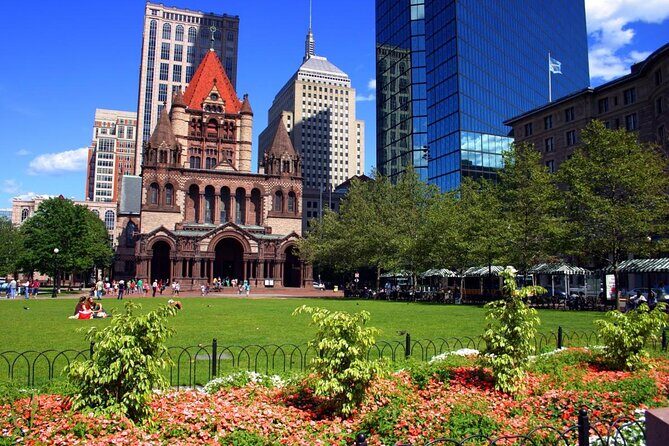
- Back Bay to Beacon Hill streetscape: Victorian brownstones, Copley Square icons, and iconic photo streets
- Freedom Trail “red line” guidance: you follow the trail with context at the big Revolutionary stops
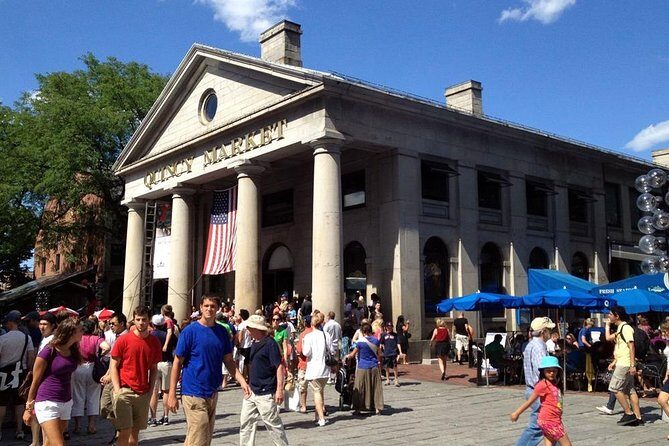
- Finish near Faneuil Hall + Quincy Market: great place to continue your food-and-attractions evening
- Guide-led question time vibe: the better guides handle the history and your side questions without derailing the tour
Start at Boston Public Library, Then Get Oriented Fast
I love tours that help you understand where you are within minutes. This one starts at 230 Dartmouth St by the Boston Public Library, which is a great location for finding the group and building an instant mental map of the city.
You’ll begin in the Back Bay/Copley Square orbit, where Boston shows two faces in the same breath: older, formal architecture and newer skyline power. That contrast is useful because it teaches you how Boston grew—piece by piece, block by block—rather than as one vague “old city.”
If you want to see more than the exterior, arrive a few minutes early. One common tip from people who’ve done this is to take a moment to step inside the library and soak up the feel of the place before the walking starts.
And because the tour runs in all weather, you’ll want to think about comfort (layers, rain protection). You’ll be outside most of the time, but you won’t be trapped waiting indoors for ideal skies.
You can also read our reviews of more walking tours in Boston

Back Bay Highlights: Marathon Energy, Trinity Church, Hancock Tower
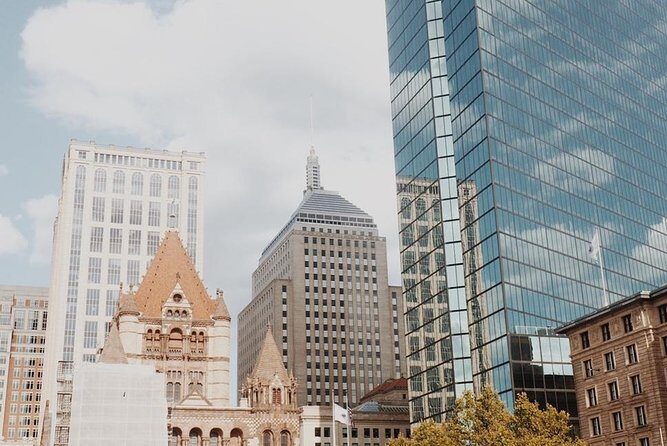
After the meeting point, the route heads into the Copley Square zone, and this is where the tour gives you “Boston in miniature.” You’ll cross through the area tied to the Boston Marathon finish line, which is more than a sports detail—it’s a reminder that Boston crowds still gather for big city moments, not just past battles.
Next comes Trinity Church, with its Romanesque look that’s instantly recognizable once you know what you’re looking for. A good guide helps you spot what makes the architecture feel sturdy and old, and how it fits into the broader neighborhood story.
Then there’s the John Hancock Tower reflection moment—yes, it’s a photo stop, but it also teaches you how Boston’s visual identity works. You start seeing how glass-and-steel landmarks “talk” with historic stone buildings when you view them from the street level.
This is also a good segment for families and first-timers. The sites are famous enough that kids don’t tune out, but the guide’s context adds meaning. You’re not just passing famous structures; you’re learning why they matter.
Copley to the Public Garden: Swan Boats and the Tiny Suspension Bridge
As the tour moves toward downtown’s edge, you’ll reach the Boston Public Garden area. This is where the walk shifts from heavy history to a lighter, more postcard-friendly side of Boston—without losing the guiding thread.
You’ll spot the swan boats, which are an easy win if you’re traveling with kids or you simply like classic Boston scenes. Even if you’re not riding, standing near the lagoon-like setting gives you that “this is why people come here” feeling.
The tour also highlights the world’s smallest suspension bridge. It’s small enough that it can be overlooked if you’re not told what to search for. A guide’s job here is perfect: point, explain, and move on before you end up standing around for too long.
This section is ideal for a quick reset in the walking rhythm. The distances aren’t extreme, but Boston sidewalks add up. Around here, you get a visual break—and a fun one—before the more serious Revolutionary stops.
Beacon Hill Streetscape: Acorn Street Photo Stop, Plus a Useful Detour
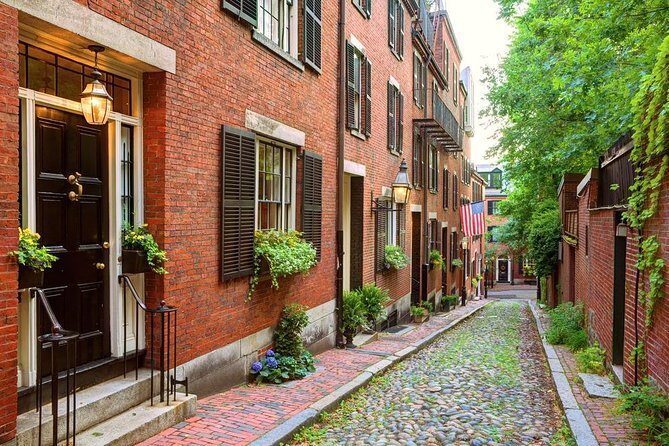
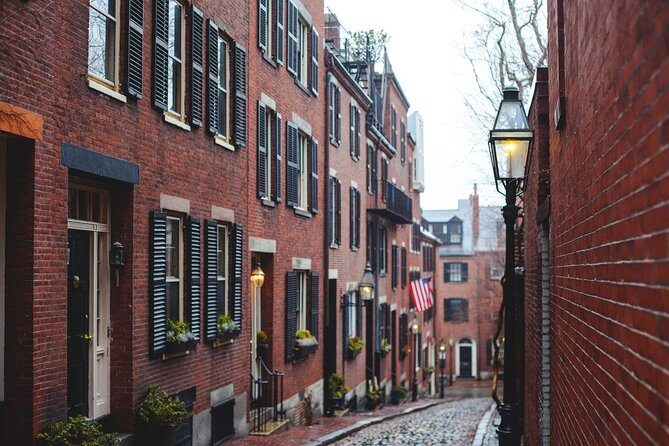
Beacon Hill is the part of Boston that often makes people stop mid-walk. The tour leans into that with the big hit: Acorn Street, where you can grab the classic photo without doing homework ahead of time.
What I like here is that the walk doesn’t treat Beacon Hill like a single stop. People have also noted a side moment that can take you off the most crowded path—Louisburg Square behind Beacon Street. It’s the kind of small detour that makes the tour feel more like a local-guided stroll than a rigid checklist.
This segment also helps you connect the neighborhood look to what you’re learning later about the city’s power centers. Beacon Hill’s charm isn’t just cute. It’s part of the story of where Boston’s leaders lived and worked.
One practical tip: Acorn Street gets photographed constantly. If you care about getting a clear shot, you’ll do better when you’re ready to step aside quickly for the guide’s explanation and then re-position for your photo.
Joining the Freedom Trail: Massachusetts State House to the Red Line
Now the tour becomes more intentionally historical. You’ll reach the Massachusetts State House, where you join the Freedom Trail’s red line and follow it with a guide.
This is one of the smartest ways to experience the Freedom Trail: instead of bouncing between stops on your own, you keep a steady sense of direction and meaning. The red line isn’t just a route—it’s a visual cue that ties separate sites into a single narrative.
At the State House, you get the political setup for what comes next. You learn why these places mattered to early American colonists and revolutionaries, and what kind of decisions (and pressures) were forming around them.
If you’re new to the Freedom Trail, this is where it starts to click. The tour helps you see the sites as parts of a system—government, public order, protest, and memory—rather than isolated markers on a map.
And if you’ve already been to Boston a few times? You’ll still likely enjoy this segment, because most self-guided walks don’t explain the “why” behind the route as clearly.
You can also read our reviews of more guided tours in Boston




Park Street Church and the Granary Burial Ground: Brimstone Corner and Key Graves
The stop at Park Street Church is memorable because of the nickname you’ll hear—called Brimstone Corner. That detail is more than trivia; it helps you understand how religious preaching and public space overlapped in earlier Boston.
From there, you head to the Granary Burial Ground, where the tour points out graves tied to major Revolutionary figures. Two names stand out: Paul Revere and John Hancock.
This is the kind of place where a guide’s pacing matters. If you move too fast, you barely absorb the meaning. If you linger too long, you fall behind and the next stops get squeezed. The tour’s overall timing is designed to keep you learning while still letting you pause.
You’ll also see King’s Chapel on the route afterward. The value here is that you get continuity: religious sites, civic memory, and Revolutionary storytelling in one connected walk.
If you like history but get lost in long lectures, these stops are a good compromise. You get enough context to understand the significance, and you keep moving.
King’s Chapel Through City Hall to the Old State House

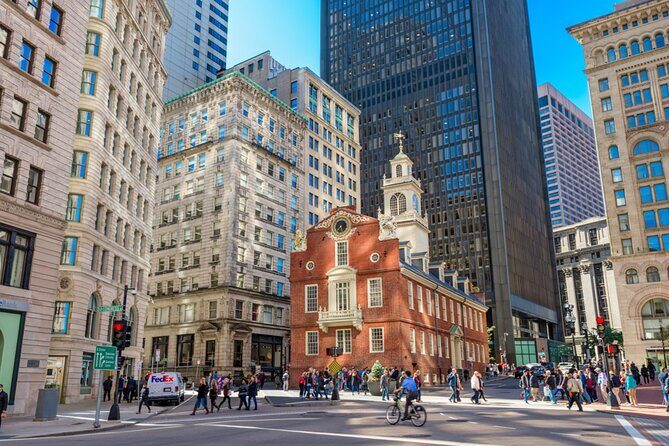
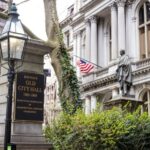
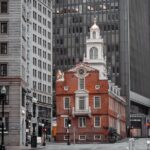
After the Granary Burial Ground, you continue toward the downtown cluster of civic buildings. The tour takes you past the Old and New City Halls and toward the Old State House.
This part of the walk is where the scenery becomes about systems: government buildings and the layers of Boston’s political evolution. Even if you’re not obsessed with architecture, the guide framing helps you understand what each location represented in its time.
The Old State House is especially important because it connects public leadership with the tensions of the era you’re learning about. You start seeing why Boston’s streets became stages for political action and argument.
One small consideration: you may notice your guide spending time on architectural features and street-level details. That can be great if you enjoy that angle. If you only want the headline Revolution story, keep your expectations tuned to a mixed approach—history plus place.
Still, for most people, this is where the tour feels most “Boston-forward.” You’re walking the city’s power core, and that makes the final stretch feel earned.
Boston Massacre Site and the Finish at Faneuil Hall + Quincy Market
Near the end, you’ll reach the Boston Massacre Site. This is one of the Freedom Trail stops that people recognize, but the context matters. A guide helps you understand what was happening and why it mattered, instead of just noting the location.
Then you finish at Faneuil Hall and Quincy Market, which is a practical choice. It’s one of the best areas in downtown Boston to keep your day going, whether you’re looking for a meal, a quick browse, or more sightseeing nearby.
This finish is also good because it reduces your stress. You don’t end at a random point. You end where the city is already geared for visitors.
If you want a smooth day plan, I’d schedule this tour earlier in your afternoon/evening so you still have time to explore Faneuil Hall properly afterward. It’s a natural “then what” ending.
Pacing, Weather, and the Small Group Factor
The tour runs about 2 hours. That length is a sweet spot in Boston: long enough to cover major landmarks and get context, short enough that you don’t feel trapped on your feet all day.
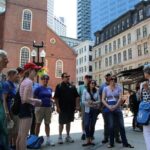
There’s also a maximum of 20 travelers, which makes a difference. Smaller groups help the guide keep track of questions, and it’s easier for you to hear explanations without leaning in constantly.
The tour operates in all weather, so plan like a local. Bring a light rain layer if needed, wear shoes you trust, and avoid anything you’ll regret on uneven sidewalks.
Pace can vary based on guide style and real-world conditions. One criticism you might want to keep in mind: if you’re the kind of person who wants extra time for photos at every major spot, you may prefer to build in your own quick photo breaks on your own right after the guide moves on. The route keeps moving, because it has multiple historic stops to cover.
Price and Value: What $65 Gets You in Two Hours
At $65 per person for about 2 hours, this is priced like a true guided experience, not just a walk with a route card. You’re paying for two things: an experienced guide and a plan that connects Back Bay streets to downtown Revolutionary sites.
To judge value, I look at three elements:
- Guided interpretation: The architecture and history don’t just sit there. You get context tied to the exact spot you’re standing in.
- Time efficiency: You cover a lot of “big name” ground without having to plot every leg yourself.
- Group management: With a max of 20, you aren’t stuck in a giant crowd where the guide becomes background noise.
Is it worth it? If you’re visiting for the first time, yes, because it compresses the learning curve. If you’re already a big Boston history nerd and you don’t mind self-guided walking, you might decide it’s optional. But even then, the architecture emphasis and Freedom Trail framing can still make it feel worthwhile.
Also, it’s offered in English and uses a mobile ticket, which keeps things simple day-of. You get confirmation at booking, so you’re not wandering around hoping you’re in the right place.
Who Should Book: Families, First-Timers, and Curious History Walkers
This is a strong fit for families. The sites are recognizable, and the guide style described by people who’ve taken it tends to keep different ages engaged. One family-friendly plus: the tour moves at a pace that works for kids, teens, and adults together.
It’s also a great choice for first-time Boston visitors. You get Back Bay orientation, Beacon Hill character, and then the Freedom Trail narrative down into downtown. That means you leave with a better sense of where everything is—so later, you can explore on your own with more confidence.
If you like architecture, you’ll probably appreciate the way the guide points out building details, especially around Copley Square, Trinity Church, and the civic core.
And if you’re the type who likes asking questions, this tour tends to work well because the guide can handle more than just scripted talking points. You’ll likely feel like the tour is answering your curiosity as you go.
Should You Book This Copley Square to Freedom Trail Walk?
Book it if you want a guided way to connect Boston’s “pretty streets” with its Revolutionary story. The blend of Back Bay + Beacon Hill + Freedom Trail is one of the best ways to see how Boston tells its history in layers.
Don’t book it if you’re only interested in a very short list of Freedom Trail stops with zero detours and maximum photo time at each one. This walk balances architecture, neighborhood scenes, and downtown history, so it’s not a pure “one stop, one fact” format.
My call: if you have about two hours and you want the city explained where you stand, this tour is a solid value—and it ends in a place where you can keep enjoying Boston right after.
FAQ
Where does the tour start and when?
The tour starts at 230 Dartmouth St, Boston, MA 02116. The start time listed is 1:00 pm.
How long is the walking tour?
It’s about 2 hours (approx.).
How much does the tour cost?
The price is $65.00 per person.
Where does the tour end?
It ends at Faneuil Hall Marketplace, Boston, MA 02109.
What language is the tour offered in?
The tour is offered in English.
Does the tour run in bad weather?
Yes. It operates in all weather conditions, so dress appropriately.
Is it okay for kids?
Children must be accompanied by an adult.