REVIEW · BOSTON
Boston Duck Boat Sightseeing City Tour with Cruise Along Charles River
Book on Viator →Operated by Boston Duck Tours · Bookable on Viator
A duck boat turns Boston into a playground. You’ll get a fast, fun ride through the city’s biggest sights, and I really like how the ConDUCKtor narration can stay funny and factual at the same time, with examples like a guide named Mike.
I also love the land-and-water combo: after the land portion, the boat goes into the Charles River for a real change of pace and a skyline view that feels different from street-level. One thing to think about: the narration comes through a GPS app on your phone, so you’ll need cellular service plus your own headphones to make it work.
In This Review
- Key highlights that make this tour worth your time
- Why Boston looks different from a WWII duck boat
- Picking your departure spot: Museum of Science, New England Aquarium, or Prudential
- ConDUCKtor narration and the GPS app you’ll use for audio
- Boston on the land portion: squares, landmarks, and quick neighborhood context
- Boston Common and Boston Public Garden (pass-by)
- Old State House and colonial-era Boston vibes (pass-by)
- Faneuil Hall area, Quincy Market, and the city center energy
- Museum of Science and the TD Garden zone
- Massachusetts State House: the gold dome moment (pass-by)
- Back Bay, shopping streets, and church icons you’ll recognize later
- Copley Place and Copley Square area (pass-by)
- Newbury Street and Boylston Street (pass-by)
- Arlington Street Church with Tiffany windows (pass-by)
- Old South Church on the Freedom Trail (pass-by)
- The Charles River splashdown: the payoff you’ll remember
- How long it feels: fast facts, real views, and one trade-off
- The stop that needs your planning: Tea Party Ships & Museum
- What to bring so the audio app and ride go smoothly
- Value at $59.75: what you’re really paying for
- Who this duck boat tour suits best in your Boston plan
- Should you book the Boston Duck Boat Sightseeing City Tour with Charles River?
- FAQ
- How long is the Boston Duck Boat Sightseeing City Tour?
- How much does it cost per person?
- Where do I meet for the tour?
- What’s included in the tour ticket?
- Is the Charles River boat ride included?
- Do I need my own headphones for the narration?
- Does the audio work without a data connection?
- What languages are available in the GPS app?
- Are the duck boats wheelchair accessible?
- Does the tour run in rain?
Key highlights that make this tour worth your time
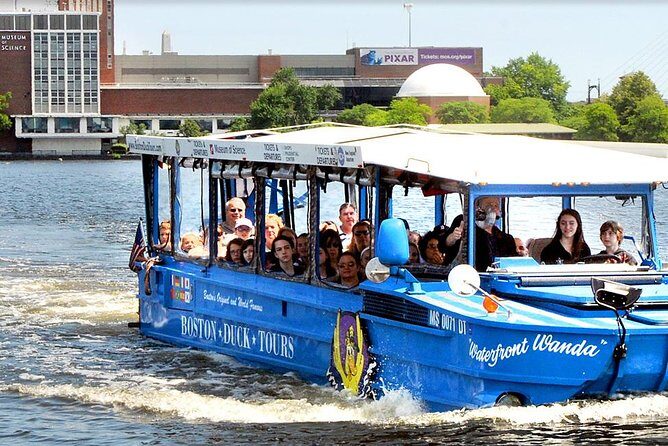
- Duck boat land tour plus Charles River splashdown for two different angles on Boston
- Three smart departure points (Museum of Science, New England Aquarium, Prudential Center) so you can pick what’s closest
- Funny, energetic narration that keeps a lot moving in about 1 hour 20 minutes
- Most stops are pass-by, so you get views and stories, not long museum time
- You control your audio with a GPS app in many languages, but your phone must be ready
- Small group size (max 30) helps the ride feel organized instead of chaotic
Why Boston looks different from a WWII duck boat
This tour runs on a renovated World War II amphibious duck boat, meaning you’re not just riding past landmarks—you’re doing it in a vehicle that can actually get you on the water. That shift matters. Street-level Boston can blur together, but a duck boat gives you quick orientation and then flips the viewpoint when you splash down.
The pacing also helps. In roughly an hour and change, you’ll cover a wide spread of neighborhoods and city landmarks without having to move your hotel luggage or hop multiple transit routes. You sit back, take in the sights, and let the ride handle the logistics.
You can also read our reviews of more boat tours in Boston



Picking your departure spot: Museum of Science, New England Aquarium, or Prudential
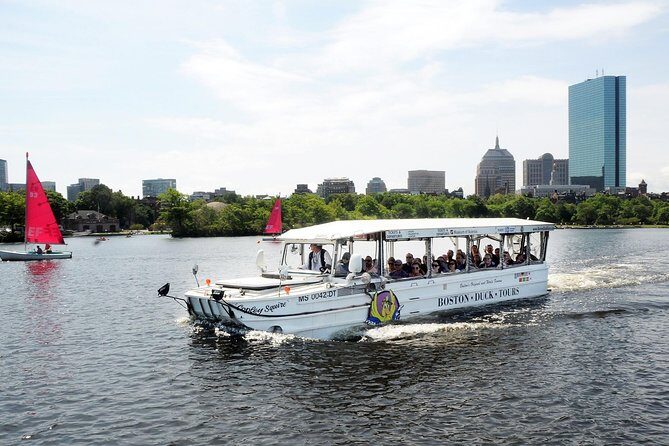
You choose one departure location when you book, and you meet there on the day of the tour. The options are:
- Museum of Science
- New England Aquarium
- Prudential Center
This choice is more important than it sounds. If you’re already near one of those areas, starting there saves you time and stress. If you’re planning your day around attractions, pick the departure point that lines up with what you’ll do before and after the tour.
The good news: all three are central. That makes it easier to build this into a first-day plan, especially if you want an early overview before you start walking.
ConDUCKtor narration and the GPS app you’ll use for audio
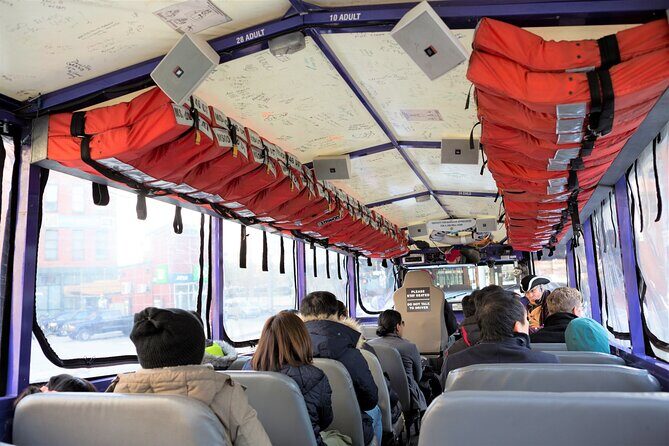
The tour narration is delivered through a GPS-activated app on your mobile device. That’s the core “audio system” here, and it affects your experience—good or bad.
What’s helpful:
- The app includes narration plus imagery as you go.
- It supports multiple languages, including Spanish, German, Mandarin, French, Japanese, Italian, Brazilian Portuguese, Korean, and Cantonese.
What you must do:
- Bring your own headphones. Headphones aren’t provided.
- Make sure your phone has cellular connection for the app to work properly.
- Plan for battery life. A GPS app plus screen use can drain a phone faster than you expect, especially while also taking photos.
Tip I’d follow: download whatever you need before you reach the meeting area, then keep your screen brightness reasonable to save power. If you’re the type who forgets to charge things, this is the moment to be extra careful.
Boston on the land portion: squares, landmarks, and quick neighborhood context
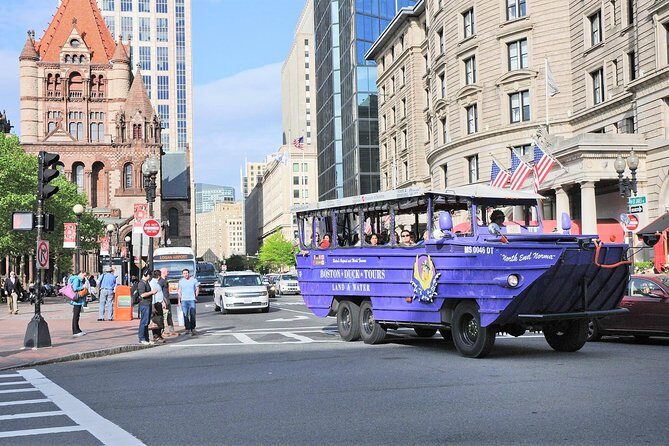
The land segment is your orientation tour. You’ll pass a stack of major landmarks across downtown, Beacon Hill/Back Bay edges, and toward the bridges and scenic areas.
Here’s how the big sights land in real life:
Boston Common and Boston Public Garden (pass-by)
You’ll glide by Boston Common, the oldest public park in the United States. It’s the kind of place you can’t un-see once you’ve seen it—green, open, and central. You’ll also pass the Boston Public Garden, described as America’s first public garden, which gives you a classic Boston “frame” even if you don’t step out.
Why pass-by works here: you get the geography instantly. Common sits like a downtown anchor, and Garden adds a softer, more ornamental layer nearby. You’ll understand where you are before your feet hit the sidewalks later.
You can also read our reviews of more city tours in Boston






Old State House and colonial-era Boston vibes (pass-by)
Next up is the Old State House, a historic colonial building that’s now used as the Revolutionary Museum. Even from the road, the building signals that Boston isn’t just modern-cool—it’s old-government, old-stories, old arguments.
In short: this is the stop that helps you feel how Boston grew, not just what it looks like.
Faneuil Hall area, Quincy Market, and the city center energy
You’ll also pass major downtown spots that are tied to Boston’s public life and marketplaces, including Quincy Market and the Faneuil Hall area. The value here is not learning one deep fact—it’s seeing how the city’s civic and commercial centers sit next to each other.
If you’re planning to eat after the tour, this is your mental map-building moment.
Museum of Science and the TD Garden zone
You’ll pass Museum of Science (great if you like science-y stuff and want a reason to return) and then swing by TD Garden, home to the Bruins and Celtics. TD Garden is one of those landmarks that’s hard to miss once you’ve seen it, and it’s a good reminder that Boston lives in sports seasons as much as history seasons.
Bonus: TD Garden also helps the tour feel current. Boston isn’t just Revolutionary-era posters—it’s also modern arenas, crowds, and big events.
Massachusetts State House: the gold dome moment (pass-by)
You’ll see the Massachusetts State House, designed in 1798 by Charles Bulfinch and dominated by a gold dome. Even if you’re not into architecture, that dome functions like a beacon. It helps you connect neighborhoods to power, literally and visually.
Back Bay, shopping streets, and church icons you’ll recognize later
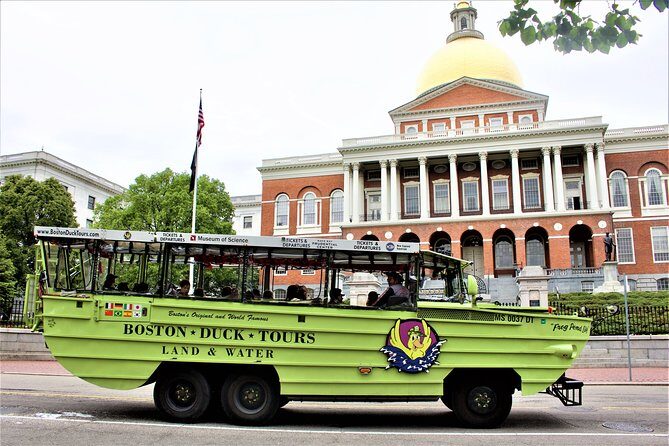
After the downtown anchors, the route leans into the Back Bay and the “walkable Boston” look—streets, squares, and landmark buildings.
Copley Place and Copley Square area (pass-by)
The tour includes the Copley area, including Copley Place and the vibe around Copley Square. It’s an easy way to register where Back Bay’s formal squares and modern retail sits, without forcing you into a full shopping detour.
Newbury Street and Boylston Street (pass-by)
You’ll pass Newbury Street, one of Boston’s chic shopping addresses, and Boylston Street, another popular street in Back Bay. These don’t feel like “tour stops” as much as they feel like a quick preview of the streets you’d want to browse on foot.
Practical payoff: if you like shopping or just window-shopping for photos, you’ll know where to walk next.
Arlington Street Church with Tiffany windows (pass-by)
You’ll also pass Arlington Street Church, noted for Tiffany windows. This is a classic example of a “blink and you’ll miss it” landmark—perfect from the duck boat, since you get the context without needing extra planning.
Old South Church on the Freedom Trail (pass-by)
You’ll pass Old South Church, located on the Freedom Trail. This helps tie the city’s history thread together, especially after the Revolutionary Museum stop.
The Charles River splashdown: the payoff you’ll remember
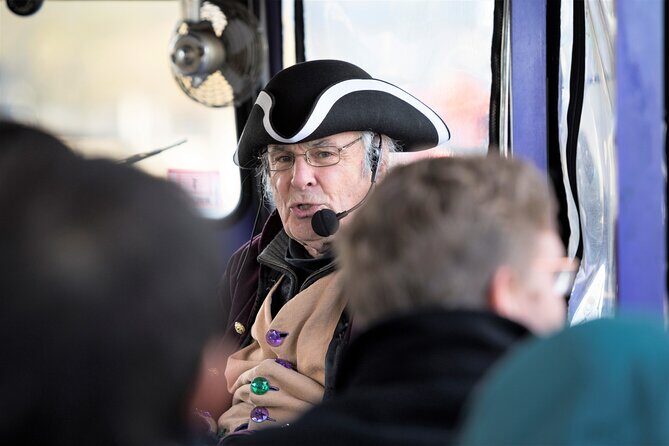
The tour’s big visual twist is the Charles River portion. After the land driving and pass-by sights, the duck boat goes into the water for about 20 minutes.
That doesn’t sound like long, but it’s the kind of short experience that lands well because it’s a contrast moment. From the river, you get different angles on Boston and you can spot the city skyline in a way that street shots don’t replicate.
Also, you pass the Charles River Esplanade, a popular path for walkers, joggers, bladers, and bicyclists. You’ll also see the Hatch Shell, where the Boston Pops holds annual summer concerts. Even without a concert date, the Esplanade gives you a “this is how locals use the city” feeling.
Photo tip: if you care about pictures, stand where you can keep the skyline in frame. The boat ride is short, so make your best angles early.
How long it feels: fast facts, real views, and one trade-off

The tour is about 1 hour 20 minutes overall, with the water splashdown included (the water time is around 20 minutes). That duration is ideal for first-time visitors who want breadth, not deep study.
What works:
- The ride keeps attention because you’re moving through neighborhoods constantly.
- The narration style can be lively and humorous, which helps the facts stick.
One drawback to plan for: the route is packed with pass-by stops, so you won’t have long breaks to go inside buildings. Some people also wish the water time felt longer, since the land portion does take most of the total schedule.
Here’s the smart way to handle it: treat this as your “get oriented and build your list” tour. Then, pick one or two spots afterward—like a museum you actually care about—and go deeper.
The stop that needs your planning: Tea Party Ships & Museum
One notable item on the route is Boston Tea Party Ships & Museum. You’ll meet it in the narrative, but admission is not included.
This means you can do it two ways:
- Use the duck boat as a history sampler and come back later on your own schedule.
- Or, if you want this museum experience, plan to buy the ticket separately and give yourself enough time to do it properly.
If you skip it, you still get the story context as you ride past. If you want the full experience, this is your reminder to add a second stop that’s more than just a glance.
What to bring so the audio app and ride go smoothly
This tour is simple on paper, but it runs on your phone audio—so your prep matters.
Bring:
- Your mobile phone with cellular service (GPS app depends on it)
- Your own headphones
- A fully charged phone (GPS + photos can drain power)
- Something warm or wind-blocking for the Charles River portion (water air can feel colder)
Helpful extras:
- If you’re with kids, there’s stroller handling: a guest service representative takes your stroller during the tour and returns it afterward.
- If you like coffee, this ride is casual enough that some people expect to keep a cup along for the trip.
Quick warning: if your phone struggles with signal or you forget headphones, you can lose the narration experience. The duck boat ride is fun on its own, but the stories are a big part of the value.
Value at $59.75: what you’re really paying for
At $59.75 per person, you’re paying for an “active overview” of Boston: transportation, narration, and both land and water city views in one ticket.
Here’s why that price can feel fair:
- You get a narrated sweep across major landmarks in about 1 hour 20 minutes.
- The water portion is included, and skyline views are the payoff.
- You don’t need to figure out route planning or juggle multiple forms of transit just to see the core sights.
It’s not the best choice if you’re hunting for:
- long museum time,
- quiet, slow-paced architecture viewing,
- or a tour that doesn’t require your phone.
Think of it as a first-layer tour. It’s a fast way to create a Boston map in your head, then you can choose what to do next.
Who this duck boat tour suits best in your Boston plan
I think this tour fits best if you:
- want a quick first look at Boston without lots of walking,
- like funny, energetic narration,
- enjoy seeing cities from changing angles (street to river),
- travel with family and want something that stays moving.
It’s also a solid option if your schedule is tight and you need a one-stop activity that covers many neighborhoods.
If you’re an international visitor who wants very Boston-only history talk for the whole ride, you should know that the narration can include broader American pop-culture or sports angles. The duck boat format is fun, but it’s not a lecture series.
Should you book the Boston Duck Boat Sightseeing City Tour with Charles River?
Yes—if you want a fun, efficient way to get oriented and you’re ready to use your phone as the audio guide. The combination of land landmarks plus the Charles River skyline splashdown is the kind of contrast that makes Boston feel new fast.
Book with confidence if:
- you like lighthearted narration and quick stops,
- you want to see a wide range of sights in one outing,
- you’re happy with pass-by views and then doing deeper exploration later.
Skip or rethink it if:
- you don’t want app-based audio or you can’t rely on cellular service,
- you’re hoping for long indoor museum time during the tour,
- or you want extended time on the water.
FAQ
How long is the Boston Duck Boat Sightseeing City Tour?
The tour lasts about 1 hour 20 minutes, including the Charles River portion.
How much does it cost per person?
The price is $59.75 per person.
Where do I meet for the tour?
You meet at one of three central locations: Museum of Science, New England Aquarium, or Prudential Center. You select your departure location during checkout.
What’s included in the tour ticket?
Your ticket includes an 80-minute duck boat tour of Boston, a narrated tour, and a 20-minute boat ride along the Charles River.
Is the Charles River boat ride included?
Yes. The tour includes a 20-minute splashdown on the Charles River, and the admission ticket for that portion is free.
Do I need my own headphones for the narration?
Yes. Headphones are not available for the audio-guided app, so you’ll need to bring your own.
Does the audio work without a data connection?
Your mobile device must have its own cellular connection for the GPS activated audio app to work.
What languages are available in the GPS app?
The app includes narration in multiple languages, including Spanish, German, Mandarin, French, Japanese, Italian, Brazilian Portuguese, Korean, and Cantonese.
Are the duck boats wheelchair accessible?
Yes, there are wheelchair accessible ducks from all three departure locations, but you must call after booking to arrange seating.
Does the tour run in rain?
It runs rain or shine, but severe weather can lead to canceling either the water portion or the entire tour at the dispatcher’s discretion.
Booking ahead pays off here — HappyToVisit ranks another top-rated Boston option, and the official Mass Vacation and Boston USA sites have the timings and access.