REVIEW · BOSTON
Boston’s Freedom Trail: A Revolutionary Walking Tour
Book on GetYourGuide →Operated by Boston History Company · Bookable on GetYourGuide
One walk makes the Revolution feel real. This Boston Freedom Trail tour strings together all 16 official stops, from the Boston Common start point right through the places tied to the Boston Massacre, Paul Revere, and John Hancock. I love the way the guide turns names into street-level stories, and I love that you see a lot of ground in just 2.5 hours without hunting for the trail yourself. The main trade-off: it’s a long, steady walking route, so plan on comfortable shoes and a bit of patience at busy sidewalks.
If you’re a first-time visitor, this is a fast way to get your bearings. I also like that the tour doesn’t only hit the famous figures; you’ll hear about women, African Americans, and immigrant patriots and pioneers, plus Boston’s role in abolition, American education, and immigration. One consideration: it’s an English-speaking live guide, and the pace can be lively—so if you need slower delivery, come ready to focus.
In This Review
- Key highlights you’ll feel fast
- Meeting at The Embrace on Boston Common: your starting line matters
- The value question: $31 for 16 stops is the point
- Park Street Church to Granary Burying Ground: where names become neighbors
- The Golden Dome moment at the Massachusetts State House
- Old South Meeting House and Old State House: protests with paperwork energy
- Faneuil Hall and the Revolutionary “loudspeakers”
- Paul Revere House and Old North Church: lanterns, signals, and the midnight narrative
- Copp’s Hill Burying Ground and USS Constitution: the trail keeps stretching
- Bunker Hill Monument: how the tour lands the final note
- Who this tour suits best (and who should rethink)
- Quick planning tips so you enjoy every stop
- Should you book this Freedom Trail walk?
- FAQ
- Where does the tour start?
- How long is the tour?
- How much does it cost?
- Is a live guide included, and are attraction tickets included?
- What should I bring?
- Is video recording allowed?
Key highlights you’ll feel fast
All 16 official Freedom Trail sites in one guided outing
The Golden Dome at the Massachusetts State House
Graves of Hancock, Revere, and Samuel Adams plus the nearby burial-ground stops
Places tied to the Boston Massacre and other Revolutionary flare-ups
Old North Church lanterns and the Midnight Riders story thread
USS Constitution and Bunker Hill Monument to close the arc beyond the city streets
Meeting at The Embrace on Boston Common: your starting line matters
Your tour begins at The Embrace statue on Boston Common, right by the Visitor’s Center at 139 Tremont Street. This is a smart setup: it’s central, easy to find, and you’re already in the historic core before you even start walking the trail.
Your guide won’t be in costume. Instead, you’ll spot them by a flag marked Boston History Company, which saves you the awkward guesswork at the crowd level. You’ll also end back at the meeting point, so you’re not stuck figuring out where you’ll land after the last stop.
Practical tip: wear shoes you’d be happy in for a couple hours of city walking. The tour is 2.5 hours long, and that time adds up quickly on cobblestones, curb cuts, and Boston sidewalk traffic.
You can also read our reviews of more walking tours in Boston


The value question: $31 for 16 stops is the point

At $31 per person, the value comes from the mix of three things: a live guide, a packed route, and no attraction entry tickets required as part of the price. You’re paying for interpretation—someone to connect the dots between the Revolutionary moments—while using walking time to hit multiple official sites.
If you tried to do this solo, you’d spend extra time figuring out the trail order, and you’d probably miss some of the context that makes those stops click. The guide’s job here is to do the hard part for you: place each stop into a bigger story of rebellion, protest, and political change.
Also, this is not a “sit and listen” tour. It’s moving. That’s a good fit for people who get restless in museums and prefer history you can point at.
Park Street Church to Granary Burying Ground: where names become neighbors
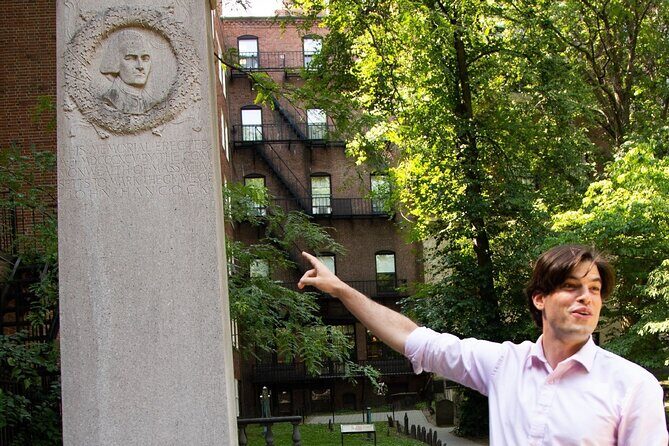
Early on, you’ll hit Park Street Church and then move into the gravity zone of Granary Burying Ground. This stop cluster is where the tour really starts to feel personal, because you’re walking through a place tied to final resting spots for major Revolutionary-era figures—specifically John Hancock, Paul Revere, and Samuel Adams.
I like this portion because it slows the tour down emotionally, even if the walking pace stays steady. After street-level Revolutionary talk, you see the aftermath, not just the action.
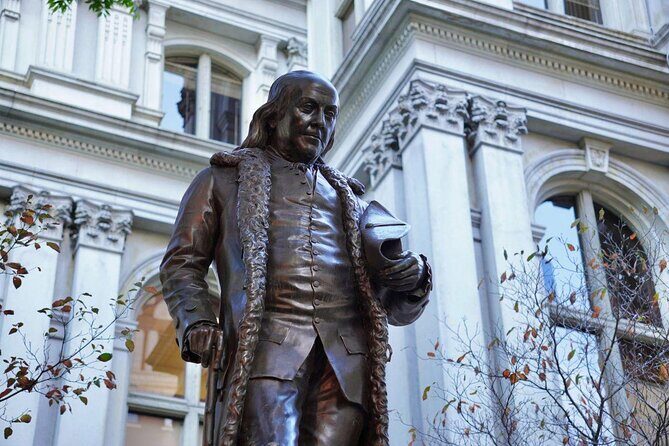
You’ll also pass King’s Chapel, then the Benjamin Franklin Statue and the Old Corner Bookstore. These are ideal “mental markers.” The guide uses these points to keep the story organized, so you don’t feel like you’re just hopping between random plaques.
Possible drawback here: if you want lots of quiet time in a cemetery or churchyard, the schedule is designed to cover ground. You’ll get guided context, but it’s still a moving tour.
The Golden Dome moment at the Massachusetts State House

One of the clearest high points is seeing the Golden Dome at the Massachusetts State House. This isn’t just a photo stop. The guide uses this kind of landmark to help you understand how Boston’s identity as a revolutionary city carried forward into politics and public life.
You’ll get the vibe shift you want on a walking tour: from the heat of crowds and conflict to the look of power and governance. It’s a useful contrast that makes the earlier protest sites feel sharper, not softer.
If you’re the type who likes a mix of iconic architecture and plain storytelling, this is a great anchor moment. And since the dome is easy to recognize, it helps you orient yourself mentally while you keep walking.
Old South Meeting House and Old State House: protests with paperwork energy
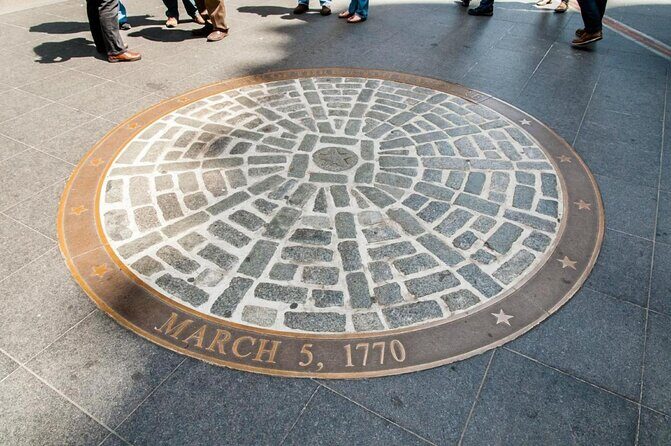
The tour follows the Revolution into civic spaces. You’ll visit the Old South Meeting House and the Old State House, then move along to the Boston Massacre Site.
This is where the tour leans into the big set pieces you’ve likely heard about—like the Boston Tea Party and the Boston Massacre—and then ties them to what you can actually see on the street. Instead of treating the Revolution as a list of dates, the guide connects cause to place.
The Boston Massacre Site is especially important if you want the story grounded. When the guide points out where events occurred, you stop thinking of it as a textbook scene and start thinking of it as something that happened in real streets with real movement and real fear.
One thing to keep in mind: this part of Boston can get busy. Give yourself time to walk calmly through crowds, especially if you’re traveling during peak hours.






Faneuil Hall and the Revolutionary “loudspeakers”
Next up: Faneuil Hall. This is a classic Freedom Trail stop for a reason—you’re in a place where public speech and public pressure mattered. Even if you already know the broad idea, the guide’s job is to show how these sites fit into the “who pushed what, and when” structure of the Revolution.
The best part of Faneuil Hall on a guided walk is pacing. You’re not just looking at a building; you’re hearing how the building fits into the tension of the time.
And if you like storytelling tone, this is also where the tour’s humor tends to show up. Expect some light dad-joke energy along the way. It won’t derail the facts, but it keeps the group from turning history into a lecture marathon.
Paul Revere House and Old North Church: lanterns, signals, and the midnight narrative

Then the tour shifts into the story thread people remember best: Paul Revere and the signal system that helped move word quickly. You’ll visit the Paul Revere House and also stop at Old North Church.
The highlight here is the steeple moment—the two lanterns story. It’s a strong example of how the guide teaches cause-and-effect: the message, the timing, and the stakes. Even if you’ve heard the legend, seeing the actual landmark makes it easier to picture how communication worked before phones and alerts.
In the same arc, the guide weaves in the “rebels, gangs, and Midnight Riders” angle. That’s one of the more fun parts of this tour because it makes the Revolution feel like lived action, not distant pageantry.
Copp’s Hill Burying Ground and USS Constitution: the trail keeps stretching
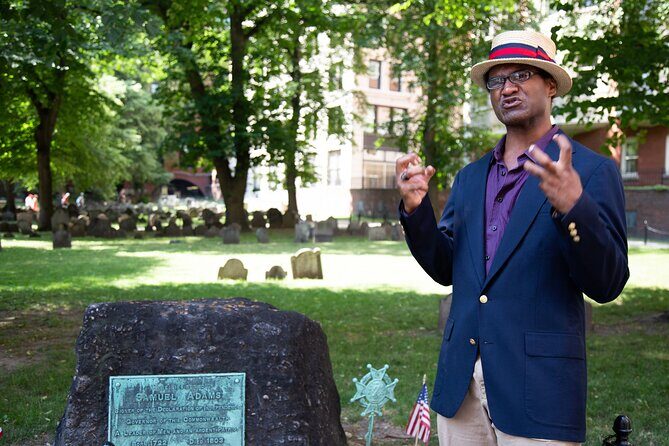
You’ll continue to Copp’s Hill Burying Ground and then move toward USS Constitution.
This is a smart shift in tone. The Freedom Trail can sometimes feel like it’s stuck in the 1770s forever. But adding the waterfront anchor helps you see that the Revolution wasn’t just debates and meetinghouses—it was also conflict tied to ships, power, and movement.
I also like that the guide uses stops like these to bring in broader themes beyond battles. The tour discusses Boston as a pioneer in abolition, American education, and immigration. Those topics aren’t “extra trivia” here; they help explain why Boston became a place where revolutionary ideas could take root and spread.
Bunker Hill Monument: how the tour lands the final note
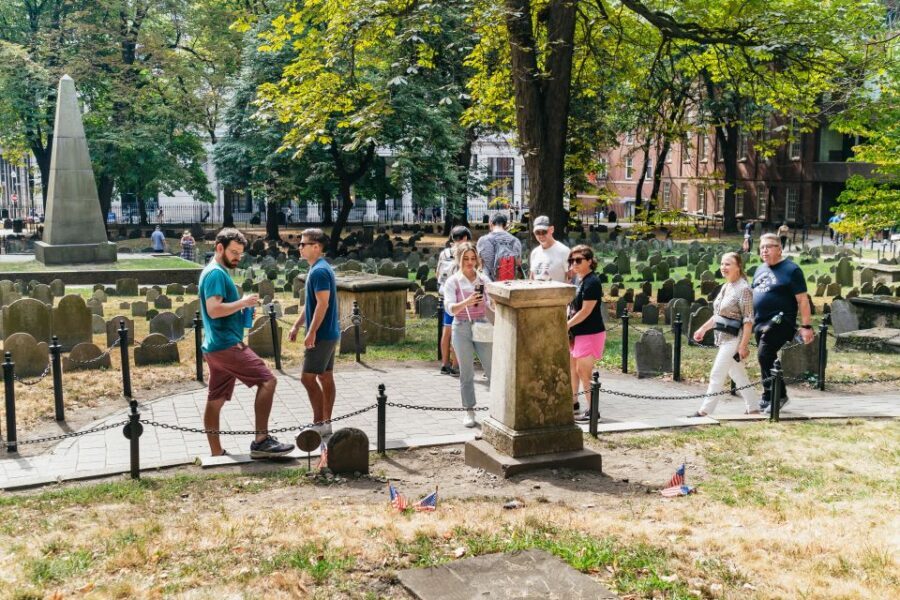
To wrap up the experience, you’ll see Bunker Hill Monument. Even if Bunker Hill is already famous in your mind, this stop helps complete the arc: the Revolution isn’t only about key individuals or a single riot-like day. It’s about momentum and the cost of momentum.
The guide’s storytelling style matters here. A good host will help you connect what you’ve just walked past—the meeting places, the sites of violence, the signal points—to why this hill mattered and what it symbolized afterward.
As with the rest of the tour: you’ll be moving. Don’t expect long solo wandering time. Do expect a guided wrap-up that helps you remember the story in order.
Who this tour suits best (and who should rethink)
I think this tour is a strong choice if you want:
- A tight, guided route that covers all 16 official Freedom Trail sites in one outing
- History explained with humor and human-scale stories (and yes, some cheap dad jokes)
- A mix of famous names—like Hancock and Revere—with lesser-known perspectives, including women and African Americans and immigrant patriots and pioneers
- A practical plan for a short trip or a layover where you still want the big picture
Where it may not be ideal:
- If you hate walking, this won’t magically turn into a short stroll. It’s 2.5 hours on foot.
- If mobility is a concern, the info says wheelchair accessible, but it also notes not suitable for people with mobility impairments. If that applies to you, it’s worth checking directly with the operator before you commit.
- If you need lots of time inside buildings, this tour does not include entry tickets, so you’ll mostly be seeing exterior areas and learning from the guide rather than going deep into exhibits.
Also, one rule to note: video recording is not allowed. If that matters to you, plan to use photos only.
Quick planning tips so you enjoy every stop
Bring what keeps you comfortable: comfortable shoes, water, and comfortable clothes. You’re going to want both hydration and footwear that can handle Boston sidewalks without chewing up your feet.
Come with an open mind. The tour uses the Freedom Trail stops to talk about complicated themes—rebellion, public conflict, abolition, education, immigration. That mix is why the tour feels more useful than a simple “checklist of monuments.”
If English is your second language, keep in mind that some guides can speak quickly. I’d plan to stay focused and not treat it like background audio.
Should you book this Freedom Trail walk?
Book it if you want the Freedom Trail experience with a live guide and a route that hits all 16 official sites efficiently. This is good value for the price because you’re buying someone’s ability to connect events to places—plus a format that keeps you moving through Boston Common and the Revolution’s key corners in about 2.5 hours.
Skip or reconsider if you’re determined to take your time inside attractions, or if you’re walking-sensitive. The tour covers a lot of ground and doesn’t include entry tickets, so you’ll still need other plans if you want museum-level depth.
If you do book, aim to show up ready to walk, and you’ll leave with a clearer Revolutionary storyline—one you can actually picture next time you stand in front of these sites.
FAQ
Where does the tour start?
Meet your guide at The Embrace statue on Boston Common, right next to the Visitor’s Center at 139 Tremont Street.
How long is the tour?
The tour lasts about 2.5 hours. Starting times depend on availability.
How much does it cost?
The price is $31 per person.
Is a live guide included, and are attraction tickets included?
A live guide and a walking tour are included. Entry tickets to attractions are not included.
What should I bring?
Wear comfortable shoes, bring water, and wear comfortable clothes.
Is video recording allowed?
Video recording is not allowed during the tour.