REVIEW · BOSTON
Boston Hop-On Hop-Off Trolley Tour with 13 Stops
Book on Viator →Operated by Historic Tours Of America · Bookable on Viator
Two hours, and Boston clicks into place. I love the hop on and off freedom and the live guide narration that makes the city feel organized. One thing to plan for: in winter or during busy traffic, you may wait longer at some stops or need a bus transfer to finish the full route.
This is a solid pick when you want a fast overview of Boston without studying maps for hours. The trolleys are comfortable in bad weather, and the stops drop you close to famous neighborhoods and landmarks you’d otherwise squeeze into a hectic walking day. The only real drawback I’d flag is that the experience can feel smoother if you’re flexible about timing—especially if you’re doing multiple stops in one day.
I also like the human side of the guides. On some departures, you may encounter conductors with names like Capt E. Hambone, Wiggles, Charming, and Earnest (yes, those are real tour personalities), and the humor can keep the ride from getting stale in the cold. Just keep your expectations realistic about frequency and transfers.
In This Review
- Quick take: what matters most on this trolley loop
- Why this trolley beats a solo walking scramble in Boston
- The two-loop route: where the trolley actually takes you
- Getting on and staying oriented: transfers can affect your day
- Stop-by-stop: what you’ll see from Atlantic Avenue to Boylston
- Weather-proof riding: heated comfort with plastic windows
- The guides: where the bus becomes more than transportation
- Timing, frequency, and the one thing to watch
- Price and value: when $52.45 makes sense
- Who this tour is perfect for (and who should pick something else)
- Should you book this Boston hop-on hop-off trolley?
- FAQ
- How long is one full rotation on the trolley?
- Are the conductors and narration part of the experience?
- Can I bring food and drinks on board?
- Are pets allowed?
- Are the trolleys enclosed, and are they heated in winter?
- Does the trolley tour follow the Freedom Trail exactly?
- How many stops are there on the Boston trolley tour?
- How often do trolleys come to each stop?
- Are wheelchair-accessible trolleys available?
Quick take: what matters most on this trolley loop
- Live narration by trained conductors who connect the streets to the stories
- Hop on hop off at 13 key stop points spanning waterfront, downtown, and Back Bay
- Weather-ready comfort with plastic windows and winter heating
- Two-loop routing that may require a transfer (especially near Park Plaza)
- High value for short stays since it bundles orientation + proximity to major sights
Why this trolley beats a solo walking scramble in Boston
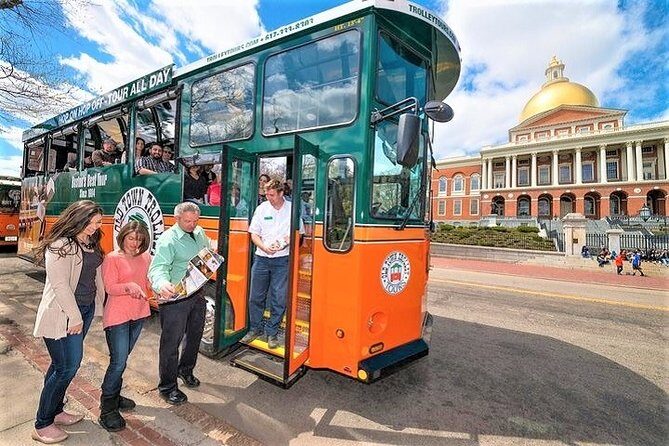
Boston is compact, but it’s also hilly, windy, and full of one-way streets. A hop-on trolley gives you the big-picture layout fast, so you’re not guessing where neighborhoods start or where the next landmark really sits.
I like that you can treat it as an orientation tool. If you only have a day, you can ride, get oriented, then spend the next day walking the parts that actually grab you—North End streets, Beacon Hill corners, or the Back Bay stretch.
Also, the pacing is realistic. The tour is designed around short ride segments between stops, so you can step off for photos or a quick visit and then continue when you’re ready.
You can also read our reviews of more tours and experiences in Boston.
The two-loop route: where the trolley actually takes you
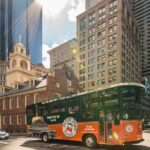
This tour runs along two loops—often described as a Green loop and an Orange loop—with 13 named stop points. Depending on the way the route is presented, you may also see references to 18 stops placed near major points of interest.
The Green side leans toward the classic “Cradle of Liberty” core: waterfront views, North End history, and the Freedom Trail area. Then it reaches Park Plaza, where you’ll commonly transfer to the Orange route for Back Bay and the big museum/theater corridor.
The Orange loop is where Boston gets more modern-fast. You’ll move through downtown shopping streets, then up toward Prudential and the performance halls.
Getting on and staying oriented: transfers can affect your day
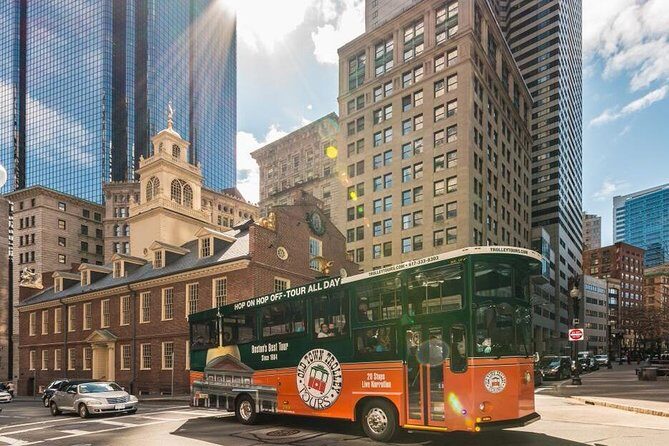
The route is hop-on hop-off, but it’s not always hop-on-all-day-with-one-bus. You’ll start at 200 Atlantic Avenue, near the end of the Marriott Longwharf Hotel, and from there you follow the loop pattern.
At 2 1/2 Park Plaza, you’ll reach a welcome center area and a common transfer point into the Orange loop. That’s one of the moments where your day can feel “automatic” if you’re paying attention, or annoying if you’re not.
Here’s the simple way to handle it: pick a time window for transfers, then use your time off the bus to do something close by (Public Garden, Theater District streets, or a quick stop for coffee). If you do that, you turn the transfer moment into normal downtime instead of a scramble.
Stop-by-stop: what you’ll see from Atlantic Avenue to Boylston
Below is how the route plays out once you’re on the trolley. Think of each stop as a small neighborhood “doorway,” not just a bus stop.
Stop 1: 200 Atlantic Ave (New England Aquarium, Harbor area, Faneuil Hall area)
This is a great launch point because it anchors you by the waterfront. You’re close to major attractions like the New England Aquarium zone and the Faneuil Hall area, plus you can connect to harbor sightseeing options nearby.
If you’re arriving for the first time, start here early in the day. Getting this section done while the light is good makes the rest of your day easier.
Stop 2: 561 Commercial St (North End, Old North Church / Little Italy)
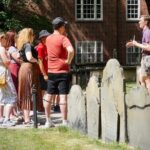
The North End is where Boston feels like a real neighborhood, not just a postcard. From here you’re positioned for the Old North Church area and the North End’s Little Italy vibe.
This is also where a short walk can beat “only photos.” Even stepping off for 20 minutes can help you understand how the streets weave.
Stop 3: USS Constitution Museum
You’re now in the historic ship zone, which is one of Boston’s easiest wins for understanding the city’s past. If you want a museum stop that feels directly tied to the waterfront story, this is it.
Tip: if the weather is rough, do the museum briefly, then come back to the trolley to stay warm and keep moving.
Stop 4: 162 Causeway St (North Station / TD Garden area)
This area is more of a landmark-and-transport hub than a “one big sight” moment. It’s useful because it connects you to a key part of town and helps you build a mental map of downtown.
If you’re timing your day around sports or a show, this stop helps you plan around where you’ll be later.
Stop 5: 28 State St (Downtown Crossing / Historic District / Old State House area)
State Street is where you connect commerce with history. The Old State House area sits right in the middle of the downtown flow, so you get that “Boston in layers” feeling.
It’s a good stop for a short educational walk, especially if you want a quick hit of the city’s early political story without committing to a long museum day.
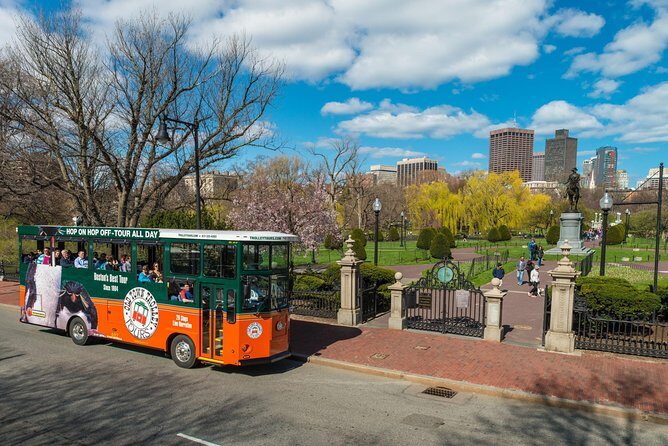
Stop 6: Cheers (Original Cheers Bar area / Boston Common / Boston Gardens nearby)
This is the fun stop—part sitcom nostalgia, part prime location. It’s also your easiest route-adjacent way to reach Boston Common and Boston Gardens without trying to thread your way through downtown traffic on foot.
Even if you’re not a TV person, stepping off here helps you break the “museum-only” rhythm with open green space.
Stop 7: 2 1/2 Park Plaza (Old Town Trolley welcome area / Theater District / Boston Public Garden; transfer to Orange loop)
This is a high-utility stop. It sits where Theater District streets and the Boston Public Garden meet, and it’s also commonly where you change loops.
If you’re doing the full route, this is your strategy checkpoint. Decide what you want to accomplish on the Orange side before you start hopping again.
Stop 8: Beacon Hill area (Beacon Hill near Park Street / Boston Common / start of the Freedom Trail)
Beacon Hill is where the city turns quaint-fast. From this section, you’re also positioned near the start zone associated with the Freedom Trail idea, so you can connect trolley viewing to a walking history route later.
I like using this as a “photo and orientation” stop—get your bearings, then hop off again later if you want to linger in the streets.
Stop 9: Boston Tea Party Ships & Museum area (plus Boston Children’s Museum / Fort Point Channel nearby)
This is one of the most important stops on the whole route. It puts you by the Boston Tea Party Ships & Museum, and there’s also kid-friendly and waterfront-adjacent stuff nearby.
This stop also matters for value because the tour includes a discount to the Boston Tea Party Ships & Museum. If that museum is on your list, this trolley pass starts making more sense instantly.
Stop 10: Prudential Center / Hynes Convention Center / View Boston Observation Deck area
Now you’re in the “higher views” part of town. This stop works well if you want easy access to modern landmarks like Prudential and the convention center area.
If you’re planning an observation deck visit, this is a convenient staging point.
Stop 11: Christian Science Plaza / Symphony Hall
This is where Boston feels like it’s dressed for a performance night. Symphony Hall and the Christian Science Plaza area are clustered so you can walk a short loop after you step off.
If you have limited daylight hours, this is a good place to choose one indoor stop and keep the rest of your time flexible.
Stop 12: Copley Place area (Copley Place Mall / Boston Marriott Copley Place nearby)
This stop is practical. It’s shopping, food, and a predictable meeting point—plus it helps if you need indoor breaks.
In cold weather, this can be your “reset button” stop.
Stop 13: Trinity Church area near Boylston Street / Phillips Brooks statue
This final stretch is about iconic church architecture and the Boylston corridor. Trinity Church and the Phillips Brooks statue area are easy to recognize and good for last photos before you wrap up.
If you’re finishing your full ride, this is a clean “end cap” section where you can decide whether to hop off for a longer walk or just head out.
Weather-proof riding: heated comfort with plastic windows
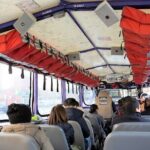
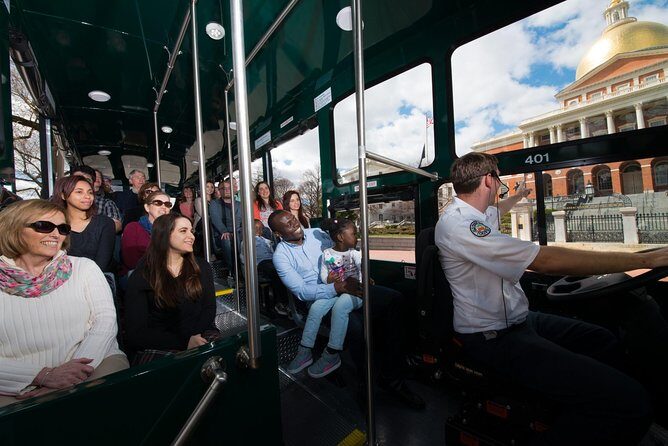
The trolley is designed to run in all seasons, with protection from weather and heated comfort in winter. You’ll often hear it described as enclosed or sheltered, but practically speaking it uses open-air vehicles with plastic windows that roll up and down based on conditions.
That combination matters. On a windy Boston day, you want both wind blocking and some airflow control. In winter, heating helps a lot, and the plastic windows make a noticeable difference in how long you’ll stay comfortable between stops.
So if you’re traveling off-season, this trolley is still a workable plan—not just a summer thing.


The guides: where the bus becomes more than transportation
The tour is fully narrated by expert guides who provide professional commentary. You’ll hear local history and local context along the route, not just scripted facts.
I also like how the guides can shift tone to keep you awake on longer stretches. From what I’ve seen in guide-style examples, the humor can range from playful to straight-up character-driven—names like Rocky show up in people’s stories of guides staying on top of the experience even when conditions get tricky.
One practical thing: if you care about specific themes—like politics of the Revolution, maritime Boston, or neighborhood architecture—listen early. The first loop tends to set the story, then the later stops click into place.
Timing, frequency, and the one thing to watch
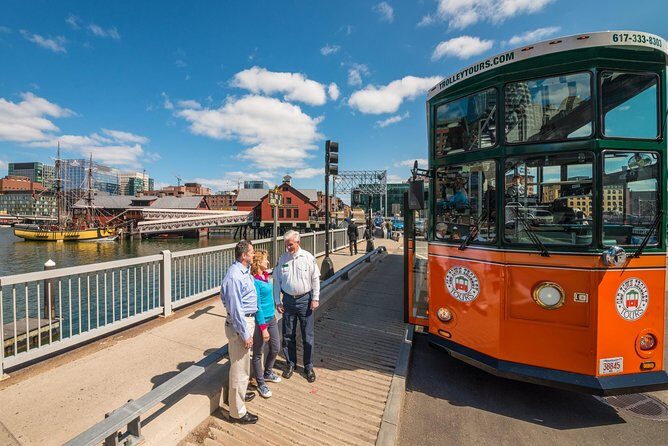
A lot of the value depends on how quickly trolleys show up at your chosen stop. Some departures run smoothly, with pickup intervals mentioned in the 15–30 minute range. But when traffic or weather gets heavy, or when you’re unlucky with the timing, longer waits can happen.
There are two patterns to expect:
- Transfers can add friction if you arrive during a gap.
- In cold weather, standing around is misery—so plan to have a backup indoor option nearby.
Also, avoid relying on exact arrival predictions unless you’ve got a way to check. Some people report there’s no trolley tracking, which means you can only estimate. When you don’t know, you either commit to the wait or you switch to a different transport option.
If you want the best odds of a smooth day, aim to ride earlier in the day and hop off with purpose rather than lingering at the stop.
Price and value: when $52.45 makes sense
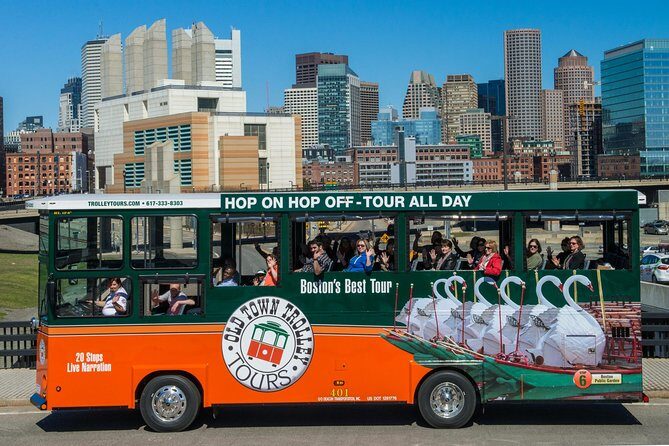
At $52.45 per person, this isn’t the cheapest way to ride around Boston. But it’s often cheaper than piecing together multiple paid attractions plus multiple transport rides, especially for a first-time visit.
You’re paying for three things:
- Orientation in a short time (so you don’t burn hours figuring out geography)
- Convenience (you don’t need to constantly re-plan walking routes)
- Added value through the included discount to the Boston Tea Party Ships & Museum
If the museum is on your list, the discount can push this from “nice” to “worth it.” If you only want one or two sights, the pass may feel less efficient. That’s where a simple strategy helps: ride enough to decide what to do next, then go deeper on your second round.
For families, solo travelers, and groups mixing different interests, this is a pretty efficient compromise. Everyone gets movement and context, and you can still split off for specific stops.
Who this tour is perfect for (and who should pick something else)
This is a great fit if you want an easy way to see major areas without building a route yourself. It’s also good if your group has different walking comfort levels, because you can step on and off without committing to long stretches.
I’d also recommend it if you’re visiting for a limited time and want your bearings fast. After one loop, you’ll usually know where you want to spend real time.
If you hate waiting and need strict minute-by-minute schedules, this might test your patience. Boston traffic and weather can shift timing, and transfers can feel awkward if you’re not expecting them.
Should you book this Boston hop-on hop-off trolley?
Book it if you want a practical first pass at Boston: waterfront history, neighborhoods like the North End and Beacon Hill, plus the Back Bay corridor. The combination of live narration, frequent landmark drops, and weather-ready rides is a strong match for short stays and cold-season travel.
Skip it or keep your expectations modest if your plan depends on exact trolley arrival times or you’re trying to “optimize” every minute. If your day is fragile, build in buffers at transfers and consider having a Plan B for stops with long gaps.
If you do book, start early, pay attention at the Park Plaza transfer point, and use your off-bus time to actually visit something close by. That’s how you get the best value out of the pass.
FAQ
How long is one full rotation on the trolley?
The Old Town Trolley tour is approximately 1 hour and 50 minutes if you ride all the way around without getting off and on.
Are the conductors and narration part of the experience?
Yes. The tour is fully narrated by knowledgeable, expert guides, with commentary throughout the route.
Can I bring food and drinks on board?
Yes, food and drinks are welcome. Alcoholic beverages are not allowed.
Are pets allowed?
Service animals are the only animals allowed on board the trolleys. Emotional support animals and pets are not allowed.
Are the trolleys enclosed, and are they heated in winter?
The trolleys use open-air vehicles with plastic windows that can roll up or down depending on weather. Yes, the trolleys are heated during the wintertime.
Does the trolley tour follow the Freedom Trail exactly?
No. The Freedom Trail is a self-guided walking route, and the trolley gets you close to many sights along the route but does not follow it exactly.
How many stops are there on the Boston trolley tour?
There are 18 stops on the tour, conveniently located at or near major points of interest.
How often do trolleys come to each stop?
Frequency depends on the time of year, along with traffic and weather conditions. Trolleys tend to run more frequently on weekends than weekdays.
Are wheelchair-accessible trolleys available?
A certain number of trolleys have hydraulic wheelchair lifts. Call the phone number on your ticket at least 24 hours before your travel date to confirm an accessible vehicle.