REVIEW · BOSTON
The Full Revolutionary Story Epic Small Group Boston Walking Tour
Book on Viator →Operated by The Revolutionary Story Tour · Bookable on Viator
The Revolutionary story clicks into focus when you hear it in sequence, not just in random sightseeing. This small-group walking tour strings together major sites plus off-the-track stops, with a guide who uses storytelling and visual aids to connect people, places, and events. I especially like the way it starts in downtown history and then keeps widening into modern Boston. One heads-up: this is a lot of walking, and it’s mostly outdoors, so weather matters.
I love that the route follows the Revolution’s timeline, including walking the Freedom Trail in the same order events unfolded. You’ll also get stops that most Freedom Trail-only tours skip, like King’s Chapel Burying Ground and the Old South Meeting House build-up to the Boston Tea Party. The main drawback is simple: expect a workout pace, not a casual stroll, and bring a plan for cold wind or rain.
Small groups (max 15) mean questions don’t get lost, and the guide can keep the story moving without herding people like a train. You’ll begin at City Hall Plaza and end in the North End near Boston Harbor, with a final waterfront stretch that gives your brain a break after all that politics.
In This Review
- Key highlights you’ll feel on this walk
- Starting at City Hall Plaza, then getting your bearings fast
- The Freedom Trail in order: why this tour feels smarter than a straight line
- King’s Chapel Burying Ground and the first settlers you never met
- Granary Burying Ground: where the Revolution gets human
- City politics, democracy debates, and why architecture shows power
- Boston Massacre and the escalation trap
- Old South Meeting House and the road to the Tea Party
- Faneuil Hall, Quincy Market, and the moment a protest becomes a revolution
- Paul Revere House, North Square Park, and Old North Church’s big signal
- Charlestown and Bunker Hill: the story reaches its hard edge
- USS Constitution from across the harbor, then the finish line in the North End
- Price and value: what $55 buys you on a history-heavy walking tour
- Who should book this Boston Revolutionary story walk
- Should you book it
- FAQ
- How long is the Boston Revolutionary story small-group walking tour?
- Where do you meet for the tour?
- Where does the tour end?
- Is the tour only on the Freedom Trail?
- Does the tour include food?
- What’s the group size limit?
- Is this tour in English?
- Is there any costume reenactment or theater?
- Is museum entry included?
- Is the tour suitable for kids and service animals?
Key highlights you’ll feel on this walk
- Freedom Trail, but in chronological order so the Revolution makes sense step by step
- Off-trail detours like King’s Chapel Burying Ground and Brimstone Corner for Boston context beyond the usual names
- Turning-point stops at Granary Burying Ground and Old South Meeting House that explain why resistance escalated
- Modern Boston stops that matter (Post Office Square, the Financial District) so history doesn’t feel stuck in the past
- A North End and harbor finale with food vibes, sea air, and classic waterfront views
- Storytelling with props and visuals (including examples like Lego-style visuals used for Bunker Hill)
Starting at City Hall Plaza, then getting your bearings fast
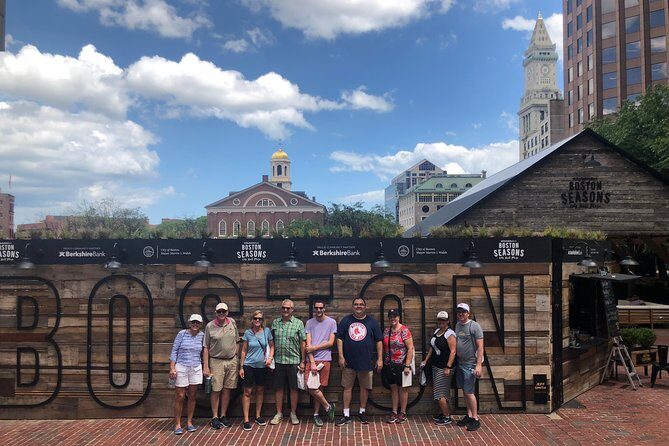
The tour begins at City Hall Plaza, right by Faneuil Hall’s orbit. You meet between Five Iron Golf and City Hall, in front of a seasonal beer garden, and next to a large BOSTON sign. There’s also a strong photo moment at the start with the Bill Russell statue nearby and Faneuil Hall watching over the background—handy when you want a clean before-you-walk memory.
From the start, the tour has a clear rhythm: you’re not just “visiting buildings,” you’re collecting clues. That matters because Boston’s Revolution story spans a compact area, and it’s easy to get lost if your guide only names landmarks without explaining why they mattered.
Practical tip: wear shoes that can handle city sidewalks for a few hours. This walk has enough stops that you’ll feel it in your legs, especially if you’re there on a windy day.
You can also read our reviews of more walking tours in Boston


The Freedom Trail in order: why this tour feels smarter than a straight line
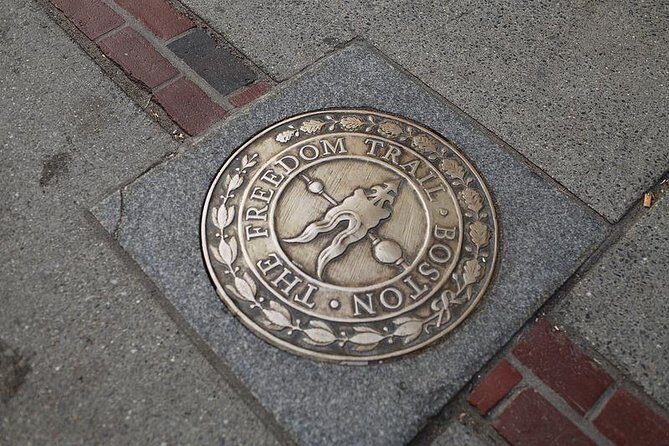
Most Freedom Trail experiences are basically follow-the-bricks. This one uses the bricks, but it also builds a storyline around them—so you’re walking the trail in the same order major Revolution events played out. That single shift changes the whole experience.
Instead of thinking of the Freedom Trail as a checklist, you start to connect cause and effect. One stop explains the next. One personality leads to the next argument. And when you veer away from the trail, it feels like you’re taking a necessary side street to get the full plot, not escaping the “main attraction.”
Also, the tour is built on a big chunk of the official Freedom Trail locations—enough to give you the coverage most visitors want, while still making room for other sites downtown that fill in the social and political background.
King’s Chapel Burying Ground and the first settlers you never met
Early in the walk, you’ll go to King’s Chapel Burying Ground, where the focus shifts to the first people who settled in Massachusetts Bay. Puritans show up here in a way that’s more than a quick mention. You get a sense of how early Boston attitudes shaped what came later—especially the tension between belief, authority, and civic life.
Next, you pass the first Anglican church in Boston. That stop is useful because it hints at Boston’s religious mix and the power structures behind them. Even if you’re not a “religion history” person, the point is practical: belief systems weren’t private matters back then. They were part of the public argument.
If you’re the kind of traveler who likes your history with real people behind it (not just famous names), this segment tends to land well.
Granary Burying Ground: where the Revolution gets human
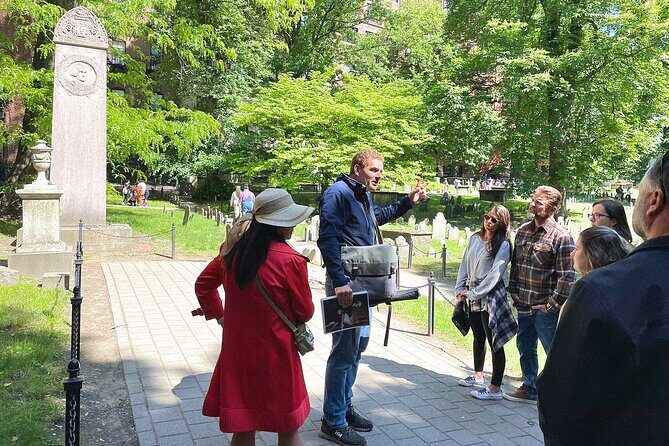
At Granary Burying Ground, the tour centers on the tombs of Paul Revere, John Hancock, and Sam Adams. This is where the story stops feeling abstract. Seeing where key figures are buried makes the Revolution feel less like a textbook chapter and more like a network of lives and choices.
This is also a good place to understand the “Sons of Liberty” idea beyond the catchphrase. You’re not only learning who they were. You’re also learning how the movement used public pressure and messaging to push Boston from complaint toward action.
Bonus: the tour’s pacing here gives you enough time to look around and absorb the names without feeling rushed.
City politics, democracy debates, and why architecture shows power
Two downtown stops help explain how Revolution-era power worked:
- Old City Hall: you get discussion tied to the obstacles to democracy, using the building as a visual reference point.
- Old State House: this is framed as the nerve center of Massachusetts politics, including the clash between British authority and American rights.
Then comes a familiar face: the Statue of Benjamin Franklin. The angle here isn’t just “Franklin was smart.” You learn about America’s first public school and his role as its famous pupil. That’s a subtle but important theme—Revolution thinking wasn’t only about taxes and guns. It was about education and who should have access to it.
Even if you only remember one thing from these stops, remember this: in Boston, politics was built into the streets and buildings.





Boston Massacre and the escalation trap
The tour also brings you to the Boston Massacre site, where tensions are explained through different roles: soldiers, citizens, loyalists, and patriot leaders. This matters because it gives you the full messy picture. Events like this are easy to turn into a single moral story. The tour pushes past that by showing how many groups were watching and reacting at the same time.
The payoff is that your brain starts to understand escalation as a process. It’s not just one moment. It’s pressure building—then exploding.
Old South Meeting House and the road to the Tea Party
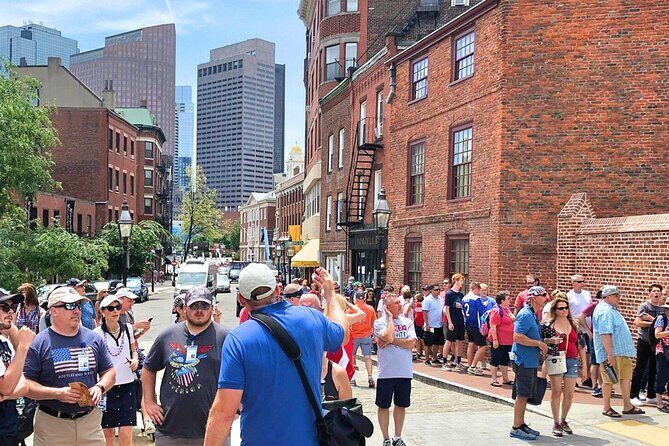
If you want one of the most dramatic segments of the walk, this is it. The tour heads to Old South Meeting House, where you learn that the Boston Tea Party starts there. The framing is blunt: once the argument turns into action, there’s no turning back.
Right around this stretch, you’ll also pass by a former publishing house connected to major American literary figures like Ralph Waldo Emerson, Henry Wadsworth Longfellow, and Nathaniel Hawthorne. This stop helps you see how ideas traveled through print and public discussion, not only through speeches in the streets.
Then the tour tracks you into the downtown flow with Post Office Square and the Financial District, where the message is simple: modern Boston grew up on top of the Revolution story. These aren’t filler stops. They’re there to show that Boston’s political muscle evolved, and the city still runs on civic argument and economic leverage.
Faneuil Hall, Quincy Market, and the moment a protest becomes a revolution

Faneuil Hall Marketplace gets its big treatment because it’s described as the cradle of liberty. You hear how it became a place where protest turned into revolution. This is one of those stops where it helps to stand still and imagine the crowd energy.
Then you have a break built in around Quincy Market. The warning here is practical: tourist traps are real. But a stop with food is also part of the value. You can refuel without losing the thread of the day.
Right after that, you walk through the Rose Fitzgerald Kennedy Greenway, and you’ll get time at North Square Park later too. These garden-and-square pauses are more than pretty spots. They give your legs a breather and let you reset mentally before the tour ramps up again toward the harbor.
Paul Revere House, North Square Park, and Old North Church’s big signal
The tour then shifts into Boston’s older residential feel with the Paul Revere House and nearby charm. You’ll also visit North Square Park, described as the oldest residential square in America. This is where the city stops being just a museum outdoor and starts behaving like a real neighborhood.
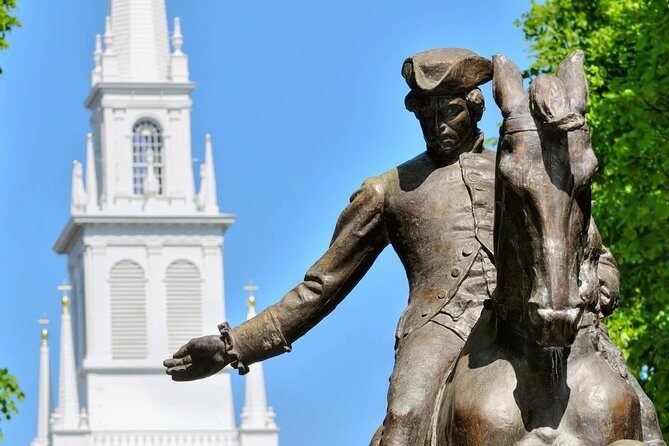
Next comes the Paul Revere statue photo moment, and then one of the best story payoff stops: Old North Church & Historic Site. Here, you connect Paul Revere’s midnight ride—the one if by land, two if by sea signal—with the “shot heard round the world” framing and the chaos that followed in Lexington and Concord.
It’s a lot of information for a small space, but the tour’s structure tries to keep it understandable. If you like your history chronological and connected, this portion tends to feel satisfying rather than overwhelming.
Charlestown and Bunker Hill: the story reaches its hard edge
After Old North, you get views from a nearby terrace area tied to a second older burial ground. You don’t go deep inside here, but the angle matters: from this viewpoint, you get the wider Boston harbor and Charlestown context. That helps you picture the geography that soldiers and messengers had to deal with.
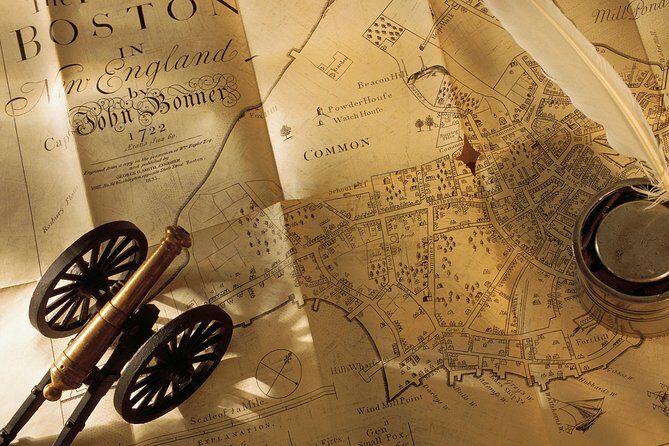
Then you reach Bunker Hill Monument, where you get a complete recreation of the Battle of Bunker Hill. This is also where visual teaching shows up in a helpful way. One guide example is a LEGO soldier style illustration used to map out the battle, which can make the action feel less like random names and more like a sequence of choices and outcomes.
A good rule: if you’re a visual learner, this is the stop where you’ll appreciate the props and maps most.
USS Constitution from across the harbor, then the finish line in the North End
The tour includes the USS Constitution angle too, but from across the harbor. You won’t be stepping into Revolution reenactment here; you’ll get an overview of its history and context, along with tips on how best to experience it on your own if you want to go further.
Then the walk opens into the North End, described as the oldest residential neighborhood in America. The plan is short and sweet here, giving you time for culture and food vibes without turning your history day into a full dining tour.
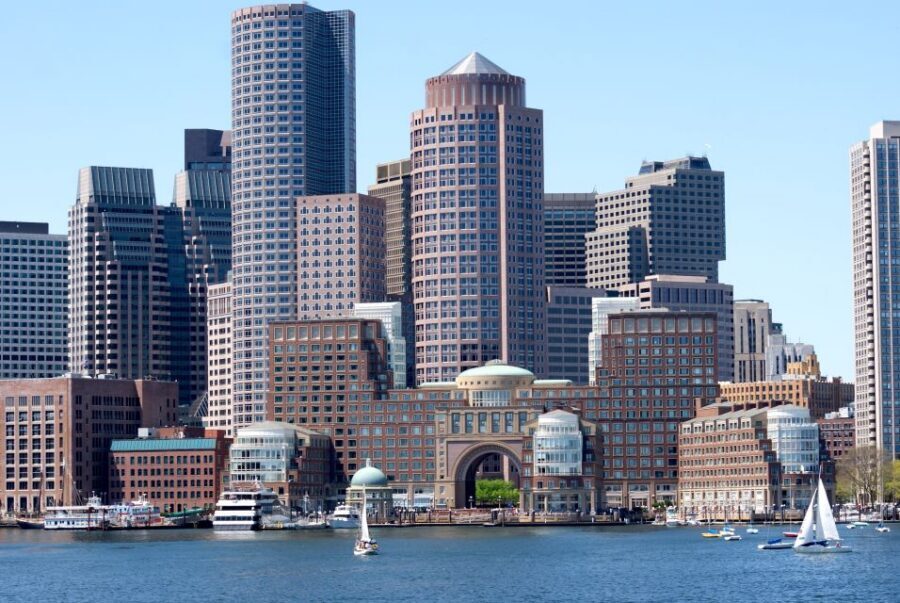
Finally, you reach the harbor: a Harbor Walk stretch for city views and sea air, then a longer Boston Harborwalk section with ocean breezes and skyline views from piers and wharfs. The tour ends at Lewis Wharf in the heart of Little Italy, where there are public restrooms and easy nearby public transit options, including being close to an Aquarium T-stop.
If you’ve been looking at stone and politics all afternoon, this ending works because it changes the sensory scene while keeping the story theme of pressure, resistance, and the city’s maritime energy.
Price and value: what $55 buys you on a history-heavy walking tour
At $55 per person for roughly 3 to 3.5 hours, the value comes from the format, not just the landmarks. You’re paying for:
- A guided narrative that links sites in sequence
- Small-group attention (maximum 15)
- A wide spread of stops, including core Freedom Trail moments plus extra sites downtown and in the North End
- Built-in breaks around major stops like Faneuil Hall and Quincy Market
- A finale on the waterfront, instead of ending abruptly in a random plaza
Also, most stops are outdoor or free to view, which keeps the experience from turning into “pay again for every site.” You get a lot of history per dollar because the tour’s cost is focused on storytelling time and route design.
One more value point: the tour is offered in English with a mobile ticket, which is useful if you’re trying to keep your phone handy and paper light.
Who should book this Boston Revolutionary story walk
This tour fits best if you want history that’s connected and explained. It’s ideal for:
- Adults who like their Revolution story more than a list of famous names
- Couples who want a single outing that covers downtown Revolution sites and adds neighborhood flavor
- Families with kids who can handle a history-focused walk that’s not a costumed show
It may not feel ideal if you want minimal walking or you need frequent indoor stops. The day is described as requiring moderate physical fitness, and it’s appropriate for all ages, but it’s not a kids-only event.
Should you book it
I’d book this tour if you want Boston’s Revolution story in a clear sequence, with enough extra stops to go beyond the usual Freedom Trail sweep. The small-group size, the storytelling style, and the mix of political turning points plus city context make it one of the more satisfying ways to spend half a day in Boston.
Skip it or choose a different plan if you know you struggle with long outdoor walks. Also, if you only want the single most famous landmarks with minimal explanation, you might find the story-heavy approach a bit intense.
FAQ
How long is the Boston Revolutionary story small-group walking tour?
It runs about 3 hours to 3 hours 30 minutes, depending on timing during the walk.
Where do you meet for the tour?
The meeting point is City Hall Plaza at City Hall Square, Boston, MA 02203. You meet between Five Iron Golf and City Hall, in front of the seasonal beer garden next to a large Boston sign.
Where does the tour end?
The tour ends at Lewis Wharf, Boston, MA 02110, in the North End area near Boston Harbor. It’s a short walk back to the original meeting area, and the finish point has public restrooms.
Is the tour only on the Freedom Trail?
No. The tour uses the Freedom Trail, but it also veers off to see other major and more local historical sites, plus modern Boston stops.
Does the tour include food?
There is a built-in break around Faneuil Hall and Quincy Market, and the tour includes a surprise tea party on Boston Harbor as part of the experience.
What’s the group size limit?
The tour has a maximum of 15 travelers, which helps keep it small-group and interactive.
Is this tour in English?
Yes, it is offered in English.
Is there any costume reenactment or theater?
No. The tour is described as not using costumes or reenactments. It’s focused on scholarship and helping you understand what happened.
Is museum entry included?
It does not include museum entry other than Faneuil Hall and Quincy Market.
Is the tour suitable for kids and service animals?
Children must be accompanied by an adult. It’s appropriate for all ages but not a kids version. Service animals are allowed, and the tour is near public transportation.