REVIEW · BOSTON
Boston Record Breakers: Self-Guided Scavenger Hunt
Book on Viator →Operated by Questo · Bookable on Viator
A Boston history game without Wi‑Fi. This scavenger hunt stays offline in the Questo app, and it’s self-paced so you control the walking pace and stop time. You’ll solve clue challenges while moving between major Boston landmarks, from the Boston Public Library area down toward a classic final meal at the Union Oyster House.
I like the format because it’s private and has no human guide in your face. That means fewer crowd shoulder-checks and no waiting around for the next group to catch up—just your phone, your group, and a clear set of “go here, find this” prompts.
The only real catch is that a few clues can feel a touch unclear, so if you hate guessing, you’ll want patience and good looking-around skills (especially around Park Street and the Union Oyster House end).
In This Review
- Key Things to Know Before You Start
- Offline Boston Scavenger Hunting That Actually Fits Your Day
- Boston Public Library Central Library: Starting at a Real First
- Copley Square: Where Art Square Became a Landmark Area
- Arlington Street Church: A Unitarian Universalist Church With a London-Style Look
- Ether Monument (The Good Samaritan): A Fountain That Marks Anesthesia History
- Massachusetts State House: Politics, Architecture, and the 1798 Build
- Memorial to Robert Gould Shaw and the Massachusetts 54th: Courage in Bronze Relief
- Park Street: A Street With Journalist Energy
- Tremont Temple: A 19th-Century Church Rebuilt After Fire Damage
- Alexander Graham Bell Connection: 1876 and a BU-Era Photo Moment
- The Tavern (Since 1795): Printers, Politicians, Sailors, Students
- Union Oyster House Finish: America’s Oldest Restaurant, On the Freedom Trail
- Price and Value: Is $5.99 Worth It?
- Best Fit: Who Will Enjoy This Hunt Most?
- Should You Book This Boston Scavenger Hunt?
- FAQ
- How long does the Boston Record Breakers scavenger hunt take?
- Can I play this game without an internet connection?
- Where does the hunt start and end?
- Is there a physical guide with you during the hunt?
- Can I start the hunt at any time?
- What language is the experience offered in?
- Is it private or shared with other groups?
- Are service animals allowed?
- How flexible is cancellation?
Key Things to Know Before You Start
- Works fully offline so your plans don’t depend on cell service
- Private, no-contact experience designed to keep you away from crowds
- Flexible timing with the ability to pause and resume later
- A smart landmark route through Boston’s most story-heavy central neighborhoods
- An easy finish for food at the Union Oyster House at the end point
- Low price, but clue clarity varies—go in ready to read carefully and explore
Offline Boston Scavenger Hunting That Actually Fits Your Day
Boston Record Breakers is a self-guided scavenger hunt built for people who want a fun walk through “real Boston” without locking into a fixed group schedule. For $5.99 per person, you’re buying a mobile game that takes about 1 hour 20 minutes (approx.), with the ability to start at any time and take breaks whenever you want.
This is also offered in English, and it’s set up to run without an internet connection. That matters in Boston, where you might lose service between neighborhoods, in street canyons, or just because you’re out all day and your battery is already begging for mercy.
The other practical win: it’s a private activity, meaning only your group plays. You’ll be following instructions inside the app to get from stop to stop—no guide meetings, no group huddles, and less chance of getting slowed down by waiting for other people.
You can also read our reviews of more guided tours in Boston



Boston Public Library Central Library: Starting at a Real First
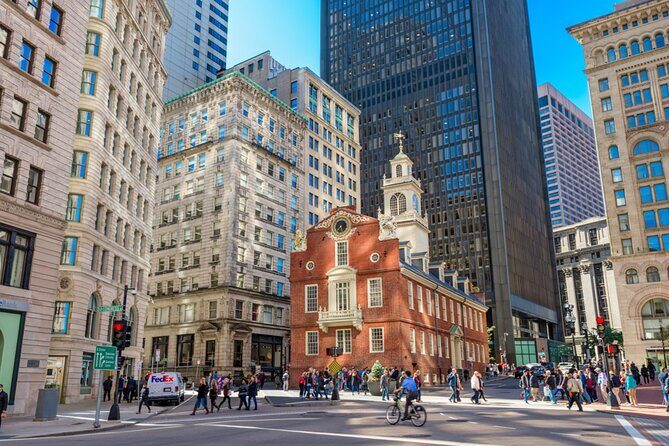
Your game starts at the Boston Public Library – Central Library, 700 Boylston St. This is a big-deal start because the library’s role in American public life is right in the facts: it was established in 1848 and was the first large free municipal library in the United States. It was also the first public library to lend books and the first to have a branch library and a children’s room.
For the game, you’ll be looking around to find answers that help you advance to the next location. That turns the library from “pretty building” into an active stop: you’re not just walking past. You’ll likely spend a few minutes studying details nearby so the clue makes sense.
Tip for enjoying this start: give yourself extra time to read the clue prompt before you hunt. If you rush, the library can feel overwhelming because it’s a whole complex, not one single spot.
Copley Square: Where Art Square Became a Landmark Area
Next up is Copley Square, in Boston’s Back Bay neighborhood. It’s named for painter John Singleton Copley, and before 1883 it was known as Art Square because of the many cultural institutions in the area (some of which remain today).
In the hunt, you’ll scan the square to find the clue answer and move on. This is one of those stops where Boston’s city-planning choices do a lot of the work for you: Copley Square is open enough that you can see what you’re looking for without feeling stuck in a narrow side street.
One practical note: squares can be breezy and busy depending on the day. Since this is a private, offline game, you don’t need to fight for attention—just take your time and keep moving at your own pace.
Arlington Street Church: A Unitarian Universalist Church With a London-Style Look
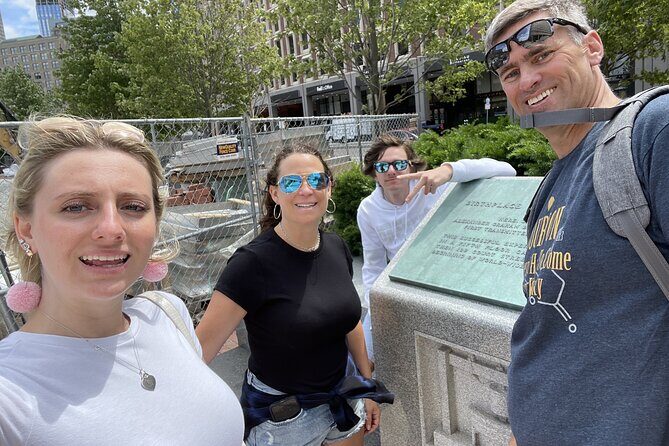
Across from the Public Garden, you’ll hit the Arlington Street Church. It’s a Unitarian Universalist church, completed in 1861, and it’s considered historically important in Unitarian and Unitarian Universalist circles. The game includes details about the building’s design too: architects Arthur Gilman and Gridley James Fox Bryant made it resemble James Gibbs’ St. Martin-in-the-Fields in London.
Because the game asks you to look around, this stop works best when you treat it like a “slow down and observe” moment. Instead of racing toward the next landmark, you pause to match what you see with the story you’re being given.
Why I like this kind of stop: it helps you notice Boston’s mix of international influence and local identity. Even if you’ve seen churches before, the London comparison is a useful mental hook.
Ether Monument (The Good Samaritan): A Fountain That Marks Anesthesia History
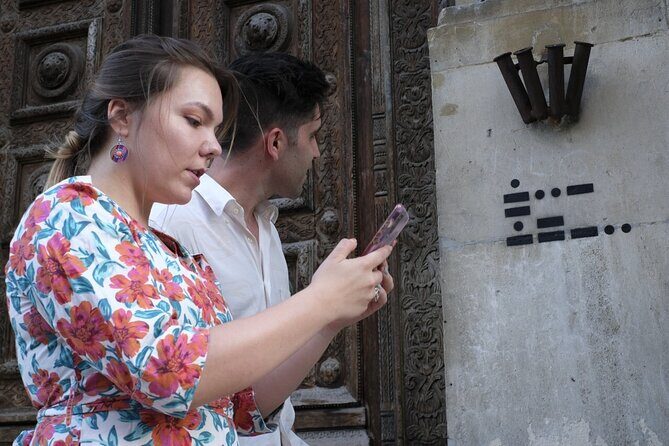
Right near the northwest corner of the Boston Public Garden, the hunt sends you to the Ether Monument, also known as The Good Samaritan. It commemorates ether’s role in anesthesia, and it’s described as the oldest monument in the public garden.
The facts included in the game are specific and memorable: the monument is 40 feet (12 m) tall, and it’s tied to Boston architect William Robert Ware and sculptor John Quincy Adams Ward (as attributed by the monument’s design history).
In practice, monuments are great for scavenger hunts because they’re fixed points. You can stand there, take a minute, and let the clue guide you through the details without feeling like you’re searching through dozens of similar buildings.
You can also read our reviews of more tours and experiences in Boston





Massachusetts State House: Politics, Architecture, and the 1798 Build
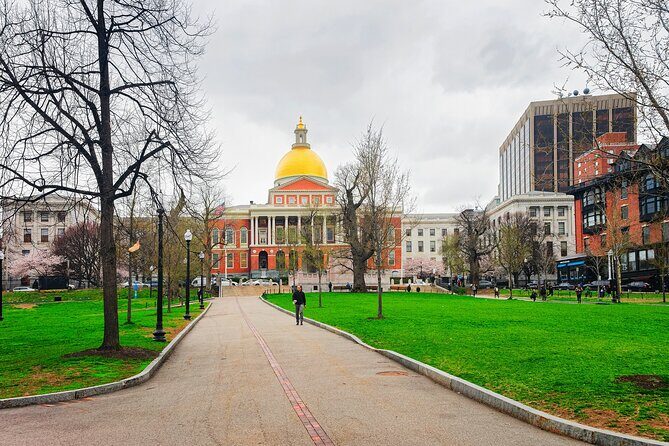
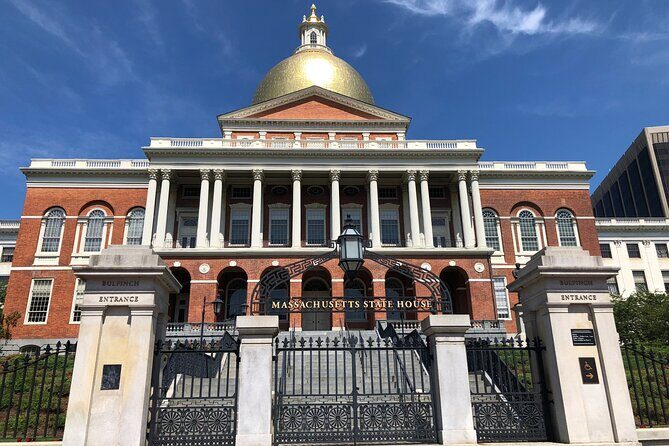
Then you’ll move into Beacon Hill territory for the Massachusetts State House, the seat of government for the Commonwealth of Massachusetts. The building houses the Massachusetts General Court (the state legislature) and the Governor’s offices.
This stop gives you a concrete architecture story: designed by Charles Bulfinch, completed in January 1798 at a cost of $133,333—more than five times the budget—and later enlarged repeatedly.
The game’s instructions again ask you to look around for the answer. That’s exactly what makes this a good match for an offline clue hunt: a landmark like the State House gives you readable shapes, inscriptions, and building features to compare against the clue.
Memorial to Robert Gould Shaw and the Massachusetts 54th: Courage in Bronze Relief
Opposite 24 Beacon Street, you’ll find the memorial relief dedicated to Robert Gould Shaw and the Massachusetts Fifty-Ffourth Regiment. It’s a bronze relief sculpture by Augustus Saint-Gaudens. The memorial depicts Shaw leading members of the 54th Regiment as they marched down Beacon Street on May 28, 1863 to depart the city and fight in the South.
This stop also carries a major “why it matters” detail included in the game: it’s described as the first civic monument to pay homage to the heroism of African American soldiers.
As a scavenger hunt moment, it’s powerful but also practical. You can get close, read the forms, and take your time—no tricky interiors required based on the information provided.
Park Street: A Street With Journalist Energy
You’ll then pass Park Street, which was laid out in 1804, originally as Park Place. It replaced Sentry Street, and the hunt connects this street to publishing and Boston’s business life.
Two clue-relevant historical notes are included: in the 1880s, the feminist Woman’s Journal was published on Park Street, and Houghton Mifflin was headquartered here beginning in the late 19th century.
Park Street can be an easy “walk-through” area, so here’s how to make it worth your attention: slow down for the clue. Treat the street like a timeline. You’re looking for a specific answer, but the payoff is you understand that this isn’t just a road—it’s a slice of Boston’s communications history.
Tremont Temple: A 19th-Century Church Rebuilt After Fire Damage
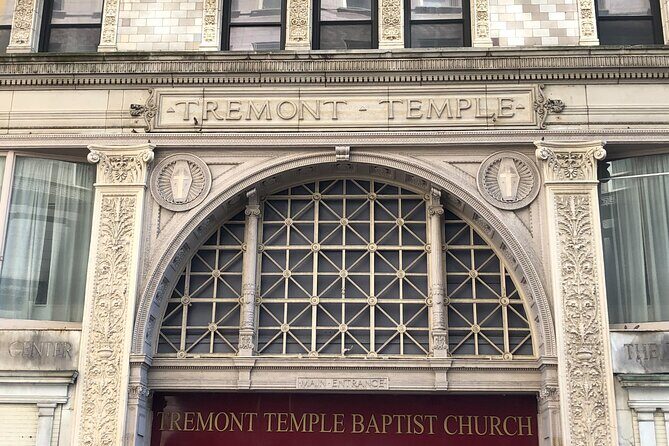
At 88 Tremont Street, the hunt heads to Tremont Temple. It’s a Baptist church affiliated with the American Baptist Churches, USA. The existing multi-storey structure was designed by architect Clarence Blackall of Boston and opened in May 1896.
The information included in the game also explains why this building matters in a practical way: it replaced a much smaller 1827 structure that had repeatedly suffered damage from fires.
This is a stop where the “why” makes the “what” more interesting. As you look around for your clue answer, keep in mind that this building represents rebuilding and persistence, not just architecture for architecture’s sake.
Alexander Graham Bell Connection: 1876 and a BU-Era Photo Moment
Another fun detour is the site tied to Alexander Graham Bell, specifically noted as a BU professor from 1874 to 1879. The game facts say he invented the telephone in 1876 after research on transmitting speech was funded by BU.
You’ll also be directed to an appearance of Bell connected to a 1916 BU reception marking the 40th anniversary of his invention.
Because Bell’s story is technology-heavy, using him inside a street-level scavenger hunt can be surprisingly effective. You’re not reading a textbook timeline; you’re seeing how Boston marked his legacy in the built environment.
The Tavern (Since 1795): Printers, Politicians, Sailors, Students
The hunt then points you to The Tavern, described as a gathering place that has been around since 1795. It became popular with printers and politicians, plus sailors and students, and it quickly became the most famous alehouse in the city.
As a clue stop, this is where the hunt feels most like a “wander and discover” experience. The landmark isn’t just about a single historical event—it’s about what kinds of people filled the room.
If you’re the kind of traveler who likes to build a picture of everyday life, you’ll probably enjoy this one more than you expect. Boston’s “big stories” are right there, but so is the human rhythm of the city.
Union Oyster House Finish: America’s Oldest Restaurant, On the Freedom Trail
The end of the game is Union Oyster House, 41 Union St. The restaurant is on the Freedom Trail near Faneuil Hall, and it holds the distinction of being America’s oldest restaurant—with the building dating back to Pre-Revolutionary days.
The included facts go even further: it started serving food in 1826 and has continued ever since, and the stalls and oyster bar are described as being in their original positions. Daniel Webster is noted as a constant customer.
This final stop is a smart way to end a scavenger hunt because it gives you something immediate to do when the game ends: eat. After walking and reading clues, you don’t want to wander another mile just to find a meal.
Small consideration: this is also an easy place to get “stuck” if the clue expects you to look for a very specific detail. Plan to take an extra minute to read the app prompt carefully so you don’t feel rushed at the finish line.
Price and Value: Is $5.99 Worth It?
At $5.99 per person, Boston Record Breakers is priced like a budget activity—and that’s exactly how you should think about it. You’re not paying for a guide’s narration or curated museum-like interpretation. You’re paying for a self-paced way to connect Boston’s major landmarks with mini-challenges that keep you moving.
Here’s the value math that makes sense for real trips:
- Offline play helps you avoid “vacation dead zones,” which can make cheaper digital activities frustrating.
- Private, no-contact format can be a big deal if you dislike crowd energy or want flexibility.
- Start any hour and pause/resume means it can fit around your day, not the other way around.
The one caution is clue clarity. If you’re hoping for perfect, clever puzzle design at every stop, you may feel like a couple of moments ask you to guess a bit more than you want. Still, if you’re comfortable with scanning and taking your time, this remains good value for a low-cost Boston walk.
Best Fit: Who Will Enjoy This Hunt Most?
This hunt fits best if you:
- want an easy, self-paced way to see central Boston landmarks
- like short bursts of “look around” problem-solving
- prefer private activities over crowded group tours
- want something that can be done in about 1 hour 20 minutes without committing to a long day
It may be less ideal if you want a purely guided experience with clear step-by-step instruction the whole way, or if puzzles and clue-finding genuinely stress you out.
Should You Book This Boston Scavenger Hunt?
I’d book Boston Record Breakers if you want a low-cost, low-pressure way to turn a walk through Boston’s core sights into an active mini-adventure—especially because it works offline and stays private.
I’d think twice if you only enjoy puzzles when every clue feels crystal clear, with zero ambiguity. But if you’re the kind of traveler who likes to slow down, read the environment, and learn as you go, this is a fun match.
If you’re planning ahead, note that it’s often booked about 6 days in advance, so grabbing your time window sooner can help.
FAQ
How long does the Boston Record Breakers scavenger hunt take?
It’s listed at about 1 hour 20 minutes (approx.).
Can I play this game without an internet connection?
Yes. You don’t need an internet connection to play the city game.
Where does the hunt start and end?
It starts at Boston Public Library – Central Library, 700 Boylston St, Boston, MA 02116 and ends at Union Oyster House, 41 Union St, Boston, MA 02108.
Is there a physical guide with you during the hunt?
No. This is a private, self-guided experience with no physical tour guide.
Can I start the hunt at any time?
Yes. You can start at any hour, and you can take a break and resume later.
What language is the experience offered in?
It’s offered in English.
Is it private or shared with other groups?
It’s private. Only your group will participate.
Are service animals allowed?
Yes, service animals are allowed.
How flexible is cancellation?
You can cancel for a full refund if you cancel up to 24 hours in advance of the experience start time.