REVIEW · BOSTON
Boston’s Freedom Trail: A Revolutionary Walking Tour
Book on Viator →Operated by Boston History Company · Bookable on Viator
Boston’s Revolution starts with a few steps.
I like how this 2.5-hour walk turns famous names into living characters, and I love that you check off all 16 official Freedom Trail sites in one go. Guides like Noah and Kenny can keep even tough-to-please ages locked in, but one thing to weigh is the pace: some parts move quickly, especially on and off cemetery ground.
You begin at Boston Common’s edge at The Embrace (near the visitor center), then wind through government, abolition, publishing, and street-level violence—down to the North End. If you’re the type who likes to understand why a place matters, not just where it is, this is a strong way to get your bearings fast.
In This Review
- Quick hits before you go
- Meeting at The Embrace: start where Boston changed
- Massachusetts State House and abolition-era sermons that hit hard
- A 1660 burying ground and the Patriots you’ll recognize by sight
- The Tea Party start: Puritan meeting house to protest planning
- Ticknor & Fields and the Old State House: power after the printing press
- Bloody Massacre marker and Faneuil Hall’s Cradle of Liberty
- Oldest house in Boston: the Revere Family base
- Old North Church and the lantern signal before Revolution
- Copp’s Hill: Bunker Hill battlefield ground and the obelisk
- The payoff at Copp’s Hill Terrace: USS Constitution and the view line
- Price, group size, and why $31 can make sense
- Pacing, hearing, and comfort on a heavy walking route
- Who should book this Freedom Trail walk
- Should you book the Boston Freedom Trail Revolutionary Walking Tour?
- FAQ
- How long is the Freedom Trail walking tour?
- What does the tour cost?
- Where does the tour start and where does it end?
- What language is the tour offered in?
- Do I need printed tickets?
- Is the tour too much walking?
- How big are the groups?
- What happens if weather is bad?
- Are service animals allowed?
Quick hits before you go
- 16 Freedom Trail sites in one organized walk so you don’t have to plan or hop between tickets
- Story-forward guidance that connects events (Tea Party, Bloody Massacre, Paul Revere signals) to real streets and buildings
- A small-group feel with a cap of 25 people and a tour duration of about 2 hours 30 minutes
- Start and end in great spots: Boston Common area to Copp’s Hill Terrace with views toward Bunker Hill and the USS Constitution
- Modern ticket, old-school walking with a mobile ticket but a moderate fitness level required
Meeting at The Embrace: start where Boston changed
The tour begins at The Embrace at 139 Tremont Street, right by the Boston Common Visitor Information Center. That matters more than it sounds. Boston’s story is often told like a straight line, but starting at a memorial tied to the civil-rights era reminds you this city kept arguing with power long after the Revolution.
From there, you’re close enough to transit and foot traffic that you can arrive without stress. And because the tour is designed to cover a lot of ground in a short time, this early positioning helps: you’re not hunting for the meeting point while everyone else is already moving.
You can also read our reviews of more walking tours in Boston


Massachusetts State House and abolition-era sermons that hit hard

The first big “watch your step” moment comes soon: you’ll see the Massachusetts State House with its golden dome. Your guide will connect its role as the seat of state government to the way revolutionary leaders shaped the early republic—Samuel Adams laying the cornerstone in 1795 is part of that story.
Then the walk shifts into moral conflict. You’ll stop at a red brick church built in 1809 where abolitionists gathered. This isn’t a generic “slavery was bad” stop. The focus is on the speeches and the idea that public persuasion was a political weapon. Even if you’ve read about abolition before, hearing how the talk worked in real rooms makes it feel immediate.
One practical note: this is downtown, so expect steady sidewalk walking. Bring comfortable shoes and plan for a lot of short segments rather than long rests.
A 1660 burying ground and the Patriots you’ll recognize by sight
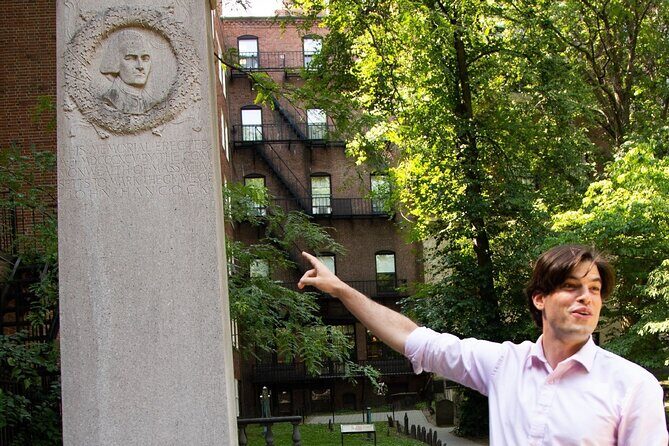
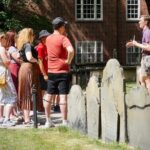
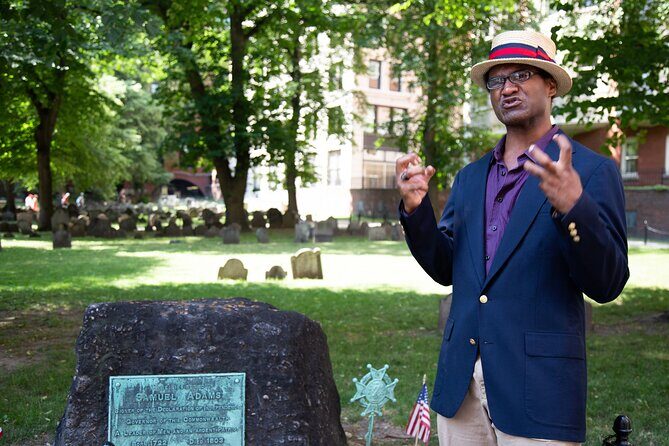
Next you’ll head into a graveyard dating to 1660, where you’ll learn stories tied to major figures like John Hancock, Paul Revere, and Samuel Adams. This kind of stop is a great reason to book a guided walk. On your own, a cemetery can feel like a quiet maze of names. With a guide, it becomes a map of who mattered and why.
This is also one place where pace can feel different. Cemetery ground can slow people down, and if you’re moving through with a group, you may hear most comfortably when you’re not trying to stop for photos every few steps. If you use a walking stick, consider going in with the mindset that you might need a slower moment or two to catch up—some guests have said this walk can feel rapid when the group tightens up.
After that, you’ll visit the first Anglican Church in Boston, built in 1754. The guide will talk about construction, the burying ground next to it, and crypts beneath. It’s the kind of detail you’d miss if you just glance at a building from the street.
The Tea Party start: Puritan meeting house to protest planning

A Puritan meeting house built in 1729 is one of the key “wait, this really started here” stops. This is where the Boston Tea Party began. The value here isn’t just the famous date—it’s understanding how dissent was organized, not just that it happened.
From a traveler’s perspective, this stop helps you see the Revolution as a process, not a single dramatic night. You’ll get context that ties everyday religious and civic spaces to political actions. That makes the later talk about mobs, militias, and signals feel less random and more like a chain of choices.
Ticknor & Fields and the Old State House: power after the printing press
You’ll pass a 1718 brick building that started as a colonial apothecary and later became the publishing house Ticknor & Fields. This is a smart mid-tour pivot. The Revolution gets told as war and riots, but ideas spread through print and publishing too. Seeing this stops you from thinking that “history” only happens on battlefields.
Then comes the Old State House with its symbols of Great Britain—a lion and a unicorn—plus the story of how it served as the center of British government in Massachusetts. You’ll hear about speeches and confrontations happening inside. For me, the takeaway is simple: architecture and politics aren’t separate in Boston. Government got literally built into the city’s most important corners.






Bloody Massacre marker and Faneuil Hall’s Cradle of Liberty
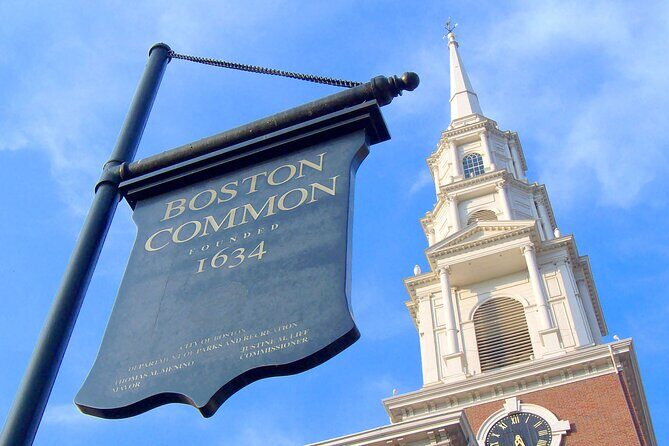
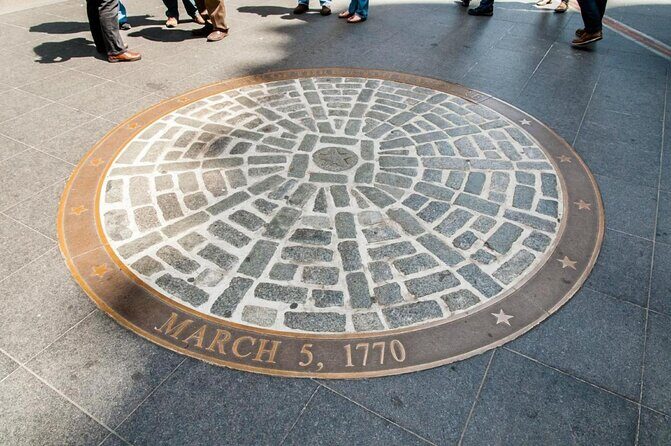
At the next stop, you’ll find a circular marker of stones tied to the Bloody Massacre of 1770. Guides typically give a moment-by-moment account of what unfolded the night redcoat musket fire left five colonists dead. This is heavy material, but it’s also a turning point that explains why tensions didn’t cool after earlier protests.
Then you’ll reach Faneuil Hall, known as the Cradle of Liberty. Even if you’ve heard that line before, the guided explanation helps you understand why a meeting hall became a magnet for political energy. Speeches delivered from within mattered because the city treated public gathering as part of governing.
Sound can make or break this portion. A few guests have said it can be hard to hear if the guide isn’t facing everyone or if the speaker volume is low. If you want the best audio, position yourself where you’re not behind people’s shoulders, and don’t assume you’ll catch every word from the back.
Oldest house in Boston: the Revere Family base

One of the more fun stops is the Revere-related home, the oldest building in Boston from about 1680 and once home to the Revere family. The guide will describe how Paul Revere lived there with his family and how this is tied to the larger events of American history.
This stop works especially well if you like the human side of famous men. It’s easier to picture a signal, a ride, or a plan when you’ve seen the place where the person actually moved through daily life.
Also, it’s a nice reset in the walk. Before you hit the most dramatic signal and battle geography, you get a calmer, more personal scene.
Old North Church and the lantern signal before Revolution
The tour takes you to Old North Church, built in 1723. This is where the famous signal happened: two lanterns shone from the steeple on the eve of the Revolution—one if by land, two if by sea, as the famous signal goes. You’ll hear how the signal was arranged by Paul Revere and why it mattered.
This stop is a turning point for the whole walk. The earlier sites show how conflict built through protests and governance. Here, you get a plan in motion. It’s one of the best examples of how Boston wasn’t just a location—it was a communications hub.
If you’re visiting in construction-heavy periods or when the Freedom Trail is crowded, guides tend to manage group flow so you can still see what you need and hear the explanation. It’s not always perfect, but the structure of the tour helps.
Copp’s Hill: Bunker Hill battlefield ground and the obelisk
Then you shift to the Bunker Hill area by walking through Copp’s Hill geography. You’ll stop at burying ground dating to 1660 that also served as the site of British cannon emplacements during the battle. The guide will connect what you’re looking at to what happened during the fight.
After that, you’ll view a 221-foot obelisk from the Copp’s Hill Terrace area. The monument marks where colonial militia defended hastily made earthworks and repelled two redcoat charges before retreating.
From a value standpoint, this part is great because you don’t just hear “battle happened.” You see how terrain and defense work. Even if you’re not a military-history person, it’s easier to understand the stakes when you’re looking at the ground as part of the story.
The payoff at Copp’s Hill Terrace: USS Constitution and the view line
The tour ends at Copp’s Hill Terrace in the North End, with views that pull you forward to other landmarks. From the ending spot, you can see toward the Bunker Hill Monument and the USS Constitution, the famous ship often called Old Ironsides.
That ending is more than a nice photo moment. It gives you a clean “what next” path. If you want to keep going, you’ve got a natural next stop right from where you finish. If you’re done for the day, you still get a real visual payoff for the walking effort.
Price, group size, and why $31 can make sense
The price is $31 per person, for about 2 hours 30 minutes. That’s not a bargain price in the sense of a free city walk. But for what you’re getting—16 official Freedom Trail sites plus guided storytelling—it often lands as good value, especially for first-time visitors.
A few practical reasons it adds up:
- Your guide helps you connect buildings to events without you needing to download a dozen maps or apps.
- The walk is built to maximize time. You’re not doubling back as much as you would on your own.
- Groups are capped at 25, which usually keeps the experience from turning into a noisy stampede.
Also, average booking is about 12 days in advance, which tells me this tour isn’t just for spontaneous wanderers. If you’re traveling during peak season or on a weekend, I’d book earlier rather than hoping for an open slot.
Pacing, hearing, and comfort on a heavy walking route
This is not a stroller-friendly stroll. You should plan for a moderate physical fitness level and a lot of walking in a short window. Even with short segments between major stops, you’ll likely cover several miles by the time you reach Copp’s Hill Terrace.
The good news: many guides work to keep movement moving, with frequent “information on each stop” so you’re not just dragging yourself from landmark to landmark. The less-good news: cemetery time and group flow can make the tour feel quicker than you expect, especially for anyone with mobility limitations.
Two small comfort tips that matter:
- Wear shoes you trust. The Freedom Trail is mostly outdoors and you’ll be on sidewalks and terrain that can get slick.
- If you care about hearing every word, stand where the guide can face you. A louder speaker would help, but your position still makes a difference.
Even when conditions are tough—rain, crowds, construction—the structure of the tour generally keeps it moving.
Who should book this Freedom Trail walk
This tour is a strong fit if you:
- Want the big-picture Revolution story without doing all the research yourself
- Like a guide who can explain why events happened where they did
- Are visiting Boston for the first time and want to hit the core without planning like a part-time historian
- Enjoy learning through characters: Revere, Hancock, Adams, and the less-famous people who shaped the arguments and actions
It’s also a decent option for couples and small families, especially if you want a shared storyline that holds attention.
If you dislike fast pacing or you need lots of quiet stops, you might find the route demanding. You can still do it, but I’d go in expecting a busy walk and plan accordingly.
Should you book the Boston Freedom Trail Revolutionary Walking Tour?
I think you should book it if you want a one-shot way to understand Boston’s Revolutionary-era turning points—Tea Party planning, political showdowns, the Bloody Massacre, liberty speeches at Faneuil Hall, and the signal and battle geography around Copp’s Hill. The format is built for first-timers, and the end view toward the USS Constitution gives you a satisfying finish.
Skip it only if your top priority is a slow, leisurely wander with lots of independent time at each site. This tour is about momentum, not lingering.
If you’re on the fence, here’s my simple decision rule: if you’d rather have a guide map the story for you than piece it together yourself, this is a smart use of your time in Boston.
FAQ
How long is the Freedom Trail walking tour?
It runs for about 2 hours 30 minutes.
What does the tour cost?
The price is $31.00 per person.
Where does the tour start and where does it end?
It starts at The Embrace, 139 Tremont Street, Boston, MA 02108, and ends at Copp’s Hill Terrace, 520 Commercial St area in Boston, MA 02109 (the end address listed is 7 Jackson Ave, Boston, MA 02113).
What language is the tour offered in?
The tour is offered in English.
Do I need printed tickets?
No. The tour uses a mobile ticket.
Is the tour too much walking?
You should have a moderate physical fitness level. It involves a significant walking route and some cemetery time.
How big are the groups?
The tour has a maximum of 25 travelers.
What happens if weather is bad?
This experience requires good weather. If it’s canceled due to poor weather, you’ll be offered a different date or a full refund.
Are service animals allowed?
Yes, service animals are allowed.