REVIEW · BOSTON
The Freedom Trail and a whole lot more 3 hour Boston walking tour
Book on Viator →Operated by Boston Sightseeing Tours · Bookable on Viator
Brick by brick, Boston reveals its arguments.
This 3-hour Freedom Trail and More walk is a smart way to get the full story at a human pace, with restroom and snack breaks built in. I also like that the tour goes past the usual half-trail stops, reaching from Boston Common all the way to Copp’s Hill. The one tradeoff: the timing at each stop is short, so you should expect lots of looking from the sidewalk and excellent storytelling, not long inside visits.
I love how the route mixes famous Revolutionary landmarks with other moments that shaped Boston and the U.S., including the Embrace memorial for Martin Luther King Jr. and Coretta Scott King and the Holocaust memorial at Faneuil Hall Marketplace. The guide leads without costumes, so the tone stays grounded, and it still feels fun. If you’re the type who wants constant time in museums, this might feel brisk—but for most people, it’s a great first tour.
In This Review
- Key highlights you’ll feel right away
- Why this Freedom Trail and More tour is worth your $39.95
- Start in the Theatre District, finish in the North End
- A tour that strings together Boston’s turning points
- The Embrace memorial to Boston Common: protest’s modern echo
- Massachusetts State House: Federal architecture and real governance
- Granary Burying Ground and the people behind the Revolution
- The Shaw Memorial and Civil War memory in downtown Boston
- The Boston Latin School site and the Tea Party beginnings
- Old Corner Bookstore: print culture as a weapon
- Irish famine sculpture: immigration, hardship, and adaptation
- Old State House and the Boston Massacre site: tension made visible
- Faneuil Hall Marketplace to Haymarket: protest meets everyday life
- North End highlights: Paul Revere House and Old North Church
- Copp’s Hill and final viewpoints: Bunker Hill and USS Constitution
- What the guide does to keep it fun (and not exhausting)
- Practical value: what’s included and what you should plan
- Price breakdown: why $39.95 makes sense for a first Boston Freedom Trail day
- When weather is bad, know how the tour responds
- Should you book this Freedom Trail and More tour?
- FAQ
- How long is the Freedom Trail and a whole lot more tour?
- How much does the tour cost?
- Where does the tour start and where does it end?
- Is it a mobile ticket tour?
- What stops are included beyond the main Freedom Trail sites?
- Is there a restroom or snack break?
- Is the tour suitable for families or all ages?
- What happens if the weather is poor?
Key highlights you’ll feel right away
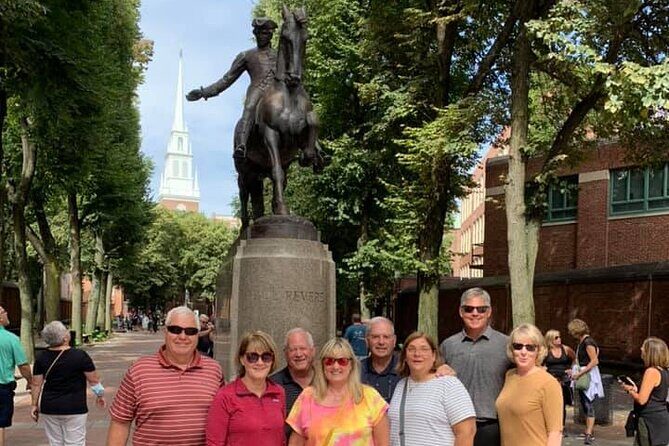
- Covers the full Freedom Trail arc (16 Freedom Trail sites), not just a partial sampler
- Includes extra stops like the Old Corner Bookstore, Old State House, Haymarket, and major nearby viewpoints
- Short, energetic pacing for a 3-hour outing that stays engaging for all ages
- Built-in comfort with a restroom and snack break
- Local, story-first guiding style that keeps the group on track and checks in
Why this Freedom Trail and More tour is worth your $39.95
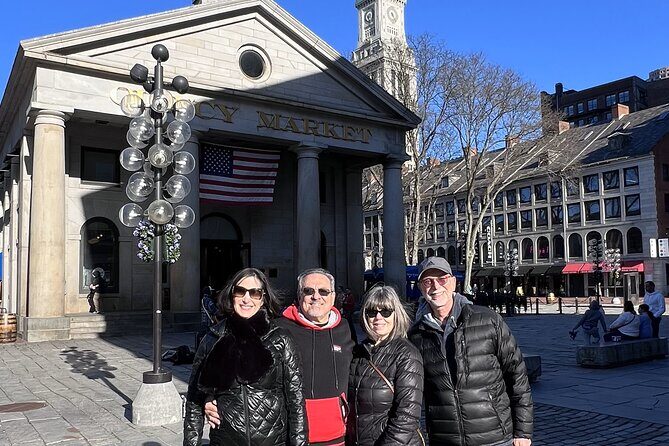
At $39.95 per person for about three hours, this is priced like a midrange guided walking tour. The value comes from two things: you don’t have to research every stop yourself, and you’re not paying for only a half-route.
Many Freedom Trail tours stop once they’ve hit the biggest names and call it a day. This one keeps going long enough to connect the dots from the earliest protest ground around Boston Common through North End icons and up to Copp’s Hill. The result is a route that feels like a complete walk-through of Boston’s role in conflict, argument, and change.
You also get extra cultural stops that don’t always show up on the standard Freedom Trail circuit. That matters because Boston wasn’t only one moment in the 1700s. You see how different communities, wars, and social movements left traces in streets, buildings, and memorials.
You can also read our reviews of more walking tours in Boston


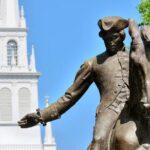
Start in the Theatre District, finish in the North End
The tour starts at 139 Tremont St. That’s a very workable location because you’re near a cluster of transit options and central hotels. The walk ends at Copp’s Hill Terrace, 520 Commercial St, around 1:15 PM, with the North End right there for your next meal.
This ending point is practical. From Copp’s Hill Terrace, you’re set up for two extra “bonus” views across the water: Bunker Hill Monument and USS Constitution (Old Ironsides) via a short walk across the bridge area. Even if you do nothing else, finishing near the North End is a smart move because you can eat without having to figure out a new commute.
A tour that strings together Boston’s turning points
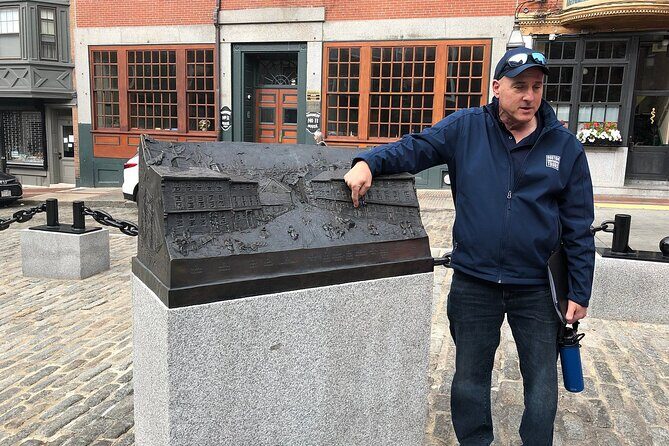
The backbone is the Freedom Trail brick path, connecting historic sites in a direct line. The tour uses that trail, but it also adds detours and extra stops so the story doesn’t feel like a checklist.
Here’s how the “more” shows up, in plain terms: you get Revolutionary-era flashpoints, yes. But you also get memorials and civic landmarks that explain who was affected and how Boston kept talking back—long before and long after 1776.
And unlike some theatrical tours, this one doesn’t lean on costumes. That keeps the tone readable and helps you take the details seriously without feeling like you’re stuck in a history lecture.
The Embrace memorial to Boston Common: protest’s modern echo
You begin at The Embrace, a striking memorial honoring Rev. Dr. Martin Luther King Jr. and Coretta Scott King. Starting here changes the way you read everything that follows. Instead of treating the Revolution as a sealed-off past, you notice how Boston’s civic energy keeps resurfacing.
From there, the route moves to Boston Common, founded in 1634 as the oldest public park in the United States. Beyond the park itself, the stop matters because it’s a gathering place in the literal sense—events happen there, and political arguments have long played out in public space. The tour also notes Boston Common’s connection to the oldest subway station in the Western Hemisphere, which is a neat reminder that Boston’s public infrastructure has always carried history with it.
If you’re walking early in the day, Boston Common is also a friendly place to get your bearings. Even a quick stop feels like a reset before the denser downtown streets.
Massachusetts State House: Federal architecture and real governance
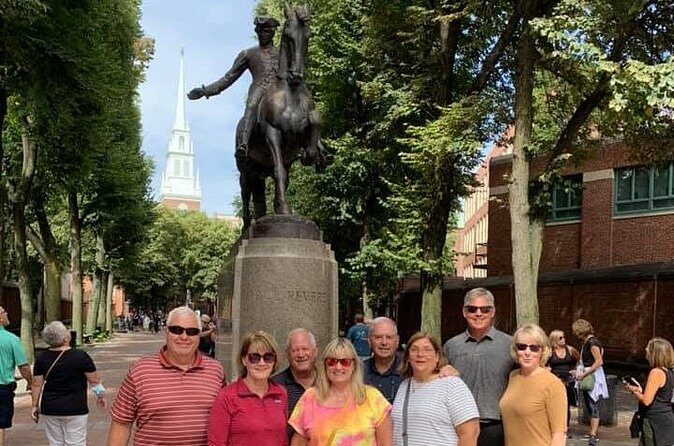
Next up is the Massachusetts State House, designed by Charles Bulfinch and serving as the seat of Massachusetts government since 1798.
This stop is short, but it’s useful. It gives you a sense of how Boston’s civic identity isn’t just old brick and patriotic slogans. The building represents a government that kept evolving after the Revolutionary period. When you later pass places linked to protests and conflict, the State House helps explain the “why” behind all that public drama.
You can also read our reviews of more tours and experiences in Boston
Granary Burying Ground and the people behind the Revolution
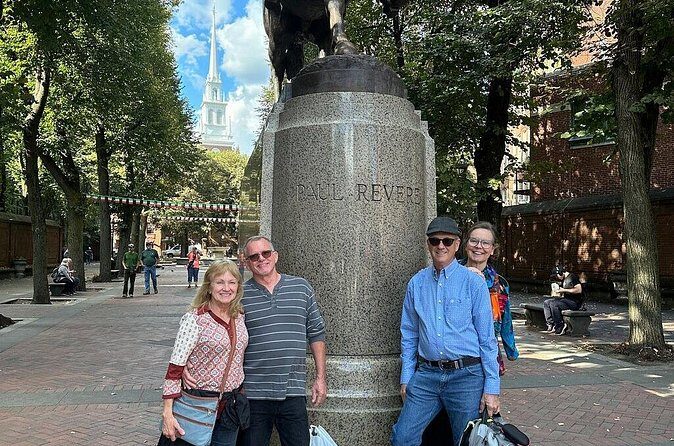
Granary Burying Ground, founded in 1660, is where the personal side of Revolution becomes unavoidable. It’s the final resting place for notable Revolutionary-era patriots, including Paul Revere and others connected to the Boston Massacre story.
Even if you only have a few minutes here, this is the kind of stop that changes how you see the timeline. Instead of dates floating by, you start thinking about the cost of decisions. Cemeteries like this are also where the Revolutionary story becomes less abstract and more human.
The Shaw Memorial and Civil War memory in downtown Boston
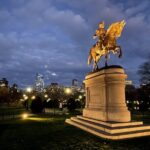
The tour also includes the Robert Gould Shaw and Massachusetts 54th Regiment Memorial, which commemorates one of the first Black regiments of the American Civil War. The memorial is described as a bronze relief sculpture by Augustu—an artistic detail that signals you’re not only looking at a name on a plaque.
Including this on a Freedom Trail walk is a smart choice. It widens the lens. Boston’s identity isn’t locked in the 1770s; it keeps shaping national history through later conflicts and civil rights progress.
The Boston Latin School site and the Tea Party beginnings
A key educational stop is tied to the Boston Latin School, founded April 23, 1635, noted as the oldest public school in America. The idea here isn’t just “old school.” It’s about how the city treated education as a public value—free education for boys regardless of wealth, while girls often attended private schools.
Then you move to the hall where the Boston Tea Party began. This stop is built around how the space sounded and how politics got argued—sermons, public meetings, debates over the tea tax. It’s a reminder that revolutions aren’t always sparked by one dramatic moment. They’re often fermented by constant conversation and pressure.
Old Corner Bookstore: print culture as a weapon
Old Corner Bookstore is downtown Boston’s oldest commercial building, built in 1718, and it connects to the publishing house Ticknor and Fields. The tour highlights that it published famous American titles, including titles linked to famous authors such as Thorea—showing you that ideas weren’t only carried in churches and pamphlets.
This is one of those stops that feels quiet until someone explains why it matters. You start recognizing that the American argument traveled through print as much as through speeches.
Irish famine sculpture: immigration, hardship, and adaptation
You’ll also see a sculpture depicting two Irish families: one starving and emaciated while battling famine in Ireland, and another well-fed family thriving in the United States after finding prosperity.
This stop turns the tour into more than a Revolutionary highway. It’s Boston acknowledging immigration stories and the way migration can include both suffering and reinvention. Even if you only spend a couple of minutes, it’s memorable because it shows the contrast plainly.
Old State House and the Boston Massacre site: tension made visible
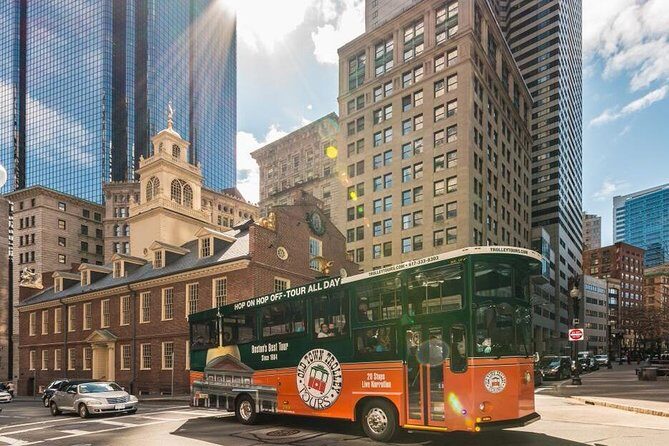
Next comes the Old State House, built in 1713 and used as the seat of the Massachusetts General Court until 1798. It’s also a site tied to the Boston Massacre.
Then you reach the Boston Massacre site itself. On March 5, 1770, tensions tied to occupation and taxation escalated into a clash between Bostonians and Redcoats, ending with five civilians killed by gunfire and names like Crispus Attucks and Samuel G referenced in the tour description.
This is where the tour earns its “and a whole lot more” claim. The stop sequence helps you see cause and effect: protest and tax conflict lead to occupation tension, which leads to bloodshed. And once you’ve seen the memorial logic behind the rest of the route, this one lands harder.
Faneuil Hall Marketplace to Haymarket: protest meets everyday life
Faneuil Hall Marketplace is another cornerstone stop. The tour frames it as a place that hosted meetings, protests, ceremonies, and debates for 275 years and counting. That long timeline matters. It suggests Boston’s political habit didn’t start in 1775 and vanish right after independence.
Then you head to Haymarket, described as one of America’s oldest open-air markets. You get to connect the past to the present in a practical way: markets are where people live out daily economics, not only grand speeches. This stop also nudges you toward thinking about food as part of the story, not just a pause for hunger.
North End highlights: Paul Revere House and Old North Church
In the North End, you walk through Boston’s Little Italy—a maze of narrow streets with some of the city’s oldest buildings. Along the Freedom Trail, you pass key historic stops such as the Paul Revere House and the Old North Church.
The Paul Revere House, built around 1680, is framed as Revere’s colonial home during the American Revolution. You also visit the Old North Church & Historic Site, founded in 1723 and noted as the oldest standing church in the city. This church stop functions like a bridge between the Revolutionary drama and the everyday religious life that shaped how communities organized.
If you like your history with faces and places, the North End is where you start feeling that the story lives in the street grid.
Copp’s Hill and final viewpoints: Bunker Hill and USS Constitution
The tour ends at Copp’s Hill Burying Ground, dating back to 1659 and described as the second oldest burial ground in Boston. It’s the final resting place of merchants, artisans, and craftspeople tied to the North End. This is a quiet kind of closure. You finish not at a grand monument, but at a reminder that working people built the city and carried it through wars.
From Copp’s Hill Terrace, you get views across the water to the Bunker Hill Monument and USS Constitution, also known as Old Ironsides. You’re not just hearing about naval history here—you’re seeing how Boston’s geography supported it.
What the guide does to keep it fun (and not exhausting)
A walking tour can go two ways: either it’s a steady flow, or it drags and turns into a line with facts. This one is designed to avoid the second problem.
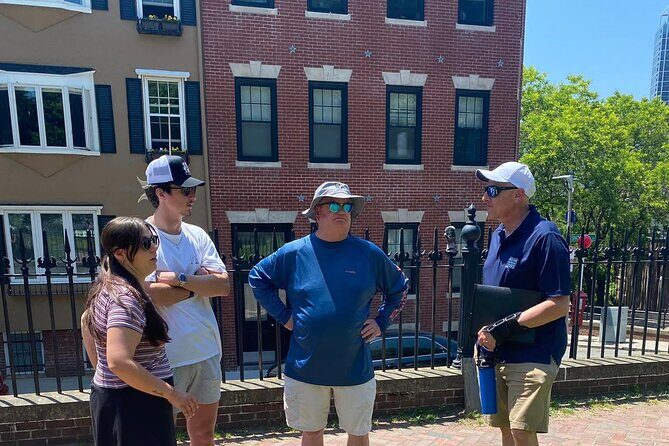
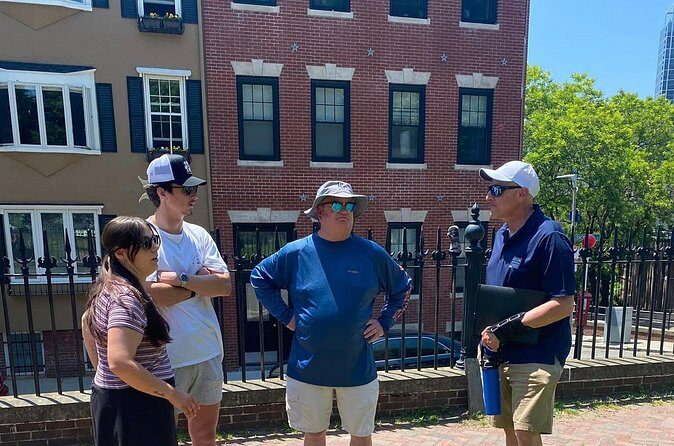
The tour emphasizes a guided, story-led pace without costumes, and the stop timing shows the intention: keep moving, keep the group together, and use each location for a focused meaning. In a rainy or hot scenario, a guide’s habit of checking in matters. You want someone who notices when the group is struggling and adjusts—especially when you’re on foot for three hours.
Group size is capped at 35 travelers, which helps. Big groups can feel like marching band logistics. Smaller groups feel more human.
Practical value: what’s included and what you should plan
You get a mobile ticket, a restroom and snack break, and admission is listed as free for the stops where applicable. Also, service animals are allowed and the tour is near public transportation.
What you should plan for yourself:
- Comfortable shoes. This is a walking route across multiple historic areas.
- Water and sun/rain gear. The tour requires good weather, but Boston weather can be unpredictable.
- Photo time is real, but the guide keeps you moving, so don’t assume you’ll have long unstructured breaks.
Price breakdown: why $39.95 makes sense for a first Boston Freedom Trail day
If you’re comparing options, here’s the logic I use:
- If a tour only shows half the trail, you’ll spend extra time later trying to fill gaps.
- If you’re paying for a guide, you want a route where the guide explains more than just the front of a plaque.
At $39.95 for about three hours, you’re buying a guided walkthrough that connects many stops—from early civic spaces like Boston Common to North End sites like Paul Revere House and Old North Church, then up to Copp’s Hill and viewpoints across the water.
You’re also getting a built-in break, which is underrated value on a walking day. It keeps the experience from turning into the usual end-of-tour fatigue where you just want to sit down and forget.
When weather is bad, know how the tour responds
The tour specifically requires good weather. If it’s canceled for poor weather, you’re offered either a different date or a full refund. That’s important because walking tours live and die on ground conditions and visibility, especially for street-level sites and viewpoints.
If you’re booking for a day with sketchy forecasts, pack for changing conditions anyway. Even a short rain can make cobblestones and brick paths feel slippery, and Boston summer warmth can feel more intense during stop-start walking.
Should you book this Freedom Trail and More tour?
Book it if you want a first-time Freedom Trail experience that actually covers the full arc and doesn’t stop halfway through. It’s especially good if you like your history explained in an active way—through memorials, civic buildings, markets, and street corners—not only through museums.
Skip it or think twice if your top priority is long indoor time at major sites. This is built for walking, short stop explanations, and then moving on while the story stays connected.
If you’re coming to Boston with limited time and you’d rather spend your day seeing and understanding than planning, this is a solid pick. End with the North End meal plan, then roll right into Bunker Hill and USS Constitution at your own pace.
FAQ
How long is the Freedom Trail and a whole lot more tour?
It lasts about 3 hours.
How much does the tour cost?
The price is $39.95 per person.
Where does the tour start and where does it end?
It starts at 139 Tremont St, Boston, MA 02111 and ends around 1:15 PM at Copp’s Hill Terrace, 520 Commercial St, Boston, MA 02109.
Is it a mobile ticket tour?
Yes, the tour uses a mobile ticket.
What stops are included beyond the main Freedom Trail sites?
In addition to Freedom Trail locations, the tour includes extra stops such as The Embrace memorial, Old Corner Bookstore, the Irish famine sculpture, the Holocaust memorial, and Haymarket, along with North End sights like the Paul Revere House and Old North Church.
Is there a restroom or snack break?
Yes. A restroom and snack break is included.
Is the tour suitable for families or all ages?
It’s described as great for people of all ages.
What happens if the weather is poor?
The tour requires good weather. If it’s canceled due to poor weather, you’ll be offered a different date or a full refund.