REVIEW · BOSTON
Heart of the Freedom Trail – 60 Minute Private Walking Tour
Book on Viator →Operated by Boston By Foot · Bookable on Viator
Revolutions start with ordinary streets. This fast, focused walk turns Boston’s Freedom Trail into a clear story, and I especially like the one-hour pace plus the way the guide connects each stop to what people believed and feared. The only real catch is you only get short stops (about 15 minutes each), so you won’t have time for deep museum-style lingering.
I also love that this is set up as a private tour for your group (up to 12), which keeps questions from getting lost in a crowd. Guides such as Kate and Marcie are described as story-focused and patient, so even if you’re new to the American Revolution, you won’t feel behind.
You’ll start at Faneuil Hall Marketplace and end near One Beacon Street, with a mobile ticket for the experience. Since it’s a walking tour, wear comfy shoes and plan for a short sprint between sites rather than a slow stroll.
In This Review
- Key highlights to look for
- Why the 60-minute format feels right on the Freedom Trail
- Meeting point and the practical side of walking tours
- Stop 1: Old State House and the balcony where power changed hands
- Stop 2: Faneuil Hall Marketplace, trade money, and Peter Faneuil’s twist
- Stop 3: King’s Chapel, Joseph Warren, and a funeral that mattered
- Stop 4: Old South Meeting House and the chain reaction behind Tea Act protest
- What you learn in a private group of up to 12
- Price and value: is $175 per group worth it?
- Guides like Kate and Marcie: why their style matters
- Who should book this (and who might want more time)
- Should you book this Heart of the Freedom Trail private walk?
- FAQ
- Where does the tour start?
- Where does the tour end?
- How long is the Heart of the Freedom Trail private walking tour?
- How much does it cost?
- Is this tour private?
- Do I need admission tickets for the stops?
- Do I get a ticket on my phone?
- Are service animals allowed?
- Is the tour near public transportation?
- Can I cancel and still get a full refund?
- Should you book this tour?
Key highlights to look for
- A tight “starter course” on the Freedom Trail without dragging for hours
- Royal power vs. civic life at the Old State House, including the Declaration reading connection
- Money behind the revolution at Faneuil Hall, where trade and even slavery are part of the story
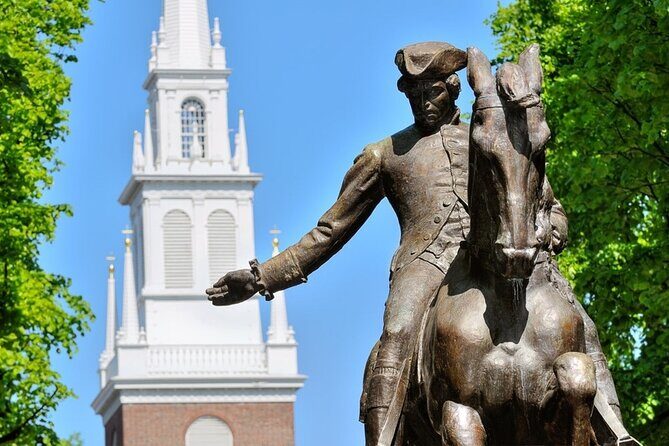
- Religion and politics collide at King’s Chapel, tied to Dr. Joseph Warren
- The Tea Act story in walking form at the Old South Meeting House, ending with the protest moment
Why the 60-minute format feels right on the Freedom Trail
Boston’s Freedom Trail is famous, but it can also feel like a homework assignment if you try to do it alone. This tour keeps you moving and gives you just enough context to make each landmark matter, not just look impressive.
The schedule is simple: four stops, roughly 15 minutes each, guided from beginning to end. That matters because Revolutionary-era history is layered. With time constraints, you want the guide to do the sorting for you, and you can keep the timeline in your head instead of carrying a notebook full of dates.
This is also a smart choice if Boston is one of many cities on your trip. In a single hour, you get a real overview—politics, commerce, religion, protest—without committing your whole day.
You can also read our reviews of more walking tours in Boston



Meeting point and the practical side of walking tours
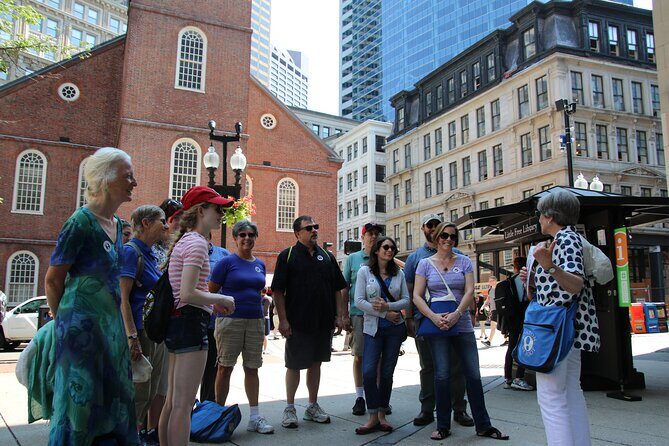
You’ll meet at 1 Faneuil Hall Market Pl, Boston, MA 02109, and the tour finishes in the general area of 1 Beacon St, Boston, MA 02108. That end location is handy because it puts you close to a central area where you can naturally continue exploring on your own.
You’ll get a mobile ticket, and the tour is designed so it’s easy to show up and go. It’s also noted as near public transportation, so if your plan includes subway or bus connections, this tour fits well into a normal day.
One thing to remember: because the tour is about a one-hour walk, it’s not built around long stops at any single location. If you want to sit and read every plaque for 30 minutes, you’ll still enjoy the guide—but you may wish you’d budget extra time afterward for the places that grab you most.
Stop 1: Old State House and the balcony where power changed hands
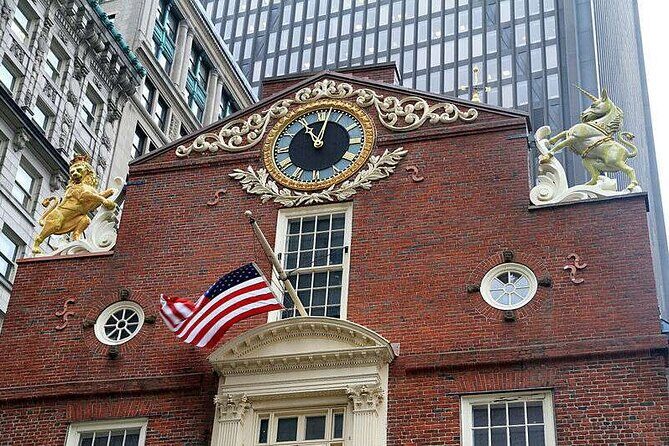
The Old State House was built in 1713 and is described as the oldest public building in Boston. Even before the history lesson begins, the building’s presence helps you understand why it mattered: it was meant to impress, and it sat above the street life around it.
Here’s why this stop is so important. It was the center of government business starting in 1658, and it links two big ideas: authority from above, and the declaration of independence from below. The balcony where royal governors proclaimed the king’s decrees is also connected to when the Declaration of Independence was read on July 18, 1776.
The guide also brings up a tough but necessary point: liberty didn’t include everyone. The tour specifically notes that African Americans and women remained without a voice during that era. That detail changes the feel of the landmark. Instead of a clean patriotic story, you get a more honest one—full of promise, disappointment, and limits.
If you’re visiting with kids or if history makes you glaze over, this is a great first stop because the story is concrete and easy to picture: balcony, proclamations, and a turning point in authority.
Stop 2: Faneuil Hall Marketplace, trade money, and Peter Faneuil’s twist
Next up is Faneuil Hall Marketplace, and this stop makes the revolution feel less like magic and more like economics. In 1742, Boston is described as a bustling town of about 14,000 people, with a safe harbor and heavy trade.
The tour highlights the merchant class that grew wealthy through exports to Europe and the West Indies. Then it takes a sharper turn: Peter Faneuil, a wealthy merchant whose wealth came from the transatlantic slave trade, offered the town a central marketplace modeled after major European cities.
The town initially refused the gift, suspicious it might disrupt local businesses. That refusal-and-reversal matters because it shows you how complicated community politics were, even before the big confrontations with Britain. By a slim margin, the town accepted the marketplace, and Faneuil made a last-minute change by adding a second floor.
One practical benefit: the stop is listed with admission free, so you’re not juggling ticket hassles while the guide is busy connecting the dots. For me, the best part of this stop is the reminder that commerce and cruelty were intertwined, and the same city that funded trade also fueled arguments about freedom and rights.
Stop 3: King’s Chapel, Joseph Warren, and a funeral that mattered
King’s Chapel is the kind of location where you can almost feel the tension just by its position next to an old burying ground. The chapel’s story begins in 1686, when it became the first Church of England congregation in Boston, created for the worship needs of the newly appointed royal governor.
The guide frames it as a symbol of what colonists hated about England. That theme is useful because it helps you understand why places of worship could become political targets during the Revolution, not just religious ones.
By the beginning of the Revolution, the chapel becomes tied to Dr. Joseph Warren, described as a charismatic patriot leader. The stop notes that Warren was eulogized here, and it also emphasizes his background: he was an accomplished physician who cared for Patriots and Loyalists alike. That detail can surprise you, and it gives the tour more human texture than a simple good-guys/bad-guys tale.
In other words, this isn’t just about British vs. colonists. It’s about how people worked through loyalty, conscience, and community ties while events escalated.
As a bonus for anyone who likes character-driven history, this is one of the most personality-rich stops on the route, because it centers on a single well-known figure and what he stood for.
You can also read our reviews of more private tours in Boston






Stop 4: Old South Meeting House and the chain reaction behind Tea Act protest
Old South Meeting House, built in 1729, is described as the largest meeting space in Boston. The tour connects its size to how Puritans worshiped and lived, and it stresses that the space was ideal for public meetings and protests.
Then it zooms in on one specific protest moment: December 16, 1773. That date is the kind of anchor you can carry forward when you’re later trying to make sense of the Revolution as a series of turning points instead of a single story.
Here’s the key setup. The East India Company was supplying tea to the colonies, and the company was failing due to poor European economy conditions. Parliament responded with the Tea Act of 1773, bailing out the company and giving it exclusive access.
This is the kind of explanation that makes the protest feel logical. The guide ties the tea issue to trade pressures and political decisions, so you understand the anger without needing a separate economics class.
Also, like the other stops, admission is listed as free, so you’re not stuck paying your way through the tour while the main story is happening outside.
If the earlier stops set up power, money, and symbolic conflict, this one shows how the fuse is lit and why people felt they had to act.
What you learn in a private group of up to 12
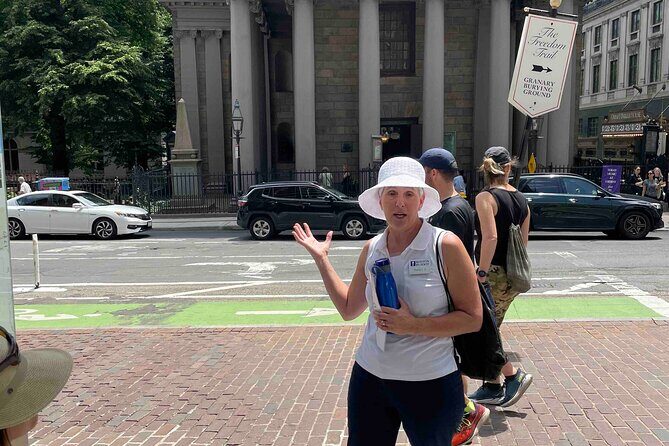
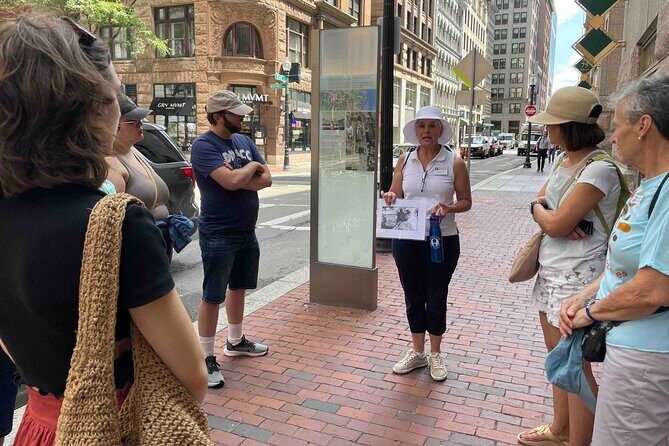
The “private” part is more than a marketing label. In a group of up to 12, your guide can pace the story around your questions, and you can raise small points without feeling rushed. That’s especially helpful on a tour like this, where the names and ideas can pile up fast.
It also makes a difference for families. One review highlights that the guide was very patient with young children, which tells me the experience works when attention spans are unpredictable. Since the stops are short, it’s easier to keep momentum and keep everyone from tuning out.
You’ll also likely come away with a mental map. The route runs through big Freedom Trail landmarks, so even if you plan to do the trail again later, you’ll have a better sense of what each site represents.
Price and value: is $175 per group worth it?
The tour costs $175.00 per group, up to 12 people, and it lasts about 1 hour. In value terms, the price only really looks “high” if you compare it to doing the trail on your own. But the point here is guided sorting, not just sightseeing.
A practical way to think about it is cost-per-person. If you fill the group, the math works out to roughly $14.60 per person at the maximum group size. If it’s only a couple of people, the per-person cost rises, but you still get a full hour of guide attention without negotiating for separate bookings.
The stops are listed with free admission, which supports the idea that you’re paying for interpretation and time, not entry fees. And because the itinerary is tightly structured, you’re paying for the guide’s ability to make a short window feel complete.
If you’re traveling in a small group and you want a strong first pass at the Freedom Trail, this is the kind of pricing that can make sense fast.
Guides like Kate and Marcie: why their style matters
The reviews point to guide energy that’s both instructional and story-driven. Kate is noted as knowledgeable and captivated, and the tone described suggests she keeps moving without losing the thread. That’s exactly what you want in a one-hour format: clarity plus momentum.
Marcie is described as fantastic, and the standout detail is that she taught things even to people who had lived in Boston for decades. That’s a strong sign the tour doesn’t just repeat the same handful of surface facts. Instead, it connects details—like the balcony reading link at the Old State House or the economics behind the Tea Act—to make the bigger story click.
Whether your group loves big personalities or calm explanations, this tour’s success seems tied to guides who can hold attention for short bursts and still deliver meaning. You don’t just hear names; you understand how the pieces relate.
Who should book this (and who might want more time)
You’ll likely love this tour if:
- You’re new to Boston and want a fast introduction to the Revolution
- You like guided walking tours that keep a clear timeline
- You’re traveling with family and need a format that stays moving
- You want a private setup for up to 12 people
You might want something longer or more detailed if:
- You’re the type who wants to linger inside each site for a while
- You already know the basics and want deeper access beyond four quick stops
- Your group needs slow pacing for mobility reasons (the tour is said to be for most travelers, but it is still a walking route)
This isn’t a marathon. It’s a strong orientation. Think of it as planting flags: you’ll know where to return and what to focus on later.
Should you book this Heart of the Freedom Trail private walk?
Yes, if you want a clean, guided shortcut through the Freedom Trail’s most meaningful Revolution stops in just one hour. It’s a good fit for first-timers, families, and small groups who don’t want to spend their day trying to turn landmarks into understanding.
If your budget allows a guided hour, and you care about context more than endless photo stops, this tour can save you time and make your later self-guided exploration smarter. You’ll leave with a clearer story of power, money, protest, and the people left out of the promise.
FAQ
Where does the tour start?
The tour starts at 1 Faneuil Hall Market Pl, Boston, MA 02109.
Where does the tour end?
The tour ends in the general area of 1 Beacon St, Boston, MA 02108.
How long is the Heart of the Freedom Trail private walking tour?
It runs for about 1 hour.
How much does it cost?
It costs $175.00 per group, up to 12 people.
Is this tour private?
Yes. This is a private tour/activity, and only your group participates.
Do I need admission tickets for the stops?
The tour notes free admission for the listed stops.
Do I get a ticket on my phone?
Yes, you receive a mobile ticket.
Are service animals allowed?
Yes, service animals are allowed.
Is the tour near public transportation?
Yes, it is near public transportation.
Can I cancel and still get a full refund?
You can cancel for free up to 24 hours in advance for a full refund. If you cancel less than 24 hours before the experience starts, the amount paid is not refunded.
Should you book this tour?
Book it if you want a smart, time-saving introduction to the Freedom Trail that explains what you’re seeing at each landmark. If you prefer spending long stretches inside buildings, you may want to pair this with extra self-guided time afterward.