REVIEW · BOSTON
Boston’s Freedom Trail: A Self-Guided Tour of All 16 Sites
Book on Viator →Operated by VoiceMap Audio Tours · Bookable on Viator
History feels close when you walk.
This self-guided Freedom Trail audio tour lets you tackle Boston’s most famous Revolutionary-era spots at your own pace, with offline access to audio and maps built into the VoiceMap app. You’ll go past landmarks tied to the Boston Tea Party, the midnight ride, and the darker moments of the British occupation.
I like that the route is set up for real walking time—about 2 to 2 hours 40 minutes—and that the narration is made to keep moving rather than lecture. You’ll also get lifetime access, so you can repeat sections on another trip without paying again.
One thing to consider: the app’s map and location tracking can be a little imperfect. You may need to manually forward or replay if your phone lags behind your exact spot.
In This Review
- Key things you should know before you go
- Price and value: what $14.99 actually buys you
- Start line: finding your way at 139 Tremont St
- Stop 1: Faneuil Hall—Samuel Adams’ old town meeting vibe
- Brewer Fountain and the story of how Boston took shape
- Massachusetts State House: the gold-and-brick symbol of the new system
- The graveyard pause: Otis, Hancock, Revere, Samuel Adams
- Old State House area: 1713, trade, and Boston’s business brain
- Old City Hall and the birth of the American legal system
- Old South Meeting House: where the Tea Party planning energy lived
- The Massachusetts State House again (and why the audio keeps returning to the Revolution)
- Beantown Pub: a real break that fits the route
- Irish immigrant history and the tragedy that forced departures
- Boston Massacre site: nine officers, a crowd, and five deaths
- Boston’s oldest outdoor market for produce, fish, and flowers
- Final stretch: Copp’s Hill Terrace and the view-area ending
- Self-guided vs live tour: who this works best for
- How to make the audio experience feel easy
- Should you book this Boston Freedom Trail audio tour?
- FAQ
- How long does the Boston Freedom Trail self-guided tour take?
- What is the price per person?
- Does it include offline audio and maps?
- Is the tour only in English?
- Where does the tour start and end?
- What do I need to bring, and what is not included?
Key things you should know before you go
- Offline audio and maps mean you can keep going even if your signal gets sketchy.
- All 16 Freedom Trail sites are included in one continuous experience, made for solo or small groups.
- Narration style is story-first, with humor and clear directions that help you stay oriented.
- You control the pace, with the option to pause for a snack break and then jump back in.
- The tour’s ending is location-adjacent, so if you want exact views or sites beyond the narration, plan those separately.
Price and value: what $14.99 actually buys you
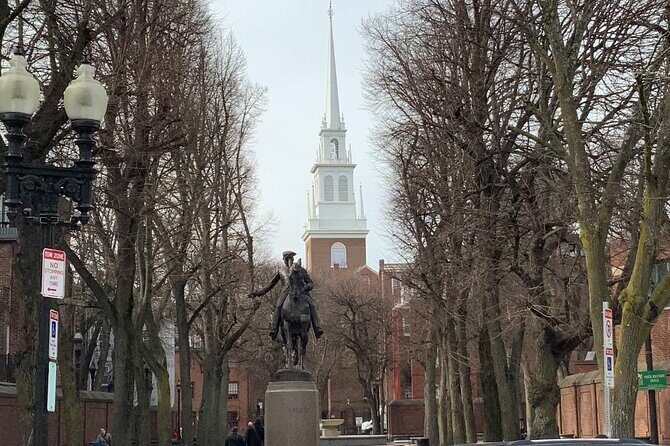
At $14.99 per person, this is priced like a low-cost upgrade that replaces the need for a live guide on a busy day. The big value isn’t just the audio—it’s that you get lifetime access and offline access to the tour content.
That means you can do it once, then reuse it later. Boston is the kind of city where walking routes feel different at different times of day. If you want to re-walk the sections around Faneuil Hall, the Old South Meeting House area, or the Copp’s Hill finish, you can.
You do need to show up prepared. The tour does not include food/drink, transportation, museum tickets, or headphones—and yes, you’ll want your smartphone. If you’re the type who travels light and hates adding gear, budget for a phone + earbuds and you’re set.
You can also read our reviews of more guided tours in Boston



Start line: finding your way at 139 Tremont St
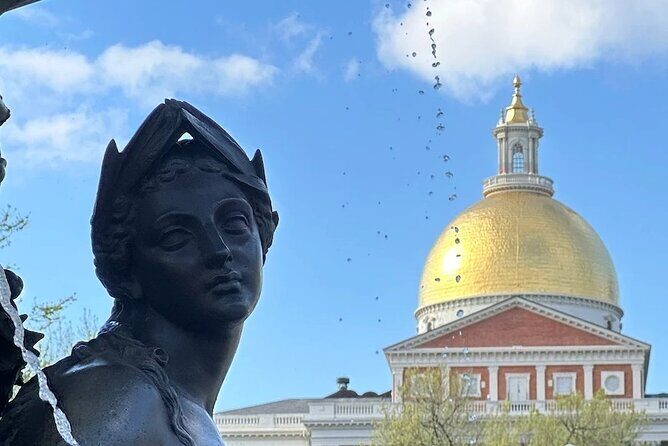
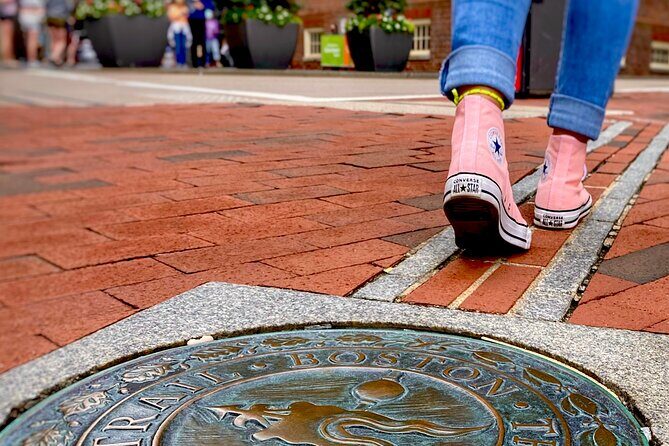
The tour starts at 139 Tremont St, Boston, MA 02111 and runs all the way through the trail. This area is very walkable and helps you start without a long commute across town.
From the first cue, the experience is designed to feel like a guided walk without the stress of a group. You’re not trying to keep up with anyone. The narration tells you when to turn, when to look around, and what to notice as you pass key sites.
If you’re solo, that’s especially useful. You’ll still get the structure of an itinerary, but you can stop when you want—at doorways, viewpoints, or street corners—without anyone waiting on you.
Stop 1: Faneuil Hall—Samuel Adams’ old town meeting vibe
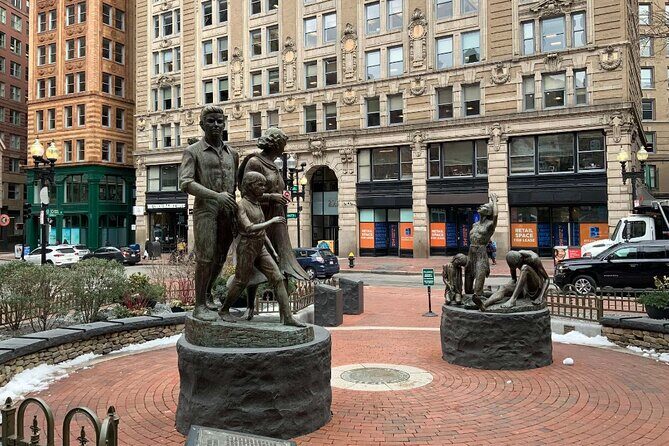
Faneuil Hall is one of those places where history is not trapped behind a ticket counter. You’re guided to pop into Faneuil Hall, where it started as a town meeting hall tied to figures like Samuel Adams and later became a government auditorium with old art inside.
What you should pay attention to here is the shift in tone. This isn’t just a pretty building. It’s a snapshot of how public speaking and public decisions helped drive the events that followed.
Practical tip: when you enter, give yourself a couple of minutes to orient. If you’re tight on time, you can still take in the outside and come back later during your “rest break” window.
Brewer Fountain and the story of how Boston took shape
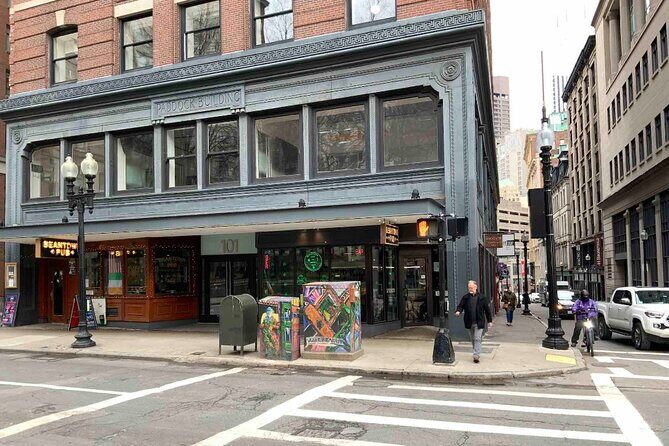
Next you’ll hear about Boston’s formation at the Brewer Fountain stop. This is the kind of location that can feel like background unless someone gives you a reason to look.
The tour uses that pause to set context: Boston wasn’t just a place where major events happened. It was a city with an identity shaped by trade, water access, and people pushing back against outside control.
If you like understanding the why behind the headlines, this is a good moment to slow down for a minute. Let the audio finish the thought before you keep walking.
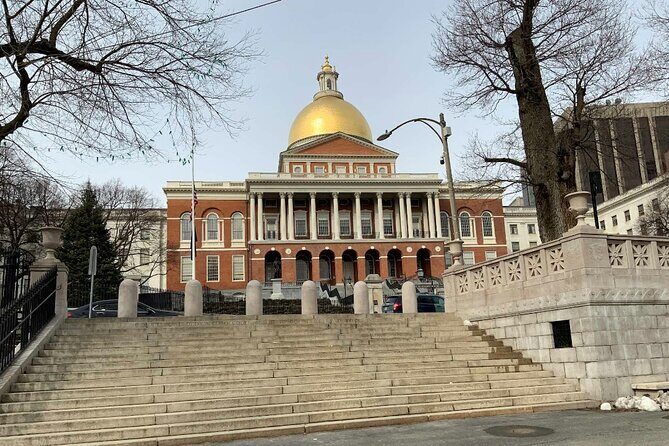
Massachusetts State House: the gold-and-brick symbol of the new system

Then comes the big visual hit: the Massachusetts State House. The narration frames it as more than architecture, asking you to connect the building to the American Revolution and what came after.
This stop works because you can see the influence of ideas in stone. You’re standing in a place tied to the evolution of governance, and the audio helps you read the location like a marker on the timeline.
Drawback to keep in mind: this is also where you might want to slow down longer than the timer wants. It’s easy to linger when the building is this prominent.
You can also read our reviews of more tours and experiences in Boston




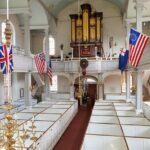

The graveyard pause: Otis, Hancock, Revere, Samuel Adams
One of the most human parts of the trail is the graveyard stop. You’re directed to a beautiful, older cemetery where you’ll meet characters like James Otis, John Hancock, Paul Revere, and Samuel Adams.
This is where the Freedom Trail stops feeling like a checklist and starts feeling like a map of real people. Names become faces you can picture, even if you’ve never read a book about them.
Practical tip: take 3–5 minutes here even if the rest of the route is fast for you. Graveyards reward quiet attention. And with audio narration, you’ll get more out of it if you don’t rush.
Old State House area: 1713, trade, and Boston’s business brain
The tour then moves you toward one of Boston’s oldest buildings, dating to 1713, and connects it to Boston’s unique trading position.
This is a strong pairing: Revolutionary history is often taught as politics and speeches, but trade is the engine underneath a lot of it. The audio does a nice job tying everyday economic power to the bigger conflict brewing in the background.
If you’re the type who likes cause-and-effect, this stop will click.
Old City Hall and the birth of the American legal system
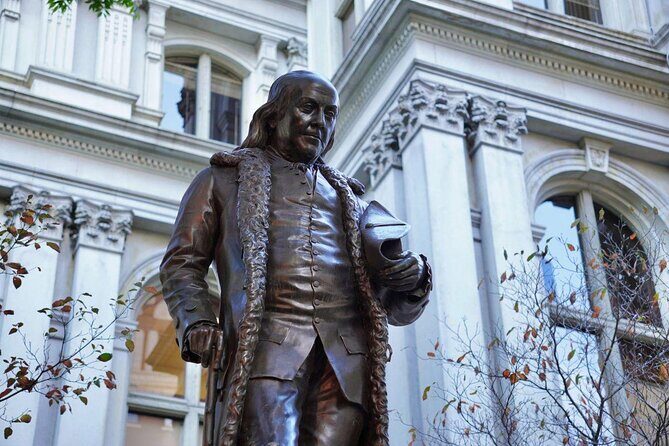
You’ll reach the grand façade of Boston’s Old City Hall and hear about the birth of the American legal system. That angle is a smart one, because it stretches the Freedom Trail beyond rebellion.
Revolutions don’t just topple governments. They try to build new rules for the mess that follows. This stop gives you that practical legal thread while you’re still walking the same corridor of history.
If you’re tired of war stories, this is a helpful shift. If you love them, you’ll still appreciate the “what happened next” framing.
Old South Meeting House: where the Tea Party planning energy lived
Next is the Old South Meeting House, described as the largest building in colonial Boston at one point. More importantly, it’s tied to the planning of the Boston Tea Party—presented as an important catalyst for the American Revolution.
The audio’s approach here matters. Instead of treating it like a single dramatic moment, it treats it like a room where decisions were made. You get a sense of group coordination—how anger turned into action.
Practical tip: if you’re hungry, this is a great time to keep moving toward a snack option soon after. The tour’s pace makes it easy to stop for food without losing your place later.
The Massachusetts State House again (and why the audio keeps returning to the Revolution)
After other stops, the route returns to the Mass State House theme—so you can connect earlier context to the larger Revolutionary story arc. You’ll be asked to “ponder” the Revolution while standing in the gold-and-brick structure.
This repetition is useful. It helps you remember that history wasn’t a straight line. It was back-and-forth. Events changed ideas, and ideas changed policies, and the buildings stayed.
Beantown Pub: a real break that fits the route
Midway, you’re guided to Beantown Pub as a refreshment stop—positioned as a Boston favorite with local ties (the audio mentions Sam Adam’s beer).
Even if you don’t drink beer, this is a smart move in theory: it gives you permission to pause. You’re walking for roughly a couple hours, so a mid-route break helps you keep your energy for the second half.
If you want a low-effort “treat yourself” stop, this is where it fits.
Irish immigrant history and the tragedy that forced departures
The tour includes a stop focused on Irish immigrants in America, and specifically the tragedy that forced them to leave their homeland for the unknown.
This is a different kind of historical lens. It’s not just Revolutionary Boston. It’s immigration and survival—part of why Boston became what it is.
You might find this section heavier than the political stops. If you’re traveling with someone who likes variety, it’s also a good balance.
Boston Massacre site: nine officers, a crowd, and five deaths
One of the most sobering stops is the area tied to the Boston Massacre in 1770, where nine British officers faced a crowd of hundreds, with five Bostonian lives lost.
The audio frames the event carefully: it’s described as an incident involving unarmed citizens and British soldiers, presented in a way that makes you pay attention to scale—how quickly tension turns lethal.
Practical tip: stand back for a minute and let the narration finish before you move on. This is the type of event where your surroundings matter, even if the exact street layout is different than what you imagined from textbooks.
Boston’s oldest outdoor market for produce, fish, and flowers
The tour then points you toward Boston’s oldest outdoor market, offering deals on fresh produce, fish, and flowers in the historic heart of the city.
This is a real-life pairing: Revolutionary grit and then a place built for daily commerce. That contrast helps the trail feel grounded, not sealed inside museum walls.
If you like picking up small gifts or snacks, you’ll likely enjoy the temptation here. Just plan your time—markets can slow you down in a good way.
Final stretch: Copp’s Hill Terrace and the view-area ending
Your tour ends at Copp’s Hill Terrace, 520 Commercial St, Boston, MA 02109. This gives you a sense of landing the route at a viewpoint edge, rather than ending inside another building.
One detail that’s worth knowing: the audio experience may finish with a look toward the USS Constitution and Bunker Hill area rather than stopping at those exact attractions. If you want to go to those spots in person, you’ll need a separate plan after the narration ends.
Self-guided vs live tour: who this works best for
This is built for people who like control. If you’re traveling solo, it’s a strong match. You get the structure of all 16 sites without the pressure of keeping pace with strangers.
It also works for couples who want to talk, pause, and re-start without feeling like they’re breaking someone else’s schedule. The audio format is ideal when you’re the type who takes photos at doorways and reads signage only when you care.
If you’re traveling with limited mobility or short attention spans, self-guided can still work because you choose how long you linger. Just remember you’re walking a city route across multiple stops, so take breaks when you need them.
How to make the audio experience feel easy
A few setup habits make this tour smoother:
- Get your VoiceMap app installed before you leave, and practice starting it once so you’re not troubleshooting outside.
- Bring earbuds/headphones. The tour does not supply them.
- When you reach a new stop, let the audio play through the directions before you start moving again.
A notable plus is how the audio is described as starting when you get to the next location and how the map feature can help you follow timing. Still, don’t assume it will be perfect every time—phones can misread your exact position.
Should you book this Boston Freedom Trail audio tour?
Yes, if you want all 16 Freedom Trail stops in a format that lets you walk at your pace. At $14.99 with lifetime access and offline audio/maps, it’s a solid value for people who’d rather spend money on food and transit than on an expensive guided package.
Skip it only if you need 100% guaranteed turn-by-turn accuracy with no fiddling at all. The route is straightforward, but audio syncing and map tracking can require a quick manual correction.
If you’re the kind of traveler who enjoys turning a city walk into a story, this is a smart way to do Boston’s most famous historical route without feeling rushed.
FAQ
How long does the Boston Freedom Trail self-guided tour take?
It takes about 2 hours to 2 hours 40 minutes to complete, depending on how long you pause at stops.
What is the price per person?
The tour costs $14.99 per person.
Does it include offline audio and maps?
Yes. You get offline access to the audio, maps, and geodata, plus the VoiceMap app for Android and iOS.
Is the tour only in English?
Yes, it’s offered in English.
Where does the tour start and end?
It starts at 139 Tremont St, Boston, MA 02111 and ends at Copp’s Hill Terrace, 520 Commercial St, Boston, MA 02109.
What do I need to bring, and what is not included?
You’ll need your smartphone and headphones. It also does not include food/drink or tickets/entrance fees for museums or attractions along the way, and it doesn’t include transportation.