REVIEW · BOSTON
Self Guided “Historic Boston Downtown Freedom Trail” Audio/GPS Walking Tour
Book on Viator →Operated by WalknTours · Bookable on Viator
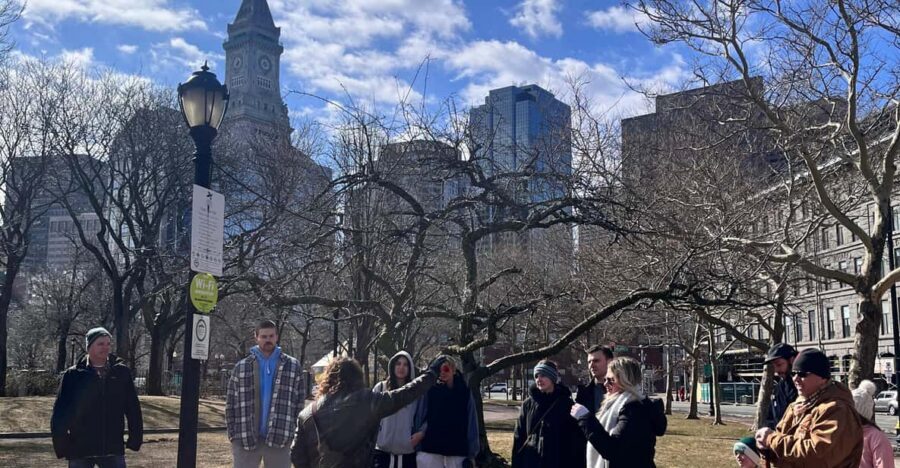
Freedom Trail, minus the big group. This location-aware GPS audio tour lets you wander Boston Common to Haymarket at your pace, with narration that helps you spot the big Freedom Trail landmarks. I love that you can revisit the experience later with 360-degree photo guides.
One thing to plan for: traffic noise can make the audio harder to catch unless you use headphones and keep your phone volume up.
In This Review
- Key things to know before you go
- A self-guided Freedom Trail day that fits your schedule
- Getting started at Boston Common without losing time
- Stop 1: Walking the Freedom Trail spine (Common to Bunker Hill and USS Constitution)
- Robert Gould Shaw and the 54th Regiment Memorial in minutes
- The “big Boston landmarks” stretch: dome, gunpowder, bells, and a Tea Party spark
- Granary Burying Ground: where the audio makes the place feel alive
- Boston Massacre site and the power of a short sound scene
- Faneuil Hall and the Revolution’s “Cradle” feeling
- Green Dragon Tavern and the places revolutionaries actually used
- Haymarket finish line: set yourself up for North End momentum
- New England Holocaust Memorial: a heavier stop with specific details
- JFK’s Boston home: 122 Bowdoin St
- Spring Street and Commonwealth Books: Boston before it became postcard-perfect
- Price and value: why $5 can feel like a full day’s worth of structure
- When to go, what to bring, and how to hear it well
- Should you book this Freedom Trail audio walk?
- FAQ
- How much does the Historic Boston Downtown Freedom Trail audio tour cost?
- How long does the tour take?
- What language is the tour in?
- Do I need an in-person guide?
- Where do I start and where does it end?
- Are there any entrances to buildings included?
- What are some of the major stops I can expect?
- Can I revisit the tour after I complete it?
- Are there any time limits for specific stops?
- Can I get a refund if my plans change?
Key things to know before you go
- Start at the Boston Common Visitors Center (139 Tremont St) and finish at Haymarket (100 Hanover St)
- WalknTours app GPS guidance keeps you moving site to site, without a human guide
- Freedom Trail highlights in one outing, plus downtown stops like Faneuil Hall and Granary Burying Ground
- You actually enter select burial grounds, not just stand on the sidewalk
- Short audio “scenes” at a few major moments, including the Boston Massacre site
- It’s only $5 per person, which is hard to beat for a full hour-plus of major Boston stops
A self-guided Freedom Trail day that fits your schedule
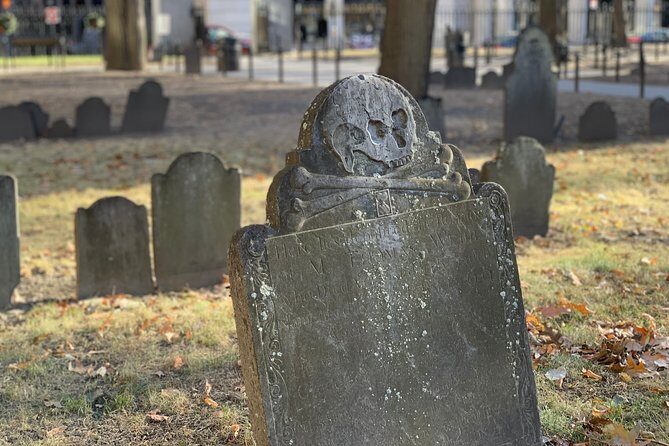
I like this style of tour because it removes the stress of group timing. You’re not waiting for anyone else, and you can slow down when a street view grabs your attention (or speed up when you spot a bathroom line you trust).
At $5 per person, this feels like a low-cost way to get a structured walk through downtown Boston’s hardest-hitting sites. Most of the stops are free to view from the outside, so you’re paying for the story, not museum tickets.
If you’re visiting in cold or if you just don’t want the big-group circus, this kind of phone-guided format is a smart match.
You can also read our reviews of more walking tours in Boston
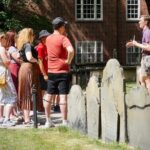


Getting started at Boston Common without losing time
The tour begins at Boston Common Visitors Center, 139 Tremont St. From there, the app uses location-aware GPS so you can follow along as you walk.
To make it painless, do this before you go:
- Download the WalknTours app first (cell service can be inconsistent while you’re walking)
- Make sure your phone battery is topped up, since GPS + audio can drain power
- Bring headphones if you want the narration clearly over street noise
If you hit a snag at the start, the experience is set up to be fixable fast (there’s support contact info provided), but it’s still better to arrive ready.
Stop 1: Walking the Freedom Trail spine (Common to Bunker Hill and USS Constitution)
The tour’s first big leg is the Freedom Trail itself. You’ll start on the Boston Common and work through older Boston areas, cross toward Charlestown, and continue on toward Bunker Hill and the USS Constitution area.
This matters because the Freedom Trail can be overwhelming if you’re doing it solo with a map. The audio guidance turns the route into an order you can follow, so you’re not stuck asking yourself what you just passed.
Practical tip: this is a walking route, not a sit-down tour. Wear real walking shoes and expect an outing closer to 1 to 1.5 hours if you pause for photos and let the audio run cleanly.
Robert Gould Shaw and the 54th Regiment Memorial in minutes
Short but powerful, this stop centers on the Robert Gould Shaw and the 54th Regiment Memorial. You’ll learn why the 54th Regiment mattered—especially its role as the second black regiment to fight in the U.S. Civil War, and how that changed the larger story.
What I like about this stop in an audio format is pacing. It’s quick enough that it doesn’t feel like homework, yet you get context that most people skip when they’re just moving between the famous buildings.
The “big Boston landmarks” stretch: dome, gunpowder, bells, and a Tea Party spark
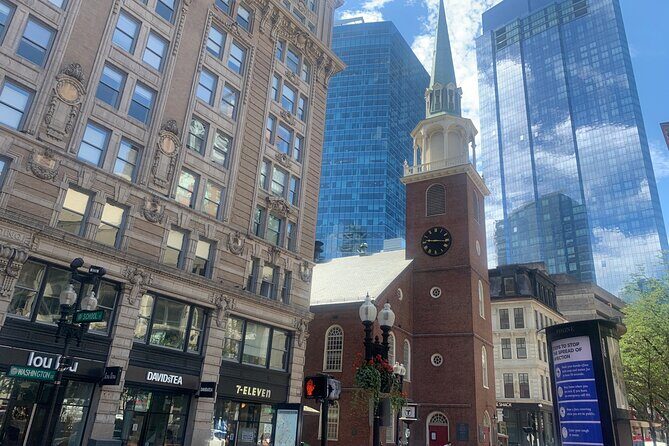
After the memorial, the tour moves through a chain of downtown landmarks where the audio focuses on what you might otherwise miss. You’ll hear about a golden dome—what’s on top and why it has history—and you’ll also get the story of a site tied to an explosive past, including where gunpowder was stored during the War of 1812.
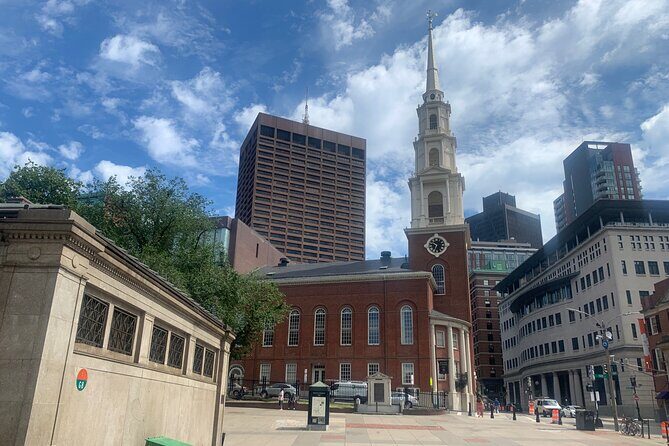
Then the narration shifts to the character of historic religious architecture: you’ll get notes about a steeple and bell and how the place fits into Boston’s longer timeline.
You’ll also cover the more everyday-but-important historic corners:
- The oldest continually run hotel in the USA (you’ll stop outside and learn why it’s famous)
- The old City Hall area, plus the story of the donkey in front of it
- Boston Latin, described as the first school in the U.S.
- The point where the Boston Tea Party began (you’ll hear the setup behind the famous protest)
This stretch is one of the tour’s strengths because it turns “I’ve walked past that” into “I know what that was.” If you like Boston as a place you can actually interpret—not just photograph—this part does the job.
You can also read our reviews of more guided tours in Boston






Granary Burying Ground: where the audio makes the place feel alive
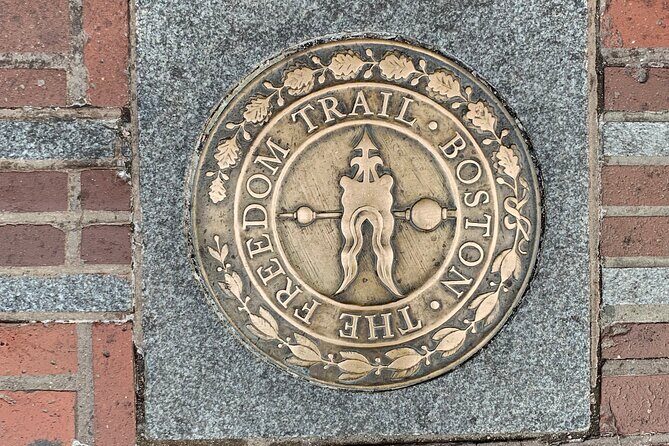
Next up is Granary Burying Ground, and this is where the tour earns its keep. You’ll enter the cemetery and hear an interactive-style narration tied to the grounds keeper Willie voice, with stories connected to Paul Revere, John Hancock, Sam Adams, and more.
One practical note that can matter for your plans: Granary Burying Ground is only open 9 to 5, so it’s worth checking timing before you arrive. If you’re arriving late in the day, you might still pass by nearby parts, but your ability to enter is the limiting factor here.
Why it works as a GPS audio stop: cemeteries can feel cold and static if you don’t know what you’re looking for. Here, the audio gives you names, connections, and reasons to care.
Boston Massacre site and the power of a short sound scene
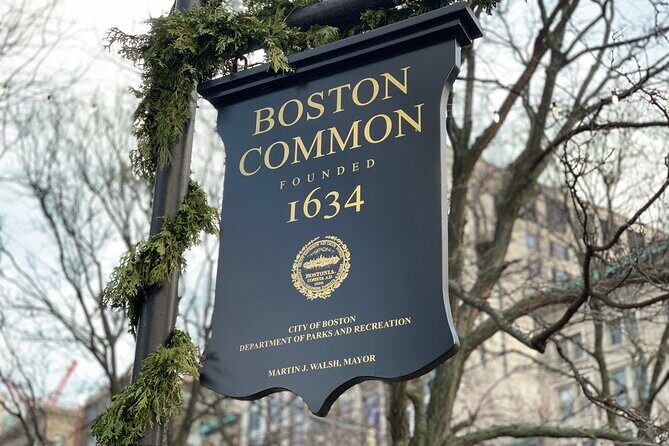
You’ll then visit the Boston Massacre site, and this is one of those places where a few minutes of sound narration can change your whole understanding. The tour uses a short audio experience to help you relive what happened that day.
I like this approach for two reasons. First, it keeps the story focused instead of turning into a lecture. Second, it helps you connect the site to the moment, not just the fact that something famous happened here.
Faneuil Hall and the Revolution’s “Cradle” feeling
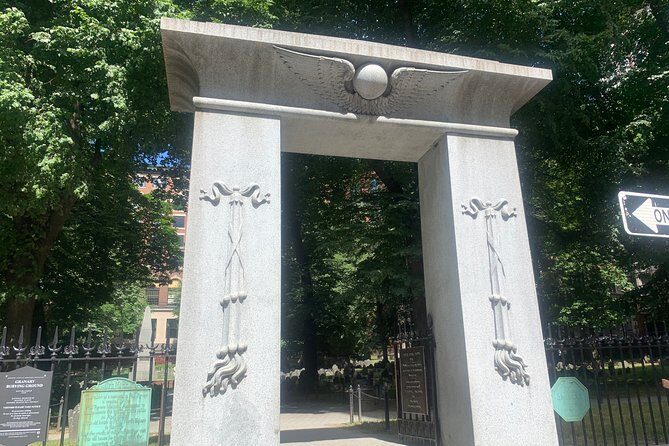
The tour highlights the Cradle of Liberty and brings you to Faneuil Hall, one of the most visited spots in the USA. In practice, it’s also a useful landmark for navigation—you’ll recognize it fast and it anchors the rest of downtown history.
From there, you’ll get a connection to JFK’s family dining at the oldest continuously run restaurant in the USA. The narration points you to the story behind the spot, which makes it a natural place to plan a lunch break nearby if you’ve got the time.
Green Dragon Tavern and the places revolutionaries actually used
Next is the Green Dragon Tavern, described as a headquarters of the revolution. You’ll get a short, high-signal story about why it mattered and what kind of role such a gathering place played in Boston’s political heat.
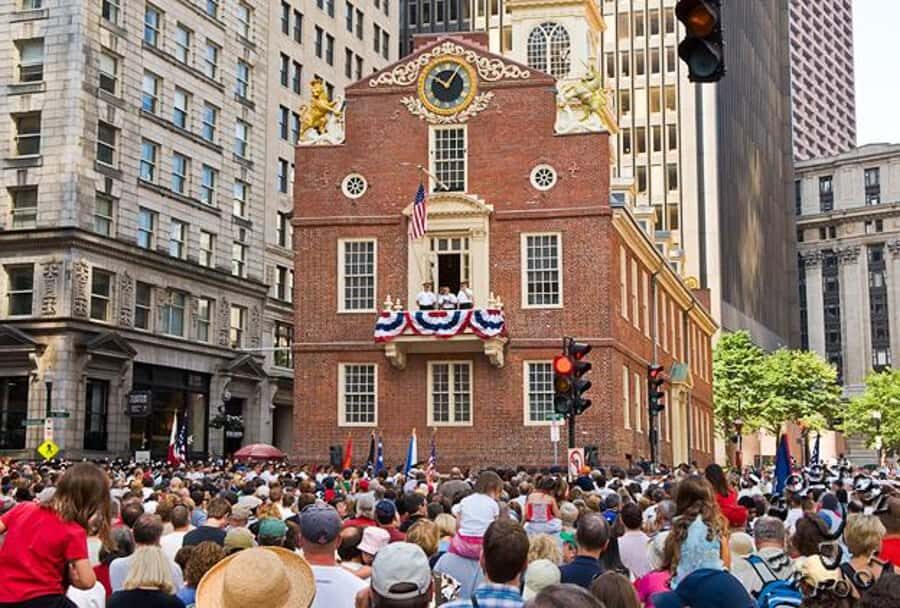
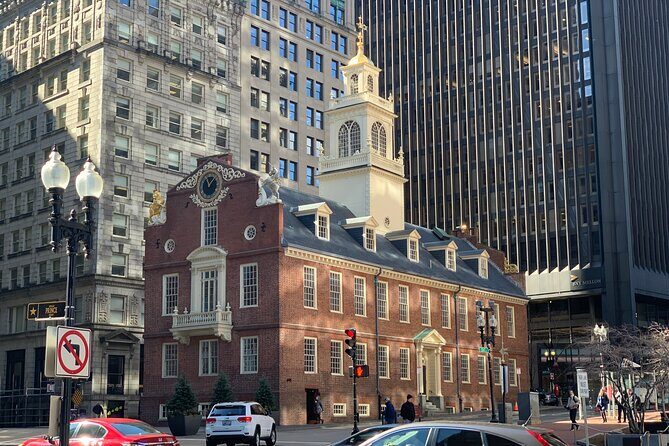
Then you’ll move past the Old State House, another key stage for major events. Even when you’re only seeing the exterior, the audio is doing the heavy lifting by giving you the why behind the walls.
If you like to turn walking into a story you can follow, this section is the emotional payoff before the tour heads to its final stretch.
Haymarket finish line: set yourself up for North End momentum
The tour ends at Haymarket, near Blackstone Corner, and it’s close to the North End. If it’s Friday or Saturday, Haymarket can be lively, which makes the finish feel less like a dull stop and more like a gateway.
I’d plan a little extra time after you finish. The North End area is close enough that you can keep exploring on your own without repeating the entire walk.
New England Holocaust Memorial: a heavier stop with specific details
The tour includes the New England Holocaust Memorial, and it’s not treated like a quick photo-op stop. You’ll hear explanations about what the numbers on the glass mean, along with the significance of the fire glowing below, plus the bigger history of the Holocaust and its camps.
This is one of those moments where audio is especially helpful because you’re not expected to “figure it out” just by looking. Expect the tone to be serious and let it land.
JFK’s Boston home: 122 Bowdoin St
You’ll also stop at 122 Bowdoin St, where the tour points out JFK’s residence in Boston. The narration focuses on the story tied to that home, and you’ll learn it as something specific—not just a name on a sign.
In my view, this is one of the best ways to experience “celebrity history” without turning it into theme-park energy. It’s still street-level Boston, just with a sharper lens.
Spring Street and Commonwealth Books: Boston before it became postcard-perfect
Later you’ll walk past Spring Street, tied to the idea of the first spring that helped early settlers thrive. It’s a small detail, but it’s the kind of historical breadcrumb that makes old cities feel real.
Then the tour ends with a stop at Commonwealth Books, described as an older, cool shop tucked down a small alley. It’s a nice shift in mood after the heavier memorial and the JFK stop—books and quiet streets give your brain a breather.
Price and value: why $5 can feel like a full day’s worth of structure
At $5 per person, you’re buying organization. The route stitches together Freedom Trail highlights and downtown context without you paying for lots of separate admissions.
You also get:
- A mobile ticket approach (so you’re not messing with paper)
- A GPS-guided experience that can be repeated later
- 360-degree photo guides that give you a way to refresh what you saw
Compared to a typical guided walking tour, the value here is in flexibility. You’re not stuck with one start time or a rigid pace, and you can take breaks for food without feeling like you’re holding up a group.
When to go, what to bring, and how to hear it well
Plan for a comfortable walk first, then layer the audio on top. This is especially true because some stops are outdoors and you’ll want your attention on the streets.
Bring:
- Comfortable shoes
- Headphones (street noise can drown the audio)
- A power bank if your phone battery is average
Also, check opening hours for Granary Burying Ground (9 to 5), since that’s the one included stop tied to set entry timing in the information you have.
Should you book this Freedom Trail audio walk?
Yes, I think you should book it if you want a low-cost, self-guided Freedom Trail experience that’s built for pacing yourself. It’s a good fit for families and for anyone who hates the feeling of being rushed or herded, and it’s especially useful in bad weather.
I’d skip it (or at least be extra prepared) if you rely on audio without headphones or if you know your phone battery usually struggles with GPS.
One last smart move: double-check you picked the downtown Freedom Trail version. There are different Freedom Trail audio options, so if you expect the whole trail in one go and you bought only the downtown stretch, you may finish sooner than you hoped. If you want more, you’ll likely need a second tour for the extra sections.
FAQ
How much does the Historic Boston Downtown Freedom Trail audio tour cost?
It costs $5.00 per person.
How long does the tour take?
It’s listed at about 50 minutes to 1 hour 40 minutes, depending on how you walk and how long you listen.
What language is the tour in?
The tour is offered in English.
Do I need an in-person guide?
No. It’s a self-guided walking tour using your smartphone, with GPS guidance through the WalknTours app.
Where do I start and where does it end?
You start at Boston Common Visitors Center, 139 Tremont St, Boston, MA 02111, USA and end at Haymarket, 100 Hanover St, Boston, MA 02108, USA.
Are there any entrances to buildings included?
No. The experience is all outside, though it does include entering the Granary Burying Ground and King Chapel burial ground.
What are some of the major stops I can expect?
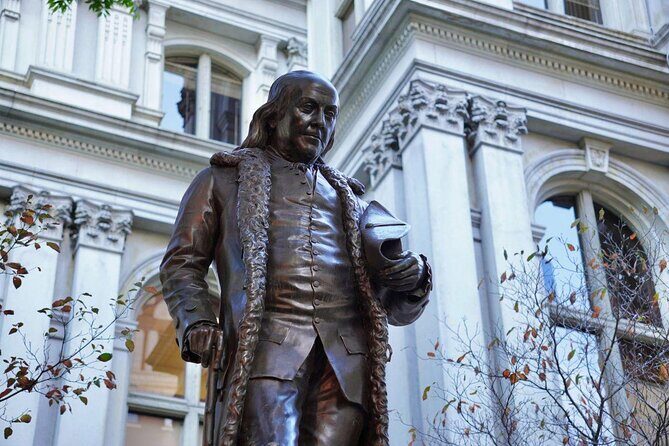
You’ll follow major Freedom Trail sites and also hit stops such as Faneuil Hall, the old State House, Granary Burying Ground, and King Chapel areas. You’ll also have stops connected to JFK and Benjamin Franklin’s birthplace.
Can I revisit the tour after I complete it?
Yes. After completion, you get 360-degree photo guides and you can listen anytime.
Are there any time limits for specific stops?
Granary Burying Ground is only open 9 to 5, so you’ll want to plan around that.
Can I get a refund if my plans change?
Yes. You can cancel for a full refund if you cancel at least 24 hours in advance of the experience’s start time.