REVIEW · BOSTON
PRIVATE Authentic Revolutionary Boston Walking Tour
Book on Viator →Operated by Authentic Revolutionary Boston Tours · Bookable on Viator
Lanterns, tea, and tense politics start here. This private walk strings together Boston’s Revolution with a story built for today, moving from Boston Common to Haymarket in a tight, easy-to-follow route. You’ll get a custom feel because your guide can adjust what you focus on as you go, and the history comes with an eye toward modern ideas of citizenship and fairness.
private Revolutionary Boston tour
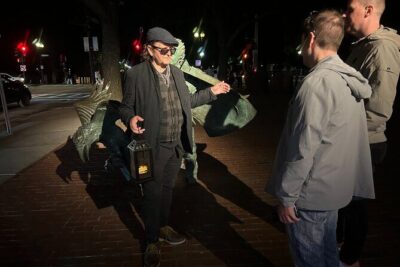
I love that it’s private, not a crowded lineup, so your guide can slow down, speed up, or spend extra time on what matters to your group. I also like the 21st-century angle: the Revolution is explained in a way that pushes you to think, not just memorize dates and names. On top of that, guides (like Adam, who’s known for showing up in period-style British uniform and mixing humor with facts) bring real personality to the walk.
One consideration: several of the famous buildings are viewed from the outside, and the interiors require separate tickets. That means your final cost can rise a bit if you decide to go in. extra museum tickets
In This Review
- Key highlights at a glance
- A private Boston Revolution walk you can actually steer
- What you should expect from the format
- Boston Common: the political stage before the Revolution story starts
- Granary Burying Ground: the cemetery that changes the demographics you assume
- King’s Chapel: global connections, with a ticket choice
- Old South Meeting House: the Tea Party story, widened
- Old State House: the Boston Massacre legacy near the intersection
- Faneuil Hall Marketplace: a fast stop with big meaning
- Old North Church: lanterns, plus the freedom and bondage paradox
- Timing, walking pace, and how to plan around museum tickets
- A smart way to decide on the inside tickets
- Price and what makes this tour good value
- Who this tour is best for (and who might skip it)
- Accessibility and real-world walking needs
- Should you book the Private Authentic Revolutionary Boston Walking Tour?
- FAQ
- FAQ
- How long is the walking tour?
- What does the $75 per person price include?
- Are we going inside the churches and meeting houses?
- Where does the tour start and end?
- Is this tour private?
- Can the guide tailor the tour to our interests?
- What happens if the weather is bad?
Key highlights at a glance

- Adam-style showmanship plus accuracy: history told with humor and strong preparation
- Outside-first stops: you see the major sites without feeling rushed through interiors
- Inclusive, modern framing: the Revolution is tied to today’s questions about rights and power
- Customizable for your group: your guide can adjust the emphasis and pace
- Bathroom intel included: your guide knows where the cleanest public bathrooms are
A private Boston Revolution walk you can actually steer
The best part of a private tour is simple: you’re not stuck with someone else’s interests. With this one, you can shape the walk around your questions—war history fans can focus on military and political strategy, while others can spend more time on social impact, debates, and the human contradictions of the era.
I also appreciate that this isn’t treated like a museum script. The guides aim to make the story matter in the present—thinking about citizenship, critical thinking, and how diverse voices fit into what we call Revolutionary history. That approach works especially well in Boston, where it’s easy to get stuck in a monuments-and-maps mode.
If you want a guide with personality, you’re in good hands. Reviews highlight Adam specifically: he shows up in a fake British uniform, runs the tour smoothly, and turns facts into something you can follow without effort. It’s not just performance—his preparation and practical pacing come through.
You can also read our reviews of more walking tours in Boston


What you should expect from the format
This is a one-on-one-group experience (your group only), built around a short sequence of stops you can reach on foot. The total walking time is about 1 hour 30 minutes to 2 hours, so it fits well between meals and museum visits. Also, you’ll mostly be looking at sites from the outside, with interior access available only if you buy separate tickets.
Boston Common: the political stage before the Revolution story starts
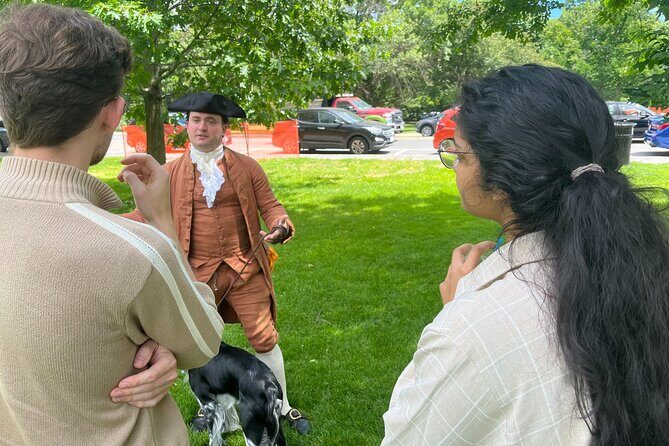
Boston Common is more than a nice park. It’s the oldest public park in the United States, and it carries symbolic weight as a civic gathering place. When your walk begins here, it sets the tone: this is where public life happened, where ordinary people and leaders met, argued, and shaped decisions.
A good guide will help you notice how a public space can become political space. You’re not just seeing “a park”; you’re standing at a physical reminder that politics in Boston grew out of shared territory—where the community could see each other and show up.
Practical note: The stop is part of the free segment of the tour, so you can enjoy it even if you decide not to buy any interior tickets later.
Granary Burying Ground: the cemetery that changes the demographics you assume

The Granary Burying Ground stop is quick, but it’s designed to shift your perspective. This is one of Boston’s oldest cemeteries, and the tour points out lesser-known details that the graves can reveal—especially the radical demographics behind the names and dates you might otherwise gloss over.
If you usually think of Revolutionary-era history as a story of a small group of prominent men, this stop pushes back gently. Cemeteries don’t only record who mattered to the elite. They can also hint at who lived around the revolution’s center, what kinds of families were present, and how society looked beneath the headlines.
Why it’s valuable: it’s a reminder that major political change doesn’t happen in a vacuum. It grows from communities, neighborhoods, work, family ties, and social mixing—some of which people forget when they stick to textbook narratives.
King’s Chapel: global connections, with a ticket choice

King’s Chapel is a standout because it shows the international scope of Revolutionary-era life in Boston. The tour pauses outside to connect what you’re seeing with the broader reach of the conflict and the relationships that crossed oceans.
Important: you’ll pause and speak outside, but entrance into the chapel requires a separate private ticket. If you’re the type who likes to confirm what you hear with an interior visit, plan on buying that ticket in advance. If you prefer the walk to stay moving, you can skip the inside without losing the main story arc.
The trade-off: interiors cost extra, but they can make the exterior story stick. If time is tight, your guide can help you decide how deep to go.
You can also read our reviews of more private tours in Boston






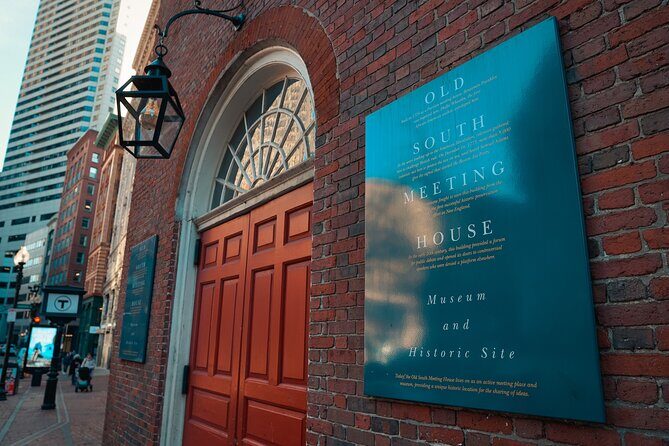
Old South Meeting House: the Tea Party story, widened

Old South Meeting House is famous for being tied to the Boston Tea Party, but the tour approach here is to keep going past the headline. You’ll pause and talk outside, then the guide reframes the building in its broader significance.
This is where you start noticing the difference between a quick “Freedom Trail highlight” and a more interpretive walk. A place like Old South is not only a backdrop; it was part of how people organized, argued, and committed to action. The Revolution was sold in speeches and carried out through decisions made in public spaces.
Extra ticket note: entrance into the Meeting House requires a separate private ticket, so treat it as optional. If you do buy the ticket, you’ll likely get more context on the meeting culture and the political pressure around commerce.
Old State House: the Boston Massacre legacy near the intersection

The Old State House stop connects to the city’s leading museum about the Boston Massacre. Again, you’ll pause and speak outside at the adjacent intersection, with entrance into the Old State House requiring a separate ticket.
This stop can be emotionally heavy if you’re sensitive to conflict stories, but it’s also useful because it anchors the Revolution’s tensions in real events. Instead of treating the massacre as a simple spark, the guide’s framing helps you see it as part of a bigger relationship problem—between communities and authorities, between fear and propaganda, and between daily life and political escalation.
Practical tip: since you’re at an intersection, it’s a great spot for photos and for regrouping. Your guide can also use this moment to recalibrate for what your group wants next.
Faneuil Hall Marketplace: a fast stop with big meaning

Faneuil Hall Marketplace is the kind of place you could walk past without realizing how loaded it is. On this route, it’s a short stop, about 5 minutes, but it’s timed well.
Here’s the value: it’s described as a meeting space, a marketplace, and a British armory—meaning you see how commerce, politics, and military pressure all crowded into the same urban life. The Revolution wasn’t only fought with muskets. It was fought with influence, access, supplies, and who got to decide what came next.
This is a free stop in the tour’s structure, so it adds meaning without ticket friction.
Old North Church: lanterns, plus the freedom and bondage paradox

Old North Church & Historic Site is one of the most recognizable lantern locations tied to the Revolution. On this tour, you’ll pause and speak outside, focusing not only on the lantern signaling but also on the paradox of freedom and bondage in that era.
That added lens matters. Many visits can feel like a clean hero story: messages carried, plans executed, rights claimed. This stop forces a more complicated question—who was actually free, who paid the price, and how societies talked about liberty while maintaining systems that contradicted it.
As with other interiors here, entrance into the church requires a separate private ticket. If you buy it, you’ll likely get deeper context that complements the outside framing.
If you care about social history: this is the stop where the modern, inclusive approach is easiest to recognize.
Timing, walking pace, and how to plan around museum tickets
The tour lasts about 1 hour 30 minutes to 2 hours. That’s enough time to cover multiple major sites without feeling like you’re on a nonstop march.
You’ll also want to plan around good weather. The experience requires decent conditions, and if it’s canceled for poor weather, you’ll be offered a different date or a full refund. Boston weather can swing fast, so keep an eye on forecasts the day before.
Start point is the Boston Common Visitors Center at 139 Tremont St, and the ending point is Haymarket at 100 Hanover St. The route end can be customized depending on what you’re most interested in and the logistics of the rest of your day.
This is also designed to be doable with public transit nearby. If you’re juggling museums afterward, the start and finish locations make it easier to connect to other stops rather than returning to the same place.
A smart way to decide on the inside tickets
Several major sites have optional interior admission: King’s Chapel, Old South Meeting House, Old State House, and Old North Church & Historic Site.
You don’t have to do all of them to get a great tour. Pick based on your priorities:
- If you want architectural or interpretive context, choose one or two interiors.
- If you prefer to maximize walking conversation, stick to the outside pauses.
- If your group includes kids or people with limited stamina, consider skipping the extra entrances unless you’re sure everyone wants them.
Price and what makes this tour good value
The price is $75 per person, and it’s a private tour—your group only. At this level, you’re paying for more than movement between sites. You’re paying for:
- a guide who can customize the emphasis to your interests
- newer research framing on iconic figures and places
- a story told with attention to diverse and inclusive perspectives
- time saved by having a structure that hits the major points without you building a route yourself
But there’s one cost reality to plan for: museum and church tickets for the interiors are not included. So your effective total depends on whether you add those optional entrances.
The practical bargain is that you still get the main historical narrative with outside viewing, so you’re not stuck paying for everything to have a meaningful experience.
Also, the tour uses a mobile ticket, which cuts down on logistics when you’re moving around a busy city.
Who this tour is best for (and who might skip it)
I’d book this if you want more than a list of famous places. This works best when you:
- care about Revolutionary history that connects to modern questions
- want a story that includes more than the usual handful of voices
- like guides who can adjust to your interests and keep things readable, not lecture-style
- want a private format where you can ask questions freely
It also fits multigenerational groups. The framing is built to be understandable for young or old, and the “active citizenship” approach is geared toward making you think, not just watch.
If you’re the type who wants a completely self-guided route with no interpretation at all, this might feel like a splurge. But if you enjoy conversation and interpretation, the guide time is the core value.
Accessibility and real-world walking needs
The walking route and pace are presented as doable for most travelers. One review specifically mentions wheelchair navigation help from the guide, which suggests the guide can support adjustments in how you move through the city.
That said, since the tour includes multiple outdoor stops and short pauses, you’ll still want to consider your group’s mobility range. If anyone in your party has specific needs, message the operator when you book so your guide can plan accordingly.
Should you book the Private Authentic Revolutionary Boston Walking Tour?
Book it if you want a Boston Revolution story that’s structured but not rigid—where you can steer the emphasis, where the guide adds context beyond slogans, and where the telling includes more modern, inclusive thinking. The $75 per person price feels more justified when you treat it as guided interpretation plus optional museum time, not just a walking transfer between landmarks.
Skip it only if your goal is purely to check off sites with minimal talking, or if paying for several separate interior tickets won’t work for your budget.
My quick checklist:
- You want private guide attention
- You’re open to optional interior tickets at specific stops
- You want a Revolution story tied to today’s ideas, not just old dates
- You like a guide who brings energy and humor, including period-style touches like Adam’s uniform
If those fit, you’ll likely come away with a clearer, more human picture of Boston’s Revolutionary era—and a better sense of why those streets still matter.
FAQ
FAQ
How long is the walking tour?
It runs about 1 hour 30 minutes to 2 hours.
What does the $75 per person price include?
The tour includes the guided walking experience with stops mainly viewed from the outside. Admission for private museums and sites along the route is not included.
Are we going inside the churches and meeting houses?
You will pause and speak outside at those sites. Entrance into places like King’s Chapel, Old South Meeting House, Old State House, and Old North Church requires separate private tickets.
Where does the tour start and end?
It starts at the Boston Common Visitors Center, 139 Tremont St, Boston. It ends at Haymarket, 100 Hanover St, Boston. The end point can be customized depending on your booking and logistics.
Is this tour private?
Yes. It is a private tour/activity, so only your group participates.
Can the guide tailor the tour to our interests?
Yes. The guides can customize the tour details to your needs and interests.
What happens if the weather is bad?
The experience requires good weather. If it’s canceled due to poor weather, you’ll be offered a different date or a full refund.