REVIEW · BOSTON
Boston Freedom Trail Self-Guided Tour with Audio Narration & Map
Book on Viator →Operated by Stories with Action · Bookable on Viator
Freedom Trail day can feel too big or too rushed. This self-guided audio walk lets you follow the red-brick path at your own rhythm with hands-free GPS playback and offline maps. The main catch: you’re committing to a steady 3 to 4 hours of walking over more than 3 miles, and the app depends on your phone working well.
I also like the flexibility. You choose when to start, stop, and replay sections, and you don’t have to fight for good hearing over a crowd. And at $9.99, the value comes from the long list of stops and the fact you keep lifetime access—no expiry, no re-buying for a next trip.
One more consideration: the tour is designed to guide you by location, so if GPS or audio glitches happen on your device, you may spend extra time fixing it. Some people report the navigation can be slightly fussy, so bring a charged phone and download before you step outside.
In This Review
- Key points before you go
- Your day, your pace on the Freedom Trail
- Price and value: $9.99 for 3–4 hours of built-in history
- Before you press play: download now, plan for no-signal later
- How long is it really? Distance, timing, and ending in Charlestown
- Boston Common to the Massachusetts State House: the Revolutionary setup
- Granary Burying Ground and Old South Meeting House: stories you can’t skip
- Boston Massacre Site and Old State House: when conflict turns real
- Faneuil Hall Marketplace, Haymarket, and the Custom House Tower views
- Paul Revere’s House to Old North Church: lanterns and the midnight ride
- USS Constitution, Charlestown Navy Yard, and Bunker Hill Monument
- Who should book this audio tour (and who might not love it)
- Should you book the Boston Freedom Trail self-guided audio tour?
- FAQ
- How long does the Freedom Trail self-guided audio tour take?
- Can I start and stop whenever I want?
- Does it work offline?
- What does the $9.99 include?
- Where does the tour end?
- How do I access the tour after booking?
- What if I need to cancel?
Key points before you go
- GPS-triggered audio plays automatically when you reach each story point
- Offline maps mean you can keep walking even with weak or no signal
- Lifetime access lets you repeat the tour on future Boston trips
- 16 free stop highlights run from downtown to Charlestown’s Navy Yard and Bunker Hill
- Easy pace control: pause for photos, snacks, or detours without losing your place
- Low cost for a full route at $9.99 per person with more than 51 audio stories
Your day, your pace on the Freedom Trail
Boston’s Freedom Trail is one of those routes that looks simple on a map and feels big in real life. This tour helps because it stops you from guessing. You follow the red-brick line, and the audio cues come to you as you reach the next point.
You get the best part of guided touring—story context—without the least-fun part: being locked into a group’s pace. Want to linger at Boston Common for a full coffee-and-people-watch break? Do it. Want to zip through the cemeteries and come back later? The tour lets you shape the day.
Also, you’re not stuck with one start time. You can go when it works for your schedule, as long as you start the audio tour app at your starting point on-site. No guide is meeting you at a plaza with a sign.
You can also read our reviews of more guided tours in Boston



Price and value: $9.99 for 3–4 hours of built-in history

At $9.99 per person, the math is pretty straightforward. You’re paying for:
- a walking route worth of explanations (more than 51 audio stories),
- a map you can use offline,
- and access that does not expire.
That lifetime access matters more than you’d think. If you only have one partial day in Boston, you can do it in sections, then come back later and re-listen to what grabbed you. The tour is also designed so you can keep moving even if you’re not stopping at every building.
One small value tip: if you’re a couple, you can share one tour by splitting headphones. It’s listed as a savings approach, and it can help your cost per person feel even smaller.
Before you press play: download now, plan for no-signal later

This is a phone-based experience. You access it through Action’s Tour Guide App, and you’ll receive a password by email and text after booking.
Here’s the part that affects success most: download the tour while you’re in strong wifi or cellular. After that, it works offline. So you can walk the trail without data fears—but you can’t rely on downloading later.
Practical advice I’d follow:
- Make sure your phone is charged before you start. You’ll be outdoors for hours.
- Wear earbuds/headphones the whole walk so you don’t miss story cues.
- Keep your eyes up for the red-brick markers. The audio helps, but you still need to walk the route.
If something goes wrong with GPS or the audio timing, you’ll want patience. Some people have reported that the automatic location didn’t always line up perfectly and required extra attention. If you prefer a hands-off experience 100% of the time, this is worth knowing upfront.
How long is it really? Distance, timing, and ending in Charlestown

The route is described as 2.5 miles for the Freedom Trail walk, but it can run over 3 miles depending on how you move through the stops. Expect about 3 to 4 hours on average.
That time estimate lines up with how the stops are paced. Many are short photo pauses (often around 5 minutes), while the busier hubs get more time. For example, Faneuil Hall Marketplace and Quincy Market get longer, and Haymarket is given more time than the quick markers. Then you finish with Bunker Hill Monument, which naturally invites a slower walk around the hill.
Also, this tour ends in a different location. Since the last stop is Bunker Hill Monument, plan your return based on where you begin versus where you finish. If you parked and planned to walk back, realize it can become a long haul. One review specifically flagged a long walk back as an unpleasant surprise—so check your transport options before you start.
Boston Common to the Massachusetts State House: the Revolutionary setup

This is where the Freedom Trail starts feeling like a story instead of a checklist.
You begin at the Freedom Trail route itself, then step into Boston Common, a green space tied to the city’s early colonial days. The audio typically starts you at a sensible baseline—begin around the Visitor Center area, then locate the red-brick path from there.
From Boston Common you reach the Massachusetts State House, and that golden dome is impossible to miss. This is a great early stop because it introduces the people and the political ideas driving the Revolution. You’ll also get pointed toward Robert G Shaw and the 54th Regiment memorial opposite the State House, which helps connect Revolutionary-era change with the bigger sweep of American history.
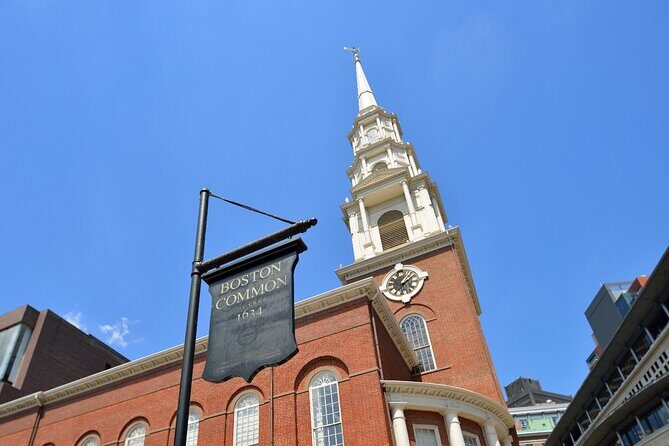
Next comes Park Street Church. This stop is useful if you want a clear cause-and-effect moment: the audio focuses on what sparked the Revolutionary War and how that conflict connects to other wars and power struggles beyond the colonies.
What I like here: these first blocks give you names and motivations before you hit the more dramatic sites.
Potential drawback: if you’re trying to speed-run the trail, these stops may feel like more “set up” than “action,” so decide how long you want for each.
You can also read our reviews of more tours and experiences in Boston





Granary Burying Ground and Old South Meeting House: stories you can’t skip

From Park Street Church the trail pushes you into Boston’s layered memory, and it does it well.
At Granary Burying Ground, the audio turns a cemetery walk into a timeline. It’s established in 1660, and it includes the graves of major Revolutionary-era figures like Paul Revere, Robert Paine, James Otis, John Hancock, and Sam Adams. One especially memorable detail here is that the ground is said to hold the grave of Mother Goose, which gives the experience a human, slightly surprising angle rather than only dates and names.
Then you head toward the Boston Irish Famine Memorial. This stop shifts the story forward into immigration after the Revolution, focusing on hardship and resilience, and where those communities ended up.
A few steps away is Old South Meeting House—and it’s a key mid-route pivot. This is where the audio frames the lead-up to the Boston Tea Party, including organizers, motivations, and what happened afterward.
Why this section works: it stops you from thinking Revolution history is only about battles. You see how communities formed, suffered, and organized.
Watch for: cemetery stops are easy to treat as quick passes, but the audio here can reward a little slowing down.
Boston Massacre Site and Old State House: when conflict turns real
After the Tea Party context, the trail moves to the moment that tightens the screws.
At the Boston Massacre Site, the audio challenges how you label the event. It brings up the British framing versus the colonial view, then tells the story at the spot where it happened. Crispus Attucks is highlighted too, which matters because it adds clarity to who people were actually talking about when the Revolution story gets told.
Then you reach the Old State House. This stop is both architectural and political. You’ll pause to identify key features and learn why this building mattered across its long life. The audio also bridges from early unrest to the structures that would come out of it.
Practical note: this stretch is more “stand and listen” than “walk fast.” If you’re wearing your best walking shoes but you hate pausing, you’ll still want to give these stops a fair chance.
Faneuil Hall Marketplace, Haymarket, and the Custom House Tower views

Now the trail hits a point where the Revolution story meets modern Boston life.
At Faneuil Hall Marketplace (and the connected Quincy Market area), the audio gives you the site’s history and then—importantly—lets you pivot to real-world exploration. This is one of your best chances to grab food without feeling like you broke the tour. The stop is set up for longer time, so it’s not just a quick look.
From there you reach Haymarket, where the story adds more than one layer. The audio covers Haymarket’s historic angle, points you toward the Holocaust Memorial out in front, and includes mention of the view of the Custom House Tower beyond.
What I’d do here: treat this as your lunch or snack decision point. If you use the audio tour like it’s meant to be used—pause when you need breaks—Haymarket is a perfect place to reset.
Reality check: parts of this route can be crowded, especially on busy days. If you’re sensitive to foot traffic and impatient with stop-and-go walking, start earlier or plan for slower movement near the commercial hubs.
Paul Revere’s House to Old North Church: lanterns and the midnight ride
The North End portion is where Boston’s Freedom Trail becomes pure legend—along with the myths people repeated for generations.
At Paul Revere’s House, the audio covers the famous Midnight Ride and also addresses the poem by Henry Wadsworth-Longfellow, which is a smart addition. It reminds you that many famous moments are shaped by how writers retell them. You get both the event and the storytelling layer that wrapped it.
Then you continue to the Old North Church, the iconic lantern spot. This is the one that people remember: one if by land, two if by sea. The audio connects that quiet signal to the movements of British troops and the colonial network watching for them.
After that comes Copp’s Hill Burying Ground. This cemetery has a different flavor than Granary: it’s older than Granary by a year, but the mood changes because the grounds feel tighter and more hill-shaped.
Why these stops matter: by the time you reach this section, you’re no longer just learning facts. You’re learning how Boston preserved its memory through buildings, graves, and stories passed down.
USS Constitution, Charlestown Navy Yard, and Bunker Hill Monument
The last stretch is the most dramatic physically, too.
You cross into Charlestown Navy Yard area and see USS Constitution. The audio explains her significance and her battle against the Guerriere. Even if you don’t linger at every side angle, this is where the tour’s stakes become obvious: the Revolution wasn’t only fought on streets and in meeting houses.
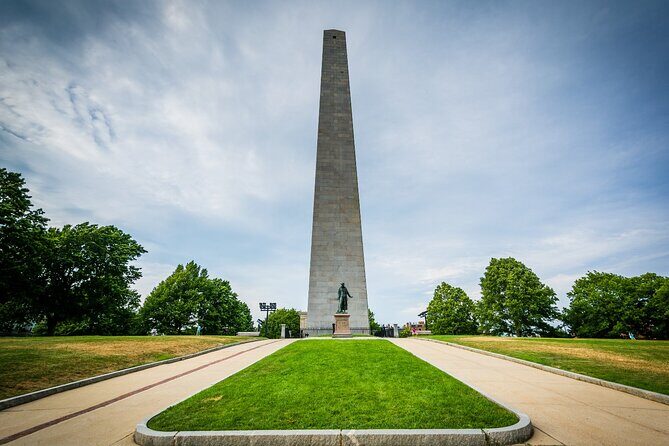
Then comes the final “wow” stop: Bunker Hill Monument. The audio frames it as a commemoration of the Battle of Bunker Hill, and it pushes you to understand the brutality and intensity of what happened on that hill. The time allocation here is longer, which matches what the site encourages you to do: walk around, take photos, and absorb the scale.
How to finish strong: don’t rush out the moment you finish the last audio story. Bunker Hill is a good place to end your day because the viewpoint and the scale help make the rest of the route feel connected.
Who should book this audio tour (and who might not love it)
This tour is a great match if:
- You want a self-guided way to understand the Freedom Trail without crowd pressure.
- You like learning from audio while walking, stopping, and then continuing.
- You’d rather control breaks around food, photos, and side wandering.
- You’re traveling solo or with a small group and want flexibility.
You might want a different option if:
- You dislike using your phone outdoors for navigation.
- You’re worried about GPS working perfectly at all times. (The tour is designed for location-based playback, but some reports mention it can require attention.)
- You’re not comfortable with a long, steady walking day.
Should you book the Boston Freedom Trail self-guided audio tour?
For $9.99, I think this is one of the smarter ways to do the Freedom Trail if you care about context but don’t want to be chained to a group schedule. The offline setup, the automatic location-based playback, and the lifetime access make it feel like a deal that keeps paying you back on future visits.
Book it if you want to hear the stories in order, at your pace, while staying on the red-brick route. I’d especially choose it if you’re the type who hates paying big money for a guided tour but still wants to understand what you’re looking at.
If your phone battery is shaky or you hate troubleshooting, plan ahead: download with strong wifi and keep a charged power source.
FAQ
How long does the Freedom Trail self-guided audio tour take?
It’s listed as about 3 to 4 hours for the walking route. The route is described as 2.5 miles, with notes that it can be over 3 miles.
Can I start and stop whenever I want?
Yes. It’s self-guided, so you can start at the starting point by launching the app and you can pause and resume when you like.
Does it work offline?
Yes. You must download the tour while in strong wifi/cellular, and then it works offline after download.
What does the $9.99 include?
It includes the audio narration, the map, and app access for the walking route. It does not include attraction passes, entry tickets, or reservations.
Where does the tour end?
The tour ends at a different location than where you start, and the last stop is Bunker Hill Monument, so expect to finish in the Charlestown area.
How do I access the tour after booking?
After booking, you receive email and text instructions with a password. Then you download Action’s Tour Guide App, enter the password, and start the tour at the first story point on-site.
What if I need to cancel?
There is free cancellation up to 24 hours in advance for a full refund. If you cancel less than 24 hours before the experience’s start time, the amount paid is not refunded.