REVIEW · BOSTON
Entire Freedom Trail Walking Tour: Includes Bunker Hill and USS Constitution
Book on Viator →Operated by Walk & Talk Boston Walking Tours · Bookable on Viator
Boston’s Revolution story moves fast on foot. The entire Freedom Trail gets packed into one walk, finishing with USS Constitution in Charlestown. You’ll connect the dots between courts, churches, speeches, and battle sites—so the American Revolution feels like a chain reaction, not a chapter list.
I love that the tour covers the full route (about 2.8 miles) instead of stopping early. I also love the way the guide ties locations together with clear, conversational storytelling—many groups are led by Mark, who keeps the pace comfortable and the questions flowing.
One thing to consider: it’s still a 4-hour walking experience with frequent stops, so you’ll want comfortable shoes and a reasonable fitness level. If you’re traveling with kids under 12 who aren’t into history yet, this can feel like a lot.
In This Review
- Key things you’ll like about this Freedom Trail tour
- Why the Freedom Trail feels different when it’s guided end-to-end
- Price and what makes this $79 value work
- Your walk starts at Beacon Street, then hits the Massachusetts State House
- Park Street Church to Granary Burying Ground: protest, sermons, and the people in the ground
- King’s Chapel: where colonial belief and royal control collided
- Old City Hall, Old South Meeting House, and Old State House: courts, meetings, and street violence
- Faneuil Hall and the speech-makers: ideas that traveled from stage to streets
- Ebenezer Hancock House and the Paul Revere House: money, printing, and a family life
- Old North Church and Copp’s Hill: the message and the terrain that mattered
- Bunker Hill Monument: the battle lesson you can actually visualize
- USS Constitution Museum area: ending at Old Ironsides
- Who should book this (and who may prefer a shorter Freedom Trail)
- Should you book this Freedom Trail walk with Bunker Hill and USS Constitution?
- FAQ
- How long is the Freedom Trail walking tour?
- How far do you walk?
- What’s the meeting point and where does the tour end?
- What time does the tour start?
- Is admission to buildings included?
- What language is the tour offered in?
- How many people are in the group?
- Is a mobile ticket provided?
- Is gratuity expected?
- What’s the cancellation policy?
- Is the tour dependent on weather?
Key things you’ll like about this Freedom Trail tour
- Full trail in one go: you hit the downtown landmarks, then push on to Charlestown for Bunker Hill and the ship
- Small group size (max 16): easier to hear, easier to keep everyone together, less milling around
- Real pacing, not a marathon: the stops are short (often 5–10 minutes each), and the walk stays manageable
- Bunker Hill + USS Constitution included: two major highlights most half-tours miss
- Short, practical site context: you learn why each place mattered, not just what it is
- Good fit for history-minded teens: a fun family option if your group likes stories with cause-and-effect
Why the Freedom Trail feels different when it’s guided end-to-end
The Freedom Trail is famous for a reason: it’s a built-in walking map of revolutionary events across Boston. But on your own, you can miss the point. A guided route changes what the same streets and buildings mean.
On this tour, the story stays connected. You start with government buildings and protest-worthy churches, then move to burial grounds and meetinghouses where ideas spread. By the time you reach the march-route clues in Charlestown, the timeline clicks. It stops feeling like memorizing dates and starts feeling like watching history happen in real time.
The big value here is that you don’t have to “choose” between downtown and the later stops. You get the full arc: from colonial power and religious tension to public speeches, to violence in the streets, to the battle geography you can actually see from the ground. And you end at USS Constitution—the kind of place that makes history feel physical.
Finally, the tour is built for conversation. You’ll be able to ask questions, and the guide’s tone tends to be friendly and funny, which matters when you’re standing outside for hours.
You can also read our reviews of more walking tours in Boston


Price and what makes this $79 value work
At $79 per person for about 4 hours, the cost only feels “high” if you expected a quick stroll with a brief overview. This is not that. You’re paying for:
- a guide to narrate the full route and connect events
- time saved versus piecing together multiple partial tours
- entry-free orientation at many major sites (interiors are not included)
The tour also includes guide gratuity as handled by the operator, with the stated note that the guide does not expect or accept gratuities. That’s useful because it removes a common travel anxiety: you can focus on the experience, not the tipping math.
Distance is another value point. You’re looking at roughly 2.8 miles total, and groups have described it as a bit like stepping through about 10,000 steps worth of Boston history. If you’ve already planned other paid activities that overlap (like a separate Bunker Hill trip), doing everything in one organized walk can be more economical than you’d expect.
One practical timing note: tours like this can be in demand. The average booking lead time is listed at about 55 days, so earlier planning helps.
Your walk starts at Beacon Street, then hits the Massachusetts State House
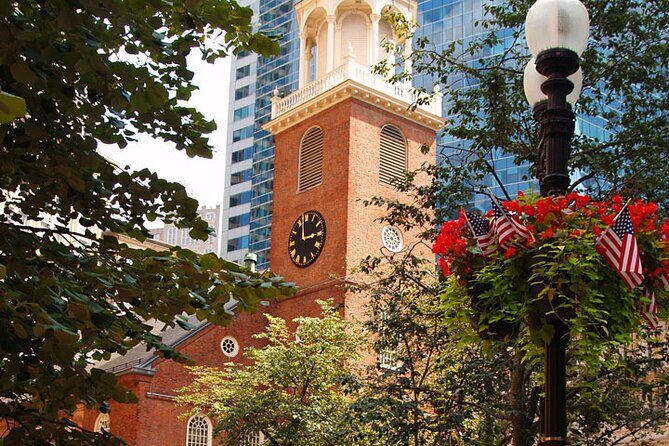
The tour begins at Beacon St @ Park St and stays in the heart of downtown. Right away, you’ll see why the Freedom Trail story begins with power.
At the Massachusetts State House, you’ll get a quick look at all three Massachusetts government buildings used as the seat of government—plus context on the current State House design credited to Charles Bulfinch. This stop matters because the Revolution wasn’t only muskets and ships. It was also arguments over authority: who gets to govern, and who gets to decide.
What to expect: a short, focused visit outside. Admission to interiors is not included, so don’t plan on wandering in unless you add that separately.
Potential drawback: because it’s a government area, you may need to tolerate a bit of sidewalk traffic as you meet the group’s timing. The upside is that the tour uses these central locations to keep your route efficient.
Park Street Church to Granary Burying Ground: protest, sermons, and the people in the ground

Next you’ll pass Park Street Church, described as once being the tallest building in the country. You’ll also hear how it ties into the abolition movement, along with the nickname Brimstone Corner—for the fiery sermons and a surprising cellar use. This is one of those stops where you realize the Revolution story was also about moral pressure and public persuasion.
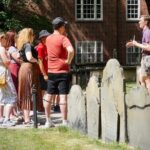
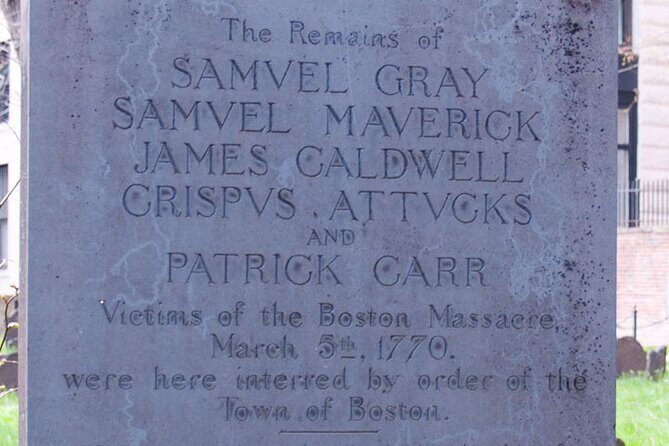
Then you’ll walk to Granary Burying Ground, a cemetery where key Revolution figures are laid to rest. You’ll get brief introductions to major names, including Samuel Adams, Paul Revere, John Hancock, and the victims of the Boston Massacre. This is a powerful moment—not because it’s dark, but because it personalizes the movement. People aren’t just symbols here; they’re individuals whose actions helped shape events.
What to expect: outside time with a guide-led mini-lesson. Graveside details are brief by design, since you’re on a walking schedule.
Possible consideration: cemeteries and churchyard areas can involve uneven ground and standing space limits. Wear shoes that handle street-to-sidewalk-to-gravel transitions without drama.
King’s Chapel: where colonial belief and royal control collided
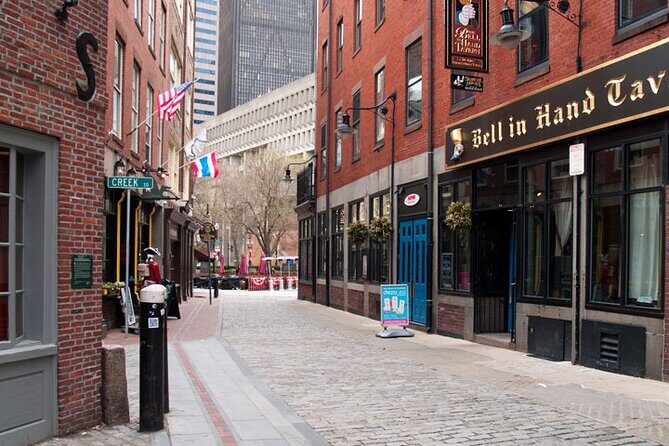
At King’s Chapel, you’ll visit a 1749 Anglican church tied to the first conflicts between Puritans and the King. The story here centers on land being used for a church that wasn’t wanted by local Puritan communities in Boston.
This stop isn’t just about a building. It’s about the Revolution’s deeper fuel: control over daily life, not only political policy. When you understand that religious and political tension overlapped, the later scenes of protest and violence start making more sense.
What to expect: a short, narration-focused stop outside the church area. Again, interiors aren’t included, so plan to listen, take photos, and move on.
Drawback to plan around: the Freedom Trail is mostly on foot and mostly outdoors. If weather turns (hot sun or wind), you’ll feel it here. A bit of planning—water, hat, and layers—helps a lot.






Old City Hall, Old South Meeting House, and Old State House: courts, meetings, and street violence
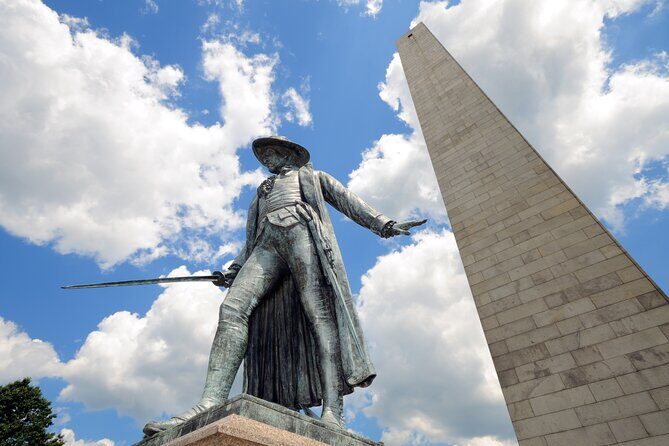
Then the route shifts back to civic buildings and the machinery of power.
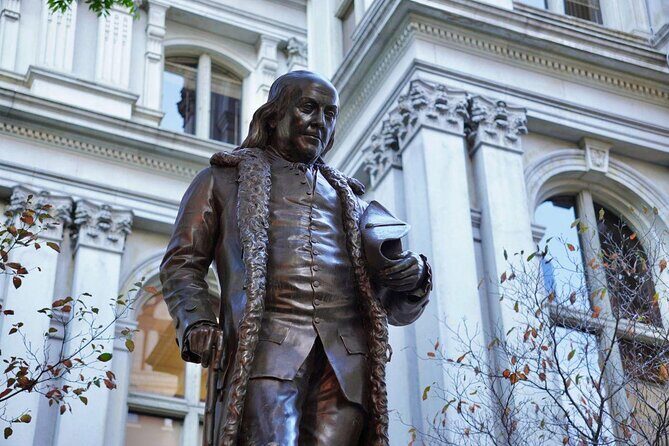
At Old City Hall, you’ll see the statue of Benjamin Franklin and a marker commemorating the oldest and still-operating school in the colony. This is a good moment to talk about how education and public ideas fed the independence movement.
At Old South Meeting House, you’ll learn why meeting halls mattered so much in colonial times—where preachers and politicians spoke and where organizing happened. This is also linked to the Boston Tea Party through Samuel Adams’ role in launching it. The key is the cause-and-effect: meetings led to action, and action helped make war more likely.
Finally, you’ll reach Old State House, which was once the seat of British government power in Boston. You’ll hear about a fiery court battle in 1761 that demonstrated disregard for colonial rights. Then the focus turns to the 1770 Boston Massacre site, with a discussion that invites you to think critically about what happened.
What to expect at these stops: the guide moves quickly but gives enough context that each location becomes understandable on its own. You’ll usually spend around 10 minutes per stop.
Possible consideration: these are emotional stories. If your travel group prefers lighter pacing, you can still enjoy this tour—just know the middle-to-late downtown stops lean darker than a typical sightseeing walk.
Faneuil Hall and the speech-makers: ideas that traveled from stage to streets
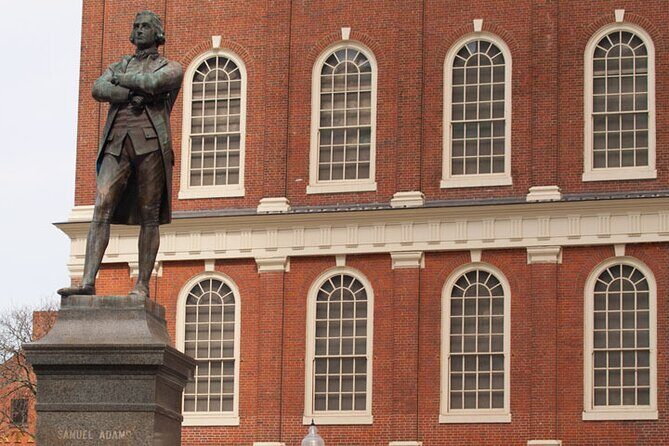
At Faneuil Hall Marketplace, you’ll connect the Revolution to public speaking. The hall hosted major speakers like Samuel Adams with the no taxation without representation message, and it also ties to Frederick Douglass in the broader struggle against slavery and oppression.
Even if you’ve heard the names before, standing in the right place changes how you remember the details. You’ll understand why public forums mattered: it was one thing to believe something. It was another thing to rally people around it in a shared space.
What to expect: this stop tends to be quick and conversational. Admission isn’t listed as included for interiors, so treat it as an outside learning stop.
Ebenezer Hancock House and the Paul Revere House: money, printing, and a family life
Next comes Ebenezer Hancock House. You’ll see context on what existed in the Blackstone Block, including offices linked to the newspaper Massachusetts Spy. You’ll also hear about headquarters of the Revolution (noted as a bar today) and the home of Ebenezer Hancock, with details about money sent from France supporting the Revolution.
From there you’ll reach the Paul Revere House, one of the oldest remaining homes in Boston. Here the focus isn’t only on Revere the messenger. You’ll also get a sense of family life—he bought the house in 1770 where he raised children with two wives.
What to expect: both are short stops, with time to orient yourself and capture photos. Interior admission is not included, so you’ll rely on the guide’s narration and exterior details.
Possible drawback: these housing stops are compact. If your group wants long personal exploration, you might find the stop lengths tight. But the tradeoff is that the guide gets you to the next major turning point in time.
Old North Church and Copp’s Hill: the message and the terrain that mattered
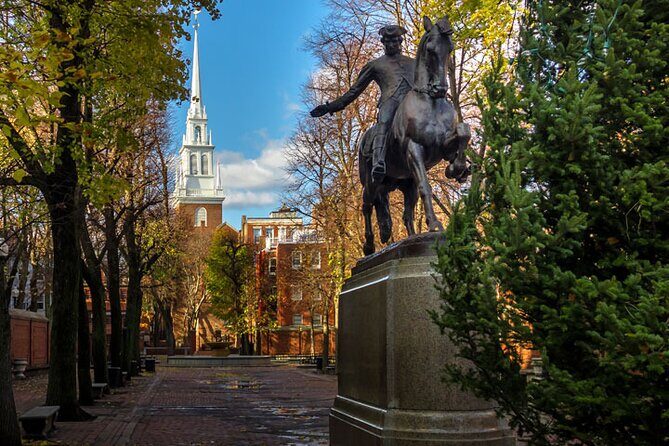
In Charlestown’s story setup, Old North Church & Historic Site plays a big role. You’ll learn how it helped notify Patriots across narrow waters that British regulars would pass through Cambridge on their march to Lexington and Concord.
This is one of the best narrative bridges on the tour: the Revolution stops being a list of events and becomes a story of information flow and timing.
Then you’ll walk to Copp’s Hill Burying Ground. The guide uses this stop to help you understand the geography of the Battle of Bunker Hill, plus you’ll visit a grave marker with an interesting story.
What makes this pair special: Old North explains the communication side; Copp’s Hill helps you grasp the battlefield terrain side. Together, they train your eye to see why location mattered.
Possible consideration: these areas can involve steps or sloped ground depending on your route. The tour is still described as manageable, but shoes with good grip help.
Bunker Hill Monument: the battle lesson you can actually visualize
At Bunker Hill Monument, you’ll learn about the Battle of Bunker Hill fought on Breed’s Hill. You’ll also hear the outcome in terms of losses—British losses described as triple those of the Patriots, even though the British won the battle.
That detail matters because it gives the battle meaning beyond the headline. The story becomes about cost, persistence, and momentum. If you only learned that Bunker Hill was a defeat, you’ll come away with the larger point: fighting and survival can still reshape the future.
What to expect: a narration-led stop with time to look around and absorb the site.
Practical drawback: monument areas can be windy or exposed. If the weather is unpredictable, bring a layer you won’t regret later.
USS Constitution Museum area: ending at Old Ironsides
The final stop is USS Constitution, the oldest commissioned war ship in the world, described here as the ship known as Old Ironsides. You’ll get the big-picture reason it’s a treasure: it served the US Navy for many years in both US and foreign waters.
What to expect: you’ll be guided right up to the ship area, and the tour ends at the USS Constitution Museum Building 22 in the Charlestown Navy Yard. The tour concludes at Old Ironsides.
This ending is smart for two reasons. First, it ties the Revolution-era story to the nation that eventually formed. Second, it gives you a dramatic visual payoff after hours of talking history.
Possible consideration: while a ship is visually unforgettable, it can also attract crowds. The tour is small, which helps, but expect a bit of busyness in the museum zone.
Who should book this (and who may prefer a shorter Freedom Trail)
This tour fits best if you:
- want the full Freedom Trail story without picking multiple tours
- like explanations that connect causes and effects
- have teens or older kids who can handle a lot of narrative
- appreciate a guide-led walk with about 2.8 miles total distance
It may be less ideal if you:
- need a very light walking schedule (this is a true 4-hour on-your-feet experience)
- want lots of time inside buildings (interior admissions are not included)
- are traveling with very young kids who bounce fast and aren’t into history
One more small tip from the practical side: multiple groups have suggested the tour can feel like around 10,000 steps. Plan accordingly. If you’re also doing a dinner reservation afterward, build in a bit of buffer.
Should you book this Freedom Trail walk with Bunker Hill and USS Constitution?
If your goal is a one-and-done Revolution experience in Boston, I think this is a strong choice. The combination of downtown stops plus Bunker Hill and USS Constitution is exactly what you want when you only have a half day and you don’t want to manage logistics between separate tours.
I’d book it if you enjoy learning in context—standing where decisions were debated, speeches were delivered, and battles were staged. You’ll get a clear timeline and a guide who keeps it moving without turning it into a dry lecture.
You might skip it (or add a lighter day) if your group hates walking, wants mostly interior museum time, or prefers a shorter route with fewer stops. In that case, the best move is to choose a shorter Freedom Trail option and save USS Constitution for another time.
FAQ
How long is the Freedom Trail walking tour?
The tour is about 4 hours.
How far do you walk?
The full route is about 2.8 miles (4km).
What’s the meeting point and where does the tour end?
It starts at Beacon St @ Park St, Boston, MA 02108 and ends at USS Constitution Museum, Building 22, Charlestown Navy Yard, Charlestown, MA 02129 at Old Ironsides.
What time does the tour start?
The listed start time is 10:00 am.
Is admission to buildings included?
Interiors are not included. The tour includes narrated stops, but you would need separate admission if you want inside access.
What language is the tour offered in?
The tour is offered in English.
How many people are in the group?
The tour has a maximum group size of 16 travelers.
Is a mobile ticket provided?
Yes, the tour uses a mobile ticket.
Is gratuity expected?
The included note says the guide does not expect or accept gratuities.
What’s the cancellation policy?
You can cancel for a full refund if you cancel up to 24 hours in advance. If you cancel less than 24 hours before the start time, the amount paid is not refunded.
Is the tour dependent on weather?
Yes. It requires good weather, and if it’s canceled due to poor weather, you’ll be offered a different date or a full refund.