REVIEW · BOSTON
️ Boston Most Famous Foodie Tour (Private & All-Inclusive)
Book on Viator →Operated by ForeverVacation · Bookable on Viator
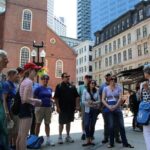
Boston bites pair well with landmark hopping. This private 3-hour walk-style route mixes big-name Boston sights with food-minded stops, so you’re not just staring at plaques—you’re moving through neighborhoods that actually shaped the city. I also like the private setup, which usually means you spend your time watching, eating, and asking questions at a pace that fits your group.
The strongest part for me is the guide experience. One guide named Manny was singled out for making the walking parts enjoyable and clear. One real consideration, though: the tour name says foodie, but the route can lean more history-and-sightseeing-heavy, so if you want lots of restaurant sampling, you’ll want to confirm what the eating portion looks like before you book.
In This Review
- Key things that make this Boston tour worth your time
- Where this tour starts and ends (and why it matters)
- The value of a private 3-hour route in Boston
- Freedom Trail: the quickest Boston orientation you can get
- New England Aquarium: more than a photo stop
- Paul Revere House and Bunker Hill: the turning points
- Old North Church and the One if by land, two if by sea moment
- Granary Burying Ground and Old State House: Boston’s civic backbone
- Harvard Museum of Natural History and Franklin Park Zoo: a break from the streets
- Faneuil Hall Marketplace and Quincy Market: where Boston shopping meets eating energy
- Copley Place: the Back Bay pause
- Fenway Park, Isabella Stewart Gardner Museum, and the floating reenactment
- Price and timing: what you’re really buying
- Who this tour fits best (and who should think twice)
- Final call: should you book it?
- FAQ
- How long is the Boston Most Famous Foodie Tour?
- How much does the tour cost?
- Where do we meet?
- Where does the tour end?
- Is this tour private?
- Do I get a mobile ticket?
- Is the tour offered in English?
- What if the weather is poor?
- Can I cancel for free?
Key things that make this Boston tour worth your time
- Private-only pacing (3 hours): You’re not stuck with a giant mix of schedules.
- Freedom Trail in the middle of the story: You get a quick orientation using the 2.5-mile route with 16 major sites.
- Hands-on Boston moments: Aquarium, colonial-era stops, markets, Fenway, and more in one block of time.
- A guide you can tailor to your interests: The itinerary is adjustable based on what you care about.
- Convenient public-transport start and end: Start at Aquarium T, finish at Haymarket with subway help.
- High overall satisfaction: A 4.7 rating from 10 reviews and about 90% recommendation.
Where this tour starts and ends (and why it matters)
You’ll meet at the Aquarium T Station at 183 State St, which is an easy launch point for downtown Boston. Starting near transit matters here because your day in Boston will likely involve hopping around, and this tour is designed to slot in without feeling like a mission.
You’ll finish near Haymarket at 136 Blackstone St. The guide also helps you get onto the subway at Haymarket, which is a small thing that can save you time and confusion when you’re tired from walking.
You can also read our reviews of more tours and experiences in Boston



The value of a private 3-hour route in Boston
Boston can feel like it’s always going somewhere else. This tour helps you do more without burning half the day transferring between “must-sees.”
For $288 per person, what you’re paying for is not a single attraction—it’s the time-saving factor of having a guide connect a lot of stops into one logical loop. The private format also gives you room to ask questions that actually connect the landmarks to the city you’re walking through.
Just keep in mind the pacing: it’s about seeing and sampling along the way, not about lingering for long museum stays or long sit-down meals. If you love fast, efficient touring with purposeful breaks, this works. If you want a slow food crawl with multiple full restaurant courses, you might find yourself wishing for more time at fewer places.
Freedom Trail: the quickest Boston orientation you can get
One of the anchor stops is the Freedom Trail, a 2.5-mile path through downtown with 16 sites tied to U.S. history. Even if you’ve seen photos before, walking it as part of an organized route helps you connect the dots between neighborhoods and eras.
What I like about using the Freedom Trail as a spine for a short tour is that it gives you a shared story. Colonial Boston. Revolution-era drama. Civic pride. You start to understand why the city is laid out the way it is, instead of just collecting isolated stops.
Possible drawback: it can feel like a lot of facts packed into a short time window. If you don’t love history detail, ask your guide to focus on the most relevant pieces for your interests, because this tour is described as customizable.
New England Aquarium: more than a photo stop
The tour also includes the New England Aquarium. In addition to the main aquarium building, it’s paired here with two major add-ons: the Simons IMAX Theatre and the New England Aquarium Whale Watch that runs April through November.
That pairing matters because it gives the stop a range of options depending on when you visit. If you’re traveling outside whale-watch season, your best bet is simply using the aquarium area as a major city landmark and break point.
What you’ll likely enjoy most is the shift in energy. After historical walking, the aquarium zone feels modern and lively—good for resetting your brain before you jump back into older Boston stories.
Paul Revere House and Bunker Hill: the turning points
Two stops in the colonial/revolution thread are the Paul Revere House (built around 1680) and the Bunker Hill Monument, erected to commemorate the Battle of Bunker Hill on June 17, 1775.
These aren’t random landmarks. They’re tightly connected to how early American resistance is remembered. Seeing the Revere House helps you picture the Revolutionary period as something personal and local, not just something in a textbook. Then Bunker Hill gives you the larger, public stakes of that moment.
Consideration: these stops can be emotionally intense even when you’re just passing by. If you’d rather keep things lighter, you can still use the area to get your bearings and then focus the questions on daily life and city development rather than battle details.
You can also read our reviews of more private tours in Boston




Old North Church and the One if by land, two if by sea moment
In the North End, the tour includes Old North Church on Salem Street. This is the spot linked to the famous signal: one if by land, two if by sea.
Why this works on a short itinerary: it turns a story you may have heard in school into a real location. When you’re standing near the church, the message is no longer an abstract phrase. It’s a piece of Boston’s communication network during the Revolution.
If you like storytelling-driven guides, this is often the kind of stop where a good guide can make the setting click quickly.
Granary Burying Ground and Old State House: Boston’s civic backbone
Two more historic stops round out the civic thread: the Granary Burying Ground and the Old State House.
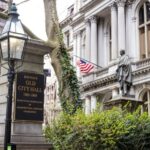
The Granary Burying Ground is Boston’s third-oldest cemetery, founded in 1660 and located on Tremont Street. The Old State House, built in 1713 at the intersection of Washington and State Streets, served as the seat of the Massachusetts General Court until 1798.
If you’re wondering why cemeteries show up on a walking tour: in Boston, they’re part of the public record. They connect names, eras, and where people lived and mattered. Pairing that with the Old State House helps you see two sides of the same city—public leadership and private lives.
Possible drawback: if your group isn’t into historical sites, this section can start to feel like a lot of “important buildings” back-to-back. Your best move is to talk to the guide early on and steer the tour toward the stops that fit your mood.
Harvard Museum of Natural History and Franklin Park Zoo: a break from the streets
The itinerary reaches beyond downtown with two major “big institution” stops in the area: the Harvard Museum of Natural History and the Franklin Park Zoo.
The Harvard Museum of Natural History is housed in the University Museum Building on Harvard’s campus in Cambridge. The Franklin Park Zoo spans 72 acres and is operated by Zoo New England (the same organization runs the Stone Zoo in Stoneham too).
Why include these on a food-and-sight tour? Because they add variety. After a day of monuments and streets, zoos and museums give your feet and attention a different kind of stimulation.
Consideration: these stops may feel more “attractions” than “food,” depending on how the guide frames them during your specific day. If the eating part of the day matters most to you, use these as structured breaks—then ask for what food opportunities are planned near/around these stops.
Faneuil Hall Marketplace and Quincy Market: where Boston shopping meets eating energy
Now we hit two locations that make the name foodie feel more grounded: Faneuil Hall Marketplace and Quincy Market.
Faneuil Hall Marketplace is a shopping center made up of three historic market buildings plus a promenade. Quincy Market is a historic market complex near Faneuil Hall, constructed in 1824–26 and named for Mayor Josiah Quincy, who organized its construction without any tax or debt.
If you want to get the “Boston food” vibe without needing a reservation for every stop, these markets are the most logical places to do it. They’re designed for movement—people come to browse, snack, and eat casually.
Small note: the itinerary gives Faneuil Hall Marketplace a 15-minute stop and lists admission as free. In other words, this isn’t a long sit-and-shop session—it’s more like a quick hit of market atmosphere.
Copley Place: the Back Bay pause
The tour also includes Copley Place, an upscale enclosed shopping mall in Boston’s Back Bay. It sits inside a larger complex with office towers and hotels, and as of May 2020 the mall is anchored by Neiman Marcus.
This stop is useful if you want indoor time, quick restrooms, and a break from street weather. It’s also a good reference point for how Back Bay shifts into a more polished, retail-forward Boston look.
Potential drawback: some people come for food and local chaos, and malls can feel too controlled. If that sounds like you, treat this stop as a reset—then keep your attention on the surrounding neighborhood streets once you’re back outside.
Fenway Park, Isabella Stewart Gardner Museum, and the floating reenactment
Three of the most memorable itinerary pieces are also the most “Boston personality” stops.
First, Fenway Park. Even if you’re not a baseball fan, it provides insights into America’s national pastime and Boston’s sports history. It was built in 1912 and is the oldest Major League Baseball stadium still in use. The tour mentions a one-hour walking tour you can take to learn more.
Second, the Isabella Stewart Gardner Museum. After Isabella Stewart Gardner’s husband died in 1898, she bought land in Boston’s Fenway area to open a museum for her Italian art collection. It’s a stop that blends art with a very specific person’s vision.
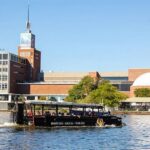
Third, a floating history museum with live reenactments, multimedia exhibits, and a tearoom. The description places it in the “hands-on history” bucket—less quiet museum, more show-and-tell.
Here’s how these fit together on a short tour: you go from street history to everyday city culture to spaces built around stories—sports stories, art stories, and reenactment stories. That variety helps the day feel like Boston rather than a single theme park of landmarks.
Price and timing: what you’re really buying
At $288 per person for about 3 hours, this is positioned for people who want maximum value in limited time, especially with a private group. You also get a mobile ticket, which is handy in cities where you don’t want extra paper to manage.
The tour is described as often booked about 96 days in advance, which tells me it’s popular during prime periods. If you want a specific day, booking earlier can save you from scrambling later.
One more practical point: it’s offered in English and is marked as requiring good weather. Boston in summer can be fantastic for walking, but winter and shoulder seasons can change the plan fast.
Who this tour fits best (and who should think twice)
This tour is a good match if you:
- want a private guided walk that bundles famous Boston sites into a short time window
- like history but still want the day to feel connected to everyday places like markets
- appreciate a guide who can tailor your itinerary based on what you care about
- value easy transit flow, since you start at Aquarium T and finish at Haymarket
Think twice if you:
- want a classic food-tasting format with lots of restaurant stops and longer meal time
- prefer museums to walking, because the route is built around seeing many distinct areas in a limited span
That last point isn’t a dealbreaker for everyone. It’s just the key expectation check. The tour name says foodie, but the stop list includes plenty of major sights, so ask about how the eating portion will be handled on your specific run.
Final call: should you book it?
If you’re trying to understand Boston quickly and you like pairing landmarks with chances to snack and browse, this is a strong pick. The private format and the guided connections between markets, monuments, and neighborhoods are the main value.
But if your top priority is a heavy food-sampling agenda, I’d treat the foodie label as a starting point—not a promise of a full-on restaurant crawl. Ask your guide how the eating portion will work in the time available, then you’ll know if it matches your idea of fun.
FAQ
How long is the Boston Most Famous Foodie Tour?
It runs for about 3 hours.
How much does the tour cost?
The price is $288.00 per person.
Where do we meet?
The meeting point is Aquarium T Station, 183 State St, Boston, MA 02109.
Where does the tour end?
The tour ends at Haymarket, 136 Blackstone St, Boston, MA 02109, and your guide will help you board the subway at Haymarket Station.
Is this tour private?
Yes. It is a private tour/activity, and only your group participates.
Do I get a mobile ticket?
Yes. The tour includes a mobile ticket.
Is the tour offered in English?
Yes. It is offered in English.
What if the weather is poor?
The experience requires good weather. If it’s canceled due to poor weather, you’ll be offered a different date or a full refund.
Can I cancel for free?
Yes. You can cancel up to 24 hours in advance for a full refund. If you cancel less than 24 hours before the start time, no refund is provided.