REVIEW · BOSTON
Private Walking Tour from Boston to Beacon Hill Freedom Trail Harborwalk
Book on Viator →Operated by Gilded Age Tour - visites de Boston et de ces environs en français · Bookable on Viator
Boston works best when you have a guide who knows the shortcuts. This private walk strings together Boston Common, Beacon Hill, and the Freedom Trail in a way that helps you connect the dots fast. I especially like how the route mixes major revolutionary sites with quieter Beacon Hill streets, and how your guide keeps the story moving at your pace. One thing to consider: it’s a true walking tour, so plan on steady foot time and wear comfy shoes.
You’ll see Boston’s oldest public park, important government buildings, and key Revolution landmarks—then end with sea air and wide views on the Boston Harborwalk. The tour runs about 3 hours for up to 12 people, and it includes a local guide plus fees and taxes, with a mobile ticket used on-site. If you prefer museums over street-level history, note that no museum visits are planned.
In This Review
- Key Things You’ll Notice on This Boston Walk
- A First-Time Boston Plan That Actually Feels Like Boston
- Boston Common: Where the Freedom Trail Begins (and Why That Matters)
- Beacon Hill on Foot: Lavender Windows, Secret Gardens, and Saint-Gaudens
- Massachusetts State House: The Golden Dome and Federal-Style Power
- Old City Hall and Old Corner Bookstore: Governance Meets Publishing
- Old South Meeting House: A Puritan Gathering Place That Lasted Centuries
- Old State House and the Declaration Balcony: The Revolution in One Place
- Boston Massacre Site and the Cradle of Liberty: Memory and Symbols
- Quincy Market: Food Court Energy with Historic Bones
- North End: Colonial Roots, Church Site, and the Paul Revere House Area
- Paul Revere Statue and the Midnight Ride Story Moment
- Boston Harborwalk Finale: Sea Air and Wide Views
- What $350 Buys (and How to Judge Value for Your Group)
- Who This Tour Fits Best
- Should You Book This Boston Common to Harborwalk Private Tour?
- FAQ
- How long is the private walking tour?
- What is the group size limit?
- Is this tour private or shared?
- Where does the tour start and where does it end?
- Is pickup offered?
- Do I need to buy admission tickets for the stops?
- Are museum visits included?
- Is transportation included?
- Is the ticket mobile?
- Can I cancel for a full refund?
Key Things You’ll Notice on This Boston Walk
- Freedom Trail start at Boston Common, with quick context so the next stops make sense
- Beacon Hill highlights like lavender-window streets, secret-garden vibes, and the Saint-Gaudens bronze bas-relief
- Revolution hot spots including the Boston Massacre site and the Old State House balcony reading of the Declaration of Independence
- Quincy Market as a mid-route reset, with lots of food options and a strong photo-friendly corridor
- North End colonial leftovers, including the Paul Revere House area and the Paul Revere statue for the Midnight Ride
- Harborwalk finale, where the history slows down and the bay view takes over
A First-Time Boston Plan That Actually Feels Like Boston
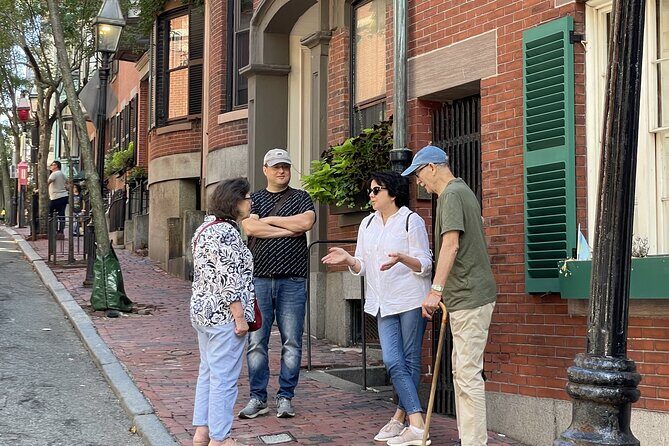
If this is your first time in Boston, you’ll want three things: orientation, stories you can remember, and stops that don’t feel like a checklist. This tour gives you all three. You start at Boston Common, roll through Beacon Hill and the Freedom Trail, then finish with the North End and Boston Harbor.
The value here is in how the route is built. Boston is famous for big headline sites, but it’s also a place where side streets matter. This itinerary deliberately balances the dramatic moments—Massacre, Declaration of Independence—with the smaller textures: historic alleys, elegant addresses, old book-town energy, and those classic harbor views at the end.
Your group stays together (this is a private tour), and the pace can be adjusted. That matters because Boston history can be dense. A good guide doesn’t just point; they connect key moments so you leave with a mental map, not just photos.
You can also read our reviews of more walking tours in Boston

Boston Common: Where the Freedom Trail Begins (and Why That Matters)

Boston Common is more than a green square. It’s tied to the city’s early life, and it also plugs directly into the Freedom Trail. Your tour begins at the Boston Common Visitors Center on Tremont Street, then you move through the park’s key landmarks.
Here’s what makes this start strong:
- You learn that Boston Common dates to 1634, and it’s part of the Emerald Necklace, a connected chain of six parks.
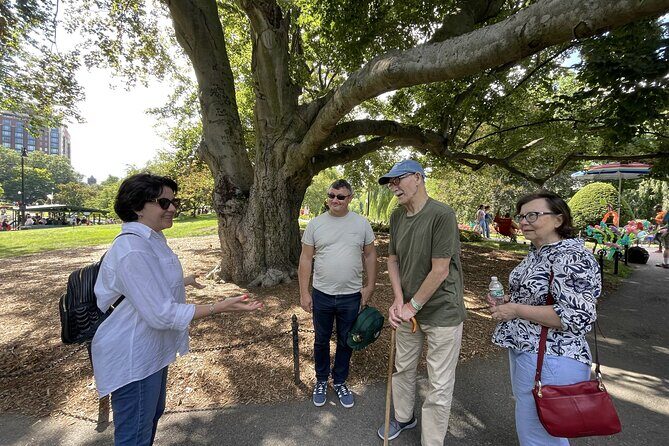
- You’ll stop at places tied to major moments in American history, including the Boston Massacre Memorial, the Great Elm Tree, and the Soldiers and Sailors Monument.
- You’ll hear about Telegraph Hill, a historic hill associated with the founding of the city.
This matters because Boston’s early story isn’t just dates. It’s a physical map: where people gathered, where conflict happened, where memory was later built. Starting here helps you understand why the Freedom Trail route is the way it is.
Practical tip: this is a good time to reset your expectations about the rest of the day. Boston Common sets a tone—public space, civic life, and turning points—and the tour keeps that tone through Beacon Hill and into the Revolution sites.
Beacon Hill on Foot: Lavender Windows, Secret Gardens, and Saint-Gaudens
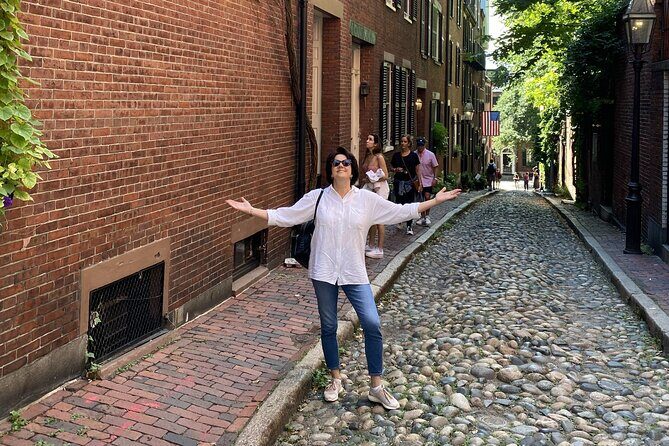
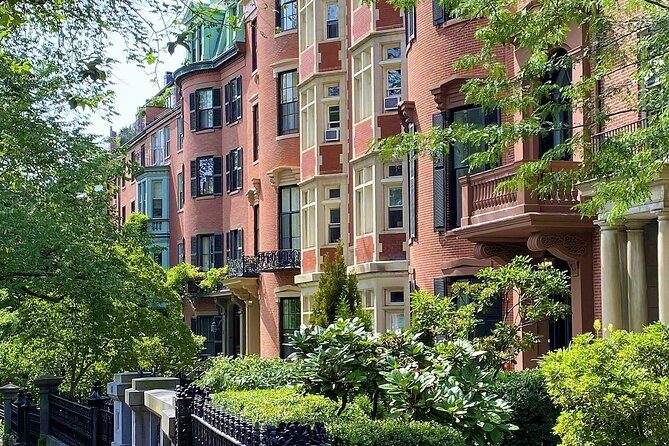
Next comes Beacon Hill, and this is where Boston starts to look like itself. The neighborhood is known for old-money architecture and tight, photogenic streets. Your guide brings you through several themed stops that make the area feel real instead of just scenic.
You’ll spend time around:
- Beacon Street, where you can admire residences tied to the city’s most distinguished families and New England aristocracy.
- The houses with the lavender windows and the neighborhood’s secret garden atmosphere.
- A highly photographed alley in Beacon Hill.
- A stretch that feels chic and prestigious, with elegant houses and nearby green space.
One standout art stop is a bronze bas-relief by Augustus Saint-Gaudens. When you’re walking, art pieces like this are easy to miss on your own. With a guide, it becomes a moment—what it is, why it’s there, and how it fits the neighborhood’s identity.
Why this portion is worth it: Beacon Hill works best when you have context. The buildings and streets are beautiful, but it’s the human stories—who lived where, how the city grew—that makes the architecture worth studying.
Photo tip: this is a strong section for street photos. Bring your camera settings, but also remember: bright daylight can blow out lighter stone and window details. If it’s sunny, shade your lens a bit and look for angles down the alleyways.
Massachusetts State House: The Golden Dome and Federal-Style Power
Then you’ll reach the Massachusetts State House, one of Boston’s most visually commanding buildings. It’s described as a Federal-style masterpiece, built in the late 18th century by Charles Bulfinch, with a golden dome that dominates Beacon Hill.
Your stop here is short, but that’s part of the plan. You’re not standing in front of a monument for 45 minutes. You get enough time to take photos and absorb the basic why: this building anchors the civic story of the city and the era you’re about to step into.
If you like architecture, you’ll appreciate that your guide doesn’t treat it like a landmark poster. The State House becomes a bridge between the elegant neighborhood feel and the political drama that shaped early America.
Old City Hall and Old Corner Bookstore: Governance Meets Publishing
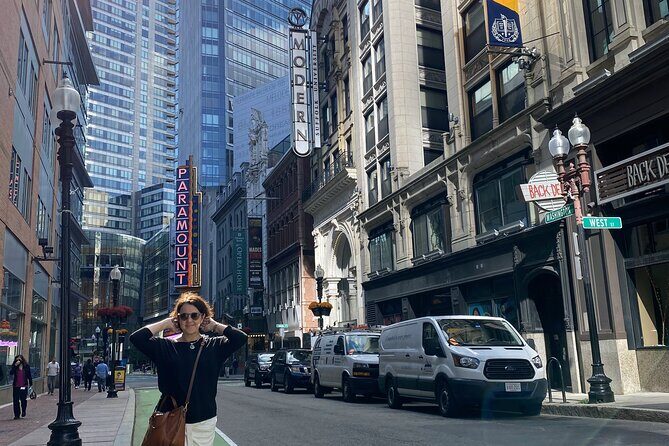
From the State House you move to Old City Hall, a French Second Empire style building built in 1865. The style is compared to the Garnier Opera in Paris, which helps you visualize it even if you’ve never studied architectural terms.
Old City Hall mattered because it hosted Boston’s city council from 1865 to 1969. That timeline alone tells you something useful: the power structures changed over centuries, and the buildings often stayed as witnesses.
Right nearby, you’ll also reference the Old Corner Bookstore, built in 1718. It’s located in the oldest commercial building in downtown Boston and served as a publishing house that published classic American works.
For a walker, this is a smart pairing. Government tells you what decisions were made. A publishing house helps you understand how ideas traveled and spread. Even if you skip museums (this tour doesn’t include them), you still get a sense of how the city’s public life worked.
You can also read our reviews of more private tours in Boston



Old South Meeting House: A Puritan Gathering Place That Lasted Centuries
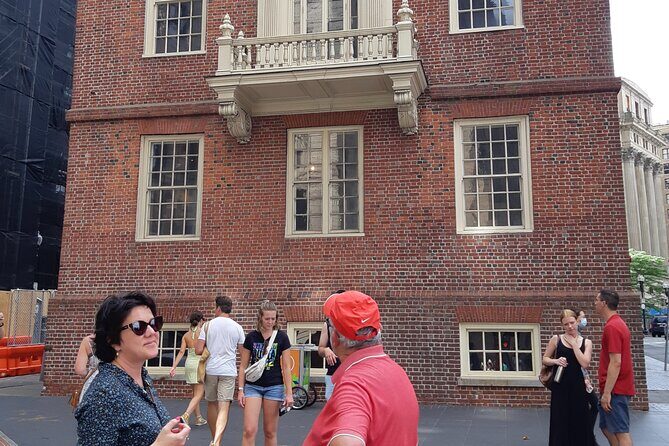
Next is Old South Meeting House, built in 1729. It used to be a Puritan church and functioned as a gathering place for nearly three centuries.
This kind of stop is great if you like history that feels lived-in. You’re not only looking at a memorial. You’re standing where people would have gathered, talked, and organized. That gives the Revolution story texture.
A short caution: this stop is brief, so if you’re the type who wants to read every plaque, you may wish you had extra time. The tour’s strength is momentum and connection, not slow museum-style sightseeing.
Old State House and the Declaration Balcony: The Revolution in One Place

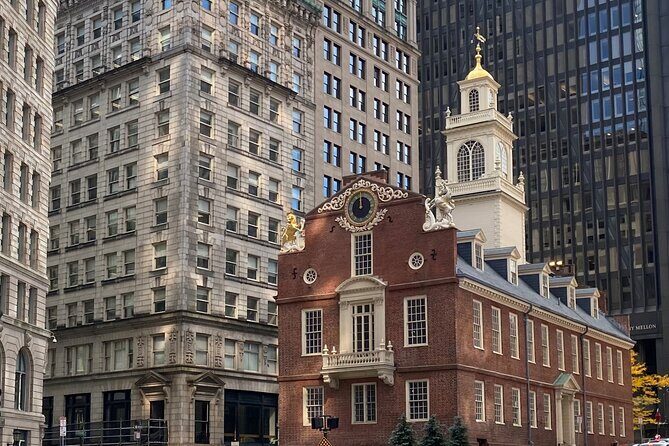
The Old State House is one of the most powerful moments on the route. It was built in 1713, and modern buildings now surround it in a way that makes it feel like the past is trapped in place.
Here you’ll learn about July 18, 1776, when the text of the United States Declaration of Independence was read from its balcony.
Even though the time at this stop is short, it’s one of those moments where your guide’s narration makes the site click. The balcony reading ties the idea of independence to a concrete location you can picture later when you read about it.
If you’re traveling with family or first-time visitors, this is often the stop that gets the most attention. It’s direct, visual, and easy to understand.
Boston Massacre Site and the Cradle of Liberty: Memory and Symbols
You’ll then move to the Boston Massacre Site, in front of a public building where a British squadron opened fire on five Bostonians in 1770. This incident is known as the Boston Massacre.
Right after, you’ll hear about 1741: The Cradle of Liberty, a historic building with a golden weathervane shaped like a huge grasshopper. That grasshopper became Boston’s first and most famous symbol.
This is one of the reasons I like this tour: it doesn’t treat symbols as decoration. It treats them as shorthand for identity and memory. The Massacre gives you tragedy; the Cradle of Liberty gives you civic pride and continuity of meaning.
Practical photo note: monuments and memorial plaques are easy to frame, but don’t forget to step back for wider context. You’re photographing more than text—you’re documenting the city’s layout.
Quincy Market: Food Court Energy with Historic Bones
After Revolution intensity, the route shifts to a busier, more relaxed atmosphere at Quincy Market. This is a former market space from 1824, now a food court with stalls and shops in a pass-through alley setting that’s very photo friendly.
A big bonus here: you get a breathing pause. Even if you don’t buy anything, it’s a place where you can reset your legs and absorb the city’s day-to-day life.
One helpful detail for food lovers: this is where you can try a lobster roll.
The tour also points out an “oldest restaurant in the United States” connection—served from 1826—within a historic building dating to 1704, where the future King of France Louis-Philippe lived on the second floor in a modest apartment.
If you care about food and history, Quincy Market is a smart mid-route stop. It keeps you energized for the North End leg, where the colonial vibe returns.
North End: Colonial Roots, Church Site, and the Paul Revere House Area
Next comes the North End, Boston’s oldest neighborhoods in the sense that it traces deep colonial roots. You’ll spend about half an hour here, which is a good amount of time for walking, spotting landmarks, and letting the neighborhood’s character land.
Key stops include:
- A church site where the first church in the North End was built in 1650. It was described as a major influence in the Northeast and a Puritan faith stronghold during the colonial period.
- The Paul Revere House area, dated to 1676, listed as one of the last vestiges of the colonial era. Revere lived there from the 1780s to the 1800s.
This neighborhood is the kind of place where your photos improve once you slow down. Instead of rushing to the biggest sign, look for doorways, street curves, and the relationship between buildings.
If you’re not into history lectures, you still get value because the streets themselves do the talking. If you are into history, you’ll like how the guide connects faith, neighborhood life, and the Revolution.
Paul Revere Statue and the Midnight Ride Story Moment
You’ll also stop at the Paul Revere Statue, set in a pedestrian space honoring the Midnight Ride (1775).
This is a good emotional pacing stop. The earlier sites cover political events and tragedy. Here, the story becomes action—movement, decision, and risk.
Even with limited time, it’s a moment that helps you remember the Revolution as a series of choices by real people, not just grand events.
Boston Harborwalk Finale: Sea Air and Wide Views
After history, you head to Boston Harbor for the Harborwalk. The promenade gives you views over the bay and harbor as the tour ends.
This final segment matters because it stops the mental workload. Your brain has been holding names, dates, and locations. Out by the water, it gets to breathe.
If you’re the type who likes a last photo that feels different from street corners, this is your payoff. The sky, the shoreline lines, and the open space turn the day’s narrative into a view.
What $350 Buys (and How to Judge Value for Your Group)
The price is $350 per group, with a maximum of 12 people. That makes the math simple:
- If you fill a big group, you’re paying far less per person.
- If it’s just a smaller party, the per-person cost rises, but you still get a private guide and a planned route with fees included.
This is where the tour tends to be best value: when you’re traveling with friends, family, or mixed-age groups who all want the same route but can’t agree on a self-guided plan. The private format also helps when you need to pause for photos, rest your legs, or adjust the pace.
What’s included: local guide services for 3 hours, a destination specialist guide, and fees/taxes. What’s not included: transportation, and there are no museum visits planned.
Who This Tour Fits Best
This tour is a strong match if you want:
- A first-time Boston orientation through the most important areas
- A Freedom Trail experience with enough context to remember what you saw
- A balance of big historic sites and photogenic neighborhood streets
- A private guide who can adjust to your pace rather than sticking to a rigid group schedule
It’s also worth it if you enjoy architecture and symbolic details—State House, Old City Hall, and the Saint-Gaudens bas-relief are built into the walk.
If you hate walking, you might feel squeezed. This is designed for feet, not for frequent rides between distant stops.
Should You Book This Boston Common to Harborwalk Private Tour?
I’d book it if you want Boston’s story told in the order it actually plays out on the streets. The route starts with orientation, layers in Beacon Hill character, then focuses on the Revolution’s key landmarks, and finishes with harbor views so your day doesn’t end abruptly on another plaque.
Skip it only if you mainly want museum interiors or you need a low-walking, sit-everywhere style. Otherwise, this is an efficient, memorable way to see a lot of Boston without losing the thread.
FAQ
How long is the private walking tour?
The tour lasts about 3 hours.
What is the group size limit?
It’s priced for up to 12 people per group.
Is this tour private or shared?
It’s private. Only your group participates.
Where does the tour start and where does it end?
It starts at Boston Common Visitors Center, 139 Tremont St, Boston, and ends at New England Aquarium, 1 Central Wharf, Boston.
Is pickup offered?
Pickup is offered.
Do I need to buy admission tickets for the stops?
The listed stops show free admission/ticket-free entries, and fees and taxes are included in the tour price.
Are museum visits included?
No. Museum visits are not planned.
Is transportation included?
No. Transportation isn’t included because it’s a walking tour.
Is the ticket mobile?
Yes, the tour uses a mobile ticket.
Can I cancel for a full refund?
Yes. You can cancel up to 24 hours in advance for a full refund.