REVIEW · BOSTON
Full-Day Minivan Tour of Revolutionary Boston, Lexington and Concord
Book on Viator →Bookable on Viator
Your day starts with history, not traffic.
This private minivan tour is built for an efficient, comfortable sweep through Revolutionary Boston and the opening battle sites in Lexington and Concord, with a guide who connects the dots as you go—especially through stories tied to places like the Paul Revere House and the Old North Church. I also love the pacing that mixes quick photo stops (so you can see more) with longer explain-and-watch moments (so it actually makes sense), and the fact that Peter Brennan brings the era to life in a way that feels practical, not like a lecture. One consideration: the route is packed, so several stops are brief by design; if you want long browsing time at every museum, plan on returning to a couple favorites later.
The vibe here is simple: you get picked up, sit back in the air-conditioning, and let the day build your bearings. I’d think of this as the start of your trip—especially if you’ve already spent time walking Boston and want the “big picture” without the logistics.
In This Review
- Key things I’d circle before you book
- The value of doing Revolutionary Boston by minivan
- Revolutionary Boston in one arc: Revere to Old North, then on to the ships
- The Boston “before the shooting” lineup: Faneuil Hall, State House, King’s Chapel
- Graves, park roots, and the Beacon Hill look: Granary, Boston Common, Louisburg Square, Acorn Street
- Tea Party planning, meeting houses, and the ships you can see from the harbor
- Paul Revere’s midnight warning network: Hancock-Clarke House and the walk to action
- Lexington Green: where the story often connects to modern rights
- Old North Bridge and the eight-minute video that changes the feel of the night
- Little Women, Emerson, Thoreau, and Washington in one long Boston-to-Concord thread
- Lunch break: plan to eat, not to solve your day
- Price and logistics: what $975 per group really buys you
- Who this tour fits best (and who might want a different format)
- Should you book this private Revolutionary day trip?
- FAQ
- How many people are in a group for this tour?
- How long is the tour?
- What is included in the price?
- Do you offer pickup?
- Is this tour private or shared?
- What language is the tour offered in?
- Can I cancel for free?
Key things I’d circle before you book
- Private group comfort: Air-conditioned minivan, bottled water, and pickup from your home or hotel keeps the day easy.
- A story-first guide: Peter Brennan’s explanations turn famous names and poems into real people in real places.
- Stop times that balance photos and context: Many stops are only minutes, but key moments get the extra attention.
- Revolution “start-to-finish” flow: You move from pre-war Boston into Lexington and Concord without fighting transit.
- Literary America in the same sweep: Alcott, Emerson, Thoreau, and Washington’s command connection all fit in.
- Video + museum time at the big night: At Old North Bridge, there’s an on-site video and exhibits, not just a walk-up view.
The value of doing Revolutionary Boston by minivan
Boston’s the kind of city where great places are also spread out, and walking a lot can turn a history day into a sore-feet day. The minivan approach is a real win because it solves the biggest problem for this topic: getting from site to site fast enough that the stories don’t blur together.
This tour also feels built around your attention span. You get a tight sequence of landmarks, but you’re not stuck staring at a guide map on your phone. When the route includes quick stops—like outside famous streets or church fronts—it keeps you moving. When the day hits a heavier moment, you get the time to slow down and actually absorb what happened.
And because it’s private, you’re not sharing your questions with a crowd. That matters when the guide is telling the “why” behind each location, not just reciting names.
You can also read our reviews of more tours and experiences in Boston

Revolutionary Boston in one arc: Revere to Old North, then on to the ships
The day starts with early Boston brick-and-timber history, and it’s a smart opener. The Paul Revere House is Boston proper’s oldest house, and the story here isn’t just who lived there—it’s how Puritan architecture has held up and shaped New England style since the early 1600s. Even if you’ve seen “Revere” in a textbook, you’ll leave this stop with a different sense of scale: the colony’s world was already old when the Revolution started.
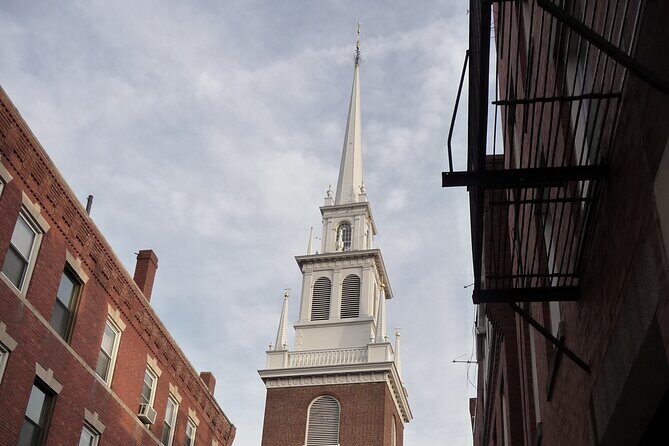
Next comes the Old North Church & Historic Site, where the famous signal tied to Longfellow’s poem—one if by land, two if by sea—becomes part of a physical place. This is one of those stops where you can look at a façade for a minute and walk away with nothing, or you can get the story behind why that line stuck in American memory. The tour is designed to do the second.
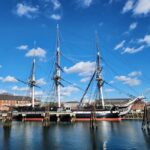
From there, you shift into a Revolutionary-era maritime mood at USS Constitution, often called Old Ironsides. Here you get to view the ship and hear why it earned that nickname. It’s not just “a cool boat,” it’s a reminder that the Revolution wasn’t only about speeches and meetings—it was also about leverage at sea and how power looked in the 1700s.
Tip for your expectations: several sites are listed with very short visit windows. Treat those as “orientation + photo + one key takeaway,” then move on. If you try to do them like museum marathons, you’ll feel rushed.
The Boston “before the shooting” lineup: Faneuil Hall, State House, King’s Chapel
After you’ve seen the early and symbolic sites, you get into the political machinery of Boston. Faneuil Hall Marketplace is framed as the cradle of liberty, where the Sons of Liberty met to plan the Revolution. This stop works best when you realize that revolutionary talk wasn’t abstract; it was happening in a set of rooms where people were actively organizing.
A short walk brings you to the Old State House, described as the oldest public building in American and tied to the Boston Massacre nearby. This is where the tour helps you understand how quickly tension can turn into violence when the same streets and power centers keep repeating the same confrontations.
Then there’s King’s Chapel, built in 1742 to replace an earlier wooden church from the 1680s. It’s a helpful reminder that Revolutionary Boston wasn’t all pamphlets and protests. It also had established institutions—religious and civic—that shaped daily life long before the conflict got loud.
Graves, park roots, and the Beacon Hill look: Granary, Boston Common, Louisburg Square, Acorn Street
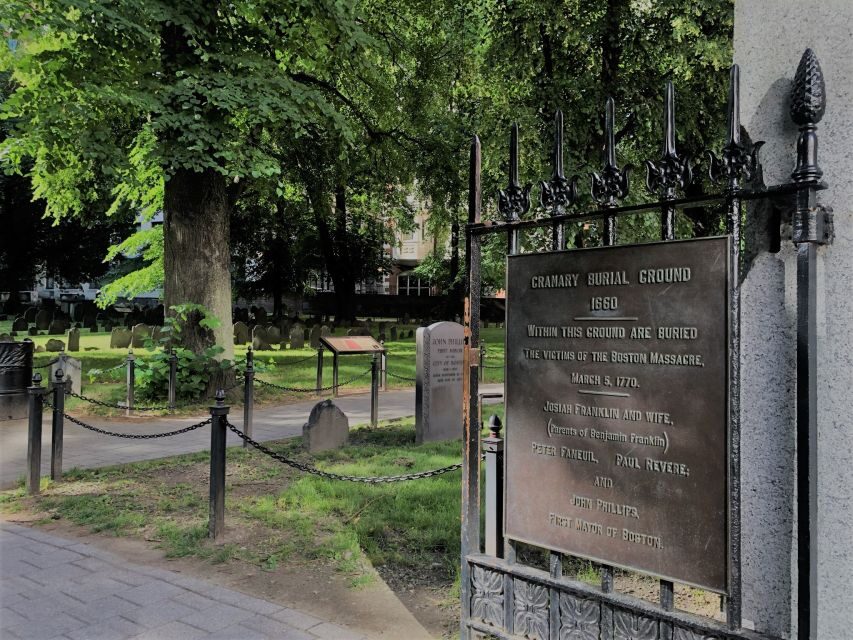
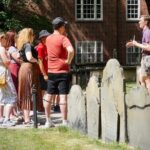
One thing I really like about this day is how it grounds “big events” in the people and neighborhoods who lived them. Granary Burying Ground is the kind of place where the names feel heavy on paper until you see them laid out in a real cemetery. You’ll get to see graves tied to Samuel Adams, Paul Revere, and John Hancock, plus other Revolutionary-era Bostonians.
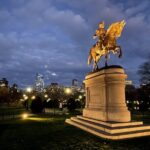
Then you move to Boston Common, the country’s oldest public park, established by Puritans in 1634. This isn’t only scenic; it’s context. You’re watching the early city’s public space evolve into a place where the community gathered—then later, where political ideas could spread.
On Beacon Hill, the stop list turns into quick visual hits: Louisburg Square for a look at a prominent Federalist neighborhood, then Acorn Street, Boston’s most photographed street where you can snap a couple images yourself. These are short stops, but they do an important job: they give your brain a map. Later, when you see those areas on your own, you’ll recognize the geography and feel less lost.
Tea Party planning, meeting houses, and the ships you can see from the harbor
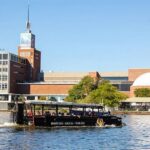
The tour keeps you moving through the pre-war conflict points. Old South Meeting House is where meetings that led up to the Boston Tea Party took place. From there, you go to Boston Tea Party Ships & Museum, with replica ships in the harbor representing what happened during the Tea Party.
This part is valuable because it turns a one-line phrase into a visual and physical experience. It also helps if you’ve heard different versions of the story over the years; seeing the replica ships makes the scene feel less like a slogan and more like a coordinated action.
And yes, the time windows are short, but the point of this stop cluster is to give you the “before” of the Revolution: political organizing, public pressure, and the choices that pushed things toward open conflict.



Paul Revere’s midnight warning network: Hancock-Clarke House and the walk to action
Next comes the Hancock-Clarke House, where the story centers on Paul Revere waking Sam Adams and John Hancock to warn them the British might be looking for them. That’s one of those historical moments that’s both dramatic and logistical, and the tour’s strength is explaining the risk in plain language.
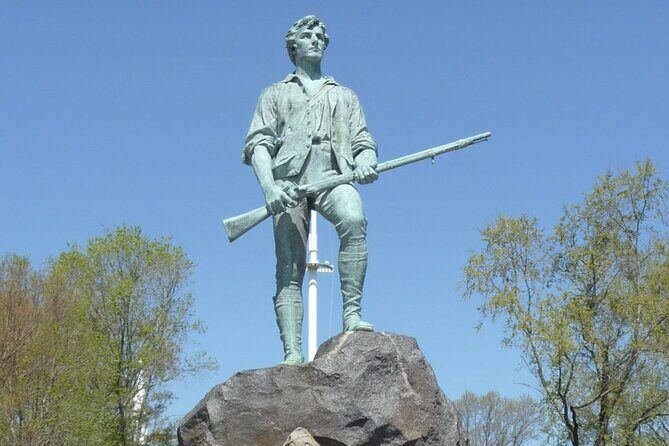
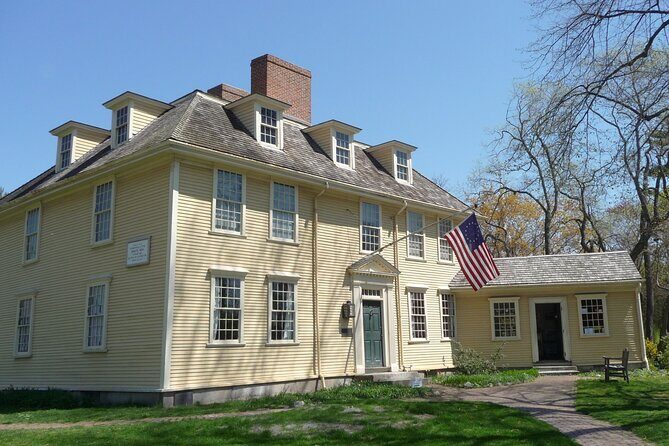
From there, you head to Buckman Tavern, described as the place where the Lexington Militia awaited the arrival of British troops before the skirmish on Lexington Green the next morning. You’re moving from political confrontation into military readiness, and the tour’s order makes that transition feel natural.
The day’s pacing also matters here. You don’t just pop out at random spots. The route is shaped so that each stop answers the question: what happened next, and why?
Lexington Green: where the story often connects to modern rights
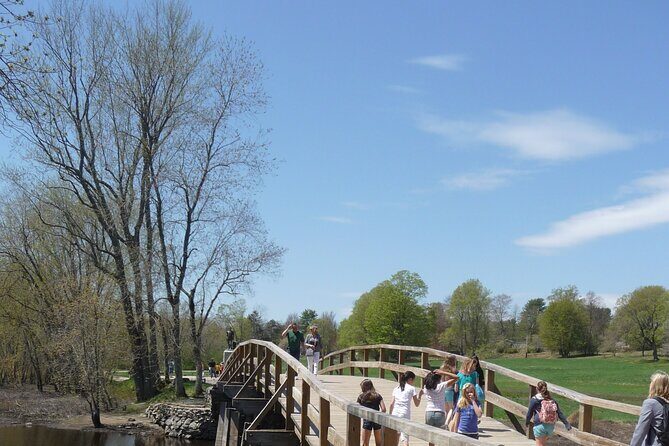
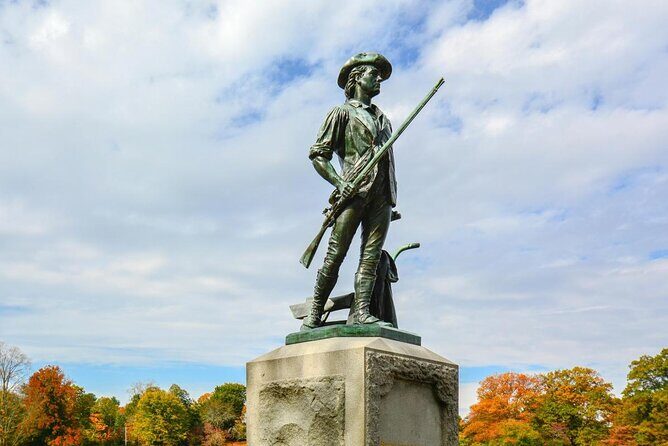
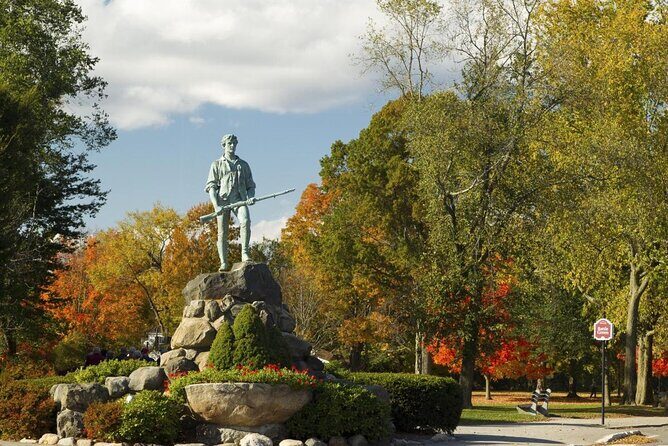
At Lexington Green, you get to see the site and hear the story of the skirmish. The information provided notes that many consider this moment the birth of the Second Amendment. Even if you’ve learned that idea before, hearing it tied to the actual location helps.
This is also the kind of stop where weather and crowds can matter. Since your time here is set (about 15 minutes), you’ll want comfortable shoes and a quick plan for photos. If you’re taking your time, you’ll feel it; if you stick to the flow, you’ll get the takeaway.
Old North Bridge and the eight-minute video that changes the feel of the night
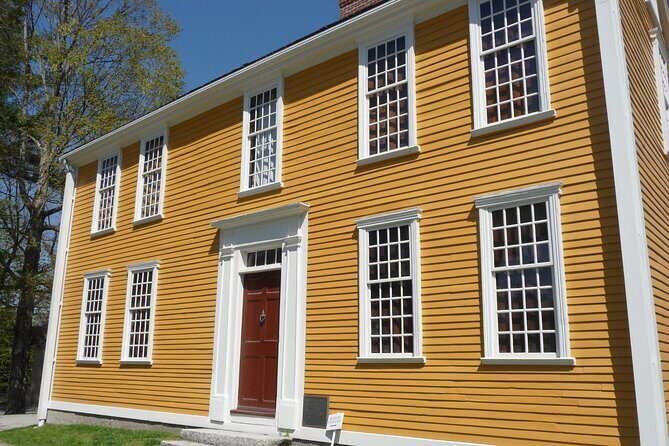
This is the biggest “slow down and absorb” moment in the day. At the Old North Bridge, the tour has you travel through the national park and hear the story of the night in 1775 when shots were first fired by patriots at the British. You also view an eight-minute video presentation in the visitors center and related exhibits.
That video time is a major value add. Without it, the facts can stay scattered—who did what, when it happened, and how fast things unfolded. With it, you get a sequence your brain can hold onto. Then the exhibits can lock in names and geography.
If you like learning through visuals, this is the part you’ll remember later when you walk by other Revolutionary sites and realize how much depended on timing and nerve.
Little Women, Emerson, Thoreau, and Washington in one long Boston-to-Concord thread
After the bridge story, the tour turns literary and philosophical. Louisa May Alcott’s Orchard House is next, with the link to where Alcott and her sisters were raised and where she wrote Little Women. This works because it keeps the day human. You’ve spent hours on politics and conflict; now you get a place where American life and imagination grew alongside the nation’s early years.
Then comes Ralph Waldo Emerson House, the home of one of America’s influential poets and philosophers. You’re not learning about a battle here; you’re seeing how people processed ideas after the world changed.
Next, Walden Pond State Reservation brings Henry David Thoreau back into the picture. Thoreau’s pond story is tied to his most famous writing, and getting to stand near the landscape that shaped his work can shift how you think about the Revolution’s long aftermath—not only laws, but ideas about conscience and living.
Finally, the tour includes Longfellow House / Washington’s Headquarters National Historic Site, where George Washington lived when he commanded the Continental Army, and later where Henry Wadsworth Longfellow lived. That connection between founding-era leadership and later American literature is exactly the kind of timeline jump this day is good at.
One more practical note: reviews also mention a drive tour of Harvard and MIT on the way back, depending on routing. If you like seeing modern landmarks from a distance while still keeping the day moving, it’s a nice bonus.
Lunch break: plan to eat, not to solve your day
Lunch isn’t included, but the schedule allows time for a break. In practice, a good guide can make that easy, and here Peter Brennan has helped with lunch reservations for groups who wanted a smoother plan. If you’re sensitive to timing, take advantage of the offered break and don’t treat it like free-form wandering.
If you’re picky about food, consider bringing snacks for the car legs. The day moves from civic Boston to battlefield ground and then into literary sites, so energy can drop without warning.
Price and logistics: what $975 per group really buys you
Let’s talk money honestly. The price is $975 per group (up to 6) for about 6 hours. That sounds high at first glance, until you break it down by what you get: private transport, a guided narrative that connects the sites, and a route that would otherwise take planning, transit juggling, and lots of walking.
If you’re traveling as two people, the cost per person can feel steep. But if you split it among a small family or a group of friends, the value shifts fast. You’re essentially paying to remove headaches: no transit research, no “how do we get from here to the next place efficiently” stress, and no need to piece together five different guides for one historical theme.
Also, the tour is private. That means you can ask follow-up questions and keep your own rhythm without being pulled along by other people’s pace.
For best value, I’d book this when:
- you want a fast, coherent overview of Revolutionary Boston + Lexington/Concord
- you’re short on days and don’t want to build an itinerary from scratch
- you’d rather spend your energy learning than transporting
Who this tour fits best (and who might want a different format)
This tour is ideal for families who want a big-picture history day without making kids hike between distant stops. It’s also a strong fit for couples and solo visitors who want a structured route and someone to explain the “why” behind the famous moments.
If you love deep museum time at every stop, you might feel the brief stops as a trade-off. This isn’t a slow archaeological dig. It’s a guided sweep with key story moments, which is a totally valid style—just know what you’re buying: breadth with context, not hours in one building.
And if you already did a walking tour of Boston the day before, the minivan format can feel like a reset. You’ll likely appreciate the car legs and the different focus: walking gives texture; this tour gives structure.
Should you book this private Revolutionary day trip?
If your goal is to understand how Revolutionary Boston moved from tension to action, then to the battlefield sites at Lexington and Concord, I’d say this is a smart booking. The tour’s main strength is the way it turns landmarks into a connected story, guided by Peter Brennan with a pace that keeps you engaged without rushing you through the important scenes.
I’d book it if you want an easy day: pickup, air-conditioning, bottled water, a private group, and a plan that covers a lot of ground without making you do the planning work. If your ideal day is slow, quiet, and museum-heavy, then you may want a more focused option instead.
FAQ
How many people are in a group for this tour?
The tour is priced per group and is for up to 6 people, so it stays private with only your group participating.
How long is the tour?
The experience runs for about 6 hours.
What is included in the price?
The tour includes an air-conditioned vehicle and bottled water. Lunch is not included, but a lunch break is allowed.
Do you offer pickup?
Yes. The tour offers pickup at your home, hotel, or any convenient location.
Is this tour private or shared?
This is a private tour/activity, which means only your group will participate.
What language is the tour offered in?
The tour is offered in English.
Can I cancel for free?
Yes. You can cancel for a full refund if you cancel up to 24 hours in advance of the experience’s start time. If you cancel less than 24 hours before, the amount paid is not refunded.