REVIEW · BOSTON
Boston: Full Revolution Story Epic Small Group Walking Tour
Book on GetYourGuide →Operated by The Revolutionary Story Tour · Bookable on GetYourGuide
Boston’s Revolution story is better in time order. This small-group walk threads the key moments of America’s founding through Boston’s streets, with a chronological narrative that’s easier to remember than the typical stop-and-go approach.
I especially love two things: the way the guide uses visual aids like maps and photos (plus name tags and other teaching tools) to make people and battles click, and the fact that you see far more than the usual Freedom Trail highlights. A possible drawback is the pace and footing—this is moderate walking with one hill and stairs toward the end, so it is not ideal if you want minimal steps.
In This Review
- Quick hits before you go
- Why this Boston Revolution walk feels different
- Getting oriented: City Hall Plaza start and what the route sets up
- Freedom Trail, then out of the box
- King’s Chapel Burying Ground: power and religious foundations
- Granary Burying Ground: the Revolution’s memory in stone
- Park Street Church pass-by: city identity without stopping traffic
- Old City Hall and Boston Latin: civic training and political gravity
- Old State House and the Boston Massacre site: when tension turns physical
- Old Corner Book Store and Old South Meeting House: words that became action
- Post Office Square and Liberty Square: Revolution politics meets modern Boston
- Faneuil Hall and Quincy Market: the break that also matters
- Rose Kennedy Greenway pass-by: reset the pace before the next chapter
- Paul Revere House, North End, and Paul Revere Mall: the story gets personal
- Old North Church and Copps Hill: the signaling era and the view angle
- USS Constitution pass-by and Bunker Hill Monument: from coastline strength to turning points
- Charter Street Park, Harborwalk, Pilot House Park, and Lewis Wharf: wrap with a living waterfront
- The guide style: small group, lots of teaching tools, real humor
- How much you get for $57: value math that makes sense
- Who should book this tour (and who might want a different style)
- Should you book this Boston Revolution tour?
- FAQ
- How long is the Boston: Full Revolution Story Epic Small Group Walking Tour?
- What does the tour cost?
- About how big is the group?
- Where do I meet the guide?
- Where does the tour end?
- Is there a restroom break?
- Does the tour include the Freedom Trail?
- Is the tour wheelchair accessible?
- What language is the tour in?
- Can I cancel for a refund, and is pay-later available?
Quick hits before you go
- Small group, big story control: around 16 people, which keeps the discussion human-sized.
- Story-first chronology: you follow the Revolutionary arc in a more logical order than the classic Freedom Trail walk.
- No costumes, no reenacting: you get history as explanation, with light humor instead of theater.
- Cemeteries and meetinghouses matter: you visit places that show how ideas moved through Boston’s civic life.
- North End finish with food context: the walk ends near the harbor with practical local recommendations.
- Planning detail: one hill and a flight of stairs (down) show up near the end, so comfortable shoes are not optional.
Why this Boston Revolution walk feels different

Most Boston history tours treat the Revolution like a checklist. This one treats it like a story with cause and effect. You’re still seeing famous spots, but the guide constantly links who was where, what they wanted, and what changed next—so the conflict stops feeling like random trivia.
I like that it is not just a straight Freedom Trail march. You get the official landmarks, yes, but also the surrounding neighborhoods and civic spaces that help explain how Boston worked in the late 1700s. It’s the difference between watching a movie with subtitles and actually understanding the plot.
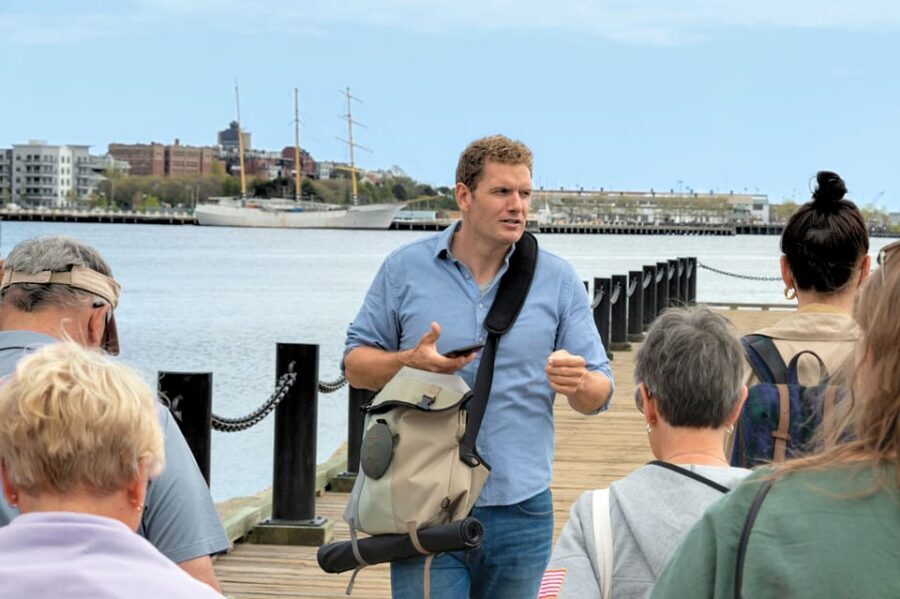
The tone is also practical. There are no costumes and no awkward reenacting. Instead, you’re guided through the drama with teaching tools—maps, photos, and hands-on-style visuals. In multiple versions of this tour I read about, guides like Mike and Tyler used things like clip-on name tags and battle figures to help you track the cast of characters while you walk.
You can also read our reviews of more walking tours in Boston
Getting oriented: City Hall Plaza start and what the route sets up

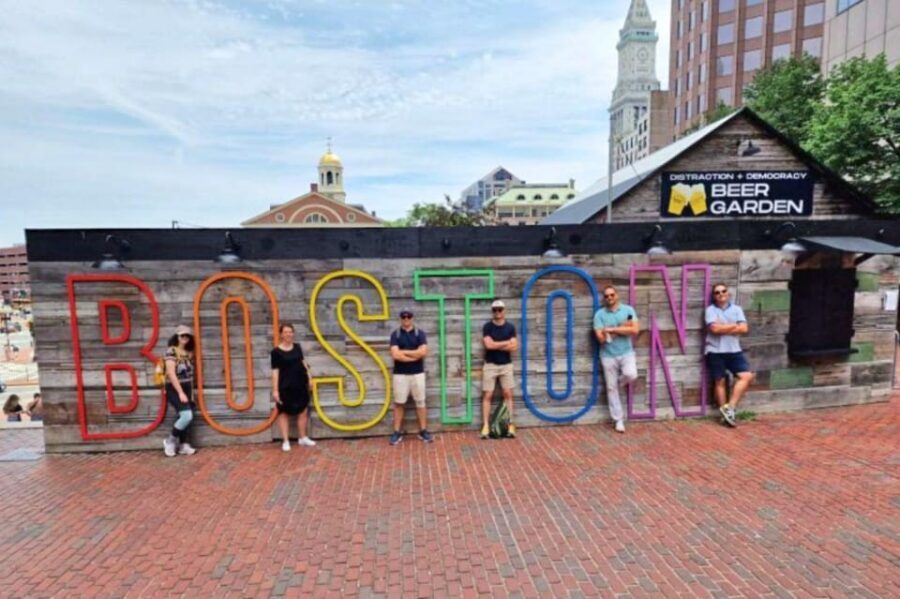
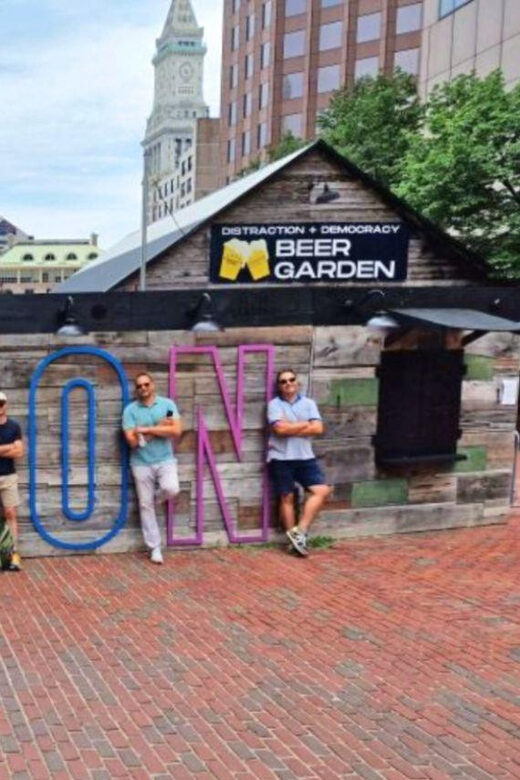
You begin at City Hall Plaza, a large pedestrian-only space across from Faneuil Hall. The meeting spot is in front of the Five Iron Golf between Staples Connect and City Hall. Look for a basketball player statue (Bill Russell) out front, near a seasonal beer garden area where your guide stands.
If you’re taking the subway, the Green Line uses the Government Center Exit, while the Orange and Blue lines use the State Street Exit. That matters because you’re walking immediately on arrival, and it helps to have a clean landing spot before the story starts.
From the start, the guide frames Boston like a connected system—people, institutions, and public spaces. That is why the route works for first-timers. You get a map of the city’s role, not just a list of sights.
Freedom Trail, then out of the box
The early minutes touch the Freedom Trail area, but it is more like a warm-up than a full linear route. You’re using it as a reference point while the guide sets the bigger timeline behind what happened next.
Then the tour starts branching into Boston’s older religious and civic geography—places that explain why the Revolution gained momentum in the city. This is where the “Boston is more than the Freedom Trail” message becomes real.
Two things I found especially useful here:
- The guide connects sites through timeline logic, not just geography.
- You learn how Boston’s institutions shaped public opinion, not only military events.
King’s Chapel Burying Ground: power and religious foundations
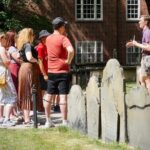
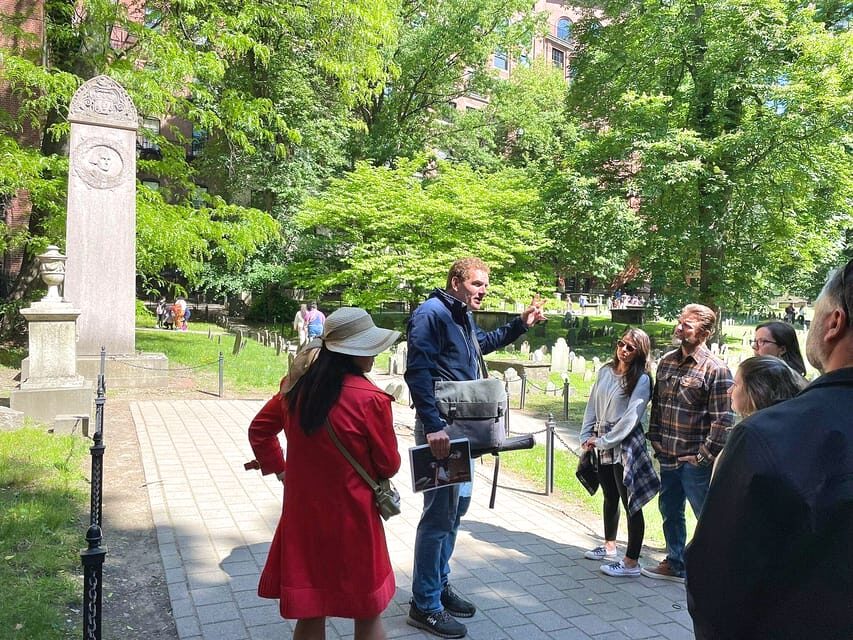
One of the first stops is King’s Chapel Burying Ground. This is not a typical “look at the headstones” moment. The guide uses it to set the human scale of early Boston—leaders, institutions, and the social world that produced the Revolution’s outspoken (and sometimes stubborn) public culture.
If you like history that has faces and relationships, this stop helps you slow down. It’s also a good reminder that the founding era wasn’t abstract; it was full of real networks of influence.
Granary Burying Ground: the Revolution’s memory in stone
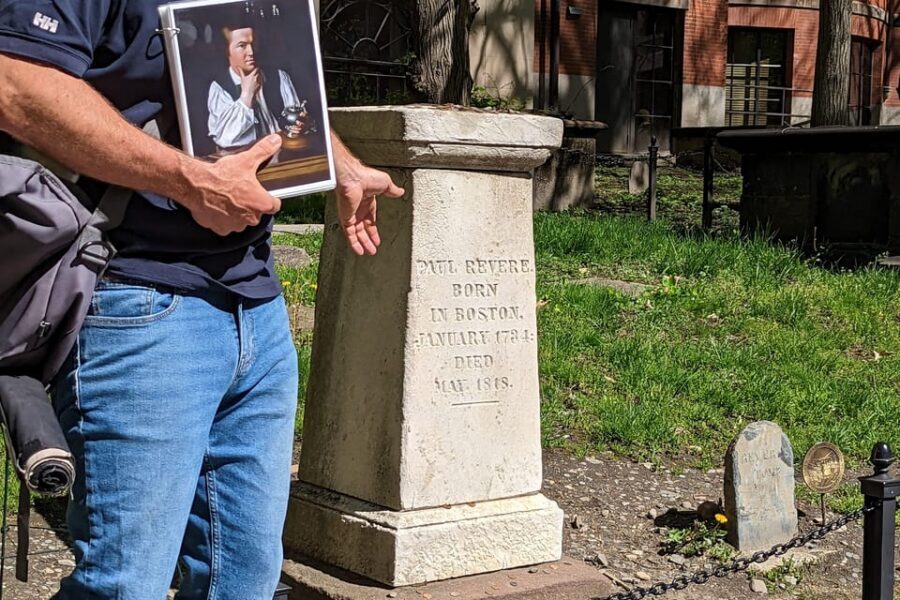
Next comes Granary Burying Ground, one of Boston’s most meaningful cemeteries for Revolutionary-era context. Here, the guide pulls you from the setting into the people—how Boston remembered its own figures and why that matters for understanding the era’s urgency.
This stop works well because it hits both emotion and information. You’re seeing how the city physically marks its past, and then the guide ties that past to the political present that led to major events.






Park Street Church pass-by: city identity without stopping traffic
You pass Park Street Church briefly. It’s quick, but it matters as a “city identity” checkpoint—Boston’s church-centered public life is part of the background noise you’re trying to understand. You don’t linger, but you keep the story anchored.
Old City Hall and Boston Latin: civic training and political gravity
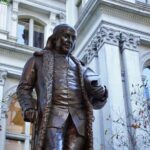
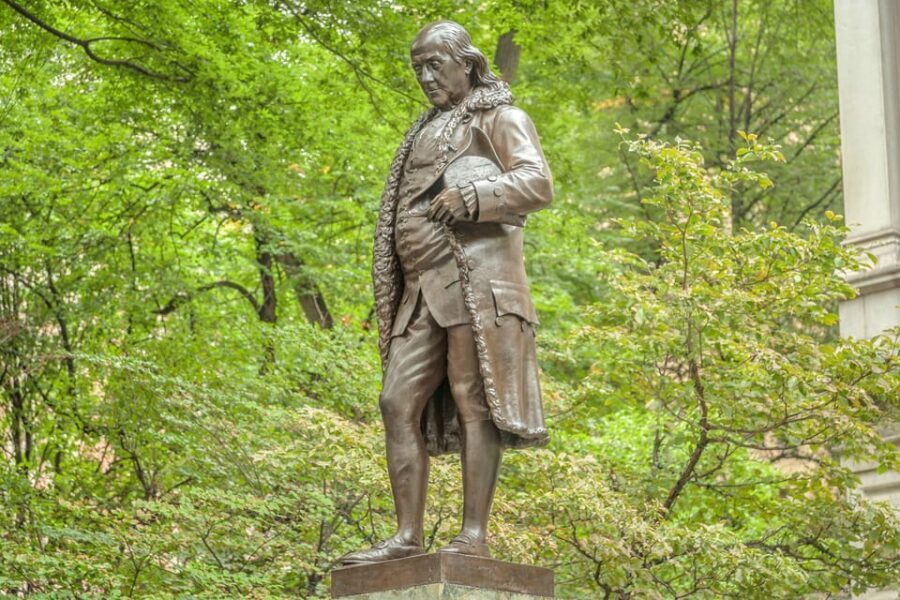
From there, the tour shifts toward Boston’s civic center, stopping at Old City Hall and then bringing you to Boston Latin School and the Benjamin Franklin statue area.
This combo is smart. Old City Hall helps you picture how government and public authority looked on the ground. Boston Latin and Franklin push you toward the Revolution’s education-and-ideas angle. In other words: it’s not only ships and gunpowder. It’s also who learned to argue, write, and organize.
If you enjoy the “how did they think” side of American history, this is a strong pocket of the walk.
Old State House and the Boston Massacre site: when tension turns physical
At Old State House, the guide guides you through why this place became a flashpoint for public conflict. Then the story moves right into the Boston Massacre site area.
This is one of those moments where a chronological narrative pays off. Instead of hearing about violence as a random incident, you understand the build-up: resentment, propaganda, and fear all feeding each other.
Practical note: this is also a good area to listen closely and ask questions, because the guide often uses visuals to help you picture positions and crowd behavior.
Old Corner Book Store and Old South Meeting House: words that became action
You then pass or stop at the Old Corner Book Store, a reminder that publishing, printing, and messaging were part of the Revolution’s engine. Immediately after, the walk reaches Old South Meeting House.
Old South is where the Revolution story becomes loud in a different way. Meetinghouse politics helps you see how Boston’s public outrage and organized debate turned into planned disruption. You’re moving through the environment that made collective action feel normal.
If you only know the Revolution from movies, this portion helps you understand the “prelude” part—how public meetings shaped decisions before anything military happened.
Post Office Square and Liberty Square: Revolution politics meets modern Boston
The route continues with stops/pass-bys around Post Office Square and Liberty Square. These are not just scenic breaks. They’re used to connect civic power from the 1700s to Boston’s later urban evolution.
You’ll feel this as you walk: Boston isn’t a museum. It keeps operating. The guide uses that to make the Revolution feel less like a dusty chapter and more like a turning point that still echoes in how the city presents itself.
Faneuil Hall and Quincy Market: the break that also matters
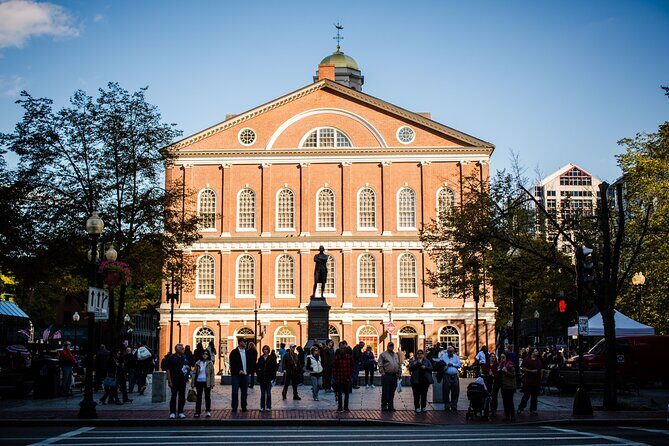
At Faneuil Hall, you get guided time inside (when open) and a structured visit that connects the place to Boston’s public meeting culture. Then you hit Quincy Market for a built-in break.
There’s a 15-minute restroom break and time to reset at Quincy Market. That’s not much time, so I’d treat it as a quick refuel: water, bathroom, and maybe something small if your stomach is ready.
This stop also works for the story. Faneuil Hall wasn’t only a symbol—it was where political energy showed up in public.
Rose Kennedy Greenway pass-by: reset the pace before the next chapter
A pass through the Rose Kennedy Greenway gives you breathing space. It’s also a useful mental transition—from civic meetings and public conflict into the more personal stories of movement, messengers, and military momentum.
Paul Revere House, North End, and Paul Revere Mall: the story gets personal
Next you visit the Paul Revere House area, then continue toward the North End and the Paul Revere Mall photo stop.
This part is built for storytelling clarity. You’re not just hearing that Revere rode that night—you’re walking through the Boston geography that made those messages urgent. The North End segment also shifts the feel of the tour toward livelier modern city energy, which makes the Revolutionary-era intensity easier to hold.
The tour is designed for real understanding. In guides’ delivery styles I saw described, they used maps and character tracking tools to keep names, relationships, and dates from blending together.
Old North Church and Copps Hill: the signaling era and the view angle
The walk brings you to Old North Church and then Copps Hill. Together, they connect two ideas: how communications moved in a pre-telecom world, and how Boston’s geography affected what people could see and do.
Copps Hill is also where you get scenic payoff—more than a quick photo. You’re seeing why a signal system made sense here.
If you like the Revolution because it was fast-moving and risky, this is the zone where it feels most urgent.
USS Constitution pass-by and Bunker Hill Monument: from coastline strength to turning points
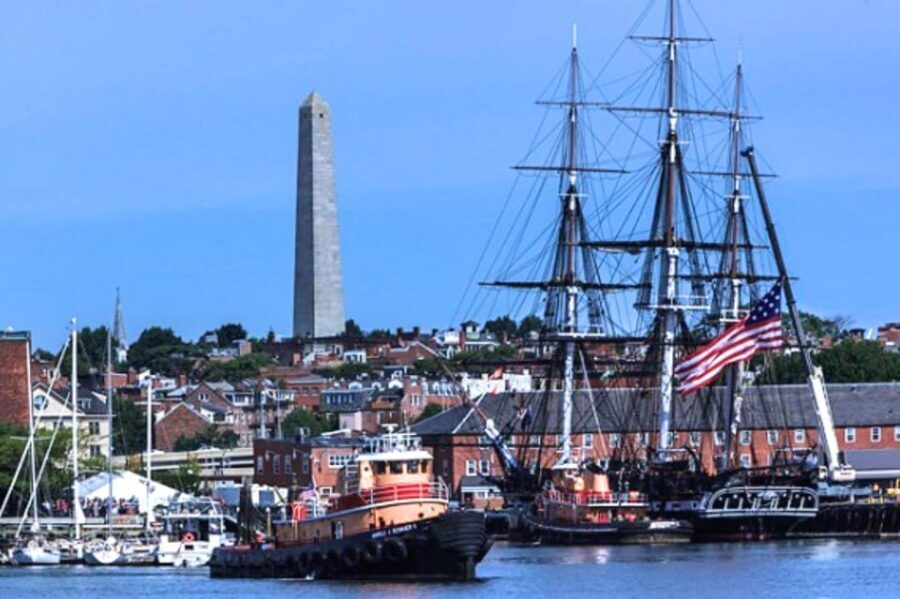
You pass USS Constitution. Even though the stop is brief, it adds maritime context. Boston’s strength wasn’t only in politics—it was also in sea power and shipbuilding-era reality.
Then the tour heads toward Bunker Hill Monument with guided time and scenic viewpoints. Bunker Hill is a turning point in the Revolutionary timeline, and the guide uses the earlier stops to make the sequence feel earned rather than sudden.
This is the moment when the Revolution story stops sounding like a school unit and starts sounding like a real struggle people paid for with fear and loss.
Charter Street Park, Harborwalk, Pilot House Park, and Lewis Wharf: wrap with a living waterfront
The final stretch moves toward the waterfront: Charter Street Park, then the Harborwalk, then Pilot House Park, before ending at Lewis Wharf.
This ending is more than a geography finish. It gives you time to take in Boston’s modern setting after the heavy Revolutionary chapter. It’s also where you’ll appreciate the guide’s local instincts—this tour ends with an emphasis on the North End and it includes practical food recommendations.
If you want a plan for what to do next, this is a good place to leave with a couple of restaurant ideas and a sense of where to wander without feeling lost.
The guide style: small group, lots of teaching tools, real humor
The best tours don’t just give facts. They manage attention. This one does that with small group size (about 16) and a guide who teaches with visuals and interactive techniques.
Across the feedback I reviewed, guides used tools like maps, photographs, clip-on name tags, and battle figures to clarify key moments. That may sound like classroom stuff, but the payoff is practical: you walk away with a cleaner mental timeline.
The humor matters too. It is light-hearted, not distracting. And since there are no costumes, your brain stays in “understand mode.”
How much you get for $57: value math that makes sense
At $57 per person for about 3.5 hours, the price feels fair if you care about structure and context. You’re paying for:
- a live guide (not just a self-led audio route),
- a small-group format,
- and a chronological narrative that uses more than the standard handful of Freedom Trail stops.
Many Boston history tours give you 6–10 famous points with short notes. This one spreads out across a citywide route and keeps the story stitched together. That’s why the cost can feel justified even if you could find free info on your own.
Think of it like this: if you want a guided explanation that reduces confusion and helps you connect names, places, and dates, you’re not just paying for walking—you’re paying for organization.
Who should book this tour (and who might want a different style)
I’d strongly recommend this tour if you:
- love the American Revolution but want the timeline sorted out,
- prefer explanations over costumes and acting,
- want to see parts of Boston beyond the typical Freedom Trail path,
- and enjoy visual teaching tools that make dates easier to remember.
You might consider a different option if:
- you want minimal walking or zero stairs (the route includes one hill and stairs down near the end),
- your English is limited and you want a simpler, lighter story line.
This tour is primarily directed at an adult audience, though the guide uses maps, visuals, and other accessibility tricks to keep it understandable. One review even notes it can feel educational at a teen level, which gives you a clue about the pace and subject density.
Should you book this Boston Revolution tour?
Yes, if your goal is real understanding rather than a quick postcard circuit. The small group, the chronological structure, and the no-costume teaching style combine into a tour that feels efficient: you see a lot, but you also leave with a clearer story.
If you know you can handle a moderate walk (and the stairs toward the end), this is a smart use of a half-day in Boston. For me, the deciding factor is how the guide connects the Revolution to Boston’s actual civic and neighborhood life—not only where famous events happened, but why Boston was the kind of place that could produce them.
FAQ
How long is the Boston: Full Revolution Story Epic Small Group Walking Tour?
It runs for about 3.5 hours (you’ll see specific start times when you check availability).
What does the tour cost?
The price is listed at $57 per person.
About how big is the group?
It’s a small group of about 16 participants.
Where do I meet the guide?
Meet at City Hall Plaza, in front of the Five Iron Golf between Staples Connect and City Hall, by the Bill Russell statue near the seasonal beer garden area where the guide will be standing.
Where does the tour end?
The tour finishes at Lewis Wharf.
Is there a restroom break?
Yes. You get a 15-minute restroom break at Quincy Market, and there is also entry into Faneuil Hall when it’s open.
Does the tour include the Freedom Trail?
You do cover part of the Freedom Trail, but the route is not limited to a straight end-to-end Freedom Trail walk.
Is the tour wheelchair accessible?
No. It is not suitable for people with mobility impairments.
What language is the tour in?
The tour is in English with a live guide.
Can I cancel for a refund, and is pay-later available?
The tour offers free cancellation up to 24 hours in advance for a full refund, and there’s also a reserve now & pay later option.