REVIEW · BOSTON
Boston Cambridge Lexington and Concord Private Day Tour
Book on Viator →Operated by Trailblazer Tours Boston - Private Tours · Bookable on Viator
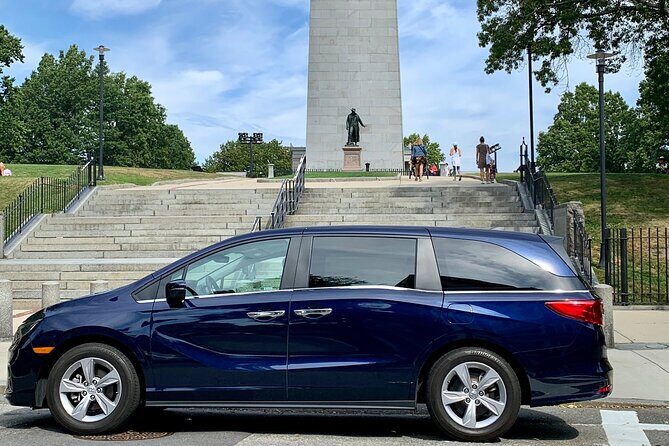
Revolution history is easier when it rides with you. This private 6-hour day ties together Boston, Cambridge, Lexington, and Concord with a guide who keeps the Freedom Trail story moving from stop to stop. I especially like the pacing and the convenience of being chauffeured in an air-conditioned Honda Odyssey van, plus the way the tour turns big textbook events into scenes you can actually stand near.
One thing to think about: at $995 per group (up to 4), it’s best if you’re sharing the cost. If you’re traveling solo or as a couple, you’ll feel the premium fast.
In This Review
- Key things I’d plan around
- Freedom Trail From the Van: 16 Sites, One Coherent Story
- Boston’s Downtown Stops: Common Ground to Gold-Domed Power
- Old State House and Faneuil Hall: Where Politics Became Personal
- Inside Paul Revere House and Old North Church
- Harvard Square: Optional Campus Walking and a Real Lunch Break
- Lexington Green and Hancock-Clarke House: April 1775 Up Close
- The Battle Road Drive and Old North Bridge: The Quiet Part of a Loud Story
- Price and Timing: What $995 Buys You (and Who It Fits Best)
- Should You Book This Boston to Concord Private Day Tour?
- FAQ
- What does the tour cost?
- How long is the tour, and when does it start?
- Where will you pick us up?
- Is lunch included?
- Do we go inside the Paul Revere House?
- Is the Harvard Square walk optional?
- What is the cancellation policy?
Key things I’d plan around
- A true private van day: only your group, pick-up in Downtown Boston, and a tight route without the hassle of public transit transfers
- Freedom Trail, driven with story pauses: you see the 16 sites and then stop at key moments to hear what matters
- Hands-on Revolutionary landmarks: time at the Paul Revere House and Old North Church where the lantern signal is part of the tale
- Cambridge + Harvard Square without the “research project”: optional campus walking time around public areas
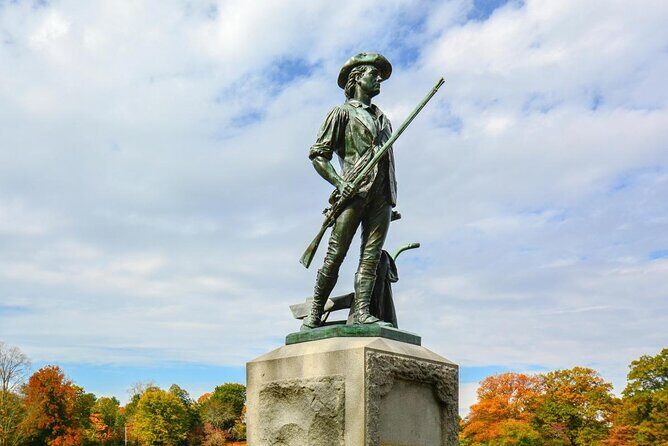
- Lexington and Concord on the same loop: Lexington Green, Battle Road drive, and Old North Bridge—mapped to April 1775
- Flexible lunch plan: lunch isn’t included, but your guide can point you to a solid spot near Harvard Square
Freedom Trail From the Van: 16 Sites, One Coherent Story
The big win of this tour is that it doesn’t treat the Freedom Trail like a scavenger hunt. You get the 16 main stops across Boston’s oldest neighborhoods, but the real value is how the guide stitches them together into one timeline you can follow. Instead of you trying to read plaques and figure out the connections while walking, you hear the “why” in plain language, with quick pauses where the people and events actually make sense.
The other reason I like the format: you can get oriented fast. Boston is dense. When you start with a guided drive through the Freedom Trail route, you get a mental map of where you’ve been and where you’re headed next. That matters later when you look back at photos and realize you’re not just capturing random historic buildings—you’re seeing the same story from multiple angles.
This tour also tends to work well for different ages. In past experiences with this provider, guides like Christian have been praised for making the narration land even with teenagers. Another guide, Martin, has been noted for arriving right on time and keeping the vehicle clean—small details, but they shape how smooth the day feels from minute one.
You can also read our reviews of more private tours in Boston



Boston’s Downtown Stops: Common Ground to Gold-Domed Power
After you get going, the day starts with Boston Common, the anchor at the top of the Freedom Trail story. It’s not just a park you pass through. The Common’s importance is that it’s one of those places where public life and big political decisions overlap. From there, you move into the buildings where power was shown and argued.
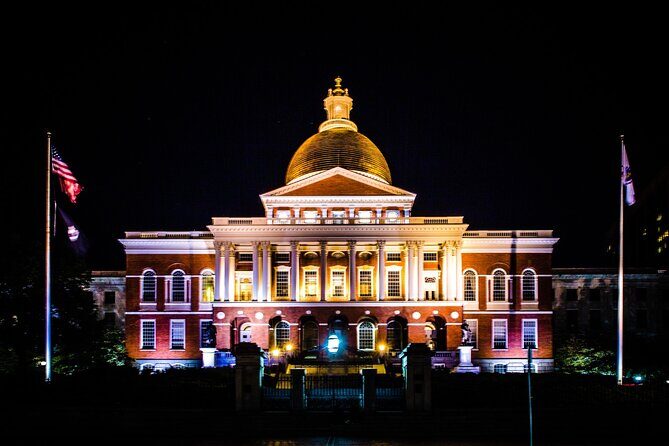
A standout stop is the Massachusetts State House, especially the famous gold dome. Even if you’ve seen it from afar on a Boston postcard, it lands differently when you’re there with context—what the building symbolizes and why it matters to Massachusetts identity. The tour keeps this kind of stop grounded: you’re not being asked to admire architecture like it’s a museum study. You’re learning what the building represents in the broader Revolutionary story.
Next up is King’s Chapel, the first Anglican church in Boston. It’s a quick stop on the schedule, but that kind of short moment can be surprisingly effective. Instead of a long explanation, the guide can focus on the key idea: where religious life sat in the power structure of the time, and how faith and governance were tangled together more than we’d expect today.
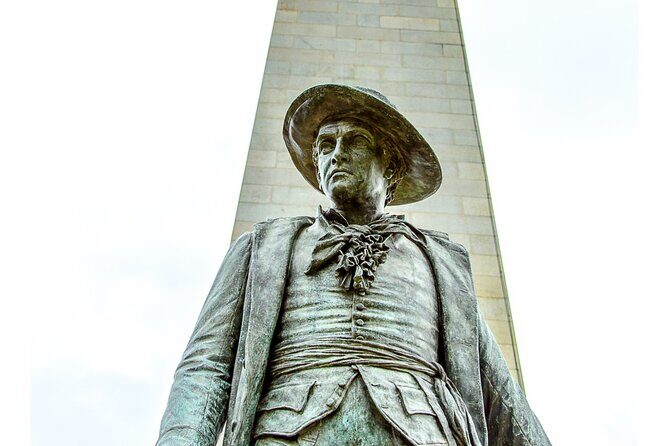
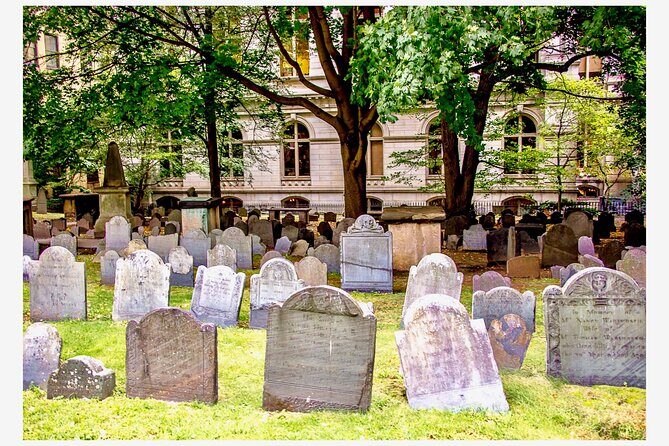
You’ll also encounter a stop tied to Revolutionary War legends that are buried in the area. That moment works best when you let it slow you down for a second, because it puts names to the story. It’s not abstract anymore. It becomes real, personal, and—if you’re paying attention—slightly sobering.
Old State House and Faneuil Hall: Where Politics Became Personal
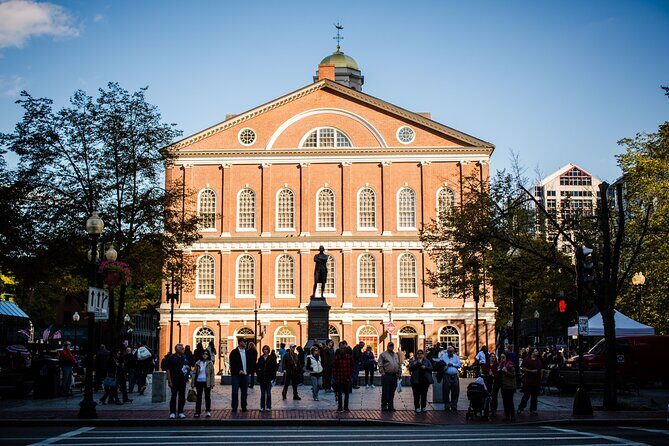
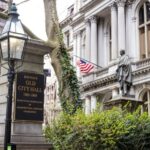
Two of the most useful “story-setting” stops are Old State House and Faneuil Hall Marketplace. Old State House is one of the older buildings in the city and a site connected to major historic events. The tour helps you see why a building like this becomes a recurring stage: laws get made here, arguments get framed here, and history keeps returning to it.
Faneuil Hall Marketplace is the opposite vibe. Yes, it’s historic, but it’s also a working public space. The guide explains how the area’s importance stretched across centuries, not just Revolutionary days. You’ll even get a chance to stop for a signature cannoli, which is exactly the kind of low-effort payoff you want on a day like this: you’re learning hard stuff, then you’re eating something simple and local without turning it into a whole detour.
One small practical note: you’re moving through the day with multiple stops, and downtown areas can get busy. If you care about photos, bring your patience. The tour will get you there, but you’ll want to be ready to grab images quickly when the guide is talking and time is tight.
Inside Paul Revere House and Old North Church
This is where the day stops feeling like a route and starts feeling like a story you can touch.
The Paul Revere House stop is built around the Son of Liberty connection, and the schedule is set up so you can go beyond the exterior. Families have specifically praised getting to go inside the Paul Revere House, which is a big deal. Interiors help you understand how people lived, not just what slogans they shouted. You’ll get the chance to connect the famous name to a real home and a real period.
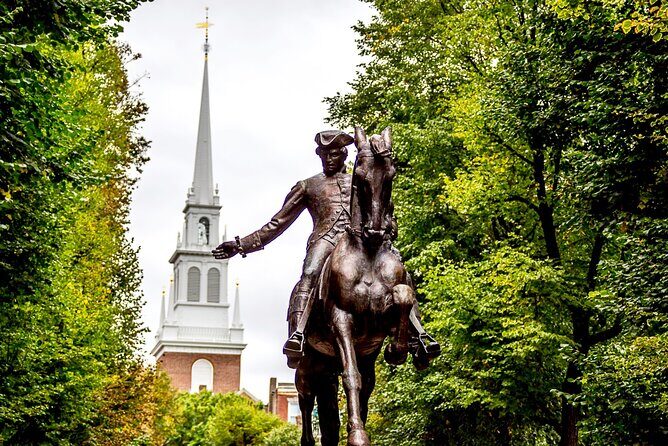
Then you move to Old North Church & Historic Site, connected to the lantern signal used the night of Paul Revere’s midnight ride. You’ll hear the lantern detail in context while you’re standing where it happened. That’s one of those rare history moments that becomes easier to remember because it’s not just told—it’s located.
These two stops pair well because they work as cause and effect. Paul Revere is the messenger figure, but the lantern signal is the mechanism that makes the warning possible. When you see the church site right after the Revere House story, the whole chain clicks.
Harvard Square: Optional Campus Walking and a Real Lunch Break
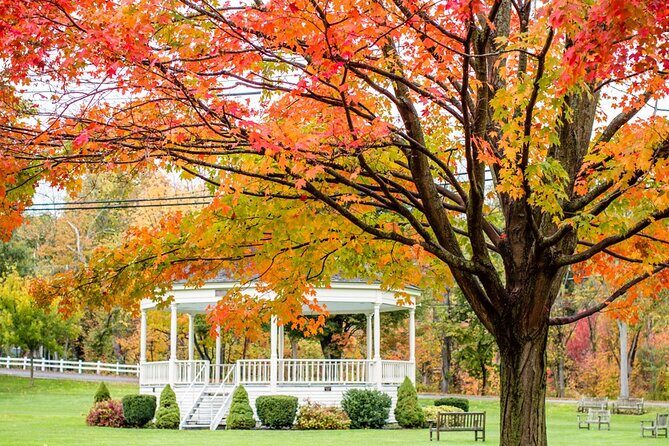
After Boston’s downtown sites and the Revolutionary core, you shift to Cambridge. The tour includes Harvard Square and an optional walking tour around the public parts of the campus with sites and history. The key word here is optional. You don’t get pressured into a long walk if you’d rather take a slower pace.
The tour also gives you about an hour for this section, plus a lunch stop near Harvard Square. Lunch isn’t included in the tour price, but the structure is helpful: you’re not hunting for food while trying to follow the day. In one family experience, the guide—again, Christian—took the group to a local seafood place for lunch, and they said it was very tasty. That’s the kind of practical “where should we eat?” help you’ll appreciate if you don’t want to gamble with reviews on the fly.
One consideration: Harvard Square is popular. Even with a guide, you may feel some foot-traffic energy. If you want quieter photos, aim to get them either before your walking segment or right after when the group regroups.




Lexington Green and Hancock-Clarke House: April 1775 Up Close
Then comes Lexington. You’ll make the drive from Cambridge into Lexington, and the schedule is designed to focus on the exact spots where decisions played out.
Lexington Green is the first battle location of the Revolutionary War, and the guide tells the story of how things unfolded on that April night in a way that’s easy to follow. This kind of stop works because it forces you to think about timing. You can almost picture how quickly situations escalated, and how small moments become turning points.
The Hancock-Clarke House is another short stop, focused on its role for Sam Adams. You’ll see it from the outside, and the guide shares the intriguing story behind it. Even as a quick viewing, it’s valuable because it links names you’ve seen in history books to actual places tied to those people.
These stops are short by design. That keeps the day moving toward Concord and the more dramatic moments ahead, without leaving you exhausted in one spot for too long.
The Battle Road Drive and Old North Bridge: The Quiet Part of a Loud Story
After Lexington, you follow a route that matches the movement of Paul Revere and the British army. This is the Battle Road Trail drive segment, about a half-hour, and it’s built to give you the “route feeling.” You’re not just visiting famous battle sites—you’re also understanding the geography that shaped them.
Then you reach Old North Bridge, where another major battle took place between local militia and the Red Coats. The surroundings are calmer than what the story suggests, and that contrast is part of the lesson. When you’re physically there, the location feels peaceful, and you realize how hard it must have been to imagine what would happen when the fighting arrived.
This stop has good story potential because the guide can talk through who was involved and what mattered in the battle’s outcome. The time is shorter, but it’s enough to leave you with clear context instead of a vague “we were there” feeling.
Price and Timing: What $995 Buys You (and Who It Fits Best)
At $995 per group up to 4 people, the math depends on how you travel.
- If you split between 4 people, you’re effectively paying around $250 each for a full day with private transportation.
- If it’s just 2 people, it’s closer to $498 each, which is a serious spend for a sightseeing day.
- For solo travelers, it’s usually a luxury decision unless you have a special reason to want privacy and a single guided timeline.
So where is the value? You’re paying for private transport, an air-conditioned van, a guided story that links multiple communities (Boston, Cambridge, Lexington, Concord), and the convenience of a single plan from start to finish. You’re also not having to coordinate separate tickets or map-your-own route across multiple neighborhoods and towns.
Timing-wise, the tour runs about 6 hours starting at 10:00 am and returning to the meeting point afterward. That’s long enough to cover the big moments without turning into an all-day slog. It also makes the day feel efficient: you’re not just “seeing stuff,” you’re following a connected narrative across locations that would be hard to stitch together well on your own.
This tour is a great fit if you:
- want a guided Revolutionary War timeline without turning the day into a logistics project
- prefer comfort and a private group over public buses and walking marathons
- are traveling with teens or mixed ages who still want real history, but not lectures
Should You Book This Boston to Concord Private Day Tour?
If your goal is to understand the Revolution through place—Boston first, then Cambridge, then Lexington and Concord—this tour is a strong choice. You get a private van day, story pauses at major landmarks, and key moments like Paul Revere House and Old North Church where the details become memorable. The optional Harvard Square walk and planned lunch break keep the day human, not just historical.
If you’re traveling as a solo or couple and you’re on a tight budget, the price may feel steep. But if you can split costs, the private format becomes a smart value. I’d book it when you want clarity more than wandering, and when you like the idea of hearing what matters while you’re standing in the right spot.
FAQ
What does the tour cost?
The Boston Cambridge Lexington and Concord Private Day Tour costs $995.00 per group, up to 4 people.
How long is the tour, and when does it start?
It runs for about 6 hours and starts at 10:00 am.
Where will you pick us up?
Pickup is offered anywhere in the immediate Downtown Boston area. If you’re staying outside the city, you’ll meet at Flour Bakery on Farnsworth St, Boston. The van used is a Honda Odyssey.
Is lunch included?
No. Lunch isn’t included in the tour price.
Do we go inside the Paul Revere House?
The schedule includes a stop at the Paul Revere House, and the experience is set up so you can go inside during that stop.
Is the Harvard Square walk optional?
Yes. There’s an optional walking tour around the public parts of the Harvard campus.
What is the cancellation policy?
You can cancel for a full refund with free cancellation up to 24 hours before the experience’s start time. The experience also requires good weather, and in poor weather you’ll be offered a different date or a full refund.