REVIEW · BOSTON
Boston: 2-Hour Historic Walking Tour
Book on GetYourGuide →Operated by Boston CityWalks · Bookable on GetYourGuide
Boston makes sense on foot through stories and architecture. I love the Freedom Trail thread from Faneuil Hall toward the Boston Common, because it gives you a clean timeline you can actually remember. I also love the Beacon Hill gaslit streets and old-stone character, then the shift into Back Bay’s elegant 19th-century streets. One drawback: with only two hours, you’ll cover a lot, so expect sidewalk viewpoints and quick photo moments rather than long stays at each stop.
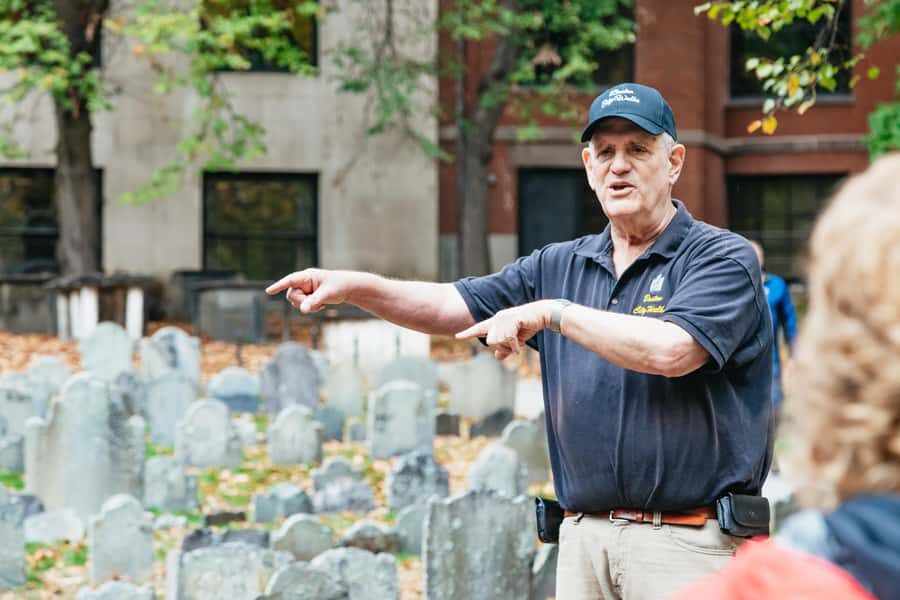
This is the kind of tour where the guide matters. In this small-group format, you’re close enough to hear the story (and the humor), and guides like Alan have a knack for making the facts feel like people you just met on the sidewalk. If you like asking questions, the pace is lively and interactive.
Come prepared to walk. Comfortable shoes are a must, and dress for the season since Boston weather can change fast—one guide in the past has kept the tour rolling even during pouring rain, so a light rain layer can be smart.
In This Review
- Key points before you start
- Starting at the corner of State and Congress: your easy meeting point
- Freedom Trail focus: Faneuil Hall to the Boston Common area
- Old South Meeting House and why it’s more than a stop
- Old Corner Bookstore, King’s Chapel, and the streets that keep talking
- Old Granary Burial Ground: history you can read with your eyes
- Beacon Hill: gaslights, cobblestones, and Louisburg Square vibes
- Newbury Street and the shift into Back Bay’s 19th-century planning
- John Hancock Tower and Trinity Church: big modern edges with old anchors
- Public Garden and Copley Square: finishing the loop with style
- Boston Marathon Finish Line: when Boston history becomes living culture
- What makes the guide experience worth it (and who it suits)
- Best for
- Price and value: what $45 buys you in 2 hours
- Pacing and practical tips so you enjoy it in real Boston weather
- Should you book this Freedom Trail, Beacon Hill, and Back Bay tour?
- FAQ
- How long is the Boston 2-Hour Historic Walking Tour?
- What does the tour cost?
- Where is the meeting point?
- Is there a live guide, and is it in English?
- What should I wear or bring?
- Is gratuity included in the price?
- Is there free cancellation?
Key points before you start
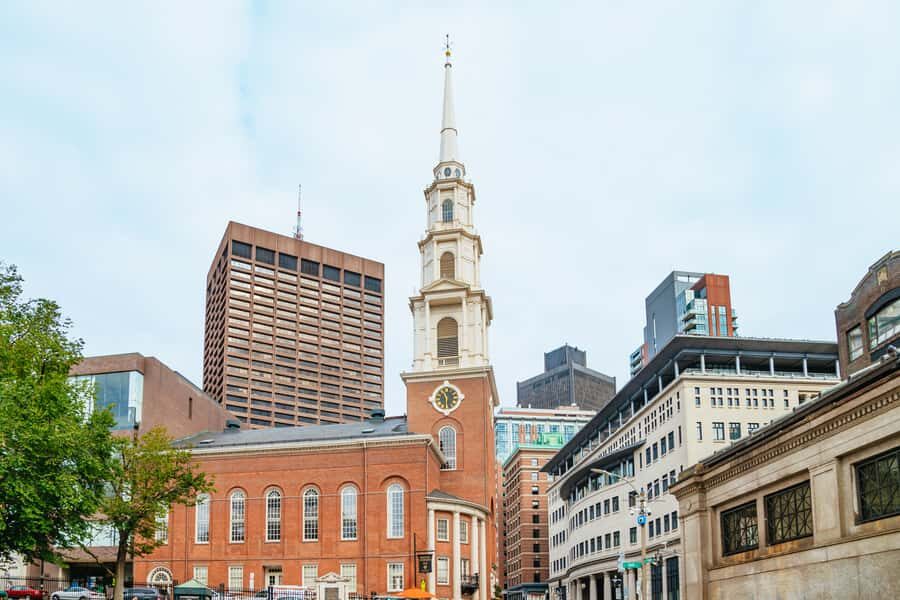
- Freedom Trail routing ties Faneuil Hall to the Boston Common area so the sites feel connected
- Beacon Hill streetscape delivers the classic gaslights, old homes, and photogenic corners
- Back Bay + Copley Square show off 19th-century Boston without needing a separate day
- A guide like Alan tends to blend big landmarks with entertaining, story-driven context
- Small-group size keeps the audio clear, so you’re not just standing around and squinting at plaques
Starting at the corner of State and Congress: your easy meeting point
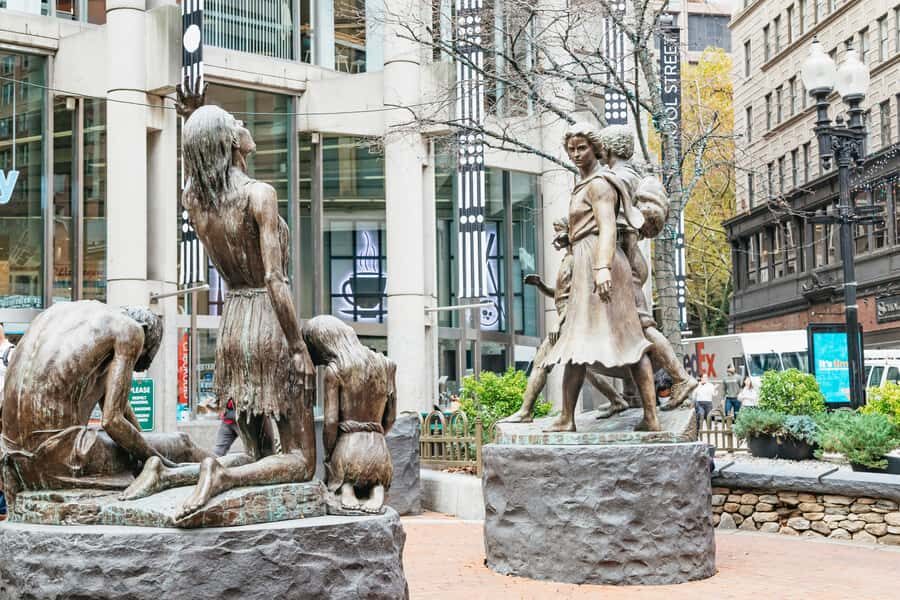
You’ll start at the corner of State and Congress Streets, across from the old State House, outside 28 State Street. It’s a handy spot because it puts you right in the middle of the old city fabric before you even begin walking.
This matters more than you’d think. When a tour starts in the right place, you waste less time “getting oriented,” and you start seeing the city’s pattern immediately—government buildings, meeting places, and the streets that grew around them.
Plan to arrive a few minutes early. In a two-hour tour, being late cuts into the part you’ll most want to remember later.
You can also read our reviews of more walking tours in Boston


Freedom Trail focus: Faneuil Hall to the Boston Common area
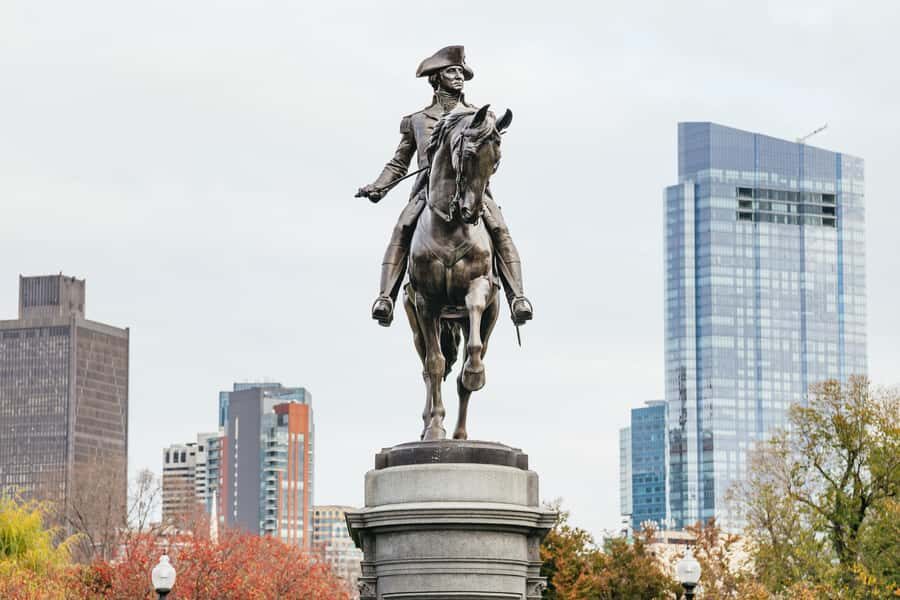
The core of the walk follows the Freedom Trail line from Faneuil Hall to the Boston Common. That stretch is a master key for first-timers, because it connects events and places into a story, not a random set of stops.
Faneuil Hall is where public arguing became a sport in early Boston life. Even if you only see the building’s exterior, the surrounding area helps you picture why crowds gathered there and how meetings shaped the city’s identity.
From there, the tour leans into the political and civic landmarks that shaped Boston’s public life. You’ll also see both the Old and New State Houses, which gives you a neat contrast: the older seat of power, then the later evolution that came with a growing city.
Old South Meeting House and why it’s more than a stop
The Old South Meeting House is one of those places where the building itself feels like it’s holding its breath. You’ll learn why the meetings mattered and how the city’s momentum built toward bigger moments.
If you want context you can carry to other museums and historic sites later, this kind of stop does the job. Instead of memorizing dates, you understand the human pressure behind the history.
Old Corner Bookstore, King’s Chapel, and the streets that keep talking
As you walk, you’ll hit several landmarks that connect the dots between faith, commerce, and daily life. The Old Corner Bookstore is a good example: it’s a reminder that Boston’s intellectual life wasn’t something that happened only in classrooms. It was part of street-level culture.
King’s Chapel adds a different angle. Churches in this area aren’t just pretty facades; they’re markers of how communities organized beliefs and public order over time.
You’ll also pass through a part of town where the buildings are close enough to feel connected. That’s the trick to this walk: you start noticing how the city’s eras layer on top of each other rather than sitting in separate boxes.
Old Granary Burial Ground: history you can read with your eyes
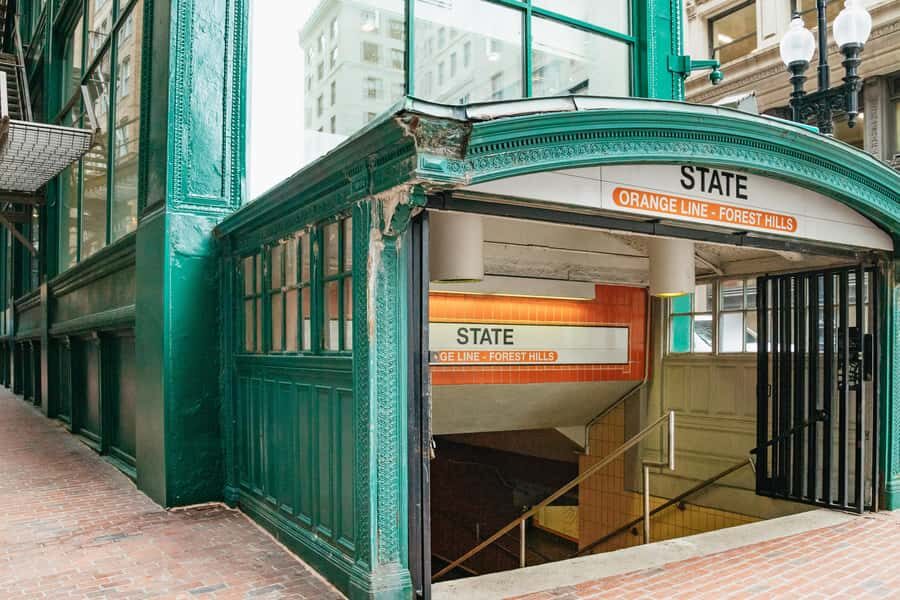
The Old Granary Burial Ground is where the tour turns more reflective. You’ll see it as an outdoor archive—people, names, and memory in one place.
It’s a stop that works well on a walking tour because you’re not stuck inside a single room. You can take a minute to slow down, look around, and let the guide’s context make the names matter.
If you tend to rush through cemeteries in museums, this one is different. It helps you see how Boston used burial grounds as part of its long-running identity, not just as a final resting place.
You can also read our reviews of more historical tours in Boston






Beacon Hill: gaslights, cobblestones, and Louisburg Square vibes
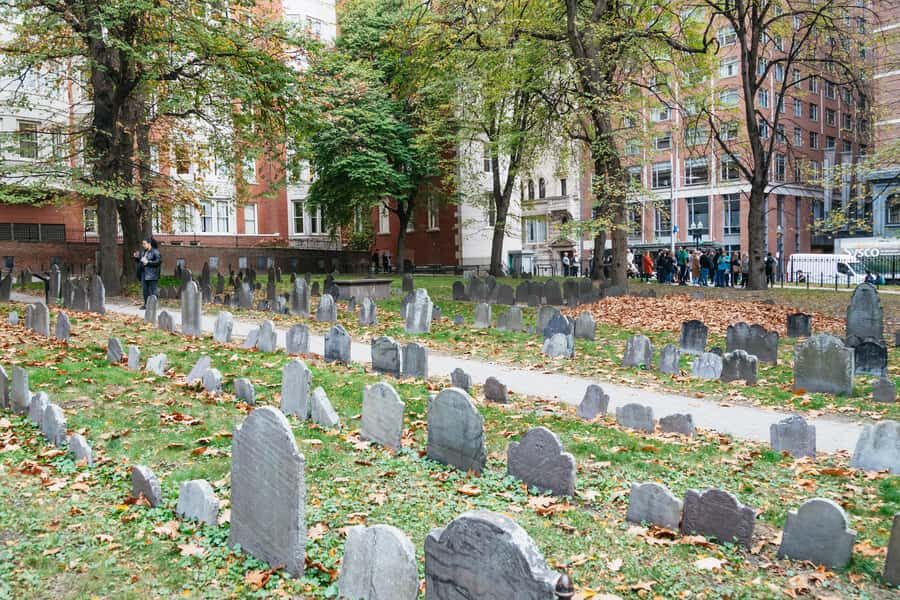
Then you move into Beacon Hill, and the vibe changes right away. Beacon Hill feels like the city put on its older clothes—gaslit streets, historic homes, and that compact sense of neighborhood.
You’ll wander among cobblestone drives and pay attention to details that are easy to miss when you’re only passing through. Louisburg Square is the kind of place that rewards looking up and around, because the setting makes you understand why people prized these streets in the first place.
This is also a great area for photos, but don’t treat it like a quick backdrop. The best moments here are the ones where you stop for ten seconds and realize the street geometry is part of the atmosphere.
Newbury Street and the shift into Back Bay’s 19th-century planning
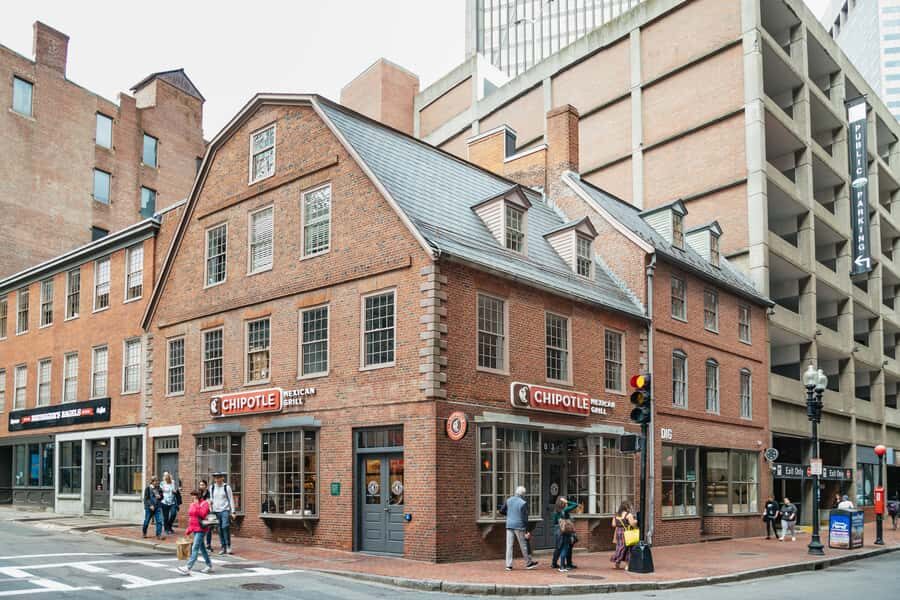
From Beacon Hill, the tour swings toward Back Bay, and you get that classic contrast: older residential character meets a more planned, grander urban style.
Newbury Street shows up along the route, and it’s more than a name to bookmark. It’s where you can feel the city’s evolution into a shopping and culture corridor without losing the historic backbone.
The guide’s job here is to explain why the architecture looks the way it does and how the neighborhood grew in its own rhythm. If you like your sightseeing to include “why this exists,” Back Bay is a strong payoff zone on this tour.
John Hancock Tower and Trinity Church: big modern edges with old anchors
You’ll also see landmarks that bridge eras—like the John Hancock Tower—while Trinity Church brings you back to older style and older community roots.
That contrast helps your brain build a clearer Boston timeline. You’re not just seeing buildings. You’re seeing how Boston keeps rewriting its skyline while still keeping key threads of identity.
Public Garden and Copley Square: finishing the loop with style
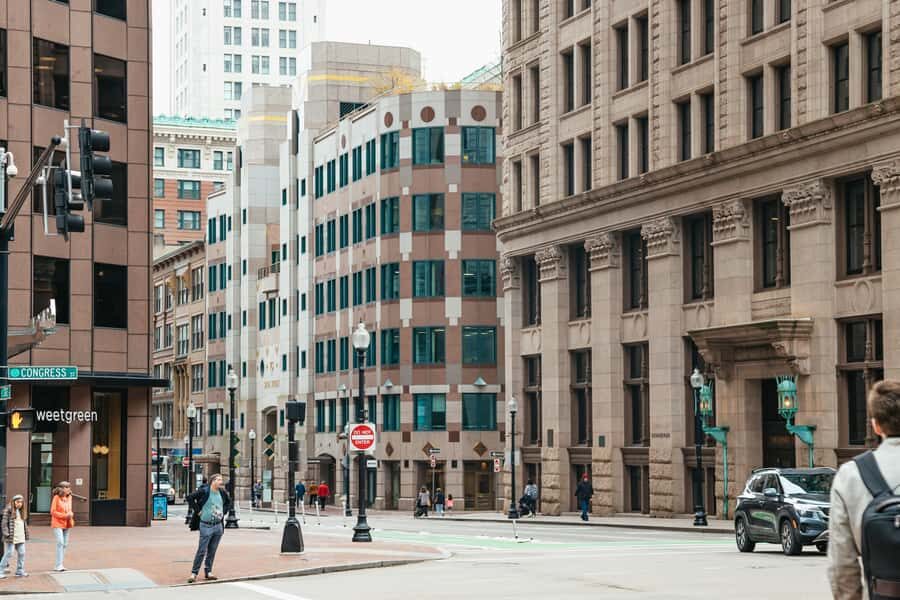
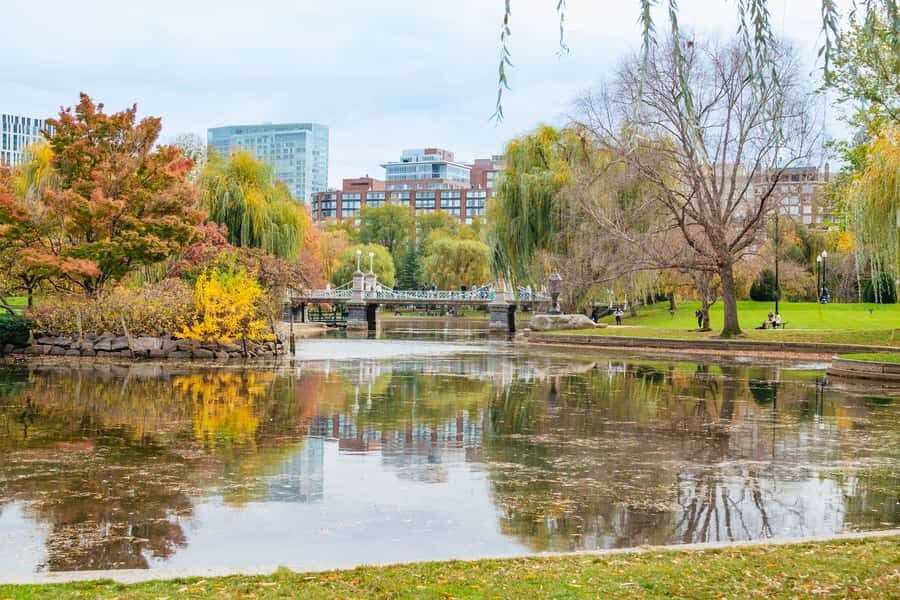
As the walk continues, you’ll reach the Public Garden and graceful Copley Square. This is a smart finish because it gives you open space after the denser streets of Beacon Hill and Back Bay.
The Public Garden is the kind of place where even a short stop helps you reset. You can stretch your legs, take in the scenery, and remember that Boston isn’t only about old stone and Revolutionary-era arguments.
Copley Square rounds out the tour with its 19th-century authority. Even if you don’t go inside anything, the square’s setting makes the architecture feel like it’s speaking.
Boston Marathon Finish Line: when Boston history becomes living culture
One of the more fun late-tour moments is the Boston Marathon Finish Line. It’s proof that Boston’s story doesn’t stop in the 1700s.
By the time you reach that area, the two-hour timing usually hits a sweet spot. You’ve learned the “origin story,” then you end with something modern that still feels like part of Boston’s civic personality.
What makes the guide experience worth it (and who it suits)

This tour is sold as history plus architecture, but the real value is how the guide frames it. In past walks, guides have been described as engaging, patient with tourists, and clearly invested in making the stories land.
One specific pattern I think you should look for: the guide should mix the well-known facts with smaller details that make the city feel personal. On this tour, that can include humor, interactive questions, and story detours that keep you awake in the middle of a long paragraph.
You may also get spooky side stories, including Salem-related witch lore and a bit of film and folklore. That’s not what you’d expect from a strictly “Freedom Trail” name, but it’s exactly the kind of add-on that makes the tour feel human.
Best for
This is ideal if you want a first-day orientation without doing three separate tours. It’s also a good fit if you care about architecture and want context, not just names of buildings.
If you’re the type who likes to walk, pause, and ask questions, you’ll do well here. If you hate walking or want long stops at indoor sites, you’ll probably feel constrained by the two-hour length.
Price and value: what $45 buys you in 2 hours
At $45 per person for a two-hour guided walk, the value depends on what you want out of Boston.
This rate is easier to justify if you:
- want a structured route that hits major landmarks without planning
- want a guide who can connect the sites into a coherent story
- prefer hearing the explanation live instead of reading every sign on your own
It’s less of a bargain if you expect extensive time at each attraction. With a short tour window, you’ll move quickly, and most of what you’ll get at stops is guided context plus exterior viewing.
Still, when you think about the concentration of stops—Faneuil Hall, State Houses, Old South, Old Corner Bookstore, King’s Chapel, Old Granary Burial Ground, Louisburg Square, Newbury Street, John Hancock Tower, Trinity Church, Public Garden, Copley Square, and the Marathon Finish Line—it’s a lot to fit into one morning.
Pacing and practical tips so you enjoy it in real Boston weather
This is an easy walking tour on a city route, but “easy” doesn’t mean “no effort.” You should wear comfortable shoes and dress for the season.
In warmer weather, bring water. Water is generally available somewhere along the route, but having your own bottle makes you less dependent on timing.
If rain shows up, don’t assume you’ll get a cancellation. One guide has previously kept the tour going through heavy rain, so a light rain jacket or umbrella can help you stay comfortable.
Also, expect to pause at many points. Two hours can feel fast, but that’s because the guide keeps the story moving while you stop for photos and brief looks.
Should you book this Freedom Trail, Beacon Hill, and Back Bay tour?
I’d book it if you want a single morning walk that gives you a clear Boston storyline. This route is strong for first-timers, and it’s also useful if you’ve already seen a few major sights but want better context and a tighter sense of where everything fits.
I’d skip it if you need a slow-paced tour with long indoor time, because two hours won’t give you that. It’s also not the best choice if you’re sensitive to weather and don’t like walking in changing conditions—Boston doesn’t always cooperate.
Overall, this is a good-value way to get your bearings fast, then return later on your own to the spots you enjoyed most.
FAQ
How long is the Boston 2-Hour Historic Walking Tour?
The tour lasts 2 hours.
What does the tour cost?
The price is $45 per person.
Where is the meeting point?
Meet at the corner of State and Congress Streets, across from the old State House, outside 28 State Street.
Is there a live guide, and is it in English?
Yes. You’ll have a live tour guide in English.
What should I wear or bring?
Wear comfortable shoes and dress appropriately for the season. If it’s warm, bring bottled water; water is generally available along the route.
Is gratuity included in the price?
No. Gratuity is optional and not included.
Is there free cancellation?
Yes. You can cancel up to 24 hours in advance for a full refund.