REVIEW · BOSTON
Boston: Freedom Trail, Bunker Hill, & USS Constitution Tour
Book on GetYourGuide →Operated by Walk & Talk Boston Walking Tours · Bookable on GetYourGuide
The Freedom Trail runs right through the Revolution. This end-to-end walk covers all the linked sites, plus real time at Bunker Hill and the USS Constitution. I like the entire Freedom Trail coverage and Mark’s clear, loud narration that keeps the story easy to follow, even in busy areas. The only catch: you need to be ready for about three miles of walking.
You won’t get just dates. You’ll hear how the Revolution came together through people like Adams, Revere, and Washington, along with lesser-known names such as Margaret Kemble Gage, Dr. Joseph Warren, and firebrand lawyer James Otis. The pace stays sensible, and the guide seems to actively manage energy levels, not just time.
If you expect a quick, casual stroll, this may feel a bit long. But if you want a walk that ties together the big turning points like the Boston Massacre, Boston Tea Party, and the battles of Lexington and Concord, you’ll probably find it hits the mark.
In This Review
- Key highlights you’ll care about
- Entering the story at the Massachusetts State House
- Boston Common to Park Street Church: the Revolution’s backdrop
- Granary Burying Ground and King’s Chapel: people you can read in stone
- Old South Meeting House to Faneuil Hall: protest meets politics
- Boston Massacre Site: the moment the tension gets real
- Paul Revere House to Old North Church to Copps Hill: the communication chapter
- Bunker Hill Monument and the Bunker Hill visit: the turning point you can stand on
- Finishing at USS Constitution: history you can see up close
- The pacing, group size, and rest stops that keep it enjoyable
- Price and value: is $79 a good deal for this much Revolution?
- Who should book this Freedom Trail tour, and who might not?
- Should you book this Boston Freedom Trail, Bunker Hill, and USS Constitution tour?
- FAQ
- How long is the Boston Freedom Trail, Bunker Hill, and USS Constitution tour?
- Where do we meet, and how do we recognize the guide?
- What does the tour include besides the Freedom Trail?
- Is the tour wheelchair accessible?
- How much walking is required?
- What is included in the price?
Key highlights you’ll care about
- Every major stop on the Freedom Trail, plus 4 to 5 extra stops that add context
- Bunker Hill is actually visited, not just pointed at from afar
- USS Constitution visit gives the Revolution a physical finish line
- Small group size (one group was about 14; another mentioned a cap around 16) so you can hear and ask questions
- Rest breaks and seating when the weather or energy calls for it
- Mark’s voice and storytelling style keep the information clear in crowded spots
Entering the story at the Massachusetts State House

Most Freedom Trail walks start strong, but this one starts with purpose. You meet at the Massachusetts State House, across the street from the main steps at the Robert Gould Shaw Memorial. Your guide stands out with a white baseball cap with the Walk & Talk Boston logo and a green sign, and you’ll want to arrive about ten minutes early.
From there, the tour doesn’t treat the trail like a checklist. It frames the whole Revolution story as a chain of cause and effect. You start with the political mood of Boston, then you move through the places where public opinion got loud and where conflict became hard to avoid.
You’ll also feel early on that the guide is focused on the “who” and the “what happened next,” not just the “what you’re looking at.” That matters because the Freedom Trail can get confusing if you’re only half-paying attention.
You can also read our reviews of more tours and experiences in Boston.


Boston Common to Park Street Church: the Revolution’s backdrop
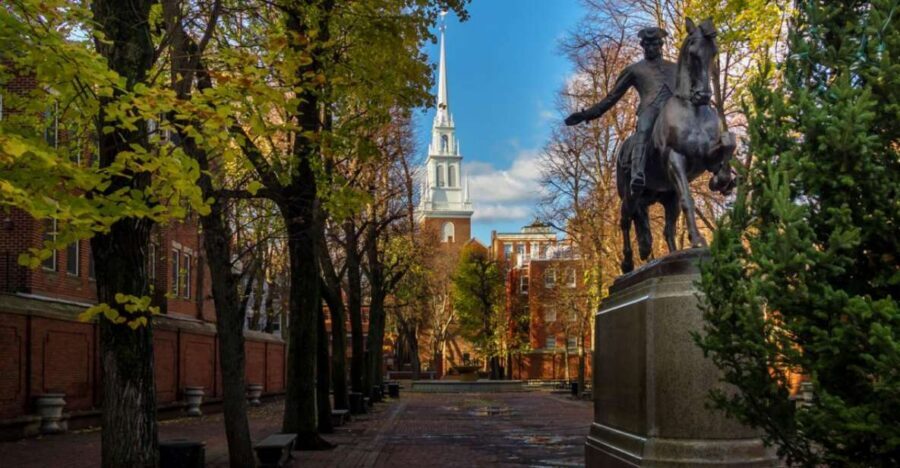
After the State House, you’ll head into Boston Common. This is the part where you get orientation—wide open space, big views, and a sense of the city scale. The tour is designed to use those outdoor stretches to set context, so you’re not just staring at plaques.
Next comes Park Street Church. In a lot of tours, churches are treated like photo stops. Here, you’re more likely to hear why the place fits the larger political and social story. It’s the kind of stop where the guide can connect the atmosphere of Boston to the tensions that eventually boil over.
If you’re the type who likes “why this place mattered,” you’ll enjoy this section. If you mostly want quick visuals, you might wish there were more free time to wander. The trade-off is you’ll get a fuller story later.
Granary Burying Ground and King’s Chapel: people you can read in stone

Stop four is Granary Burying Ground, followed by King’s Chapel Burying Ground. These are two of the most emotional spots on the Freedom Trail, because they force you to see the Revolution as something lived by real families and real communities, not just textbook names.
The guided time here helps you turn headstones into story prompts. You’ll learn why these burial grounds mattered to Boston’s collective memory and how that memory overlaps with major Revolutionary-era events. The guide’s style is helpful: instead of dumping facts, the talk tends to connect the site to the people behind the conflict.
Practical note: cemeteries can feel exposed in cold or hot weather, so dress for wind and sun. This is also a good stretch to do what one helpful reviewer recommended: slow down your pace and conserve energy.
Old South Meeting House to Faneuil Hall: protest meets politics
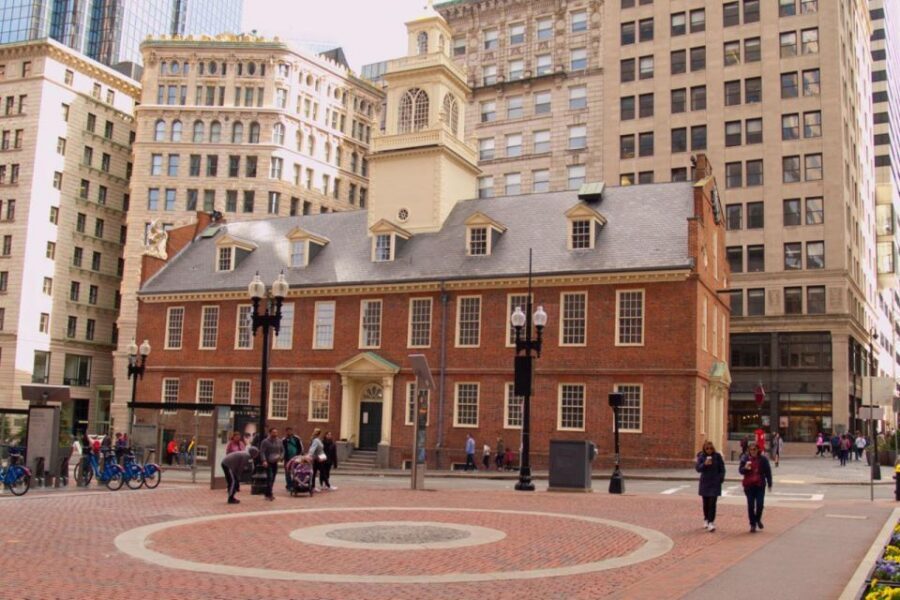
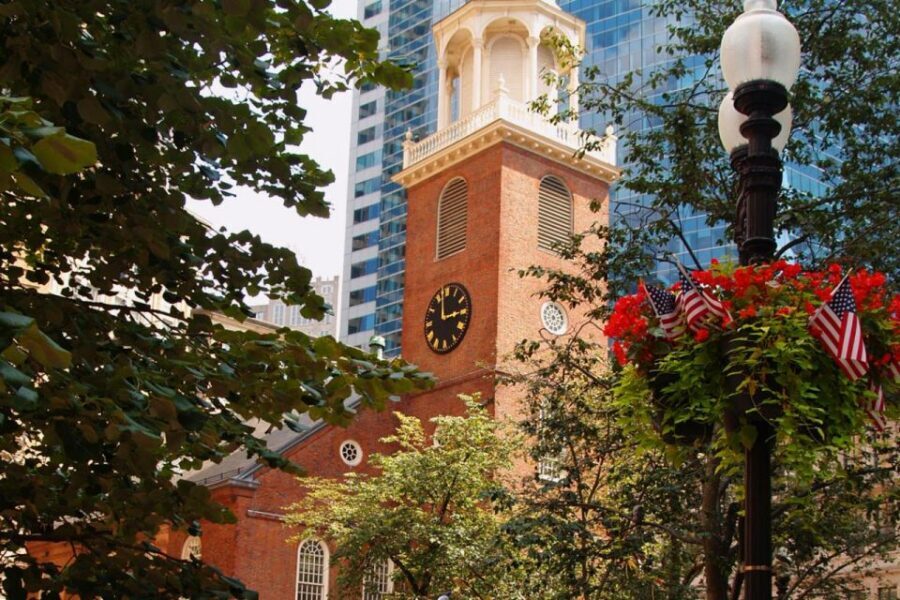
Old South Meeting House and Faneuil Hall are where Boston starts feeling like a place where decisions happened in public. You’ll visit Old South Meeting House, then continue to Faneuil Hall, with guided time at both.
This part of the tour focuses on the chain reaction behind the Revolution. You’re not only learning what happened; you’re learning what changed because people reacted. The story links major turning points like the Boston Massacre and the Boston Tea Party into a bigger movement—how anger, organizing, and public pressure built toward armed resistance.
Faneuil Hall especially helps you understand why Revolution-era Boston was loud. Even if you don’t memorize every detail, you’ll come away with the feeling that governance and protest were tied together here. That’s a lesson most short walks miss.
Boston Massacre Site: the moment the tension gets real

The Boston Massacre site is one of those stops where you can feel the weight of the event without needing a lecture-length history class. The guide gives it enough time to matter, and the talk stays grounded in people and outcomes, not abstract ideology.
This stop is also where you’ll appreciate the tour’s structure. You’ve already covered the setting and the public mood. Now you’re looking at the kind of spark that turns disagreement into crisis.
If you’re sensitive to heavy history, give yourself a quiet minute here. Some places don’t need jokes to be meaningful. (Still, the guide’s humor tends to be light and supportive, not disrespectful.)




Paul Revere House to Old North Church to Copps Hill: the communication chapter
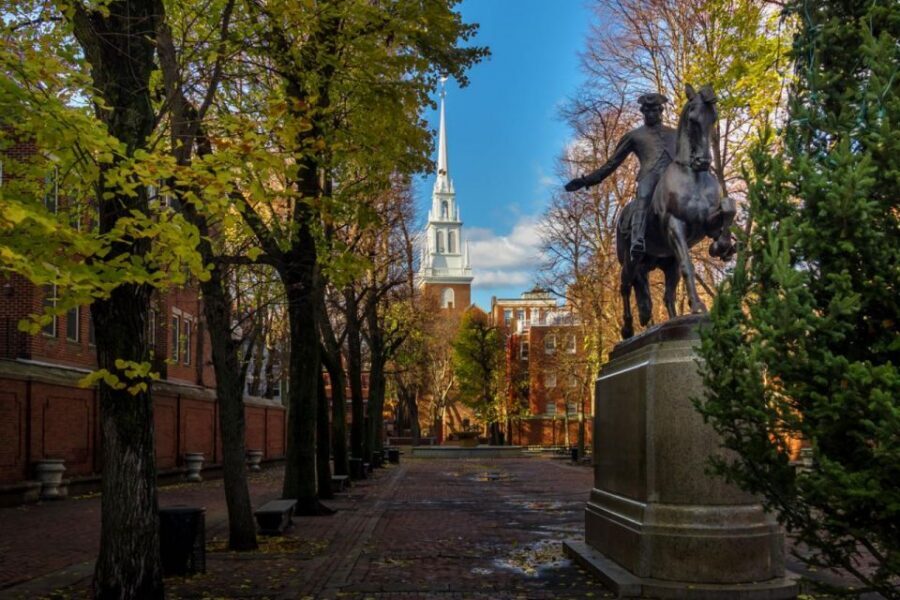
You’ll visit the Paul Revere House, then Old North Church, and later Copps Hill Burying Ground. Together, they form a section of the tour that feels like a shift from political conflict to action and message.
The guide ties these stops back to the Revolution story and the people who made events move. You’ll hear familiar names like Revere again, but you’ll also get perspective on how other individuals fit into the bigger picture. That blend is part of the tour’s value: it keeps the well-known names while adding characters you don’t usually see in a quick Freedom Trail overview.
Copps Hill also gives you one more burial-ground perspective, which helps the story land emotionally. It’s a reminder that Revolutionary change didn’t stay in headlines. It lived in households and communities.
Bunker Hill Monument and the Bunker Hill visit: the turning point you can stand on
Most Freedom Trail tours either skip Bunker Hill or treat it as a drive-by. This one doesn’t. You visit the Bunker Hill Monument, then you actually go to Bunker Hill itself.
This is one of the tour’s biggest selling points. The guide spends time on why the Battle of Bunker Hill mattered and how it connects to the subsequent departure of British forces from Boston. Instead of leaving you with a vague “it was important,” you get the story’s logic: how events shifted and why that shift mattered for what came next.
You’ll also likely feel the physical difference here. The views and terrain change compared to the downtown stops. That makes the history stick better because your brain has a new spatial anchor.
If you’re short on time in Boston, don’t underestimate how much you’re getting by including Bunker Hill and not just the Freedom Trail markers. It turns a walking tour into a fuller Revolution day.
Finishing at USS Constitution: history you can see up close

The tour ends at the USS Constitution. That final stop is a satisfying way to close the loop, because you’re leaving the streets and meeting spaces that shaped the Revolution and stepping toward a tangible wartime presence.
You’ll walk away with a clearer sense of how the story moved from protest and conflict to full-scale struggle. The guide ties the ending back to the people and events you’ve been hearing all day, so it doesn’t feel like a random extra.
One practical perk: you’ll get help figuring out how to get back after the tour. A reviewer noted that the guide even provided directions for getting back to the starting area.
The pacing, group size, and rest stops that keep it enjoyable
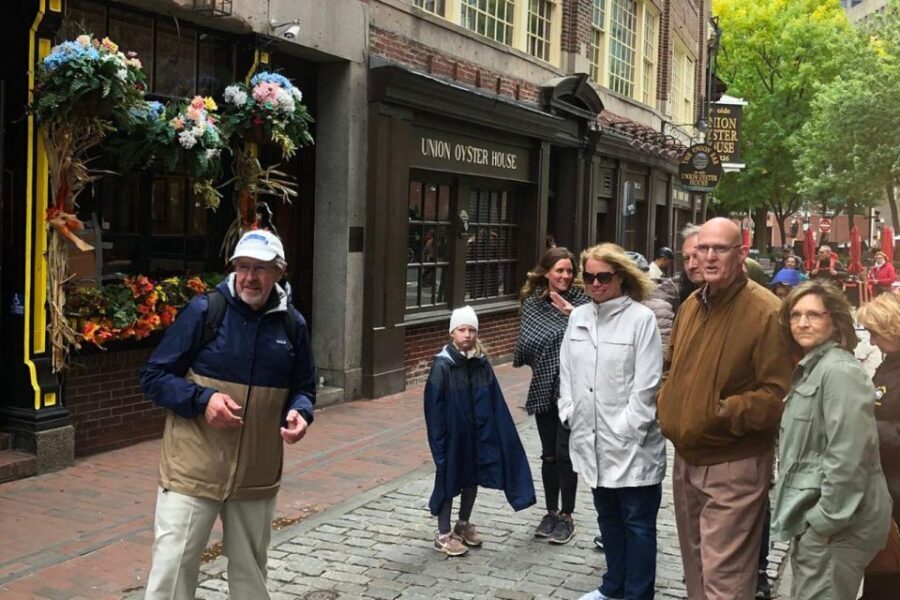
This tour is about four hours, but it doesn’t feel like a four-hour grind if you’re prepared. The guide keeps an eye on the group and slows down when needed. Several reviews mention that the pace wasn’t too fast and that the guide found places to sit in shaded spots.
The small group size makes a difference. You’re more likely to hear clearly when you’re in a tight group, and you’re more likely to get your questions answered instead of getting brushed off. One review mentioned limiting the group to around 16 so everyone could hear in busy areas.
Walking-wise, you should assume you’ll be on your feet for most of the tour. It’s not wheelchair-suitable, and the requirement is simply that you can walk about three miles. If your trip includes lots of museum time afterward, you’ll want to schedule a lighter evening.
What to bring:
- Comfortable walking shoes (you’ll be doing real walking, not just “stop and start”)
- Water and a small snack
- Sunscreen or a hat, depending on season
Price and value: is $79 a good deal for this much Revolution?
At $79 per person for about four hours, the price can look steep if you compare it to short, quick walking tours. But this isn’t a basic highlights loop. You’re paying for three things that usually cost extra in other formats:
1) Coverage: it hits the main Freedom Trail stops and adds extra stops that enrich the story.
2) Scope: it includes Bunker Hill and a finish at USS Constitution, so you get more than the downtown circuit.
3) Group experience: small group size and a guide who keeps things understandable, even when the streets are crowded.
Also, the guide tip is included. That’s not just a small detail. It can make your day feel simpler because you’re not trying to calculate gratuity on the spot.
So for most visitors, this tour feels like a good value if you care about story and structure, not just stamping out locations. If you’re the type who wants to wander independently with no guidance, you might prefer a self-paced Freedom Trail route and save money.
Who should book this Freedom Trail tour, and who might not?
Book it if you:
- Want the full story arc connecting key Revolutionary events through the actual places in Boston
- Enjoy learning about both famous names and lesser-known figures like Margaret Kemble Gage, Dr. Joseph Warren, and James Otis
- Like a guide who can handle questions and keep the group together
- Don’t mind walking about three miles
Consider skipping or choosing something shorter if you:
- Want minimal walking and lots of free time
- Prefer quiet, independent exploring over guided discussion
- Have trouble keeping up with steady city walking for several hours
One more fit note: the tour is in English, so it’s best for English-speaking travelers.
Should you book this Boston Freedom Trail, Bunker Hill, and USS Constitution tour?
If you want your Boston day to feel like one coherent narrative, I think this is a strong pick. The biggest reason is simple: you get the Freedom Trail stops and you get Bunker Hill and USS Constitution, tied together by people-first storytelling.
The best part is the guide’s presentation style. Clear voice, active pacing, small group energy, and real space for questions makes it easier to absorb the Revolution story instead of just skimming through it.
My call: if you can walk three miles and you like learning more than the usual “photo at every stop” approach, book it. It’s the kind of tour that helps you walk through history with your brain turned on.
FAQ
How long is the Boston Freedom Trail, Bunker Hill, and USS Constitution tour?
The tour runs for 4 hours. Starting times vary, so you’ll want to check availability for the exact departure time.
Where do we meet, and how do we recognize the guide?
Meet at the Massachusetts State House, 24 Beacon Street, Boston. The guide will be across the street from the main steps at the Robert Gould Shaw Memorial, wearing a white baseball cap with the Walk & Talk Boston logo and holding a green sign. Aim to arrive about ten minutes early.
What does the tour include besides the Freedom Trail?
In addition to covering the Freedom Trail stops, the tour includes a visit to Bunker Hill and ends at USS Constitution.
Is the tour wheelchair accessible?
No. It is not suitable for wheelchair users.
How much walking is required?
You need to be able to walk three miles to participate.
What is included in the price?
The tour ticket is included, and the guide tip is included as well. The tour is guided in English.