REVIEW · BOSTON
Boston: Freedom Trail History and Architecture Walking Tour
Book on GetYourGuide →Operated by Boston CityWalks · Bookable on GetYourGuide
A short walk on the Freedom Trail can turn into a full city story. This 70-minute downtown route links Boston’s most famous civic buildings to the everyday street scene around them, so the architecture doesn’t feel random.
I really like two things about this tour: the tight route that takes you from Faneuil Hall toward Boston Common and the guide-led context that explains why these buildings matter. One thing to consider: the tour is English-language, and if your English is still shaky, you may feel like you’re playing catch-up.
If you want a fast, structured way to understand Boston’s downtown without getting lost, this is a smart choice. Just go in knowing it’s a brisk history-and-architecture walk, not a slow museum stroll.
In This Review
- Key Things to Know Before You Go
- Why This Freedom Trail Walk Works So Well
- Where You Start: State Street Roots and a Clear Meeting Spot
- The 70-Minute Story Arc: Faneuil Hall to Boston Common
- Stop-by-Stop: What Each Site Adds to the Bigger Picture
- Old and New State House: Government Changes in Plain Sight
- Faneuil Hall: The Meeting Place That Explains Boston’s Voice
- The Boston Massacre Site: Tension That Lives in the Street
- Park Street Church: A Landmark That Adds a Religious-Civic Layer
- King’s Chapel: More Architecture, More Time Periods
- Old South Meeting House: Public Debate as a Repeating Theme
- Old Granary Cemetery: The Trail Turns Quiet
- Old City Hall and First Schoolhouse Site: Everyday Roots, Not Only Big Moments
- Old Corner Bookstore: The Culture Side of Downtown
- Boston Common: The Finish Line and a Reset Point
- Irish Famine Memorial: A Later Layer You Can’t Ignore
- Architecture Clues: How Boston Evolved Without You Needing a Map Reset
- The Guide Experience: Allan’s Name Comes Up for a Reason
- Price and Value: $30 for a Morning’s Worth of Context
- Who This Tour Suits Best (and Who Might Want Another Option)
- Tips to Get the Most From Your 70 Minutes
- Should You Book This Boston CityWalks Freedom Trail Tour?
- FAQ
- How long is the Boston Freedom Trail History and Architecture Walking Tour?
- How much does the tour cost?
- Where do I meet the tour?
- What’s the general route?
- What sites will we see?
- Is the tour guide live?
- Is there free cancellation?
- Can I reserve without paying right away?
Key Things to Know Before You Go
- A guided Freedom Trail loop (about 70 minutes) that focuses on downtown connections
- Real architectural variety—you’ll see how Boston’s buildings evolved in the same walkable area
- Named stops you can map mentally: Faneuil Hall, Boston Massacre Site, King’s Chapel, Old South Meeting House, Boston Common, and more
- Your local guide matters—Allan is specifically praised for being personable and patient, even with tougher questions
- English is required for full enjoyment, based on one past comment about needing solid comprehension
Why This Freedom Trail Walk Works So Well
Boston’s downtown can feel like a maze at first. The streets are charming, but the story is hard to hold in your head when you’re bouncing between landmarks on your own. This tour solves that problem by stitching the sites together into one continuous narrative—history in one direction, architecture in the other.
What I like about the format is how quickly it gets you oriented. You start at the civic heart and finish at Boston Common, which makes the whole walk feel like you’re moving through a living city, not just ticking off attractions. It’s also short enough that it fits neatly into a morning plan.
You can also read our reviews of more walking tours in Boston


Where You Start: State Street Roots and a Clear Meeting Spot

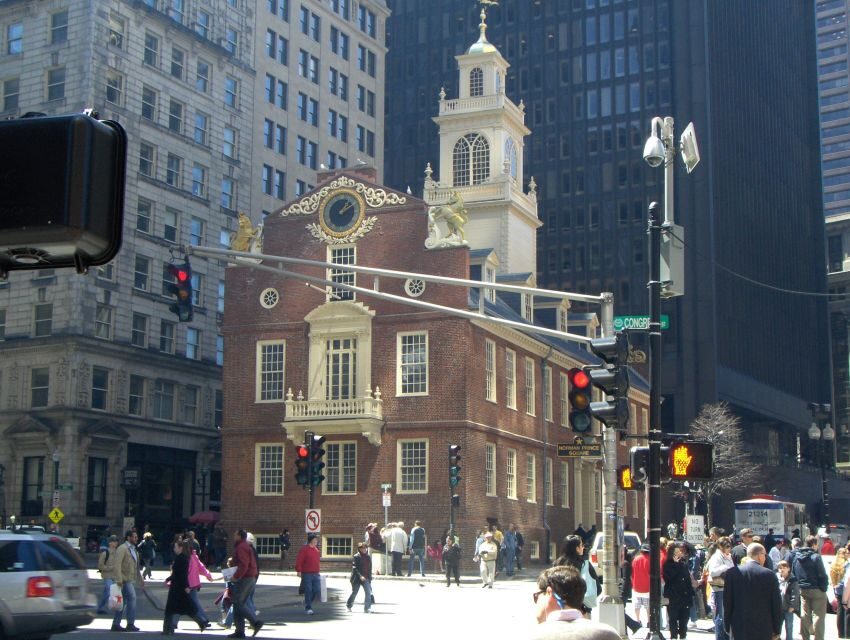
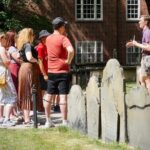
You meet at the NW corner of State and Congress Streets, outside 28 State Street (Citizens Bank). It’s across the street from the Old State House, which helps because your first moments are already in context.
This matters more than it sounds. When a walking tour starts in a recognizable landmark zone, you lose less time figuring out where you are and more time listening. Also, you can usually orient yourself by the Old State House immediately, even if you’ve never visited Boston before.
The 70-Minute Story Arc: Faneuil Hall to Boston Common
The route follows the Freedom Trail through downtown, and the tour explicitly focuses on what Boston looked like in different eras. You’ll also hear about the culture of Boston from a local guide, so the stops don’t read like a textbook list.
You should expect a steady walking pace and frequent narration. The best way to enjoy it is to treat it like a guided walk-and-talk: listen first, look second, and ask questions when something sparks your curiosity.
Stop-by-Stop: What Each Site Adds to the Bigger Picture
This tour hits a stack of major Freedom Trail touchpoints. I’ll walk you through what each one tends to contribute to the overall story, plus what to pay attention to as you’re passing by.
Old and New State House: Government Changes in Plain Sight
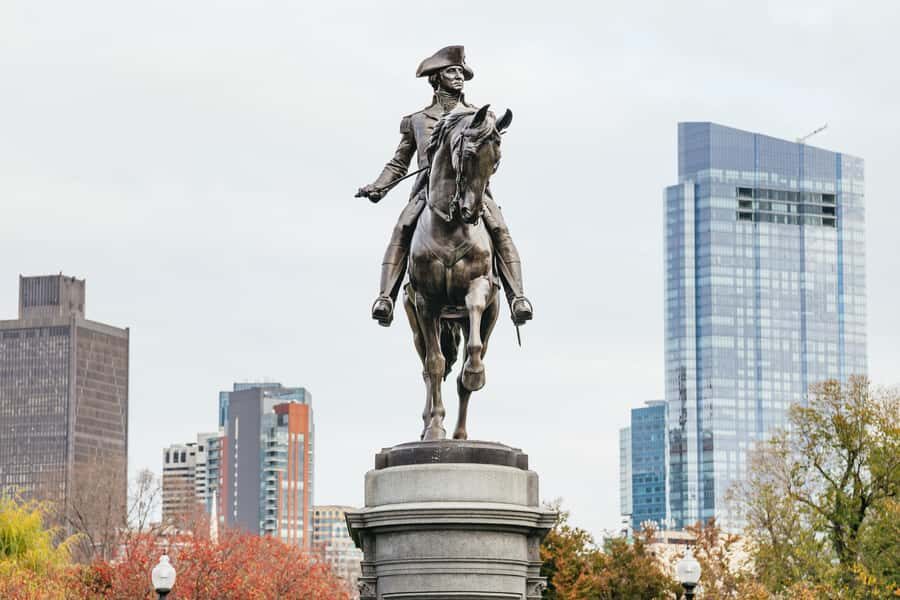
You’ll encounter the Old State House and New State House on your walk. Seeing them close together is the point—Boston’s civic identity didn’t freeze in one moment, and the downtown area shows that evolution as the city grew and formal government shifted.
As you look around, pay attention to how the spaces feel: official buildings tend to have a different mood than shops or homes, even when you’re still surrounded by everyday street life. This is a good place to notice the difference between a city that performs history and a city that still runs on it.
You can also read our reviews of more historical tours in Boston





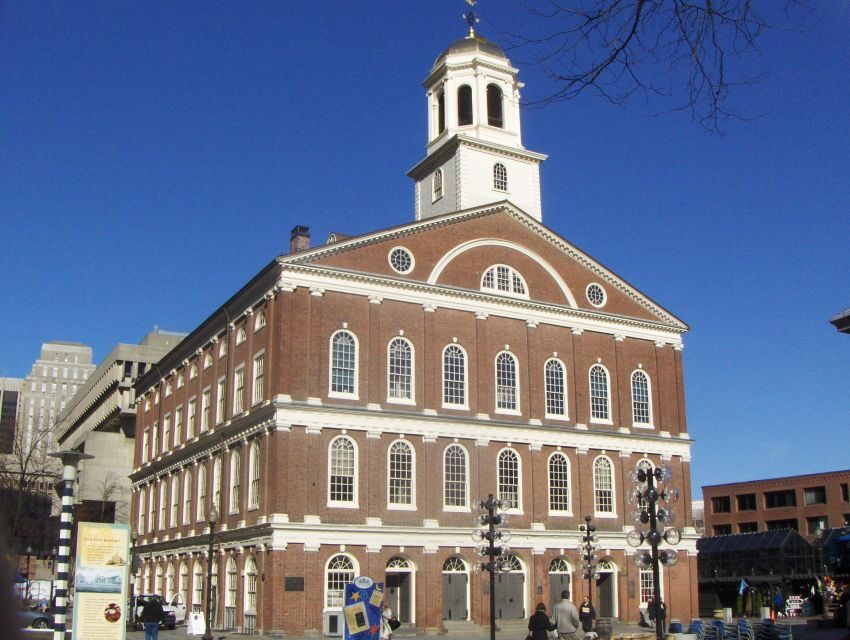
Faneuil Hall: The Meeting Place That Explains Boston’s Voice
Faneuil Hall is often the emotional anchor of the Freedom Trail. Here, it’s not just about a famous building—it’s about why public gatherings and civic debate are part of Boston’s identity.
When the guide ties it to what came next on the trail, you start to see the logic of the route. This stop is great if you like your history tied to people, not just dates.
The Boston Massacre Site: Tension That Lives in the Street
The Boston Massacre Site gives weight to the route’s dramatic moments. Even if you’re not a die-hard history fan, this stop helps you understand why the rest of the walk isn’t just architecture sightseeing.
Look for how the guide frames the story. These tours work best when you hear the events as a chain—cause, reaction, and consequence—rather than as isolated headlines.
Park Street Church: A Landmark That Adds a Religious-Civic Layer
Park Street Church adds another dimension: Boston isn’t only about government and protests; it’s also about institutions and community space. Churches on busy streets often sit at the crossroads between belief, public life, and the look of the neighborhood.
If you like architecture, this is a good moment to pause mentally and compare what you’ve already seen. The guide’s job here is to connect the meaning of the place to its physical presence.
King’s Chapel: More Architecture, More Time Periods
You’ll also pass King’s Chapel. This stop keeps the architecture story moving through time, reinforcing that downtown Boston isn’t one style, one era, or one idea.
Pay attention to how the guide explains the building’s role in Boston’s timeline. Even when you don’t catch every detail, the explanation helps the street feel organized.
Old South Meeting House: Public Debate as a Repeating Theme
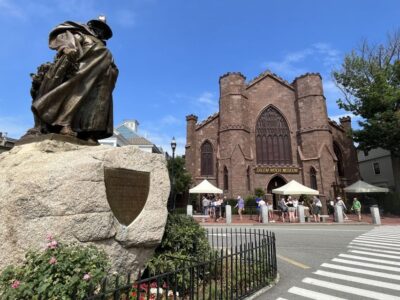
At the Old South Meeting House, the tour leans into the idea of public meeting and public voice again. It’s another reminder that civic life in Boston has long been shaped by gatherings, speeches, and community decisions.
If you’re traveling with teenagers, this is the kind of stop that can keep questions alive. Past participants praised their guide for answering questions patiently, which is especially useful at sites where people want to argue or add their own angle.
Old Granary Cemetery: The Trail Turns Quiet
Old Granary Cemetery changes the tone. It’s part of the Freedom Trail, which means it matters to the overall narrative, not just because it’s old.
This is a spot where you can slow down in your mind even if you’re still walking. If you care about how cities remember their past—who is honored, how it’s marked, and where memory sits—this will land well.
Old City Hall and First Schoolhouse Site: Everyday Roots, Not Only Big Moments
You’ll encounter the Old City Hall and First Schoolhouse Site. These stops broaden the story from dramatic events into the basics of building a city: governing, educating, and organizing daily life.
This is a strong set for anyone who prefers context over spectacle. The tour frames how Boston grew and how institutions formed, not just how crises unfolded.
Old Corner Bookstore: The Culture Side of Downtown
The Old Corner Bookstore shows up as a stop, and it’s a clue that Boston isn’t only about politics and religion. It’s also about ideas and culture—places where people come to think, learn, and share.
If you’re the type who enjoys understanding a city’s habits, you’ll probably like this stop. Even without turning it into a long museum experience, it helps the story feel human.
Boston Common: The Finish Line and a Reset Point
You’ll also see Boston Common along the way. It’s a logical ending because it gives you space after the dense downtown intensity.
Use the final moments to take a breath and connect what you learned. When the history stops, your brain can then re-map the neighborhood around you.
Irish Famine Memorial: A Later Layer You Can’t Ignore
The tour includes the Irish Famine Memorial. This stop adds a more modern historical layer, reminding you that a city’s story keeps moving forward and bringing new chapters into view.
It’s also a good moment to notice how memory works in public spaces. Even if the emotional tone is different from the earlier sites, it makes the overall route feel more complete.
Architecture Clues: How Boston Evolved Without You Needing a Map Reset
One promise here is that you’ll learn how Boston evolved over time, and you’ll see mixed architecture in the same walkable area. That’s the real value: you get to compare building types and visual styles while the guide keeps the story straight.
Here’s what you should do while walking: don’t just glance upward. Take a couple seconds to compare buildings you’ve already seen. When the guide points out how the city changed, the streets stop looking random.
Boston’s downtown is all about layers. With a guided walk, you can actually feel those layers instead of just staring at them.
The Guide Experience: Allan’s Name Comes Up for a Reason
The tour is led by a local professional guide, and one name you may see mentioned is Allan. Reviews highlight that he’s personable and makes the information easy to follow, plus he’s described as patient when questions came from different ages.
That “patient and responsive” detail is more important than it sounds. On a short walking tour, the guide’s ability to handle interruptions and answer follow-ups can make the difference between feeling rushed and feeling like you truly understood what you were seeing.
Price and Value: $30 for a Morning’s Worth of Context
At $30 per person for about 70 minutes, this tour is priced like a focused city experience rather than a long attraction day. The value comes from stacking several major Freedom Trail sites into one guided narrative, which is hard to replicate on your own without planning and background reading.
If your goal is to get oriented fast, $30 is a reasonable way to save time and mental effort. You’re paying for the “why” that turns landmarks into a connected story, plus a guide who can answer your questions on the go.
If you already know the entire Freedom Trail storyline by heart, you might feel it’s more of a structured reminder than a discovery. But for most first-timers, it’s a good use of a morning slot.
Who This Tour Suits Best (and Who Might Want Another Option)
This tour is a great fit if you want a downtown history-and-architecture walk with clear landmarks and a guide keeping the narrative on track. It’s also a solid choice if you’re traveling with mixed ages, since the guide approach has been praised for engaging teenagers as well.
You might want to consider a different format if you struggle with English comprehension on the move. One past comment specifically notes that weaker English skills can make you fall behind quickly, which is the last thing you want on a short, high-information walk.
Tips to Get the Most From Your 70 Minutes
Come prepared for a walking pace. Wear comfortable shoes and keep your phone charged, because you’ll likely want photos and a quick refresh of where you are between stops.
If you’re the kind of person who likes to ask questions, bring one or two curiosity points. The guide’s style seems to work well with questions that are a bit more playful or skeptical, not just textbook ones.
Finally, don’t try to memorize every detail. The tour’s real job is to give you a framework, so after it’s done you can look at the downtown streets and feel like you understand what you’re seeing.
Should You Book This Boston CityWalks Freedom Trail Tour?
If you have one morning and want to make Boston’s downtown click, I think this is worth booking. You’ll get a guided Freedom Trail experience that connects major landmarks, adds architectural context, and ends at a natural reset point in Boston Common—all in about 70 minutes for $30.
Book it if you like guided walking tours, want help making sense of overlapping eras, and appreciate a guide who stays friendly and responsive—especially if you’re traveling with teens.
Skip it if your English isn’t strong enough for live narration, or if you only want long museum-style time at one or two sites. In that case, you may prefer a slower self-guided plan.
FAQ
How long is the Boston Freedom Trail History and Architecture Walking Tour?
The tour lasts 70 minutes.
How much does the tour cost?
It costs $30 per person.
Where do I meet the tour?
Meet at the NW corner of State and Congress Streets, outside 28 State Street (Citizens Bank), across the street from the Old State House.
What’s the general route?
It covers the Freedom Trail through Downtown and tells the story from Faneuil Hall toward Boston Common.
What sites will we see?
You’ll encounter the Old and New State House, Faneuil Hall, the Boston Massacre Site, Park Street Church, the King’s Chapel, the Old South Meeting House, the Old Granary Cemetery, the Old City Hall and First Schoolhouse Site, the Old Corner Bookstore, Boston Common, and the Irish Famine Memorial.
Is the tour guide live?
Yes. It includes a professional local live guide in English.
Is there free cancellation?
Yes. You can cancel up to 24 hours in advance for a full refund.
Can I reserve without paying right away?
Yes. There’s a reserve now & pay later option, so you can book your spot and pay nothing today.