REVIEW · BOSTON
Boston: Children’s Museum Entry Ticket
Book on GetYourGuide →Operated by Boston Children's Museum · Bookable on GetYourGuide
A three-story climb is not what you expect indoors. The Boston Children’s Museum turns a simple ticket into a whole day of hands-on play across zones made for different ages. I like the mix of active challenges and calmer cultural learning, and I also like that there are many different exhibits so you can steer your day.
One thing to consider: it’s a children-and-families museum, so if you want quiet, adult-focused sightseeing, you may find it tough to settle.
Key things to know before you go
- Three-story climbing structure: a built-in activity that keeps kids moving from the moment they walk in
- Kid Power: health and fitness taught through interactive games, not lectures
- Construction Zone: make-and-build time where creativity gets priority over perfection
- Japanese House: a real 100-year-old house that’s a change of pace from noise and running
- PlaySpace + STEAM Lab: toddler-friendly play plus science-style experimentation for older kids
- Rotating exhibits: you’re less likely to feel like you’ve already seen everything
In This Review
- Boston Children’s Museum Entry Ticket: A Rainy-Day Plan That Actually Works
- Planning Your 1-Day Visit Around the Museum’s Best Zones
- The Iconic Three-Story Climbing Structure: Where Coordination Becomes a Game
- Kid Power and STEAM Lab: Learning That Stays Physical
- Construction Zone: Build, Create, and Expect a Little Chaos
- Japanese House: A Calm Cultural Stop That Adds Depth
- PlaySpace for Toddlers: The Difference Between Entertaining and Actually Fitting
- STEAM Lab and Rotating Exhibits: Why You Might Want to Come Back
- What to Know Before You Arrive: Ticket Rules and On-Site Boundaries
- Price and Value: Is $28 Per Person Reasonable?
- Getting the Most Out of the Day Without Stress
- Should You Book the Boston Children’s Museum Entry Ticket?
- FAQ
- How long is the Boston Children’s Museum entry ticket valid for?
- What ages need a ticket?
- Are there exhibits suitable for toddlers?
- Is the museum wheelchair accessible?
- What languages are available for the host or greeter?
- What items are not allowed at the museum?
Boston Children’s Museum Entry Ticket: A Rainy-Day Plan That Actually Works

If your Boston day has rain in the forecast, this museum is a smart pivot. It’s built for hands-on energy. Kids can move, build, climb, pretend, and learn in the same building. You’re not stuck staring at glass cases while everyone else wiggles.
I like that the day isn’t just one big “thing.” You can bounce between active areas (like the climbing structure) and calmer spots (like the Japanese House). That means you can match your pace to your kid’s mood. If your child is full of sprint, you’ve got places to spend that energy. If they need a breather, there are exhibit options for that too.
One more quiet win: the ticket is valid for 1 day, and that lets you slow down. You’re not forced to “do it all” in a tight window.
Planning Your 1-Day Visit Around the Museum’s Best Zones

With an entry ticket, you’re not locked into a scripted route. Still, a good day usually follows the same logic: start with what kids are most excited about, then mix in quieter learning, and end on something that feels like a reward.
A practical order that often works:
- Begin with the three-story climbing structure while everyone’s fresh.
- Then go to an exhibit with big participation energy, like Kid Power or the Construction Zone.
- After a more active block, shift to a calmer cultural stop, like the Japanese House.
- Leave PlaySpace and STEAM Lab flexibility for when you see what your child needs next.
The museum also has rotating exhibits, so part of your “plan” should be staying open. If a rotating display catches your kid’s interest, it’s worth shifting your schedule to that moment.
You can also read our reviews of more tours and experiences in Boston



The Iconic Three-Story Climbing Structure: Where Coordination Becomes a Game

The headline attraction is the museum’s three-story climbing structure. It’s the kind of place kids find instantly, because it looks like a playground for real body skills: climbing, reaching, balancing, and trying again.
For families, this is a huge value because it’s not time-consuming to “introduce.” Kids don’t need instruction manuals. They test the route with their own logic. And because it’s multi-level, kids who finish quickly can loop back for another attempt without the day turning into constant supervision of a single activity.
Practical tip: plan for a little patience at busy moments. Climbing spaces can naturally bunch up. If you have a child who gets frustrated when they have to wait, consider pairing this with a shorter, more independent exhibit right before or after, so the overall day stays smooth.
Kid Power and STEAM Lab: Learning That Stays Physical
Two exhibit names matter here because they signal different learning styles.
Kid Power focuses on health and fitness through interactive activities. The big idea is simple: movement and decision-making. Kids get to practice the concept of a healthy body by doing playful tasks that feel like games, not workouts.
For kids who love science and hands-on problem-solving, STEAM Lab is the other anchor. You’re not looking at a lecture; you’re trying things. STEAM-style learning usually works best when kids can repeat and adjust, and that’s the kind of mindset these labs typically invite.
If you’ve got mixed ages in your group, these areas can help you “split the difference.” One child may love the active challenges in Kid Power, while another may gravitate to the building-and-testing vibe of STEAM Lab. Either way, you’re steering toward learning without killing the fun.
Construction Zone: Build, Create, and Expect a Little Chaos

The Construction Zone is exactly what you’d hope for at a children’s museum: a spot to build and create with family. This is where the day can get messy in the best way. Kids get to experiment with ideas instead of just consuming experiences.
Why it’s worth your time: it supports creativity through action. Many museum exhibits are impressive because they look cool. The Construction Zone is valuable because it invites your child to do the work—stack, assemble, shape, and try again.
Consider this drawback: if your child is sensitive to overstimulation, this may be the noisiest zone. You’ll want to set expectations early—this is a make-and-build environment, so it won’t be quiet.
A simple strategy: if you notice your child shifting toward impatience, switch locations rather than trying to push through. A quick change of scenery often resets the mood faster than negotiation.
Japanese House: A Calm Cultural Stop That Adds Depth
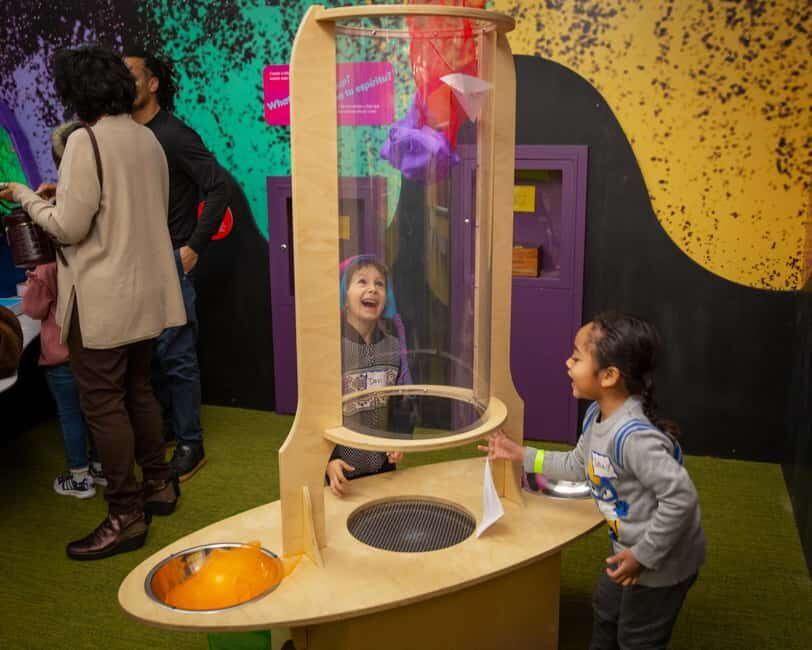
Not every zone is about motion. The Japanese House is a real 100-year-old house, and it brings a slower pace to the day. It’s also a cultural learning moment, with traditions connected to a specific place, not just generic “country facts.”
This part matters because it changes the rhythm. After climbing and construction-style play, kids often need a different type of engagement. A house setting naturally encourages quieter observation and exploration. It also offers a moment where parents can talk about what they’re seeing without competing with loud, constant activity.
For families, it’s a good reminder: the museum isn’t only for energy. It’s also for curiosity. This is one reason the museum works for siblings with different temperaments—one can be all action while the other gets absorbed in a setting that feels like a mini world.
You can also read our reviews of more museum experiences in Boston






PlaySpace for Toddlers: The Difference Between Entertaining and Actually Fitting
If you’re visiting with younger kids, PlaySpace is the relief valve. It’s designed for toddlers, which matters because a lot of children’s activities are technically “for kids” but not truly built for early-age attention spans and movement patterns.
PlaySpace helps prevent a common trip problem: when older kids move on to bigger attractions, toddlers still need safe, age-appropriate play. Having a dedicated toddler area means you’re not dragging a 2-year-old through exhibits that are visually intense or physically demanding.
If you’re traveling as a mixed-age family, treat PlaySpace as a home base you can return to. It’s often the easiest way to keep the whole group happy without constant reshuffling.
STEAM Lab and Rotating Exhibits: Why You Might Want to Come Back

Two things help the museum feel fresh even if you return someday.
First, rotating exhibits mean you’re not guaranteed to see the same set every time. Second, STEAM Lab encourages repeat experimentation. Kids tend to have favorite stations they want to try again, which naturally extends your visit without making it feel like repetition.
A helpful idea: don’t force “everything.” Pick your must-dos (climbing structure, Construction Zone, and at least one learning exhibit like Kid Power or STEAM Lab). Then fill the gaps with whatever looks interesting in the moment.
One more nudge from real experience: kids love themed moments, like seasonal events. On a rainy Sunday visit, a family planned to return for a Halloween Theme soon after. That tells you the museum’s programming can keep the trip feeling special, not just routine.
What to Know Before You Arrive: Ticket Rules and On-Site Boundaries

This museum is designed for children and families, and that shows in the rules and flow of the spaces.
Ticket basics:
- Everyone after their first birthday needs a ticket.
- Infants under 1 are free.
- All children age 15 and under must be accompanied by an adult age 16+.
Adult-only rule:
If an adult is unaccompanied by children, they’re required to leave a government-issued photo ID at the Admissions Desk under the museum’s Unaccompanied Adult Policy. If you’re coming as adults without kids, it’s worth knowing this ahead of time so your plan doesn’t get derailed at the door.
On-site restrictions are straightforward:
- No weapons or sharp objects
- No smoking or vaping
- No alcohol or drugs
Price and Value: Is $28 Per Person Reasonable?

At $28 per person for an entry ticket, you’re paying for access to a full day of interactive space. The value depends on how your family uses that time.
Here’s the honest way to judge it:
- If your kids will spend most of the day actively playing across multiple zones, the price feels fair. A climbing structure, build area, toddler play space, and multiple exhibit types can easily absorb a full day of energy.
- If your group will only do one or two small exhibits and leave early, the cost can feel heavier.
The museum’s biggest “value lever” is variety: you get zones that match different interests—climbing, fitness games, construction creativity, cultural learning, toddler play, and STEAM-style experimentation. That variety is exactly what turns one ticket into an all-day commitment.
Getting the Most Out of the Day Without Stress
You’ll have a smoother visit if you go in expecting movement. Bring your patience, not just your wallet.
A few practical tips that fit the museum’s style:
- Start with the big energy draw (the three-story climb) so kids don’t burn out before they get to the top highlights.
- Plan at least one “change of pace” stop, like the Japanese House, when you can see kids getting restless.
- Treat STEAM Lab and rotating exhibits as add-ons you choose based on mood. That keeps decision-making simple.
- If you have different ages, use PlaySpace as a pressure reliever for toddlers and switch to more appropriate zones as needed.
Also, note the museum is wheelchair accessible, and staff include an English-speaking host or greeter. That helps if you need directions fast.
Should You Book the Boston Children’s Museum Entry Ticket?
Book it if:
- You’re traveling with children and want a full-day plan with multiple exhibit types.
- You need an indoor option that works well on rainy days.
- Your kids like hands-on activity, climbing, building, science-style experimenting, and role-play.
Skip (or at least adjust expectations) if:
- You’re mainly looking for quiet, adult-focused sightseeing. This is a kids-first space, and it’s meant to be active.
If your goal is a practical, family-friendly day in Boston that doesn’t require a strict schedule, this ticket is a solid bet. You’re paying for access to a full range of kid-powered learning—right down to the big climb that keeps them moving the whole time.
FAQ
How long is the Boston Children’s Museum entry ticket valid for?
The ticket is valid for 1 day. You’ll need to check availability to see starting times.
What ages need a ticket?
Everyone after their first birthday needs a ticket. Infants under 1 are free.
Are there exhibits suitable for toddlers?
Yes. The museum includes exhibits suitable for toddlers, including PlaySpace.
Is the museum wheelchair accessible?
Yes, the museum is wheelchair accessible.
What languages are available for the host or greeter?
The host or greeter speaks English.
What items are not allowed at the museum?
Weapons or sharp objects are not allowed. Smoking, vaping, and alcohol or drugs are also not allowed.