REVIEW · BOSTON
Freedom Trail Walking Tour in Boston in French
Book on Viator →Operated by Gilded Age Tour - visites de Boston et de ces environs en français · Bookable on Viator
Boston history walks fast with a French guide. This Freedom Trail tour strings together 16 iconic stops in downtown Boston and the North End, mixing American Revolution stories with architecture, abolition, education, immigration, and even modern daily life you can see on the sidewalks. The guide is a passionate French speaker who keeps the group moving at a pace that fits you.
I especially love how the tour pairs big-name moments (the Declaration of Independence reading, the Boston Massacre, Paul Revere) with the “how did this city get built?” details. I also like that it includes public art and memorials you might miss on your own, like the Holocaust Memorial and the modern sculpture The Embrace.
One possible drawback: it’s a walking tour with lots of outdoor time, and it runs about 2.5 hours. If you dislike cold or you hate standing around, dress for weather and plan for a steady pace.
In This Review
- Key highlights you’ll feel right away
- Why the Freedom Trail in French makes Boston click
- Boston Common: where your “open-air museum” day begins
- Robert Gould Shaw and the 54th Regiment: art that teaches
- Beacon Hill’s big architecture: Massachusetts State House and Old City Hall
- Old Corner Bookstore: the start of famous publishing
- Old South Meeting House and the pre-Revolution buildup
- Old State House and the Declaration balcony moment
- Boston Massacre: the place where five Bostonians were killed
- Faneuil Hall and Quincy Market: liberty meets lunch logistics
- Union Oyster House and the French connection you’ll remember
- North End: the old neighborhood that still feels alive
- Paul Revere House and Paul Revere statue: two angles on one legend
- Old North Church: the Puritan stronghold and the story spot
- Copp’s Hill Burying Ground: the high point with a big view
- What’s included, and why that matters for your day
- Tips to get the most out of it (without overplanning)
- Should you book this Freedom Trail walking tour in French?
Key highlights you’ll feel right away
- A French-speaking guide who tells the story in a way that stays clear and lively
- 16 Freedom Trail sites stitched into one practical downtown + North End loop
- Revolution-era stops tied to specific places you can point at, like the Declaration balcony
- Public art and memorials that connect the past to present-day Boston
- North End finish near Copp’s Hill Terrace, perfect for photos after you learn the context
Why the Freedom Trail in French makes Boston click
The best part of this tour is that it doesn’t treat Boston like a list of monuments. It treats it like a city that grew, argued, and rebuilt itself—then turned those debates into streets, buildings, memorials, and rituals you can still walk past.
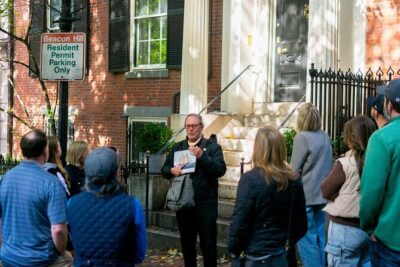
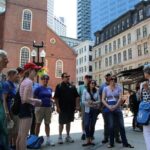
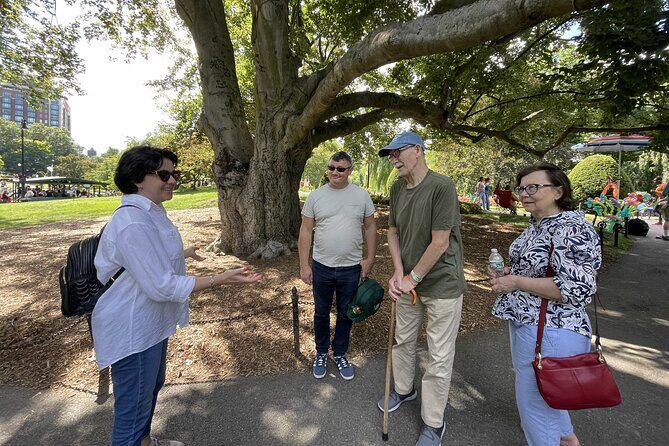
Because it’s in French, you get more than translation. You get a story that moves naturally—names, dates, and cause-and-effect—so you can actually follow what happened and why it mattered. And the small group size (up to 12) helps: you’re not shouting over a crowd, and the guide can adjust to your speed.
At $45 per person, the value is strongest if you want guided context. You’re paying for interpretation, not museum tickets (there are no planned museum stops). If you enjoy wandering, this format is ideal: you’ll get bearings fast, and the city starts to make sense.
You can also read our reviews of more walking tours in Boston


Boston Common: where your “open-air museum” day begins
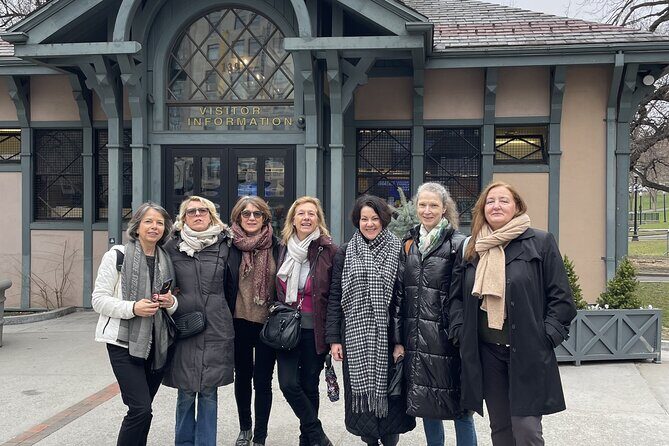
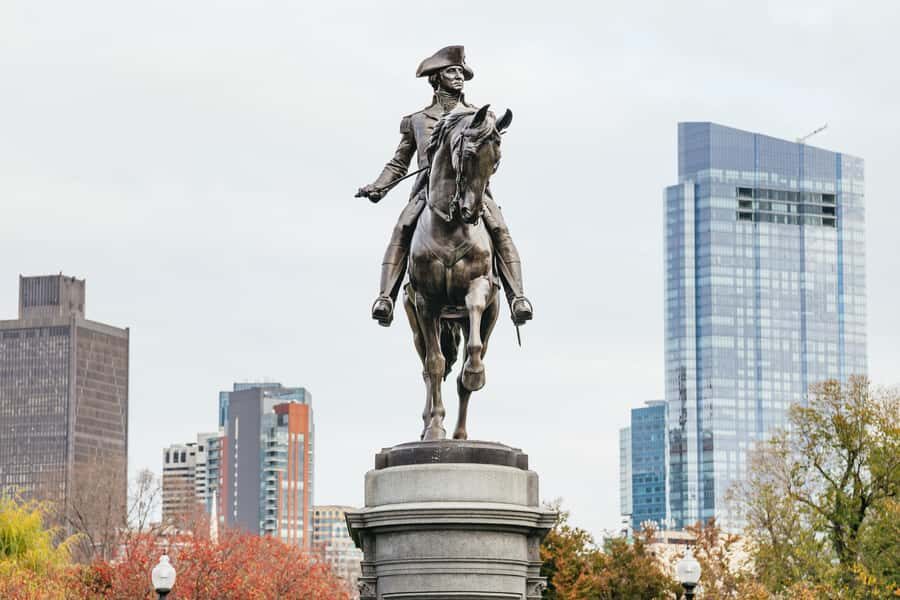
The tour starts at the Boston Common Visitors Center, right on Tremont Street, and the first stop brings you into the Emerald Necklace frame of mind. Boston Common is the oldest public park in the United States (since 1634), and the guide connects it to the wider green system—the Emerald Necklace—made up of six parks.
From there, you’ll move toward Telegraph Hill, tied to Boston’s founding. That matters because you’re not just seeing a park. You’re seeing how geography shaped early settlement, then how later generations marked moments that felt world-changing.
This is also where you’ll get classic reminders that history isn’t only battles and speeches. The park is home to monuments such as the Boston Massacre Memorial, the Great Elm Tree, and the Soldiers and Sailors Monument. And it’s the launching point of the Freedom Trail itself.
Tip for your photos: start with wide shots near Boston Common, but leave space to zoom in later. The tour becomes more intimate as you hit shorter blocks in the North End.
Robert Gould Shaw and the 54th Regiment: art that teaches
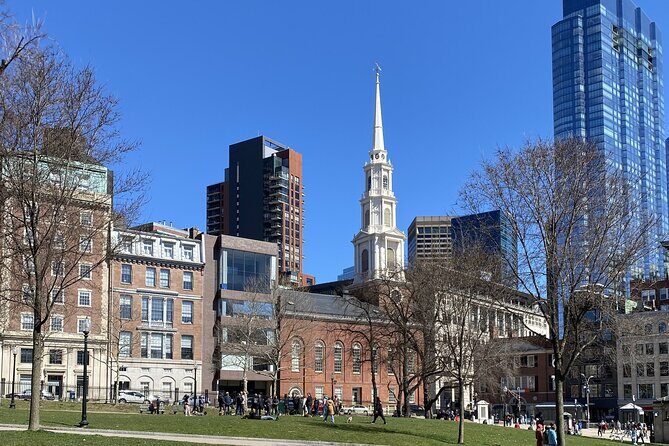
Next comes the Robert Gould Shaw and the 54th Regiment Memorial. The highlight here is the bronze bas-relief by Augustus Saint-Gaudens—an artist associated with turning public remembrance into something you can almost read with your eyes.
Even if you know the headline story of the 54th, having the moment anchored in a specific sculpted work helps you remember it. You’re not reciting a fact; you’re looking at a visual argument about courage, recognition, and the people who demanded their place in history.
This stop is short, but it sets a tone: the tour pays attention to both the famous and the meaningful.
Beacon Hill’s big architecture: Massachusetts State House and Old City Hall
Then you step into Beacon Hill territory, where the city’s power shows up in stone and symmetry.
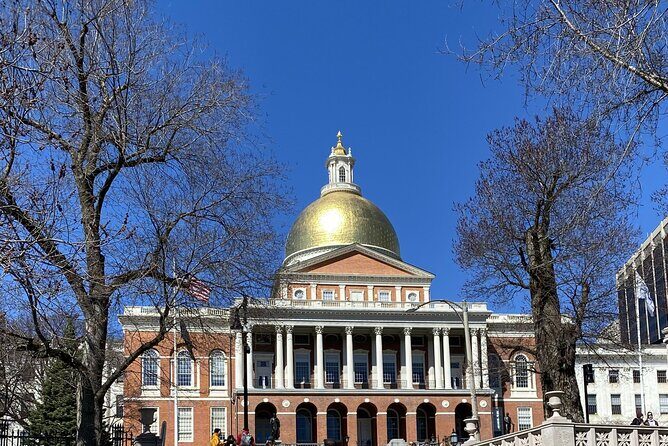
At the Massachusetts State House, you’ll see the golden dome dominating Beacon Hill. It was built at the end of the 18th century by architect Charles Bulfinch, and the style is Federal. The guide’s job here is to explain why that design feels like authority—how a government building can project stability, even in a new republic.
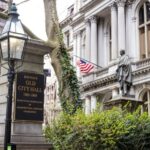
A few minutes later, Old City Hall offers a different kind of visual language. This 1865 building is in the French Second Empire style, and the architecture echoes the era you might associate with Paris (it’s the same Napoleon III vibe, like the Garnier Opera). It’s a good contrast stop: you’re moving from early federal ambition to later civic grandeur.
For context, Old City Hall hosted the city council from 1865 to 1969. That timeline helps you understand Boston as a living system, not a preserved postcard.
Old Corner Bookstore: the start of famous publishing
A quick stop brings you to the Old Corner Bookstore, built in 1718 and located in the oldest commercial building in downtown Boston. The tour connects it to Boston’s publishing scene: in the 19th century, this publishing house issued multiple famous American classics.
This is one of those stops that feels easy to skip if you’re in pure “monument mode.” But it adds something important: Boston wasn’t only producing revolutionaries. It was producing ideas through books, printers, and the people who spread them.
If you care about education and how information travels, this is where the tour quietly hooks you.



Old South Meeting House and the pre-Revolution buildup
At Old South Meeting House (built in 1729), you’re standing in a former Puritan church that served as a gathering place for nearly three centuries. That kind of long use is a clue. It tells you the same spaces can carry different eras—religious life to civic debate to political pressure.
The guide’s approach helps you see how Boston’s social fabric worked. You’ll hear about the layers behind the Revolution—where organizing happened, how communities formed groups, and why meeting spaces mattered.
If you’re tempted to think history is only kings and generals, this stop nudges you toward the everyday mechanics: people meeting, arguing, and deciding.
Old State House and the Declaration balcony moment
Then comes Old State House (1713), which sits among modern buildings like time paused and forgot to continue. You’ll learn that on July 18, 1776, the text of the Declaration of Independence was read from its balcony.
That’s the kind of detail that makes you look upward. Even if you’ve read the Declaration before, hearing it tied to a precise place changes how you picture the event. It’s no longer a document; it’s a moment in open air, in a city street world.
Right nearby, the tour keeps the tension going with the next stop: the Boston Massacre site.
Boston Massacre: the place where five Bostonians were killed
At the Boston Massacre site, the story is blunt. In front of a public building, a squadron of the British army opened fire and killed five Bostonians in 1770. This incident became known as the Boston Massacre.
This stop can feel emotionally heavy, but that’s part of what makes the Freedom Trail meaningful. The tour doesn’t just romanticize. It shows how anger and resistance often start with real loss.
When the guide shares the surrounding context, you’ll get a clearer sense of why the event mattered politically. It wasn’t only tragedy—it was fuel.
Faneuil Hall and Quincy Market: liberty meets lunch logistics
Faneuil Hall Marketplace is next, and the tour treats it as more than scenery. You’ll learn it dates to 1741 and is often called the Cradle of Liberty. The golden weathervane shaped like a huge grasshopper becomes one of Boston’s first and most famous symbols.
Then you move to Quincy Market, built in 1824. Today it’s a food court, but it’s still an architectural gem—an alley-like space of stalls and shops. This is where you might start thinking about practical hunger management, because you’re nearing the portion of the tour where snacks and pacing become your best friends.
A smart approach: don’t use this moment to wander off. Stay with the group so the guide can connect the dots between marketplace life and political life—Boston didn’t separate commerce from ideology.
Union Oyster House and the French connection you’ll remember
At Union Oyster House, you’ll hit a rare combo of history and cravings. It’s described as the oldest restaurant in the United States (1826), in a historic building from 1704.
Here’s the France-shaped detail that makes this stop especially fun: the future king of France, Louis-Philippe, lived in this house in a modest apartment on the second floor. If you like seeing how countries quietly overlap, this is your moment.
Even if you don’t eat oysters, the stop helps you understand something: old Boston wasn’t just doing politics and sermons. People lived, dined, and built routines inside historic walls.
North End: the old neighborhood that still feels alive
One of the tour’s best decisions is the time allocation for the North End. You spend about 30 minutes here, which is long enough to feel the neighborhood—not just point at it.
The North End is literally the northern district, and it’s one of Boston’s oldest neighborhoods. After the more formal downtown blocks, the streets here feel smaller, more human-sized, and more about daily life.
Along the way, the tour also notes old pedestrian streets behind the Bostonian hotel, including Blackstone block, which is on the National List of Historic Places. That detail helps you spot that history isn’t only at famous intersections.
Paul Revere House and Paul Revere statue: two angles on one legend
Next is the Paul Revere House (1676). The guide frames it as one of the last vestiges of the colonial era, and you’ll learn that Paul Revere lived there from the 1780s to 1800s.
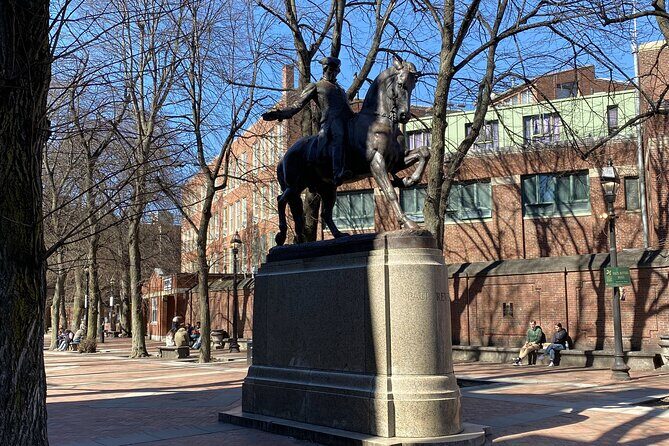
Then you move to the Paul Revere Statue in a historic pedestrian space honoring the Midnight Ride (1775). The pairing works: the house gives you the human scale, while the statue gives you the myth scale.
When you understand both, the legend feels less like a poster and more like a person with a home, a life, and a role in a moment of crisis.
Old North Church: the Puritan stronghold and the story spot
The tour continues with Old North Church & Historic Site. The first church on this site was built in 1650, and during the colonial period it was described as the most influential church in the Northeast and a stronghold of Puritan faith.
That religious context matters. It helps you understand why communities had the power they did and why communication and belief weren’t separate from politics.
Copp’s Hill Burying Ground: the high point with a big view
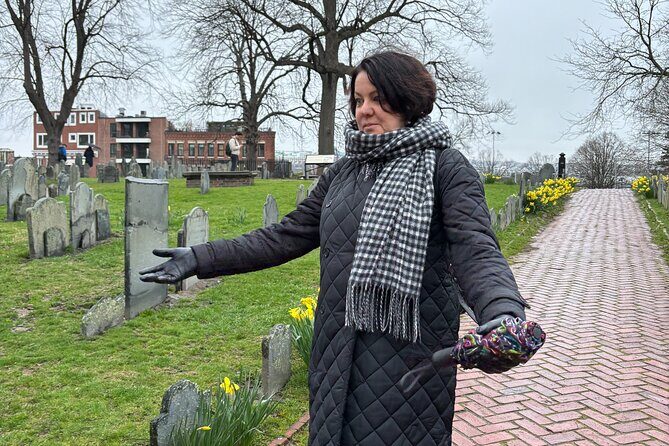
The final stop is Copp’s Hill Burying Ground. Copp’s Hill dates to 1632 and is the highest point in Boston’s North End. At the top is an old cemetery dating back to 1659.
Then the tour gives you the payoff: from Copp’s Hill Terrace, you can take in a magnificent panorama of the Charles River, plus the Bunker Hill Obelisk and the USS Constitution across the way.
This is where you’ll finally see how the whole Freedom Trail story ties together geographically. The guide’s context makes the views feel earned, not random.
Practical photo tip: arrive ready to shoot both wide city river shots and close details. Cemeteries and monuments are full of texture.
What’s included, and why that matters for your day
This tour includes a guided service for about 2.5 hours with an experienced specialist guide, plus fees and taxes. You also get mobile tickets, and the tour is designed to match your pace and preferences.
Because museums are not part of the plan, the value comes from interpretation in the street. If you love walking tours where the guide turns corners into lessons, this works well.
Group size matters here. With a max of 12 travelers, you’re more likely to get questions answered and not just listen.
Also, a small but useful detail: the route ends in Boston’s Italian Quarter at Copp’s Hill Terrace, just steps from the Old North Church and close to places where you can keep eating after the tour ends. That’s a nice way to extend the day without planning extra transport.
Tips to get the most out of it (without overplanning)
- Wear shoes you can trust. The tour is fully walking-based.
- Bring a layer. Cold weather came up in at least one account of the experience, and Boston can stay breezy even when it’s sunny.
- Use the tour as your first “map.” By the time you reach the North End, you’ll start seeing how downtown and the waterfront connect.
- If you want photos, plan for two bursts: one early around Boston Common, and the last burst at Copp’s Hill Terrace.
Should you book this Freedom Trail walking tour in French?
I think it’s a smart booking if you want Boston to make sense quickly. You’ll get the essential Freedom Trail sites, plus the added layers—construction and architecture, abolition and education themes, immigration threads, and modern city life you’ll notice as you walk. And you’ll do it with a French speaker who tells the story with energy.
Skip it if you’re looking for indoor time or museum tickets, because this is an outdoors-focused itinerary. Also, if you hate walking for long stretches, keep expectations realistic and dress for weather.
If you want an efficient, small-group way to understand downtown Boston and the North End without getting lost in facts, this tour is an easy yes.