REVIEW · BOSTON
Boston: Underground Railroad History Tour of Beacon Hill
Book on GetYourGuide →Operated by Hub Town Tours · Bookable on GetYourGuide
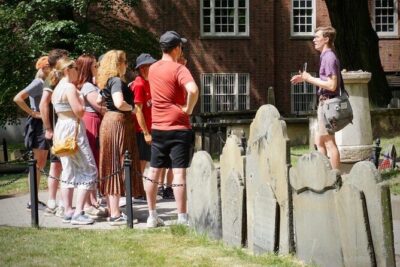
Beacon Hill gets quiet fast, but the story does not. This Boston Underground Railroad history tour keeps the group small so you can actually hear the guide as you trace antislavery activism and the struggle for equality right through the streets of the Black Heritage Trail. I love that you start on Boston Common and end at the Robert Gould Shaw and 54th Massachusetts Regiment Memorial, so the route has emotional shape. I also love the focus on everyday places tied to education, housing, and community organizing—especially around the African Meeting House. One thing to weigh: it’s an outdoor, 2-mile walk on uneven, often steep terrain, so it’s not a good match if you have mobility limits or low stamina.
You’ll be walking with a local historian guide for about 150 minutes, and you’ll cover roughly 2.0 miles (3.2 km) at a pace that keeps the tour moving without rushing. It runs rain or shine, and the route is all outdoors, which means good shoes and weather-ready clothing really matter.
The overall tone is serious. You’ll hear overlooked details that connect local events to the lead-up to the American Civil War—useful if you want more than surface-level “old buildings” sightseeing.
In This Review
- What makes this tour worth your time
- Meeting point at Soldiers and Sailors Monument: where the route begins
- Boston Common and the Black Heritage Trail origin: the “why now” moment
- Beacon Hill narrow streets: Mount Vernon, Acorn Street, and Louisburg Square
- The education and equality thread: Phillips School, Abiel Smith School, and more
- Meeting houses and civic power: Charles Street Meeting House and Charles Street
- Underground Railroad homes: John J Smith House, John Coburn House, and the Hayden and Middleton connections
- African Meeting House: the planned break and the community hub
- Abolitionists in focus: Charles Sumner House and the lead-up to Civil War
- Final walk: Park Street Church area, State House pass-by, and the 54th Regiment Memorial
- Price and value: what $35 buys you
- Tour style and practical tips that actually matter
- Guided by real people: why the narration quality matters
- Should you book this Beacon Hill Underground Railroad tour?
What makes this tour worth your time

- Small group, less crowding: fewer people on narrow Beacon Hill sidewalks makes it easier to ask questions.
- Black Heritage Trail landmarks: you’ll see key sites tied to the free Black community and abolitionist momentum.
- Focus on education and integration debates: you learn how equality arguments played out right in the community.
- Underground Railroad “doorstep” moments: specific homes give you a concrete sense of how help worked.
- African Meeting House break: a planned pause plus guided time at a central hub of worship and community.
- Strong ending at Shaw Memorial: the tour closes at a monument that reframes everything you walked past.
Meeting point at Soldiers and Sailors Monument: where the route begins
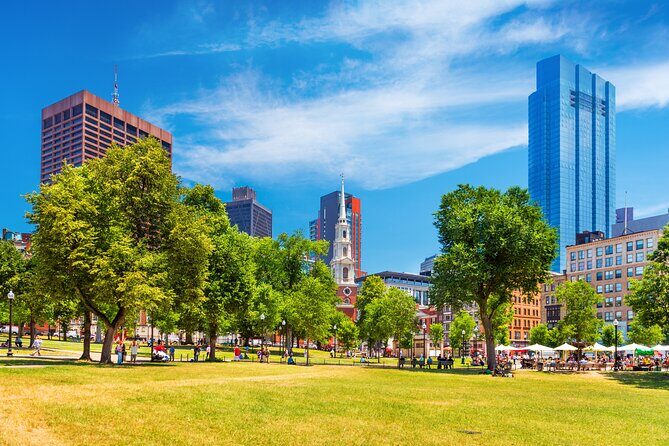
You’ll meet at the Soldiers and Sailors Monument in the center of Boston Common, steps from the Boston Common Visitors Center on Tremont Street. The landmark is easy to spot: a white granite column topped by a female figure holding a flag, surrounded by bronze statues at the base.
Starting on Boston Common works because it gives you perspective right away. You’re in the heart of the city’s oldest public space, then you’re about to walk into Beacon Hill’s tight streets, where a few blocks could separate wealth from struggle—and where abolition politics and Black community life ran side by side.
Practical tip: plan to arrive a few minutes early so you can get your bearings before the group moves. This tour is short enough that every minute matters.
You can also read our reviews of more historical tours in Boston


Boston Common and the Black Heritage Trail origin: the “why now” moment
The first guided stop is on Boston Common itself, and it’s not just a warm-up. This is where the Black Heritage Trail begins, setting the tone for what you’re about to see: a Boston story where free Black residents and antislavery allies fought for safety, education, and equal rights—long before the Civil War made everything feel inevitable.
You’ll also connect this history to the people and ideals represented later at the Shaw and the 54th Regiment Memorial. Even if you don’t know every detail at the start, you’ll feel the structure: you’re walking from public space into neighborhoods, from debate into action, and from memory into meaning.
If you like tours that help you connect neighborhoods to themes (not just dates), this start makes the rest easier to follow.
Beacon Hill narrow streets: Mount Vernon, Acorn Street, and Louisburg Square
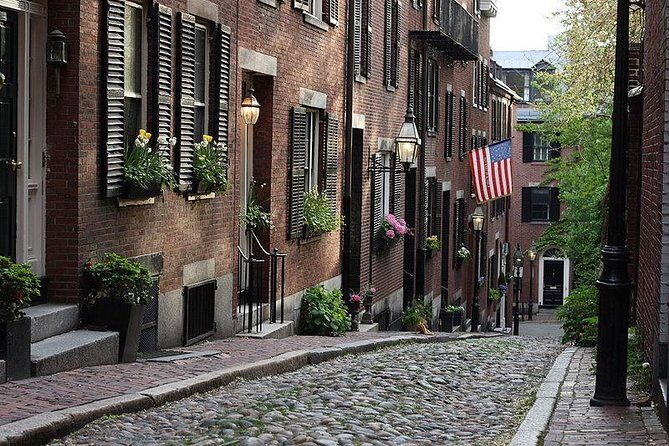
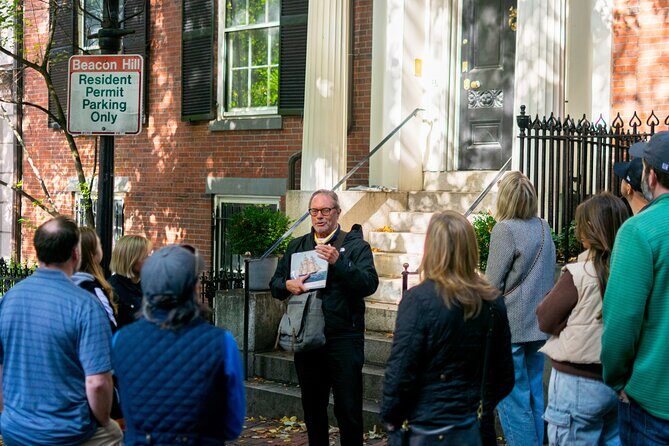
From Boston Common you move into Beacon Hill’s classic narrow lanes, which is exactly what you want for this kind of history. When streets are tight, the context becomes physical. You can better imagine how difficult it was to move around, how close neighbors were, and how quickly word—and risk—could travel.
You’ll stop briefly at:
- Mount Vernon Street
- Acorn Street
- Louisburg Square
These are “postcard” Beacon Hill spots, but the tour’s goal isn’t to admire architecture in isolation. It uses these streets as framing. You’re learning how the city’s geography shaped real life for both free Black residents and abolition-minded Bostonians. In a place like Beacon Hill, distance can be emotional: you’re not far from wealth, institutions, and political power, but your access to fairness could still be denied.
One consideration: because these are real streets, sidewalks can be uneven and movement can require careful footing—especially on uneven stone.
The education and equality thread: Phillips School, Abiel Smith School, and more
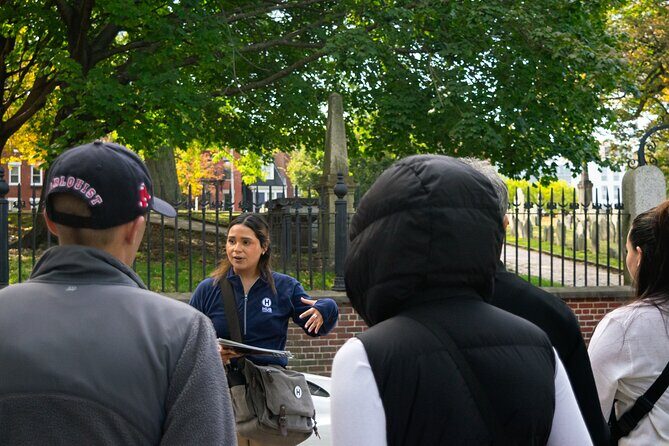
A big part of what makes this tour work is that it doesn’t treat slavery history as something that only happens “elsewhere” or “later.” It highlights how the fight over freedom and citizenship played out in local schooling and community institutions.
You’ll spend time at:
- Phillips School (about 15 minutes)
- Abiel Smith School (another guided stop later)
- Smith Court Residences (guided)
- Plus additional school-related context connected to the surrounding stops
For your takeaway, think beyond buildings. The tour’s focus on education and integration tells you something uncomfortable but important: the “road to emancipation” wasn’t only about ending a practice. It was also about who got to learn, who got doors opened for them, and who faced resistance when they pushed for equal treatment.
If you’ve ever wondered why abolition politics wasn’t only about laws but also about daily life, this is where it becomes clear.
Meeting houses and civic power: Charles Street Meeting House and Charles Street
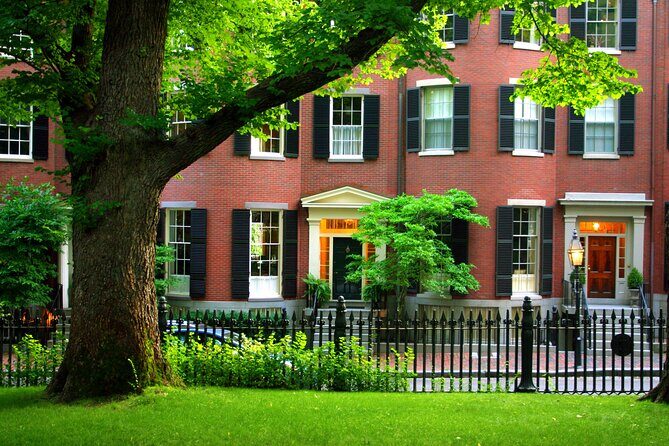
When you hit Charles Street Meeting House and nearby stops on Charles Street, the tour shifts from everyday life to a kind of community leadership. Meeting houses mattered because they gathered people, shaped beliefs, and helped coordinate action—especially in a time when institutions were contested and official power often moved slowly (or not at all) on justice.
You’ll also pass by or pause near key structures that connect to abolition-era public debate. A meeting house can sound like background. On this walk, it becomes a tool: a place where ideas and community ties could translate into real-world pressure.
If you’re the kind of person who likes context—how communities organized, not just what happened—this segment is strong.






Underground Railroad homes: John J Smith House, John Coburn House, and the Hayden and Middleton connections
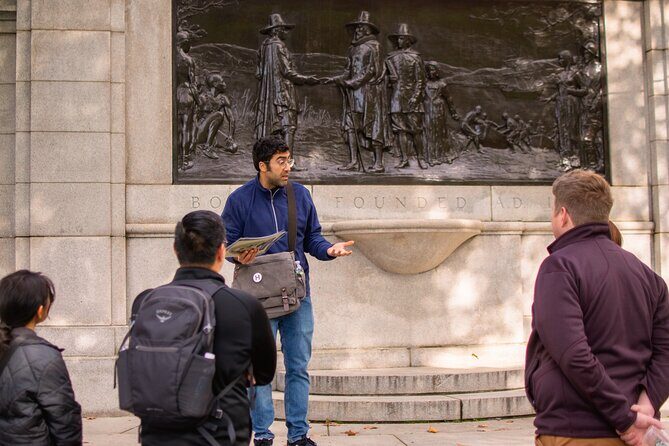
This is the heart of the “Underground Railroad” promise, but it’s done in a grounded way: you’ll walk to homes associated with help networks and free Black community life. Rather than vague “secret tunnels” folklore, the tour emphasizes how people supported each other in ways that were tied to specific addresses and community trust.
On the walk, you’ll get guided time at homes such as:
- John J Smith House
- John Coburn House
- Lewis & Harriet Hayden House
- George Middleton House
You’ll also encounter additional residential landmarks and stops connected to the wider trail.
For me, the value here is that it makes history feel less like a distant chapter and more like a series of difficult choices made block by block. You get a clearer sense that helping people escape slavery and survive afterward required community cooperation, risk awareness, and political pressure working at the same time.
One small caution: because the tour is about real people and serious events, the vibe is reflective. It’s not a “quick facts” walking tour.
African Meeting House: the planned break and the community hub
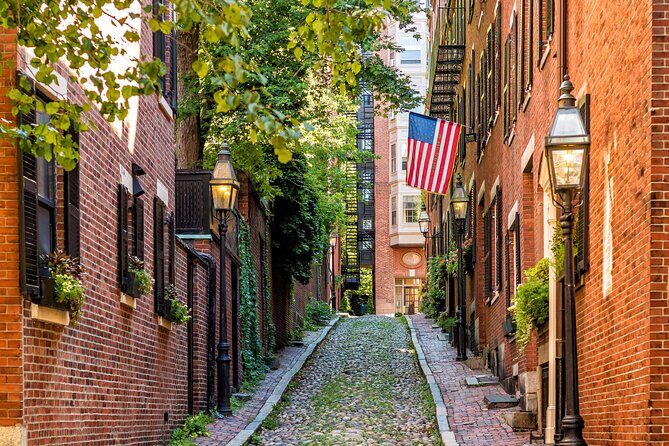
At the African Meeting House, you get a break time and then guided time of about 20 minutes. This stop is especially important because it anchors the story in a physical place of community life, worship, and resilience.
You’ll be learning about the free Black community in Boston and how it lived close to powerful institutions and wealth. That closeness matters. The tour uses the setting to show the tension of the era: people fighting for equality and safety while confronting limits imposed by law, custom, and politics.
If you like tours where one stop feels like a “center of gravity,” this is the one.
Practical tip: take the break seriously. The route keeps moving afterward, and you’ll still be walking through more of Beacon Hill.
Abolitionists in focus: Charles Sumner House and the lead-up to Civil War
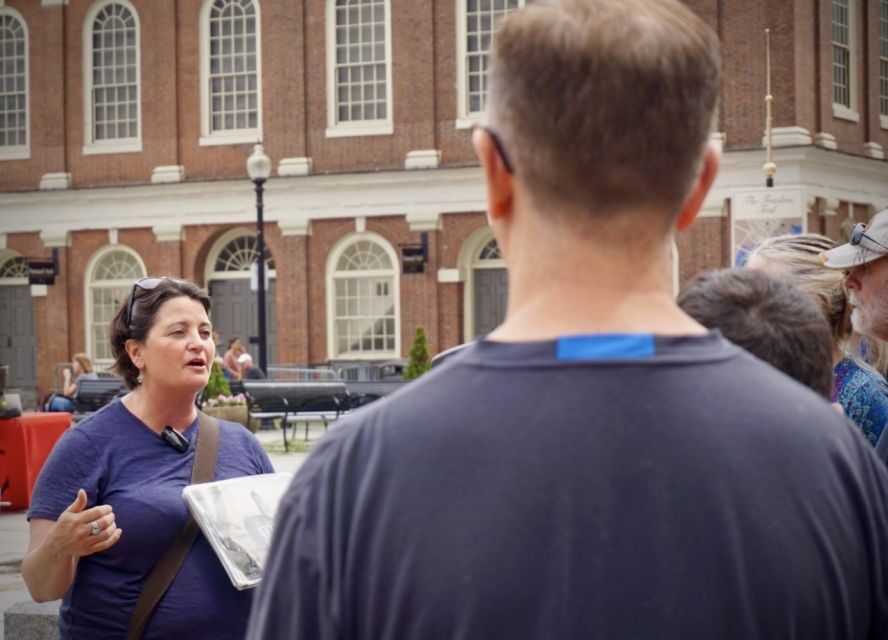
Later, the tour points you toward the bigger national story—especially the political forces that turned local tension into the lead-up to the Civil War. One of the key guided stops here is the Charles Sumner House, with about 15 minutes of guided time.
Sumner’s presence helps connect the dots between:
- antislavery political momentum,
- debates over equality,
- and the escalating conflict over slavery across the United States.
This is where the tour’s theme becomes more than “Boston was involved.” You start to see how arguments made and battles fought in Boston connected to the national crisis.
I like this part because it’s honest about the fact that change didn’t move in a straight line. People argued, organized, resisted, and pushed—sometimes in ways that didn’t look dramatic until you understand what was at stake.
Final walk: Park Street Church area, State House pass-by, and the 54th Regiment Memorial
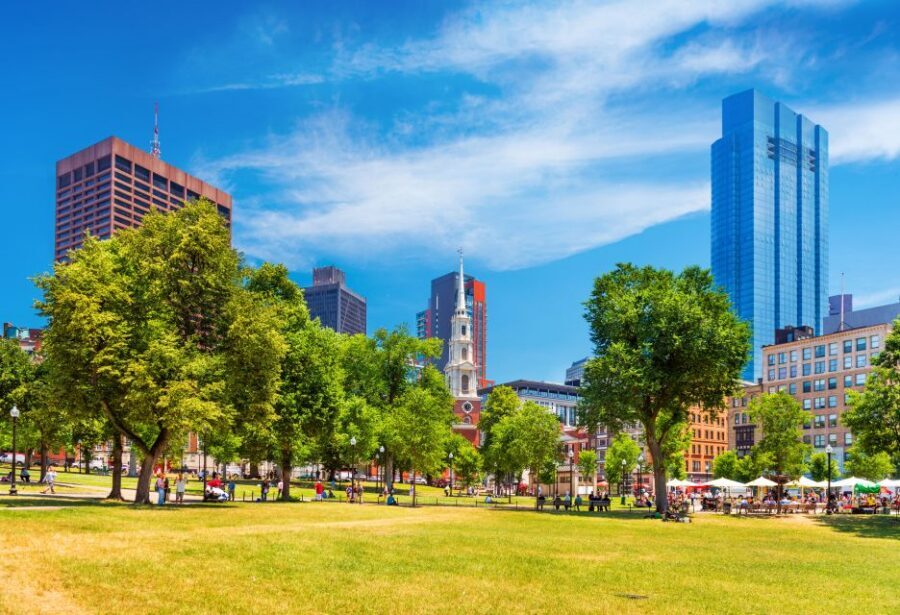
As you near the end, you’ll pass by important civic and religious landmarks, including Park Street Church and Massachusetts State House (pass-by). Even without long stops, these moments help you visualize why politics mattered so much in the story you’ve been learning.
Then you finish at the Robert Gould Shaw and the 54th Massachusetts Regiment Memorial on Boston Common, with about 20 minutes of guided time.
This ending is powerful because the memorial reframes what you’ve walked through. Early on, you’re learning about community life and the fight for equality. Now you’re standing in a spot that represents courageous action by the 54th Massachusetts Regiment. It gives your walk a conclusion that’s about more than suffering—it’s also about agency, service, and national change.
Price and value: what $35 buys you
At $35 per person for about 150 minutes, the price is reasonable for a guided, small-group walking tour focused on specific Beacon Hill addresses and major landmarks. This isn’t a broad “see the neighborhood” stroll. You’re paying for:
- a local historian guide,
- guided time at multiple named sites,
- and a route designed around the Black Heritage Trail and connected abolition narratives.
Where value really shows up is the small-group approach. Avoiding heavy crowding on narrow sidewalks isn’t just comfort—it helps you hear details and ask questions. And because the tour is only about 2 miles total, you get a lot of information without the “all day walking” fatigue.
If you’re short on time in Boston but want something more honest than standard sightseeing, this price feels fair.
Tour style and practical tips that actually matter
This tour is entirely outdoors and operates rain or shine, so you’ll want to dress like it might not be nice. Bring comfortable shoes—especially because the route is described as steep hills and non-ADA-compliant sidewalks.
A few practical notes based on the rules:
- No luggage or large bags
- No video recording
- Not suitable for children under 6
- Not suitable for wheelchair users or people with mobility impairments
- Not suitable for people with low level of fitness
If any of that affects you, it’s worth considering an alternative Boston option that’s more accessible. The tour is designed for walking pace and terrain.
If you do go, come ready to listen. This is a history walk with a serious focus on slavery’s abolition and the overlooked stories that shaped the Civil War era.
Guided by real people: why the narration quality matters
The tour’s ratings are extremely strong, and the recurring praise is about guide performance: people describe guides as passionate, clear, and willing to answer questions. Names that come up include Will, Dana, Joe (with Hub Town Tours), and William.
That matters because you’re not just reading plaques. You’re standing in a neighborhood where the details can be easy to miss. A strong guide helps you connect a street name to a person, a house to a broader network, and a debate to a real outcome.
Also, the pacing seems balanced: it’s not so fast you miss the story, and it’s not so slow that you spend all your time waiting.
Should you book this Beacon Hill Underground Railroad tour?
Book it if you want a small-group Boston Common to Beacon Hill walking experience that focuses on antislavery activism, the free Black community, and the local “how” behind the Underground Railroad. You’ll get concrete stops—African Meeting House, schools, meeting houses, and multiple linked homes—and you’ll end at a memorial that ties the whole arc to the 54th Massachusetts Regiment.
Skip it (or choose a different format) if you can’t handle uneven sidewalks, steep hills, or extended outdoor walking. This route isn’t designed for wheelchairs, and it’s not a good match for very young kids or lower-fitness days.
If you’re the kind of visitor who likes your sightseeing with purpose—history that changes how you see the city—this tour is a strong fit for a Boston trip where time is limited and attention matters.