REVIEW · BOSTON
Freedom Trail: Private 1 Hour Walking Tour
Book on GetYourGuide →Operated by Boston By Foot · Bookable on GetYourGuide
Boston history, explained in plain English. This one-hour private walking tour is a smart way to get the big Revolutionary story fast, using key Freedom Trail landmarks like the Old State House and Faneuil Hall. I especially like that you’re led by a highly trained local guide, and that the pace is built for real understanding, not just site photos.
Two other pluses: the stops you cover are the ones that actually anchor the era, and you’ll hear how ordinary colonists got pulled into extraordinary events. One thing to plan around: the tour is outdoor only, and admission to historic sites or museums isn’t included, so you’ll want to treat this as storytelling plus orientation, not a museum ticket.
In This Review
- Key highlights worth your hour
- A fast, focused Freedom Trail orientation in 60 minutes
- Meeting near the Samuel Adams statue in front of Faneuil Hall
- Old State House: where conflict meets everyday life
- Faneuil Hall: the talk that turned into action
- King’s Chapel: politics in a religious setting
- Old South Meeting House: when gatherings mattered
- What $17 gets you: value, storytelling, and a guide’s role
- Outdoor-only reality: how to plan so the hour feels comfortable
- Who this tour fits best (and who might want something else)
- The best way to get more out of each stop
- Should you book this 1-hour Freedom Trail private walking tour?
- FAQ
- How long is the Freedom Trail private walking tour?
- Where do I meet the guide?
- Which Freedom Trail sites are included?
- Is admission to historic sites or museums included?
- Is the tour wheelchair accessible and can I book it as a private group?
- Is the tour guide available in English?
Key highlights worth your hour
- A tight 60-minute format that gives you a Revolutionary overview without eating your day
- Private-guide attention that helps the details land (names, causes, and consequences)
- Core Freedom Trail stops including Old State House, Faneuil Hall, King’s Chapel, and Old South Meeting House
- Strong interpretation praised in guide performances, including narration credited to Dan Keating
- Meet-up clarity at the Samuel Adams statue in front of Faneuil Hall, with easy wayfinding
- No museum admissions included, so you’ll plan to revisit (or not) based on what grabs you
A fast, focused Freedom Trail orientation in 60 minutes
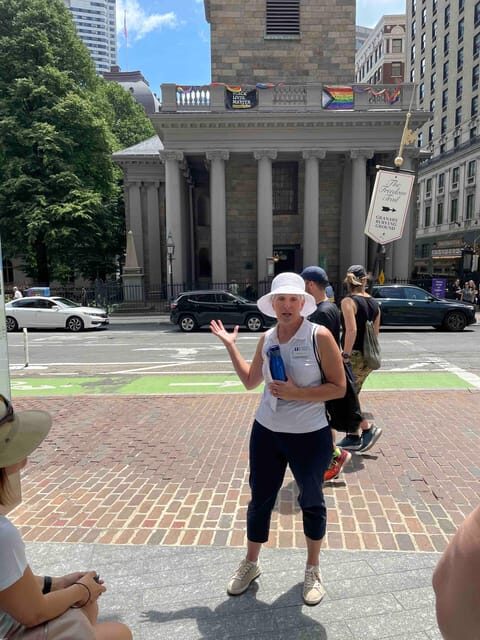
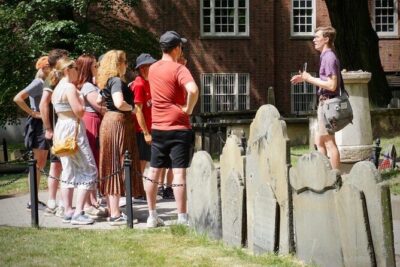
If Boston feels like a blur of brick streets and “important buildings,” this tour helps you connect the dots quickly. In just one hour, you walk part of the Freedom Trail and get the storyline of the Revolution: what pushed people, what changed, and why these specific places mattered.
I like tours that don’t treat history like a list. This one is built around explanation—how the people of colonial Boston were ordinary, and how the pressures of the time pushed them toward action. That’s a big deal for visitors, because it turns stone and streets into causes and choices.
The hour-long timing is also practical. You can do this early in your trip to build context, or fit it into a day when you want movement but don’t want long museum time. The tradeoff is simple: you’re not going inside buildings for tickets here. You’re walking, listening, and learning.
You can also read our reviews of more walking tours in Boston



Meeting near the Samuel Adams statue in front of Faneuil Hall
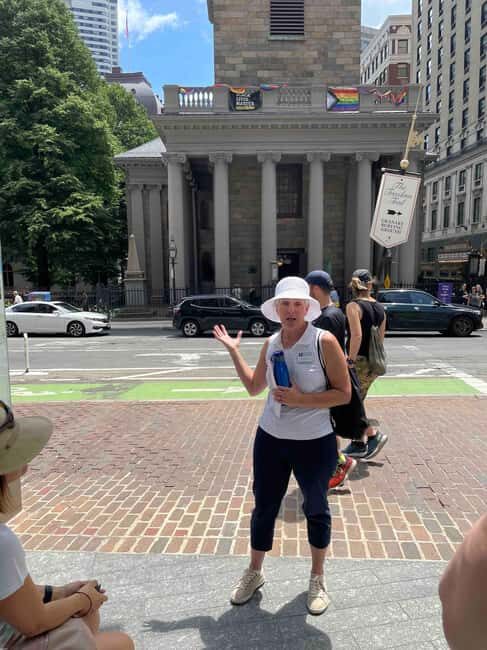
Your tour starts near the Samuel Adams statue in front of Faneuil Hall. That’s helpful because it’s an obvious landmark, and it keeps the meeting point from feeling like a guessing game.
Guides carry an 8×11 sign that says Boston By Foot Walking Tours. That’s the kind of detail that saves time and frustration, especially if you’re arriving with tight schedules or navigating on foot.
What to do when you meet: show up a bit early, grab your bearings, and be ready for a walking rhythm that moves steadily along the trail. Because it’s outdoor only, your comfort matters—wear layers, and bring something small like water if you tend to run warm in the sun.
Old State House: where conflict meets everyday life
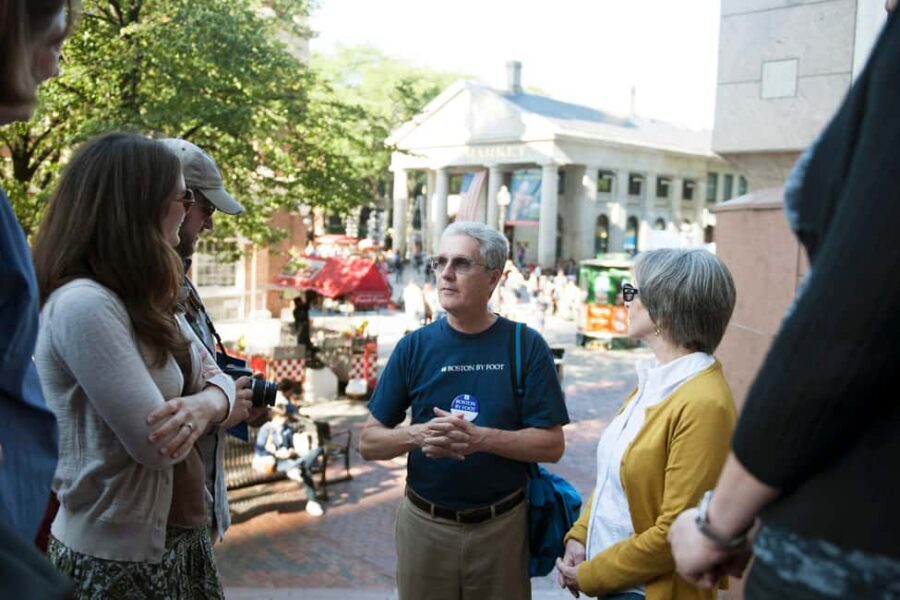
One of the best things about Freedom Trail tours is that they don’t just point at famous leaders. They show how change happened through systems—laws, taxes, enforcement, and public anger.
The Old State House stop is where that reality starts to click. You’ll hear stories connected to events tied to this building, and you’ll get a clearer sense of how tension built. The theme is not abstract: people noticed what was happening, talked about it, and responded, step by step.
A practical way to get more out of this portion is to listen for the “cause → reaction” chain. When the guide explains an event that happened here, connect it to what people later demanded. That’s how the Revolution becomes more than a timeline. It becomes a pattern you can recognize as you walk the next stops.
Faneuil Hall: the talk that turned into action
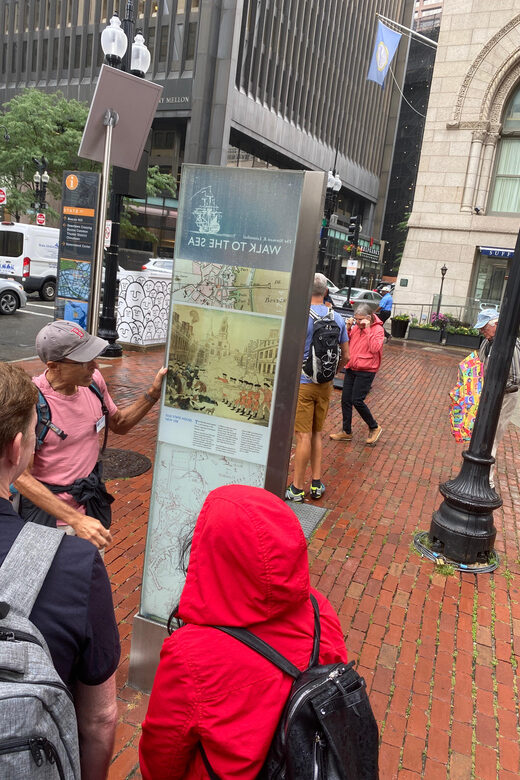
Faneuil Hall isn’t just a famous building on the trail. It’s a symbol of public conversation—where debates could spark movement.
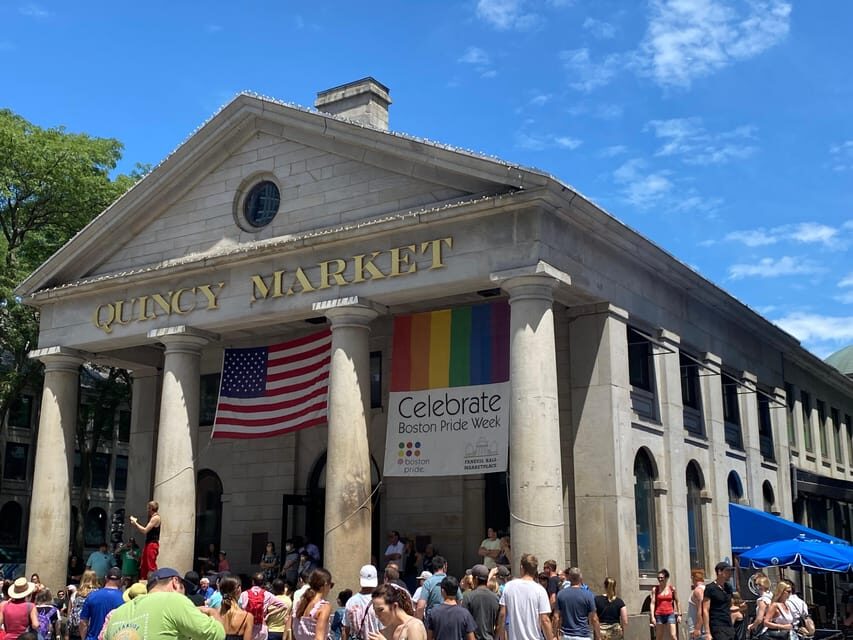
On this tour, you’ll visit and hear how events connected to Faneuil Hall fit into the broader Revolutionary story. What I like is that the tour doesn’t treat speeches as performance. It frames them as steps in organizing, persuading, and challenging authority.
This stop also works well for a short attention span, as long as the guide keeps it interactive. In one of the supplied reviews, a father-and-daughter group described how their daughter stayed fully engaged for the whole hour. That’s a clue about what the best guides do here: they make the random buildings feel purposeful by explaining what people were doing in each place.
When you’re at Faneuil Hall, look around at the surrounding urban layout and imagine the crowd energy. Even without entering anything, you can understand why this location mattered.
King’s Chapel: politics in a religious setting
King’s Chapel is a reminder that Revolutionary-era life wasn’t split into neat categories. Faith, community identity, and political conflict overlapped in real ways.
During this part of the walk, you’ll hear stories tied to the chapel and how it connects to the era’s people and events. It’s easy for visitors to assume the Revolution was only about politics in government buildings. This stop helps balance that view by showing how institutions shaped public thought.
A useful mindset: treat the chapel as a social hub, not just architecture. Even if you don’t go inside, the guide can help you see why a place associated with worship and community presence could matter when tensions rose.
Also, because this tour is outdoor only, this is a good moment to notice sightlines—where people might have gathered and how the street setting supports the story. It helps the hour feel coherent, not like separate facts.
You can also read our reviews of more private tours in Boston






Old South Meeting House: when gatherings mattered
Old South Meeting House is the kind of stop that makes the Revolutionary story feel grounded. People didn’t only protest in dramatic moments—they organized through meetings and communication over time.
On this tour, you’ll learn about events connected to this site and what it represented for colonial Boston. The key takeaway is that public meetings weren’t a side activity. They were how ideas spread and decisions took shape.
If you want to get the most value from this stop, listen for the guide’s explanation of why meetings were powerful. Is it because of the audience? The pressure of shared concerns? The ability to coordinate? When you catch that thread, the rest of the Freedom Trail becomes easier to follow.
This is also where you start to understand the Revolution as a collective effort. The tour’s framing—ordinary people shaped by their times—comes into focus here. It’s the difference between memorizing events and recognizing how everyday civic life pushed people toward change.
What $17 gets you: value, storytelling, and a guide’s role
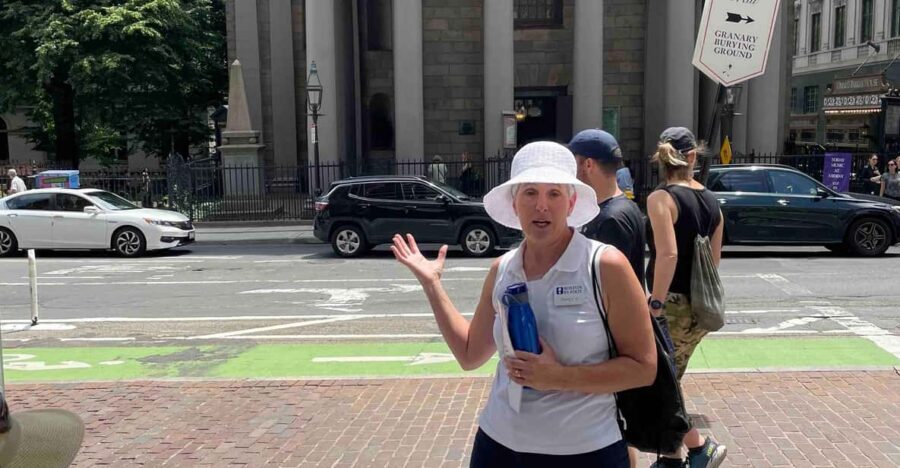
At $17 per person for a one-hour private walking tour, you’re buying speed plus interpretation. You’re not paying for museum access. You’re paying for a local guide who can connect each stop to the story you care about.
That’s why the guide quality matters. The supplied feedback highlights exactly this. Guides described as keeping the narration well researched and presented helped make the city feel alive. One review specifically credits a guide named Marcie for keeping the tour interesting all the way through. Another mentions Mr Dan Keating making Boston feel real through his narration—so much so that a child with a short attention span stayed engaged.
Even if you’re not looking for “deep history,” good guiding changes the experience. You stop thinking, That’s a cool old building, and you start thinking, This is where a decision or argument had consequences.
Private format also tends to help with pacing. If you’re the type who wants to ask quick questions or wants the story explained in a different way, a private group gives you a better shot at getting that than you would on a large group tour where every question has to compete with the schedule.
Outdoor-only reality: how to plan so the hour feels comfortable
Because the tour is outdoor only, you’ll spend the whole hour walking and listening in street-level conditions. That’s not a drawback for everyone, but it is something to plan around.
Come ready for weather. If it’s hot, wear breathable layers and consider bringing water. If it’s cool or breezy, wear a warm layer you can easily remove. If it’s raining, you’ll want rain protection so you can still hear the guide clearly.
Also, remember admissions aren’t included. That means this tour is best viewed as a foundation. If a stop sparks your curiosity, you’ll likely want to come back later for an inside look. This is the kind of tour that helps you choose what to prioritize next.
Who this tour fits best (and who might want something else)
This tour is a great fit if you want:
- A quick way to learn Boston’s Revolutionary background
- A guided walk that makes key Freedom Trail sites feel connected
- A one-hour plan that won’t swallow your entire day
It’s also ideal for families or anyone who gets tired of long museum sessions. The narration quality matters in short time windows, and the feedback you provided strongly signals that the better guides keep attention where it needs to be.
If you’re someone who wants lots of time inside historic sites, you may feel the limits because admission isn’t included and it’s outdoor only. In that case, use this tour as your pre-game. Do this, then add museum time where you want it most.
The best way to get more out of each stop
Because the tour covers multiple key locations, your best strategy is to listen for the “why,” not just the “what.” Here are practical ways to sharpen the experience during an hour:
- Ask yourself what changed after each event the guide describes.
- Pay attention to how the guide explains ordinary people getting pulled into the Revolution.
- Notice repeated themes—public discussion, organized gatherings, and confrontation with authority.
- Use the stop names as anchors, then connect them to causes and consequences.
When you do that, the tour becomes more than a walk. It becomes a story you can carry around Boston. Even after the hour ends, you’ll likely understand what you’re seeing and why it’s there.
Should you book this 1-hour Freedom Trail private walking tour?
I’d book it if you want an efficient, story-driven introduction to the Freedom Trail and Revolutionary Boston without paying for admissions you may or may not use. The $17 price point is strong because you’re getting an actual local guide and a tight hour that hits the most meaningful landmarks.
Skip it if you’re hoping for a ticketed museum crawl or long indoor time at each site. This is about interpretation on the move—great for building context, then using that context to decide what to explore more deeply.
If your schedule is tight or you’re visiting for the first time, this tour is a smart starting step. It’s the kind of experience that helps you stop seeing Boston as scattered sights and start seeing it as a connected set of events.
FAQ
How long is the Freedom Trail private walking tour?
The tour duration is 1 hour.
Where do I meet the guide?
Meet your guide near the Samuel Adams statue in front of Faneuil Hall.
Which Freedom Trail sites are included?
The tour covers key sites along the Freedom Trail, including the Old State House, Faneuil Hall, King’s Chapel, and the Old South Meeting House.
Is admission to historic sites or museums included?
No. Admission to historic sites and museums is not included. The tour is walking and outdoor only.
Is the tour wheelchair accessible and can I book it as a private group?
Yes. The tour is wheelchair accessible, and private group options are available.
Is the tour guide available in English?
Yes. The live tour guide is available in English.