REVIEW · BOSTON
Boston History and Freedom Trail Private Walking Tour
Book on Viator →Operated by WeVenture · Bookable on Viator
Boston’s Revolution sites feel close up. This private Freedom Trail history walk starts near Faneuil Hall and ends in the Boston Public Garden, with a guide who keeps things lively and practical while you move through key neighborhoods.
I especially like the small-group feel. You get room to ask questions and you do not spend your whole time jockeying with other visitors, which makes the stories stick. I also like how the route mixes famous landmarks with street-level details, so you see why this area mattered day by day.
One thing to consider: it’s a walking tour, and the day can move fast between stops. Wear comfortable shoes and plan for weather, because this is mostly time outside, not museum time.
In This Review
- Key highlights worth knowing
- Why This Private Freedom Trail Route Works So Well
- Meeting at 191 Atlantic Ave and How to Start Smart
- Beacon Hill Red-Brick Streets: Seeing Where Boston’s Story Began
- Granary Burying Ground: A Small Place With Big Names
- North End Walk: Paul Revere’s Connections and Real Local Atmosphere
- Old North Church (1723): The Signal Story You’ll Remember
- Faneuil Hall Marketplace: From Market to Meeting Stage
- Boston Tea Party Start: The Building Where It Kicked Off
- Massachusetts State House Views: Bulfinch’s Dome and Modern Boston
- The First Bookstore Site: Publishing, Ideas, and the Revolution
- Old State House and the Boston Massacre: Why the Details Matter
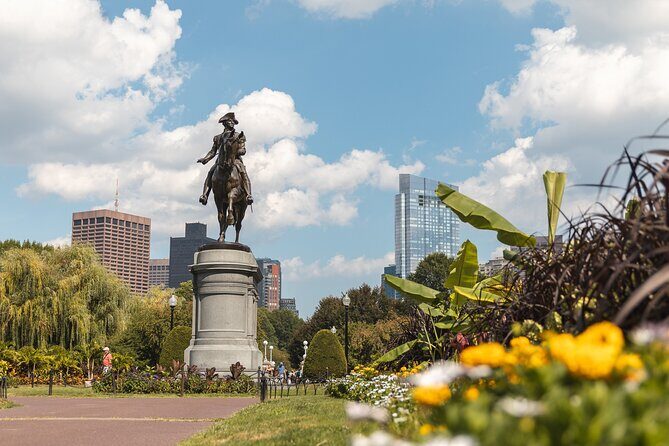
- Seaport District Flavor and the Boston Public Garden Finish
- How Long It Really Takes (and How to Get the Most)
- Price and Value: $245 Per Group Adds Up When You Travel Smart
- Who This Tour Fits Best
- Practical Tips Before You Walk
- Should You Book This Private Freedom Trail Walking Tour?
- FAQ
- Where does the tour start and what time is it scheduled?
- How long is the Boston History and Freedom Trail private walking tour?
- How many people are in the private group?
- Is a mobile ticket used for this experience?
- What major sites are included on the route?
- What should I wear for this tour?
Key highlights worth knowing

- Private group up to 12 keeps the pace friendly and question-friendly
- Faneuil Hall to Boston Public Garden gives you a logical start and finish without backtracking
- Major Revolutionary stops like the Boston Massacre and Boston Tea Party locations
- North End focus includes Paul Revere connections and Old North Church
- Big-city views from the Massachusetts State House help you connect past and present
- Mobile ticket keeps check-in simple
Why This Private Freedom Trail Route Works So Well
This tour is built for people who want the headlines of Boston’s Revolutionary era without turning the walk into a marathon. You get a guided pass through the most discussed parts of the Freedom Trail, plus a bit of local flavor as you move between downtown and nearby districts.
The “private” piece matters more than you’d think. With a group size capped at 12, the guide can adjust to what you care about. If you want more time on Paul Revere’s story or the lead-up to the Tea Party, that’s the kind of detail the guides seem set up to handle.
At $245 per group, not per person, the value depends on how many people you bring. For a couple, it can feel like a splurge. For a group of 6 to 10, it starts to look like a smart way to buy time, context, and less walking confusion.
You can also read our reviews of more walking tours in Boston

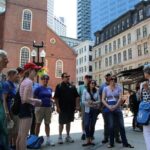
Meeting at 191 Atlantic Ave and How to Start Smart
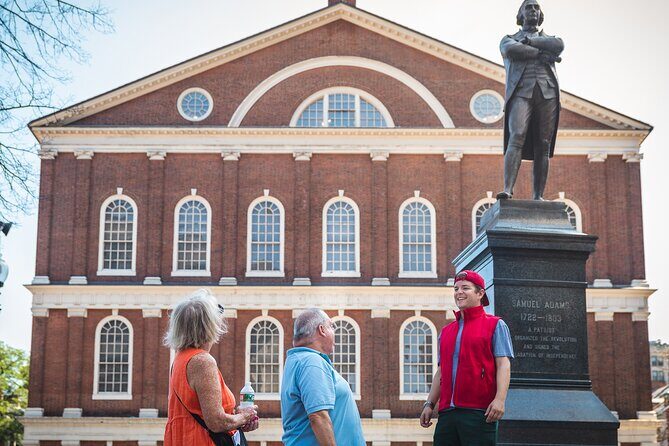
You’ll meet at 191 Atlantic Ave, Boston (near public transportation), with a 1:00 pm start. The benefit here is that it’s easy to reach from multiple directions, which helps if your hotel is scattered around the city.
This is also one of those tours where your first 10 minutes set the tone. Show up a little early, get oriented, and tell your guide what you want most. Guides have a track record of being personable and responsive, and that helps the whole walk feel like it was shaped for your group rather than a script.
And yes, you’ll walk. The tour is listed as about 2 to 4 hours, so treat it like a focused outing, not a quick stroll.
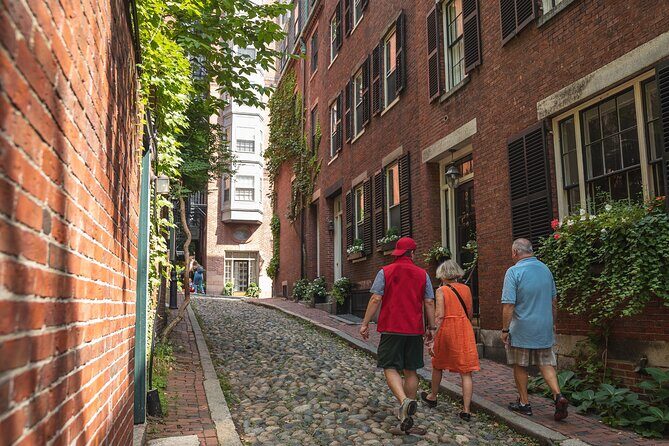
Beacon Hill Red-Brick Streets: Seeing Where Boston’s Story Began
Early on, you’ll spend time in a classic Boston neighborhood known for its red-brick streets. This stretch is a strong opener because it sets the tone: Boston’s past is not only in plaques, it’s in the feel of the streets.
A good guide will connect what you see with how the city grew. You can expect commentary on how this area developed and why those early layers still matter when you look at the downtown layout today.
Why I like this approach: it gives context before you hit the heavy Revolutionary sites. Instead of jumping straight into dates, you start with place—what it looked like, how it functioned, and how people moved through it.
Granary Burying Ground: A Small Place With Big Names
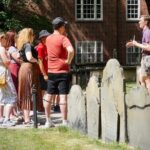
One of the first major stops is Granary Burying Ground, dating back to 1660 and originally tied to Boston Common. This is the kind of stop where the guide’s pacing matters. If they rush you, it becomes just more graves. If they slow down a touch, it turns into a real sense of who shaped the early country.
You’ll also pass by resting spots for key Revolutionary figures, including John Hancock, Paul Revere, and Sam Adams. This is where the stories begin to connect across the tour, because you’ll keep running into those names later.
The practical consideration here is simple: plan for standing time and pavement. It’s outdoor walking with short pauses, so keep your pace comfortable and do not pack too much into the minutes you spend stopping.
North End Walk: Paul Revere’s Connections and Real Local Atmosphere
Next comes Boston’s North End, a neighborhood famous for historic buildings and for everyday life around them. This part works well because it’s not frozen in time. As you walk, you’re surrounded by the neighborhood’s energy, including Italian eateries and local coffee spots.
Your guide should point out Paul Revere’s home and key sights tied to his network. Even if you think you already know the story, Boston’s geography adds layers: you start to see how locations fit together like pieces of a map.
One nice bonus is that this area naturally invites side trips for food after the tour. If you’re the type who likes to “reward” yourself after a history walk, the North End is a good place to do it.
You can also read our reviews of more private tours in Boston




Old North Church (1723): The Signal Story You’ll Remember
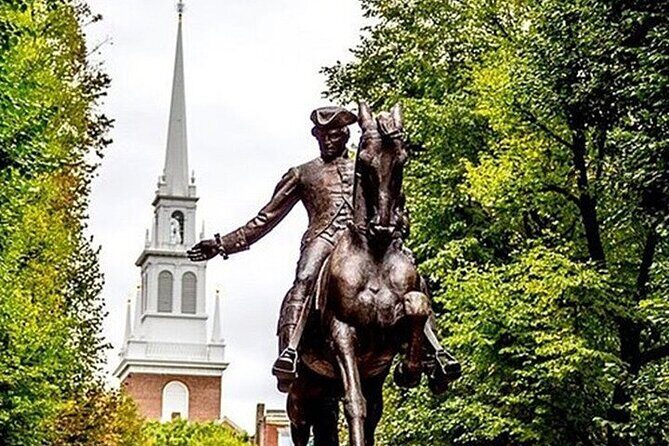
Old North Church is built in 1723 and is the oldest standing church building in Boston. It played an important role in the colonial period leading up to the American Revolution, and it’s one of those stops where the guide can make the famous moment feel real.
This stop is tightly connected to Paul Revere’s story. You’ll hear how the church fits into the plan and why it became part of Revolutionary memory.
A small drawback: this is a popular area, so the walk can feel busy at street level. The private group format helps, because you’re not trapped inside a huge crowd bubble. Still, you should expect normal city movement around the church and nearby streets.
Faneuil Hall Marketplace: From Market to Meeting Stage
From your start near Faneuil Hall, you’ll spend time at a landmark that has served as public market and assembly room. It has also been the setting for significant speeches, and that double identity—trade and debate—is one reason it matters.
This stop is where the tour often shifts from “who did what” to “how people organized.” You’re looking at a place that helped turn disagreements into public action. Even if you’re not a history buff, it’s hard to miss how logical it is that protests and speeches would happen in a high-traffic center.
You’ll also see the modern-day mix of shops and food stands around the landmark. That contrast is useful. It’s a reminder that civic life keeps evolving, and the same central idea keeps showing up in new forms.
Boston Tea Party Start: The Building Where It Kicked Off
You can’t do Boston without the Tea Party story, and this tour includes a location tied to the lead-up in 1773. The stop is described as a church linked to that moment when the building was the largest in the city.
Why that detail matters: it puts the scale of the event into your head. People did not gather in an abstract “somewhere.” They gathered in a real room, in a real community space that was big enough to hold momentum.
A guide’s job here is to keep the moment grounded. You should come away understanding what made that plan possible and why it became so effective as political theater.
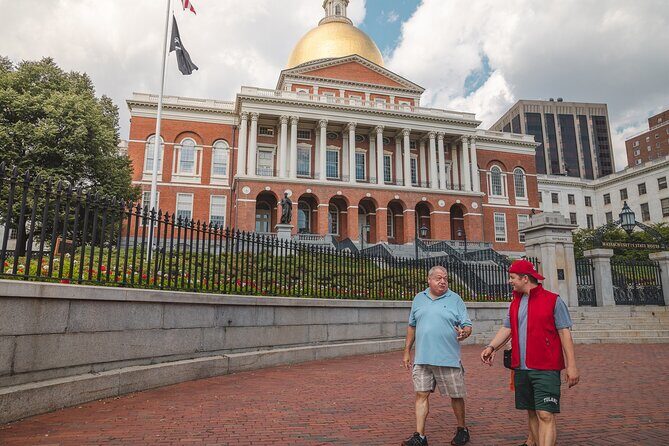
Massachusetts State House Views: Bulfinch’s Dome and Modern Boston
Then you’ll get to one of the best “past meets present” moments on the route. The Massachusetts State House, designed and built by Charles Bulfinch, includes the glittering dome and built-in views over modern Boston.
From the outside, you’ll take in the skyline: downtown, the Financial District, and even the John Hancock Tower. That’s more than a photo moment. It helps you connect how power and government grew from these earlier civic spaces into the modern cityscape.
This is also a stop where you can get your questions in. City views make it easier for guides to explain how Boston’s layout shaped movement, influence, and daily life.
If the weather’s clear, this portion tends to be a highlight. On rainy days, you’ll still get the exterior story, but you’ll want to move briskly and keep warm.
The First Bookstore Site: Publishing, Ideas, and the Revolution
As you continue, you’ll pass by the site of what’s described as the first bookstore in Boston. This place is tied to publishing—people behind books connected to Thoreau’s Walden, Hawthorne, and Longfellow—and you’ll hear how ideas spread through print.
You may also hear a connection to the Midnight Ride of Paul Revere, which is helpful because it ties communication and storytelling to the political tension of the era. Even if your focus is on battlefield events, this stop adds the background that explains how people talked themselves into action.
This is a “listen closely” stop. The value is in the narrative link between a business location and how information traveled in the 1700s.
Old State House and the Boston Massacre: Why the Details Matter
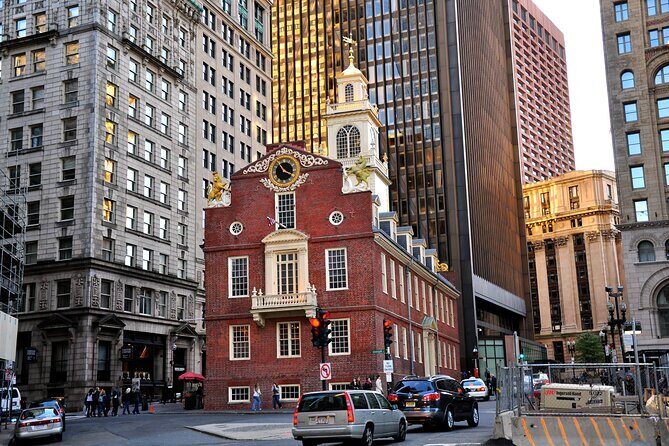
One of the most iconic stops on the route is the Old State House, tied to the Boston Massacre site. It’s described as a must-see and also one of the oldest public buildings in the country.
A good guide will do two things here. First, they’ll help you visualize the tension and the consequences. Second, they’ll clarify the specific story details, including how the account you hear today relates to where things were marked and how that changed over time due to traffic.
This is one of those stops where you leave with more than a date. You understand why “where” matters in historical memory, and how modern city needs can affect what people notice.
Seaport District Flavor and the Boston Public Garden Finish
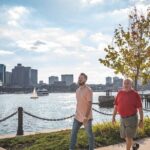
You also get a look at the Seaport District, including city views and an art-and-food scene vibe. The tour isn’t just about Revolutionary landmarks. It helps you land your visit in the Boston you can actually enjoy after the facts.
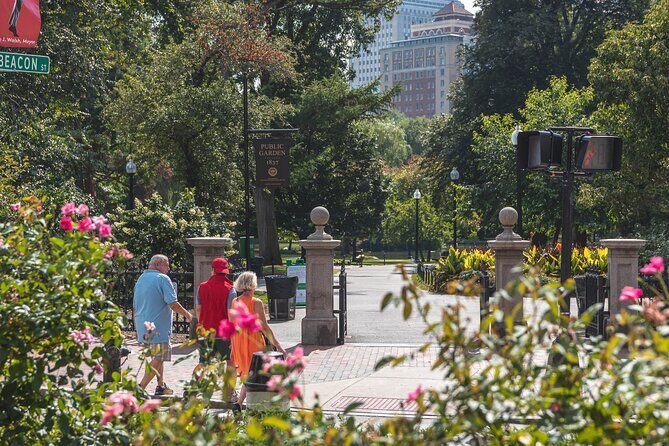
The tour ends in Boston Public Garden. That makes a lot of sense. After hours of walking and listening, you end somewhere pleasant where you can sit, reset, and decide what to do next.
If you’re planning dinner nearby, you’re in a good position. Public Garden is a natural “wrap-up” spot that doesn’t feel like you’re marching straight into another obligation.
How Long It Really Takes (and How to Get the Most)
With an estimated 2 to 4 hours, your experience will depend on how much you ask and how many photos you want. The guides tend to keep the pace comfortable, and the walk format makes it easier to stay engaged without feeling overloaded.
If you’re a first-time visitor, this is a strong sweet spot. You’ll get major sites and enough context to connect them, without needing to commit to a full-day itinerary.
If you have mobility limits or you just hate prolonged standing, plan for shorter stops and ask your guide to pace accordingly. The private format is often the easiest way to manage that.
Price and Value: $245 Per Group Adds Up When You Travel Smart
Let’s do the real math in your head. At $245 per group (up to 12 people), you are paying for a guided, private walking experience rather than a per-person ticket.
- If you travel as a couple or solo, the value is mostly about time and clarity. You’re buying a guide to connect sites you might otherwise see without understanding the links.
- If you travel with friends or family, value improves fast. Splitting the cost makes the private format feel like a bargain compared with paying separately for multiple people on a larger-group tour.
Also, the tour includes multiple headline stops tied to the Revolution, plus Paul Revere’s home area and Old North Church. That’s a lot of “why it matters” delivered in one route, which is the core reason this format works.
Who This Tour Fits Best
This tour fits best if you want a guided Freedom Trail route that feels personal. It’s ideal for:
- First-time visitors who want the big Revolutionary moments connected by story, not just signage
- Small groups who like asking questions and avoiding huge crowds
- Anyone who prefers walking with commentary over reading a phone app the whole time
Guides have shown they can adapt the pace and emphasize what matters most to the group. In past groups, you may have heard names like Alan, Allison, Lexie, Molly Mitchell, Trey Petrella, Michael, and Dillion—each praised for making the walk engaging and easy to follow.
That pattern matters. When the guide can steer based on your interests, the tour stops feeling like a lecture and starts feeling like a conversation.
Practical Tips Before You Walk
- Wear comfortable shoes. The tour is built on walking, and you want your legs to feel good for the full route.
- Bring a layer for weather shifts. Boston can change fast, and most of the tour is outside.
- If you have specific interests, say them early. Guides can adjust in response, and it makes the time feel more personal.
- For photos, plan your timing. Some stops are exterior and view-heavy, so you’ll want to be ready to pause quickly without holding up the group.
- Use the mobile ticket. It’s part of the experience flow and helps check-in move smoothly.
Should You Book This Private Freedom Trail Walking Tour?
If you want a focused, high-impact Freedom Trail experience with a guide who can answer questions and keep the pace friendly, I think this is a smart booking. The route hits major Revolutionary landmarks and key Boston neighborhoods, and it ends in a pleasant place to decompress.
If you are the kind of traveler who wants every single Freedom Trail stop and a long, slower day in all directions, you might consider a longer or more expansive route instead. This tour is described as not every location listed being guaranteed, so treat it as a compact, guided best-of approach.
Bottom line: for most visitors arriving for the first time—or for anyone who wants a clearer Freedom Trail story without the crowd pressure—this private walk is an easy yes.
FAQ
Where does the tour start and what time is it scheduled?
The tour starts at 191 Atlantic Ave, Boston, MA 02111, and the start time is 1:00 pm.
How long is the Boston History and Freedom Trail private walking tour?
It runs about 2 to 4 hours.
How many people are in the private group?
It’s a private tour with only your group participating, up to 12 people.
Is a mobile ticket used for this experience?
Yes, the tour uses a mobile ticket.
What major sites are included on the route?
Included sites include locations tied to the Boston Massacre, Boston Tea Party, and Battle of Bunker Hill, along with Paul Revere’s home and Old North Church.
What should I wear for this tour?
Wear comfortable shoes, since it’s a walking tour with time outdoors.