REVIEW · BOSTON
Boston Walking Tour of The Freedom Trail, Small Group
Book on Viator →Operated by Guided Tours Guild · Bookable on Viator
Stories start before you hit the first turn.
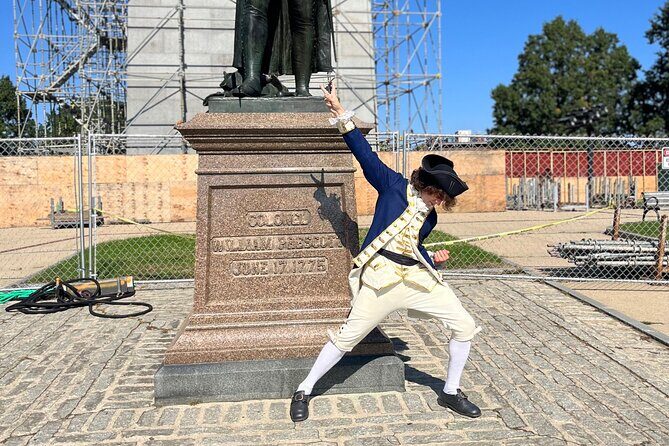
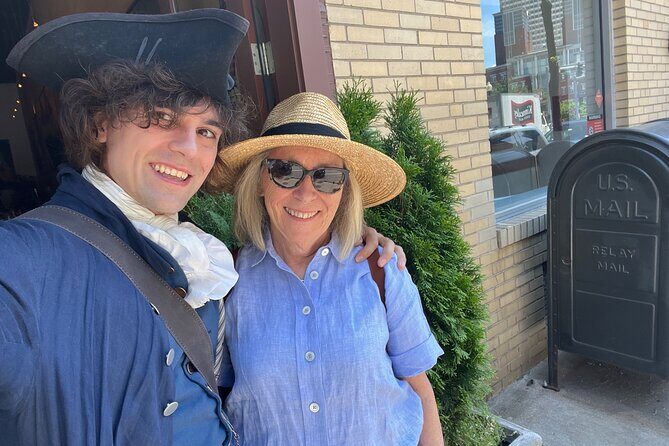
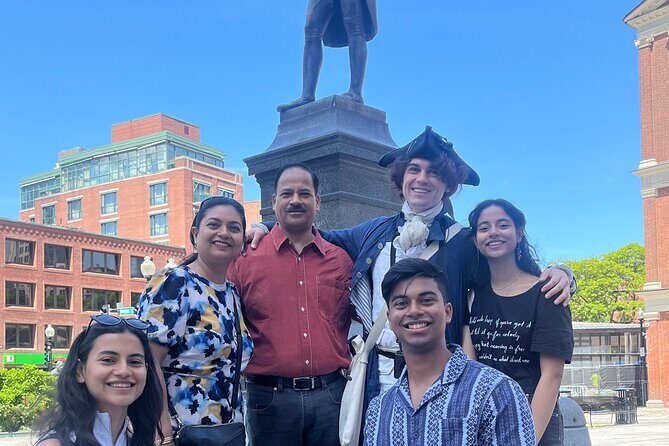
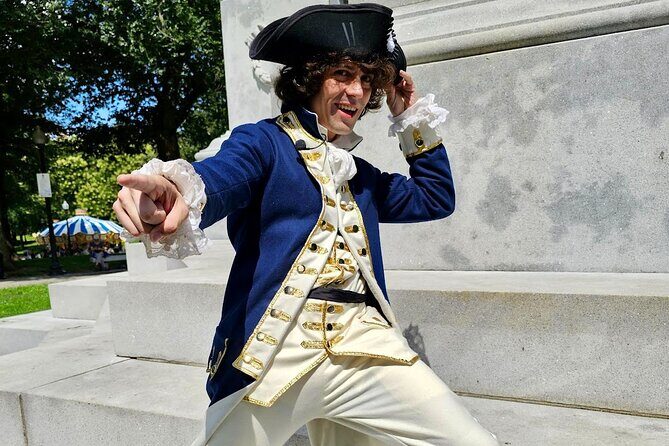
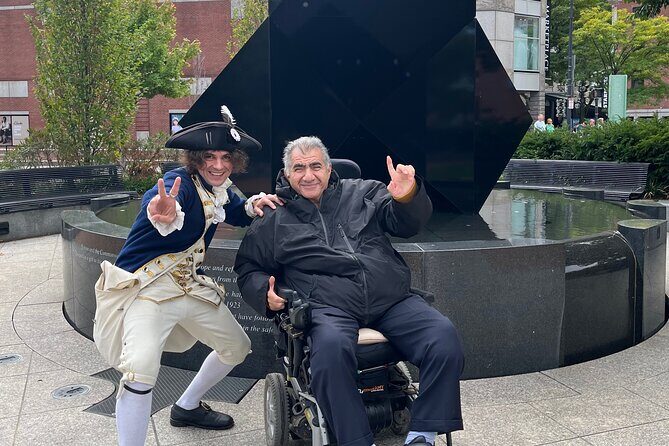
This Boston Freedom Trail walking tour keeps things fun and easy to follow, with a guide named Captain Pickles and a microphone system so you don’t miss the details. Plus, the guide is happy to pose for photos as you move between stops.
I like the slow, focused pace—you’re not racing across downtown, and you get time to notice what matters at each site. I also like the small-group vibe (up to 40 people), which makes it a lot simpler to chat with other history lovers along the way.
One thing to consider: if you prefer ultra-structured narration with no jumps between topics, you may want to ask questions if you feel the story is moving fast or hard to track in a moment.
In This Review
- 6 standout takeaways before you go
- Entering the Freedom Trail: a 90-minute story walk through Boston
- Meeting Point to Finish Line: where you start and where you’ll end up
- Captain Pickles and the small-group format that keeps it human
- Boston Common: the oldest city park sets the tone
- Massachusetts State House: power, seats of government, and John Hancock’s shadow
- Park Street Church: history that’s still active
- Granary Burying Ground: the names behind the Revolution
- Benjamin Franklin statue and the Boston Latin school connection
- Old South Meeting House: the Boston Tea Party’s organizing point
- Passing a building with a long life: home, apothecary, bookstore
- Boston Massacre Site and Old State House: the confrontation that sharpened resolve
- Faneuil Hall Marketplace: finish strong with food, restrooms, and a free museum
- Price and value: why $32 can feel like a bargain in Boston
- Who should book this Freedom Trail walk (and who might want a different plan)
- Quick weather reality check
- Should you book this Boston Freedom Trail small-group tour?
- FAQ
- How long is the Freedom Trail walking tour?
- How much does the tour cost?
- Where do I meet the guide, and where does the tour end?
- Is the tour audio-supported?
- Is it offered in English, and do I get a mobile ticket?
- What’s the cancellation policy if the weather is bad or I change plans?
6 standout takeaways before you go
- Microphone system included so the story stays audible, even on a windy sidewalk.
- Captain Pickles-style storytelling mixes American Revolution context with scene-by-scene details.
- Photo-friendly guide: you won’t feel rushed when you want a quick shot.
- All major stops are free to enter, so your $32 mostly buys the guided “put it all together” experience.
- Old meeting points, real named figures: Otis, Revere, Samuel Adams, and more show up in the route.
- End right at Faneuil Hall with bathrooms and food ready when you finish.
Entering the Freedom Trail: a 90-minute story walk through Boston
This tour is built for people who want the Freedom Trail to make sense fast. You’re not just checking off red-brick route markers. You’re getting a guided storyline that ties together government, protest, and public life, stop by stop.
At about 1 hour 15 minutes (roughly 90 minutes), it hits the sweet spot for a downtown walk: long enough to learn names and connections, short enough that it doesn’t wreck your afternoon. The route is also designed around places you can actually see from the street, which is great if you’d rather spend your time looking than waiting.
The small-group format matters too. With a maximum of 40 people, you’re not stuck feeling like a number in a crowd. It’s easier to pick up the thread of the tour and easier to talk with others when you want to.
And if you care about hearing the guide clearly, this is a big deal: the tour uses a microphone system. In Boston, wind happens. It’s nice when the story still reaches you.
You can also read our reviews of more walking tours in Boston


Meeting Point to Finish Line: where you start and where you’ll end up
You start at the Lafayette Mall Monument by Boston Common, on Tremont St (Boston, MA 02110). The tour ends at Faneuil Hall Marketplace, near the Samuel Adams statue (Boston, MA 02109).
That end point is practical. Faneuil Hall is one of those places where you can wrap up and immediately switch modes: grab food, use the bathrooms, and keep exploring without needing a second commute.
Start time is 11:30 am, and the tour is offered in English. You’ll also get a mobile ticket, which keeps things simple if you don’t want paper tickets in your pocket.
Captain Pickles and the small-group format that keeps it human
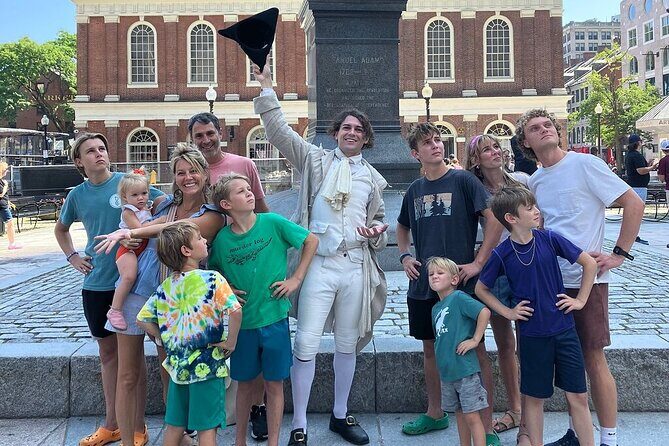
One of the most repeated themes from this tour is the guide’s energy. The guide here is Captain Pickles, and people consistently describe him as fun, story-driven, and full of facts.
A few things stand out for your comfort:
- You’ll hear the guide through a microphone system, which helps the tour feel smoother.
- Captain Pickles is willing to pause for photos, so you’re not stuck doing picture math while walking.
- The pace is often described as easy, with the tour lasting about 1.5 hours for most groups.
You’ll also notice that many comments mention how much the tour works for different ages—so if you’re traveling with kids (or adults who just don’t want a lecture), the storytelling style can carry you.
The one possible downside is pacing of the narration. A small number of people felt the talk was a bit disjointed or hard to follow, or that the guide spoke quickly when excitement kicked in. If you’re the type who likes to process slowly, don’t be shy about asking a question or requesting a repeat of a point.
Boston Common: the oldest city park sets the tone
The route starts at Boston Common, a public park in downtown Boston and the oldest city park in the United States. You get about 10 minutes here.
What makes this stop matter isn’t just the “oldest” label. It’s a reminder that Boston’s revolutionary energy didn’t happen in a vacuum. Public spaces like Boston Common are where people gathered, argued, listened, and moved through the city together. Even in a short stop, your guide can make that feel real.
Practical tip: since this is outdoors, wear weather gear. Boston Common is a good place to warm up or shield from wind before you move into the denser streets.
Massachusetts State House: power, seats of government, and John Hancock’s shadow
Next is the Massachusetts State House area. The tour gives you about 5 minutes, right by where John Hancock once lived, and at the seat of government for Massachusetts.
This stop helps you understand what the Revolution was fighting for—more than just independence as a slogan. It’s about governing structures, authority, and the public institutions that shaped daily life.
Because your time here is short, listen for what your guide connects between government and the later protest scenes. The value of a guided route is that these links don’t stay abstract.






Park Street Church: history that’s still active
Stop three is Park Street Church, founded in 1809 and still an active evangelical congregational church in Downtown Boston. You’ll spend about 5 minutes.
This is one of those stops that many self-guided walks skip. A guided tour gives context for why religious institutions show up in political change narratives—people didn’t separate faith, community, and civic action the way we sometimes do today.
Because the stop is brief, you’ll want to pay attention to the story focus: how this kind of community space fits into the broader Boston atmosphere of the time.
Granary Burying Ground: the names behind the Revolution

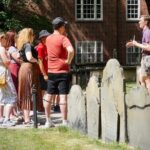
Then comes one of the most satisfying stops on the walk: Granary Burying Ground. You’ll get around 15 minutes here.
This is where you’re taken to final resting places tied to major Revolutionary figures, including James Otis, Paul Revere, Samuel Adams, and others. The tour also points out that the graveyard dates back to 1630, making it the oldest graveyard in the city and a site connected to the Freedom Trail.
What makes this stop powerful is the way it turns famous names into real people tied to a specific place. You’re not just hearing who they were—you’re standing where they ended up, and that physical connection can make the whole era click.
A practical note: this is a walking tour, so you’ll likely be standing and looking rather than spending time reading every marker in detail. If you want to linger later, you can. But for a 90-minute tour, the guide’s job is to highlight what you’ll miss if you rush.
Benjamin Franklin statue and the Boston Latin school connection

Next up: the Statue of Benjamin Franklin, with about 7 minutes allocated to this stop.
The tour ties this area to the Boston Latin school—noting it’s currently where the Old City Hall is at. That connection matters because it connects education to civic life. Revolution-era change isn’t only about battles; it’s also about how ideas spread, and how young people were trained.
If you’re someone who likes to understand the “how did they think” part of history, this stop is worth paying attention to.
Old South Meeting House: the Boston Tea Party’s organizing point
Old South Meeting House gets about 7 minutes on the route. It was built in 1729, and it’s famous as an organizing point for the Boston Tea Party on December 16, 1773.
This is where the tour often delivers some of its best “scene setting.” Even if you know the tea-party story already, a guided walk helps you picture how a place like this functioned as a meeting space for real people with real urgency.
Why it’s valuable: this stop turns the tea-party from an event into a process. People didn’t just wake up and throw tea. They organized, gathered, and moved from talk to action.
Passing a building with a long life: home, apothecary, bookstore
There’s also time on the walk for a separate building detail: a place that was built in 1718 as a residence and apothecary shop, and later became a bookstore in 1828.
This kind of stop is a gift because it shows Boston changing over time. You get a reminder that the same city that hosted revolutionary meetings also supported commerce, publishing, and everyday services. It’s a quick moment, but it adds texture.
Since the tour doesn’t give long “read everything” time here, treat it like a hint: you can later look up what the building is and why it mattered.
Boston Massacre Site and Old State House: the confrontation that sharpened resolve
Stop seven is the Boston Massacre Site, located outside of the Old State House, with about 5 minutes here.
Then you move to the Old State House itself, built in 1713, also given about 5 minutes.
These two stops work best when you connect them in your head: the massacre site provides the tension, and the Old State House gives you the setting for why that tension mattered politically. Even without a long indoor experience, you’re standing in the kind of public-power location where conflict could turn into a story people repeated for years.
If you’re curious about cause and effect, listen for how your guide frames the shift from grievance to momentum. That’s the real value here. You’re not just seeing a “site.” You’re seeing why sites mattered.
Faneuil Hall Marketplace: finish strong with food, restrooms, and a free museum
Finally, you end at Faneuil Hall Marketplace, near the statue of Samuel Adams, with about 10 minutes.
This finish is intentionally practical. The area offers:
- bathrooms
- local food
- a free museum
So when the tour ends, you don’t need to sprint to find a place to sit. You can keep going at your own pace right where you already are.
This is also a good moment to ask any final questions. If your guide has been moving fast, the end-of-tour cluster is often where people can ask about what they should see next. (And because the tour is story-heavy, you’ll likely have follow-up curiosity by then.)
Price and value: why $32 can feel like a bargain in Boston
At $32 per person, this tour is priced in a way that makes sense for what you get: you’re paying for interpretation, pacing, and connections—especially from a guide like Captain Pickles who is repeatedly described as lively, humorous, and dedicated to storytelling.
Also, most stops in this route are listed as free admission. That matters. If you’ve ever done self-guided Freedom Trail walks, you know the basic route costs you your time. The guided tour turns that time into a more organized explanation.
So the real question isn’t whether you’re paying for access. You’re mostly paying for:
- the microphone-supported narration
- a tight route from Boston Common to Faneuil Hall
- a guided emphasis on specific figures and events
If you like walking but don’t want to do the research work alone, this is strong value.
Who should book this Freedom Trail walk (and who might want a different plan)
This tour suits you best if you:
- want a fun, story-driven approach instead of a textbook-style lecture
- like small-group walks where you can hear what’s being said
- enjoy learning how Revolutionary-era events connected to everyday places in Boston
- travel with mixed ages and want a guide who can keep kids and adults engaged
You might want a different style of tour if:
- you dislike any walking and prefer mostly indoor experiences
- you need a slower, more structured pace and don’t do well when a guide is animated and moving quickly
- you want long stop-by-stop time for reading every detail on your own
Quick weather reality check
This tour depends on good weather. If conditions are poor, you’ll be offered a different date or a full refund. In Boston, that’s not trivial. Plan to dress for wind and cold if you’re going in shoulder season, and remember this is an outdoor walk.
Should you book this Boston Freedom Trail small-group tour?
If you want a Freedom Trail experience that feels like a guided story instead of a solo scavenger hunt, I’d book it. The biggest selling points are clear: Captain Pickles, the microphone system, the fun delivery, and the way the route connects major figures and events without dragging.
One last practical thought: if you’re picky about narration flow, ask questions. A couple of feedback notes mention pacing or clarity issues, and your best fix is simple—pause, ask, and keep the story working for you.
FAQ
How long is the Freedom Trail walking tour?
It runs for about 1 hour 15 minutes (approx.).
How much does the tour cost?
The price is $32.00 per person.
Where do I meet the guide, and where does the tour end?
You meet at Lafayette Mall Monument at Boston Common on Tremont St (Boston, MA 02110) and the tour ends at Faneuil Hall Marketplace near the Samuel Adams statue (Boston, MA 02109).
Is the tour audio-supported?
Yes. The guide uses a microphone system so you can hear the tour commentary clearly.
Is it offered in English, and do I get a mobile ticket?
Yes. The tour is offered in English, and you receive a mobile ticket.
What’s the cancellation policy if the weather is bad or I change plans?
You can cancel for a full refund if you cancel at least 24 hours before the experience’s start time. The tour requires good weather, and if it’s canceled due to poor weather, you’ll be offered a different date or a full refund.