Boston has other stories beneath your feet.
This 2.5-hour walk threads untold history through iconic places, turning familiar landmarks into real-life drama and survival stories. I like the small-group, life-long local guiding style because it stays focused on what matters, not a long slideshow. One thing to consider: you’ll be on your feet for the full route, so bring comfy shoes and plan for city walking.
I also like the mix of subjects. You’re not only getting wars and founding tales. You’ll hear about the people behind scandals and schemes, plus the city-changing engineering ideas under and around Boston Common and the harbor. If you’re hoping for a pure inside-museum experience at every stop, note that several sites list admission as not included, so your best views may be from outside.
In This Review
- Key highlights you’ll feel on the walk
- A 2.5-hour loop that skips the usual script
- Central Burying Ground: early Boston, right where you walk
- Boston Common: America’s first subway and MLK’s statue
- Massachusetts State House: power, family, and Whitey Bulger’s orbit
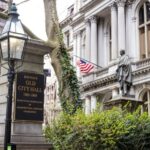
- Old City Hall: Charles Ponzi and the scandal that named itself
- Boston City Hall: architects love it, locals don’t
- Faneuil Hall Marketplace: from civic meeting place to food hall
- Rose Fitzgerald Kennedy Greenway: the Big Dig’s visible scars
- Boston Harborwalk: why 1/6 of Boston is artificial
- North End energy, then the Paul Revere statue
- Great Molasses Flood: Boston’s sweet disaster and its consequences
- What you’ll actually gain from this kind of Boston walk
- Time, tickets, and where this tour fits your day
- Should you book the Boston Untold History Walking Tour?
- FAQ
- How long is the Boston Untold History Walking Tour?
- Where do I meet and where does the tour end?
- Is the tour offered in English?
- What group size should I expect?
- Is food included?
- Are admission tickets included at every stop?
- Does the tour run in bad weather?
- Can I cancel for a full refund?
Key highlights you’ll feel on the walk
- Central Burying Ground in the middle of the city, with the earliest Boston graves as your starting point
- America’s first subway story under Boston Common, plus Dr. King’s Boston Common statue
- Crime-and-politics threads tied to the State House and the Bulger/Whitey Bulger connection
- The Ponzi scheme origin connected to Old City Hall and Charles Ponzi
- Boston’s city-shaping rebuilds, from the Big Dig scars and stitches to the harbor’s artificial land
- Molasses Flood fallout told in a way that explains why one disaster changed Boston
A 2.5-hour loop that skips the usual script
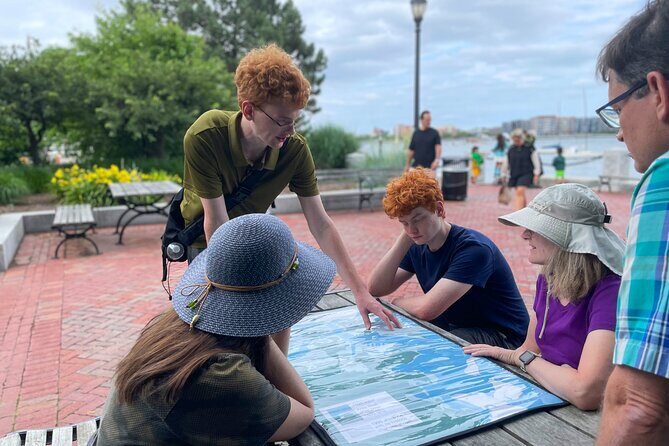
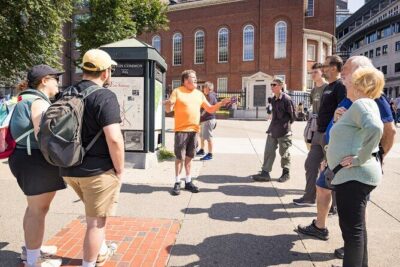
This is a walking tour that treats Boston like a set of living clues. In about 2 hours 30 minutes, you’ll move from early settlement roots to modern city transformations, with a local guide named Sam who tells stories with details you can actually picture. The pacing feels built for comprehension: short stops, then a story that makes the next street make sense.
You’ll also start and end in a way that’s convenient for a longer day. The meeting point is at 75 Boylston St, Boston and the walk ends at 521 Commercial St, which makes it easy to keep going toward the North End or the waterfront after you finish.
This isn’t a tour where you just pass through. It’s more like someone hands you the missing context for places you’ve seen on postcards.
You can also read our reviews of more walking tours in Boston



Central Burying Ground: early Boston, right where you walk
Your tour kicks off at Central Burying Ground, a historic graveyard with graves from the earliest parts of Boston’s history. Even if you’re not usually a cemetery person, I like starting here because it resets your brain. Boston’s famous for reinvention, but it also preserves memory under stone.
At this first stop, you get about 10 minutes, and the admission is free. That matters for value because you’re not paying to begin. You’ll hear the kind of context that makes “old” feel personal: who was here early, what their presence meant, and how the city grew around them instead of replacing them.
Tip: take a slow minute. Don’t just look at the biggest markers. Read enough to feel the scale and age, then let the guide’s story connect the dots.
Boston Common: America’s first subway and MLK’s statue
Next up is Boston Common, and this is where the tour really shows its edge. Beneath Boston Common is the story of America’s 1st subway. You’ll hear the true story of how it was built and how it shaped Boston’s culture. It’s the kind of detail you don’t get from the usual “walk-and-take-photos” stops.
This portion also includes another key moment on the Common: MLK spent many years in Boston and earned his PhD here, and Boston put up a statue to honor Dr. King’s legacy. So you get engineering history and civil-rights legacy in the same area. That contrast is powerful, and it helps the Common feel less like a green space you pass by and more like a symbolic center of the city.
You’re at this section for about 10 minutes, and admission here is free. Keep an eye out for where the guide steers you—Boston Common is big enough that you could wander, especially if you’re also trying to take pictures. Follow the plan so you don’t lose the story thread.
Massachusetts State House: power, family, and Whitey Bulger’s orbit
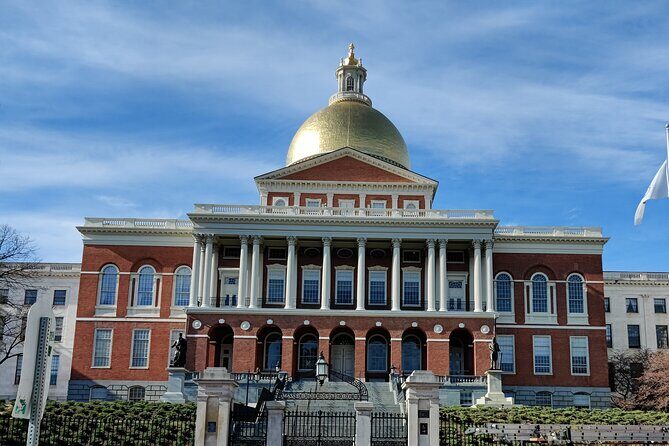
The walk then turns toward the politics of the city at the Massachusetts State House. Your guide spends about 15 minutes here, and admission is not included, so plan accordingly if you want to go inside at any point.
The story connection is to State Senate President Billy Bulger, including his complicated relationship with his brother, the infamous Irish mobster Whitey Bulger. This part works because it doesn’t treat crime as a separate genre. It shows how relationships and power can entangle civic life.
Even if you don’t love political history, the angle makes it more readable: you’re not just learning names. You’re learning the social mechanics that let someone move from influence to involvement.
Value note: this stop adds weight to the whole tour. After the Common’s big “how a city works” story, you get the human side—who benefited, who looked away, and how Boston’s public face can hide messy realities.
Old City Hall: Charles Ponzi and the scandal that named itself
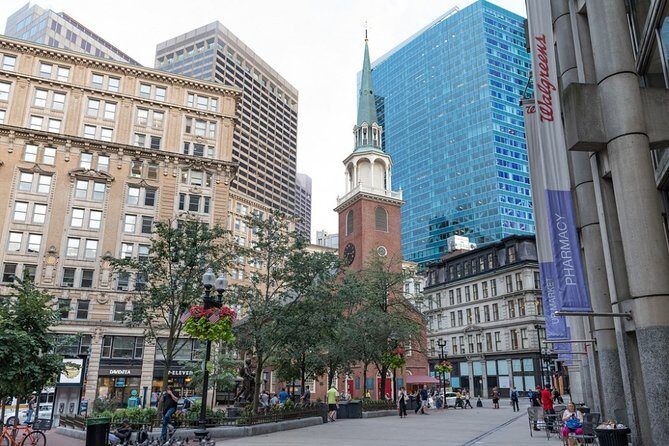
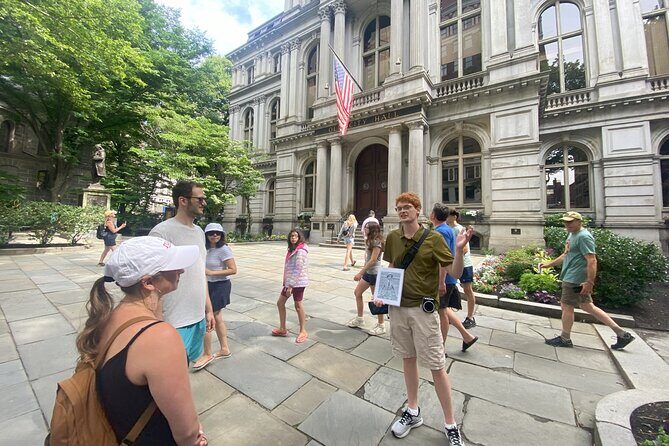
Just next door comes Old City Hall, where the guide connects local history to a worldwide financial term. Here you’ll hear about a con-man named Charles Ponzi, and how the “Ponzi scheme” became so famous the whole concept carries his name.
You’ll spend about 20 minutes at this stop, and admission is not included. The way to think about this for your day: treat it as a story-and-context stop, not a guarantee of indoor access. If the building’s interior matters to you, check what’s actually accessible on your tour date, because the tour info flags that tickets aren’t included.
I like this stop because it turns a headline idea into a Boston setting. It also gives you a mental tool for the future: when you hear Ponzi stories elsewhere, you’ll remember that the scheme didn’t just appear in a vacuum. It had a time, a city, and specific conditions.
You can also read our reviews of more historical tours in Boston





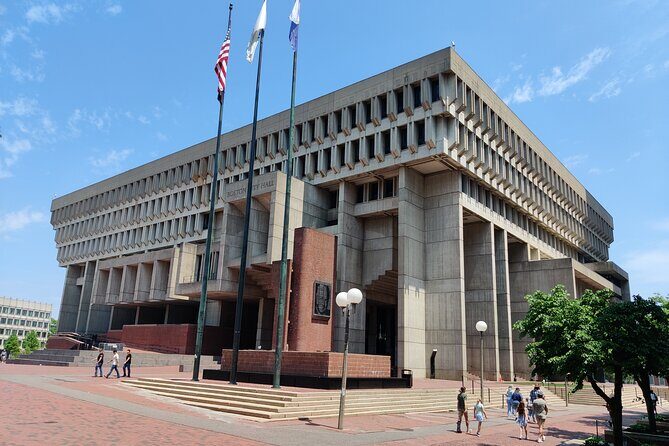
Boston City Hall: architects love it, locals don’t
From Old City Hall, you move to Boston City Hall, where the guide explains an interesting contradiction: it’s simultaneously hated by citizens and beloved by architects.
This part is about 10 minutes, and admission is also not included. That doesn’t make it less valuable; in fact, it’s a great example of how buildings act like arguments. When a structure triggers strong feelings in the public, it usually means it changed how people experience the city—walking routes, sightlines, and even how officials interact with streets.
If you like architecture but also love street-level reality, this is the sweet spot. The guide helps you translate design jargon into real-life impact.
Faneuil Hall Marketplace: from civic meeting place to food hall
Then it’s on to Faneuil Hall Marketplace, where you’ll spend about 15 minutes learning how the place has changed over time. Your guide also points you toward why Faneuil Hall matters: it’s tied to how Boston gathered, argued, and decided things together.
A bonus detail at this stop: the marketplace is described as being built in 1826, and it now serves as a food hall and commercial center. That shift from civic space to consumer hub explains why Faneuil Hall feels both historic and modern.
Admission is not included for this stop. If you’re hungry, don’t panic—this tour doesn’t include food and drink, but you’ll likely want to eat after your walk anyway. Plan for a meal nearby, since the route naturally finishes toward the waterfront.
Rose Fitzgerald Kennedy Greenway: the Big Dig’s visible scars
Next you’ll walk into Rose Fitzgerald Kennedy Greenway. This is where the tour gets very “Boston does big projects” again. You’ll learn how an old elevated highway ripped apart the city, and how Boston stitched it back together with the Big Dig.
This stop is about 10 minutes and admission is free. Green space usually gets treated like a pause. Here, it’s treated like a lesson: cities don’t just change by growth. They change when leaders cut through older systems and re-route the flow of traffic and people.
I like this part because it makes the route feel physical. You’re not only hearing about Boston’s past. You’re seeing how decisions from recent decades still shape what you’re standing on now.
Boston Harborwalk: why 1/6 of Boston is artificial
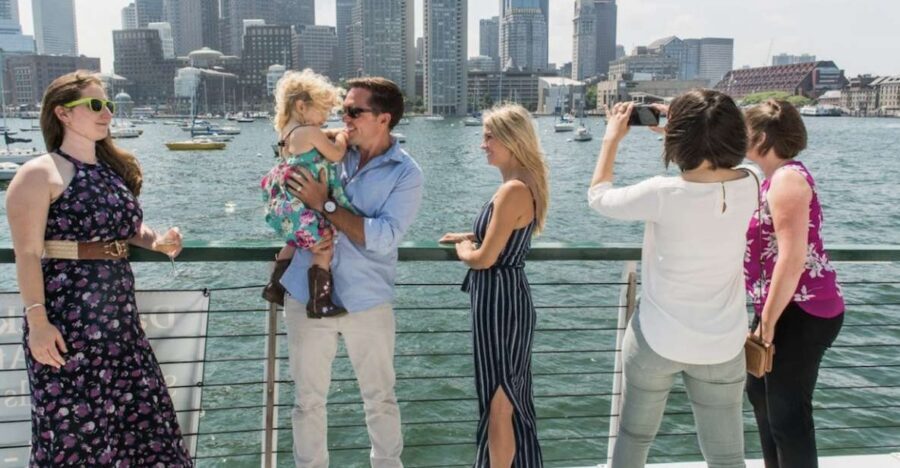
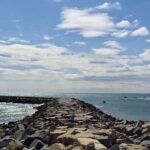
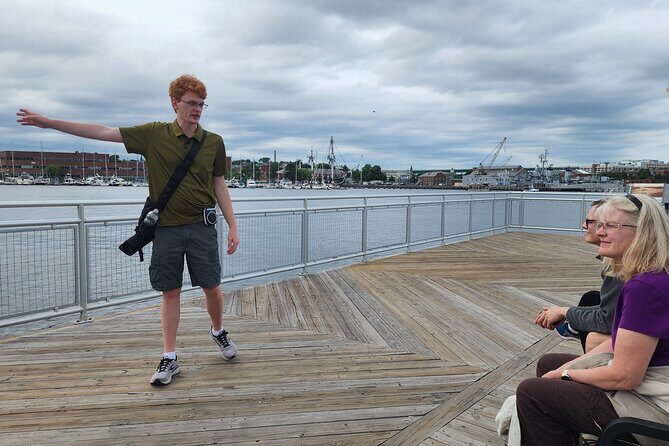
Then the tour heads to the Boston Harborwalk for about 20 minutes. Admission here is free, and the story centers on how Boston expanded its land area and why 1/6 of Boston’s land is artificial.
That fact alone changes how you look at the harbor. Instead of thinking of the coastline as permanent, you start noticing that even “natural” borders are the result of engineering choices. This is also a great segment for photo lovers, because the setting helps the story feel real.
If you’re sensitive to wind off the water, this is the time to think about layers. Harborwalk weather can flip faster than you expect, especially outside summer.
North End energy, then the Paul Revere statue
As you move through this part of the walk, you pass into the North End, described as a historic Italian neighborhood with some of the best food in Boston. Even if you don’t stop for a full meal, it’s a useful palate shift after the harbor facts.
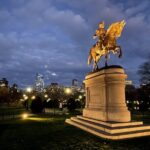
Then you reach the Paul Revere Statue for about 20 minutes. This is another story-focused stop with free admission, and it aims at a key idea: the tour shares the true story of Paul Revere’s ride and why his name became so famous.
This section is worth your time if you like historical clarity. Revere is one of those names people toss around, and the background can get simplified. The guide’s approach keeps it tied to the reality of what happened and how a legend grows.
Quick tip: don’t rush this one just because you’ve heard Revere before. The value here is the framing, and it helps the rest of the tour feel less like scattered trivia.
Great Molasses Flood: Boston’s sweet disaster and its consequences
The final storytelling stop is the Great Molasses Flood Plaque, and it’s one of those Boston events that sounds almost too strange until you understand the fallout. You’ll spend about 20 minutes here, and admission is free.
The guide explains how the molasses flood happened and what the fallout caused for Boston. This is a great closing choice because it blends spectacle with consequence. It also reinforces the tour’s main theme: Boston’s identity isn’t only built from triumph. It’s also shaped by accidents, failures, and the city’s response afterward.
If you like history that reads like cause-and-effect, this is your payoff. You leave understanding how one disaster can ripple through a city’s systems and reputations.
What you’ll actually gain from this kind of Boston walk
A lot of tours hit the same highlights. This one aims for the “why does this exist” layer instead.
I like that the stories move across categories that people usually separate:
- engineering (subway under Boston Common, Big Dig repairs)
- power (Billy Bulger and Whitey Bulger’s relationship)
- scams (Charles Ponzi and the origin of the scheme name)
- public feeling (Boston City Hall and the design-versus-public debate)
- city change (harbor expansion and artificial land)
- cultural memory (cemetery beginnings, MLK recognition, and named plaques)
Because of that range, you end the walk with a more complete mental map. Boston becomes less of a set of famous photos and more of a city where decisions—good, bad, and weird—stack up over time.
Time, tickets, and where this tour fits your day
This tour runs around 2 hours 30 minutes and stays English-language. It’s offered to a maximum of 15 travelers in a small-group format, which is a big deal if you like hearing the guide’s story without feeling lost in a crowd.
You get a mobile ticket, and the meeting point is straightforward at 75 Boylston St. You’ll finish at 521 Commercial St, so it naturally lines up with a plan for the North End, waterfront strolls, or dinner nearby.
Food and drink aren’t included, and that’s actually a good thing for value: you can pick what fits your appetite and budget after the walk. The only catch is timing—if you’re the type who needs a snack break mid-tour, bring something small for yourself before you start (since the tour itself doesn’t include it).
Tickets: some major stops list admission not included (State House, Old City Hall, Boston City Hall, Faneuil Hall Marketplace). Other stops are marked free (like the Common, Greenway, Harborwalk, Paul Revere statue, and the Molasses Flood plaque; plus the Central Burying Ground). So you’re not paying admission everywhere, but you should still be ready for the fact that a couple stops may require extra fees if you want to go in.
Weather matters. This experience requires good weather, and if it’s canceled for poor conditions, you’ll be offered another date or a full refund.
Should you book the Boston Untold History Walking Tour?
Book it if you want Boston that feels more like a story than a checklist. I’d especially recommend it when you’ve already done the big-name historic circuit and you want the next layer: the scandals, the engineering choices, and the events that made Boston Boston.
Skip it (or consider a different option) if you want a museum-heavy tour where you’re guaranteed indoor access at every stop. This walk focuses on guided storytelling across the city, and some stops explicitly note admission isn’t included.
One last practical note: you’ll need moderate physical fitness for the walking pace. If you’re comfortable with city sidewalks and short segments between stops, this is a smart way to spend half a day and come away with real context.
FAQ
How long is the Boston Untold History Walking Tour?
It’s about 2 hours 30 minutes.
Where do I meet and where does the tour end?
The tour starts at 75 Boylston St, Boston, MA 02116 and ends at 521 Commercial St, Boston, MA 02109.
Is the tour offered in English?
Yes, the tour is offered in English.
What group size should I expect?
The tour has a maximum of 15 travelers.
Is food included?
No. Food and drink are not included, but you can get recommendations for after the tour.
Are admission tickets included at every stop?
No. Some stops list admission as not included, while others are free.
Does the tour run in bad weather?
It requires good weather. If it’s canceled due to poor weather, you’ll be offered a different date or a full refund.
Can I cancel for a full refund?
Yes—free cancellation is available. You can cancel up to 24 hours in advance for a full refund.