REVIEW · BOSTON
Private Tour of Lexington, Concord, and Boston
Book on Viator →Operated by Boston Hidden Gems · Bookable on Viator
Revolutionary stories start fast here. This private day strings together Lexington and Concord first acts and then moves into Boston’s key Freedom Trail stops, with expert commentary and minimal hassle. I love how the route follows the real sequence of events so the names make sense quickly, even if you only know the basics. One possible drawback: some indoor sites depend on opening hours, so plan to flex your expectations.
The second thing I like is the mix of quick, meaningful stops with a real break for food—there’s free time at Boston Public Market for lunch, then you keep going. I also appreciate that Old North Church entry is included, so you don’t lose time hunting tickets. For the smoothest day, do note the vehicle limits for kids and luggage.
In This Review
- Key highlights to look for on this tour
- A Day Built Around Revolutionary Firsts: Lexington to Boston
- Getting There in a Toyota Sienna Van: Comfort, Stops, and Pace
- Lexington Green and the Belfry Alarm: Where the First Shots Landed
- Paul Revere’s Arrest to the Battle Road: Following the British Route
- Concord Writers, Three-Author Homes, and Orchard Views
- Old North Bridge: The Moment That Changed Everything
- Old Manse and Sleepy Hollow Cemetery: Emerson, Hawthorne, and Author Rivalries
- Boston Public Market Lunch Break: Choice Without Schedule Chaos
- USS Constitution and Bunker Hill: Big American Markers in Short Time
- Old North Church & Historic Site: Paul Revere’s Lanterns and One Pew
- Paul Revere House: The Human Scale (Wife, 16 Kids, and Wood)
- Price and Logistics: Is $480 Per Person Actually Worth It?
- Who Should Book This Private Lexington, Concord, and Boston Tour?
- Should You Book This Private Lexington, Concord, and Boston Tour?
- FAQ
- Where is the meeting point for this tour?
- Is pickup included?
- How long does the tour run?
- Is this a private tour?
- What is included in the price?
- Are entrance tickets included for all stops?
- Is lunch included?
- What language is the tour offered in?
- Do you provide car seats for children?
- What are the luggage limits in the vehicle?
- Can I cancel for free?
Key highlights to look for on this tour
- A tight, chronological Revolution route that keeps the story clear from Lexington to Boston
- Guide-led context on famous myths, including the poem inaccuracies around Paul Revere
- Old North Church includes admission, letting you sit in Paul Revere’s pew
- Boston Public Market lunch time gives you choice without dragging the schedule
- USS Constitution and Bunker Hill are included stops, even with a quick pace
A Day Built Around Revolutionary Firsts: Lexington to Boston
If you want the American Revolution to feel real, this is the kind of day that helps. Instead of bouncing around town randomly, you get a forward-moving story: Lexington, Concord, and then back into Boston for the most famous symbolic sites. It’s a private format, so you can ask questions as you go and keep the pace matched to your group.
I especially like that you’re not just hearing big “tour guide” lines. You’re getting small, specific details that make the famous moments more concrete. For example, you’ll start at Lexington Green to see where the first shots of the Revolution were fired, and then you move toward Concord with stops tied to the alarm system, the British route, and the people involved. By the time you’re in Boston, the Revolution doesn’t feel like a textbook chapter—it feels like a chain of decisions and warnings.
You’ll also notice the tour is structured for short attention spans. Most stops are under 30 minutes. That’s not a flaw. It’s how you fit in a lot without turning the day into a blur.
You can also read our reviews of more private tours in Boston



Getting There in a Toyota Sienna Van: Comfort, Stops, and Pace
This tour runs about 7 hours total (with travel time added). The day is built on a pickup from Snow Hill Street & Hull Street in Boston, and it ends back at the meeting point. You’ll ride in an air-conditioned Toyota Sienna minivan, which is a big deal on hot days and also just nice for comfort when you’re bouncing between sites.
It’s private, meaning it’s only your group. That matters because you can keep the itinerary moving without the stop-and-start rhythm of larger buses. It also helps if you want your guide to focus on what you care about most—Paul Revere, Lexington and Concord tactics, or how writers and everyday people lived in the same towns where the Revolution unfolded.
Two practical notes to keep your day smooth:
- The vehicle can only handle up to four guests with luggage comfortably. Even though the back row can collapse to fit smaller bags or 4–5 suitcases, the minivan won’t fit six passengers with more than one personal item each. If the guide decides it can’t be done safely, the tour can be canceled without refund—so plan your packing.
- There’s a Massachusetts child restraint law requirement in place. If you’re traveling with kids who need car seats/boosters, you must have the correct restraint that day, and children must be registered as separate tour guests.
Lexington Green and the Belfry Alarm: Where the First Shots Landed
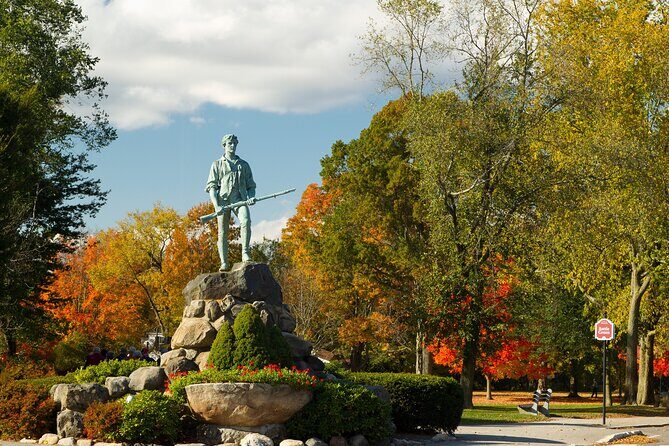
You start with Lexington Green, which is exactly what it sounds like: the Battle Green area tied to the first shots of the American Revolution. This stop works well because it sets the emotional and historical baseline. Standing there, it’s easier to understand why people in Lexington cared so much about defense and warning systems.
Then you head to the Lexington belfry area. Here the story gets specific: the belfry building was used to sound the alarm as the British were marching on Lexington and Concord. This is one of those details that turns vague “they were coming” talk into something you can picture. When a town has an alarm system, it changes how quickly people act—and how prepared they think they are.
These first stops are short, but that’s part of the value. You’re not stuck in one place long enough for the energy to drain. You’re building momentum.
Paul Revere’s Arrest to the Battle Road: Following the British Route
After Lexington, you move into the Paul Revere story, but with a twist that I really appreciate: you’re not only chasing the legend—you’re looking at the cracks in it.
At the Paul Revere capture site, you’ll learn about the moment Paul Revere was arrested by the British on his famous midnight ride. Even better, the tour includes discussion of the inaccuracies in The Midnight Ride of Paul Revere. That’s a helpful reminder for anyone who grew up with the poem as a “truth.” Here you get the reality-versus-story contrast that makes history feel smarter, not just louder.
Next comes Battle Road Trail, where you’ll see the Old Bay Road, the actual path the British took on their way to and from Concord. This stop is ideal if you enjoy walking in your mind rather than walking with your feet. Even without a long hike, the setting helps you understand how movement happened—how long travel took, where people would hide, and why timing mattered.
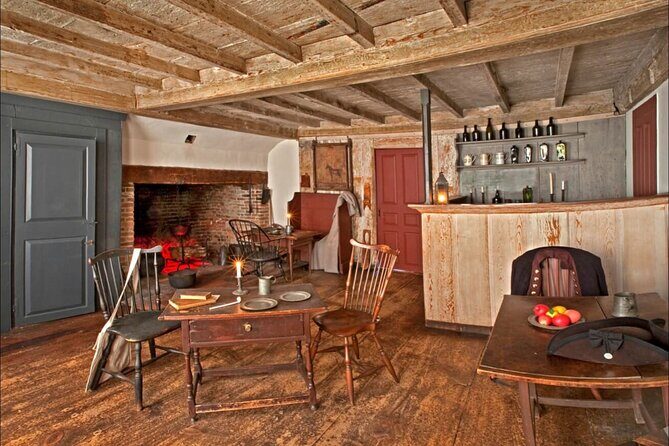
Then you visit Hartwell Tavern, located on the Battle Road Trail. This is the kind of stop that gives you everyday-life texture. You’ll see a historic building that stood there the day the British went to Concord on April 19, 1775. It’s a reminder that revolutions don’t happen in empty space. They happen in homes, taverns, and community gathering points.
Concord Writers, Three-Author Homes, and Orchard Views
After the Revolutionary action in Lexington and Concord, the day shifts gears slightly toward people who shaped American literature. This isn’t random. It helps you understand how the same landscape can hold political conflict and later creativity.
You’ll do a drive-by at the House of the Three Authors in Concord, tied to Nathaniel Hawthorne, the Alcott family, and Margaret Sydney. The house is also associated with Laurie from Little Women. This is a quick stop—mostly for orientation and photos—but it adds a satisfying layer: you see how the town aged from wartime urgency into cultural influence.
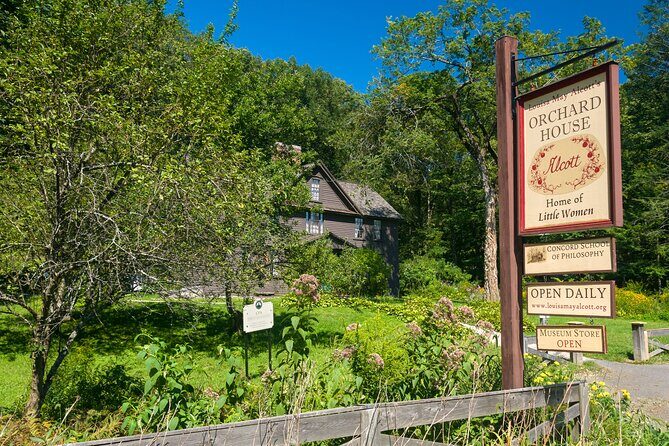
Then there’s a drive-by of Louisa May Alcott’s Orchard House. The tour notes an optional quick photo stop for a snapshot. I like including a moment like this because it gives you a break from lectures. It also helps you connect the literature you may already know with a real place you can point to on a map.
One small pacing tip: if you’re the type who enjoys longer stops, prioritize what you want to photograph. This portion moves quickly by design.


Old North Bridge: The Moment That Changed Everything
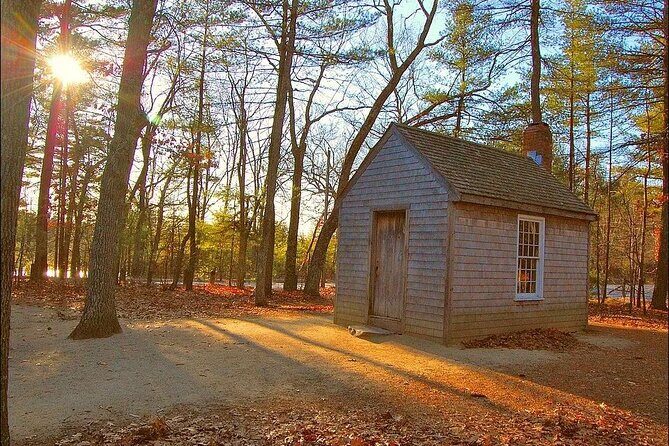
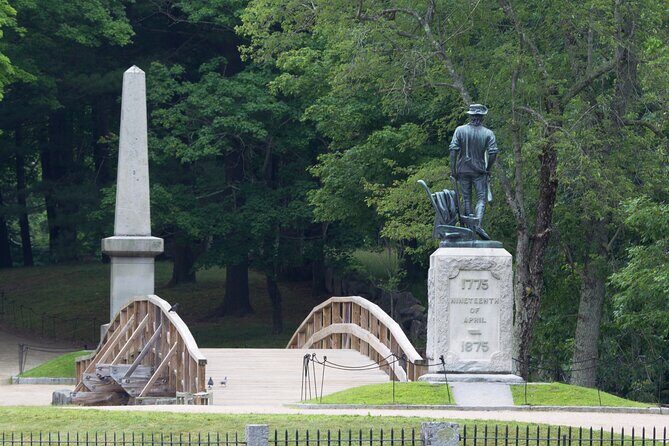
In Concord, you’ll visit the Old North Bridge location—linked with the “shot heard around the world.” This is one of the most powerful stops on the day because it’s both symbolic and specific. You also see the grave of the first British casualties of the American Revolution. That detail brings a human weight to the story that’s easy to miss when you only focus on famous phrases.
This stop works because you’re not just hearing about conflict. You’re seeing where the turning point happened and learning why it mattered beyond the immediate fight. It also sets up the Boston segment so the “what happened next” question feels answered, not confusing.
Old Manse and Sleepy Hollow Cemetery: Emerson, Hawthorne, and Author Rivalries

After Old North Bridge, you continue through Concord’s deeper layers.
At the Old Manse, you’ll see the house tied to Ralph Waldo Emerson. The story here connects the personal and the political in a neat way: Emerson later gave Nathaniel Hawthorne and his wife the right to live at the residence as a wedding present. It’s a reminder that big movements in literature often travel on personal networks and generous gestures.
Then comes Sleepy Hollow Cemetery, with a focus on Author’s Ridge—where you can see graves of the writers commonly grouped as the “famous four.” You’ll hear stories of friendship and rivalries among Nathaniel Hawthorne, Louisa May Alcott, Ralph Waldo Emerson, and Henry David Thoreau.
This stop can be surprisingly fun if you care about people rather than dates. The day already covers political drama; this adds emotional drama—who liked whom, who influenced whom, and how ideas moved through real relationships.
Boston Public Market Lunch Break: Choice Without Schedule Chaos
Back in Boston, you get free time for lunch at Boston Public Market. The plan is about 1 hour, and lunch is not included in the tour price.
This is a smart inclusion. You’re in a place with lots of vendor options, including seafood, sandwiches, and sweets, and the vibe is local and food-first. Because you can choose quickly, it avoids the common problem of a guided tour lunch turning into a rushed, low-quality meal you didn’t pick.
Practical tip: if you have dietary needs, use your 1-hour window wisely. Walk the market quickly when you arrive, pick your route, and then order. Don’t wait until 20 minutes before your meetup time.
USS Constitution and Bunker Hill: Big American Markers in Short Time
Your next Boston stops are built for scale.
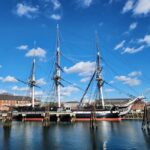
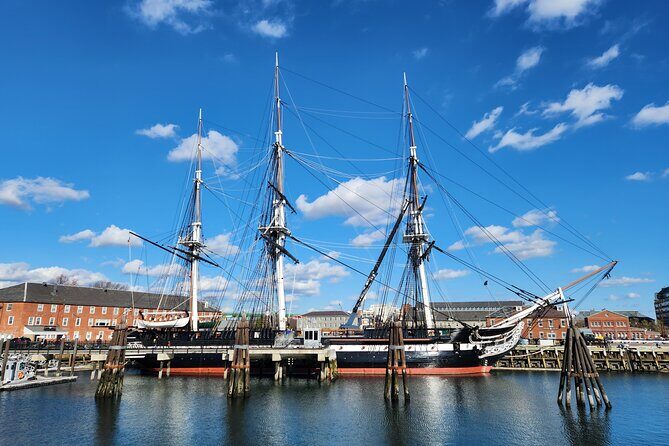
At USS Constitution, you tour the oldest working wooden ship in the world and learn why it earned the nickname Old Ironsides during the war of 1812. It’s one of those places where short time still gives you real payoff because the ship itself carries the story. Even if you only get part of the interior, the idea of a vessel built for durability makes the nickname stick.
Then you head to Bunker Hill Monument. You’ll see the monument and learn about the first official battle of the American Revolution. You’ll also hear the story behind the phrase don’t fire until you see the whites of their eyes. This is a classic line, and hearing the context matters because it shifts it from a slogan to a tactical warning.
One heads-up: in at least one past booking, USS Constitution and Old North Church were not open, which cut down on interior time. The outdoors and driving story still work, but if indoor access is a must, build in flexibility on your travel day.
Old North Church & Historic Site: Paul Revere’s Lanterns and One Pew
Next is Old North Church & Historic Site, with entrance included. This is a major reason I like this tour: you’re not left at the door hoping for last-minute entry or trying to figure out timing.
Inside, you’ll hear the lantern story tied to Paul Revere—about one if by land, two if by sea. You’ll also sit inside Paul Revere’s pew, which turns an often-repeated story into something more grounded. The detail about lantern signaling is one of those concepts that becomes way clearer once you hear it in the exact place where it’s remembered.
If you’re a fan of revolutionary communication, this is the stop that rewards your attention the most.
Paul Revere House: The Human Scale (Wife, 16 Kids, and Wood)
Finally, you visit the Paul Revere House, one of the oldest wooden houses in Boston. You’ll see where Paul Revere lived for 20 years with his wife and 16 children.
This last stop is useful because it changes your viewpoint. After all the wartime movement and warning alarms, you end with home life—big families, daily routines, and the reality that the Revolution sat inside ordinary households.
Price and Logistics: Is $480 Per Person Actually Worth It?
The price is $480 per person for about 7 hours in a private setting. That’s not cheap, so I’d judge it by what you get in return.
Here’s the value logic that makes sense:
- You’re paying for door-to-door transport (pickup offered) in an air-conditioned minivan plus fuel surcharge and parking fees.
- You get a private guide experience that moves you through multiple key sites across Lexington, Concord, and Boston without you coordinating drives and parking.
- Most stops are free to enter, which helps keep the day from turning into a pile of ticket costs.
- Old North Church entry is included, so at least one major indoor stop is guaranteed coverage in the plan.
The private cost can feel steep if you’re traveling solo. It makes more sense if you can split the day across a small group. Also, the schedule is tight, so you’re paying for time efficiency: you don’t need to research a dozen separate stops or worry about how much walking you’ll be able to do between.
Also worth knowing: gratuity is not included, so plan to budget for that.
Finally, this is often booked about 38 days in advance on average. If your dates are fixed, don’t wait until the last minute.
Who Should Book This Private Lexington, Concord, and Boston Tour?
This tour is a strong fit if you:
- Want the Revolution story connected in time, not scattered.
- Prefer short, focused stops over long museum marathons.
- Like having a guide connect famous phrases to specific places (Paul Revere, the Old North lanterns, Bunker Hill, and more).
- Appreciate a food break that’s flexible, not forced into one restaurant.
It may be less ideal if you:
- Hate group schedules and want total free-form independence.
- Need long indoor time at multiple museums (the plan moves quickly).
- Are traveling with lots of luggage or kids who need specialized restraints—because the vehicle and restraint requirements are strict.
Should You Book This Private Lexington, Concord, and Boston Tour?
I’d book it if you want a fast, story-forward day that hits the major Revolutionary anchors plus Boston’s most famous clues. The included Old North Church entry and the structured route make it a practical choice when you don’t want to piece together logistics on your own.
I’d hesitate only if indoor access is a top priority and your travel date is very likely to fall on a closure window. In that case, message the operator before you go and ask how they handle limited hours.
If you’re visiting the Boston area and you want the Revolution to make sense quickly, this is a solid way to get it done—without spending the whole day on the road.
FAQ
Where is the meeting point for this tour?
The tour starts at Snow Hill Street & Hull Street, Boston, MA 02113, USA.
Is pickup included?
Pickup is offered. The tour still notes the meeting point at Snow Hill Street & Hull Street.
How long does the tour run?
It’s about 7 hours (approx.), and travel time is added to the total duration.
Is this a private tour?
Yes. It’s private, and only your group participates.
What is included in the price?
Entrance to Old North Church, an air-conditioned vehicle, fuel surcharge, and parking fees are included. Gratuity is not included.
Are entrance tickets included for all stops?
Old North Church entrance is included. Other stops are listed as free admission, and the Orchard House photo stop is optional with admission not included.
Is lunch included?
Lunch is not included. You’ll get about 1 hour of free time at Boston Public Market, and lunch price is not included.
What language is the tour offered in?
The tour is offered in English.
Do you provide car seats for children?
The tour requires federally approved child passenger restraint until age 8 or over 57 inches. Booster seat support is noted for kids ages 4 to 8, but the operator states they do not provide child seats. You should bring the proper restraint, and you will not be able to do the tour without it if required.
What are the luggage limits in the vehicle?
The vehicle is a Toyota Sienna minivan. It can seat up to four guests with luggage. The back row can be collapsed to fit 4–5 suitcases or smaller bags, but it won’t fit 6 passengers with more than one personal item each. If the guide determines you can’t safely fit everything, the tour may be canceled without refund.
Can I cancel for free?
Yes. Free cancellation is available up to 24 hours before the experience start time for a full refund. Changes inside 24 hours aren’t accepted.