REVIEW · BOSTON
Boston Self-Guided Audio Tour Bundle: Freedom Trail & More
Book on Viator →Operated by Stories with Action · Bookable on Viator
You can hit Boston’s biggest story spots without a fixed schedule. This self-guided bundle strings together Freedom Trail landmarks, Boston’s waterfront, and a Cape Ann detour with hands-free audio and location-based playback.
What I like most is the freedom to go fast or stop often, because the audio starts at each point and keeps rolling when you’re ready. I also like that it’s built for practical travel: offline maps and audio cues mean you can keep moving even when cell service gets cranky. One thing to weigh: it’s a lot of stops, and if you try to do everything back-to-back you’ll feel rushed, especially when you switch between walking and short drives.
If you’re into Revolutionary-era places but also want a break for scenery and modern Boston views, this bundle fits well. Just bring headphones, and plan your timing so the tour stays fun instead of a checklist.
In This Review
- Key highlights worth planning around
- Freedom Trail starts with Boston Common’s easy-to-find beginning
- Boston Common and the Visitor Center approach
- Massachusetts State House, Park Street Church, and the key Revolutionary arguments
- Massachusetts State House (and Robert G Shaw’s memorial view)
- Park Street Church and the long chain idea
- Granary Burying Ground, Irish Famine Memorial, and Old South Meeting House
- Granary Burying Ground and why it feels different
- Irish Famine Memorial as a necessary “later history” pause
- Old South Meeting House and Tea Party context
- Old Corner Bookstore, Old State House, and Boston Massacre context
- Old Corner Bookstore as a quick but smart detour
- Old State House and the architecture-watching angle
- Boston Massacre site: short, intense, and arguable
- Faneuil Hall to Paul Revere and Old North Church: the famous chain of clues
- Faneuil Hall and Quincy Market: your practical lunch win
- Haymarket, Holocaust Memorial, and city views
- Paul Revere House and Old North Church
- Copp’s Hill, USS Constitution Museum, and Bunker Hill’s final step
- Copp’s Hill and the cemetery timeline trick
- USS Constitution: fast but story-rich
- Bunker Hill Monument: where the war feels real
- Cambridge bonus loop: Harvard Yard and the “who lived where” storytelling
- Harvard Yard to John Harvard Statue: helpful corrections
- Dorm-and-alumni stops: fun, quick, and oddly motivating
- South Station to Long Wharf: Harborwalk and Boston Tea Party Ships
- South Station and Harborwalk: easy to navigate on foot
- Boston Tea Party Ships: what you’ll actually use it for
- Harbor Towers and modern Boston’s argument
- Cape Ann road-trip style detour: Gloucester to Rockport and back
- Gloucester’s waterfront stops: good for photo breaks
- HarborWalk granite slabs: built for people who like details
- Motif #1 and Bearskin Neck: classic Cape Ann flavor
- Value and who this bundle fits best
- Should you book it?
- FAQ
- What is the duration of the Boston Self-Guided Audio Tour Bundle?
- How much does it cost?
- What language is the audio available in?
- Does the audio work without cell service?
- Do I need headphones?
- Is the tour guided by a person at the start?
- What hours is the experience available?
Key highlights worth planning around
- Go at your pace: pause for photos, snacks, and side streets without waiting for a group.
- Hands-free audio on your phone: stories play automatically based on where you are.
- Offline-ready experience: download with strong signal, then rely on offline playback afterward.
- Great for groups: per-car style pricing is framed as budget-friendly compared with guided options.
- Two big regions in one: downtown Boston + Cambridge/Havard + Harborwalk, plus Cape Ann scenery.
Freedom Trail starts with Boston Common’s easy-to-find beginning
Boston Common is a smart place to begin because it’s open, central, and you can get your bearings quickly. You start near the Visitor Center, then follow the red-brick path cues so the tour feels like a guided route even though no one is meeting you. The audio theme here is Revolutionary-era origins, setting the tone before you hit the signature brick trail.
From there, the tour funnels naturally toward the big Freedom Trail corridor. You’ll hear short, story-driven segments designed for walking legs—often around 10 minutes at a time—so you can comfortably step in and out as your energy level changes.
You can also read our reviews of more guided tours in Boston



Boston Common and the Visitor Center approach
The Boston Common segment is your launchpad: spacious green, early colonial references, and the red-brick path that keeps you oriented. The tour format also helps if you’re arriving hungry, tired, or jet-lagged, because you’re not forced into a strict “start right now” moment with a guide.
Potential downside: Common is popular. If you start at a busy time, you may want to pause early so you can hear the audio clearly and avoid getting distracted by the crowds.
Massachusetts State House, Park Street Church, and the key Revolutionary arguments

The Freedom Trail portion begins to pay off fast once you hit the Massachusetts State House and the golden dome area. The audio points out Revolutionary characters and sets up the political mood that led to open conflict. You’re also directed to look across toward the Robert G Shaw and 54th Memorial, which gives the tour a wider lens beyond the earliest revolutionaries.
Next comes Park Street Church, where the audio frames a basic question: what actually prompted the Revolutionary War. That “cause-and-effect” angle is useful because it turns a list of landmarks into a story you can remember.
Massachusetts State House (and Robert G Shaw’s memorial view)
This stop works well because it’s both visually iconic and conceptually important. You’re not just looking at architecture—you’re connecting the people and the ideas to why independence became unavoidable.
One caution from a low-rated comment: the listener felt some names and burial-ground focus didn’t match what they expected. If you’re very exacting about every historical detail, expect that the audio is curated into short highlights rather than a research-grade script.
Park Street Church and the long chain idea
I like this stop for how it explains momentum. Instead of treating the war as one sudden event, the audio frames it as part of a bigger chain of conflicts, across continents and older wars. Even in 10 minutes, that approach makes the later stops click.
You can also read our reviews of more tours and experiences in Boston




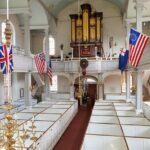

Granary Burying Ground, Irish Famine Memorial, and Old South Meeting House
The oldest stops bring the atmosphere. Granary Burying Ground (established in 1660) is described as one of Boston’s earliest burial grounds, and the audio uses that age to connect history you can literally stand on today. The tour also references Mother Goose’s grave and major Revolutionary figures like Paul Revere, Robert Paine, and James Otis, plus John Hancock and Sam Adams. It also includes graves tied to those killed in the Boston Massacre, leading you toward the next dramatic scene.
From there, you step to the Irish Famine Memorial, where the tone shifts later in time. The audio moves to post-revolution immigration and the hardships that newcomers faced—then hints at where these communities are today. That’s a nice tempo change, because it shows Boston history didn’t stop at independence celebrations.
Just nearby is Old South Meeting House, where the audio highlights the Boston Tea Party setup—organizers, motives, and the consequences. This is where the Revolution stops being a vague idea and becomes a sequence of decisions and risks.
Granary Burying Ground and why it feels different
This is one of those places where short narration can still land. When you’re surrounded by names and dates from centuries ago, the audio’s role is to point your attention and keep you from missing the big threads.
If you’re short on time: you can spend less than the audio window and still get the main connections, because the stops are designed as self-contained segments.
Irish Famine Memorial as a necessary “later history” pause
I appreciate that this tour doesn’t keep everything locked in the 1700s. The Irish Famine Memorial gives you a second historical arc, and it’s a good moment to slow down and reset your mental timeline.
Old South Meeting House and Tea Party context
The Tea Party stop is effective because it focuses on motivations and outcomes. You’ll understand this was not just a riot for fun; it was political pressure under high stakes.
Old Corner Bookstore, Old State House, and Boston Massacre context

After Tea Party history, the tour continues through the commercial and political heart of the trail. Old Corner Bookstore is flagged as a historic commercial building—built in 1718 as a residence and apothecary shop, becoming a bookstore in 1828. Even though you’re only at this stop briefly, it’s a reminder that revolution-era Boston was also a working city.
Then you reach Old State House, a popular Freedom Trail stop. The audio asks you to look at architectural features and learn about the building’s significance. You’ll also walk around to the other side as part of the pacing, which helps you avoid “one-photo and out” fatigue.
Finally, the Boston Massacre site brings the story to a tense climax. The audio raises a point you’ll likely think about later: was it a massacre, or just a rowdy riot as the British said? The stop also includes Crispus Attacks, described as an honored American hero.
Old Corner Bookstore as a quick but smart detour
This is the type of stop I like because it adds “daily life” texture. Revolution doesn’t happen in a vacuum, and an old apothecary-to-bookstore story makes the city feel real.
Old State House and the architecture-watching angle
The tour nudges you to identify features, which helps. When you’re told what to look for, you remember more than if someone just says “this is old and important.”
Boston Massacre site: short, intense, and arguable
The audio’s framing of the event is practical. When you’re standing at the spot, it makes you look at the narrative itself, not only the outcome.
Faneuil Hall to Paul Revere and Old North Church: the famous chain of clues

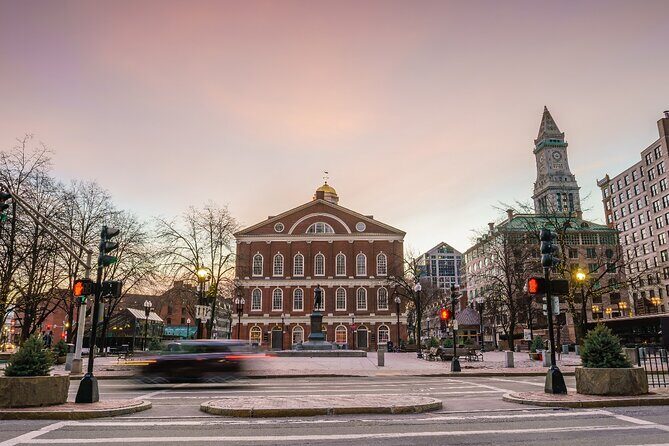
The Freedom Trail keeps moving through the spots people come to Boston for. Faneuil Hall and Quincy Market are next, and the audio splits the stop into two parts: site history and then time to eat. That’s a big value because a self-guided tour works best when you plan a real break, not just more walking.
After that, Haymarket adds variety with its historic character, plus an out-front mention of the Holocaust Memorial. You’ll also get a view toward the Custom House Tower beyond. The stop is short, but it’s a good “look around” moment if you’re ready for a sensory break.
Then the tour switches from public squares to personal stories: the Paul Revere House explains the Midnight Ride, its later poem connections, and the myth-versus-truth idea. Old North Church follows with the famous lantern signal line—one by land, two by sea—so you can connect the plan with the place.
Faneuil Hall and Quincy Market: your practical lunch win
This is where you can actually reset. The audio’s structure makes it easy to stop for a meal without feeling like you abandoned the tour; you’re doing it right where the bundle expects you to.
Haymarket, Holocaust Memorial, and city views
This stop gives you a broader view of Boston’s layers: not only independence-era memories, but also 20th-century remembrance in a public space. If you’re sensitive to heavy topics, you’ll likely appreciate having it as a named stop rather than an accidental pass-by.
Paul Revere House and Old North Church
These two work together. One tells you why the ride mattered; the other tells you how communication was handled at the moment it mattered. The audio’s myth-versus-truth framing is also a helpful check.
Copp’s Hill, USS Constitution Museum, and Bunker Hill’s final step

The tour heads farther into Boston’s North End with Copp’s Hill Burying Ground, described as older than Granary by only a year. That small detail helps you feel the timeline instead of memorizing random dates.
Then you cross into Charlestown Navy Yard for the USS Constitution Museum area. You’ll see the USS Constitution and hear about the epic battle against the Guerriere. This stop is short, but it’s a strong payoff because you shift from rebellion politics to naval action—the war turns physical.
The last major Freedom Trail stop is the Bunker Hill Monument area. The audio has you walk the hill, understand battle brutality, and recognize how hard-won the fight was. It’s a fitting closing note because it’s not an abstract story; it’s a battlefield you can circle.
Copp’s Hill and the cemetery timeline trick
The “one year older” message is a neat way to remember relative age. It’s also a quiet stop where you can listen without rushing.
USS Constitution: fast but story-rich
This stop is ideal if you’re doing the bundle as a day-trip without a full museum deep-dive. You get the core naval narrative without needing hours of ticket planning, since the tour segments are short and admission is noted as not included.
Bunker Hill Monument: where the war feels real
I like the tour’s emphasis on intensity. Bunker Hill is easy to romanticize; standing there pushes you toward understanding cost.
Cambridge bonus loop: Harvard Yard and the “who lived where” storytelling

After Bunker Hill, the bundle shifts to Cambridge. You’ll hit Harvard University stops designed more like a walk-through of campus landmarks rather than a strict guided lecture.
Harvard Yard (the oldest part) is where you start, and the audio notes it as a historic center and modern crossroads. You’ll then find the John Harvard Statue, with an important correction: John Harvard didn’t found the university, at least in the way people often assume. The audio also references the university’s early years and women’s integration, noting that it was all-male for a time.
Next comes the Science Center and then a section past picturesque student dorms. The audio names Mower and Holworthy dorms as part of that storytelling. You’ll continue to Memorial Hall at 45 Quincy St (called the most beautiful building on campus by the tour’s own tone) and then Memorial Church.
The Widener Library is another visual anchor, followed by a run of dorm and residence halls: Weld Hall (once home to President JFK), Wigglesworth Hall (Bill Gates’ once-domain), Grays Hall (including mention of Malia Obama), Matthews Hall (Matt Damon), and Straus Hall (Mark Zuckerberg). The loop continues through campus traditions until you near Johnson Gate, which serves like a natural ending point for this campus section.
Harvard Yard to John Harvard Statue: helpful corrections
Even if you’ve visited Harvard before, this stop is useful because it corrects an oversimplified origin story. That keeps the campus visit from turning into a photo spree.
Dorm-and-alumni stops: fun, quick, and oddly motivating
This portion is lightweight but memorable. When the audio tells you who lived where, you start noticing architecture and layout as “real spaces,” not just backdrops.
Possible drawback: If you only want serious academic history, you might find the alumni-home angle more pop-culture than scholarship.
South Station to Long Wharf: Harborwalk and Boston Tea Party Ships

Once you’re back toward Boston’s waterfront, the audio switches gears again. You start at South Station, focusing on the huge eagle and clock dominating the facade. Then you walk a focused stretch of the Harborwalk: from South Station to Long Wharf, roughly one mile, instead of the full 43-mile route.
As you move, the audio connects big themes: colonial trade that set the stage for the Boston Tea Party, and the modern skyline that now surrounds it. You’ll hit Atlantic Wharf at Russia Wharf, then Boston Tea Party Ships & Museum as a short stop centered on looking across the water at a colonial ship packed with tea crates. Then Rowes Wharf is next, named for one of the tea smugglers discussed in the story.
The audio then guides you past Marina at Rowes Wharf, with a note about the Harbor Hotel’s copper dome and a glass cupola view if you look straight up. Next is the Moakley Courthouse, described as significant across the water. Then you’ll pass Harbor Towers, where the audio talks about Brutalist architecture and Boston’s affordable-versus-luxury tensions, plus harbor cleanup efforts tied to these structures.
The final waterfront stops include the New England Aquarium and Long Wharf, with Long Wharf framed as a Boston hotspot from colonial battles to modern crowds.
South Station and Harborwalk: easy to navigate on foot
This is a practical section because it’s walkable and visually rewarding. If you’re pairing the Freedom Trail day with a real city-break, this is where you do it.
Boston Tea Party Ships: what you’ll actually use it for
The audio emphasizes the view across the water and the “why were taxes so high” type questions. It’s not an entry-ticket plan in the bundle format, so treat it as a story stop plus a chance to decide if you want to add museum time on your own.
Harbor Towers and modern Boston’s argument
I like that the audio gives architecture context and makes room for disagreement. Brutalism is polarizing, and having the tour explain the “why” helps you understand what you’re seeing, not just how it looks.
Cape Ann road-trip style detour: Gloucester to Rockport and back
The bundle then takes you out to Cape Ann, starting with a Gloucester Visitor Information Center stop. The tour frames it as a launchpad for waterfront views, then sends you to Tablet Rock, where an early-1900s plaque is mentioned as commemorating first settlers.
Stage Fort Park follows, with options to walk around and admire views of ocean and city. Then you reach the Fishermen’s Memorial, described as Cape Ann’s famous monument tied to fishing, and the audio references the movie The Perfect Storm to connect culture with industry.
Next you move to Gloucester HarborWalk, described as having granite slabs with “story moments” created by volunteer teams. Then you get a stop about Cape Ann Whale Watch, including the claim that whale watching trips are set up to guarantee sightings with every voyage. After that, you can stop at Niles Beach and choose how much time to give it.
The tour continues with Beauport, also known by other names, described as a historic home on the waterfront. Eastern Point Lighthouse appears next, with a focus on why lighthouses mattered as maritime trade grew, especially with valuable cargo in shipwreck risk.
Then the audio points you toward Thacher’s Island, Rockport, Motif #1 (called the most painted building in America), and Bearskin Neck (with a legend tied to bears). You’ll also pass Rockport Granite Pier and related beaches, then Cape Ann Light Station, Goose Cove Reservation, and the loop back toward the Gloucester Visitor Information Center.
Gloucester’s waterfront stops: good for photo breaks
This part of the tour isn’t as heavy on politics as the Freedom Trail. It’s scenic, and the audio structure supports quick pauses. If you’ve walked too long downtown, this is where you recover.
HarborWalk granite slabs: built for people who like details
If you enjoy reading short stories while walking, the “story moments” format is ideal. Since this bundle keeps segments short, you can pick the slabs you like without losing the overall route.
Motif #1 and Bearskin Neck: classic Cape Ann flavor
These are fun, visual stops that help you feel the region’s personality. Even if you’re not into art, Motif #1 is recognizable and makes for a good anchor photo.
Value and who this bundle fits best
At $24.99 per person, this bundle can be good value if you’ll actually use it for most of the day. The key is that it’s not only audio—it’s also built for flexibility: start and pause whenever you want, skip what you don’t care about, and use offline maps so you aren’t tied to signal strength.
The “per car” angle is also important for families or groups. If you’re splitting cost across multiple people, it can undercut bus-style tours and reduce decision fatigue compared with hiring a guide for every hour.
You’ll get the most out of this if you:
- like self-paced walking and short driving legs
- want a structured route but hate fixed schedules
- enjoy story-led history without a long sit-down lecture
- can handle a big day with many short stops
If you want only one or two areas—like only the Freedom Trail or only Cape Ann—this may feel like too much. But the bundle is flexible enough that you can treat it like an “audio menu” rather than a single mission.
Should you book it?
Yes, if you want a smart, low-commitment way to cover a lot of Boston ground with clear audio guidance and lifetime access. The best part is how the pacing lets you stay present: you can walk the brick trail, then shift to waterfront views and Cape Ann scenery without coordinating with strangers.
Hold off or narrow your plan if you prefer deep, museum-level history at every stop. This bundle gives you story highlights at each location, not full admissions experiences. And if you’re very detail-specific about historical naming or interpretations, keep your expectations aligned with a short audio format.
FAQ
What is the duration of the Boston Self-Guided Audio Tour Bundle?
It’s listed as about 6 to 8 hours.
How much does it cost?
The price is $24.99 per person, and the bundle is framed as budget-friendly with per-car pricing for groups.
What language is the audio available in?
The tour is offered in English.
Does the audio work without cell service?
Yes. You download the tour while you have strong wifi or cellular, and it works offline afterward with offline maps.
Do I need headphones?
For the best experience, the tour recommends bringing headphones or earbuds for walking tours.
Is the tour guided by a person at the start?
No. It’s self-guided, and you start the audio at the first story point. No one meets you at the start.
What hours is the experience available?
It’s listed as Monday through Sunday from 6:00 AM to 9:00 PM (for the date range shown on the offer).