REVIEW · BOSTON
Boston: Freedom Trail History Small Group Walking Tour
Book on GetYourGuide →Operated by Hub Town Tours · Bookable on GetYourGuide
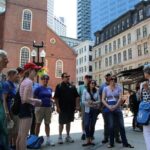
The Revolution walks with you. This Freedom Trail small-group walk strings together major sites across Downtown Boston and the North End, with a guide who turns the American Revolution into something you can picture. I like that you get a manageable small-group size, so you can actually hear the details without getting swallowed by foot traffic.
I also like the story focus: the tour explains the years leading up to the Revolution and the tough question of loyalty vs. rebellion, using stops like Granary Burying Ground, Old South Meeting House, and the Boston Massacre Site. One thing to consider: it’s a steady walking day (about 2 miles total on an accessible route) and it’s not meant for low fitness, so comfortable shoes matter.
In This Review
- Key Things I’d Plan For
- Why the Freedom Trail Tour Feels Different at a Walking Pace
- Start at Boston Common: Where the Trail Gets Its Gravity
- Massachusetts State House, Park Street Church, and the early “who belonged here” question
- Granary Burying Ground: where the Revolution has faces
- King’s Chapel and the mix of old faith and public life
- The Revolutionary Core: Meeting Houses, Streets, and the Boston Massacre Site
- Boston Latin School, Old City Hall, and the role of education
- Old South Meeting House and the noise of public pressure
- Faneuil Hall and the quick stop before the Market reset
- Paul Revere Through Old North: How the North End Turns Into a Story
- Paul Revere House, Hanover Street, and the ride’s backstory
- Old North Church: the night-ride moment you can actually see
- Copps Hill Burying Ground: the past looking back at you
- North End Finish Point and Charlestown Views: The “big picture” payoff
- What You’ll Get From the Guides (and Why It Matters)
- Price and Logistics: Is $39 Worth It?
- Who Should Book This Freedom Trail Walk?
- Should You Book This Freedom Trail Tour?
- FAQ
- FAQ
- How long is the Boston Freedom Trail small-group walking tour?
- Where does the tour start?
- Where does the tour end?
- About how far do you walk?
- Are museum admissions included?
- Is the group size really small?
- Is it wheelchair accessible?
- Can I bring luggage or record video?
Key Things I’d Plan For
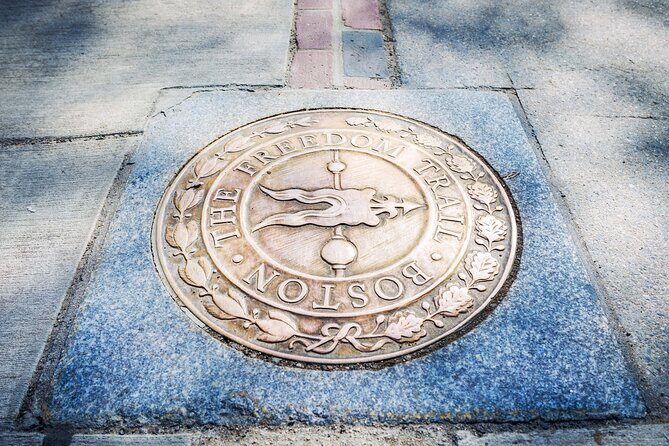
- A tight route with big storytelling from Boston Common to the North End, plus scenic Charlestown views without entering that neighborhood
- All 16 official Freedom Trail landmarks covered in about 2.5 hours
- Short stops, high impact—you’ll see a lot, but you won’t linger like a museum day
- Guides who bring the characters to life, with standout feedback on guides such as Josh, Nick, Cal, Matt, Lin, Maz, and Tracey
- Quincy Market break time gives you a quick reset before the Paul Revere section
Why the Freedom Trail Tour Feels Different at a Walking Pace
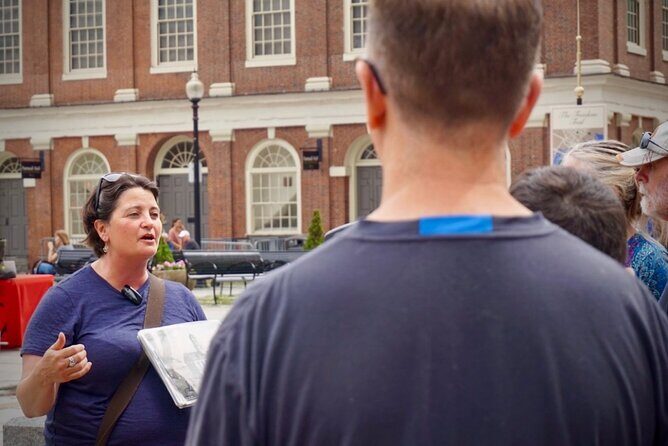
The Freedom Trail is famous because it’s clear and physical: you can follow the line and watch history line up street by street. On this 2.5-hour small-group version, the walking pace helps you connect the dots between places that might otherwise feel like separate sightseeing stops.
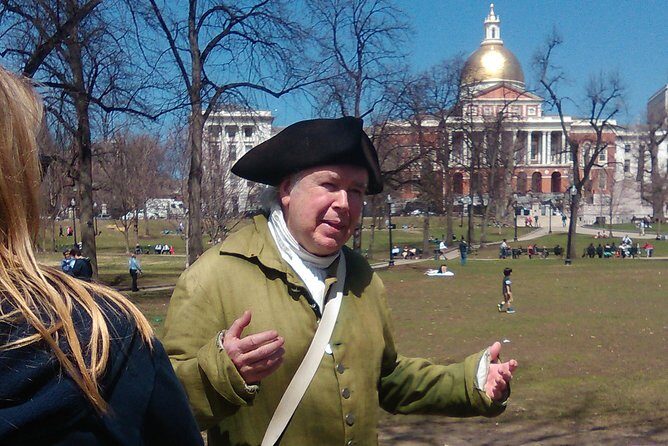
You also get a built-in advantage: you’re not rushing alone. A local guide frames each site around the same central storyline—how Boston moved from tension to open resistance over a long, difficult stretch of time. That means you’re not just memorizing names like Paul Revere or Samuel Adams; you’re seeing how the colony got pulled toward rebellion.
And the small group size (up to 16 guests) is more than a comfort perk. It changes the whole vibe. You’re easier to manage, questions are easier to ask, and the guide can slow down for the group when a detail matters.
You can also read our reviews of more walking tours in Boston
Start at Boston Common: Where the Trail Gets Its Gravity
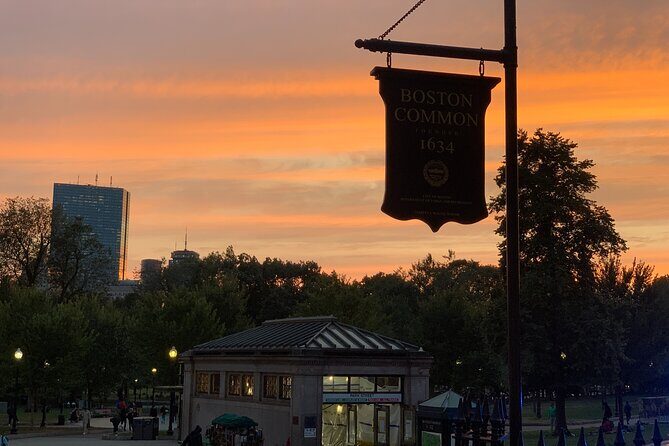
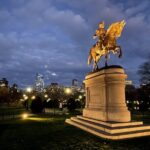
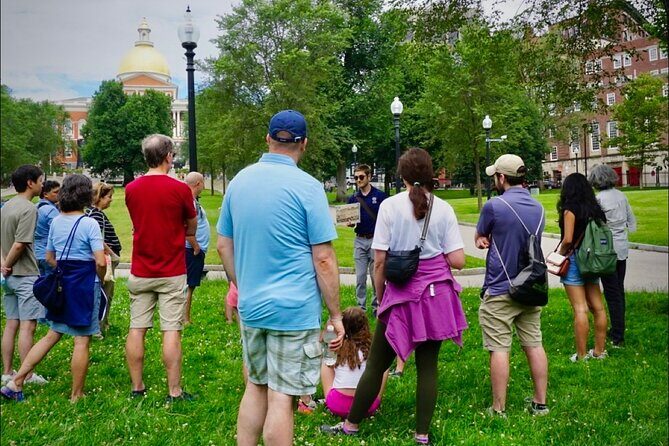
You meet inside Boston Common at the Boston Foundation Monument, located on the park’s northern edge near 50 Beacon Street. The granite memorial includes a bronze relief of Puritans arriving in 1630, which is a smart warm-up: you’re reminded that Boston started as a community with rules, beliefs, and a strong sense of identity.
From there, the tour immediately sets the tone for what you’ll spend the next hours doing—following footsteps of Colonial Bostonians and learning what loyalty meant in real life. That context matters because the Revolution here isn’t presented as a sudden event. It’s a slow burn, with people arguing, negotiating, and choosing sides long before 1776.
Massachusetts State House, Park Street Church, and the early “who belonged here” question
Next you move through several key downtown landmarks with guided stops that help explain why this area mattered. You’ll visit the Massachusetts State House, the Park Street Church, and then head into burial-ground and church spaces where the city’s social history is easy to read in stone.
These stops are short, but they’re targeted. The guide uses them to show how the public and the private worlds overlapped in colonial Boston—government, religion, and community all shaping what people believed was lawful, fair, and justified.
Granary Burying Ground: where the Revolution has faces
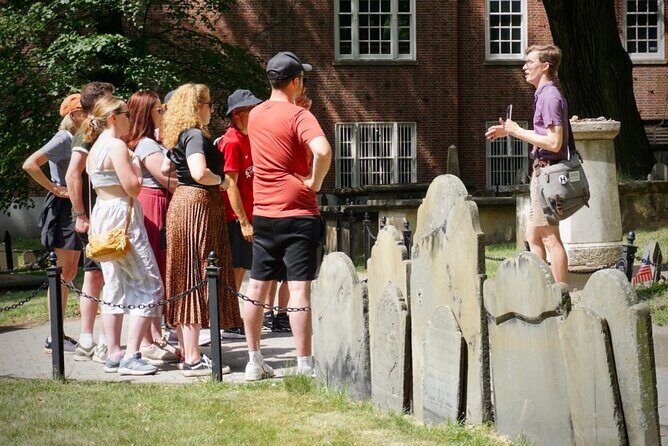
At Granary Burying Ground, you get time for a proper guided look (about 25 minutes). This is where Boston’s past stops being abstract. You can see why names like Paul Revere and others keep turning up in Revolution stories: this is where many prominent figures are laid to rest.
Even if you’ve read about the era before, a place like this changes how the material lands. It’s personal. It makes the argument feel human: decisions were made by real people who left family, reputation, and legacy behind.
King’s Chapel and the mix of old faith and public life
From there you visit King’s Chapel. It’s the kind of stop that helps you understand the city’s religious roots without turning the tour into a sermon. The broader theme stays the same: Boston’s identity was political, social, and spiritual all at once, and the Revolution grew out of those overlapping loyalties.
You can also read our reviews of more historical tours in Boston





The Revolutionary Core: Meeting Houses, Streets, and the Boston Massacre Site
Once you leave the earliest Commonwealth-era feel behind, the tour leans hard into the political pressure that built toward the Revolution. This is where you spend much of your time in places tied to protest, public speech, and confrontation.
Boston Latin School, Old City Hall, and the role of education
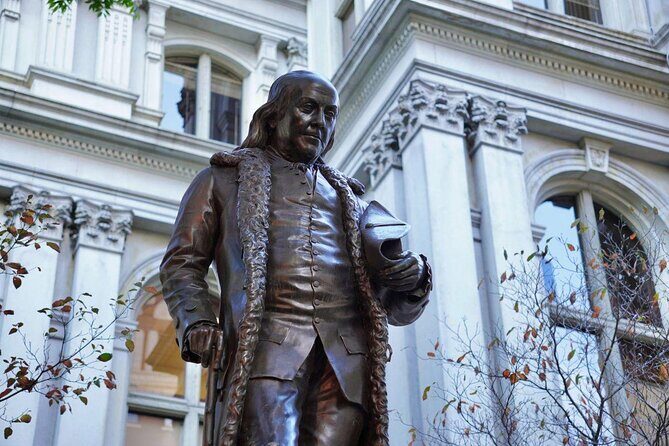
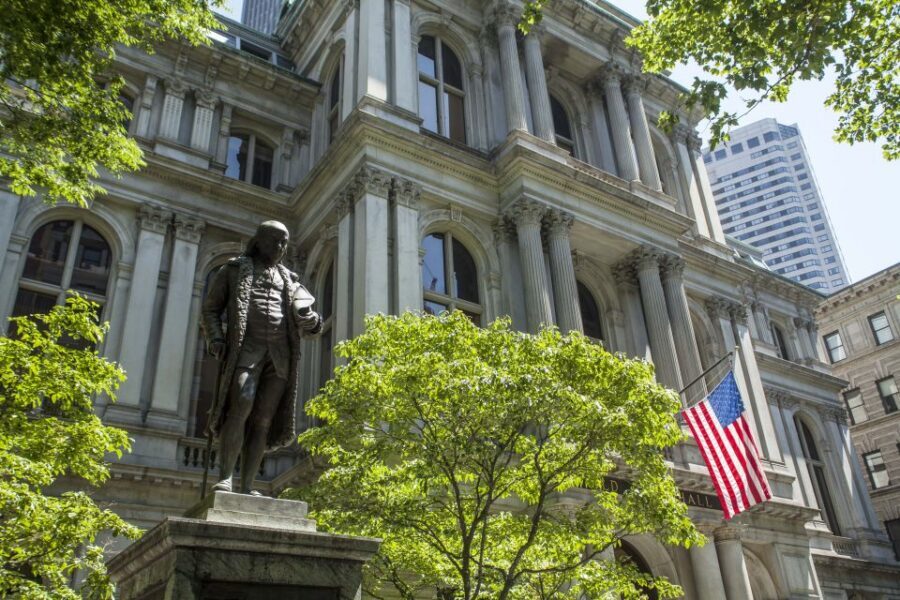
You’ll stop near Boston Latin School and the Benjamin Franklin statue area for a short guided moment. Then you move on to Old City Hall and the Old Corner Book Store. The guide ties these kinds of locations to the wider story: who had access to learning, who influenced public opinion, and why ideas spread quickly in a city that cared about debate.
The value here is practical for your understanding. If you’ve ever wondered how revolutionary thought traveled, these stops help you see that it wasn’t just secret meetings and whispered plans. It was also tied to institutions and everyday public life.
Old South Meeting House and the noise of public pressure
At Old South Meeting House, you get a guided stop that’s short (around 10 minutes), but focused. This is one of those places where you can almost feel the energy shift from ordinary disagreement to collective action.
Then you head to Old State House, another key stop for understanding how power was displayed and contested in public spaces. From there, the tour continues to the Boston Massacre Site (about 15 minutes), where the story turns from political tension to something darker and more immediate.
You don’t need to be a history nerd to appreciate this part. It’s the hinge of the narrative. The guide uses these sites to show why violence became a turning point and how public outrage could harden positions.
Faneuil Hall and the quick stop before the Market reset
You’ll visit Faneuil Hall with a short guided stop (about 5 minutes). Even in a quick visit, it’s a powerful location because it represents the civic style of Boston: people gathered to talk, argue, and rally around shared grievances.
Then you reach Quincy Market for a break (about 10 minutes). This is a smart pause. You get a chance to grab a snack or water, regroup, and avoid the classic walking-tour mistake of running on empty and getting cranky. It also gives you a change of scenery before the tour shifts into the Paul Revere and North End sequence.
Paul Revere Through Old North: How the North End Turns Into a Story
After the Market break, the tour becomes more specific and cinematic. You start moving toward the North End, where Revolution stories feel tied to specific streets and specific buildings.
Paul Revere House, Hanover Street, and the ride’s backstory
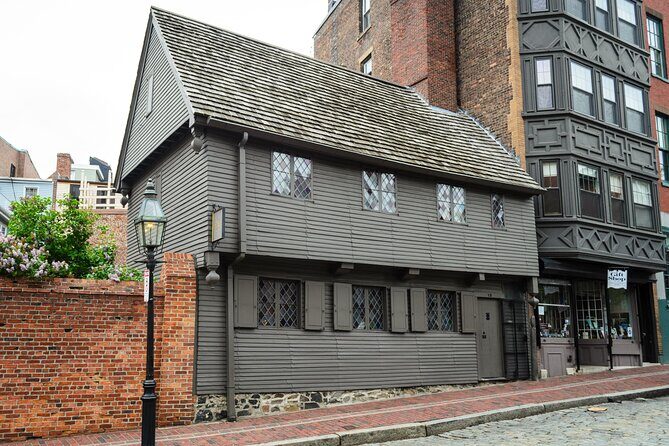
The Paul Revere House stop is guided (about 15 minutes), giving you enough time to understand why the story isn’t only about a single night. It’s about networks, communication, and how quickly information mattered.
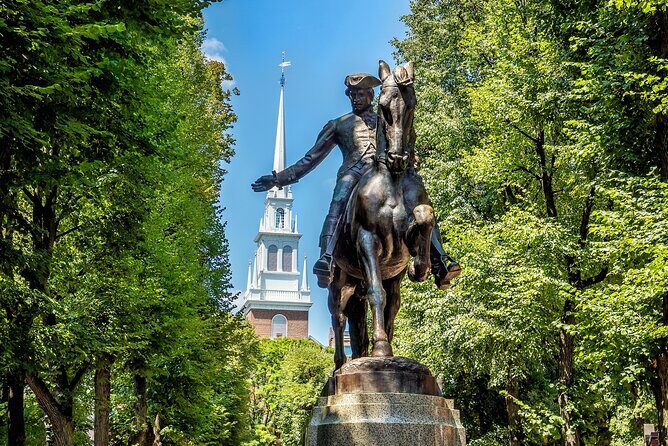
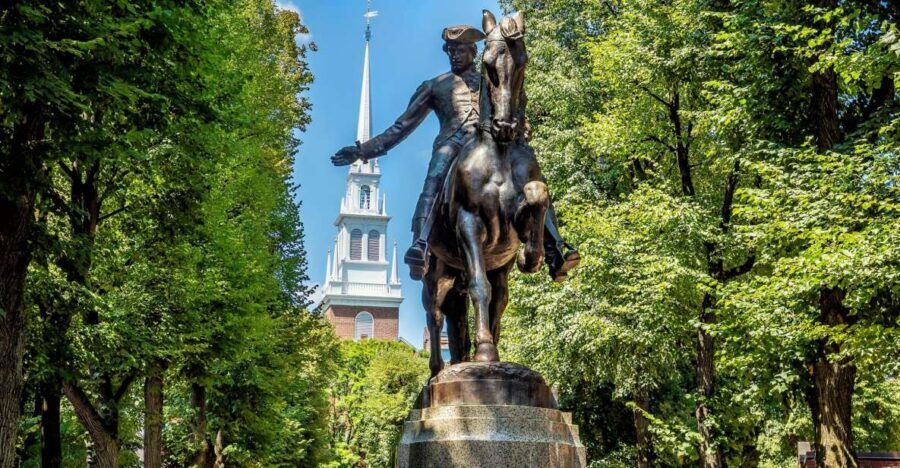
Then you walk through Hanover Street with a guided moment, and you stop at the Paul Revere Statue (about 10 minutes). The guide uses the sculpture area to connect Revere’s role to the broader conflict, so you’re not just collecting trivia.
Old North Church: the night-ride moment you can actually see
You then reach Old North Church for a guided stop (about 10 minutes). This is one of the most iconic stops along the trail because the story is so tied to the physical structure and the surrounding viewpoint logic.
What I like about this segment is the pacing. The guide doesn’t just recite the most famous line; they frame how the city’s geography and communication shaped what could happen. It helps you understand the night-ride as a response to urgency, not a legend floating free of context.
Copps Hill Burying Ground: the past looking back at you
Next is Copps Hill Burying Ground (guided, about 10 minutes). It’s a reminder that these Revolution stories lived in landscapes of family, burial, and remembrance—not just on documents. The guide keeps the focus on how Boston’s identity was preserved and carried forward even while political events escalated.
North End Finish Point and Charlestown Views: The “big picture” payoff
The tour ends at Copps Hill Terrace, just steps from the North End’s heart. You get a final guided stop (about 10 minutes) that functions like a “see the whole map” moment.
From here, you also get scenic views over toward USS Constitution and the Bunker Hill Monument across the way in Charlestown. The important detail is that you’re not touring Charlestown itself; you’re seeing it from this high viewpoint. For many people, that’s ideal. You get the wider city picture without adding more neighborhood time.
This finish works because it wraps the emotional story in a practical one. You’ve walked the streets where the Revolution unfolded, and then you look outward to see how the city’s later identity and landmarks sit in the same wider geography.
What You’ll Get From the Guides (and Why It Matters)
This tour lives or dies by the guide’s storytelling rhythm. The strongest feedback you’ll see attached to this experience is consistently about guides who can explain complicated ideas in plain language and keep the group moving with humor and energy.
Names that repeatedly show up in the best feedback include Cyprus, Josh, Cal, Eric, Nick, Mark, Miles, Will, Matt, Leah, Lin, Maz, and Tracey. What they share in the feedback is the ability to turn locations into scenes. People mention how guides made the Revolution feel vivid and how they were great with questions and staying on track.
So when you book, don’t treat the guide as a random detail. Pick the time slot you can attend, then show up ready to listen. If you’re the type who likes asking why events happened, you’ll get rewarded here.
Price and Logistics: Is $39 Worth It?
At $39 per person for about 2.5 hours, the value mostly comes from three things: you cover all 16 official Freedom Trail landmarks, you get guided context that ties them into one storyline, and you do it in a small group where your questions aren’t constantly drowned out.
This isn’t priced like a private driver tour. It’s closer to a focused walking class that happens to be sightseeing. And because admission to museums isn’t included, you’re paying mainly for interpretation, not ticketed indoor experiences. If you want to see inside every museum, you’ll still need separate plans. But if you want to understand the places and why they mattered, that’s where the money goes.
One practical heads-up: the tour does not include Charlestown neighborhood exploration, even though you see Charlestown landmarks from the viewpoint. Also, video recording is not allowed, and you can’t bring luggage or large bags.
Who Should Book This Freedom Trail Walk?
You’ll probably love this tour if you:
- Want a structured overview of the Revolution without getting lost on your own
- Prefer walking with a guide over reading guidebooks at each stop
- Like connecting people and events to the actual streets they happened on
- Want the North End payoff near the end, with easy access to food afterward
You might skip it or think twice if you:
- Need a very slow pace or lots of museum time
- Have low stamina for a route of about 2 miles total
- Are traveling with young kids (it’s not suitable for children under 6)
Should You Book This Freedom Trail Tour?
Yes, I’d book it if you want the Freedom Trail done in the most efficient, story-driven way. The combination of small-group size, a tight focus on Revolutionary Boston, and finishing at Copps Hill Terrace with views toward Bunker Hill makes it feel like more than a checklist.
If you love history that connects places to decisions, you’ll get a strong return on your time. If you’re unsure, consider this a best-first walking option: it gives you bearings fast, and then you can decide what to revisit on your own.
FAQ
FAQ
How long is the Boston Freedom Trail small-group walking tour?
The tour runs about 2.5 hours. The duration can vary, but it won’t be more than 3.0 hours.
Where does the tour start?
You meet your guide inside Boston Common at the Boston Foundation Monument, on the northern boundary of the park opposite 50 Beacon Street.
Where does the tour end?
The tour finishes at Copps Hill Terrace, in the North End area near the Old North Church.
About how far do you walk?
The accessible route travels approximately 2.0 miles (3.2 km).
Are museum admissions included?
No. Admission inside museums is not included.
Is the group size really small?
Yes. The tour lists small groups with a maximum of 16 guests.
Is it wheelchair accessible?
It’s described as wheelchair accessible, but it also lists that it is not suitable for people with mobility impairments. If you need mobility support, you should verify the route specifics with the operator before booking.
Can I bring luggage or record video?
Luggage or large bags are not allowed, and video recording is not allowed.