REVIEW · BOSTON
Private Walking tour of Boston’s Freedom Trail and more!
Book on Viator →Operated by Boston Sightseeing Tours · Bookable on Viator
Boston’s Revolution starts with a comfortable pace. This private walking tour strings together the famous Freedom Trail sights and several extra stops in the downtown core, with a guide who can pace you and adjust along the way. You’ll use a mobile ticket, meet at a central spot near public transit, and walk through the city’s key story locations on foot.
I especially like the private guide setup. It keeps the experience focused on your group, and you can ask questions or make small detours instead of waiting for a bus-load schedule. I also like the freedom to customize what matters most to you, whether that’s churches, meeting halls, or Revolutionary-era details.
One consideration: it’s a real walking morning, so plan on moderate fitness and comfortable shoes. Also, while many stops are free, the tour includes optional admission for places like Old North Church and the Paul Revere House, plus the Massachusetts State House isn’t included—so decide what you want to go inside.
In This Review
- Key highlights to look for on this Freedom Trail walk
- Freedom Trail on Your Feet: How the Private 3-Hour Format Feels
- Starting at 139 Tremont St: Meeting, Getting Oriented, and Ending in the North End
- Boston Common to Granary Burying Ground: The First Story Arc in 20-25 Minutes
- Massachusetts State House and Park Street Church: Where Power Meets a Steeple
- Granary Naming, the Benjamin Franklin School Marker, and the Old Corner Bookstore
- Faneuil Hall Marketplace: The Home of Free Speech, Town Meetings, and Real Momentum
- Boston Stone and the Oldest Restaurant Moment: Small Stops With Big Boston Character
- North End Push: Paul Revere House and Old North Church (Optional Inside Access)
- Copp’s Hill Burying Ground and the Final Feel of the North End
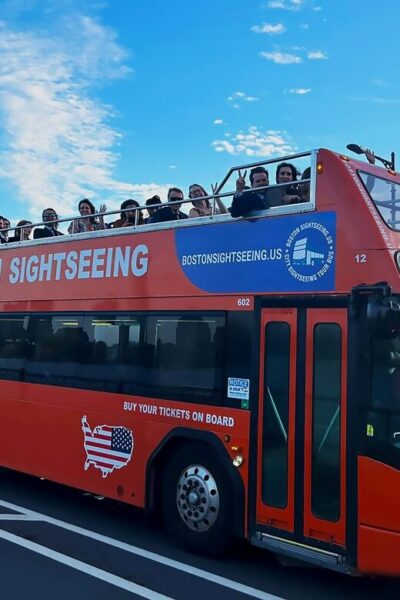
- Why This Tour Beats the Big Bus Version for Most People
- What You’ll Learn (and Remember) From the Guide’s Style
- Tickets, Admissions, and What Costs You Might Choose
- Who This Tour Suits Best (and Who Might Prefer Something Else)
- Should You Book This Private Freedom Trail Tour?
- FAQ
- How long is the tour?
- Is this a private tour?
- What language is the tour offered in?
- What do I need for entry or confirmation?
- Are the Massachusetts State House, Old North Church, and Paul Revere House admissions included?
- Does the tour include both Paul Revere House and Old North Church?
- Where do I meet the guide and where does the tour end?
- Is the tour good for people with moderate walking ability?
- What happens if the weather is poor?
- Are service animals allowed?
Key highlights to look for on this Freedom Trail walk
- A private guide who adjusts to your group (the pacing and stop requests are part of the deal).
- Freedom Trail classics plus extras like the Old Corner Bookstore, Boston Stone, and a North End push.
- Time-smart walking that avoids crowded bus logistics and gets you close to the stories.
- Stops with strong context such as Park Street Church sitting on the granary site and Granary Burying Ground’s naming.
- Optional ticket choices at Old North Church and Paul Revere House if you want more interior access.
Freedom Trail on Your Feet: How the Private 3-Hour Format Feels
This tour is built for people who want the good stuff without the herd. In about 3 hours, you’ll cover a tight loop that hits the heart of downtown Boston and then steps into the North End for the bigger Revolutionary payoffs.
A major advantage is that this is truly private. Only your group goes, so you’re not stuck behind the slowest walker or herded through doorways. The guide also has the flexibility to tailor stops to your interests, which makes the morning feel less like a script and more like a conversation with Boston.
You’ll also get a mobile ticket, which means fewer check-in tangles and less time hunting for paper passes. It’s the kind of small detail that saves your energy for the walking part.
You can also read our reviews of more walking tours in Boston

Starting at 139 Tremont St: Meeting, Getting Oriented, and Ending in the North End
You meet at 139 Tremont St, Boston, MA 02111, with a 10:00 am start. That central location is handy because it’s easy to reach via public transit, and you won’t lose time crossing the city just to begin.
The tour ends at 282 Hanover St in the North End Italian District. That’s a smart finish if you’re hungry right after—lots of options for lunch or a snack sit nearby, and you’ll already be in the neighborhood most people think about for food after the history.
Because the timing is compact, it helps to arrive a few minutes early and be ready to walk. If you tend to stop a lot for photos, tell the guide early so the pace matches your style.
Boston Common to Granary Burying Ground: The First Story Arc in 20-25 Minutes
Boston Common is your opening anchor. Established in 1634, it’s America’s oldest public park, stretching 44 acres. The Puritan colonists bought the land rights from the first European settler, Anglican minister William Blackstone—one of those early details that makes the park feel less like a postcard and more like a real starting line.
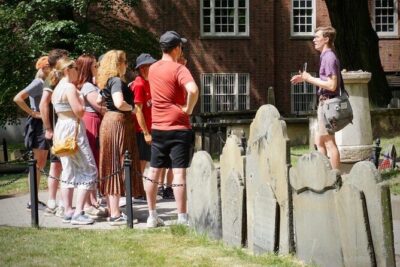
From there, you head toward Granary Burying Ground, which was established in 1660 and contains the graves of many notable figures, including founding fathers. It’s named for a nearby 12,000-bushel grain storage building, and the cemetery has around 2,300 markers. Even if you don’t spend forever reading names, the setting gives you a quick sense of how packed and purposeful this early city was.
These are the stops where a guide earns their keep. The streets look familiar in Boston, but the layers of meaning only snap into place when someone points out why the land, buildings, and burial grounds are linked.
Massachusetts State House and Park Street Church: Where Power Meets a Steeple
You’ll spend about 10 minutes at the Massachusetts State House, designed by Charles Bulfinch. It’s the “new” State House—opened in 1798—and it’s been the seat of Massachusetts government since then, housing legislative and executive branches.
Admission here is not included, so treat this as a focused exterior-and-explanations stop unless you’re ready for the entry cost on top. If you’re curious how government space evolved right next to older political sites, the timing works well.
Then comes Park Street Church, founded in 1809 at the corner of Park and Tremont Streets. It sits atop the site of Boston’s town grain storage building, known as the granary, and it was designed by Peter Banner. The 217-foot steeple matters more than you’d think because it used to be the first landmark travelers saw approaching Boston.
If you like your history with a bit of “how this city was navigated,” this is one of those stops that connects architecture, geography, and everyday movement.
Granary Naming, the Benjamin Franklin School Marker, and the Old Corner Bookstore
After the big early landmarks, the tour shifts into small-but-memorable facts that you’ll actually remember later.
First, there’s a Benjamin Franklin marker connected to the site of Boston Latin School. Boston Latin School, founded April 23, 1635, is the oldest public school in America. It offered free education to boys regardless of whether they were rich or poor, while girls typically attended private schools at home.
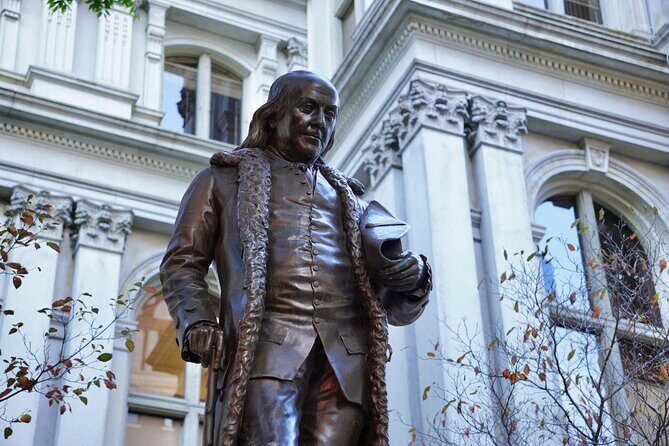
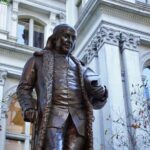
Until a schoolhouse was finished in 1645, classes were held in the home of the first headmaster, Philemon Pormont. Today, you’ll see a mosaic and a statue of former student Franklin marking the original schoolhouse location—an easy stop, but a strong one.
Next is the Old Corner Bookstore, built in 1718 and described as downtown Boston’s oldest commercial building. It was home to the publishing firm Ticknor and Fields, which produced major American titles like Walden, The Scarlet Letter, and Midnight Ride of Paul Revere, plus the Atlantic Monthly and Ward Howe’s Battle Hymn of the Republic. The building survived demolition in 1960, and its leases help subsidize preservation across Boston neighborhoods.
If you care about how ideas traveled through print, this stop adds a different angle to the Revolution-era focus. And it’s quick enough that it won’t derail your schedule.
You can also read our reviews of more private tours in Boston



Faneuil Hall Marketplace: The Home of Free Speech, Town Meetings, and Real Momentum
You’ll reach Faneuil Hall Marketplace, often tied to the idea of the Cradle of Liberty and free speech. The hall hosted America’s first town meeting, which helped turn local debate into something larger and more political.
A useful nuance here is that this role wasn’t part of the original plan. Faneuil Hall became what it became because people kept showing up—so it’s not just about a building. It’s about the momentum of public meetings, sermons, and arguments that shaped decisions.
You’ll also have time in the adjacent marketplace area, where shops and eateries sit nearby. It’s a practical break point, especially if you need water, a quick rest, or a snack before the North End portion.
Boston Stone and the Oldest Restaurant Moment: Small Stops With Big Boston Character
Before you jump fully into the North End, you’ll make a short stop at the Boston Stone. It’s literally a round rock embedded in a wall of an 18th-century building, and the tour shares the story of why it’s there. This is the kind of roadside curiosity that turns into a fun puzzle you can tell later.
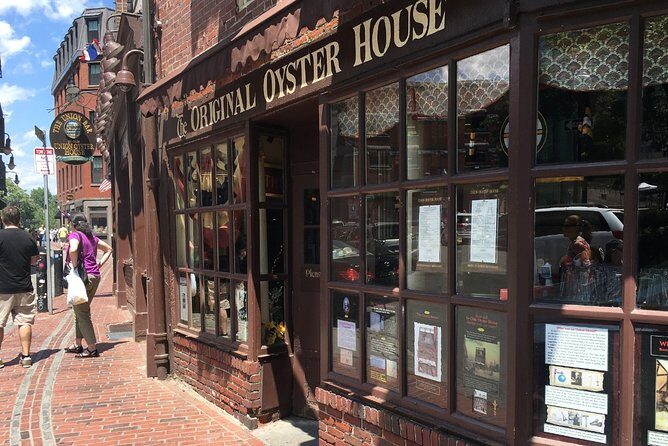
Then you’ll be in the area of the Union Oyster House, described as the oldest continually operating restaurant in America. Even if you skip a meal here, it’s a helpful pause because it shows how Boston layers its “old” not only in museums, but in places where people still eat and gather.
These quick stops keep the morning from feeling like one long march. They also give you easy photo moments without adding major walking time.
North End Push: Paul Revere House and Old North Church (Optional Inside Access)
This is where the tour shifts from downtown meeting halls to the personal story of 1775.
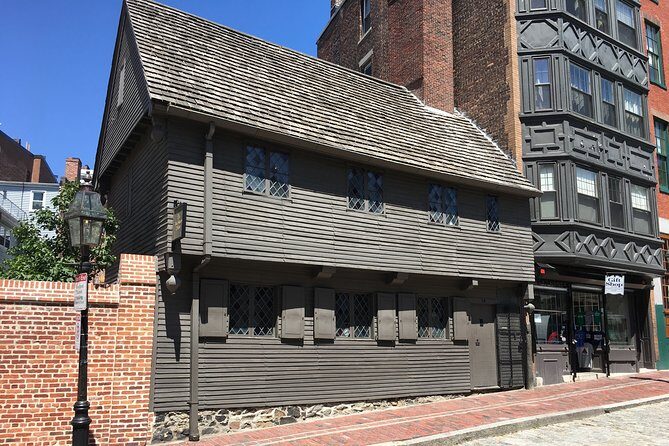
The Paul Revere House stop is about 25 minutes. You’ll learn about Paul Revere leaving his small wooden home on the night of April 18, 1775, and how that trip became legend. The house still stands at 19 North Square and is downtown Boston’s oldest building, and one of the few remaining 17th-century dwellings in a large urban area in the United States.
Admission here is not included, though the tour mentions they receive a very special low rate for you. If you like seeing artifacts and period rooms, going inside can add a lot. If you mostly want the street-level story and exterior orientation, you might choose to pass and keep the walking focus.
Then you’ll visit the Old North Church & Historic Site. Christ Church in the City of Boston—called the Old North Church—is the oldest surviving church building in Boston and also one of the most visited historical sites. It was built in 1723, and the signature moment happened on April 18, 1775.
Church sexton Robert Newman climbed the steeple and held high two lanterns as a signal from Paul Revere that the British were marching by sea across the Charles River, not by land. That signal is tied directly to the spark of the American Revolution.
Like the Paul Revere House, optional admission isn’t included. If you can only afford one interior ticket, decide based on your interest level: the house is about Revere as a person and craftsman; the church is about the lantern signal and the city’s communication network.
Copp’s Hill Burying Ground and the Final Feel of the North End
You’ll end the walking story with Copp’s Hill Burying Ground. Named after shoemaker William Copp, it’s the final resting place for merchants, artisans, and craftspeople who lived in the North End.
This stop works well as a closing note because it brings you back to people, work, and community. It also feels grounded—less like a dramatic climax and more like a reminder that history was built by regular lives, not just famous names.
Admission here is free, and the stop runs about 20 minutes. It’s a good length: enough time to look around, but not so long you feel trapped when your group wants to move on.
Why This Tour Beats the Big Bus Version for Most People
The Freedom Trail can be crowded. The difference here is simple: you’re not stuck matching a bus schedule or sharing your view with dozens of strangers trying to take the same picture.
Because it’s private and on foot, the guide can steer you around congestion and keep the group moving at a pace that makes sense. That alone can feel like a luxury, especially when you’re carrying water, dealing with kids, or just want to stop and ask why a detail matters.
It also helps that the tour doesn’t only stick to the most famous locations. You’ll hit places like Old Corner Bookstore and the Boston Stone, which often get skipped when tours race through the standard photo lineup.
What You’ll Learn (and Remember) From the Guide’s Style
The best Freedom Trail guides don’t just name dates. They connect things—architecture to politics, streets to daily life, and small symbols to major turning points.
In this tour, guides like Tracy, Manny, Ernie, Cindy, Ellen, and Neil are repeatedly praised for knowledge and for staying flexible with pacing. The consistent theme is that your questions get answered and you can set your own rhythm, including if someone in the group needs a slower stride.
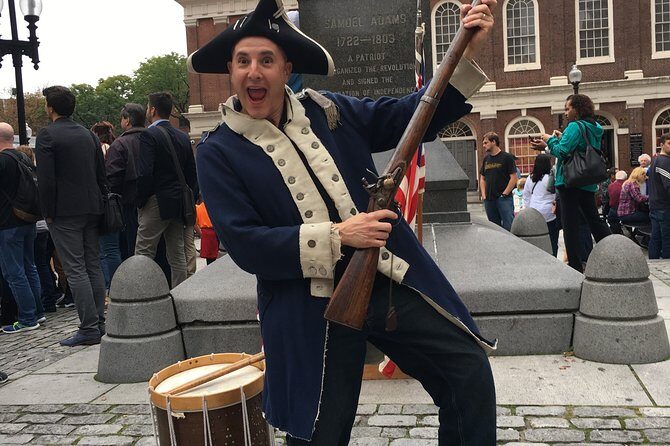
If you’re traveling with teens, this format also tends to work because it can keep the pace engaging without relying on costume-style performance. That matters if your group wants facts with energy rather than a show.
Tickets, Admissions, and What Costs You Might Choose
Many stops on this route are free, including Boston Common, Granary Burying Ground, Faneuil Hall Marketplace, Boston Stone, and Copp’s Hill Burying Ground.
But a few important places are not included by default:
- Massachusetts State House is not included.
- Paul Revere House is not included (with a special low rate mentioned).
- Old North Church is not included (also with the special low rate context).
So think of this as a base tour with optional “go inside” add-ons. If you’re the type who wants only street-level history, you can keep costs down. If you’d like interior context and artifacts, plan for at least one of the optional admissions.
Who This Tour Suits Best (and Who Might Prefer Something Else)
This is ideal if you want:
- a private morning with a real conversation,
- strong Freedom Trail coverage plus a handful of extra downtown and North End stops,
- a guide who helps you move efficiently without feeling rushed.
It’s also a good match for families with moderate walkers. One of the guide strengths highlighted in past experiences is keeping younger travelers interested, including when the group includes teens.
If your group has mobility limitations or you hate walking, this might feel like too much. The tour is marked as requiring moderate physical fitness, and it covers a lot of ground in a short time.
Should You Book This Private Freedom Trail Tour?
If you want the Freedom Trail story with less crowd stress and more personal attention, I’d book it. The private guide format plus the flexibility to adjust the route is the real value, and the stop mix (from Boston Common to Faneuil Hall, then into the North End) keeps the morning from turning into a one-note checklist.
Book it especially if:
- you’re traveling with kids or teens and want energy without costume theatrics,
- you want to ask questions and get answers in plain language,
- you’d rather walk than deal with bus bottlenecks.
Skip or reconsider if you’d rather spend most of the time inside museums and historic buildings. This tour prioritizes walking, orientation, and context at key exterior sites, with interiors as optional add-ons.
FAQ
How long is the tour?
The tour runs about 3 hours.
Is this a private tour?
Yes. It’s a private tour/activity, and only your group participates.
What language is the tour offered in?
The tour is offered in English.
What do I need for entry or confirmation?
You’ll receive a mobile ticket, and you should get confirmation within 48 hours of booking, subject to availability.
Are the Massachusetts State House, Old North Church, and Paul Revere House admissions included?
No. The Massachusetts State House admission is not included, and admission to Old North Church and the Paul Revere House is optional.
Does the tour include both Paul Revere House and Old North Church?
Yes. Both stops are on the route, with optional admissions for entry.
Where do I meet the guide and where does the tour end?
You start at 139 Tremont St, Boston and end at 282 Hanover St in the North End Italian District area.
Is the tour good for people with moderate walking ability?
It requires moderate physical fitness, so comfortable shoes and the ability to walk for a few hours are important.
What happens if the weather is poor?
This experience requires good weather. If it’s canceled due to poor weather, you’ll be offered a different date or a full refund.
Are service animals allowed?
Yes, service animals are allowed.