REVIEW · BOSTON
Boston’s Revolutionary Path The Freedom Trail Tour
Book on Viator →Operated by The Daily Trips · Bookable on Viator
Boston’s past is a walk away. This Freedom Trail tour strings together major landmarks with clear explanations, starting right at The Embrace on Boston Common. You get a tight, doable route through neighborhoods, churches, cemeteries, and Revolutionary-era sites in about 2 hours.
I especially like two things about this experience. First, the tour guide shines with behind-the-scenes details that make the dates and names stick fast. Second, the mix of places—from Beacon Hill’s photogenic streets to the solemn quiet of burial grounds—keeps your brain awake without turning the walk into a lecture.
One thing to keep in mind: the schedule packs a lot in. If you want long museum time or a slow sit-down at every stop, you may wish you had extra hours in Boston after the tour.
In This Review
- Key highlights worth showing up for
- Starting at The Embrace: the meaning of the walk
- Beacon Hill in a quick hit: charming streets with real context
- Boston Common: your built-in reset between landmarks
- Massachusetts State House: the golden dome and the politics behind it
- Park Street Church: a quick stop with a big steeple story
- King’s Chapel Burying Ground: Boston’s quietest Revolutionary roots
- Granary Burying Ground: names you recognize, context you can remember
- Old State House: where Revolution stories get specific
- Faneuil Hall and Quincy Market: finish with food and momentum
- How much value you’re actually getting for $45
- Who this tour suits best
- Should you book Boston’s Revolutionary Path Freedom Trail Tour?
- FAQ
- How long is the Boston Revolutionary Path Freedom Trail tour?
- What does the tour cost?
- Where does the tour start?
- Where does the tour end?
- Is the tour offered in English?
- How large is the group?
- Do I get a mobile ticket?
- Are service animals allowed?
- Is free cancellation available?
Key highlights worth showing up for
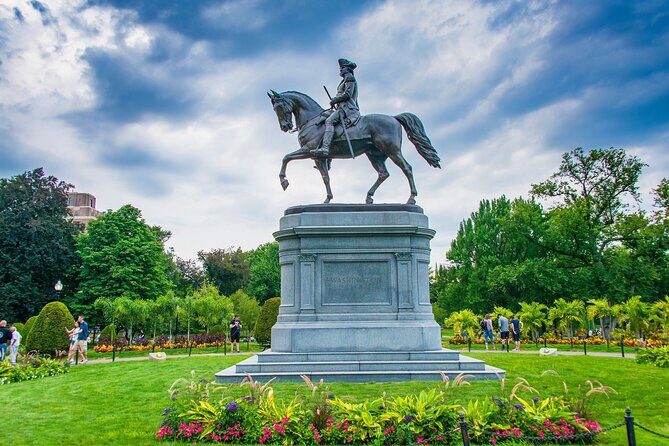
- The Embrace on Boston Common: a 2023 MLK and Coretta Scott King sculpture with a meaning you can see immediately.
- Beacon Hill + old streets: cobblestones, gas lamps, and classic brick architecture in a compact area.
- Boston Common and its calm reset: the oldest public park in the U.S., with a breather before the political sites.
- Cemeteries that connect directly to the Revolution: King’s Chapel Burying Ground and Granary Burying Ground, both free to visit.
- Old State House and Faneuil Hall: two places where the story of protest and early American politics feels very real.
- Quincy Market as your landing zone: food, shops, and street performers after the walking portion.
Starting at The Embrace: the meaning of the walk
Most Freedom Trail tours start with the oldest stuff. This one starts with something newer—and that’s smart. You begin at The Embrace, a bronze sculpture on Boston Common unveiled in 2023 that honors Dr. Martin Luther King Jr. and Coretta Scott King. The artwork is based on a well-known photo of them hugging after Dr. King won the Nobel Peace Prize in 1964.
What I like about this opening is that it gives you a theme before you step into the Revolutionary timeline: partnership, love, unity, and the drive for justice. You’re not just memorizing history. You’re getting a lens for how people have fought for change across different eras.
The setting is also practical. Boston Common is right in the middle of the city, so starting here helps you avoid the feeling of crossing Boston just to begin. And since admission is free at the stop, you can take a few minutes to actually look, not just pass by.
You can also read our reviews of more tours and experiences in Boston.


Beacon Hill in a quick hit: charming streets with real context
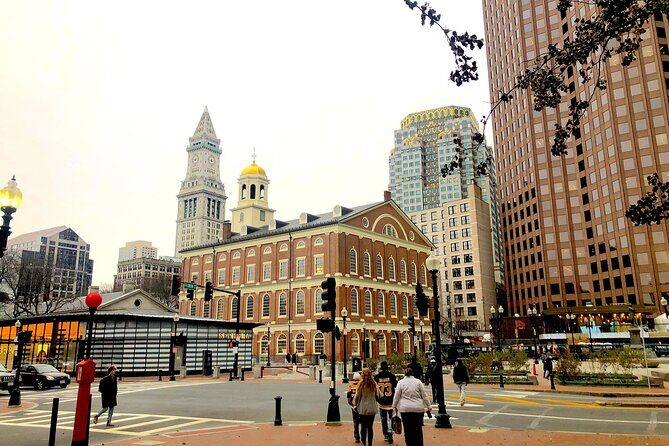
After Boston Common, you’ll head into Beacon Hill. This neighborhood is famous for the basics: cobblestone streets, gas lamps, and Federal-style brick houses. It’s the kind of Boston that looks like it belongs in a postcard, but it’s also close to the political and civic spine of the city.
The tour’s time here is short, so you’ll want to do this like a local: pick one or two streets to focus on rather than trying to see everything. Acorn Street is an obvious target because it captures the look of Beacon Hill in a small space. If you’re the type who likes architecture details—doorways, brick patterns, window shapes—you’ll get a lot out of the walk even in a limited time window.
The best value of Beacon Hill on this route is the pacing. It gives your feet a break before you return to big civic spaces like the State House and the church landmarks.
Boston Common: your built-in reset between landmarks

Then you’re back at Boston Common, and that second stop is more than a repeat. Boston Common is the oldest public park in the U.S., and it functions like the tour’s breathing room. Instead of rushing from building to building, you get time to walk paths, notice greenery, and look toward ponds.
Seasonal events and activities can add energy, but even without them, it works as a calm reset. This is where you can take a real moment to absorb the fact that these civic stories happened in a real living city, not inside a museum glass case.
Practical tip for you: use this section to orient yourself. The Freedom Trail can feel like a straight line on paper, but your brain learns best when you’ve walked a little green space and seen how the city’s blocks fit together.
Admission is free, and that’s a nice bonus—your money goes toward the guide and the structure, not ticket fees.
Massachusetts State House: the golden dome and the politics behind it
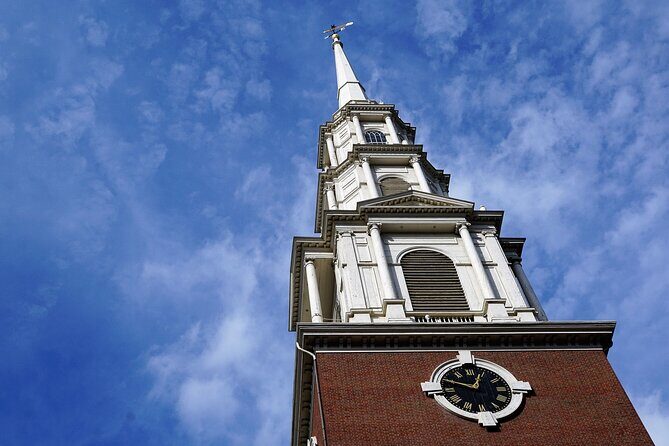
Next comes the Massachusetts State House, a landmark on Beacon Hill best recognized for its stunning golden dome. Even if you don’t spend much time inside, just seeing it changes how you read the surrounding area. This is government, up close.
The tour focuses on the building’s architecture and historic significance, and it notes that guided tours are available. That means you can decide on the spot whether you want to spend extra time learning how Massachusetts government works or just admire the exterior and keep moving.
The value here for first-timers is simple: the guide helps you connect the domes-and-columns look to the actual political story of the state. If you’re only passing by this building on your own, you might notice it. If you’re with a guide, you’ll know why it matters.
Park Street Church: a quick stop with a big steeple story
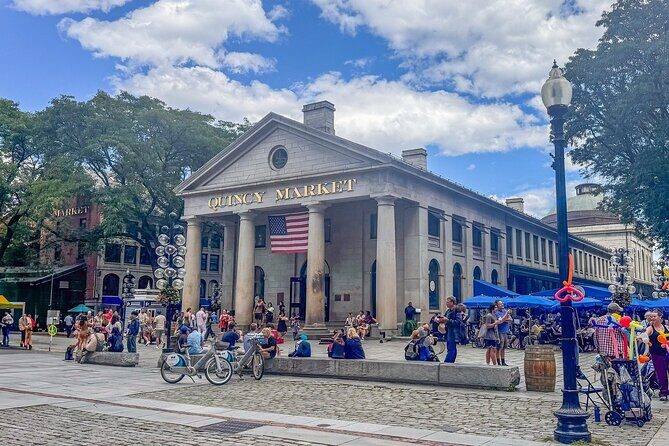
From the State House area, you’ll reach Park Street Church, known for its tall white steeple and its classic architecture. Built in 1809, it played a key role in Boston’s religious and social life.
This is a shorter stop, so it works best if you treat it like a photo moment plus a listening moment. The guide’s job here is important: they help you connect what you see—an iconic steeple in a busy downtown—to how institutions shaped public conversation.
Also worth noting: the church hosts services and community events. Even if you’re not attending a service during your tour, you’ll understand why it’s not just a landmark. It’s still active.



King’s Chapel Burying Ground: Boston’s quietest Revolutionary roots

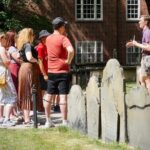
Now the tour shifts tone. King’s Chapel Burying Ground is Boston’s oldest cemetery, dating back to 1630. It sits next to King’s Chapel and is the final resting place of early Boston settlers, including John Winthrop.
Walking among historic tombstones tends to slow people down, and that’s exactly what you want on this kind of route. The Revolution narrative becomes more than dates. You start thinking about the earliest people who lived through the conditions that eventually led to political rupture.
This stop is also a good place to practice a simple tour habit: don’t only look at the most famous names. Look at spacing, inscriptions, and how the cemetery layout feels. The guide’s explanations give you the context, but your eyes help you understand why this place has such weight.
Admission is free, which makes it easy to give the moment the time it deserves.
Granary Burying Ground: names you recognize, context you can remember
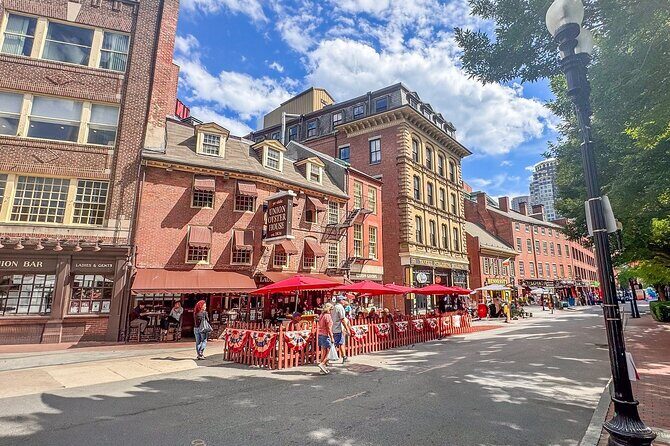
Next is Granary Burying Ground, dating back to 1660. This cemetery is close to Boston Common, which helps the tour feel connected instead of scattered.
Here you’ll find the final resting place of figures you’ve probably seen in school history: Paul Revere, Samuel Adams, and John Hancock. That alone draws you in, but the guide’s explanations are what turn recognition into understanding.
If you’re worried about cemetery stops being boring, I get it. The fix is expectation-setting: this is not about spooky vibes. It’s about locating the Revolution in real people who lived, died, and were remembered by their community.
One small consideration: cemeteries can be emotionally heavy for some visitors. If you’re sensitive to that, you might want a calm mindset when you arrive.
Old State House: where Revolution stories get specific
Then you hit the Old State House, built in 1713 and tied to major events of the American Revolution. This is the site where the reading of the Declaration of Independence took place—an event that turns a building into a moment you can picture.
The stop includes exhibits on early American history and, again, there’s the architecture to look at. Even with limited time, the guide’s job is to give you the what-happened-where so your mental timeline stops feeling fuzzy.
This is one of those stops where it helps to listen actively. The guide’s behind-the-scenes style—often what guests love most—matters here. When you connect a building to an event, the story becomes easier to carry with you after the tour ends.
Faneuil Hall and Quincy Market: finish with food and momentum
After Old State House, the route brings you into the heart of the action around Faneuil Hall. It’s often called the Cradle of Liberty, because it was where early protests against British rule took place. The building was built in 1742 and today it operates as both a marketplace and a museum.
This part of the tour is more sensory: you get the chance to explore the hall’s historic significance, then shift into the modern use of the space. You’ll find local food vendors and a lively scene in the surrounding area.
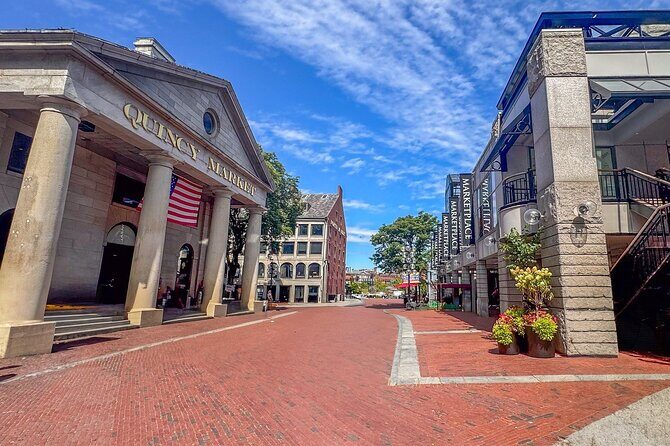
From there, you finish at the Quincy Market area, a busy hub for food, shopping, and entertainment. The historic market building houses multiple local vendors, and street performers add energy in the outdoor space. It’s a practical end point because you can grab a snack or decide what to explore next without needing to navigate your way across town.
The tour’s small-group format helps here. In a group of up to 10, you’re not getting steamrolled by the crowd. You can ask a last question, get pointed in the right direction, and then enjoy the market on your own terms.
How much value you’re actually getting for $45
At $45 per person for about 2 hours, this is priced like a guide-based walking tour, not like a museum-and-transit day. And that matters. Your biggest expense is paying for someone to connect the dots—especially on a topic that can feel overwhelming if you DIY it.
The value improves because:
- The group stays small, with a maximum of 10 travelers.
- Multiple major stops are included, including cemeteries and landmark civic buildings.
- It’s a structured route that helps you avoid wasting time figuring out what’s worth your attention.
One more clue that helps with expectation: this tour averages bookings around 58 days in advance, which usually means it’s a popular way to do Boston’s core sights without stress. For you, that’s a sign to book early if you want a specific day.
Who this tour suits best
This is a great fit if:
- You’re a first-time Boston visitor who wants the core Freedom Trail story in a compact timeline.
- You like walking and learning through conversation, not through reading a stack of plaques.
- You want a guide to explain what you’re seeing at places like the cemeteries and the State House.
It may be less ideal if:
- You hate walking when it’s all packed into two hours.
- You want long indoor museum time at multiple sites. The tour includes stops, but the format is built for motion.
Should you book Boston’s Revolutionary Path Freedom Trail Tour?
If you’re choosing between a DIY walk and a guided path, I’d lean toward booking. The price is reasonable for what you get, and the guide’s ability to share behind-the-scenes details is exactly the kind of help that makes history feel less like memorization and more like a story you can retell.
Book it if you want structure, fast context, and a smooth route that ends in a place where you can eat and keep exploring. Skip it—or add extra time on your own—if you know you’ll want to linger for long periods at indoor exhibits or prefer a slower, more wandering pace.
FAQ
How long is the Boston Revolutionary Path Freedom Trail tour?
It’s listed as about 2 hours.
What does the tour cost?
The price is $45.00 per person.
Where does the tour start?
The start point is The Embrace, 139 Tremont St, Boston, MA 02108.
Where does the tour end?
It ends around the Faneuil Hall Marketplace area, with the tour wrap-up connected to the Quincy Market area.
Is the tour offered in English?
Yes, it’s offered in English.
How large is the group?
The tour has a maximum of 10 travelers.
Do I get a mobile ticket?
Yes, the tour includes a mobile ticket.
Are service animals allowed?
Yes, service animals are allowed.
Is free cancellation available?
Yes. You can cancel up to 24 hours in advance for a full refund.