REVIEW · BOSTON
Downtown Freedom Trail, Beacon Hill & Back Bay Walking Tour
Book on Viator →Operated by Boston CityWalks · Bookable on Viator
Hooked on Boston, but short on time? This route strings together the city’s biggest stories fast. You’ll walk the Freedom Trail core, then shift neighborhoods from Beacon Hill to Back Bay, with the Boston Public Garden in the middle and a stylish finish in Copley Square.
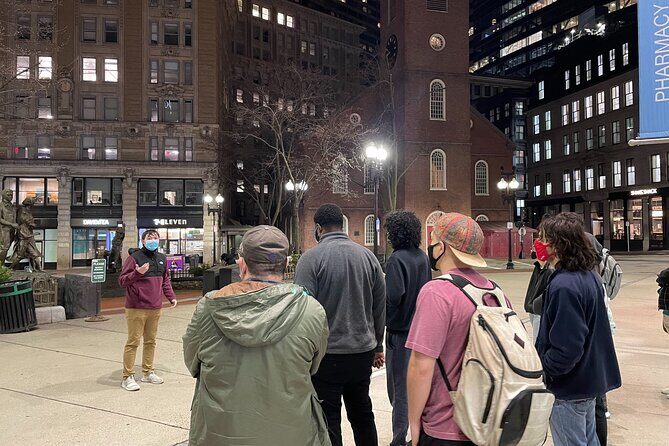
I really like how the tour is built for real time on your feet: it checks off a long list of landmarks in about 2 hours without feeling like a frantic sprint. I also love that you get architectural and historical context from the guide while you’re standing right where things happened—Faneuil Hall, the State Houses, the Massacre site, then the Victorian streets of Back Bay.
One thing to consider: this is a focused route, not the entire Freedom Trail end-to-end. If you’re expecting every single Freedom Trail stop, you’ll likely want to pair this with additional self-guided walking on a different day.
In This Review
- Key things to know before you go
- Why this Freedom Trail to Copley Square route is worth your time
- Meeting at 10:00am on State Street: the start that sets the pace
- Faneuil Hall to Boston Common: the Freedom Trail section that actually builds understanding
- Beacon Hill details: Frog Pond, Purple Windows, and the feeling of old Boston
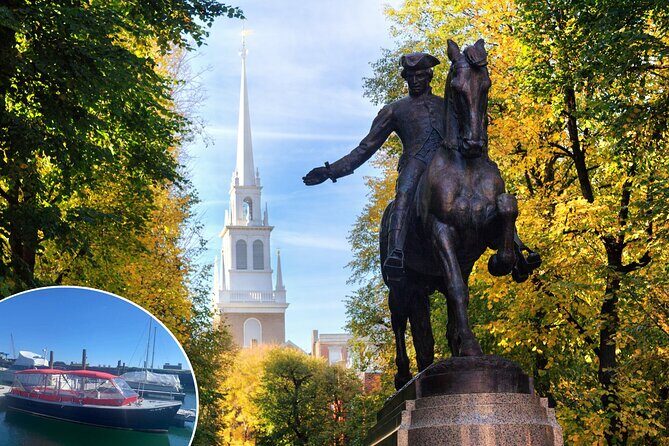
- Boston Public Garden and the Swan Boats: history you can see, not just read
- Back Bay brownstones and Commonwealth Avenue: the neighborhood that feels like a stroll through style
- Copley Square and the Marathon finish line: a strong architectural end point
- How the guide makes or breaks this kind of walking tour
- Price, group size, and timing: getting the most from your $65
- What kind of traveler will enjoy this most?
- Quick practical tips so your walk feels smooth
- Should you book Downtown Freedom Trail, Beacon Hill & Back Bay?
Key things to know before you go
- Small-group feel (max 20): easier conversation, better chances to hear your guide.
- Starts at the Old State House area: clear, central meeting point before you hit the Freedom Trail.
- Covers classic Revolution-era landmarks: Faneuil Hall, both State Houses, and the Boston Massacre site.
- Adds neighborhood texture: Beacon Hill details like Frog Pond and Purple Windows, then Back Bay brownstones.
- Ends near the Marathon finish line: Copley Square energy, plus big-city architecture.
Why this Freedom Trail to Copley Square route is worth your time
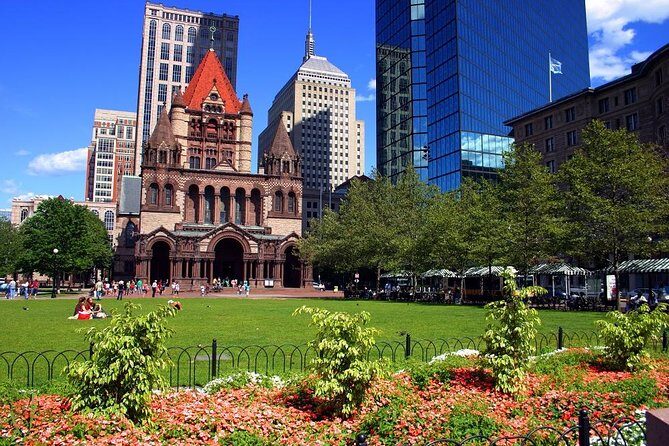
Boston can feel like three different cities depending on where you stand. This tour stitches them together in one walk: the Revolutionary-era streets around Downtown, the older-still-standing charm of Beacon Hill, and the polished, tree-lined look of Back Bay ending at Copley Square. It’s a smart way to get your bearings fast.
The best part is the mix of “you can see it” stops and “you can understand it” stories. You’re not just ticking names from a map. You’re moving from Faneuil Hall to the State Houses, then into the Common and Public Garden area, and finally into Back Bay’s residential streets. That sequence helps the big themes click—power, protest, civic life, and then how the city remade itself.
At $65 per person for about 2 hours, the value comes from efficiency: you’re paying for a professional local guide plus a route that hits multiple major sights with minimal downtime. Most of the specific stops are listed as free, so your money goes toward interpretation and momentum rather than entry fees.
You can also read our reviews of more walking tours in Boston


Meeting at 10:00am on State Street: the start that sets the pace
The tour meets at Citizens28 State St, Boston, MA 02109, across the street from the Old State House area. Starting around 10:00 am is helpful because you’ll often beat the heaviest midday crush near the core sites.
A practical tip: in a city full of landmarks, the meeting point matters. One recent concern was that it can be difficult to find the guide quickly. When you arrive, give yourself a few minutes to orient—open your map, check the meeting address twice, and plan to stand in a spot where your phone signal and street landmarks make sense.
Once you’re underway, the pace is designed for walking, not rushing. You’ll spend the most time on the Freedom Trail portion, and then the route branches into Beacon Hill, Boston Public Garden, Back Bay, and ends at Copley Square. That structure is great if you want a guided “starter set” for your Boston days.
Faneuil Hall to Boston Common: the Freedom Trail section that actually builds understanding
This is the heart of the tour, and it’s where the stories have the most payoff because you’re physically moving through the spaces tied to American independence and civic debate.
Expect to pass or stop at a strong chain of landmarks, including:
- Faneuil Hall and the surrounding downtown civic energy
- Quincy Market
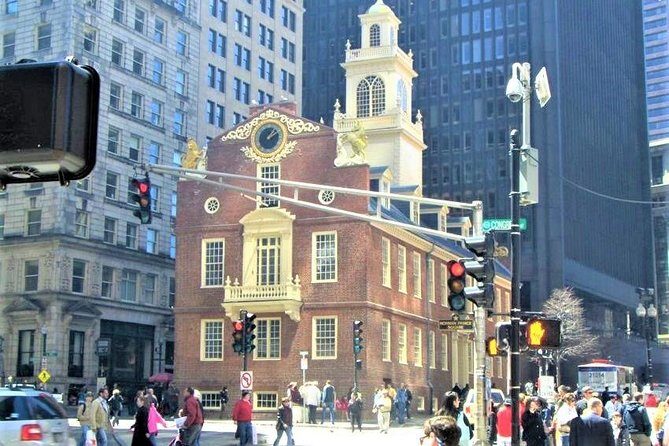
- Old State House plus the New State House
- The site of the 1770 Boston Massacre
- Old South Meeting House
- Old Corner Bookstore
- King’s Chapel
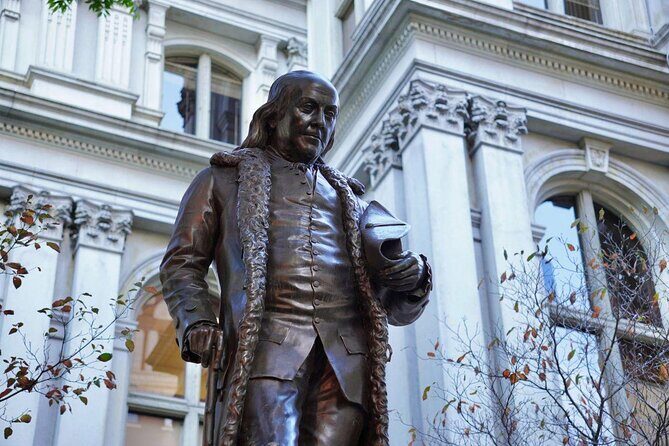
- Old Granary Cemetery, Park Street Church, and the Old City Hall area
- Plus additional architecture along the way, which is often where the guide’s details matter most
What makes this section special for me is how the route links power and place. You’re not just hearing that people argued, protested, and organized—you see the buildings that made those actions visible and public. Faneuil Hall feels like a stage for civic speech. The State Houses feel like the machinery behind decisions. And the Massacre site is a sharp reminder that political conflict had real consequences.
A small note on expectations: this walk focuses on a major segment rather than covering the entire trail end-to-end. If you want the full Freedom Trail experience, treat this as your “guided core,” then add extra walking later at your pace.
Beacon Hill details: Frog Pond, Purple Windows, and the feeling of old Boston
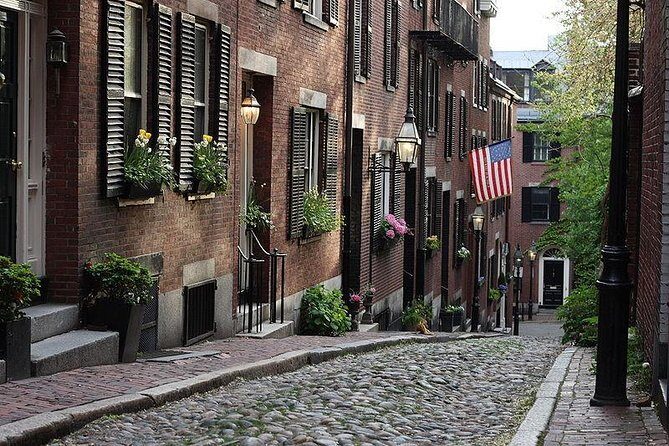
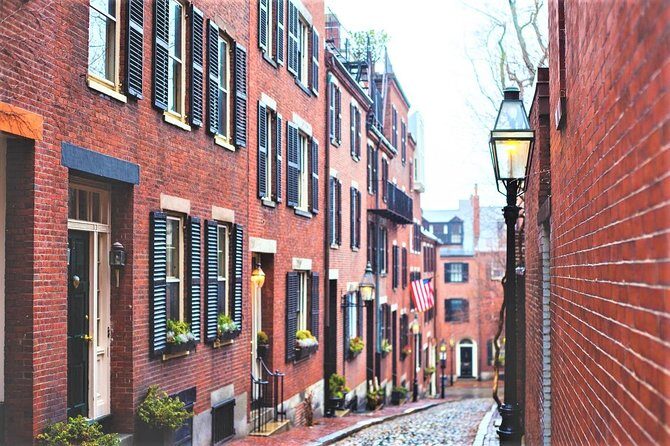
After the downtown stretch, the scenery shifts. Beacon Hill is more intimate—brick, gaslight-style street moods, and those iconic visual quirks that make you stop and look up.
This part is brief—about 15 minutes—but it’s packed with recognizable markers, including:
- Federal-style architecture
- Frog Pond
- Purple Windows
- Gas lamps
Even in a short stop, Beacon Hill helps you change gears from Revolution-era public life to a neighborhood that still feels like it has memory. The guide’s commentary here matters because these are the tiny design choices that create the vibe—color details, street shapes, and the way buildings face the road.
The practical drawback is time: don’t plan to photograph Beacon Hill like it’s a full half-day. Plan to enjoy the atmosphere and capture a few standout shots, then keep moving.
Boston Public Garden and the Swan Boats: history you can see, not just read
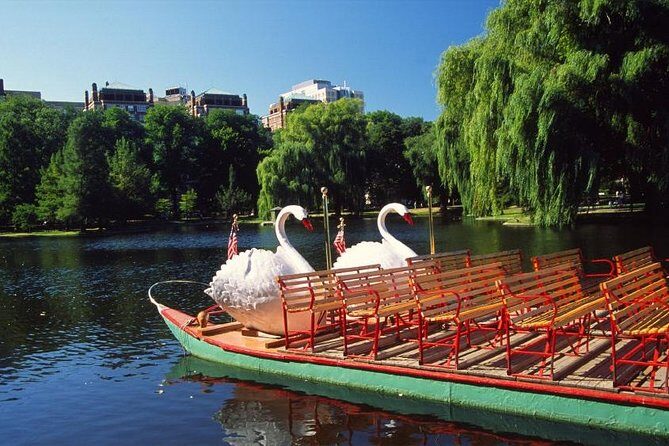
The tour includes a stop at the Boston Public Garden, with a storytelling focus that connects landscape change to modern Boston life. You’ll also get iconic photo points and a few cultural nods that help this place feel local, not museum-like.
You can expect to see:
- Boston Common elements nearby as you transition
- The Swan Boat Lagoon
- The Make Way for Ducklings statues
- A Monument to the first successful use of ether
- The Cheers connection (the guide ties it into the neighborhood vibe)
- Plus mention of the largest landfill in the world used to create Back Bay, starting with the Public Garden area
This is one of those stops where the guide can turn a pretty park into a place with context. The idea of the city literally reshaping land is a powerful way to understand why Boston looks the way it does now. And because you’re outdoors, the park’s beauty keeps the stories from getting too heavy.
The best part is that the Public Garden gives you a pause in the middle of the walk. Even if you’re only there for around 10 minutes, it breaks up the urban intensity and gives you a chance to look around and breathe.





Back Bay brownstones and Commonwealth Avenue: the neighborhood that feels like a stroll through style

Back Bay is where Boston shifts into something more residential and polished. This stop runs about 15 minutes, but it’s enough to notice patterns: wide avenues, planned elegance, and those famous Victorian-style homes.
You’ll cover:
- Commonwealth Avenue (often described as having a Parisian feel in how the residential look is presented)
- The Newbury Street boutique area
- Victorian brownstones throughout the neighborhood
For me, this section is worth it because it shows another side of Boston’s identity. After the civic and political weight near Faneuil Hall, Back Bay feels like the city’s self-image—how wealth, planning, and design shaped everyday streets.
One consideration: since Back Bay is mostly sidewalks and streets, you’ll want comfortable shoes. Also, a past comment flagged that walking surfaces vary, which can be tough for people with mobility issues. If you need extra stability, bring supportive footwear and plan for a steady walking pace.
Copley Square and the Marathon finish line: a strong architectural end point
The tour finishes in Copley Square, where Boston’s big-name landmarks cluster. You get about 10 minutes here, and it’s designed as a satisfying wrap-up rather than a long sightseeing detour.
The guide route points out major architecture, including:
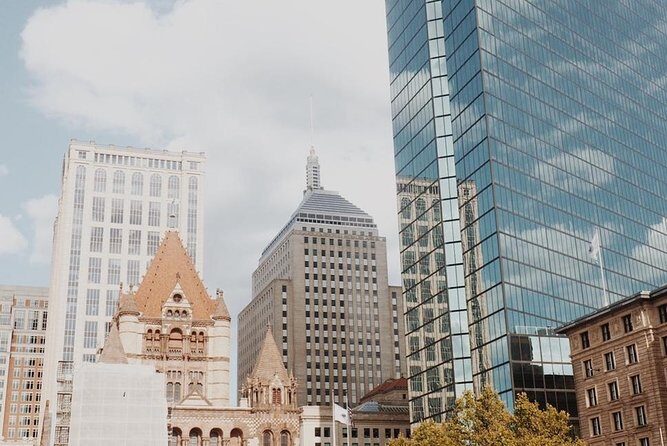
- Trinity Church
- The Boston Public Library
- John Hancock Tower
- The New Old South Church (seen in the surrounding area)
- The Boston Marathon finish line area, described as the oldest continuously operated marathon in the world
Copley Square is a great ending for two reasons. First, it’s visually cohesive—you can see why Boston is often described in terms of architecture and skyline drama. Second, it helps your last moments feel like a celebration rather than another stop in the middle of a long checklist.
If you’re planning the rest of your day, this end point is convenient. You’re close to major downtown energy, so you can choose what you want next: more photo time, a meal, or a self-guided walk into nearby streets.
How the guide makes or breaks this kind of walking tour
This is the sort of tour where the guide’s personality turns locations into a story. The strongest feedback patterns point to guide style that includes humor, pacing that keeps everyone together, and a willingness to answer questions.
Two names came up repeatedly in feedback: Alan and Chris. People especially liked how their tours stayed lively, how they handled questions without losing momentum, and how they made sure the group could hear—one review even mentioned a small speaker for clarity while walking.
There are also practical things that matter more than you’d think on a two-hour walk:
- Water breaks and comfort checks (especially when weather is hot)
- Staying aware of the group’s needs, including opportunities to use restroom when possible
- Tailoring the walk when a group wants a slightly different emphasis
So if you’re the type who learns best by listening while moving, you’re in the right format.
Price, group size, and timing: getting the most from your $65
Let’s talk value in plain terms.
For $65, you’re buying:
- A 2-hour guided route that covers multiple major Boston landmarks
- Local interpretation focused on what you see as you walk
- A small-group cap of 20, which tends to improve interaction and hearing
- Mobile ticket convenience
- A tour in English
If you tried to do this on your own, you’d still be able to see most of these places for free, but you’d miss the connections. The real cost is the time you’d spend figuring out what matters and why. This tour compresses that work into a guided walk.
Timing is also worth considering. If your day is booked tight, you’ll want a little breathing room. A past issue involved the tour running later than the planned end time because of group timing and ongoing interactions. That doesn’t mean it will happen to you, but it’s a good reason to avoid scheduling a hard deadline right at the finish.
What kind of traveler will enjoy this most?
This tour is a strong fit if you:
- Want a first-timer’s Boston orientation that covers multiple neighborhoods
- Like walking history but don’t want to spend all day planning
- Prefer a structured route over getting lost with a map
- Enjoy architecture and city stories as much as major monuments
It’s also a nice option for families, since the pace is short and the Public Garden stops bring easy-to-recognize kid-friendly sights like the duck statues.
If you’re mobility-limited, you should think carefully. One comment noted walking surfaces can vary and might be hard for people with mobility issues. You can still consider it, but plan around comfortable shoes and be ready for street-level unevenness.
Quick practical tips so your walk feels smooth
A few things that can make this tour better on the ground:
- Wear comfortable walking shoes. You’ll be on foot for the full experience.
- Dress for the weather. The tour operates in weather but still asks you to dress appropriately.
- Bring a water bottle if you get thirsty easily; the guide has provided water breaks in hot conditions.
- If you’re starting your Boston trip, this tour is a great anchor. After it, it’s easier to choose what to revisit.
Should you book Downtown Freedom Trail, Beacon Hill & Back Bay?
If you want one guided experience that gives you a lot of Boston in a short window, this is an easy yes. The route makes smart sense—downtown Revolution landmarks, then a tonal shift to Beacon Hill, a breath in the Public Garden, and a clean finish in Copley Square.
I’d especially recommend it if you’re planning a busy itinerary and want the guide’s help making connections between neighborhoods, politics, architecture, and how the city evolved. The main reason to pass is if you’re chasing the entire Freedom Trail end-to-end in one go, or if your schedule can’t handle a small delay.
For most people, though, this is a strong value: $65 for two hours of focused sightseeing, small-group energy, and a route that helps Boston click into place.