REVIEW · BOSTON
Boston Walk Through History Private & All-Inclusive Tour
Book on Viator →Operated by ForeverVacation · Bookable on Viator
Boston history hits the pavement with a private guide. This 3 to 6 hour walk-style tour pulls together major landmarks from the early Puritan era to the Revolution, then adds neighborhoods and food stops for a day that feels more like Boston than a checklist. You’ll spend time around the Freedom Trail and signature sites like Old North Church, plus you get a guide who can steer the day toward what you actually want to see.
What I like most is the flexibility of a private guide, which means the pace and focus can adapt to your questions. I also like that the stops listed along the route have free admission called out, so you’re paying mainly for time with the guide (not a pile of tickets).
One drawback to keep in mind: timing. A past customer described a guide arriving over an hour late and feeling rushed, so you’ll want to show up on time and give a little buffer if your schedule is tight—especially if you’re relying on exact connections.
A few standout details before you go
- Private guide, only your group: no joining strangers mid-walk.
- Freedom Trail built into the route: you get a strong orientation for 2.5 miles worth of sites.
- Revolution stop set: Paul Revere House and Old North Church are included.
- Free-entry stops listed: many locations on the plan are marked ticket-free.
- Route can expand beyond the trail: you may also hit areas like Fenway, Harvard, and major museums.
In This Review
- A Boston history walk built for real-time orientation
- Boston Common and the Massachusetts State House: where the story starts
- Beacon Hill’s churches and old cemeteries: power, faith, and memory
- Faneuil Hall to Paul Revere House: commerce meets the Revolution
- Old North Church and the Freedom Trail: the fastest way to get oriented
- Beyond the trail: Fenway, Harvard, and big museums if you have time
- North End: Italian Boston texture and lively street energy
- Price and value: what $339 buys you in Boston
- Logistics that matter: where you start, where you finish
- Should you book this Boston history private tour?
- FAQ
- How long is the Boston Walk Through History private tour?
- Is this tour private?
- What language is the tour offered in?
- Where does the tour start and end?
- Are there admission fees for the stops?
- What major historical stops are included?
- Does the tour include the Freedom Trail?
- What if the weather is bad?
- What is the cancellation policy?
A Boston history walk built for real-time orientation

If Boston is a puzzle, this tour helps you put the picture together fast. It’s not just about seeing famous spots; it’s about understanding how the city grew and why certain places still matter. You cover key layers: civic power (state government), belief and institutions (churches and meeting houses), commerce (market spaces), and revolution-era communication and rebellion.
Because it’s private, you can ask the follow-up questions you’d never get on a larger group tour. One guide named Manny is specifically called out for being friendly, knowing his stuff, and asking what you’ve already seen so he can tailor the day. That’s a big deal in a city where you can easily waste time hopping between stops with no context.
You should also know it’s built for walking time and sight time, not for lingering forever. Some parts move quickly, which can be great if you want momentum. If your travel style is slow and museum-calm, you’ll want to treat this as a structured overview you can build on later.
Boston Common and the Massachusetts State House: where the story starts
You begin at Boston Common, the oldest public park in the U.S. (dating to 1634). It’s a perfect starting point because it anchors the whole city in one place. From here, you’re not just learning about 1600s Boston—you’re stepping into a public space that has shaped everyday life for centuries.
A short hop later is the Massachusetts State House in Beacon Hill. It’s the state capitol and the center of Massachusetts government. This stop helps you connect the dots between early Boston and the political power that formed afterward. Even if you’re not a policy person, you’ll likely appreciate how government, neighborhoods, and local identity tie together.
Time here is modest—about 15 minutes each for Boston Common and the State House. That’s intentional. You get the highlights and then move on rather than spending the whole day staring at one view.
Practical tip: Wear decent walking shoes right away. The tour is short on time per stop, so comfy footwear saves you later.
You can also read our reviews of more walking tours in Boston
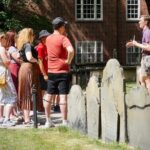


Beacon Hill’s churches and old cemeteries: power, faith, and memory
Next you head through the Beacon Hill orbit with stops that show Boston’s identity isn’t only about big battles. Granary Burying Ground (founded in 1660) is Boston’s third-oldest cemetery, and it’s where the city remembers people who shaped its early era. Cemeteries can sound heavy, but they’re often where the details of a place become vivid: names, dates, and the sense that this city has been layering stories for a long time.
Then comes King’s Chapel, an independent Christian unitarian congregation. What makes it interesting isn’t just the building; it’s the mix of theological and worship traditions described in the tour notes—unitarian Christian in theology, Anglican in worship, and congregational in governance. It’s a reminder that Boston’s religious life has always had its own quirks, not a single straight line.
This section is also a good example of why a private guide matters. In a large group, you might get a “what happened here” version. With a private guide, you’re more likely to get the “why it matters to Boston” version.
Consideration: These stops are brief. If you love deep reading and long pauses, use this time to get oriented, then plan a follow-up on your own.
Faneuil Hall to Paul Revere House: commerce meets the Revolution
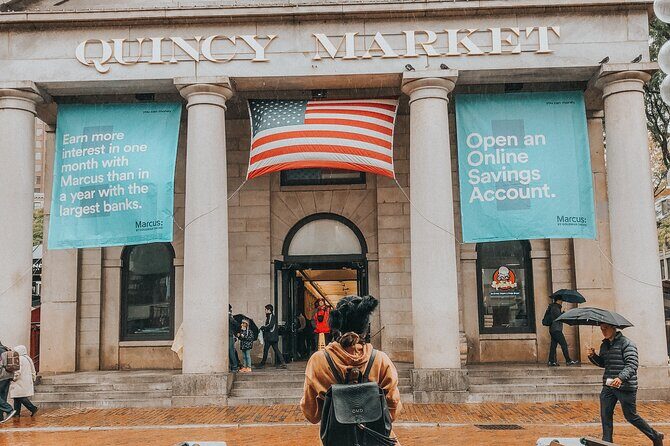
From King’s Chapel, you shift into a more public, lively area with Faneuil Hall Marketplace. It’s described as a shopping and dining spot built around three historic market buildings and a promenade. This matters because Revolution-era Boston wasn’t only about uprisings—it was also about commerce, crowds, and daily public life.
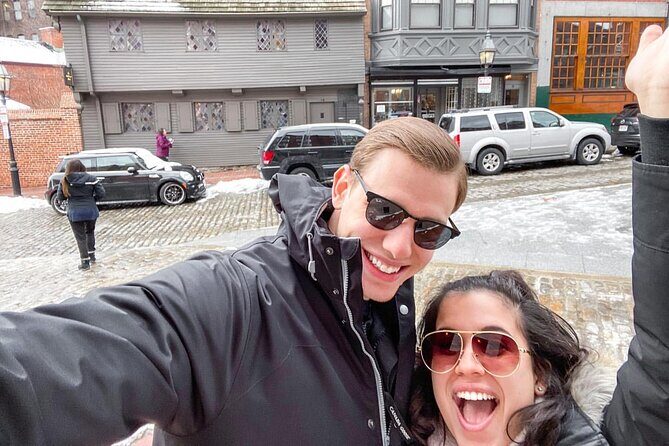
After that, the Paul Revere House takes you back to the colonial period. The house is described as built around 1680 and tied to Paul Revere during the American Revolution. The value here is not only the patriot name. It’s the way a small historic home can help you understand how revolutionary events came out of ordinary schedules, local networks, and a community that was watching itself.
This part of the day stays focused on the Revolution’s real-world footing: where people gathered, how they moved, and why certain locations mattered to messaging and planning.
Old North Church and the Freedom Trail: the fastest way to get oriented

Old North Church is one of the most famous Revolutionary-era sites in Boston. The tour notes connect it to the famous lantern signal story—One if by land, two if by sea. Even if you’ve heard the quote before, being here in person gives it weight, because you’re standing at the physical point where history becomes a specific place.
Then you move into the Freedom Trail. The trail is a 2.5-mile route with 16 significant locations tied to U.S. history. On this tour, the Freedom Trail segment is allotted about 1 hour 30 minutes and is marked free to visit.
This is one of the best parts of the experience for most people because it compresses a lot of major sites into a manageable chunk. The practical value: once you understand how the trail strings locations together, you can explore the city later with better instincts. You’ll know where you are and why that direction makes sense.
Small caution: The Freedom Trail is famous, which means crowds are possible. With a private guide, you can still move efficiently, but you shouldn’t expect a calm, empty stroll.
Beyond the trail: Fenway, Harvard, and big museums if you have time
Not every Boston “history day” has to be only colonial streets. The tour notes include several popular add-ons that broaden the feel of the city: Fenway Park, Beacon Hill’s South Side, the Museum of Fine Arts, the Museum of Science, and Harvard University.
- Fenway Park is described as America’s Most Beloved Ballpark. Even if you’re not a die-hard sports person, it’s fun for the atmosphere and the idea that Boston’s culture includes more than politics and old brick.
- South Side of Beacon Hill is framed as home to Boston’s old-money families, often called the Brahmins. This helps you understand how Boston identity expresses itself through neighborhood reputation and architecture.
- Museum of Fine Arts is highlighted for Impressionist paintings and major collections like ancient Egyptian treasures, Asian and Persian fine arts, and works from ancient Greece and the Middle East.
- Museum of Science is described as hands-on and not just for kids, which is useful if you want a break from walking while still staying engaged.
- Harvard University is included as a highlight of the oldest institution of higher learning in the U.S. The notes point you to the Harvard Information Center for a free walking tour guided by a student, or to download a tour from their website.
Since your total time is 3 to 6 hours, these additional stops are likely “best fit” based on your day and pacing. If you want maximum historical focus, prioritize the trail and Revolution sites. If you want variety—sports, museums, and campus energy—you’ll probably enjoy choosing at least one of these.
Practical tip: If museums are part of your plan, decide early which one you’d rather be happy spending time in. Trying to do too much can leave you rushing indoors.
You can also read our reviews of more private tours in Boston






North End: Italian Boston texture and lively street energy
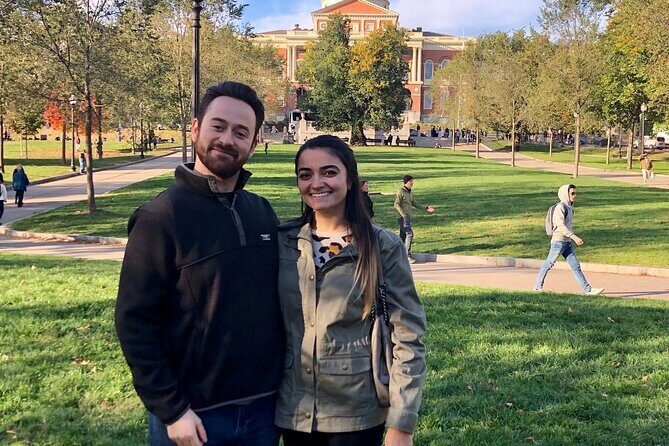
The North End is included as a highlight, and the notes are very clear on what makes it special: even with change over time, it keeps an Italian character and a lively feel. This is where Boston shifts from official history to everyday culture.
It’s also a smart place to learn and taste Boston. The tour highlights Boston’s signature foods as part of the experience, and a neighborhood like this is where “history” becomes something you can experience in the middle of your day—not just something you read about later.
What to expect: This part of the day feels more like walking through a working neighborhood than touring a single monument. If you’re hungry, plan to slow down and look around.
Price and value: what $339 buys you in Boston
At $339 per person, this is not a bargain-basement tour. But it’s also not paying for tickets and queues so much as paying for focused time with a guide. You’re buying:
- Private routing for your group
- A structured path that connects major landmarks
- Free-entry sites noted on the route
- Help finishing at South Station, including the guide saying goodbye and helping you board the subway
Whether it feels like good value depends on your group setup and travel style. This tour tends to make the most sense if:
- You want a guided overview and you hate wasting time deciding what to do next
- You like asking questions and learning the “why,” not only the “what”
- Your schedule is limited and you want the biggest history highlights packed into a single day
If you’re traveling solo, the cost can feel steep versus self-guided Freedom Trail walking. But if you want someone to stitch the city together for you and keep the day moving, the private format can justify the price.
Logistics that matter: where you start, where you finish
The meeting point is Tremont St opp Temple Pl, Boston, MA 02108. The tour ends at South Station, 700 Atlantic Ave, Boston, MA 02110, where your guide will help you get onto the subway.
That end point is practical. South Station is a major transit hub, so it’s easier to continue your trip afterward without backtracking across the city.
The tour is also described as near public transportation and available in English. Most people can participate, but because it relies on walking and good weather, plan for real shoes and layers.
Timing note: This is a “good weather required” experience. If conditions are poor, you may be offered a different date or a full refund, so it’s worth booking with your schedule flexibility in mind.
Should you book this Boston history private tour?
Book it if you want a guided, well-structured day that strings together Boston’s biggest identity markers: civic power, Revolution landmarks like Paul Revere House and Old North Church, and the Freedom Trail. I especially think it’s a good fit if you like the idea of a guide who can personalize your route—Manny’s approach of asking what you already saw and what you want next is a strong sign that the day can feel built around you.
Skip it or choose a lighter plan if you dislike any sense of rushing, or if your schedule is extremely tight. One documented issue was a late guide and a rushed feel, so give yourself buffer time and don’t schedule fragile connections immediately after.
If you want, tell me your travel dates and what you care about most—Revolution sites, architecture, museums, or food—and I’ll suggest the best way to shape the route within the 3 to 6 hour window.
FAQ
How long is the Boston Walk Through History private tour?
It runs about 3 to 6 hours, depending on the pace and what you focus on during the walk.
Is this tour private?
Yes. It’s a private tour/activity, meaning only your group participates.
What language is the tour offered in?
The tour is offered in English.
Where does the tour start and end?
It starts at Tremont St opp Temple Pl, Boston, MA 02108, and ends at South Station, 700 Atlantic Ave, Boston, MA 02110.
Are there admission fees for the stops?
The stops listed include “Admission Ticket Free” for each named location, indicating you won’t be paying admission at those specific stops.
What major historical stops are included?
Key stops include Boston Common, the Massachusetts State House, Granary Burying Ground, King’s Chapel, Faneuil Hall Marketplace, the Paul Revere House, Old North Church, and the Freedom Trail. Other popular places mentioned include Fenway Park, Beacon Hill’s South Side, the Museum of Fine Arts, the Museum of Science, the North End, and Harvard University.
Does the tour include the Freedom Trail?
Yes. The Freedom Trail segment is included and the tour notes it as a 2.5-mile route with 16 significant locations.
What if the weather is bad?
This experience requires good weather. If it’s canceled due to poor weather, you’ll be offered a different date or a full refund.
What is the cancellation policy?
You can cancel for a full refund up to 24 hours in advance. If you cancel less than 24 hours before the start time, the amount paid is not refunded.