REVIEW · BOSTON
Boston: Votes for Women History Tour of Back Bay
Book on Viator →Operated by Hub Town Tours · Bookable on Viator
Women’s rights history hides in plain sight. This Boston women’s suffrage walking tour threads landmark stops across Back Bay and puts names and motivations behind them, not just dates. I love that it’s led by historian Maura, who tells the stories with real energy (and answers questions without turning it into a lecture). I also like the small-group setup with a cap of 15, so you actually get to engage instead of being herded. One heads-up: it’s a walking tour with extended standing outdoors, so it’s not a great fit if that’s tough for you.
At $35 per person for about 2 hours 30 minutes, it’s strong value because most of what you see is outside and free to view—no museum entry fees needed to get the payoff. You’ll also get a focused angle on women’s rights in Boston, including pro- and anti-suffrage voices, which makes the whole story feel more real (and less like a single parade of heroes). If you only want purely scenic stops or you’re looking for lots of indoor time, this might feel more talk-and-walk than postcard.
The tour starts at Make Way for Ducklings by Nancy Schön (4 Charles St) at 10:00 am and finishes near the Boston Women’s Memorial on Commonwealth Avenue Mall (about 0.8 miles from the start). Expect a moderate pace through classic Back Bay streets, with mobile tickets, an English-speaking guide, and a route designed around buildings and public spaces you can actually read from the sidewalk.
In This Review
- Key highlights you’ll remember after the walk
- Why Back Bay works so well for a Votes for Women tour
- Getting started at Make Way for Ducklings (and then moving fast)
- Boston Public Garden and Thomas Ball’s Washington statue
- 6 Marlborough St: Pauline A. Shaw and Boston’s organized push
- Contrasting voices: Elizabeth Putnam, Julia Ward Howe, and the anti-suffrage presence
- The Ames Mansion area: how pro and anti-suffrage lived side by side
- College Club of Boston and the power of women’s institutions
- The Historic Museum of Natural History building: from museum to protest
- Copley Square and the Boston Public Library: cultural hubs as political real estate
- A spiritualist temple and women leading in public
- Boston Women’s Memorial: a strong final note on names you’ll carry
- Price, time, and why $35 feels fair for this route
- Who should book this women’s suffrage walk?
- Should you book this Votes for Women History Tour of Back Bay?
- FAQ
- How long is the Boston Votes for Women History Tour of Back Bay?
- How much does the tour cost?
- What group size should I expect?
- Where does the tour start and where does it end?
- What time does the tour begin?
- Is the tour offered in English?
- Do I need museum tickets to enjoy the tour?
- Is this tour okay for someone who has trouble standing for a long time?
- Is the tour suitable for people using public transportation?
- What happens if the weather is poor?
Key highlights you’ll remember after the walk
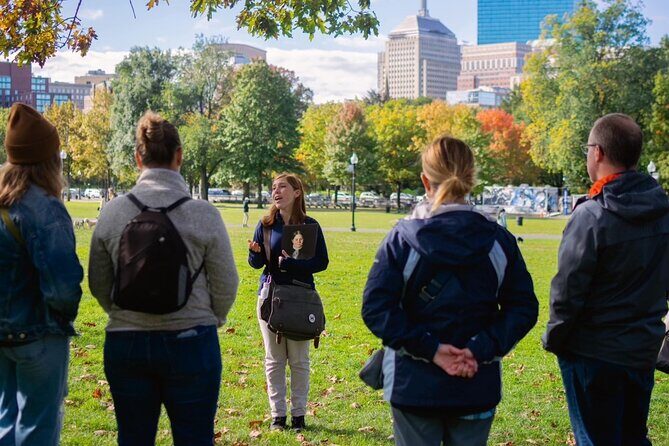
- Small group size (15 max) means more back-and-forth with the guide.
- Maura’s storytelling makes suffrage-era Boston feel personal and specific.
- Pro and anti suffrage viewpoints show up in the same neighborhood story.
- Landmark stops outside keep the tour moving without museum admission costs.
- Boston’s cultural anchors like the Public Garden, Copley Square, and the Public Library tie into the political fight.
Why Back Bay works so well for a Votes for Women tour
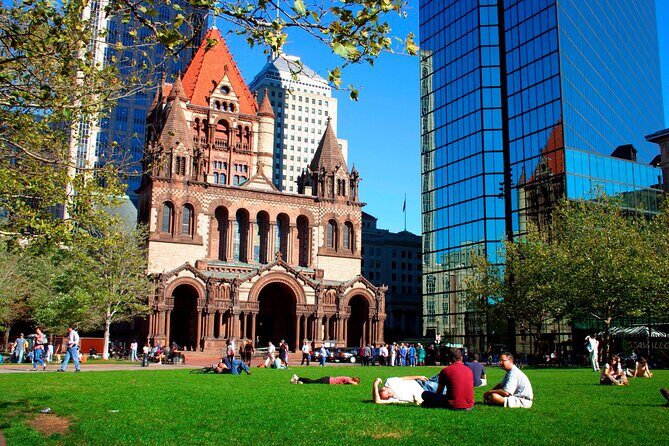
Back Bay isn’t just pretty architecture—it’s a map of power. On this walk, you see how money, institutions, social reform, and public debate all collided in one of Boston’s most prominent neighborhoods.
That’s why this route clicks for me. You’re not jumping around the city to chase a handful of famous names. Instead, you’re walking the kind of streets where influential people lived, organized, argued, and shaped public life. The result is that women’s suffrage history stops feeling like something sealed in textbooks and starts feeling like it happened to real neighbors.
It also helps that the tour doesn’t treat suffrage as a single straight line. You’ll see prominent pro-suffrage figures and equally prominent opponents. That balance makes the story more honest—and frankly, more interesting.
You can also read our reviews of more historical tours in Boston


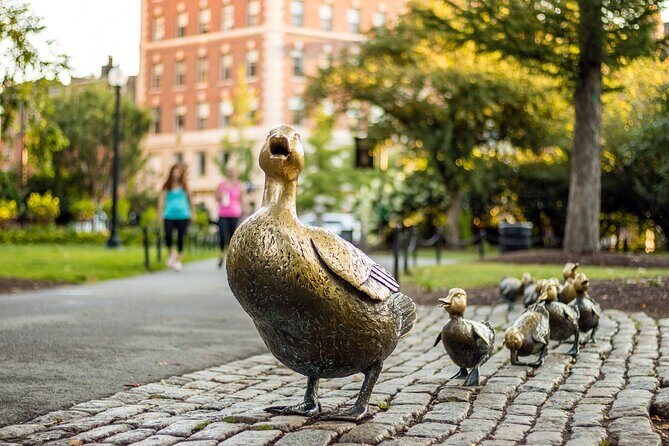
Getting started at Make Way for Ducklings (and then moving fast)
The tour meets at Make Way for Ducklings by Nancy Schön (4 Charles St). It’s a lively starting point, and it gets you oriented quickly: you’re in the center of Boston’s civic and cultural geography, not off in some obscure corner.
From there, you head into a morning rhythm that’s very easy to follow. You’re outdoors, you’ll be looking at facades and landmarks, and you’ll get short stops that connect what you’re seeing to what you’re learning. The whole experience is paced like a good conversation: enough structure to keep you on track, and enough space for the guide to answer questions.
If you want to make this go smoothly, wear comfortable walking shoes. This isn’t a long-stride power walk, but you do need to be okay standing for stretches while the guide explains what to look for.
Boston Public Garden and Thomas Ball’s Washington statue
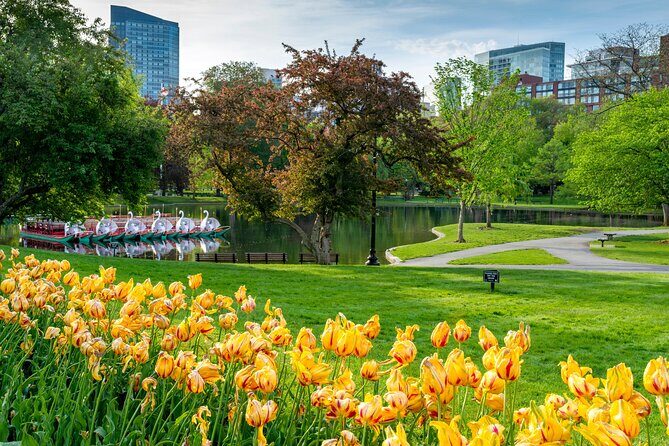
One of the first major stops is Boston Public Garden, established in 1837 as the first public botanical garden in the United States. Even if you’ve strolled through the Garden before, this stop gives you a new frame. It’s not just a park—it’s part of Boston’s public-world evolution, where people gathered, ideals circulated, and civic identity got built.
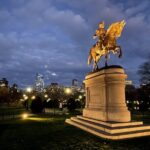
Right alongside that broader “public life” theme, the tour also highlights the equestrian statue of George Washington by Thomas Ball, commissioned in 1859. This is a reminder that public monuments often reflect the values and priorities of their era. When you pair that with the women’s rights focus, you start to notice how politics and visibility go together—who is commemorated, who is ignored, and how change happens when new voices demand a place in public life.
6 Marlborough St: Pauline A. Shaw and Boston’s organized push
At 6 Marlborough St, the tour turns from civic background to direct suffrage-era organizing. This is the home of Pauline A. Shaw, described as a financier of Boston’s women’s suffrage movement and founder of the Boston Equal Suffrage Association for Good Government.
What I like about this stop is the specificity. You’re not just learning that “women campaigned.” You’re seeing the role of money, planning, and institutions—because suffrage wasn’t only speeches and rallies. It was also associations built to influence the rules, the public conversation, and the practical machinery of government.
This section also sets up an important theme the tour returns to again and again: the suffrage movement was contested. That’s not a downer—it makes the story feel grounded.
Contrasting voices: Elizabeth Putnam, Julia Ward Howe, and the anti-suffrage presence
The walking route threads together several homes tied to major figures, including those who opposed suffrage.
You’ll pass the home of Elizabeth Putnam, identified as an anti-suffragist and noted as the first woman to preside over a state electoral college. That’s a strong detail because it complicates the storyline. You see that women held authority in public structures—even when that authority didn’t automatically translate into support for voting rights for women.
You’ll also see the home of Julia Ward Howe. And the tour doesn’t stop at major names; it uses the neighborhood to show how different kinds of influence mattered—social, political, and cultural.
Then you reach the home of Blanche Ames, a pro-suffrage cartoonist and early advocate for birth control. If you’re wondering what “activism” looked like beyond petitioning, this is one of the most eye-opening moments. It’s a clear signal that suffrage was connected to broader debates about women’s lives and autonomy.



The Ames Mansion area: how pro and anti-suffrage lived side by side
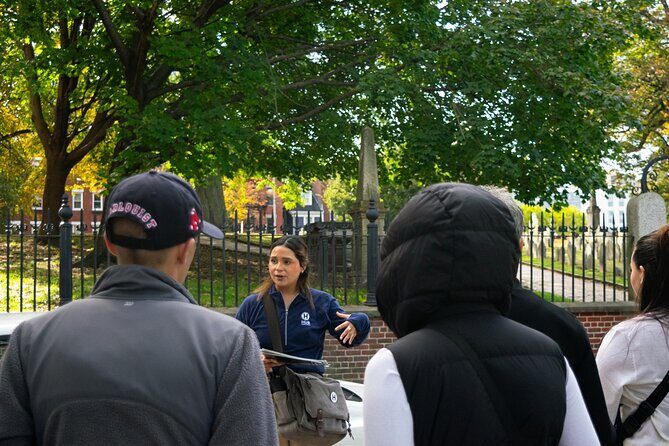
The tour lingers on the Ames Mansion as the centerpiece of the Ames family fortune and their involvement in politics. Here the story gets sharply personal, because the supplied details point to two key figures tied to the family: Mary Shreve Ames (anti-suffragist) and Blanche Ames (suffragist).
This is where the walk feels most human. You aren’t staring at a distant “movement.” You’re looking at how a wealthy family’s influence could pull in opposite directions at the same time. That kind of internal contrast is harder to get from a museum exhibit.
As you move along, the route also includes a historic long avenue with a path through trees, grassy areas, park benches, and statues. In practice, it’s a breather for your legs, but it also reinforces how suffrage conversations unfolded in ordinary public spaces—not only in meeting halls.
The tour then points to the home of Mary Shreve Ames, president of the Massachusetts Anti-Suffrage Association. Seeing that title in context—paired with the nearby suffrage connections—adds weight. You understand that anti-suffrage organizing was not passive. It was structured, led, and serious.
College Club of Boston and the power of women’s institutions
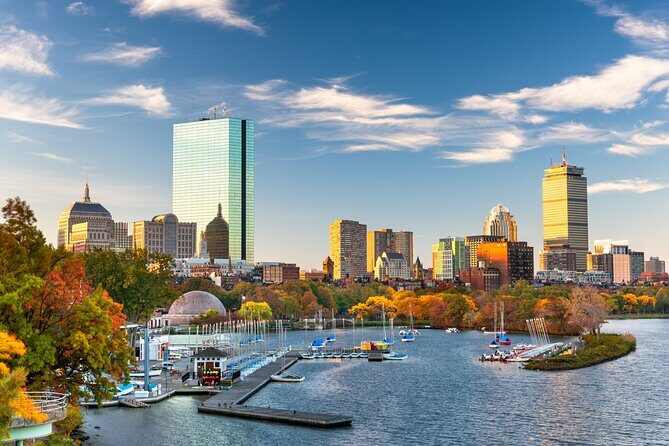
Stop 3 is the College Club of Boston, described as the first women’s college club in the United States. This is an important shift in emphasis: you’re moving from people’s homes and associations toward organized education and women’s professional community.
Clubs like this mattered because they created networks. Networks created credibility. And credibility helped women press for broader rights.
At this stage of the tour, I also appreciate how the pacing works. You’ve heard enough names and politics to feel immersed, but the stops stay short—so you can keep your attention without getting overloaded.
The Historic Museum of Natural History building: from museum to protest
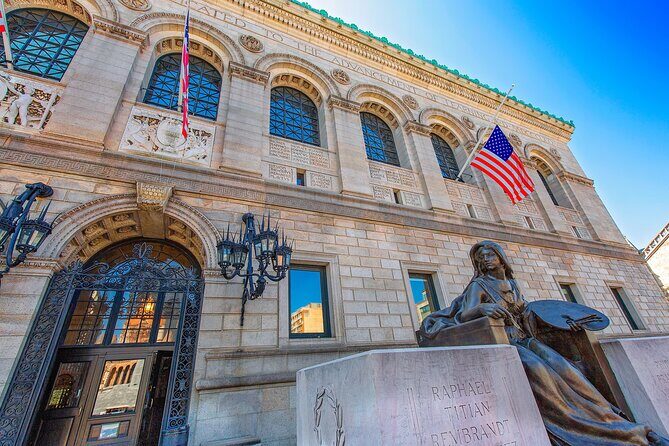
Stop 4 is RH Boston | The Gallery at the Historic Museum of Natural History. The building is noted as the home of the Museum of Natural History from 1864 to 1951, which gives it that “Boston’s institutions changing over time” feel.
Then comes one of the most memorable details: the site was previously an MIT lab where Katherine McCormick protested popular fashion as part of the suffrage movement. Even without a long indoor visit, you get the idea that activism wasn’t limited to elections and speeches. It also included controlling culture, challenging norms, and pushing back on how women were expected to appear and behave.
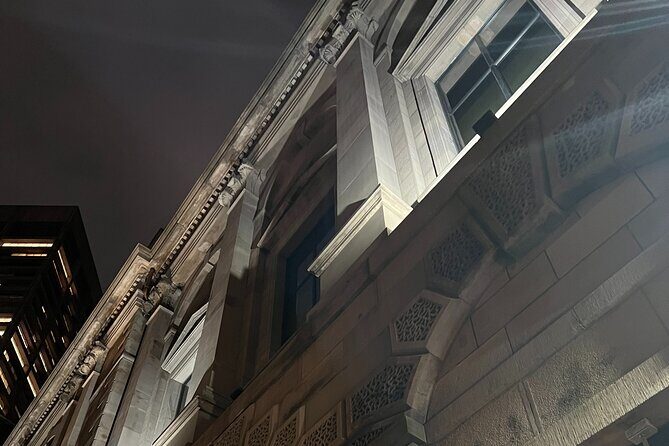
The building itself is also highlighted as built in 1877, and cited by members of the American Association of Architects as one of the country’s top 10 buildings. That’s a nice contrast point: women’s rights history isn’t separate from the city’s architectural pride. It sits right in the same streetscape.
Copley Square and the Boston Public Library: cultural hubs as political real estate
Stop 5 is Copley Square, described as an iconic public square built to be the cultural center of Boston. This helps you zoom out. Cultural spaces and political spaces often overlap. If people gather for ideas, art, and public life, it becomes easier for arguments about voting rights to spread.
Next you reach the Boston Public Library, founded in 1848 and now the third-largest public library in the United States. Even if you don’t step inside, this stop anchors the tour in the civic goal behind education: access to knowledge and public learning.
From there, the tour points to a cluster of suffrage-related office history in the area:
- It was once known as Chauncy Hall, home to offices of pro-suffrage organizations including the Massachusetts Woman Suffrage Association and The Women’s Journal.
- It also mentions the Kensington Building (demolished in 1967), which housed offices of the Massachusetts Association Opposed to Further Extension of Suffrage to Women.
That “same neighborhood, opposing organizations” setup is one of the best teaching tools this tour uses. You can see how politics wasn’t happening elsewhere—it was happening in the city’s main conversation spaces.
You’ll also pass the finish line of the iconic Boston Marathon, plus a nearby shopping and dining street associated with luxury brands. The practical takeaway here is that today’s everyday Boston overlaps with yesterday’s organized debate. The neighborhood you walk through now has always been a place where power and attention mattered.
A spiritualist temple and women leading in public
The tour includes a stop referencing a former Spiritualist Temple, described as a place where women were allowed to lead public meetings.
That detail does something useful. It connects women’s public presence to organized meeting culture, even when formal political voting rights weren’t granted yet. It’s a reminder that women built public leadership in whatever spaces were available—then used that experience to press for legal rights.
Boston Women’s Memorial: a strong final note on names you’ll carry
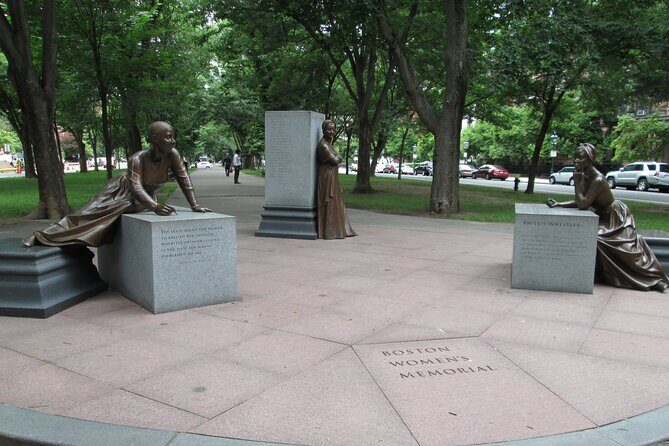
The tour finishes at the Boston Women’s Memorial on Commonwealth Avenue Mall. This memorial depicts Abigail Adams, Phillis Wheatley, and Lucy Stone.
I like how this ending works. After hours of walking past doors and institutions, you end in a single place that names people you’ll want to remember. You leave with a short list of names to look up later, and with a sense of how much argument, organizing, and courage it took to get from exclusion to voting rights.
Price, time, and why $35 feels fair for this route
At $35 per person for about 2 hours 30 minutes, this tour is priced like a classic walking experience—and it earns that price.
You’re paying for:
- A focused expert guide (Maura) who connects buildings to specific women and organizations
- A small group size (max 15) that keeps the interaction real
- A route that packs multiple landmark-quality stops into one outing
Because the tour is designed around outdoor landmarks and public spaces with free viewing at most stops, you’re not hit with add-on museum ticket costs just to get the main story. That makes it a cost-controlled way to do a meaningful theme tour.
Who should book this women’s suffrage walk?
This is a great fit if you want:
- A small-group, expert-led walking tour in Back Bay
- Women’s rights history in Boston specifically, with both pro- and anti-suffrage figures
- A route that makes you look at familiar places differently (especially parks, squares, and major institutions)
It’s less ideal if:
- You need a lot of indoor seating or you struggle with extended standing
- You prefer a shorter tour with minimal walking
- You’re not in the mood for sustained historical context tied to real buildings and named individuals
Should you book this Votes for Women History Tour of Back Bay?
Yes—if you enjoy guided walking tours that turn street-level details into a story. The combination of a tight group size and an expert guide matters here, because the tour’s value is in connections: a home, an association, a building, an organization, and the named women behind it.
If you’re the type who likes to understand how change actually happens—through networks, institutions, and arguments—this one will click. And if you’re worried it might be too much history, you can treat it as a well-paced city walk with a theme. It moves, it includes a mix of parks, squares, and prominent buildings, and it ends with a memorial that makes the names stick.
FAQ
How long is the Boston Votes for Women History Tour of Back Bay?
It’s approximately 2 hours 30 minutes.
How much does the tour cost?
The price is $35.00 per person.
What group size should I expect?
The tour has a maximum of 15 travelers, in a small group.
Where does the tour start and where does it end?
It starts at Make Way for Ducklings – Nancy Schön, 4 Charles St, Boston, MA 02116, and ends at Boston Women’s Memorial, 256 Commonwealth Ave, Boston, MA 02116. The finish is about 0.8 miles from the start.
What time does the tour begin?
The start time listed is 10:00 am.
Is the tour offered in English?
Yes, it’s offered in English.
Do I need museum tickets to enjoy the tour?
Admission inside museums is not included. However, many stops are free to visit from the outside.
Is this tour okay for someone who has trouble standing for a long time?
It’s not recommended if you have trouble standing for extended periods. The tour is best for guests with moderate physical fitness.
Is the tour suitable for people using public transportation?
Yes, it’s near public transportation.
What happens if the weather is poor?
The experience requires good weather. If it’s canceled due to poor weather, you’ll be offered a different date or a full refund.