REVIEW · BOSTON
Boston Pass: 40+ Things To Do – Includes Franklin Park Zoo
Book on Viator →Operated by Go City · Bookable on Viator
One pass, dozens of Boston stops. The value comes from choosing among 40+ attractions at your own pace, and I like the convenience of mobile tap-in entry instead of digging for paper tickets. The big consideration: some included partners are seasonal or require reservations, so you’ll want to check your dates early.
If you pick the 1, 2, 3, 5, or 7-day pass, you’re building a plan around “big-ticket” admissions while still keeping freedom for the rest. I also like that the Go City app centers your itinerary and the digital guide, which helps you map your day without guessing. Still, there’s a catch to manage: each attraction can only be visited once, and your pass is activated when you use it the first time.
Finally, for a smooth trip, I’d treat your first-day entry like a checklist job. Keep your pass synced and working on your phone before you reach the door. And if you’re traveling in winter, remember the CityView trolley is listed as closed Dec–Mar and some other attractions are marked as currently unavailable.
In This Review
- Key highlights to know before you go
- Boston Pass in plain English: how 40+ sights actually work
- Planning your days: a practical way to avoid wasting time
- Museum of Science, Prudential Tower views, and Swan Boats
- Revolution in walking distance: Paul Revere, Buckman Tavern, USS Constitution, and the harbor
- Art and architecture lovers: Museum of Fine Arts, Isabella Stewart Gardner, and Peabody Essex
- Families in Boston: Boston Children’s Museum and Franklin Park Zoo
- Harvard Tour and the Boch Center theater tour
- Salem, Plymouth, Concord, and Cape Cod: the day-trip mindset
- Colonial house time in Salem and beyond
- Franklin Park Zoo day or Museum day: which should be first?
- The CityView trolley: what it’s good for, and what to watch
- App and ticket reality check: the smooth version and the problem version
- Getting value from $79: when this pass really pays off
- Who this Boston Pass suits best (and who should skip it)
- Final take: should you book the Boston Pass?
- FAQ
- How many attractions are included with the Boston Pass?
- How long are the passes valid?
- What language is the pass available in?
- How do I use the pass for entry?
- Is the Go City app included?
- Do all included attractions work without reservations?
- Can I visit the same attraction more than once using the pass?
- Are food, drinks, and transportation included?
- Where does the experience start and end?
- Is the pass refundable if I cancel?
Key highlights to know before you go

- Pick your own mix: One pass covers 40+ attractions across 1 to 7 consecutive calendar days.
- Tap-to-enter convenience: Store your pass on your phone and use it at participating sites.
- Big-name Boston anchors: Museum of Science, Museum of Fine Arts, Harvard Tour, and more.
- Family-friendly wins: Boston Children’s Museum and Franklin Park Zoo are included.
- Day-trip options: Salem, Plymouth (Plimoth Patuxet), Concord, and a Cape Cod harbor cruise are part of the offer.
- Plan for reservations and seasonal gaps: Some stops require bookings, and some are closed at certain times.
Boston Pass in plain English: how 40+ sights actually work
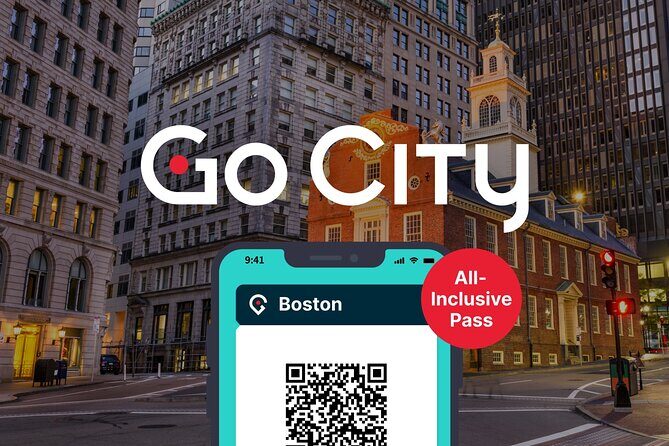
Think of this pass as a “choose-your-own itinerary” ticket. You buy a pass for a set number of consecutive calendar days (not rolling 24-hour periods). Once you enter your first included attraction, the clock starts—and you’re allowed to use the pass for that full stretch.
Two rules matter a lot for your day planning:
- Each attraction can only be visited once.
- You can’t assume every included partner will be operating. The trolley and a handful of venues are listed as closed or currently unavailable, so your plan should include backups.
Price-wise, the logic is simple. At $79 per person, the pass tends to pay off when you hit multiple “anchor” attractions that normally cost real money—especially museums, observation decks, and harbor cruises. If you’re only planning to do one or two small stops, you may end up happier buying individual tickets.
You can also read our reviews of more tours and experiences in Boston



Planning your days: a practical way to avoid wasting time

Boston is compact in the center, but your must-see list still spreads out. The pass helps because it reduces the mental friction of ticket lines—you can focus on getting to places and staying on schedule.
Here’s the approach I recommend:
- Start with one major museum or guided experience each morning (when energy is highest).
- Slot the shorter attractions (45–60 minutes) after lunch or in late afternoon.
- Use the included trolley option when it fits your route, but don’t build your whole day around it.
Also, do one planning task before you step outside: open the Go City app/digital guide and check which stops need reservations. At least two of the included items specifically call this out, so you’ll save yourself stress by handling it ahead of time.
Museum of Science, Prudential Tower views, and Swan Boats

If you want a first-day win, this is a strong trio: hands-on learning, skyline views, and a classic Boston waterside break.
Museum of Science (3 hours) is one of the city’s biggest interactive science centers, with hundreds of exhibits across electricity, animals, the human body, and dinosaurs. What I like about it is that it works for a wide age range without turning into a single-theme visit. If you’re traveling with kids, this is a safe bet that can easily fill a half-day.
Boston Observation Deck at Prudential Tower (1 hour) gives you 360-degree city views from the 52nd floor. It’s short, weather-dependent, and usually best when you want the “I see the layout” effect—especially helpful if you’re building a multi-neighborhood day.
Swan Boats (30 minutes) are not a long stop, but they’re pure Boston tradition: pedal-powered swan boats across a lagoon. If you’re trying to squeeze in something low-effort between bigger venues, this fits well.
One drawback to watch: these are popular. If you want extra breathing room, plan earlier in the day rather than right at peak.
Revolution in walking distance: Paul Revere, Buckman Tavern, USS Constitution, and the harbor
Boston’s story shows up best in places tied to the American Revolution, and this pass puts several of them on the same itinerary map.
The Paul Revere House (1 hour) takes you to an old downtown landmark tied to the 1775 ride warning about British troop movement. Even if you think you already know the famous version, the point here is seeing the physical place that anchors the larger Revolution narrative.
Buckman Tavern (30 minutes) is a National Historic Landmark tied to April 19, 1775 in Lexington, where militiamen gathered to await the British. This one is self-guided with an audio tour, so you can go at your own pace and stop for photos when you want.
USS Constitution Museum (1 hour) is next to the famous ship “Old Ironsides.” The museum tells the story of the vessel, while the actual ship is free to visit and does not require using your pass. I like that setup because you can focus your paid time on the museum, then still walk to the ship without extra friction.
Boston Harbor City Cruises (1.5 hours) adds a different kind of context: water-level history. This cruise takes you through the inner and outer harbors and includes narration about Revolutionary War tales and maritime legends. It also lines up with the “you need a break” rhythm of Boston sightseeing: sit down, look around, and let the harbor do the storytelling.
Tip: if your schedule is tight, choose between a midday museum-heavy day and a cruise-heavy day. The harbor cruise is a time commitment, but it’s also one of the easiest ways to see a lot without walking nonstop.
Art and architecture lovers: Museum of Fine Arts, Isabella Stewart Gardner, and Peabody Essex
If you want Boston-style culture that goes beyond one famous name, you’ve got options here.
Museum of Fine Arts (3 hours) is a major collection stop. Expect everything from American masterpieces to works spanning ancient Egypt to contemporary art. It’s big enough that you’ll want to pick a path rather than trying to see everything.
Isabella Stewart Gardner Museum (1.5 hours) is housed in a 19th-century palazzo-style building modeled after Venetian architecture, and the courtyard garden space is part of the “experience,” not just decoration. This is a great choice if you want a museum that feels like a curated world rather than a hallway of rooms.
Peabody Essex Museum (1.5 hours) leans toward global curiosities and maritime context—objects brought back by sea captains, plus art from diverse cultures. It’s also built around collections like a transported Chinese merchant house reassembled in the US.
One caution: Peabody Museum of Archaeology and Ethnology is included on the list, but it’s marked currently unavailable. If you were counting on it, plan a swap before you go.






Families in Boston: Boston Children’s Museum and Franklin Park Zoo
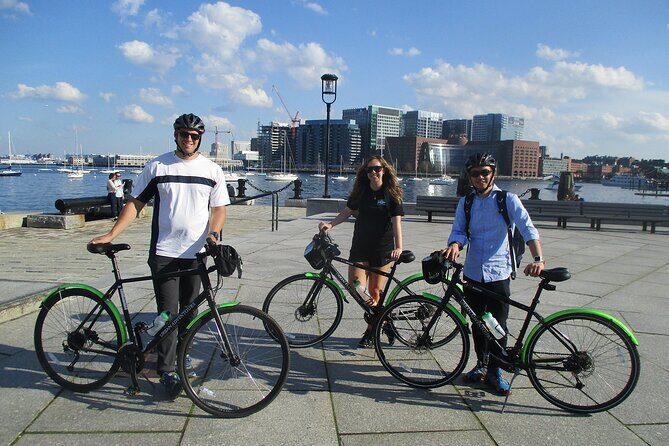
Two stops here make the pass feel tailor-made for families.
Boston Children’s Museum (3 hours) is built for hands-on participation: kids can climb a wall, navigate a giant maze, and create original artwork. The big advantage is that you’re not just buying entry and hoping your child finds interest—you’re walking into a place designed around that momentum.
Franklin Park Zoo (2 hours) is an open-air zoo spread across about 72 acres, with themed exhibits meant to help you get closer to animals while still feeling like you’re in their environment. If you’re visiting in a season when the zoo is operating normally, this is one of the best “spend your time where it matters” uses of a pass.
If your group includes both adults who want value and kids who want motion, these two complement each other better than you’d expect.
Harvard Tour and the Boch Center theater tour

This is where the pass gets more “guided experience” style—less about standing in a line, more about getting stories with context.
Harvard Tour (1 hour 10 minutes) is described as an insider-led theatrical experience with students guiding you past historical sites like John Harvard Statue, Memorial Hall, Harvard Square, and Harvard Yard. The payoff is that you’re not just looking at buildings; you’re learning how the campus evolved and how to read it.
Boch Center – Wang Theatre (45 minutes) gives you a behind-the-scenes look at theater history and architecture, including the stage where big performers have appeared. Advance reservations are recommended, so don’t leave this as an afterthought.
One related note: Harvard Museum of Natural History is marked currently unavailable, so if natural specimens are a priority, you’ll need an alternative plan.
Salem, Plymouth, Concord, and Cape Cod: the day-trip mindset
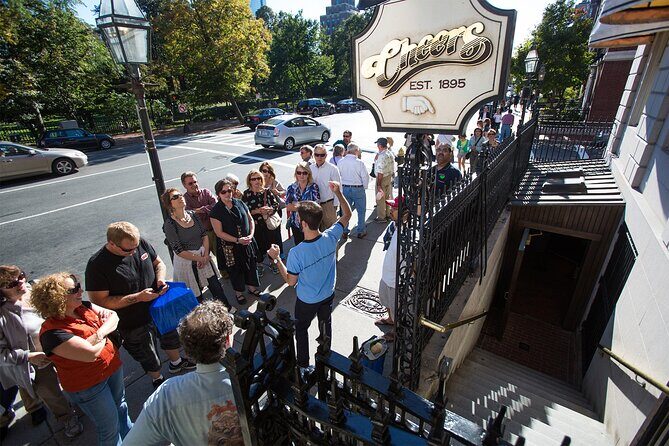
Boston day trips can be time-consuming to plan because they often mean crossing different regions. What the pass gives you is a simple “yes, you can afford to try this” option.
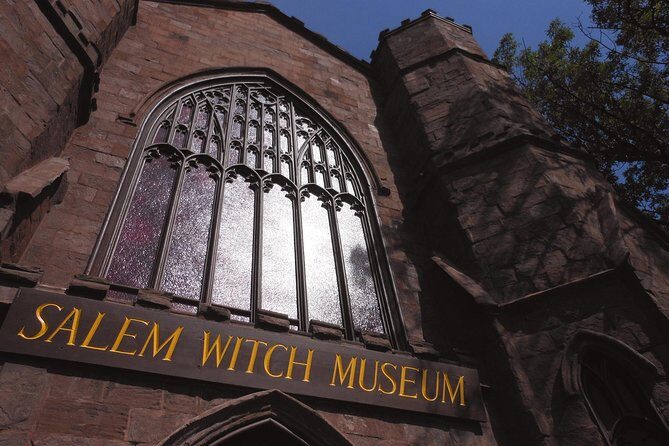
Salem Witch Museum (45 minutes) is timed and dramatic, and it specifically requires reservations. If you love history that’s told like a story, this is the stop. If you hate planning, this is the stop to reserve early.
Plimoth Patuxet Museums (2 hours) brings you to an authentic 17th-century New England living museum, with historically accurate settlement recreations and opportunities to meet Pilgrims and Natives. This is a stronger choice than many “historic reenactment” style stops because the focus is on living history rather than a quick walkthrough.
Plimoth Grist Mill is also listed, but it’s marked currently unavailable. If your version of the pass includes it as a combination, double-check what’s actually accessible when you arrive.
Concord Museum (1 hour) is a smaller, more old-road-feeling stop with American history artifacts across the 17th, 18th, and 19th centuries. It’s a good match when you want a day trip that’s not all driving and no time to breathe.
Hy-Line Cruises (Cape Cod harbor cruise, 1 hour) is included as a Hyannisport area harbor cruise. It’s a relaxing way to end a day-trip rhythm: sit down, look at landmarks, and let the water reset your energy.
A note on other included items in this larger region: Louisa May Alcott’s Orchard House and Samuel Adams Boston Brewery are marked currently unavailable, so don’t build your schedule around tastings or that specific literary stop unless your app confirms they’re operating.
Colonial house time in Salem and beyond
A lot of the appeal here is stepping into places tied to famous writers and local legends.
The House of the Seven Gables (45 minutes) includes access to the Nathaniel Hawthorne House as well. It’s described as New England’s oldest wooden mansion, built in 1668 in what the listing ties to witchcraft capital Salem. Even if you only know the title from school, walking the rooms is a different kind of connection than reading about it.
If you want a day that mixes history with architecture and story, this works well after a more intense museum stop, like Salem Witch Museum.
Franklin Park Zoo day or Museum day: which should be first?
When you’re juggling multiple big places, order matters. Here’s a simple ordering rule that works in real life:
- Put the Zoo earlier if your group likes being outside and animals are high motivation.
- Put the large indoor museums earlier if weather could be iffy or if your group needs quiet time.
If you’re using the observation deck, I’d put it near a “big picture” moment—right after you’ve explored one neighborhood—so you can look down and understand where everything sits.
And because some stops are seasonal or currently unavailable, your backup plan should live in your phone. If one attraction doesn’t work, you want to be able to swap quickly without losing half a day.
The CityView trolley: what it’s good for, and what to watch
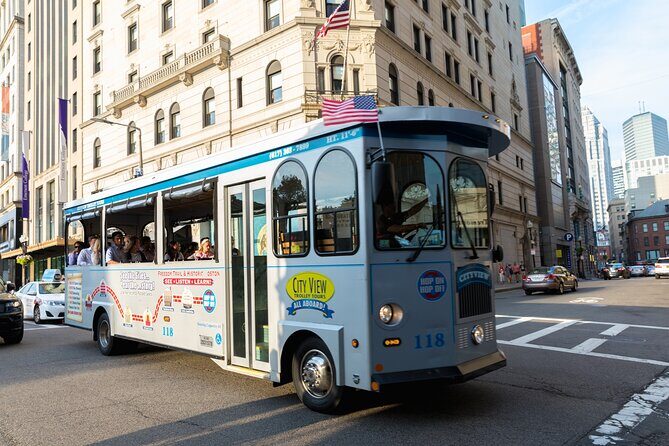
The included City View Trolley Tours is essentially a hop-on, hop-off, fully narrated option. It’s described as valid for two days and is available as a seasonal service (closed Dec–Mar).
What I like about a trolley day is that it reduces decision fatigue. You get narration while you ride and the open-air views can make the city feel less like a grid of stops.
But there are two practical considerations:
- You might face waiting lines at the boarding point, especially when you start mid-day.
- Hop-on setups often limit where you can board and how long the seats stay available, so it pays to arrive earlier if you want flexibility.
A smart move is to get your bearings before you ride. One helpful tip is to stop at the Boston Common Visitor Center area to grab a map for the City Tours, so you know where to start and how the pickup points work.
Also, if you’re visiting during the months when the trolley is listed as closed, plan around it. Don’t build a whole itinerary assuming the trolley runs.
App and ticket reality check: the smooth version and the problem version
In theory, your phone becomes your ticket. In practice, you need it to work before you reach the door.
The good news: the pass is designed to be used via a mobile ticket, and the app is what you use to plan and show your pass. For most people, that means less waiting and fewer ticket counter delays.
The caution: some people run into trouble when QR codes don’t scan or if the pass isn’t fully synced on the device they’re carrying. I recommend you do two things:
- Open the Go City app and verify the pass is there before you start your first day.
- When possible, have your phone fully charged and keep the screen ready when you approach entrances.
If your itinerary includes a reservation-based stop (Salem Witch Museum, and the theater tour where reservations are recommended), don’t wait until the last minute to confirm.
Getting value from $79: when this pass really pays off
This pass is best when you treat it like a tool for stacking major admissions. It’s not as good if your plan is mostly walking and only a couple of paid entry spots.
Here are the scenarios where the math usually works in your favor:
- You’re doing at least two big museums plus one “experience” stop like the harbor cruise.
- You’re traveling with family and want kids-first energy (Children’s Museum + Franklin Park Zoo).
- You’re a first-timer who wants multiple Boston icons without thinking about ticket logistics all day.
Where value can slip:
- You visit in winter months when seasonal partners like the trolley may be closed.
- You rely on stops marked currently unavailable and don’t check the app.
- You’re missing reservations for required entries, which turns a planned day into a scramble.
If you can keep those risks in check, the pass becomes a straightforward way to see more of the city than you’d normally attempt.
Who this Boston Pass suits best (and who should skip it)
This pass fits best if you:
- Want a flexible plan with a mix of museums, guided tours, and family stops
- Prefer tapping into admissions rather than buying each ticket separately
- Like seeing a city by clusters: a big museum block, then a harbor or Revolution block
You might want to skip or reconsider if you:
- Have very limited time and only want one or two specific attractions
- Are traveling during a period where the trolley is closed and multiple stops may be unavailable
- Hate reservation-based planning, since at least Salem Witch Museum calls for it and the theater tour strongly suggests it
Final take: should you book the Boston Pass?
If you’re going to use it like a planning tool, I think this is a strong deal. The mix of major museums, standout family stops like Franklin Park Zoo, and classic Boston experiences like the harbor cruise makes it easy to fill your days without driving yourself crazy.
Book it if you’ll stack multiple included attractions and you’re willing to check availability and reservations in the app first. Skip it if you’re visiting at a time when seasonal services shut down or you’re betting on venues that are currently marked unavailable.
If you do book, I’d treat your phone as your ticket wallet, confirm your pass is synced the moment you get it, and build a backup plan for any stop that doesn’t cooperate.
FAQ
How many attractions are included with the Boston Pass?
The pass includes entry to 40+ unique Boston-area attractions, with pass options for 1, 2, 3, 5, or 7 days.
How long are the passes valid?
Passes are valid for 1 year from the purchase date, and the pass is activated when you visit your first included attraction. It then remains valid for the number of consecutive calendar days purchased (not 24-hour periods).
What language is the pass available in?
The pass is offered in English.
How do I use the pass for entry?
Your pass is available as a mobile ticket. You’ll store it on your phone and tap for entry at participating attractions using the pass in the Go City app.
Is the Go City app included?
Yes. You get the Go City app, which helps you plan your trip and access your digital guide (also available as a PDF).
Do all included attractions work without reservations?
Not all. Some require reservations, including Salem Witch Museum, and the included digital guide provides reservation instructions where needed.
Can I visit the same attraction more than once using the pass?
No. Each included attraction can only be visited once.
Are food, drinks, and transportation included?
Food and drinks are not included unless specified, and transportation to and from attractions is not included unless stated.
Where does the experience start and end?
It starts and ends back at the meeting point in Boston, MA, with the activity ending back where you started.
Is the pass refundable if I cancel?
This experience is non-refundable and can’t be changed for any reason. If it’s canceled due to poor weather, you’ll be offered a different date or a full refund.