REVIEW · BOSTON
Boch Center Wang Theatre Tour & Folk Americana Roots Hall of Fame
Book on Viator →Operated by Boch Center Tours · Bookable on Viator
A theater tour can feel like a shortcut to the city’s soul. This one gets you inside a landmark space and pairs backstage access with time in the Folk Americana Roots Hall of Fame, where you can connect music stories to the building that hosted them. I love that it’s not just front-of-house sightseeing; you’ll walk through working-artifacts areas like dressing room zones and stage views, plus learn how the venue shifted from a film era to live music. One thing to plan for: some parts of the theater may be limited by availability, and a few areas can be less accessible or mainly for viewing from a distance.
This tour runs about 1 hour 15 minutes and keeps the group small (up to 10 people), which makes it easier to hear your guide and ask questions without getting swallowed by a crowd. It also uses a mobile ticket, so you can show up ready to go. If you’re hoping to see every single corner, treat this as a highlights-focused tour rather than a guaranteed full sweep of the entire building.
In This Review
- Key highlights you should care about
- Entering Boch Center Wang Theatre: classic rooms, real-world scale
- Backstage tour flow: how the theater works when no one is watching
- Stage, dressing zones, and the autograph-wall moment
- Folk Americana Roots Hall of Fame: music stories you can walk through
- From movie cathedral to music icons: why the building’s timeline matters
- Price and logistics at 270 Tremont St: $25 is fair, with one caveat
- Best way to enjoy a 75-minute theater tour (without feeling rushed)
- Who this tour is best for
- Should you book this Wang Theatre and Folk Americana Roots Hall of Fame tour?
- FAQ
- FAQ
- How long is the Boch Center Wang Theatre and Hall of Fame tour?
- How much does the tour cost?
- Where does the tour start?
- Is parking available at the theater?
- What do I get with my ticket?
- Do I need to print a ticket?
- How large is the group?
- Is there free cancellation?
Key highlights you should care about
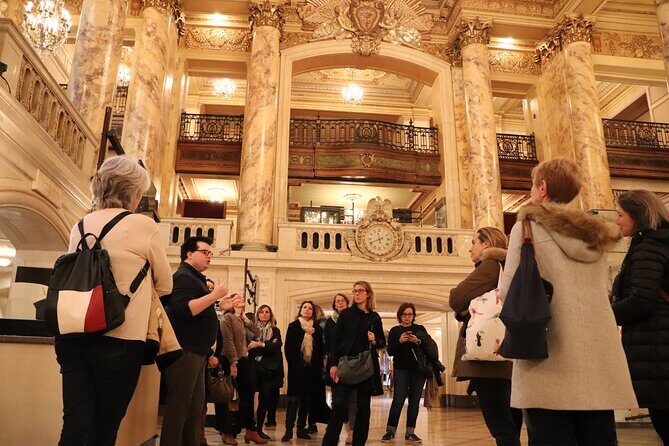
- Backstage access at a major Boston landmark so you’re not stuck only in the lobby or seats
- Time at the Folk Americana Roots Hall of Fame with exhibits focused on music history
- Stage-and-dressing-area moments that make the theater feel real, not just pretty
- A guide who explains how a performing arts center actually runs day to day
- Small-group pacing (max 10 travelers) for better questions and less waiting
Entering Boch Center Wang Theatre: classic rooms, real-world scale
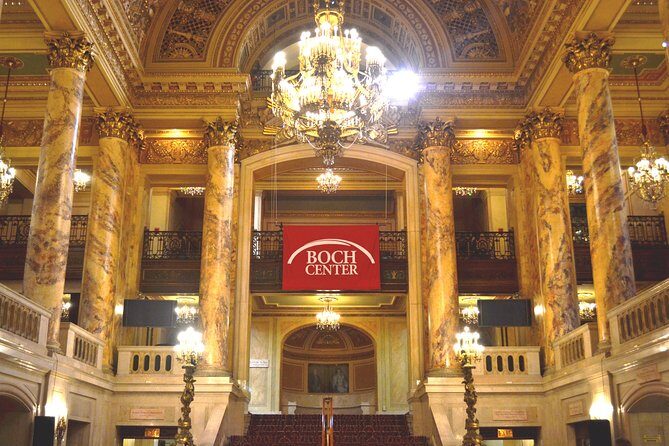
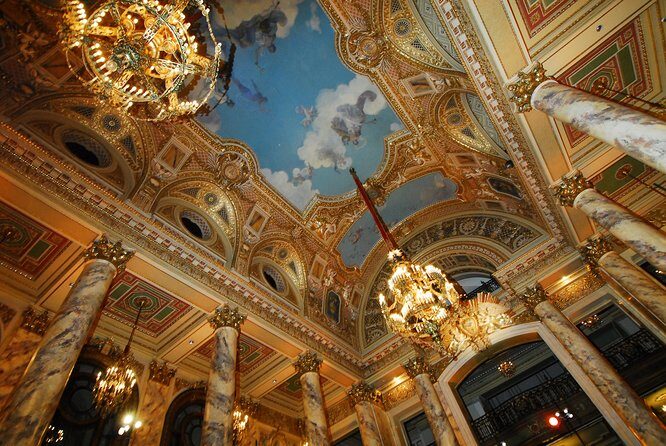
The Boch Center Wang Theatre sits at 270 Tremont St, right in the thick of Boston’s theater district. The building opened in 1925, so even before you learn details, you can feel that it’s meant for big moments—wide sightlines, dramatic architecture, and a stage built for presence. You’ll start right at the theater and then move into the areas your guide can access during the tour window.
I like that the experience is structured around one clear anchor: the Wang Theatre itself. That means your attention stays where it should. You’re not hopping between random stops or splitting time across unrelated attractions; you’re learning how this one venue became the kind of place people plan concerts, shows, and music milestones around.
It’s also worth noting that the tour lasts about 1 hour 15 minutes (approx.), which is a sweet spot. Long enough to feel like you went somewhere, short enough that you can still do other Boston plans the same day. And because the group cap is 10, you’re less likely to be squeezed into a tight line that kills your ability to look up, listen, or take a moment.
The only caution I’d give is the way older theaters operate. Even when something is “open” for tours, some rooms can be limited by maintenance or by what’s happening in the building that day. The tour makes it clear that areas are subject to availability, so keep expectations flexible and focus on what’s actually open.
You can also read our reviews of more tours and experiences in Boston.


Backstage tour flow: how the theater works when no one is watching
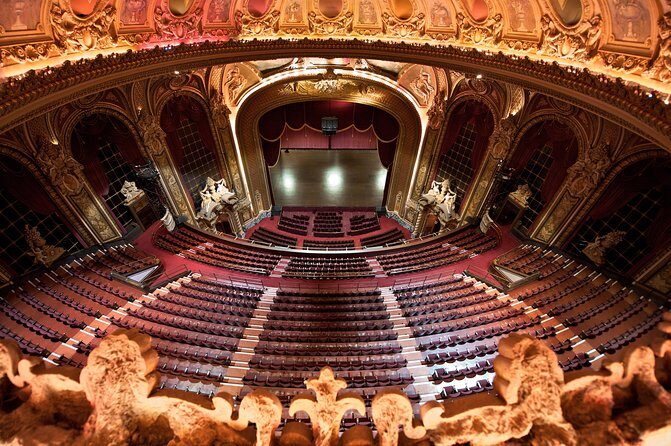
The core of the tour is a guided backstage walk through the Wang Theatre. This is the part that tends to make people light up, because backstage is where theater stops being abstract. You see the kinds of hallways, support spaces, and behind-the-scenes logic that help a performance happen smoothly—then you hear how that logic maps to the modern day.
What stands out is that you’re not only shown “cool spots.” Your guide explains the day-to-day operation of a performing arts center, which turns the backstage areas from random rooms into a functioning system. That’s the difference between a decorative tour and a useful one. Once you understand the workflow—how people move, where operations sit, and how the building supports artists—you’ll look at the public rooms differently later.
The tour also includes an exclusive look connected to the Folk Americana Roots Hall of Fame. That means the backstage walk isn’t treated like a separate show. Instead, it supports the bigger story: why this theater matters for music, and how music history lives inside its walls.
You’ll likely spend time standing in places that make the theater’s scale feel different than it does from the seats. One review specifically calls out the massive stage feeling, which matches what you’d expect when you’re standing where performers actually do their job. In plain terms: it helps you understand why audiences react the way they do—sound and sightlines are engineered for impact.
Stage, dressing zones, and the autograph-wall moment
A good theater tour has at least one “wait, that’s real?” moment. Here, that moment often comes near the dressing room area, where you can see autograph walls and memorabilia linked to performers. Reviews mention autograph walls by the dressing rooms, and that’s exactly the kind of detail you can’t easily appreciate from the audience side.
I also like the way this kind of stop changes your perspective on theater. When you’re backstage, you’re less focused on the plush seats and more focused on the human side: the preparation, the movement, the waiting, the build-up before the curtain. Even if you’re not a theater superfan, those details make the building feel alive.
Your guide’s storytelling matters here. One comment highlights a historian who was very informative and passionate, and that’s the right tone for this setting. For a venue like the Wang Theatre, you don’t want generic facts. You want someone who can connect architecture and rooms to the people who filled them.
Keep in mind that not every backstage element may be accessible to every guest. The tour notes that some areas may not be accessible to all guests, and that all areas are subject to availability. So if you have mobility needs, it’s smart to be ready with questions when you book.
Folk Americana Roots Hall of Fame: music stories you can walk through
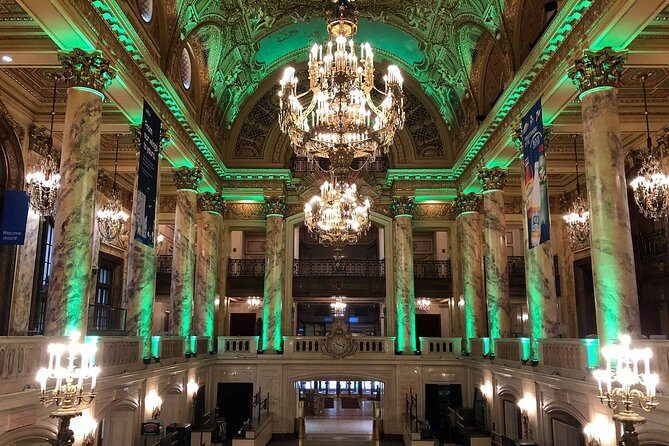
Inside the theater, you’ll have time to visit the Folk Americana Roots Hall of Fame. This is a big part of why the tour feels more like a music experience than a pure architecture walkthrough.
You’ll see exhibits celebrating music history, and you’ll learn why Boston is described as a music city. That matters because Boston’s identity often gets framed through sports, schools, or politics. Here, the building itself is used as a way to talk about how music develops and how venues shape cultural memory.
Also, you’re not just looking at isolated plaques. The tour description points to an exclusive look at the Music Hall area connected to the upcoming Hall of Fame, which suggests the collection is meant to feel like a living project rather than a dusty museum wing. Even if specific rooms change as construction and programming evolve, the overall idea remains: the theater becomes a home for Americana and roots storytelling.
This stop is a great “gear shift” after backstage. Backstage tells you how performances are supported. The Hall of Fame tells you what performances meant and who came through. If you love music but don’t want a full day at a museum, this pairing is efficient and emotionally satisfying.
If you’re a fan of Americana, folk, or roots artists, you’ll probably enjoy the way exhibits let you connect names and eras to a real performance space. And even if you’re not deep in the genre, it’s still a strong way to understand why so many venues treat memorabilia and history like a form of pride.
From movie cathedral to music icons: why the building’s timeline matters
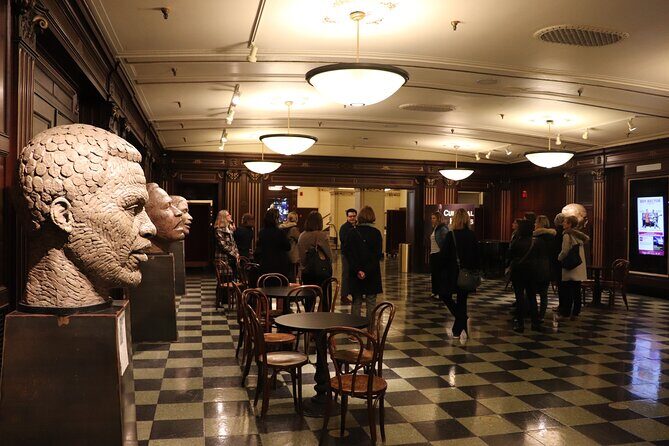
One of the most interesting parts of the tour is how the guide frames the Wang Theatre’s evolution. You’ll learn about the days when it functioned as a movie theater and compare that era to its current role as a stage for music icons.
That shift is more than a fun fact. It explains how theaters survive. Buildings like this adapt as audiences change what they want: the same architecture that once served cinema can be repurposed for concerts and live performances with the right operational adjustments. The tour’s focus on how a performing arts center runs day to day reinforces that practical reality.
This is also where Boston’s identity gets clarified. The Hall of Fame exhibits, plus the theater’s timeline, help you see Boston not just as a place that hosts music, but as a place that collects and preserves music memory. When you understand that, you’ll have an easier time appreciating why the theater is still treated as a landmark even when the city is always adding new venues.
One review also complained that some areas seemed observational due to renovation, and that high-up arts couldn’t be appreciated. That’s a reminder that a historic building can still have active maintenance needs. You should still go, but plan to focus on what’s visible and explained rather than expecting every architectural feature to be accessible for close viewing.




Price and logistics at 270 Tremont St: $25 is fair, with one caveat
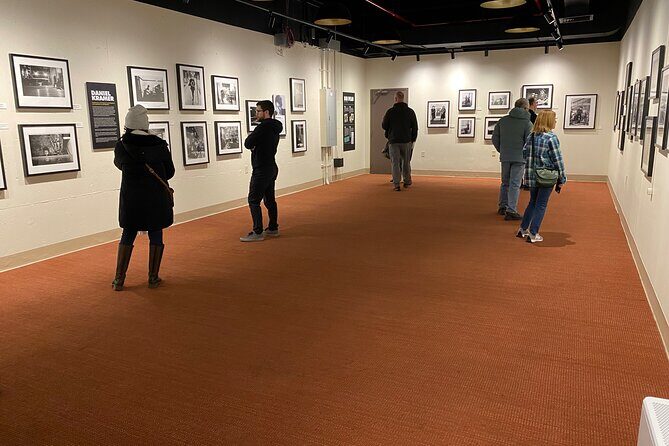
At $25 per person, this tour is priced for a “do it now” experience. You’re paying for two valuable things: a guided backstage walk and an included visit to the Folk Americana Roots Hall of Fame. For a major theater landmark, that combo can be a better deal than paying separately for access to guided history plus museum-style exhibits.
Timing is also sensible. It runs about 1 hour 15 minutes, and the tour typically gets booked around 8 days in advance on average. If you’re traveling in peak periods, I’d treat it as something to book early rather than waiting until the last minute, especially because group size is limited to a maximum of 10.
Logistics are straightforward, but there’s one important detail: parking isn’t available at the theater. If you’re driving, you’ll need to park elsewhere and walk or take transit. The good news is that the site is near public transportation, so you can arrive without stressing your plan.
You’ll use a mobile ticket, which reduces the hassle of printing. The tour ends back at the meeting point, which makes it easy to tack on lunch or a second stop nearby.
Quick reality check: you’ll want to keep your expectations aligned with a backstage tour that operates in a real working venue. That’s why “availability” is mentioned. Some rooms may be restricted, but the experience is designed so you still get meaningful backstage access plus the Hall of Fame exhibits.
Best way to enjoy a 75-minute theater tour (without feeling rushed)
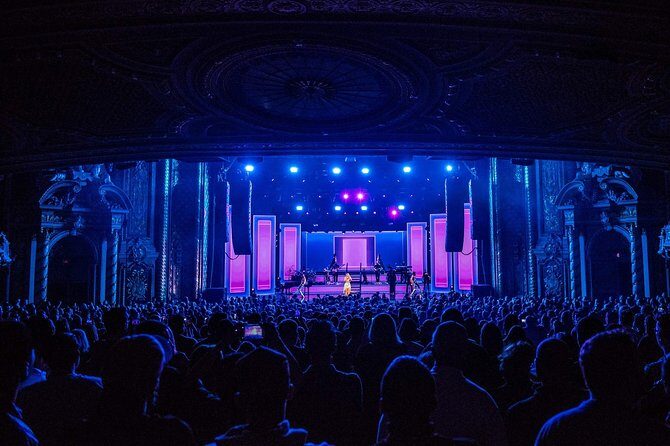
To get the most out of a short backstage-style tour, I recommend you do two things: arrive early enough to settle in, and keep your camera ready but your eyes even more ready. In older theaters, lighting and sight angles vary. A quick moment of looking up can be the difference between seeing the tour and understanding the place.
Here are practical ways to make it smoother:
- Wear shoes you can walk in comfortably; backstage routes often involve hallways and uneven surfaces.
- Be ready to move quickly between points, because a 1 hour 15 minute schedule doesn’t leave much slack.
- If you’re curious about theater operations, ask your guide how the building supports shows day to day. That’s one of the tour’s stated strengths.
- When you reach the Hall of Fame, don’t just skim. Take 2–3 minutes to look at the story flow, because the exhibits are part of the theater’s larger narrative.
Also, keep an ear out for the guide’s timeline connections: movie era to live music era, and how Boston’s music identity gets discussed through the building. That framing is what helps the tour feel like more than a checklist of rooms.
And if you want to maximize the “wow” factor, focus on the stage and dressing area moments. That’s where the building stops being architecture and becomes performance reality.
Who this tour is best for
This is a strong fit if you:
- love live music history and want a venue-based experience, not just a museum visit
- enjoy backstage access and want to understand how a performing arts center operates
- want a short, high-impact activity in central Boston
It’s also a good option if you’re traveling with someone who likes architecture but might not want a long walking museum day. The theater gives you the structure, and the Hall of Fame gives you the story.
If you’re only interested in modern pop culture exhibits, you might prefer a different attraction. But if you’re curious about Americana roots, theater heritage, or how big stages work, this tour hits the right notes.
Should you book this Wang Theatre and Folk Americana Roots Hall of Fame tour?
Yes, I think you should book it—especially at $25—if you want an efficient way to experience two things Boston does well: historic performance spaces and music storytelling. The best reason to go is the pairing: backstage access plus time in a music-focused hall of fame inside the same landmark building.
I’d hesitate only if you require guaranteed access to every part of a theater, because some areas are subject to availability and some may not be accessible to all guests. Also, if you’re the type who needs every decorative architectural detail up close, be prepared for the reality that some sections can be observational or limited due to theater operations.
If your goal is to learn something real in a short window, stand on a meaningful stage perspective, and walk through music exhibits in a historic venue, this is a very solid use of an afternoon in Boston.
FAQ
FAQ
How long is the Boch Center Wang Theatre and Hall of Fame tour?
The tour lasts about 1 hour 15 minutes (approx.).
How much does the tour cost?
It costs $25.00 per person.
Where does the tour start?
You meet at Boch Center – Wang Theatre, 270 Tremont St, Boston, MA 02116, USA, and the tour ends back at the same meeting point.
Is parking available at the theater?
No. Parking is not available at the theater.
What do I get with my ticket?
Your ticket includes a 1-hour guided backstage tour and access to the Folk Americana Roots Hall of Fame.
Do I need to print a ticket?
No. You’ll use a mobile ticket.
How large is the group?
The tour has a maximum of 10 travelers.
Is there free cancellation?
Yes. You can cancel up to 24 hours in advance for a full refund.