REVIEW · BOSTON
Boston: Underground Railroad History Tour of Beacon Hill
Book on GetYourGuide →Operated by Hub Town Tours · Bookable on GetYourGuide
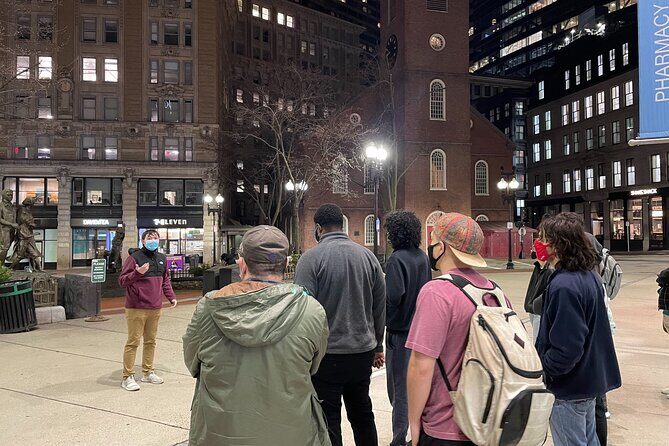
Beacon Hill hides stories beneath the streets. This small-group walking tour connects the lead-up to the U.S. Civil War to the people who fought slavery and segregation just a few blocks apart. You start on Boston Common, then move through tight Beacon Hill lanes and essential sites tied to the Black Heritage Trail.
I love how the route avoids the crush. With a tighter group size, you can actually hear the guide and get a good look at each landmark without elbow-to-elbow sidewalk stress. I also like the way the tour uses multiple angles of the same big problem: slavery, education equality, political pressure, and the everyday communities that were forced to respond.
One drawback to weigh: this is a fully outdoor walk (rain or shine) over about 2 miles, with steep hills and non-ADA-compliant sidewalks. If you have mobility limits or prefer a flat, stroller-friendly route, you may want to skip this one.
In This Review
- Key things I’d plan for
- Value for $35: a 2.5-hour story you can walk off
- Starting at Boston Common’s Soldiers and Sailors Monument
- From Boston Common into Beacon Hill: when equality debates were local
- Tight streets and big names: Mount Vernon, Acorn, Louisburg Square, and more
- Phillips School to Charles Street Meeting House: education and public debate
- Underground Railroad neighborhoods: John J Smith House through Lewis & Harriet Hayden House
- The African Meeting House break: where the tour slows down
- Abiel Smith School to George Middleton House: education, community, and names
- Pass-bys that still matter: Vilna Shul, Otis House Museum, Old West Church, and the State House
- The finish at Shaw and the 54th Regiment Memorial
- Who should book this tour (and who might skip)
- Should you book the Boston Underground Railroad History Tour of Beacon Hill?
- FAQ
- How long is the Boston Underground Railroad History Tour of Beacon Hill?
- Where does the tour start?
- How long is the walking route?
- Is the tour indoors or outdoors?
- What landmarks are included?
- Is admission to museums included?
- Are there any rules about recording or bags?
- Who is the tour not suitable for?
- Where does the tour end?
Key things I’d plan for

- A crowd-smart pace through Beacon Hill so you’re not stuck waiting for people to move
- African Meeting House as a real stop, including time for a guided tour and a break
- Underground Railroad-linked homes along the Black Heritage Trail route
- Guide Will’s storytelling energy, which keeps a 2.5-hour walk moving fast
- Expect a true walking tour: about 2.0 miles, all outdoors, weather-dependent clothing helps
Value for $35: a 2.5-hour story you can walk off
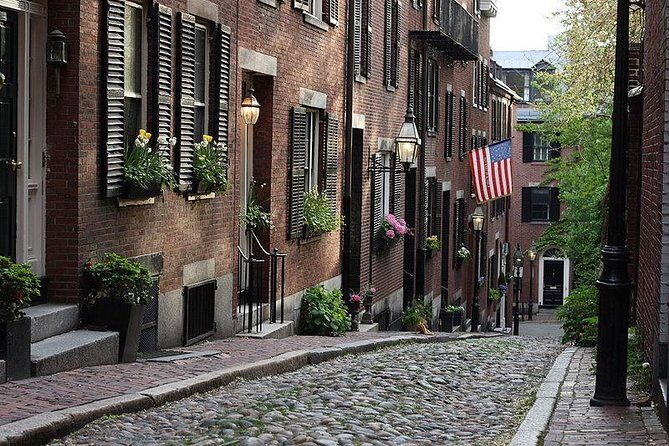
At $35 per person for about 2.5 hours, this is the kind of tour that feels priced to be accessible without cutting corners on context. You’re not just getting photos or random anecdotes. You’re getting a local historian/expert guide, a structured walk through 10 Black Heritage Trail landmarks, and enough time at key stops to understand why those places mattered in the decades before the Civil War.
Also, this is not a museum add-on. The tour does not include admission to any inside museums, so you can plan your spending accordingly. What you are paying for is the guided street-level interpretation: the “why” behind the names, blocks, and institutions you pass.
If you’re trying to choose between a generic “Boston history” walk and something more specific, this one is focused. It tracks the years when racial slavery, political arguments, and fights over education and integration were shaping life in Boston long before 1861.
You can also read our reviews of more historical tours in Boston


Starting at Boston Common’s Soldiers and Sailors Monument
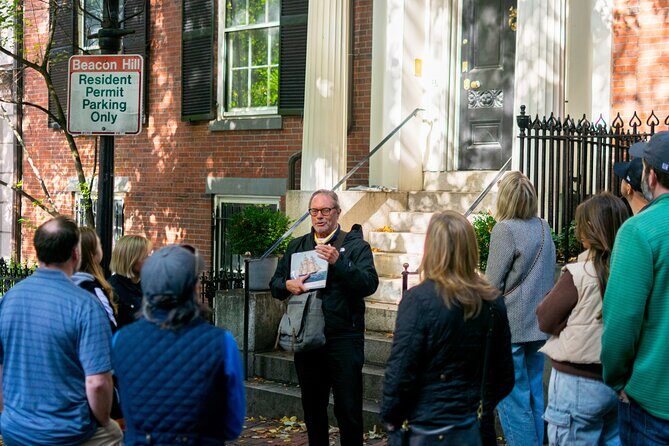
Your tour begins at the Soldiers and Sailors Monument in the center of Boston Common. The meeting point is right by the Boston Common Visitors Center at 139 Tremont Street (02108).
To find the right spot, look for the white granite column topped by a female figure holding a flag, with four bronze statues at the base. That detail matters because the Common can be busy, and you don’t want to waste time hunting when the walk is timed to start.
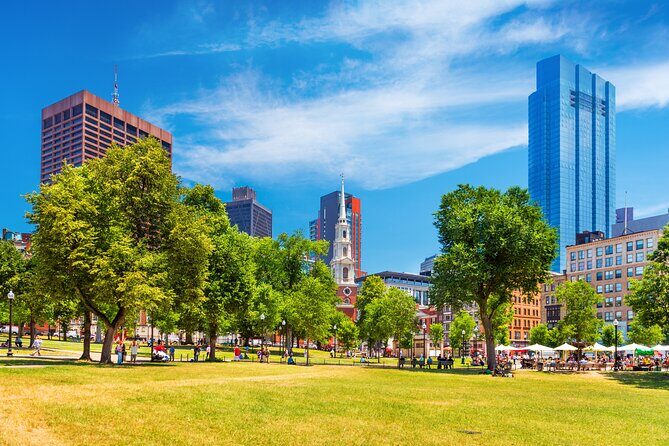
Starting on Boston Common also does a smart job of setting scale. You’re at a central anchor point in the city, but the story then shifts fast into Beacon Hill—narrow streets where a wealthy Boston address and a free Black community could exist within just a few blocks of each other.
From Boston Common into Beacon Hill: when equality debates were local
Once you’re moving, the tour focuses on the tumultuous decades that built toward the Civil War. You’ll follow a route that traces how Black and white Bostonians grappled with slavery’s reach into daily life—along with the social conflicts that grew around it.
This is where Beacon Hill becomes more than scenery. You’re walking through a neighborhood where wealth and struggle are close enough to feel like they’re part of the same conversation. The guide connects the dots to topics like equality in education, debates about racial integration, and the growth of anti-slavery political movements—ideas that were not abstract. They were argued over in institutions, streets, and neighborhoods.
The tour also uses the Black Heritage Trail framework. That gives you a structure, not just a list of stops. As you walk, you start to notice how many of these sites are connected by the same pressure: how people responded when slavery was becoming a national crisis.
Tight streets and big names: Mount Vernon, Acorn, Louisburg Square, and more
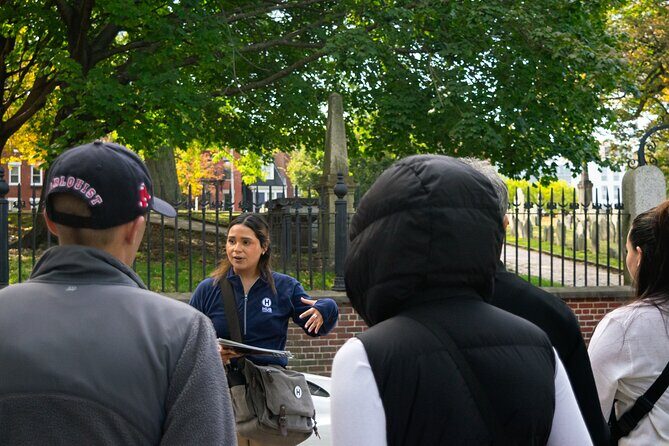
As you head deeper into Beacon Hill, you pass by streets that look small on a map but feel compact in real life. You’ll get guided time at Mount Vernon Street, then keep going to Acorn Street, a classic narrow-lane sight that helps you visualize the walking world 19th-century Bostonians would have known.
Next comes Louisburg Square (about 10 minutes with the guide). Squares like this help you understand the physical layout of the neighborhood—how communities moved, where people gathered, and why “just a few blocks” could still mean real separation in power and opportunity.
Then the tour continues with more named places that connect to Black community life and abolition-era conflict. You’ll spend time at Phillips School and John J Smith House, and you’ll also pass by a couple of notable religious and institutional landmarks along the way (like the Vilna Shul, and the Otis House Museum area as you continue). Even when the time is shorter or it’s pass-by viewing, the guide uses these points to keep the broader story grounded in where people actually lived and worked.
Tip for this segment: wear shoes with real grip. Beacon Hill’s sidewalks can feel uneven underfoot, and your tour is still early enough that you’ll want energy for the later longer guided stops.
Phillips School to Charles Street Meeting House: education and public debate
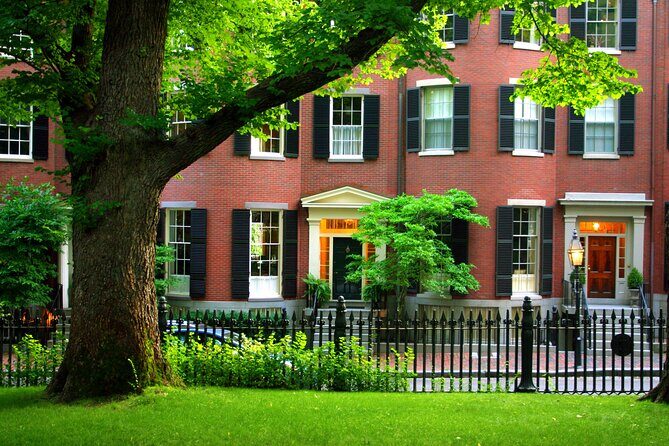
Some of the most important themes are not about battles in the obvious sense. They’re about institutions and arguments—especially around education and integration.
You’ll get a longer guided stop at Phillips School (about 15 minutes). This is a key point for the tour’s focus on equality in education and the ongoing push-and-pull over racial integration. Even if you don’t know the Boston context going in, the guide’s framing helps you see education as political terrain, not just classroom life.
From there, you’ll continue to Charles Street Meeting House (guided, about 15 minutes). Meeting houses were central places for community leadership, conversation, and moral argument in the 1800s. The tour uses the stop to connect belief systems and activism to the lead-up to the Civil War.
You’ll also get guided time at Charles Street itself, letting the story stretch from one building to the street around it—so it doesn’t feel like a “site photo” tour. The guide keeps bringing you back to how people lived alongside each other, debated each other, and worked under pressure from national slavery politics.





Underground Railroad neighborhoods: John J Smith House through Lewis & Harriet Hayden House
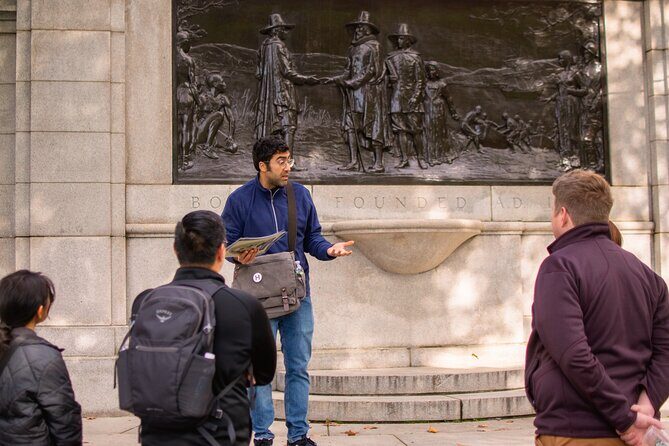
If you’re drawn to the Underground Railroad theme, this part is the tour’s spine. The experience focuses on homes and places tied to the trail—sites where the guide explains how communities supported freedom-seeking people, even while national slavery conflict was tightening.
You’ll spend time at the John J Smith House and then reach the Lewis & Harriet Hayden House (about 15 minutes guided). The guide’s big job here is to connect these names to the wider moral and political struggle leading toward the Civil War. It’s not just a list of addresses. It’s a picture of how real households were part of the response.
As you continue, you’ll also visit John Coburn House (guided) and then later return to more education and community landmarks. The route keeps reminding you that the Underground Railroad story isn’t only about escape routes. It’s also about the local relationships and risks that shaped daily life.
A helpful way to enjoy this segment: keep an eye out for the pattern of the guide’s talking points. When the tour moves from a home to an institution, it’s usually showing how abolition wasn’t limited to one kind of place.
The African Meeting House break: where the tour slows down
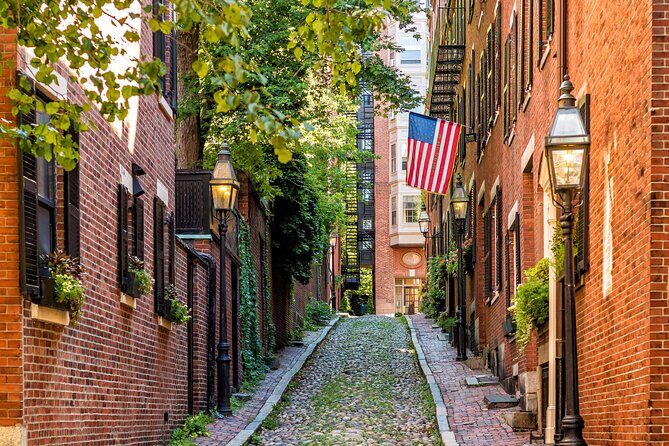
One of the standout moments is the African Meeting House. This is where the tour builds in a break time plus a guided tour (about 20 minutes).
That extra time matters. Outdoor walks can turn fast and flat if every stop is rushed. Here, the pace loosens so you can regroup, look around, and absorb the place without feeling like you’re sprinting between points.
The guide uses this stop to bring forward key themes about the free Black community in the area and the tension of living near Boston’s wealth while pushing for equality. It’s one of the best points to understand that the story isn’t just “before the Civil War.” It’s also about organizing, education, community leadership, and the argument for rights within a hostile or divided society.
After this pause, you’ll feel the rest of the walk moves forward with a clearer sense of what the tour has been building toward.
Abiel Smith School to George Middleton House: education, community, and names
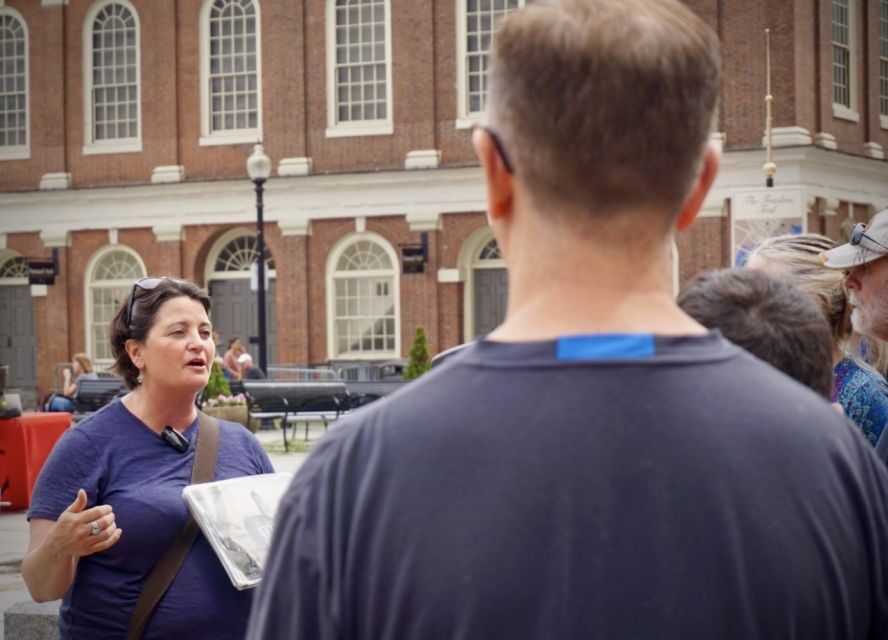
After the meeting house stop, the tour continues into more guided time tied to education and community identity.
You’ll visit Abiel Smith School (guided). This follows the tour’s theme of equality in education and helps you see how educational access and segregation debates were part of the same pressure cooker as anti-slavery politics.
Next, you’ll move to the George Middleton House (guided, about 15 minutes). The tour uses stops like this to keep the Underground Railroad story connected to real families and real neighborhoods, not only to national headlines.
As the walk progresses, you’ll also pass through areas like Smith Court Residences (guided), and you’ll spend time with Charles Sumner House (guided, about 15 minutes). The Sumner stop is one more way the guide ties local Boston sites to the political energy pushing against slavery.
Pass-bys that still matter: Vilna Shul, Otis House Museum, Old West Church, and the State House
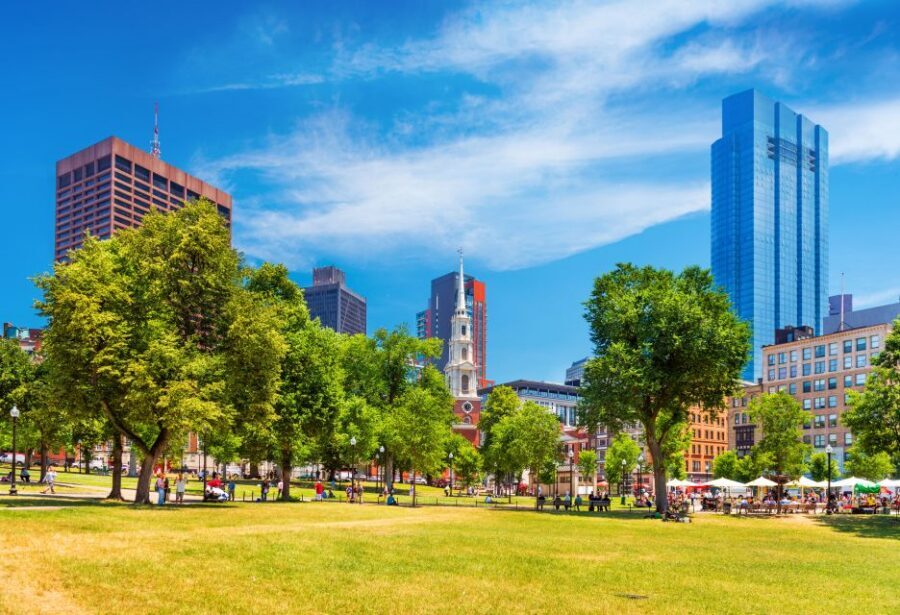
Not every site gets the same time, but the tour still uses pass-by landmarks to widen the context. You’ll pass by the Vilna Shul, the Otis House Museum, and the Old West Church. You’ll also pass by the Massachusetts State House.
These “look and listen” moments keep you from thinking the Underground Railroad story is isolated from everything else happening in Boston. The guide uses them as visual anchors: different communities, different institutions, and the way Boston’s public space held multiple currents of the era at once.
If you’re the kind of traveler who likes to keep your bearings, this is a useful section. You get quick orientation signals so the end of the tour doesn’t feel like it comes out of nowhere.
The finish at Shaw and the 54th Regiment Memorial
To close, you circle back to Boston Common and end in front of the Robert Gould Shaw and the 54th Massachusetts Regiment Memorial—right up Beacon Street from where you started.
There’s a guided segment here (about 20 minutes) that brings the story to a hard, memorable landing. The tour finishes at the point that links the anti-slavery struggle to the Civil War era directly, using the monument as a visual punctuation mark.
This final stop also makes the whole walk feel “complete” in a way that some city tours don’t. You start with Boston Common, move through the neighborhood-level fight for equality, and end with a memorial tied to the 54th Massachusetts Regiment.
And because the walking loop returns to the same central meeting area, you’re not left hunting for a bus or negotiating your way out of Beacon Hill after you’ve spent your energy on 2 miles of outdoors walking.
Who should book this tour (and who might skip)
You should book if you want:
- A small-group Beacon Hill walk that keeps conversations audible and stops paced
- The Black Heritage Trail structure, not a random hopscotch of sites
- A focus on how the lead-up to the Civil War played out locally—especially around education and community life
- A guide who tells the story with energy, including a moment where Will kept the group moving so well that the full 2.5 hours felt like it went by quickly
You might skip if:
- You need wheelchair-friendly routes or fully accessible sidewalks
- You’re uncomfortable with steep hills and an all-outdoors, rain-or-shine schedule
- You’re traveling with young kids (not suitable for children under 6)
- You’re counting on museum-style indoor time (admission is not included, and the tour is outdoors)
Should you book the Boston Underground Railroad History Tour of Beacon Hill?
Yes, if you’re trying to understand Boston’s anti-slavery story in a way that connects streets, institutions, and community choices. The value for $35 is strong for what you get: a trained guide, 10 trail landmarks, and enough time at key stops like the African Meeting House and the Shaw and the 54th memorial.
Book it on a day when you can comfortably handle about 2 miles of walking and you’re okay being outside the whole time. If you want a deeper feel for how Boston’s conflicts over slavery, rights, education, and integration played out block by block, this is the kind of tour that makes the neighborhood feel newly readable.
FAQ
How long is the Boston Underground Railroad History Tour of Beacon Hill?
The tour runs about 2.5 hours, with tours varying but not more than 3.0 hours.
Where does the tour start?
Meet your guide at the Soldiers and Sailors Monument in the center of Boston Common, near the Boston Common Visitors Center at 139 Tremont Street (02108).
How long is the walking route?
The tour travels approximately 2.0 miles (3.2 km).
Is the tour indoors or outdoors?
It is entirely outdoors and operates rain or shine.
What landmarks are included?
The tour includes the Black Heritage Trail (10 landmarks), with guided stops at places such as the African Meeting House and the Shaw and the 54th Regiment Memorial, plus several other Beacon Hill sites.
Is admission to museums included?
No. Admission inside museums is not included.
Are there any rules about recording or bags?
Video recording is not allowed. Luggage or large bags are also not allowed.
Who is the tour not suitable for?
It is not suitable for children under 6, people with low level of fitness, people with mobility impairments, or wheelchair users.
Where does the tour end?
The tour ends back at the meeting point in front of the Robert Gould Shaw and the 54th Massachusetts Regiment Memorial on Boston Common.