REVIEW · BOSTON
Freedom Trail Experience
Book on Viator →Operated by The Salem Night Ghost Tour · Bookable on Viator
Revolution starts in the middle of Boston. This guided Freedom Trail experience strings together the big turning points of the American Revolution in about 2 hours, with a guide who makes names feel like people. You’ll buy in for $35 and get a mobile ticket to keep things smooth.
I especially like the way the tour moves briskly but stays conversational. Stops are close enough that it feels doable, and the guide uses a mic and speaker so you don’t have to strain to catch every detail—whether you get Roseli, Sarah, Jeremiah Poope, or Mother Goose (Elaine). I also like the variety: churches, tombs, a school, meeting houses, and colonial-era streets all in one go.
One thing to consider: each site is a quick hit. If you want to linger, read every plaque, or take lots of photos without crowd flow pressure, you’ll likely want to add extra time after the tour—especially at the sites that aren’t included for entry.
In This Review
- Key Highlights You’ll Feel Right Away
- A Freedom Trail Walk That Moves, and Still Feels Personal
- Price and Group Size: Why $35 Actually Works Here
- Getting There: Start on Tremont, End at Paul Revere House
- The 11 Stops You’ll Hit (and What to Pay Attention To)
- Stop 1: Park Street Church (My Country ’tis of Thee)
- Stop 2: Granary Burying Ground (Tombs That Tell the Revolution)
- Stop 3: King’s Chapel (Anglican Roots in a Revolutionary Town)
- Stop 4: Boston Latin School (First Public School in America)
- Stop 5: Benjamin Franklin Statue (Boston’s Role in His Story)
- Stop 6: Old South Meeting House (Where the Tea Party Spark Started)
- Stop 7: Boston Massacre Site (Colonial Costumed Storytelling)
- Stop 8: Old Corner Bookstore (Where Paul Revere’s Ride Was Published)
- Stop 9: Old State House (Colonial Government Center)
- Stop 10: The Paul Revere House (Boston’s Oldest Residential Home)
- Stop 11: Paul Revere Mall + Old North Church Connection
- What Makes the Guides Matter: Roseli, Sarah, Jeremiah Poope, and Mother Goose
- Admission and Tickets: What You Pay For vs What’s Free
- Timing, Walking, and When the Tour Works Best
- Should You Book This Freedom Trail Experience?
- FAQ
- How long is the Freedom Trail experience?
- What does it cost?
- Is the tour offered in English?
- Do I need a printed ticket?
- Where do I start and where do I end?
- How big is the group?
- Is admission included for all stops?
- Can I bring a service animal or a dog?
- What is the cancellation policy?
Key Highlights You’ll Feel Right Away
- Short, focused stops that cover the core Freedom Trail without turning into an all-day project
- Live period storytelling with guides like Roseli, Sarah, Jeremiah Poope, and Mother Goose
- Clear audio from a mic and speaker that helps you hear even in a larger group
- Memorable highlights like the Park Street origin of My Country ’tis of Thee and the Granary tomb area
- Admission mix where some stops are free, Granary and Paul Revere Mall include entry, and Paul Revere House costs extra
- Practical pacing that works for many people, with a separate entrance option for stairs at Granary
A Freedom Trail Walk That Moves, and Still Feels Personal
Boston’s Freedom Trail can feel like a long list of plaques if you do it alone. This tour fixes that by turning the route into a story you can follow step-by-step. In 90 minutes to 115 minutes, you go from the early revolution-era landmarks to the North End’s Paul Revere connections—without wasting time figuring out what matters most.
I like that the experience is built for people who want context fast. You’re not just seeing locations; you’re hearing why each one mattered to the revolution in Boston—politics, protest, education, and public memory all in one walk.
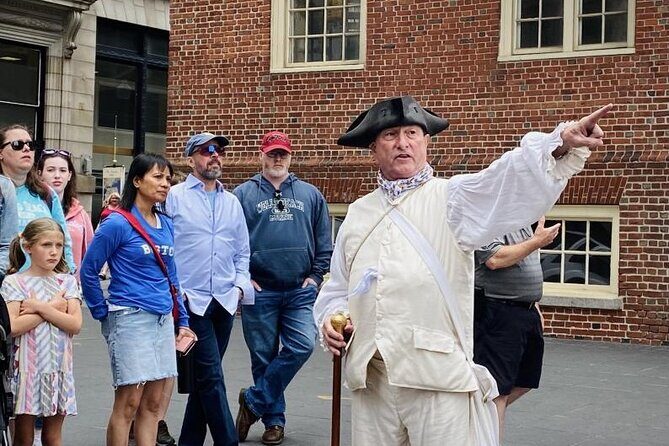
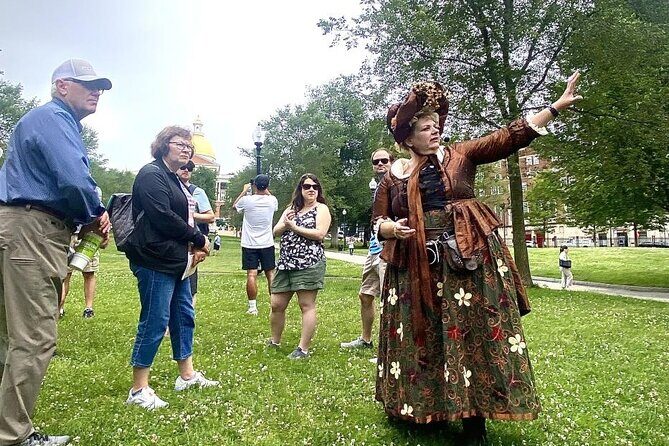
A big part of the value is the guide style. From the reviews you can tell the storytelling really affects the whole trip. When Sarah led, the mic and speaker made it easy to stay locked in. When Jeremiah Poope took the mic, the tone was personable and fun while still grounded in facts. Mother Goose (Elaine) leaned into vivid description, even singing My Country ’tis of Thee while explaining its history—something you won’t get from a phone audio track.
The route is also well suited for a range of people. It’s mostly walking along connected stops, and the tour is capped at 30 so it stays manageable instead of turning into a swarm.
You can also read our reviews of more tours and experiences in Boston.


Price and Group Size: Why $35 Actually Works Here
At $35 per person, this is a smart value for Boston because you’re paying for (1) guided context and (2) a fast walk through the high-impact sites. A self-guided Freedom Trail walk is cheap, sure. But if you want the “why” behind each stop—who’s buried where, what happened at the meeting house, and how the Paul Revere story spread—you’ll usually end up reading a lot on your own. This tour does that reading for you, on the street.
The group size cap matters too. With a maximum of 30, you get that guided feeling without the chaos that can happen when a route is overloaded. You’ll still feel it’s a group environment, but it doesn’t become stressful.
One practical note from the experience design: short stop times mean you’ll probably miss a few optional details at each location unless your guide points them out. If you’re the type who wants to read every word at a graveyard or church, plan to return later for extra time.
Getting There: Start on Tremont, End at Paul Revere House
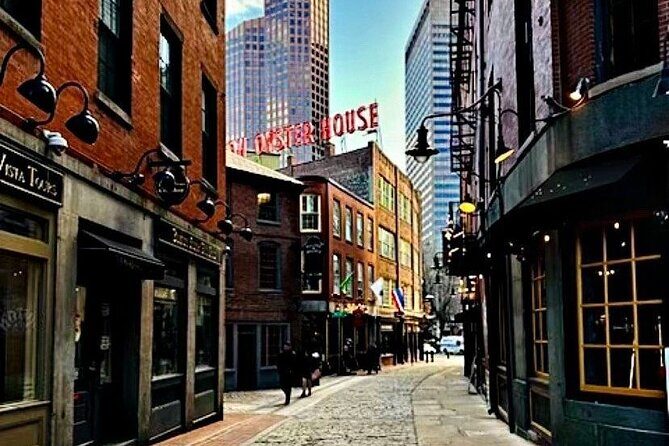
The tour starts at 120 Tremont St, Boston, MA 02108. You end at 19 N Square, Boston, MA 02113, at the Paul Revere House area in the North End.
It’s also convenient for public transportation since the meeting area is near transit. For timing, the whole tour runs roughly 1 hour 30 minutes to 1 hour 55 minutes, so you can fit it into almost any Boston day that also includes a meal and one extra attraction.
Also, this tour uses a mobile ticket. That helps if you’re juggling maps, photos, and snack plans.
The 11 Stops You’ll Hit (and What to Pay Attention To)
What makes this itinerary work is how it follows the story thread. You start with early revolutionary symbolism and public messaging, move through the people and places tied to dissent and government, and then land on the famous North End Paul Revere sites.
Below is what to expect at each stop, plus the small watch-outs.
Stop 1: Park Street Church (My Country ’tis of Thee)
This is where the tour starts with a big cultural hook: the place that originated the song My Country ’tis of Thee and connects to a key Revolutionary-era site. You’ll get why public songs and public spaces mattered during the build-up to conflict.
Why it’s worth your time: It’s not just a church. It’s an early example of how revolution-era Boston used shared messages to shape identity.
Drawback: The stop is short, so don’t expect a long sit-down here.



Stop 2: Granary Burying Ground (Tombs That Tell the Revolution)
Granary Burying Ground is a major anchor on the Freedom Trail. You’ll walk through one of the biggest clusters of meaningful Revolutionary-era graves, including Samuel Adams, Paul Revere, and John Hancock tombs.
Admission is included here, so you don’t have to juggle extra costs at this specific stop. There’s also a practical accessibility note: if someone in your group can’t climb stairs, there’s a separate entrance option for entering Granary.
Why it’s worth your time: This stop gives you a visual map of who mattered, and how tightly Boston’s revolution connects to specific individuals.
Watch-out: Dogs cannot enter the Granary Burial Ground. If that matters for you, plan accordingly.
Stop 3: King’s Chapel (Anglican Roots in a Revolutionary Town)
King’s Chapel is Boston’s first Anglican church in a town at war with the crown. The building carries stories that span over 300 years, and your guide ties the architecture and setting back to the larger political shift.
Why it’s worth your time: It shows how older institutions sat right inside the changing power structure.
Drawback: The stop is brief, so it’s more about orientation than slow sightseeing.
Stop 4: Boston Latin School (First Public School in America)
Boston Latin School comes next, tied to education and the people who learned in classrooms that influenced future leaders. Your guide connects it to the fact that some of America’s founding figures were educated here.
Why it’s worth your time: It’s a reminder that revolution wasn’t only fought with speeches and ships. It was also built on learning and preparation.
Drawback: Expect a quick “here’s why it mattered” moment, not a campus tour.
Stop 5: Benjamin Franklin Statue (Boston’s Role in His Story)
You’ll stop at the statue of Benjamin Franklin and hear his role in Boston during the Revolution. This is a simple stop, but it helps you connect famous names to the places that shaped them.
Why it’s worth your time: Franklin becomes less abstract when you’re standing in the Boston setting the story references.
Drawback: It’s not an indoor stop, so on hot or rainy days it can feel like a quick waiting game.
Stop 6: Old South Meeting House (Where the Tea Party Spark Started)
Old South Meeting House is one of the big dramatic landmarks on this walk. You’ll hear the story of the Boston Tea Party starting here, and how public gatherings fueled action.
Why it’s worth your time: The meeting house is built for gathering, so hearing the story out loud in the right spot makes sense.
Drawback: Since the focus is the revolution story, you’ll move on fairly quickly.
Stop 7: Boston Massacre Site (Colonial Costumed Storytelling)
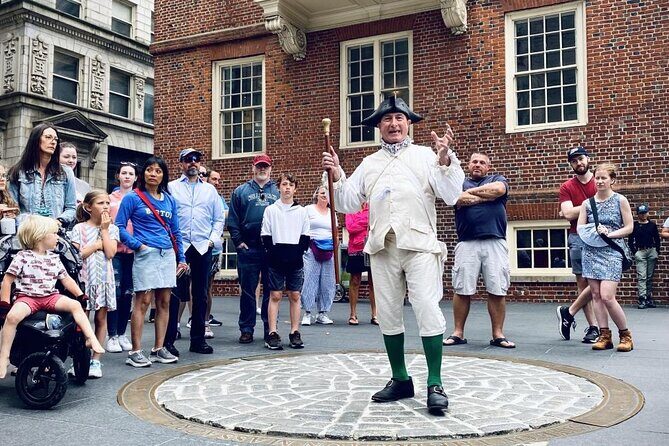
At the Boston Massacre site, you’ll get the story with a colonial costumed guide. This stop leans hard into drama, and that can be a good thing when you’re trying to make sense of an event that people remember through language and myth as much as records.
Why it’s worth your time: The costumed storytelling style helps you remember what happened and why it mattered politically.
Drawback: If you’re sensitive to theatrical elements, you may want to mentally shift expectations to performance.
Stop 8: Old Corner Bookstore (Where Paul Revere’s Ride Was Published)
Old Corner Bookstore is tied to the spread of Paul Revere’s story. You’ll see and hear about Paul Revere’s Ride, connected to the original publication location.
Why it’s worth your time: Revolution-era messages spread through print and public interest. This stop makes that feel real instead of distant.
Drawback: It’s a short stop and more about the connection than a long look.
Stop 9: Old State House (Colonial Government Center)
Next is the Old State House, described as the center of Colonial Government and near the Boston Massacre site. Your guide helps connect the political machinery to what happened on the streets.
Why it’s worth your time: It ties the cause-and-effect together: policy, power, tension, then consequences.
Drawback: The stop is quick, so it’s more about framing than deep study.
Stop 10: The Paul Revere House (Boston’s Oldest Residential Home)
You’ll reach the Paul Revere House area, described as Boston’s oldest residential house from 1680, and tied to the start of the famous midnight ride.
Admission is not included at this stop. That means you’ll likely get the storytelling and context, with any inside visit requiring separate plans and payment.
Why it’s worth your time: This is where the route shifts from “revolution setting” into “specific midnight action tied to one house.”
Watch-out: If you want to go inside, build extra time and budget.
Stop 11: Paul Revere Mall + Old North Church Connection
You finish at Paul Revere Mall, with the famous Paul Revere statue and the Old North Church connection. Admission here is included, so this is a nice final payoff if you want one last site that connects directly to the ride story.
Why it’s worth your time: Ending here gives your day a visual climax—statue, church connection, and the North End story made concrete.
Drawback: If you have another reservation right after, you may need to pace yourself at the end.
What Makes the Guides Matter: Roseli, Sarah, Jeremiah Poope, and Mother Goose
This tour lives or dies by the guide’s delivery, and the reviews give you a strong signal about what to expect. You might get Roseli, who filled people’s heads with facts and events so the Trail felt alive. You might get Sarah, who delivered an easy, casual walking experience with the kind of audio support that keeps you in the story. You could even land Jeremiah Poope, described as personable and fun while staying grounded in the details.
And if your guide is Mother Goose (Elaine), expect a storyteller who uses vivid descriptions, sings during explanations, and adjusts pace for someone who needs slower movement. That adaptability is a big deal on a route built on quick stops.
One more subtle point: because the tour can run in larger groups, the guide may sometimes manage crowding by shifting the group slightly. In one case, a guide kept people together even when they had to handle a bigger group situation. The takeaway for you: listen for the guide’s directions, stay close, and you’ll be fine.
Admission and Tickets: What You Pay For vs What’s Free
This tour is a mix of free stops and a few paid entries. Here’s the practical breakdown:
- Free admission stops: Park Street Church, King’s Chapel, Boston Latin School, Benjamin Franklin statue stop, Old South Meeting House, Boston Massacre site, Old Corner Bookstore, and Old State House.
- Included admission: Granary Burying Ground, plus Paul Revere Mall.
- Not included: The Paul Revere House.
So you can think of the $35 as covering the guided storytelling plus the parts of the route where entry is included. If you want to go inside the Paul Revere House itself, you’ll likely need to plan for that separately.
Timing, Walking, and When the Tour Works Best
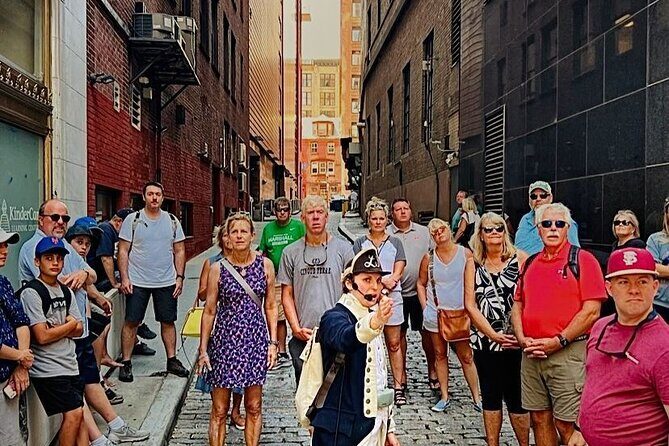
This is not a sit-and-stare museum day. It’s a “see it now, understand it now” walk. The quick stop rhythm makes it ideal if you have limited time in Boston, especially if you want a coherent revolution arc without hunting down resources.
You’ll likely enjoy this most if:
- you’re visiting Boston for the first time and want an organized orientation
- you like history told through people and events, not only dates
- you want a guided route you can do in a morning or afternoon without draining your whole day
It’s less ideal if:
- you hate walking between stops
- you want long time inside buildings
- you need slow, independent reading at each site before moving on
On rainy days, the route still works because you’re moving between short stops close to each other. If the weather is bad, wear shoes you trust and keep your rain plan simple.
Should You Book This Freedom Trail Experience?
If you want the Freedom Trail without turning it into a self-guided reading project, I’d book it. For $35, you’re getting an organized route, clear audio, and storytelling that turns names like Samuel Adams, Paul Revere, and John Hancock into something you can picture. The guide approach also seems consistent across multiple styles—Roseli, Sarah, Jeremiah Poope, and Mother Goose—so you’re not stuck with one bland delivery.
I’d hesitate only if you’re the type who needs lots of time at each stop. Since admission and entry vary (Granary and Paul Revere Mall included, Paul Revere House not), and each location gets only a short visit, you may want to add follow-up time after the tour for the sites you care about most.
If you can swing it, try to book ahead. On average, this is booked about 32 days in advance, so earlier planning helps you lock in the day you want.
FAQ
How long is the Freedom Trail experience?
It runs about 1 hour 30 minutes to about 1 hour 55 minutes.
What does it cost?
The price is $35.00 per person.
Is the tour offered in English?
Yes, it’s offered in English.
Do I need a printed ticket?
No. It uses a mobile ticket.
Where do I start and where do I end?
You start at 120 Tremont St, Boston, MA 02108. You end at The Paul Revere House area, 19 N Square, Boston, MA 02113.
How big is the group?
The tour has a maximum of 30 travelers.
Is admission included for all stops?
No. Granary Burying Ground includes admission, Paul Revere Mall includes admission, and Paul Revere House does not include admission. Several other stops are listed as free.
Can I bring a service animal or a dog?
Service animals are allowed. Dogs cannot enter the Granary Burying Ground.
What is the cancellation policy?
You can cancel for free up to 24 hours in advance for a full refund. If you cancel less than 24 hours before the start time, you won’t get a refund.