REVIEW · BOSTON
Public Authentic Revolutionary Boston Walking Tour
Book on Viator →Operated by Authentic Revolutionary Boston Tours · Bookable on Viator
Revolution, but with context for today. This Boston walking tour connects you to real Revolutionary-era locations—Boston Common, meeting houses, and the places where tensions boiled—while keeping the story relevant for how you think in the 21st century. I like the way the tour stresses accurate storytelling and 21st-century meaning, not just dates and facts.
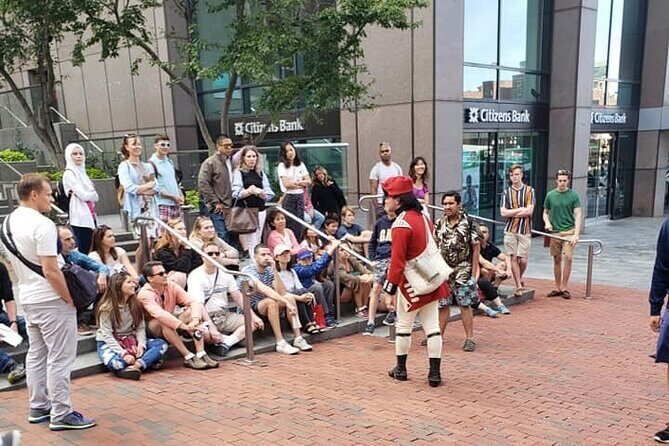
The guides are part scholar, part performer, and part problem-solver for the group. I like that you can ask questions and get answers that actually fit what you care about, and if you get a guide like Adam, expect charismatic energy and humor that keeps the pace friendly.
One thing to plan for: not every stop is included for entry. Several of the iconic buildings are mostly a pause-and-look from outside, and places like separate-ticket museums or chapel/church entries are not bundled.
In This Review
- Key highlights worth knowing before you go
- Boston Common to Haymarket: a Revolutionary walk with modern relevance
- Price and value: what $45 buys you in Boston downtown
- Starting at Boston Common Visitors Center (139 Tremont St): get your bearings fast
- Stop 1: Boston Common—public space as the Revolution’s stage
- Stop 2: Granary Burying Ground—memory, names, and lesser-known details
- Stop 3: King’s Chapel—international ties and the separate-ticket reality
- Stop 4: Old South Meeting House—how one room sparked a bigger movement
- Stop 5: Old State House—Boston Massacre legacy, in the city’s center
- Walking moments: the Massacre spot, a marketplace, a British armory, and lantern-signal symbolism
- The guides: how humor, questions, and a great sense of pace change everything
- What to do (and what to skip) during the tour route
- Who this Boston Revolutionary walking tour is best for
- Should you book this tour?
- FAQ
- How long is the Public Authentic Revolutionary Boston Walking Tour?
- How much does the tour cost?
- Where does the tour start?
- Where does the tour end?
- What’s included in the tour price?
- Are admission tickets to private sites included?
- What kind of ticket do I need?
- What is the group size limit?
- Is it near public transportation?
- What is the cancellation policy?
Key highlights worth knowing before you go

- A tight route with a clear story arc from park origins to Revolution flashpoints
- Small group size (max 16) so you’re not lost in a crowd
- Affable guides who can customize the route pace to your interests
- Outside-the-doors teaching moments when entry needs a separate ticket
- Mobile ticket for easy check-in right on your phone
- A more inclusive Revolution lens aimed at modern civic thinking
Boston Common to Haymarket: a Revolutionary walk with modern relevance

This tour is built around one simple idea: if you want to understand the American Revolution, you should see where the conversations happened, where the pressure built, and where the consequences showed up in public space. You start in the heart of Boston and end in the Haymarket area, so the walk feels like a clean line through downtown history rather than a scatter of stops.
The biggest value is that the story is framed for today. You’re not just learning what happened; you’re also getting prompts about how ideas about freedom, power, and responsibility still land in real life now. The tour also leans into a Revolution narrative that’s described as diverse and inclusive, with an emphasis on active citizenship and critical thinking.
With a duration of about 1 hour 30 minutes to 2 hours, this isn’t a half-day project. It’s enough time to connect the dots between a few key sites—without wearing you out or turning the experience into a museum day.
You can also read our reviews of more walking tours in Boston


Price and value: what $45 buys you in Boston downtown

At $45 per person, you’re paying for three things: a small-group setting, a professional guide, and a guided sequence through a handful of major locations. You’re not paying for all the separate building admissions along the route, which matters for budgeting.
If you mainly want the guided story and the historical “why it matters,” the price is pretty sensible. You get a structured walk, clear stop-by-stop interpretation, and guidance that’s tailored to questions you bring. If you also plan to go inside every ticketed site along the way, then you’ll need extra funds for those entrances.
Also worth noting: the tour uses a mobile ticket, and the route is set up so you move efficiently between stops. That helps you squeeze a meaningful cultural experience into a busy day in Boston.
Starting at Boston Common Visitors Center (139 Tremont St): get your bearings fast

You begin at the Boston Common Visitors Center at 139 Tremont St. That location is ideal because Boston Common is more than a pretty landmark—it’s described as the oldest public park in the U.S. and a symbolic site tied to America’s early cultural identity.
The tour’s first minutes set the tone. You’re not immediately marching into random street corners; you’re starting in a place that represents public life itself. From there, the guide steers the group from the park into the next layer of the story, using the geography to teach you how the city functioned during and around the Revolution.
This start works especially well if you’re new to the city. Even if you’ve walked Boston streets before, Boston Common is the kind of anchor point that helps the rest of downtown history make sense.
Stop 1: Boston Common—public space as the Revolution’s stage
Boston Common is the first major stop, and it’s a smart opener. The tour treats it as the symbolic “foundation” of a public America, so you’re able to frame later scenes in a broader way.
What I like about starting here is that it gives you a lens before you hit the arguments, disruptions, and tense moments. You learn to look at the city as a set of shared spaces—where people gathered, debated, and acted together.
The stop time is around 15 minutes, which is long enough for context without dragging. You’ll likely spend most of that time at or near key sightlines, listening, then moving.
Stop 2: Granary Burying Ground—memory, names, and lesser-known details
Next comes Granary Burying Ground, where the tour focuses on lesser-known aspects of one of Boston’s oldest cemeteries. This is a useful pivot. After a civic space like Boston Common, you go to a place that represents how a city remembers its people and its past.
You’ll get short, focused time here—about 10 minutes. That timing is perfect because cemeteries can become a maze if you wander on your own. A guide keeps you oriented and points out what to notice in the story, instead of leaving you to guess.
A quick caution: if you’re sensitive to solemn settings, treat this as a quiet stop. The tour’s approach is interpretive, but you’re still in a burial ground.






Stop 3: King’s Chapel—international ties and the separate-ticket reality
King’s Chapel is where the tour expands the Revolution story beyond one narrow national script. The plan includes a pause outside to discuss the church and its connection to the Revolution’s international scope in Boston.
Here’s the key practical point: entrance into the Chapel requires a separate private ticket with this museum. So you’re not guaranteed to go inside unless you purchase that additional entry on your own.
That outside pause is still valuable. It forces you to learn from the building’s presence in the streetscape, and it keeps the walking pace tight. But if you strongly prefer indoor viewing, you’ll want to factor in extra time and cost for tickets.
Stop 4: Old South Meeting House—how one room sparked a bigger movement
Old South Meeting House is a major stop tied to the Boston Tea Party, but the tour aims to explain the building’s broader significance too. The rhythm here matters: you’re not just told that an event happened. You learn why the location mattered as a gathering place and how public action formed in real time.
As with King’s Chapel, the tour pauses outside. Entrance into the Meeting House is not included; you’ll need a separate private ticket if you want to go in.
This approach can be a plus. Many people over-plan museum days and then feel rushed inside. Here, you get context at street level and keep the story moving. Still, it’s smart to decide ahead of time what you care about most: the guided narrative is included; the inside views cost extra.
Stop 5: Old State House—Boston Massacre legacy, in the city’s center
Old State House is where the tour’s Revolution tension becomes unmistakable. This stop is framed as the city’s leading site for the diverse story and legacy of the Boston Massacre.
Again, expect a pause-and-look from outside for about 6 minutes. Entrance into the State House requires a separate private ticket, so you’ll mostly be interpreting the site from the outside rather than touring the interior exhibits.
Even with the shorter time, the value comes from the guide connecting the scene to the larger arc of the Revolution. This is where you start to feel the cause-and-effect pattern: political arguments in public spaces lead to crowd pressures, and crowd pressures lead to real outcomes.
Tip: keep your eyes up and your focus on the street-level story. With a short stop, it helps to listen for the guide’s specific framing, not just the general background.
Walking moments: the Massacre spot, a marketplace, a British armory, and lantern-signal symbolism
Between the named stops, the tour adds several interpretive walking segments. The plan includes walking over the spot of the infamous Boston Massacre, but with guidance to avoid lingering in traffic.
You’ll also get additional historical context tied to what’s described as a Revolutionary meeting space, a marketplace, and a British armory—locations that help you see how many roles were packed into the same downtown world. It’s a smart way to show you that Revolution-era Boston wasn’t only about one event. It was about systems: communication, commerce, and military power all interacting in public.
One of the most memorable thematic elements is a church connected to lanterns that signaled the Revolution. The tour also highlights the paradox of freedom and bondage that came with that same period and mindset. That theme is exactly the kind of thinking that makes the tour feel built for modern audiences, not just reenactment spectatorship.
Because these are walking and pause moments, you’ll want to stay present. If you drift into phone-scrolling mode, you’ll miss the point of why these “in-between” locations matter.
The guides: how humor, questions, and a great sense of pace change everything
The tour’s guides are described as passionate, articulate, professional, and affable. The practical result is that the experience doesn’t feel like a script. You should be able to ask questions and get responses tailored to what your group wants.
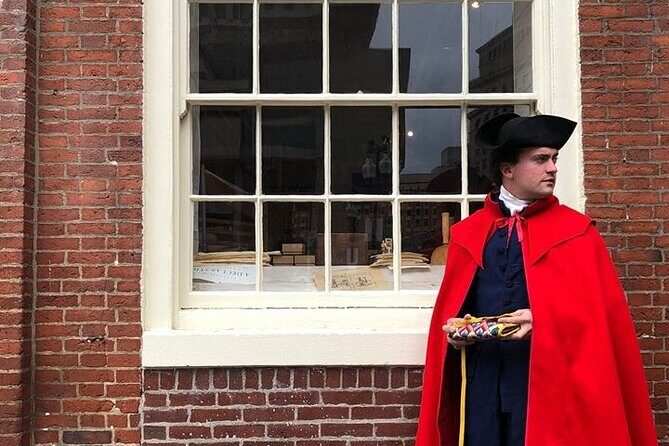
The reviews’ guide impressions also point to humor and patience as standout traits. One name that comes up is Adam, praised for being knowledgeable, funny, and easy to get along with, plus for dressing for the part. Even if you’re not expecting a costumed history moment, this kind of guided character tends to make the story feel more human and easier to remember.
Small group size matters here. With a max of 16 people, you’re more likely to get your questions answered instead of listening from the back of a large pack. And because the duration stays in the 1 hour 30 minutes to 2 hours range, the pacing remains manageable.
If you prefer a tour where you can talk back (without derailing the group), this setup fits well.
What to do (and what to skip) during the tour route
This tour is short, so your job is simple: show up ready to listen while moving.
Bring comfy walking shoes. Downtown Boston streets are uneven in spots, and you’re covering multiple stops in a limited time.
Dress for quick weather shifts. Boston conditions change fast, and you’ll be outside for most of the experience since several key sites have separate admission.
Decide in advance about extra tickets. Since King’s Chapel, Old South Meeting House, and Old State House entries are not included, you should choose whether you want to spend extra money and time going inside. If you don’t, the outside interpretation still gives you the story spine.
One more practical point: the tour may travel further depending on walking speed and available time. That’s normal for walking tours, but it helps to keep your schedule flexible.
Who this Boston Revolutionary walking tour is best for
This is ideal if you want your Boston history learning to feel connected instead of random. You’ll likely enjoy it most if you like walking-based city sightseeing and you value a guided storyline that ties places together.
It’s also a good pick if you want your history to include modern civic thinking. The tour is described as building active citizenship and critical thinking, and it’s framed to be diverse and inclusive for modern audiences.
It may not be your best choice if your main goal is to do a heavy museum schedule. With several stops outside and separate admissions for entries, you’ll get the guided narrative more than the full indoor exhibit experience.
For families and mixed groups, it’s generally approachable. The tour is described as suitable for most travelers, and it’s short enough that kids usually won’t melt into the pavement—assuming they can handle city walking.
Should you book this tour?
If you want a focused Boston Revolutionary walking tour that connects major sites into a story designed for today’s thinking, book it. For $45, you’re buying a guide-led sequence through key places, and the small group size helps you actually interact.
Book with extra ticket awareness if you want to go inside King’s Chapel, Old South Meeting House, and Old State House. If you’re fine with outside interpretation, you’ll likely feel like you got your money’s worth faster.
Finally, if you care about history that’s not just a list of names—history tied to questions of freedom, power, and responsibility—this walk is the kind of experience that sticks.
FAQ
How long is the Public Authentic Revolutionary Boston Walking Tour?
It runs about 1 hour 30 minutes to 2 hours, depending on the group’s pace and time available.
How much does the tour cost?
The price is $45.00 per person.
Where does the tour start?
It starts at Boston Common Visitors Center, 139 Tremont St, Boston, MA 02111.
Where does the tour end?
It ends at Haymarket, 100 Hanover St, Boston, MA 02108.
What’s included in the tour price?
Professional guides are included in all programs. The tour ticket covers the guided experience along the route.
Are admission tickets to private sites included?
No. Some stops require separate private admission tickets, including entry for King’s Chapel, Old South Meeting House, and Old State House.
What kind of ticket do I need?
You’ll use a mobile ticket.
What is the group size limit?
This tour has a maximum of 16 travelers.
Is it near public transportation?
Yes, it’s near public transportation.
What is the cancellation policy?
You can cancel for a full refund up to 24 hours in advance. Confirmation is received at booking time.