REVIEW · BOSTON
Private Boston Freedom Trail Walking Tour
Book on Viator →Operated by Boston Town Crier - Tours of Freedom Trail · Bookable on Viator
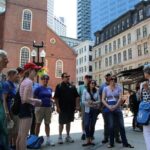
Freedom Trail can feel like a scavenger hunt. This private walk turns it into a guided story across Boston Common and the Revolutionary-era core, with flexible departure timings and a route designed to be doable in about 90 minutes. You’ll follow a clear path from the starting point at 139 Tremont St and end at Faneuil Hall Marketplace.
Two things I really like: you get a truly private experience for only your group (up to 15), and you don’t have to fight for attention or pace. One consideration: the stops are intentionally short, so if you’re hoping for long time inside each building, you may want to add extra museum time on your own.
In This Review
- Key things to know before you go
- Why this Boston Freedom Trail tour feels different
- Price and value for groups up to 15
- Start point to finish: the route flow that makes sense
- Stop-by-stop: what you’ll see and what to watch for
- Boston Common Visitor area: getting your bearings fast
- Boston Massacre site: the emotional opening of the story
- Park Street Church: faith meets the revolutionary era
- Massachusetts State House: politics in stone and symbolism
- Granary Burying Ground: history you can walk through
- King’s Chapel: a quieter stop with strong atmosphere
- Boston Latin School: the education thread
- Old South Meeting House: where public voices mattered
- Old State House: the story gets specific
- Boston Massacre site (second time): why return matters
- Faneuil Hall Marketplace: end with options
- The guides: why names keep showing up
- Who this tour is best for
- Timing tips that make the most of 1 hour 30 minutes
- Weather and comfort reality check
- A quick value reality check before you commit
- Should you book this Private Boston Freedom Trail walking tour?
- FAQ
- How long is the Private Boston Freedom Trail walking tour?
- What are the start and end points?
- Is this tour private?
- What is the language of the tour?
- Are admission tickets included?
- Does the tour run in bad weather?
- What is the cancellation policy?
Key things to know before you go
- Private group up to 15 keeps the tour focused on your questions and pace
- Mobile ticket makes check-in simpler
- Entry tickets included at the scheduled sites along the route
- Short, timed stops help you cover major Revolutionary-era landmarks fast
- Guides with strong reputations including Don, Jeff (aka Samuel), Adri, David, and Elissa (Mrs. Silence DoGood)
- All-weather operation, with an alternative date or full refund if canceled for poor weather
Why this Boston Freedom Trail tour feels different

If you’ve ever walked the Freedom Trail on your own, you know the problem. You can see a lot, but you miss the thread that connects it all.
This tour is built around getting that connection quickly. You start at Boston Common, then move site to site through the Revolutionary War era landmarks that people mention first when they talk about Boston’s past. The best part for me is that it’s private. That means your group can ask questions, react to the story, and move at a pace that works for you.
The other advantage is the time box. At about 1 hour 30 minutes, it’s long enough to make the places matter, but short enough that it won’t swallow your whole day. If you’re trying to fit Boston into a tight schedule, this style of tour can do real work.
You can also read our reviews of more walking tours in Boston


Price and value for groups up to 15

The price is $450 per group, up to 15 people, and the tour is in English. That sounds like a lot until you look at it like a group experience rather than a per-person ticket.
Here’s the practical way to think about it:
- If you book with a smaller group, the cost per person will be higher.
- If you fill a bigger group size (closer to 15), the value can drop quickly.
What you’re paying for is not just walking. You’re paying for a guide who can explain what you’re seeing, keep your group moving through tight city spacing, and tailor the pace so it stays fun. The tour also includes admission tickets at the scheduled stops, which helps reduce the number of separate expenses and time-consuming decisions you’d otherwise handle yourself.
Start point to finish: the route flow that makes sense

Meeting at 139 Tremont St puts you right near the action in the Boston Common area. Ending at Faneuil Hall Marketplace is smart too, because it leaves you in a spot where you can grab food, shop, or keep exploring without needing to backtrack.
The route is arranged like a steady sweep through the historic center:
- You begin with the Boston Common area and the Boston Massacre story.
- You move through key churches and civic locations around downtown.
- You hit burial grounds and colonial-era institutions.
- You finish in the marketplace area tied to political gatherings.
Because each stop is timed, you’ll feel the momentum of the storyline. It’s not a slow “stand and admire everything” walk, but it’s also not rushed to the point where nothing lands.
Stop-by-stop: what you’ll see and what to watch for
The itinerary is structured as a set of short stops with built-in time for the story at each location. Here’s what each part is likely to give you, plus the one trade-off to expect.
Boston Common Visitor area: getting your bearings fast
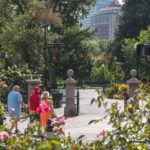
You begin at the Boston Common visitor area, with about 10 minutes to orient. This start matters because Boston’s historic sites can look disconnected unless you know how they link.
What to watch for: use this first segment to get your mental map of the Freedom Trail narrative and how the Revolutionary-era locations connect to each other.
Trade-off: at only 10 minutes, you won’t linger, so come ready to listen and look.
You can also read our reviews of more private tours in Boston





Boston Massacre site: the emotional opening of the story
The route then moves to the Boston Massacre site for another 10 minutes. Even if you’ve heard the basics before, a guided explanation tends to make the setting feel more real because you’re standing in the right place.
What to watch for: pay attention to how the events are described in relation to the crowd and tension of the time. The goal here is context, not memorizing dates.
Trade-off: if you want deep courtroom-level detail, you’ll get the story hit quickly and then move on.
Park Street Church: faith meets the revolutionary era
You’ll spend around 5 minutes at Park Street Church. This stop is short, but churches often anchor the social and civic world of the era, which helps you understand why political events spread the way they did.
What to watch for: listen for how religious institutions and public life overlap in Boston’s early years.
Trade-off: short stop length means you’ll likely get a guided overview rather than a long, building-focused visit.
Massachusetts State House: politics in stone and symbolism
Next is the Massachusetts State House for about 5 minutes. A quick stop here can still be useful because it ties the Revolutionary story to the idea of government that continues to shape the city.
What to watch for: the way your guide connects the Revolution to civic identity. Even in a fast visit, that connection can stick.
Trade-off: you won’t have time to do this location like a standalone tour. If interior exploration is a priority, plan to return later.
Granary Burying Ground: history you can walk through
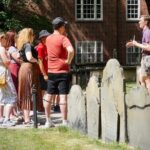
You’ll have about 15 minutes at Granary Burying Ground. This is one of the more time-friendly stops on the tour, and it’s where the past feels physical under your feet.
What to watch for: your guide can help you connect names and events without turning it into a list. The best tours use this spot to show how communities remembered people and ideas.
Trade-off: it’s a lot to take in. If you’re easily overwhelmed by dense information, lean on your guide with a question early in the stop.
King’s Chapel: a quieter stop with strong atmosphere
You’ll spend around 10 minutes at King’s Chapel. This stop adds variety from the “politics-only” feel and gives you a sense of how Boston’s older institutions survived and evolved.
What to watch for: how the guide handles continuity—what stayed, what changed, and why that mattered.
Trade-off: again, it’s not built for a long, architectural deep read. It’s designed for story first.
Boston Latin School: the education thread
At Boston Latin School, you’ll have about 5 minutes. This is a quick glance, but it can pay off because education was part of how revolutionary-era thinking and leadership formed.
What to watch for: listen for how schooling connected to civic life. Even a short stop can give you a strong takeaway if the guide frames it well.
Trade-off: limited time means you’ll likely hear the big ideas rather than details.
Old South Meeting House: where public voices mattered
You’ll move to Old South Meeting House for about 10 minutes. This site is important because it represents how people gathered, argued, and organized.
What to watch for: focus on what the space was for and how gathering spaces shaped political action.
Trade-off: if you’re the type who wants to read every sign, you’ll need additional independent time.
Old State House: the story gets specific
At about 5 minutes, Old State House is fast but meaningful. This is a major anchor point on the Revolutionary Trail, and it helps connect the story to the idea of law, leadership, and conflict.
What to watch for: your guide’s ability to connect what happened here to the wider arc you’ve been following since Boston Common.
Trade-off: it’s short. You can’t expect an all-day Old State House visit in this format.
Boston Massacre site (second time): why return matters
The itinerary includes a second Boston Massacre site stop near 206 Washington St, again around 5 minutes. Coming back to the theme is not a mistake; it’s a chance to reinforce the narrative after you’ve picked up more context from the surrounding sites.
What to watch for: the second stop often helps everything click together. By then, your guide can explain the incident with fresher context from the route.
Trade-off: don’t expect two completely different deep dives. It’s reinforcement.
Faneuil Hall Marketplace: end with options
You’ll finish at Faneuil Hall Marketplace after about a 5 minute final stretch. Ending here is practical because you’re placed near food and onward sightseeing.
What to watch for: use this moment to plan your next step. You’re done with the structured story, so you can switch modes to wandering, eating, or browsing.
Trade-off: it’s not the time for a long lingering lecture. Think of it as a landing zone.
The guides: why names keep showing up
The biggest pattern in this tour’s reputation is the guides. You’ll hear names like Don, Jeff (aka Samuel), Adri, and David—all praised for making the story move with humor and clarity.
Elissa, who’s listed as Mrs. Silence DoGood, is called out for keeping a younger audience engaged. If you’re traveling with teens, that matters because the Freedom Trail can turn into a memorization exercise without the right tone.
One practical takeaway: if you care about how the story is delivered, this tour is built on that. The “what” (the sites) is only half the deal. The “how” (the explanations and pacing) is where the tour earns its high score.
Who this tour is best for
This is a strong fit if:
- You want the Freedom Trail in a tight window without losing the storyline.
- You’re traveling with a mixed group and need the pacing to work for everyone.
- You prefer a private setup over large-group walking chaos.
- You want admission tickets included for the scheduled stops.
It’s also a good match for families, including teens, because the format is timed and narrative-driven rather than long and lecture-heavy.
If you’re the kind of traveler who wants to read every plaque and spend 40 minutes inside every building, you might find the stop lengths a little too efficient. In that case, treat this as your “map plus narrative,” then return on your own for the sites that pull you in.
Timing tips that make the most of 1 hour 30 minutes
Since the tour runs about 90 minutes, your best move is to go light and ready.
I suggest:
- Wear shoes you can walk in for a full city block-to-block stretch.
- Bring a jacket. Boston weather changes fast, even when the tour runs in all conditions.
- Have one or two questions in mind, especially about the Boston Massacre and how events escalated.
One more practical note: this tour tends to get booked about 43 days in advance on average. If you have a preferred departure time, I’d treat that as a clue to reserve sooner rather than later.
Weather and comfort reality check
The tour operates in all weather conditions and is meant to keep moving. Still, the experience can be canceled due to poor weather, in which case you’re offered a different date or a full refund.
So pack for walking and check conditions the day you go. If rain is likely, plan for it rather than hoping it passes.
A quick value reality check before you commit
At $450 per group, this is best when you share the cost with other people in your party or when your group size is close to the upper end of the allowed range. If you’re only two people, the math is less friendly, but the private format can still be worth it if you want a guided narrative without splitting attention across strangers.
I also like that admission tickets are included at the scheduled sites. That reduces decision fatigue and keeps the tour from turning into a stop-and-start checklist.
If your priority is the Freedom Trail’s big story in a focused, well-paced way, this tour fits. If your priority is maximum time inside buildings, you may need an extra plan after the walk.
Should you book this Private Boston Freedom Trail walking tour?
Book it if you want a private, time-efficient way to connect Boston Common to Revolutionary-era landmarks, with admission tickets included at key stops and a guide who can explain the story in a way that lands for both adults and teens.
Skip it or add extra time elsewhere if you expect to spend lots of minutes inside buildings at each location. This tour is designed for momentum and story clarity, not a slow museum crawl.
If that trade-off sounds right for your trip, you’ll likely leave with the Freedom Trail feeling like one coherent narrative rather than a list of stops.
FAQ
How long is the Private Boston Freedom Trail walking tour?
The tour runs for about 1 hour 30 minutes.
What are the start and end points?
You meet at 139 Tremont St, Boston, MA 02108, USA and the tour ends at Faneuil Hall Marketplace, Boston, MA 02109.
Is this tour private?
Yes. It’s a private experience, and only your group participates. The group size is up to 15 people.
What is the language of the tour?
The tour is offered in English.
Are admission tickets included?
Admission tickets are included for the scheduled stops listed on the itinerary.
Does the tour run in bad weather?
It operates in all weather conditions, and if it’s canceled due to poor weather, you’ll be offered a different date or a full refund.
What is the cancellation policy?
Free cancellation is available up to 24 hours in advance for a full refund. If you cancel less than 24 hours before the experience starts, the amount you paid is not refunded.