REVIEW · BOSTON
Boston: Tour of The Freedom Trail with Historic North End
Book on GetYourGuide →Operated by Histrionic Academy · Bookable on GetYourGuide
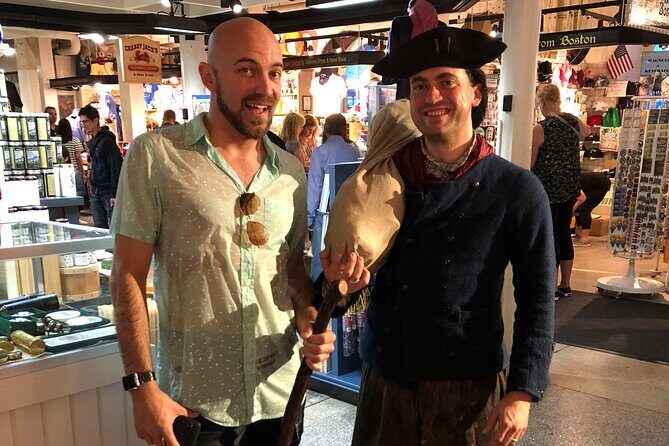
Boston’s revolution walk is actually fun. This Freedom Trail tour takes the familiar route and then pushes into the Historic North End, with a colonial-costumed guide and live storytelling that makes old plaques feel like people. Guides you may meet, like Catherine, Ben, and Elena (Mother Goose), tend to keep the energy up even when the weather turns.
What I like most is how much you cover for the time: the route works the core trail between Boston Common and Faneuil Hall, plus extra stops tied to America’s beginnings, including a guided stop at Granary Burying Ground. I also love the added payoff of reaching Paul Revere’s area, with photo stops and guided time around key landmarks such as the Old South Meeting House, Old State House, and the Paul Revere House.
One thing to consider: this is a walking tour with a good amount of standing and listening at stops, and pacing can vary with the group and conditions. If you need lots of seating breaks, plan accordingly—this is more walk-and-story than museum-and-sit, and it can run up to about 2 hours.
In This Review
- Key things I’d plan around
- Freedom Trail plus the Historic North End: why this route feels smarter
- Start at the Boston Common Visitor Center, 139 Tremont St
- Boston Common to Faneuil Hall: the main spine of the Revolution
- Boston Common (Stop 2)
- Massachusetts State House (Stop 3)
- Park Street Church (Stop 4)
- Granary Burying Ground (Stop 5)
- King’s Chapel Burying Ground (Stop 6)
- Boston Latin School and the Benjamin Franklin Statue (Stop 7)
- Old Corner Book Store (Stop 8)
- Old South Meeting House (Stop 9)
- Old State House (Stop 10)
- Boston Massacre Site (Stop 11)
- Faneuil Hall (Stop 12)
- Into Paul Revere’s world: North End stops and the story’s next chapter
- Paul Revere House (Stop 13)
- Paul Revere Mall (Stop 14)
- Finish point: Paul Revere Mall (Stop 15)
- Price and value: $26 for a 105-minute guided story walk
- What the timing feels like on the ground (and what to wear)
- Which guides shine, and what they tend to do well
- Who this tour is best for (and who might want a different plan)
- Should you book this Freedom Trail with Historic North End?
- FAQ
- Where does the tour start and end?
- How long is the Freedom Trail walk?
- How much does it cost?
- Is this tour limited to the standard Freedom Trail?
- What’s included in the ticket price?
- Are museum or attraction admissions included?
- Is it wheelchair accessible?
- Is the tour in English?
- Is it mainly outside, or do you go inside sites?
- Do I need to arrive early?
Key things I’d plan around
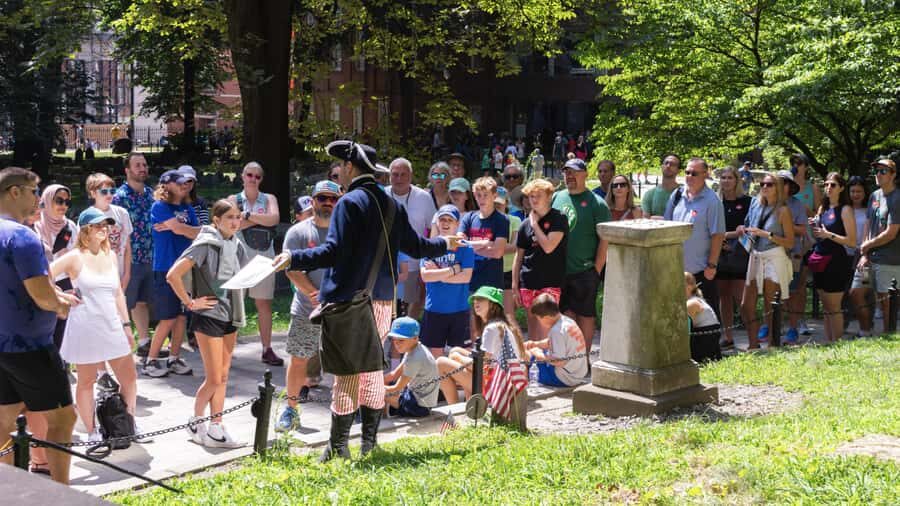
- Costumed colonial guide + live narration: you get stories, not just directions.
- Freedom Trail plus Historic North End: the route continues past Faneuil Hall into Paul Revere’s neighborhood.
- Granary Burying Ground: a burial-site stop tied to the American Forefathers.
- Major civic buildings in sequence: Boston Common to State House to meeting houses, in a tight loop.
- Paul Revere House and Paul Revere Mall: you end where the revolution story keeps going.
- Photo stops built in: you get quick look-bys alongside deeper guided moments.
Freedom Trail plus the Historic North End: why this route feels smarter
The big idea here is simple: you follow the Freedom Trail for the core “greatest hits,” then the tour continues into the Historic North End instead of stopping right after Faneuil Hall. That matters because Boston’s revolutionary story doesn’t pause at the city center. It keeps moving, and the North End is where that momentum feels real.
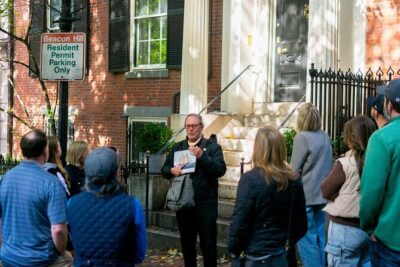
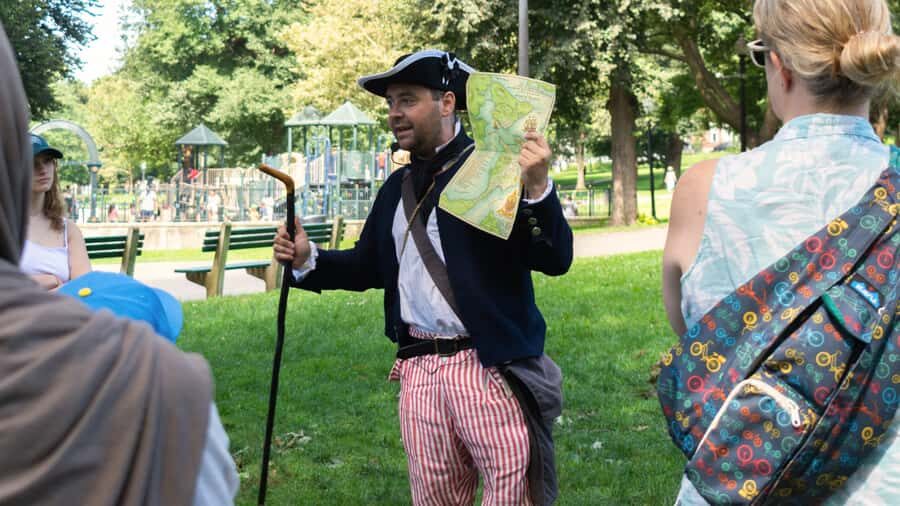
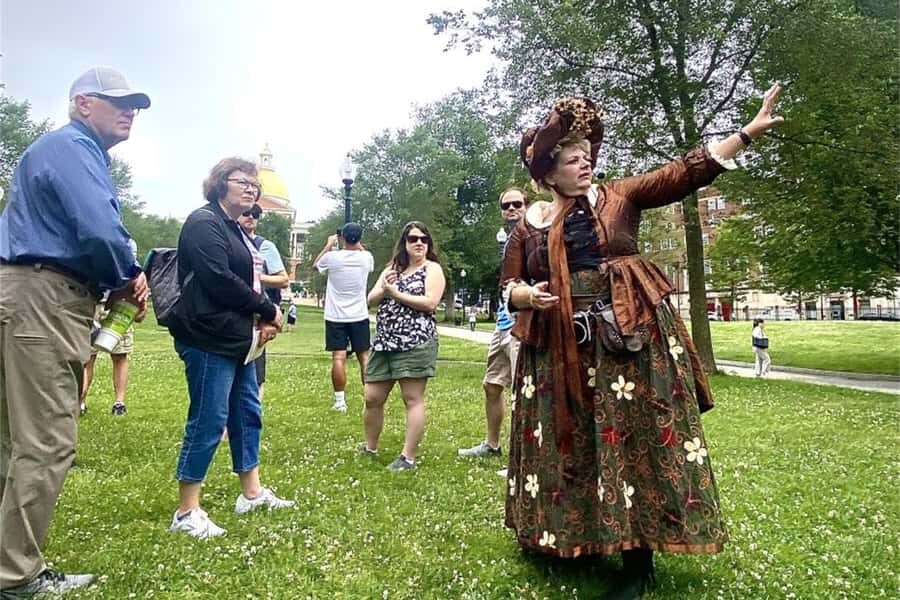
You’ll walk with a colonial-costumed historical interpreter who provides live narration throughout. This is the kind of guided setup where you start noticing patterns: where protests gathered, where leaders spoke, and how the “beginning” of America connects to the specific streets you’re standing on. Several guides named in the experience history—Ben, Catherine, Elena (Mother Goose), Steve, Captain Pickles, and Jeremiah—are praised for keeping the walk fun without turning it into silliness.
This is also a practical tour size and length for a first visit. It’s listed at 105 minutes, and you should plan for up to about 2 hours. That’s long enough for real context, but short enough that you can still do other things afterward in Boston without feeling like you spent the whole day underground in a timeline.
You can also read our reviews of more historical tours in Boston


Start at the Boston Common Visitor Center, 139 Tremont St
Your meeting point is 139 Tremont St, the Boston Common Visitor Center. You’ll want to arrive about 15 minutes early, because the group leaves on time. If you’re the type who likes to take a long bathroom break and then wander in five minutes late, build in buffer—this tour is designed around a set walking schedule.
The first stretch runs out of Boston Common, which the tour frames as America’s first public park. Even if you’ve seen photos of Boston Common before, you’ll get a more connected mental map once your guide starts linking what you’re seeing to what’s next on the route.
This tour is also listed as wheelchair accessible. Since it’s still a walking tour, you’ll want to think about your comfort with uneven sidewalks and standing time at each stop, but the accessibility note is a positive signal if mobility planning is part of your trip.
Boston Common to Faneuil Hall: the main spine of the Revolution
Between Boston Common and Faneuil Hall, you’re covering about a 1.3-mile stretch with lots of key landmarks packed in. This section is where most first-timers love the “I finally get it” feeling—the guide connects the civic spaces to the events that made them famous.
Boston Common (Stop 2)
You start here with a photo stop and some guided tour time. I like that the tour doesn’t rush past the park signposts; it treats Boston Common as the starting point for power, protest, and public gathering—the sort of place where history becomes visible fast.
Massachusetts State House (Stop 3)
You’ll do another photo stop and guided context as you walk by and look toward the building. Expect the guide to tie this to how governance and revolution feed each other: not just rebel speeches, but the civic structure that made dissent matter.





Park Street Church (Stop 4)
This stop includes a visit and guided tour. It’s one of those landmarks that looks like part of the city’s ordinary skyline—until your guide connects it to early Boston public life. The practical benefit: you learn what to notice when you see it on your own later.
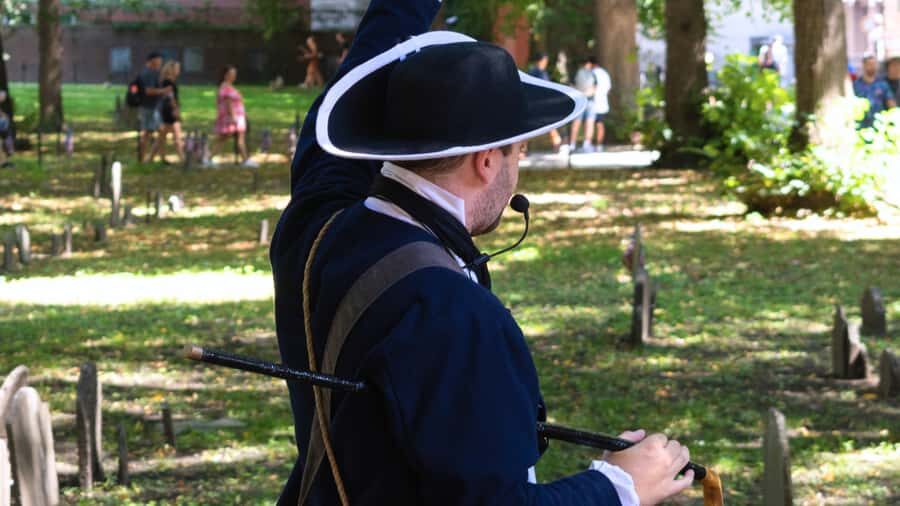
Granary Burying Ground (Stop 5)
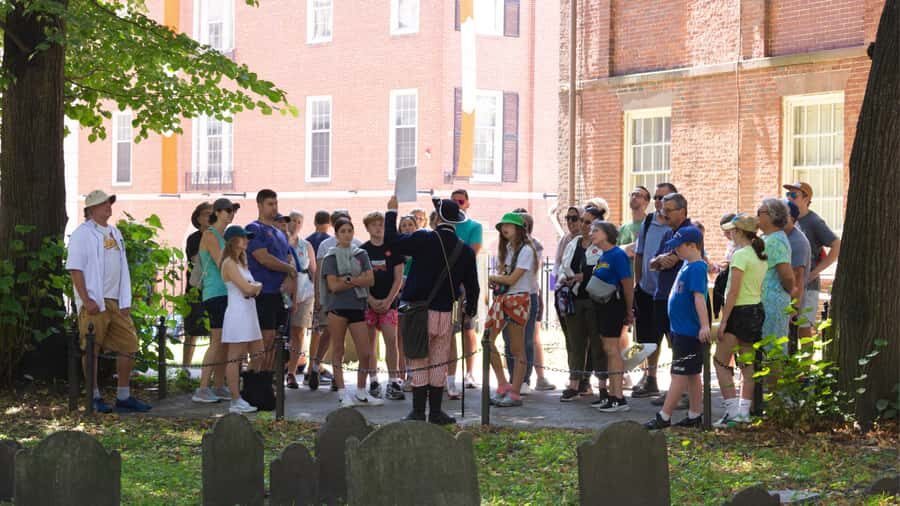
This is one of the emotional anchor points on the route: you’ll visit and get a guided tour at Granary Burying Ground. The tour specifically calls out the American Fore Fathers and this burial ground’s role in America’s beginnings. If you like history that has a human scale, this is often the moment that sticks.
A small caution: this is also a place where crowds and physical layout can affect hearing. If you’re in the back, you’ll want to position yourself early so you can catch the story as the guide talks.
King’s Chapel Burying Ground (Stop 6)
You’ll have a guided tour here, plus a few walk-and-pass-by elements depending on the flow. The best part of these cemetery stops is that they slow the pace down. You’re no longer just looking at buildings—you’re learning the names and places that shaped the early cast of characters.
Boston Latin School and the Benjamin Franklin Statue (Stop 7)
This one is listed as a photo stop plus visit and guided tour, including the Benjamin Franklin Statue. I like how this stop expands the story beyond politics into education and public figures. It’s also a quick win for people who want variety without adding extra transportation.
Old Corner Book Store (Stop 8)
You’ll get a photo stop and guided context here as part of the walking flow. This is one of those “you’ll miss it if you don’t stop” kinds of Boston spots. The guide’s job is to explain why a shopfront matters in a revolution story.
Old South Meeting House (Stop 9)
Another photo stop plus visit and guided tour. This is where the Revolution becomes public theater—people gathering to argue, plan, and persuade. If you want the Freedom Trail to feel like a story with characters instead of a list of dates, your guide is likely to make this stop do the heavy lifting.
Old State House (Stop 10)
This stop includes visit, guided tour, and pass by elements as you move. It’s a key civic site, and it often works like a bridge between the earlier stops (public spaces and institutions) and the more intense protest-and-clash moments that come next.
Boston Massacre Site (Stop 11)
You’ll have a photo stop plus visit and guided tour. The tour explicitly frames this as the site of the world-famous Boston Massacre. I like this placement because it helps you connect the earlier buildup—meeting houses, civic power, public action—to the sudden escalation.
Faneuil Hall (Stop 12)
This is listed as a photo stop plus visit and guided tour. Faneuil Hall is Boston’s most visited attraction for a reason, and even if you’ve seen it before, the guide’s narration can change how you read it. Also, here’s the practical value: since this tour goes past Faneuil Hall into the North End, you’re not stuck wondering what comes next.
Into Paul Revere’s world: North End stops and the story’s next chapter
After Faneuil Hall, you keep walking into Boston’s Historic North End where the revolution story continues. The highlights call out Old North Church, and the route is built so you can connect the earlier civic conflict to the famous midnight messaging era that people associate with Paul Revere.
Paul Revere House (Stop 13)
You’ll do a photo stop and visit plus guided tour at the Paul Revere House area. This is one of the high-interest stops for many people, and it’s also where the costumed guide approach shines. The more time the guide spends explaining who lived here and why it mattered, the more this becomes than just a pretty landmark.
Note on timing: the tour is built to include this stop, but as with any walking tour, rain and pacing can affect how long you spend at each location. If you care most about Paul Revere House, I’d arrive early and stay close to the front of the group so you can hear the guide clearly.
Paul Revere Mall (Stop 14)
You’ll finish this segment with another photo stop, visit, and guided tour, then move toward the end point. The idea is to wrap up the revolution arc with a final “place-based” moment tied to Revere’s legacy.
Finish point: Paul Revere Mall (Stop 15)
The tour ends back at Paul Revere Mall. That’s helpful because it gives you a clean drop-off location for planning the rest of your day—dinner, a quick walk, or hopping to other Boston sights without retracing every step.
Price and value: $26 for a 105-minute guided story walk
At $26 per person for about 105 minutes, you’re buying interpretation and pacing, not museum tickets. That’s an important distinction. Admission inside museums and/or attractions is not included, so if you’re the type who wants to go deep inside every building, you’ll likely need additional tickets.
Still, this is strong value because the price covers:
- a costumed colonial guide
- historical interpretation
- live narration
- and a skip the ticket line convenience
That last part can matter when you hit popular, timed-entries attractions in a busy city. Even when stops are mostly outside or photo-focused, your guide’s narration helps you understand what you’re looking at, which is where guided tours earn their keep.
Also worth noting: the tour is wheelchair accessible, and it’s designed as a standard Freedom Trail segment plus the North End extension. For many visitors, that blend is the sweet spot: you get the famous bits and the less “automatic” continuation.
What the timing feels like on the ground (and what to wear)
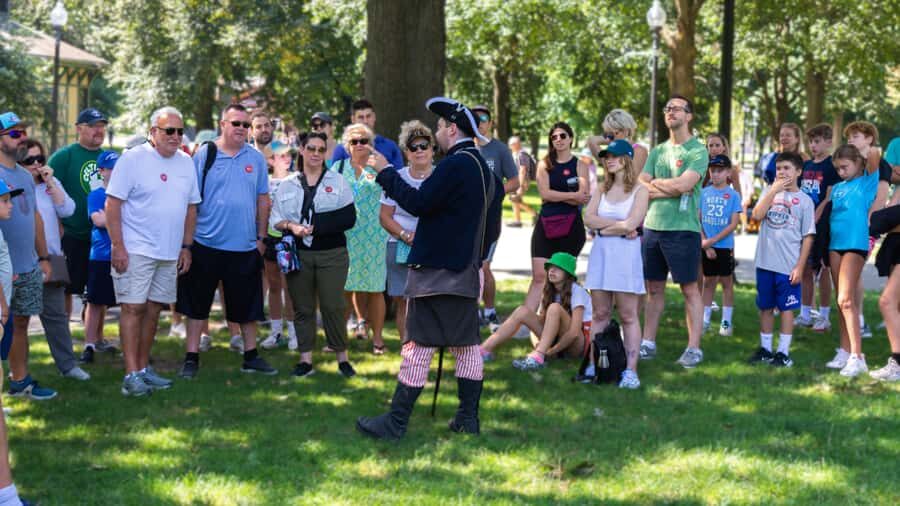
This tour is short on paper, but it’s still two hours of city walking with frequent stop-and-listen moments. You’ll want comfortable shoes. You’ll also want weather-appropriate clothing, because Boston weather loves to change its mind fast.
The route includes guided tours at multiple stops and photo stops at others. That usually means you’ll spend time standing where the guide can be heard. In the feedback history, some people loved how the pace lets you learn without feeling rushed, while others noted that standing can be a factor—so if you need to sit often, this may not be your best format.
Group size can also change your experience. One standout experience described a group around 50 people where the guide still worked to make sure everyone could hear. Even so, if you prefer quieter, smaller group dynamics, that’s something to keep in mind.
One more practical note: alcohol and drugs are not allowed, and intoxication is not permitted. That’s good for a respectful, family-friendly learning tone.
Which guides shine, and what they tend to do well
The best part of a guided historical walk is the match between guide style and your curiosity. In the experience history, named guides like Catherine, Ben, Elena (Mother Goose), Steve, Captain Pickles, and Jeremiah show up for praise. Common threads:
- keeping stories engaging and fun without losing facts
- period-costume character work, including period clothing
- clear pacing with plenty of chances to ask questions (or at least to feel included)
One highlight you’ll appreciate if you like extra flair: one guide experience specifically mentions an excellent fife player. Since that’s not guaranteed for every departure, treat it as a bonus when it happens—but it fits the overall style of the tour.
Who this tour is best for (and who might want a different plan)
This fits you if:
- you’re doing Boston for the first time and want the Freedom Trail to make sense fast
- you want the most famous sites plus the North End continuation in one ticket
- you like story-driven history and costumed, theatrical narration
- you’d rather walk with a guide than piece together the timeline on your own
It might not fit you as well if:
- you need lots of seated breaks during a tour (this format has standing moments)
- you’re trying to do Charlestown (this tour does not cover Charlestown)
- you’re expecting museum admissions to be included (admissions aren’t included)
Should you book this Freedom Trail with Historic North End?
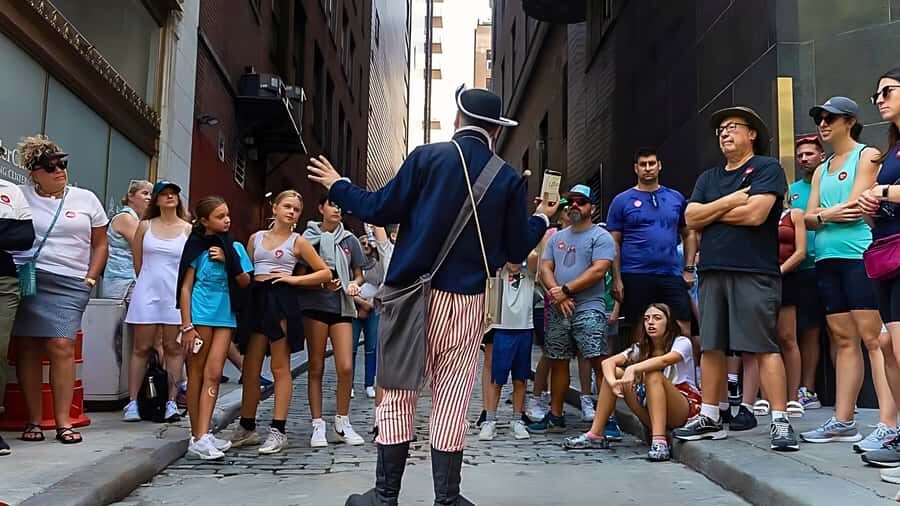
I’d book it if you want a guided, story-forward walk that covers the core Freedom Trail and then earns its keep by continuing into the Historic North End. The route hits major stops like Granary Burying Ground, Old South Meeting House, Old State House, and the Boston Massacre site, then connects that to Paul Revere’s House and the Paul Revere Mall finish.
Skip booking if your top priority is museum time inside every site, because admissions aren’t included. Also skip if Charlestown is on your must-do list, since this tour keeps its focus on Boston’s standard trail plus the North End extension.
If you’re flexible on weather and you pack comfortable shoes, this is an efficient way to get your bearings and leave with a clearer picture of how Boston’s revolutionary beginnings unfolded across real places.
FAQ
Where does the tour start and end?
The tour starts at 139 Tremont St (Boston Common Visitor Center). It ends at Paul Revere Mall.
How long is the Freedom Trail walk?
The duration is listed as 105 minutes, and you should plan for the tour to last up to about 2 hours.
How much does it cost?
It’s listed at $26 per person.
Is this tour limited to the standard Freedom Trail?
It covers the standard section of the trail and then ventures into Boston’s Historic North End neighborhood. It does not cover Charlestown.
What’s included in the ticket price?
You get a costumed colonial guide, historical interpretation, and live narration.
Are museum or attraction admissions included?
No. Admission inside any museums and/or attractions is not included.
Is it wheelchair accessible?
Yes, it’s listed as wheelchair accessible.
Is the tour in English?
The tour is offered in English.
Is it mainly outside, or do you go inside sites?
The tour includes photo stops and guided tours at multiple landmarks, but it does not include museum admissions. So expect a mix of outside viewing and guided time at stops.
Do I need to arrive early?
Yes. The instructions say to arrive 15 minutes before the activity starts so the tour can leave on time.