REVIEW · BOSTON
Boston: Underground Railroad History Tour of Beacon Hill
Book on Viator →Operated by Hub Town Tours · Bookable on Viator
Beacon Hill hides a second revolution. This 2.5-hour walk stitches together Black Heritage Trail stops across Beacon Hill, showing how local activism fed the Underground Railroad and the Civil War. I love the small-group pace (up to 16 guests) and the Black Heritage Trail focus on real places, not just dates.
I’ll warn you about one thing: this is a city-hills tour. Beacon Hill means uneven sidewalks and some uphill walking, so bring comfy shoes and plan to stand often.
The big value at $35 is how much ground you cover for your time: you hit all 10 trail landmarks, and the African Meeting House stop includes admission. You’ll also move with a real guide in English, using a mobile ticket so you can stay focused on the streets.
In This Review
- Key Things You’ll Notice on This Beacon Hill Tour
- Why This Beacon Hill Tour Makes Underground Railroad History Feel Real
- Price and Time: What $35 Buys You in Real Walking Minutes
- Meeting at Soldiers and Sailors Monument: Finding the Thread in Boston Common
- Acorn Street and Beacon Hill’s “Pretty” Façade Meets Real Power
- Phillips School and John J Smith House: Education and Action in the Same Streets
- Charles Street Meeting House: When Integration Turned Contentious
- 66 Phillips St Safe House: The Underground Railroad Was Work, Not Myth
- Otis House and the 1806 Church by Asher Benjamin: Boston’s Debates in Architecture Form
- African Meeting House (1806): The Stop With the Most Time—and Meaning
- Pinckney Street to the Massachusetts State House: From Home to Government
- Ending at Robert Gould Shaw and the 54th Regiment Memorial
- What to Wear, How to Pace Yourself, and Small Tips That Help a Lot
- Should You Book This Beacon Hill Underground Railroad Tour?
- FAQ
- How long is the Boston Underground Railroad History Tour of Beacon Hill?
- How much does the tour cost?
- What is the group size?
- Where do I meet the guide, and where does the tour end?
- Is admission included for any stops?
- What kind of walking should I expect?
Key Things You’ll Notice on This Beacon Hill Tour

- Ten Black Heritage Trail landmarks on one tight loop across Beacon Hill, ending near the Massachusetts State House
- A clear Underground Railroad thread through safe-house history and abolitionist networks
- Civil War-era Boston shown from the ground up with names, debates, and the people behind change
- African Meeting House (1806) gets a dedicated stop with included admission and time to absorb it
- Stories tied to specific buildings like 66 Phillips St, the Haydens’ Underground Railroad safe house
- Guides who teach with momentum; I’ve heard standout storytelling from guides including Dana, Will, Meghan, Lin, Joe, and Drew
Why This Beacon Hill Tour Makes Underground Railroad History Feel Real
Most Underground Railroad tours either stay vague or bounce between big headline sites. This one stays in Beacon Hill and keeps bringing you back to the same question: how did ordinary people help create routes to freedom?
What I like is the balance. You get the Civil War and abolition backdrop, but you also learn the local details that make Boston matter: schools that integrated, churches where debates turned ugly, and neighbors who risked their safety to help people escape.
You can also read our reviews of more historical tours in Boston


Price and Time: What $35 Buys You in Real Walking Minutes
At $35 for about 2 hours 30 minutes, this tour is priced like a friendly bargain compared with many city guided walks. The value isn’t just the length. It’s that you’re getting a guide plus a full set of Black Heritage Trail landmarks, with only one place requiring admission (and that admission is included).
Timing matters here because the streets are doing work for you. Each stop is close enough that you keep momentum, but spread out enough that you’re not reading a plaque and moving on. Expect frequent brief pauses plus a steady pace.
A practical note: the tour can run long if your group has questions. You’ll be on your feet, so don’t plan a tight next activity right after.
Meeting at Soldiers and Sailors Monument: Finding the Thread in Boston Common
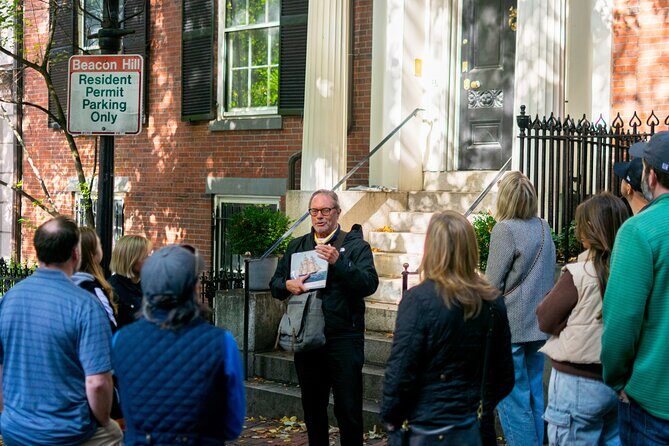
The tour kicks off at the Soldiers and Sailors Monument in the center of Boston Common, near the Boston Common Visitors Center at 139 Tremont St (02108). Look for the white granite column capped with a female figure holding a flag, with four bronze statues around the base.
This is a smart starting point because it forces you to zoom out first. Before you get into Beacon Hill, you set the mental frame: Boston’s fight over slavery, citizenship, and civil rights was not a side story. It was part of the city’s public life.
You also get a quick reminder that the area around you has deep roots—Boston Common is Boston’s communal grazing pasture dating to 1634, described on the tour as the oldest public land in the Americas.
Tip: Take a moment at the start to orient yourself. Once you’re walking uphill, you’ll be glad you anchored your bearings early.
Acorn Street and Beacon Hill’s “Pretty” Façade Meets Real Power
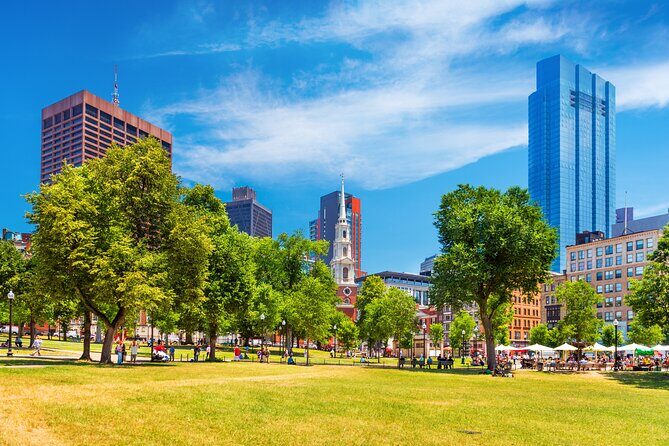
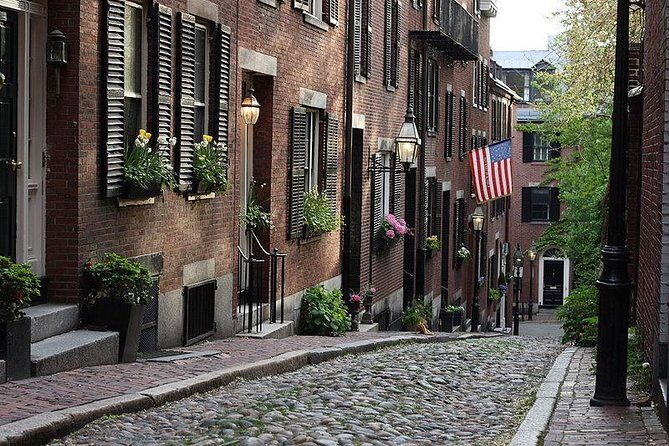
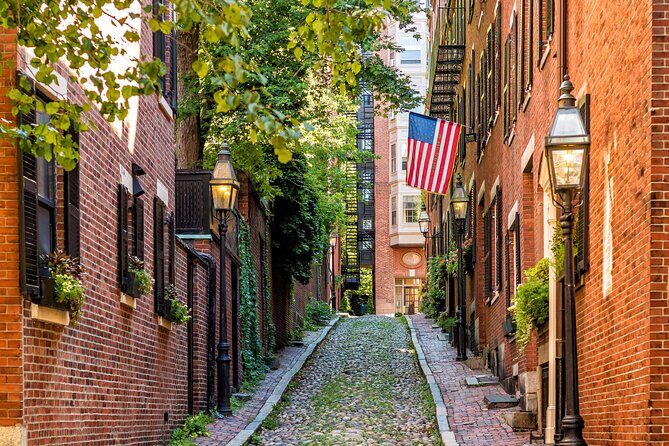
Next comes Acorn Street, famous for its narrow cobblestone lane that snakes through Beacon Hill. It’s one of those streets that looks like a postcard—until your guide starts putting names and conflicts to the architecture.
This stop matters because Beacon Hill’s charm can make you forget the politics happening behind those facades. As the tour moves, you’ll see how elite social circles coexisted with the abolitionist work happening nearby.
The tour also points you to the neighborhood’s social hierarchy, often described as tied to the 19th-century Boston Brahmins. That context helps you understand why battles over education, church membership, and integration were so intense.
Possible drawback: If you hate cobblestones, you may feel it here and later. Take your time on the uneven footing and keep your stride short.
Phillips School and John J Smith House: Education and Action in the Same Streets
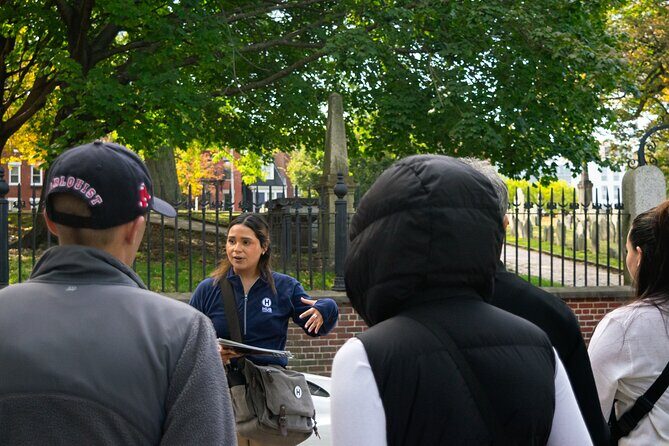
Phillips School is a key stop because it’s not just a building; it’s a record of policy and resistance. The school opened in 1824 as whites-only, then became among the first schools in Boston to integrate by 1855. That shift tells you something important about timing and pressure—change didn’t arrive quietly.
Then you move to the John J Smith House, connected to a leading abolitionist, state legislator, and former barber. This is the kind of detail that turns history from a general lecture into a map of real people.
When your guide ties a person’s job and public role to their abolition work, it makes the story feel more possible. You start thinking: if someone could organize and speak from a small neighborhood, what does that say about what your neighbors can do today?





Charles Street Meeting House: When Integration Turned Contentious
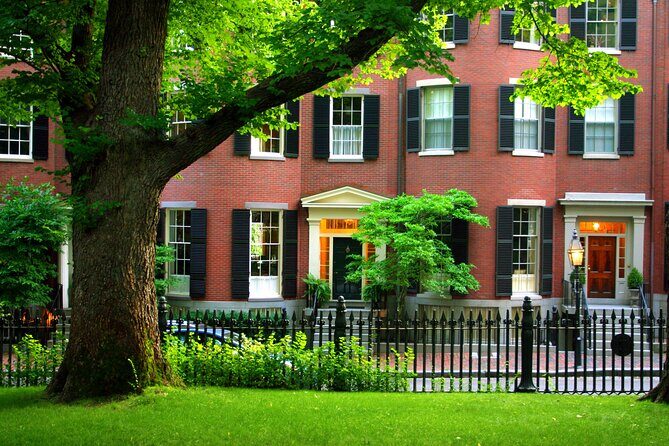
At the Charles Street Meeting House (1807), you’ll hear about debates over racial integration tied directly to this historic site. This is one of the stops where the tour’s tone shifts from background to conflict.
Why it’s powerful: integration was not a smooth, well-mannered process. The building becomes a witness to arguments about who belonged, who led, and how far institutions would go.
This section also connects you to the home of an African-American community activist and abolitionist, reinforcing that the movement wasn’t only led by famous white reformers. People in the community pushed, organized, and insisted on participation.
66 Phillips St Safe House: The Underground Railroad Was Work, Not Myth
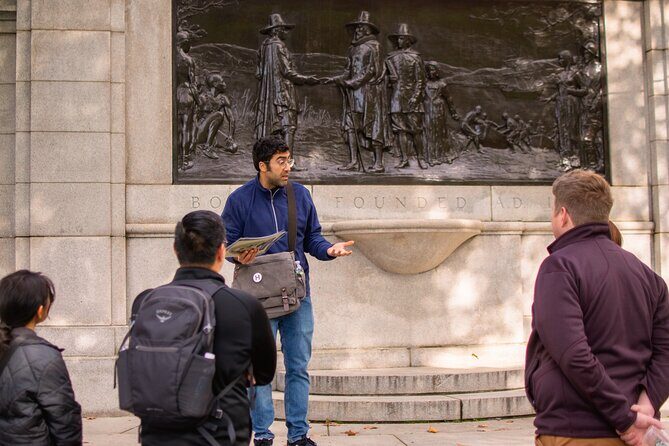
Now you get to one of the most emotionally direct stops: 66 Phillips St. The tour identifies it as an Underground Railroad safe house owned by the Haydens—staunch abolitionists who were formerly enslaved.
This is where the tour earns its name. Not because the story becomes spooky movie material, but because it becomes concrete: people helped people, and they did it from real addresses in real neighborhoods.
A detail that helps: your guide doesn’t just call it a safe house. They connect the story to abolition networks and the larger pressures building toward the Civil War. The result is you don’t leave thinking the Underground Railroad was some secret fantasy. You leave thinking it was a coordinated human effort under threat.
Otis House and the 1806 Church by Asher Benjamin: Boston’s Debates in Architecture Form
The tour continues with Otis House, a residence from 1796 tied to Boston mayor Harrison Gray Otis and his connection to the revolutionary James Otis Jr. This stop gives you contrast. You’re seeing the city’s political world at the same time you’re learning about its moral conflict.
Near there, the tour highlights a church designed in 1806 by architect Asher Benjamin. Then it shifts to a much darker story: an outspoken abolitionist and U.S. Senator was beaten unconscious in the Capitol in 1856 over slavery. Charles Sumner is named as the person tied to that event.
You’ll also hear about homes of several African-American abolitionists, including historian William Cooper Nell. And the story expands beyond adults to institutions by referencing a school founded in 1835 as a segregated school for Boston’s African-American children.
Why this section matters: it shows how moral arguments traveled through power structures—houses, churches, schools, and government.
What to watch for: this part can feel like a lot of names in a row. That’s normal for this tour style. If you like to process by asking questions, this is a good time to slow down with your guide.
African Meeting House (1806): The Stop With the Most Time—and Meaning
The African Meeting House is the anchor stop, with about 25 minutes on site and admission included. The tour frames it as the cultural center of Boston’s African-American community and the oldest extant black church building in the United States (1806).
This is the moment you’ll likely feel history shift from “public debates” to “community life.” Even without touring a museum, you’ll get a strong sense of why buildings like this mattered—spiritual grounding, leadership, and community organization.
If you want to understand why abolition was not just politics but also survival and community strength, this stop gives you the clearest lens.
Practical note: since you’ll stand and listen for a while here, it’s a good checkpoint to take a few deep breaths, refill water, and reset your legs.
Pinckney Street to the Massachusetts State House: From Home to Government
Next is 5 Pinckney St, described as the oldest extant house in Beacon Hill (1787). The tour says it was home to an African-American Revolutionary War veteran—again, a reminder that Black Boston’s story isn’t limited to the Civil War era. It has older roots in the city.
Then you reach the Massachusetts state capitol, described on the tour as the Hub of the Solar System (1798). It’s a fun nickname, but the meaning lands with the abolition context you’ve built over the previous stops. Government is where arguments became policy, and policy became real risk and real opportunity.
If you’ve ever wondered how local activism links to national change, this is where the tour threads that connection for you.
Ending at Robert Gould Shaw and the 54th Regiment Memorial
The tour concludes beside the Robert Gould Shaw and the 54th Regiment Memorial, opposite 24 Beacon Street, near the Massachusetts State House.
This ending matters because it reframes what you’ve been learning. The Underground Railroad is often taught as escape routes. This tour uses that story to point you toward the Civil War era fight for freedom—and the people who led it with action on the ground.
You’ll leave with a different sense of Beacon Hill: not just pretty streets, but a living map of moral courage and public conflict.
What to Wear, How to Pace Yourself, and Small Tips That Help a Lot
Beacon Hill rewards good planning. The tour is listed for moderate physical fitness, and it’s not recommended if standing for extended periods is difficult. Uneven surfaces and hills are part of the deal.
Here’s what helps most:
- Wear shoes with real grip on cobblestones and old sidewalks.
- Bring water; even on a cool day, you’ll work up a sweat.
- Pace yourself during Q&A. If your group is chatty, the tour can run longer than the estimate.
- If you like visuals, don’t be afraid to look back and re-scan the streets once your guide explains what you’re seeing.
Also, this is a guided experience, not a museum day. Admission inside museums is not included, and guides are not in period costume.
Should You Book This Beacon Hill Underground Railroad Tour?
Book it if you want Underground Railroad history in a place you can walk through—and if you care about how Boston’s abolition story connects to the Civil War. For $35, the combination of a small-group walk, ten Black Heritage Trail landmarks, and a guided story that names people and explains their roles is strong value.
Skip it if you can’t handle hills or uneven footing for a couple of hours. If you can, bring comfortable shoes and an open mind. You’ll come away seeing Beacon Hill as a real political and moral battleground—not just a charming neighborhood.
FAQ
How long is the Boston Underground Railroad History Tour of Beacon Hill?
It runs about 2 hours 30 minutes.
How much does the tour cost?
The price is $35.00 per person.
What is the group size?
The tour has a maximum of 16 travelers.
Where do I meet the guide, and where does the tour end?
You meet at the Soldiers and Sailors Monument at 139 Tremont St, Boston, MA 02109. The tour ends by the Robert Gould Shaw and the 54th Regiment Memorial at 26 Beacon St, Boston, MA 02108, across from the Massachusetts State House.
Is admission included for any stops?
Yes. Admission is included for the African Meeting House. Admission inside museums is not included.
What kind of walking should I expect?
This is a mostly on-foot walking tour with moderate physical fitness needed. It is not recommended if you have difficulty standing for extended periods, and you should expect hills and uneven surfaces.