REVIEW · BOSTON
Boston: Mapparium® globe + How Do You See the World?™
Book on GetYourGuide →Operated by How Do You See the World?™ experience + Mapparium® globe · Bookable on GetYourGuide
A world frozen in stained glass.
That’s the magic of the Boston Mapparium® globe, a three-story walk-through globe that puts you inside a snapshot of 1935—and makes history feel physical. I also love how the showlines up big themes with modern media, especially the human progress exhibits tied to the Christian Science Monitor.
My one watch-out: the Mapparium portion is timed, so you’ll want to pick a start time that fits your day. Food and drinks are also not allowed inside.
In This Review
- Key highlights you’ll actually care about
- Entering the Mapparium Globe in Boston (the 1935 stained-glass world)
- The timed ticket experience: why 20 minutes feels short (but works)
- How Do You See the World narration: a perspective shift in real time
- Our World: Mapping Progress (1935 to now) and why it’s more than an add-on
- The Christian Science Monitor connection: progress stories with a mission
- Interactive multimedia you can actually use: how to enjoy Points of Progress
- Mary Baker Eddy and Christian Science exhibits: what you’ll learn and how it lands
- Christian Science and architecture stop: a smart way to pair with Boston sightseeing
- Price and value: how $6 turns into a longer visit
- Who should book this (and who might not love it)
- Quick practical tips before you go
- Should you book this How Do You See the World + Mapparium experience?
- FAQ
- How much does the Boston Mapparium globe experience cost?
- How long is the Mapparium Globe experience?
- Do I need a timed ticket for the Mapparium Globe?
- Where is the meeting point for How Do You See the World?
- What exhibits are included with the ticket?
- Are food and drinks allowed?
Key highlights you’ll actually care about
- Three-story stained glass globe you walk through, not just around
- Fixed-in-time view of 1935, giving you a pre-WWII world lens
- Multimedia exhibits on progress from 1935 onward
- Christian Science and Mary Baker Eddy exhibits included with your ticket
- State-of-the-art interactive stories from The Christian Science Monitor
- Good value for the price, since other related exhibits are free once you’re there
Entering the Mapparium Globe in Boston (the 1935 stained-glass world)
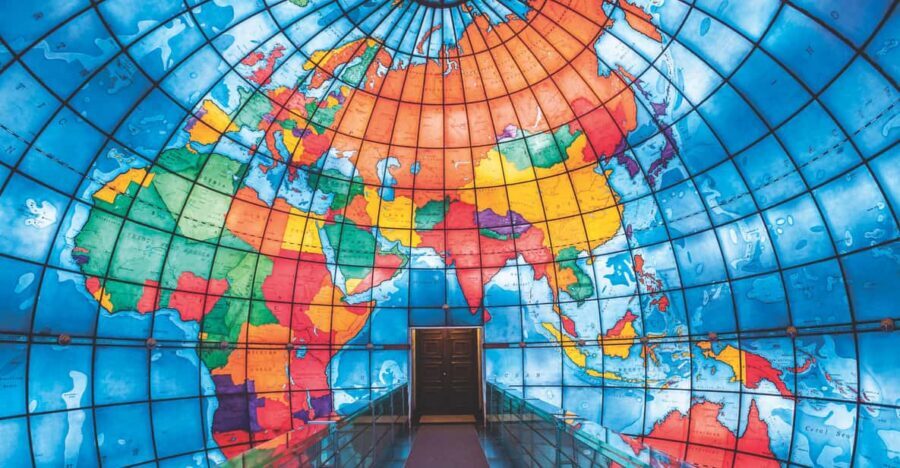
The Mapparium® in Boston is one of those attractions that sounds simple until you see the scale. This isn’t a tiny diorama globe. It’s a walk-through, three-story stained glass world where you physically move through a globe-like space while the experience frames the planet as it existed in 1935.
The key benefit for you: you get a strong sense of perspective. When you’re standing inside a globe, you stop thinking like a tourist scanning landmarks and start thinking like a person inside a world system. It’s a clever way to make geography, design, and history feel connected.
And yes, the “inside-out” feeling is real. One visitor called it a giant inside out globe, and that’s exactly the point: you’re meant to experience the earth as an object that surrounds you, not something you just observe from the outside.
You can also read our reviews of more tours and experiences in Boston.



The timed ticket experience: why 20 minutes feels short (but works)
The Mapparium is ticketed and timed. Your entry is part of a 20-minute experience, and that time box matters because it keeps the show focused. If you have a tight schedule, that can feel like a win. If you hate rushing, it’s the one element that can feel a bit compressed.
Plan smart and you’ll enjoy it more. Arrive a few minutes early, then let the narration and movement carry you instead of trying to “speed-read” everything. The experience is designed to give you an emotional snapshot quickly, then hand you off to the free exhibits where you can linger.
Also note the practical rule: no food or drinks. That keeps the indoor space clean, but it means you’ll want to snack before or after.
How Do You See the World narration: a perspective shift in real time
Inside the globe, the experience uses narration delivered from within the space itself. That sounds like a small detail, but it changes how the whole place “reads” to your brain. You’re not just watching images; the story is set up so you feel like you’re hearing the world from inside the world.
For you, that’s the best takeaway: you’ll come away thinking less about dates as facts and more about them as viewpoints. The year 1935 isn’t just a label. It’s a lens on what people might have expected, feared, hoped for, and prioritized before World War II reshaped everything.
If you like travel moments that make you pause and reframe the past, this narration angle is a strong reason to go—even if you’ve walked past the building many times.
Our World: Mapping Progress (1935 to now) and why it’s more than an add-on
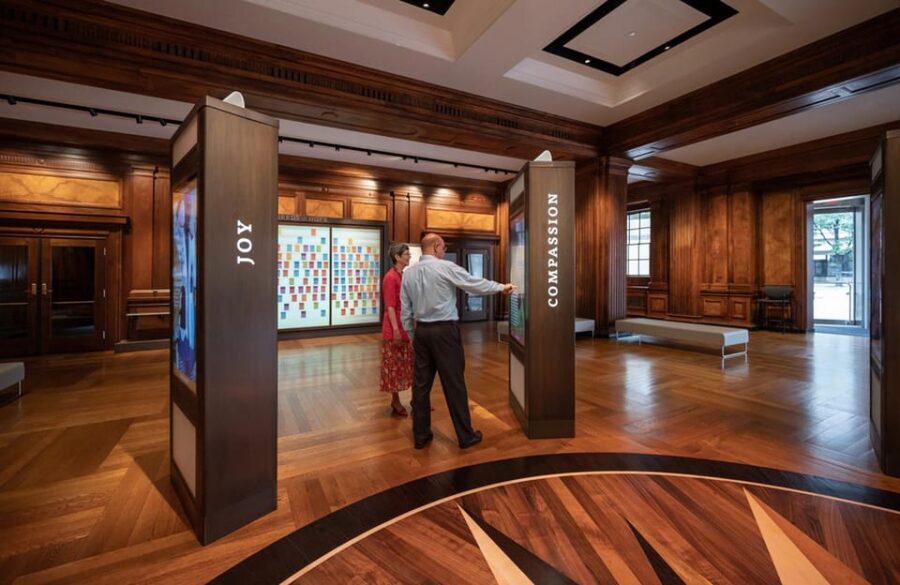
Once you step out of the Mapparium, you enter the exhibits that connect that 1935 snapshot to bigger changes over time. The first major one is Our World: Mapping Progress, built around the idea that the years since 1935 brought major advances—and that there’s a reason to hold onto hope.
What I like about this setup is the pacing. The Mapparium gives you a fixed historical worldview. Then Mapping Progress asks you to compare that earlier snapshot to the broader arc of human development. You’re not just learning facts; you’re being guided toward cause-and-effect thinking.
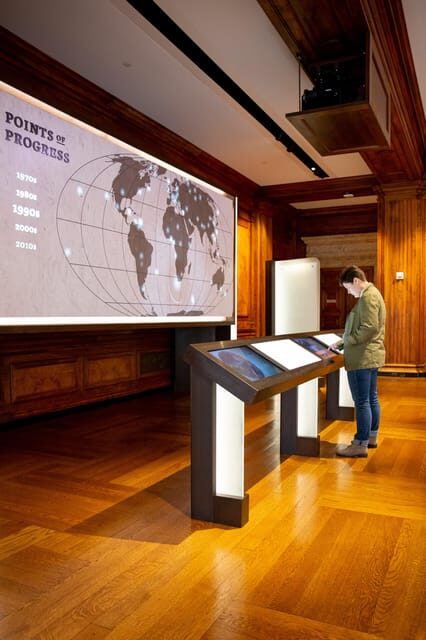
Then you’ll get Points of Progress, described as a dynamic set of pivotal moments across human rights, scientific breakthroughs, exploration, and more, stretching into the post-war era. This is where the experience leans into modern multimedia storytelling, so it feels less like a museum lecture and more like a guided tour through milestones.
The Christian Science Monitor connection: progress stories with a mission
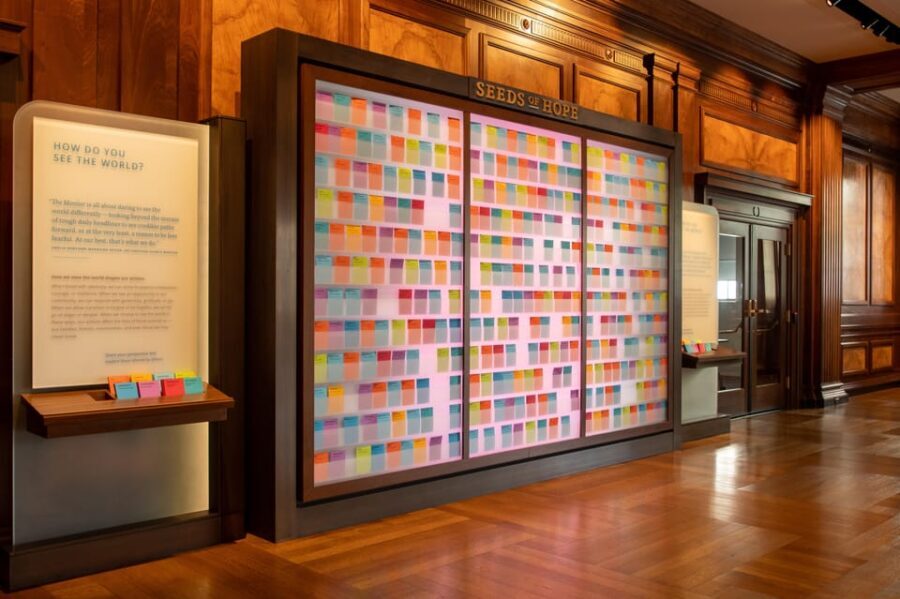
One reason this experience feels distinctive is that the story isn’t presented as “tech wins” only. It ties its progress narrative to The Christian Science Monitor, founded in 1908 by Mary Baker Eddy.
You’ll see exhibits built around the Monitor’s themes, including interactive stories linked to individuals shaping their communities worldwide. The Monitor is described as Pulitzer Prize-winning, and the mission is stated as injure no man, but to bless all mankind. That framing matters because it steers the exhibits toward resilience and responsibility, not just inventions and headlines.
From a value standpoint, this is smart. At $6 per person, you’re not only paying for a cool object (the globe). You’re paying for a packaged idea: history plus interpretation plus stories that try to connect the world’s problems to human agency.




Interactive multimedia you can actually use: how to enjoy Points of Progress
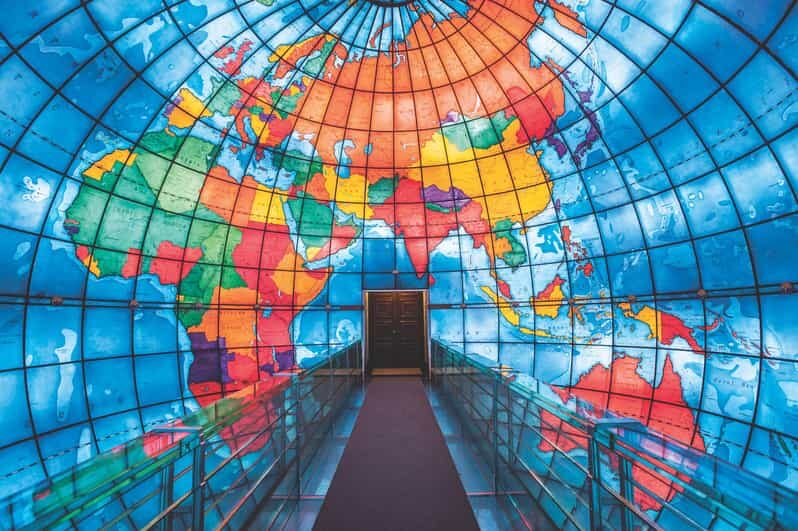
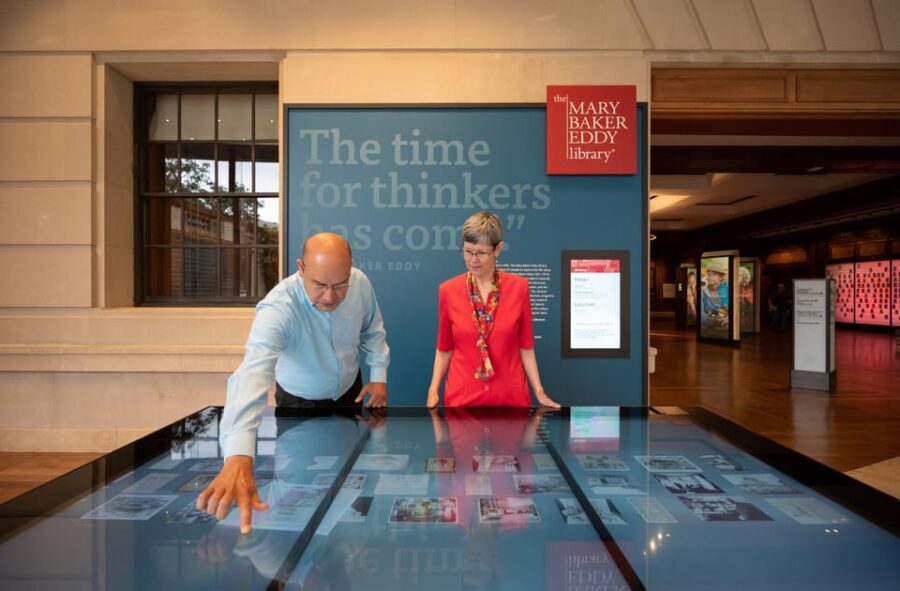
Points of Progress is where the exhibit style becomes “hands-on” in a way that supports different learning styles. You’re likely to encounter interactive story sets, and the experience includes eight sets of interactive stories associated with The Christian Science Monitor.
Here’s how I’d use your time: don’t rush the screens. Pick one or two story sets, read actively, and let the prompts do their job. When exhibitions like this work, they make you compare your own assumptions against someone else’s experience of progress.
If you’re visiting with teens or adults who usually glaze over at indoor history, this section is one of the better reasons to prioritize this stop. The subject matter is broad, but the format is designed to keep it moving.
Mary Baker Eddy and Christian Science exhibits: what you’ll learn and how it lands
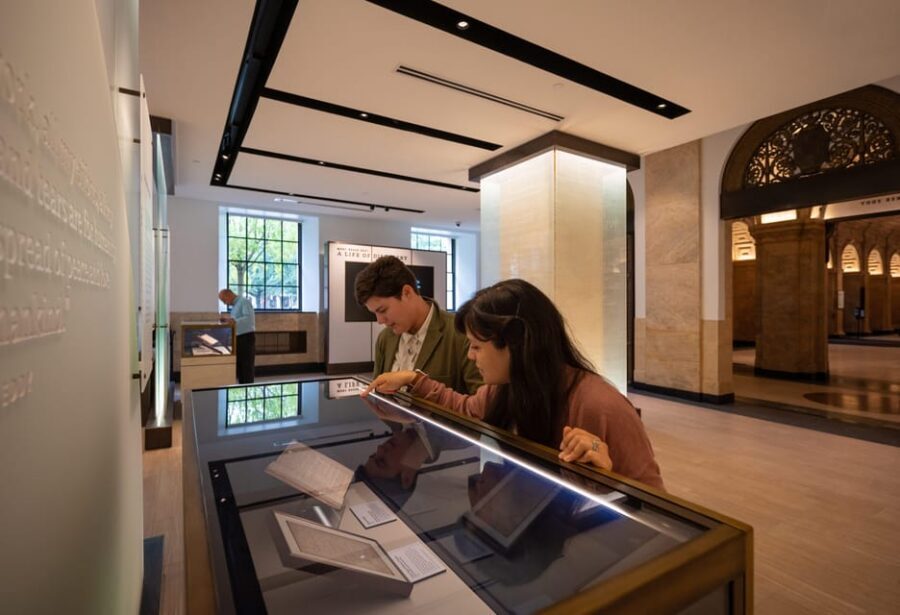
Your ticket includes multiple areas tied to Christian Science and Mary Baker Eddy. There’s Christian Science and Mary Baker Eddy, plus The Mary Baker Eddy Library and Exhibit.
Even if you’re not planning to study religion on vacation, I think these exhibits are worth your attention because they explain a real person and a real institution with clear goals. Mary Baker Eddy’s love of the Bible and its ongoing relevance to universal questions is highlighted as part of the exhibit narrative, so you’re not only reading biography—you’re getting the framework behind the organization.
A detail worth mentioning from visitor experience: on some occasions, you may have the chance to catch a guided church tour and hear a large organ. That’s not guaranteed based on the provided info, but it’s a real perk when it lines up with your visit. If you’re the type who enjoys architecture and atmosphere as much as content, that possibility adds extra value.
Christian Science and architecture stop: a smart way to pair with Boston sightseeing
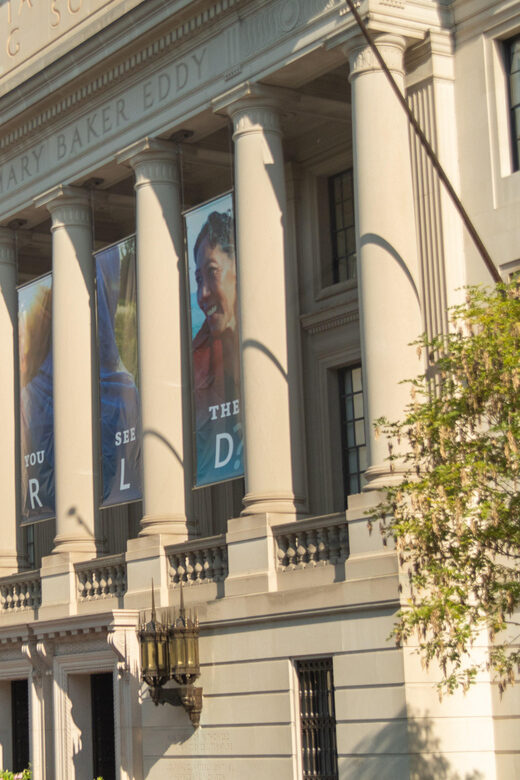
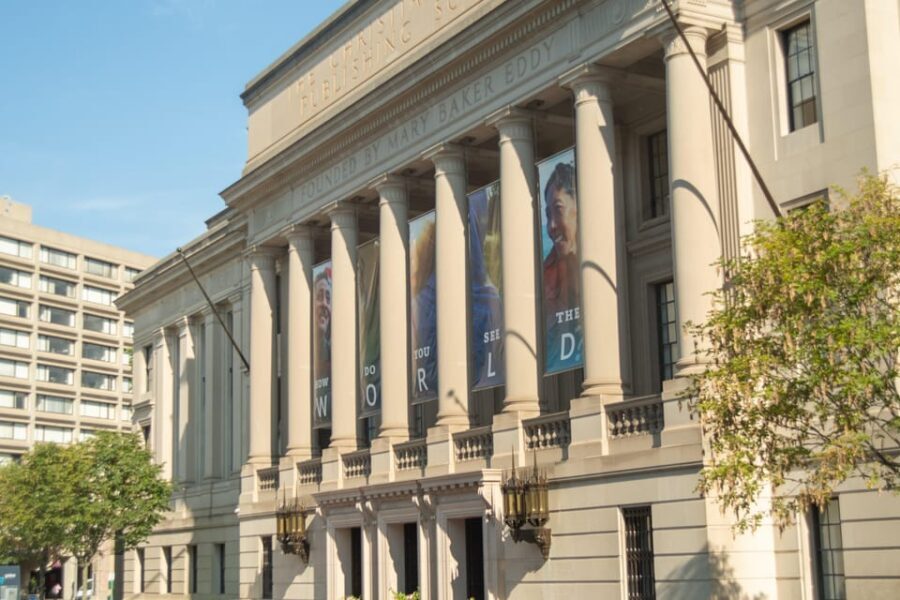
This experience is set next to a church building, and the meeting point is practical: look for the large banners that read How Do You See the World? on the building next to the church.
That matters because you can plug it into a day without fuss. The Mapparium is quick (timed, about 20 minutes for the globe portion), and the other exhibits are described as free and not requiring a timed ticket once you’re there. So if you’re sightseeing around Boston, you can treat it like a focused cultural stop rather than a half-day commitment.
Just remember: the globe portion is scheduled. If you’re running late, you’ll likely feel it immediately when it’s time to enter. Build in a small buffer.
Price and value: how $6 turns into a longer visit
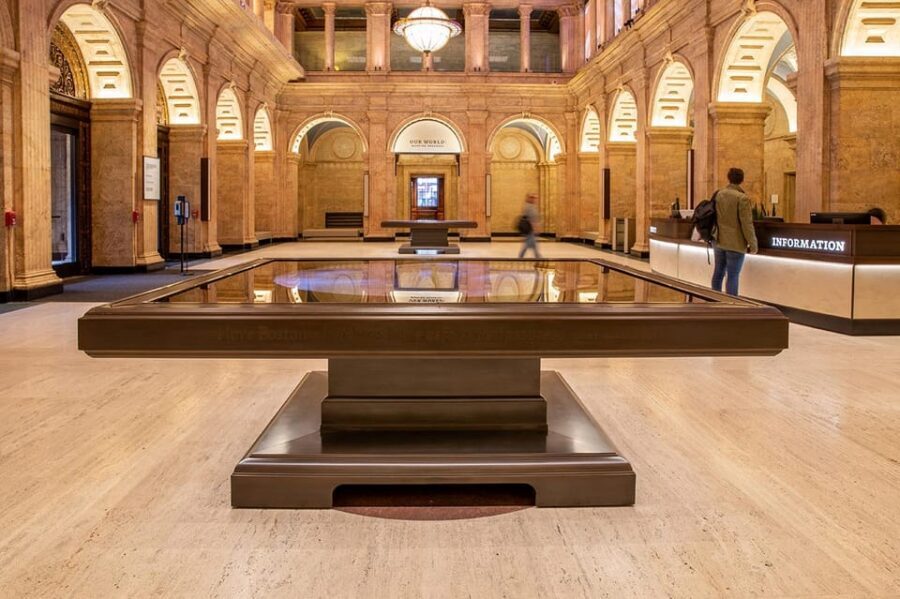
At $6 per person, the Mapparium portion alone would already be a bargain for many people. But the best value angle is how the ticket connects you to extra learning spaces without additional timed entry requirements.
You get entry to:
- the Mapparium Globe experience via timed entry,
- the How Do You See the World experience area,
- Christian Science and Mary Baker Eddy exhibits,
- The Mary Baker Eddy Library and Exhibit.
Then, beyond the ticketed globe, you can spend time at the progress-themed exhibits that are free and don’t require another timed slot.
I’d call this a smart spend if you like three things:
1) big visual environments,
2) a historical viewpoint you can feel in your body,
3) accessible multimedia storytelling.
Who should book this (and who might not love it)
This is best for you if you enjoy:
- geography and “how the world is shown” moments,
- museum experiences that mix history with media,
- travelers who like short-but-thoughtful stops.
It’s also a great option if you want something different from standard Boston sightseeing—less about streets and more about worldview.
Who might not love it? If you strongly dislike timed attractions or you’re the type who needs long, unstructured time to read every label, the Mapparium’s 20-minute window could feel limiting. In that case, you can still treat the free exhibits as the main event and view the globe as the quick centerpiece.
Quick practical tips before you go
- Choose your Mapparium entry time carefully since that part is timed.
- Plan for an indoor visit with no food or drinks, so eat before or after.
- Use the meeting point signage on the building next to the church so you don’t waste time hunting.
- Give yourself time to move from the globe to the progress exhibits so you don’t end up sprinting through the best parts.
Should you book this How Do You See the World + Mapparium experience?
Yes, you should book if you’re the kind of traveler who likes a standout visual experience paired with meaningful context. For $6, you get the rare “walk inside a globe” moment plus a set of progress and human stories that connect 1935 to the wider modern world.
Skip it only if your schedule can’t handle timed entry or you know you don’t enjoy media-driven exhibits. Otherwise, this is one of those Boston stops that feels both unusual and genuinely useful for understanding how people map the world—literally and emotionally.
FAQ
How much does the Boston Mapparium globe experience cost?
It costs $6 per person.
How long is the Mapparium Globe experience?
The duration is listed as 20 minutes.
Do I need a timed ticket for the Mapparium Globe?
Yes. The Mapparium globe is a timed, ticketed exhibit. Other exhibits are free and do not require a timed ticket.
Where is the meeting point for How Do You See the World?
Look for the large banners that read How Do You See the World? on the building next to the church.
What exhibits are included with the ticket?
You get entry to the Mapparium Globe experience, the How Do You See the World experience, the Christian Science and Mary Baker Eddy exhibit, and The Mary Baker Eddy Library and Exhibit.
Are food and drinks allowed?
No. Food and drinks are not allowed.