REVIEW · BOSTON
Boston: Freedom Trail History Tour and Brewery Taste
Book on Viator →Operated by Hub Town Tours · Bookable on Viator
Freedom Trail plus lunch beats solo sightseeing. I love how this tour strings together 11 Freedom Trail stops into one smooth walk, and you also get an included New England lunch with a beer, seltzer, or mocktail tasting. The only real catch is that it’s a walking tour, so if you struggle with standing for stretches, you’ll want to think carefully.
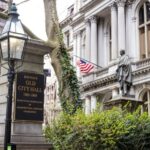
I also like the way the story stays human. The guide weaves the years leading to the Revolution through places like Faneuil Hall, the Boston Massacre site, and Old South Meeting House, not just dates on plaques. You’ll hear it from real locals too, with guides like Gianna, Nick, John, and Jon called out for making the material clear and comfortable.
And the format is practical. You start at 121 S Market St near the black-and-white Coach banners opposite Quincy Market, you meet in the middle of the action, and the tour ends at Democracy Brewing for lunch in a private dining room. Expect a moderate walking pace and a cap of 25 people, with mobile tickets and English-only guiding.
In This Review
- Key things I’d bet on before you book
- How the 2.5-hour Freedom Trail format keeps it doable
- Faneuil Hall Marketplace: the crowd-rouser at the start
- Boston Massacre site: where the story turns tragic
- Old South Meeting House: the Boston Tea Party connection
- Benjamin Franklin statue area: learning Boston’s layers fast
- Granary Burying Ground: Revolution remembered in stone
- Boston Common: the oldest public land in the Americas
- Democracy Brewing: lunch, tasting, and a local brew stop that fits the day
- Price and value: is $79 worth it?
- Who should book this Freedom Trail and brewery combo
- Small tips that make the day smoother
- Should you book this Boston Freedom Trail tour and brewery taste?
- FAQ
- How long is the Freedom Trail History Tour and Brewery Taste?
- Where do you start and where does the tour end?
- What’s included in the $79 price?
- Are any of the historic sites paid admission?
- Is the tour guided in English and do you get a mobile ticket?
- Is the tour suitable if I have trouble standing for long periods?
Key things I’d bet on before you book
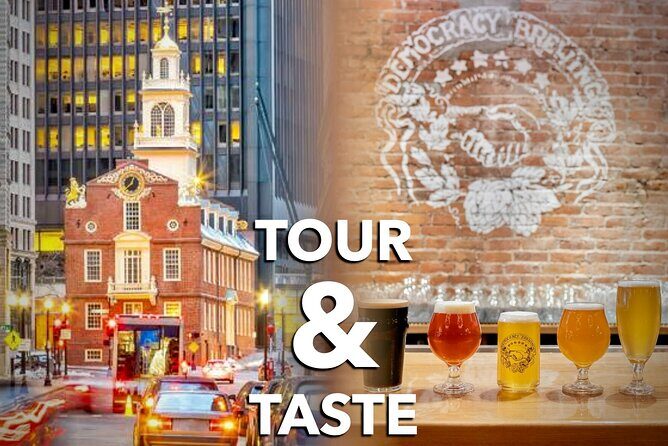
- 11 of 16 official Freedom Trail landmarks packed into one guided route
- Included New England lunch plus a tasting (beer, seltzer, or mocktail)
- Small group size (max 25, and often fewer) keeps questions easy
- Start at Faneuil Hall Marketplace and finish at Democracy Brewing, so you don’t lug your plans around
- Free-entry historic stops help your money go to the guide and the meal
How the 2.5-hour Freedom Trail format keeps it doable

This is not a marathon. The tour clocks in at about 2 hours 30 minutes, and that matters because Boston’s Freedom Trail can feel like a checklist if you try to do it on your own at a casual pace.
The big advantage is the route logic: instead of hopping randomly, you cover a tight section of downtown history. You start at Faneuil Hall Marketplace at 121 S Market St, where you can easily orient yourself near major transit and the lively public market area. Then you work your way through key Revolution-era sites and burying grounds, finish at Boston Common, and land at the brewery for food and tastings.
One practical consideration: you should have a moderate fitness level. It’s also specifically not recommended if you have difficulty standing for extended periods. The pace is described as easy by people who’ve taken it, but it’s still a walking tour, so plan for your feet.
You can also read our reviews of more historical tours in Boston


Faneuil Hall Marketplace: the crowd-rouser at the start

Your first stop is right where people still gather: Faneuil Hall Marketplace. The meeting point is easy to spot if you look across from Quincy Market for the black-and-white Coach banners. You’ll be standing in a space that has hosted public life for a long time, and that gives the Revolution story immediate context.
Here’s what you’ll focus on in this area:
- Faneuil Hall as a historic public market space
- The town meeting legacy, often remembered as the Cradle of Liberty
Why I like starting here: the Revolution wasn’t only fought on battlefields. It grew from arguments in meeting rooms and public squares. This stop sets the tone early, so later scenes like unrest, intimidation, and political power don’t feel abstract.
A potential drawback? If you’re sensitive to crowds, Faneuil Hall and the surrounding market zone can be busy in general. Arriving a few minutes early helps you catch the group before the space gets loud.
Boston Massacre site: where the story turns tragic
Next up is the Boston Massacre site, where you get the moment of shock: British soldiers kill five Bostonians in 1770. Even if you know the name, this stop is where the story gains weight—because the Revolution wasn’t one straight line. It included fear, anger, and escalation.
Nearby context you’ll connect to this area includes:
- A colonial political setting linked to Massachusetts Bay Colony
- The Oldest public building note often associated with the story
This is a good place to ask questions. The guide can help you connect what was happening politically with what people felt day to day. If you’ve ever wondered why public unrest mattered so much, this stop is your answer in plain language.
Time on the site is short, so if you want extra time for photos or reading, keep an eye on the group’s pace. The benefit of the format is you still hit many stops without feeling rushed at every single one.
Old South Meeting House: the Boston Tea Party connection
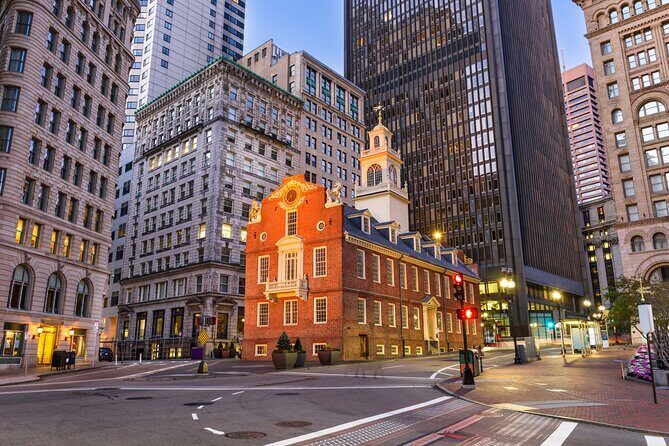
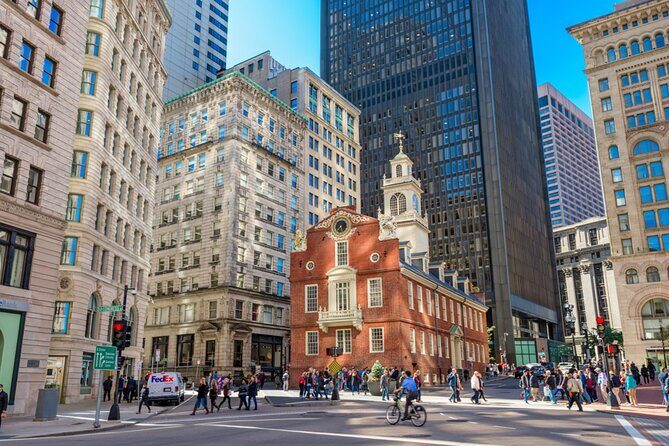
Old South Meeting House is next, and it carries a specific Revolutionary-era association. You’ll see the congregationalist meeting house from 1729 and hear how this location ties to the Boston Tea Party (1773).
Why this stop works: it shows how communication and organization moved through everyday institutions. It wasn’t all secret meetings and dramatic speeches. It was regular spaces used for political decisions.
You’ll also get a thread of Boston’s larger political and publishing scene in the area, including connections to places like Ticknor & Fields (a former publishing house). That matters because the Revolution era depended on writing, printing, and public opinion as much as ships and weapons.
A small tip: if you’re the type who likes to read everything you see, you might need to compromise. This tour prioritizes narrative clarity over long self-guided museum time, so focus on the story beats the guide is emphasizing.
Benjamin Franklin statue area: learning Boston’s layers fast
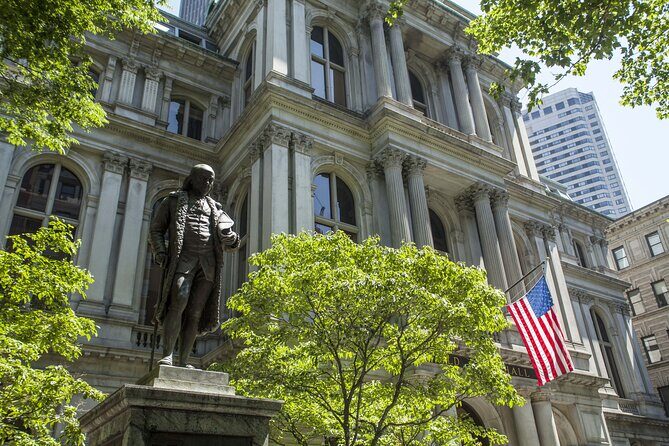
Then comes a stretch around the Benjamin Franklin statue area, which turns into a quick sampler of early Boston landmarks. You may not spend as long at each spot here as you do at the major stops, but the guide ties them together so you’re not just walking past points of interest.
In this zone, you’ll connect the dots between:
- Boston Latin School (noted as the oldest public school in the Americas, established 1635)
- First Church of England in Puritan Boston (1686, with 1754 noted)
- Boston’s first burying space, flagged as an oldest Freedom Trail landmark
The value is speed with structure. It’s how you learn a city without spending the whole day studying a map. And it’s also where you start to see how education, religion, and public life were interwoven with politics.
Watch for the stop length here. It’s more of a quick, guided pass than a lingering visit, so keep your questions ready. This is the kind of area where a good guide can point out details you’d otherwise miss in passing.
You can also read our reviews of more drinking tours in Boston






Granary Burying Ground: Revolution remembered in stone
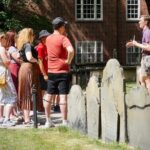
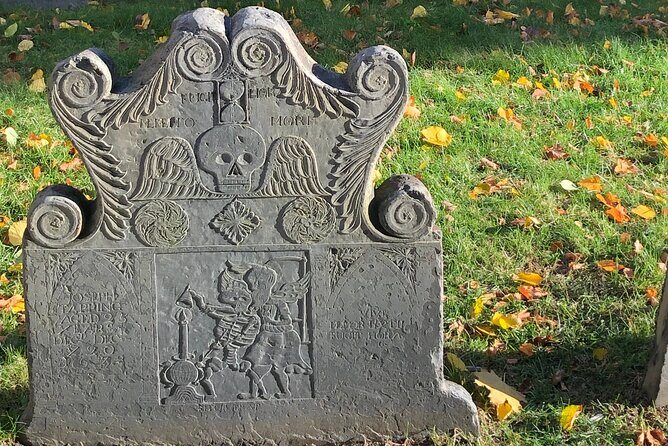
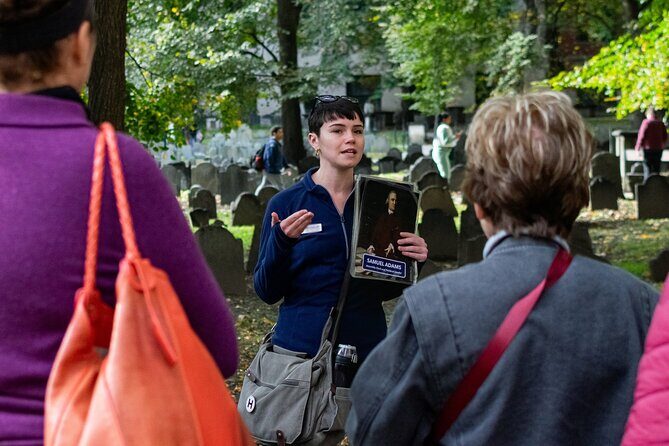
Granary Burying Ground is a highlight for a lot of people, and I agree it’s one of the most powerful stops on the route. You’ll visit Boston’s third-oldest burying ground and the final resting place for Revolutionary Boston (with a 1660 reference).
Even if you’ve toured cemeteries before, this one has a specific energy because it’s tied to the people who shaped the Revolution. The guide’s narrative helps you read the stones as part of the story instead of just old names and dates.
As you move through the area, you’ll also pick up connections that help you understand Boston’s shift from colonial roots to later civic life. For example, the tour notes:
- An active church
- A reference to the tallest building in 19th-century Boston
- The Massachusetts state capitol and a quirky-sounding local nickname about the Hub of the Solar System (1798)
That last detail is worth paying attention to. Boston’s history can feel like it jumps eras. This stretch helps you see continuity—how the city kept building over its own past.
Practical note: cemeteries mean uneven ground in spots. Wear shoes that won’t complain on rocky or worn surfaces.
Boston Common: the oldest public land in the Americas
Then you hit Boston Common, which is credited as the oldest public land in the Americas. You’ll get the idea that it started as a communal grazing pasture (with 1634 noted), and you can see why a central public space became a political stage.
This stop is usually a breather. You get time to pause, soak in the scale of the Common, and let the Revolution storyline land. It also helps you reset your energy for the meal part of the tour.
The Common is also a natural place for perspective. You’ve just been focused on meetings, conflict, and memorials. Here the story expands into the city itself—the shared space where people lived, gathered, and argued.
Democracy Brewing: lunch, tasting, and a local brew stop that fits the day
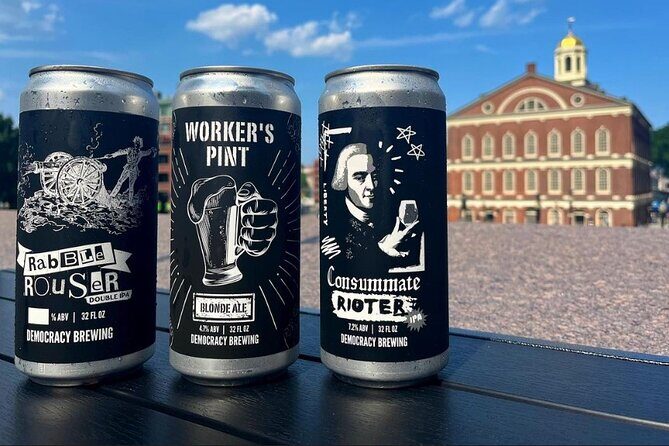
The tour ends where the planning gets smart: it wraps at Democracy Brewing at 35 Temple Pl. Instead of marching to one more historic site and calling it done, you get food and a tasting right where the tour naturally slows down.
The brewery partner is worker-owned, and the experience includes:
- Beer, seltzer, or mocktail tasting
- All-inclusive New England lunch
The tasting format is flexible, so you can choose what fits your preferences. And there’s a full restaurant menu on hand, which helps if you want something beyond the tasting portion.
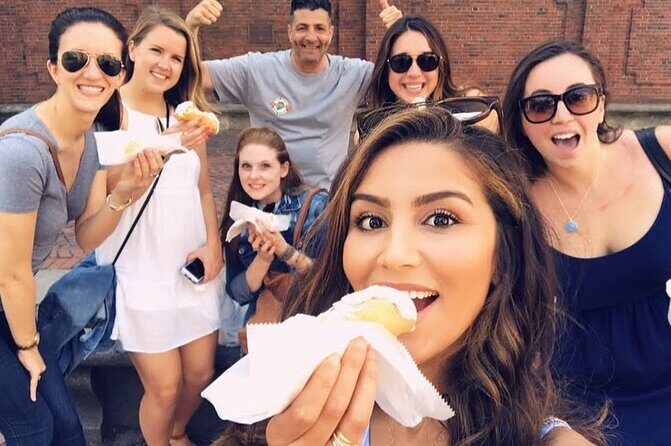
One of the practical perks: lunch is served in a private dining room. That means you’re not trying to eat in a loud, chaotic public space while everyone scrambles for plates. It’s also a chance to sit down, cool off if Boston weather is doing its usual thing, and ask follow-up questions that you didn’t think of earlier.
This is where the tour feels like more than a history walk. It’s a genuine break built into the schedule, not tacked on at the end.
Price and value: is $79 worth it?
At $79 per person for about 2.5 hours, the price can look steep until you count what’s included.
Here’s what you’re getting in the deal:
- A guided walk that covers 11 Freedom Trail landmarks
- A tasting (beer, seltzer, or mocktail)
- An all-inclusive New England lunch
- Free admission tickets for the historic stops listed in the route
When lunch and a tasting are included, you’re not paying separately for a meal while also paying for a guide. You’re paying for a full package of time, storytelling, and food.
It’s also a tour with a small-group feel (max 25, often fewer). Smaller groups are a big deal if you like asking questions or want the guide to tailor explanations to what you’re curious about.
The biggest reason I’d watch the value is personal fit. If you hate walking, won’t eat what’s offered, or don’t care about Revolutionary-era storytelling, then the included lunch won’t help. But if you want a guided orientation to Boston and a built-in meal, $79 starts to feel more like a fair price for what’s bundled.
Who should book this Freedom Trail and brewery combo
This tour is a great match if:
- You want a guided route through major Freedom Trail stops without doing it piece by piece
- You like a story-driven approach to the Revolution years
- You enjoy good explanations and don’t mind walking at an easy pace
- You want a real meal at the end instead of figuring out dinner after
It’s less ideal if:
- Standing and walking for stretches are difficult for you
- You expect to cover the North End and Charlestown on this exact tour, because those are not part of the route here
- You want a long stop at every site for self-guided museum-style reading
Language is English, and service animals are allowed. Mobile tickets make it easier to move without printing paperwork.
One last thing: it’s commonly booked ahead (on average about 17 days), so if you’re traveling at a busy time, don’t wait until the last minute.
Small tips that make the day smoother
- Wear comfortable shoes. Even an easy walking tour adds up over 2.5 hours.
- Plan for weather. The experience requires good weather, and if it’s canceled due to poor weather, you’ll be offered another date or a full refund.
- Arrive slightly early at Faneuil Hall. The meeting point is specific, and you’ll want to spot the group before you’re juggling bags.
- If you care about what’s served for lunch, consider any dietary needs before you go. The lunch is included, but your comfort matters.
And when it comes to guides, the names people mention for warmth and clarity are a good sign—Gianna, Nick, John, and Jon are examples of guides associated with friendly, question-friendly tours.
Should you book this Boston Freedom Trail tour and brewery taste?
I’d book it if you want a smart, time-friendly Freedom Trail introduction that ends with an actual meal and a local brewery experience. The combination of 11 landmark stops, a guide who explains the Revolution years clearly, and included lunch + tasting is exactly the kind of “get a lot done without turning into a robot” day that works well in Boston.
Skip it if you want a completely self-guided, slow museum pace, or if walking/standing will be uncomfortable. Also, if you’re specifically aiming for the North End and Charlestown, know that this tour route doesn’t cover them.
If you’re on the fence, think of it like this: you’re buying a guided downtown history route plus a built-in lunch solution. For many first-time visitors, that’s the sweet spot.
FAQ
How long is the Freedom Trail History Tour and Brewery Taste?
It lasts about 2 hours 30 minutes.
Where do you start and where does the tour end?
You start at 121 S Market St, Boston, MA 02109, and the tour ends inside Democracy Brewing at 35 Temple Pl, Boston, MA 02111.
What’s included in the $79 price?
The tour includes the Freedom Trail route covering 11 of 16 landmarks, beer/seltzer/mocktail tasting, and an all-inclusive New England lunch.
Are any of the historic sites paid admission?
The stops listed on the route show free admission tickets.
Is the tour guided in English and do you get a mobile ticket?
Yes, it’s offered in English, and you receive a mobile ticket.
Is the tour suitable if I have trouble standing for long periods?
It’s not recommended for travelers who have difficulty standing for extended periods, though it’s described as an easy pace.