REVIEW · BOSTON
Boston Crime Tour
Book on Viator →Operated by Boston Crime Tours · Bookable on Viator
Boston has a darker side. This 2 hours 20 minutes walk turns classic landmarks into story locations, mixing famous cases with lesser-known criminal chapters in a way that feels made for true crime fans. I like the small group size (max 22) and the fact the tour is built around clear, real-world stopping points, not just one long lecture. One consideration: it is crime-forward and deals with violence, so it is not the best pick for kids who are sensitive to dark topics.
Guides lean hard into storytelling, often with humor and visual aids, and it helps that the experience runs in English and stays focused on what you can see outside. You also get practical value: the stops are marked as free admission, and the tour includes a mobile ticket so you are not scrambling for paperwork. If you want Boston to feel like a living crime map—with regular pauses at meaningful corners—this format should click.
The vibe is part history, part criminal case files, and part city sightseeing. You will cover several parts of town from downtown toward Boston’s waterfront and back, ending near Scott Alley close to Boston City Hall, with plenty of short stops to catch your breath and follow the thread.
In This Review
- Key things that make this Boston crime walk worth your time
- Why Boston’s crime story works on foot
- Price and value: what $34.99 really buys
- Meeting points and how the route is laid out
- Stop-by-stop: from the Boston Massacre site to the Brooke Courthouse
- The opening: historical narration that sets the tone
- Stop 1: Boston Massacre Site (about 10 minutes)
- Stop 2: South Boston Waterfront (about 30 minutes)
- Stop 3: Rachel Revere Square (about 20 minutes)
- Stop 4: DeFilippo Playground (about 15 minutes)
- Stop 5: Lancaster Street (about 10 minutes)
- Stop 6: Edward W. Brooke Courthouse (about 15 minutes)
- The guide factor: Omar, Tom, and the storytelling style
- Who this tour fits best (and who should pass)
- Practical tips so you enjoy the walk
- Should you book this Boston Crime Tour?
- FAQ
- How long is the Boston Crime Tour?
- What is the price of the tour?
- Is the tour offered in English?
- What is the maximum group size?
- Where do you meet for the tour?
- Where does the tour end?
- Is admission required for the stops?
- Do I need a printed ticket?
- What about cancellations and weather issues?
- Is the tour accessible if I have limited mobility?
Key things that make this Boston crime walk worth your time
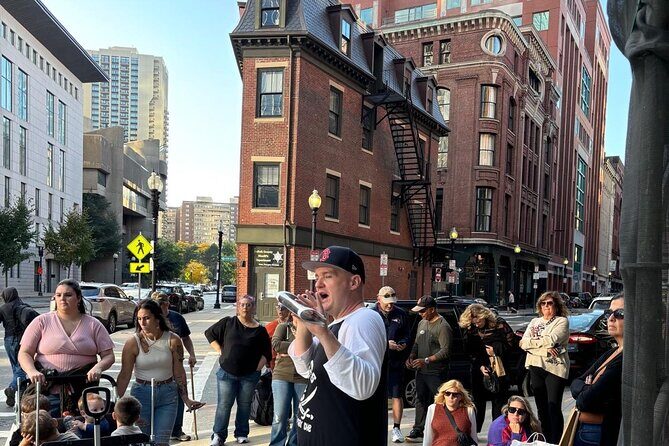
- True crime meets street-level sightseeing, so you are not just hearing dates—you are seeing locations.
- Small group, max 22, which usually means you can actually stay engaged rather than getting lost in the back row.
- Free admission stops are built into the route, so you can spend your money on the tour, not entrance fees.
- Guides use visuals (photos and materials), helping you picture the people and cases as they come up.
- A mix of eras, from early American chaos to later mob and serial killer stories.
- Lots of moving city variety: waterfront, Little Italy area sites, courthouse grounds, and film location vibes.
Why Boston’s crime story works on foot
Boston is compact enough that a walking tour can actually feel like a guided case file you can physically follow. On this one, the structure is practical: you start in the downtown zone, then you keep bouncing across key areas where stories are easier to connect to real street layouts.
The tour runs about 2 hours 20 minutes, which is long enough to build a narrative arc but short enough that you still get out and back without turning the day into a slog. You should expect real walking, and the activity lists moderate physical fitness as the baseline—so comfortable shoes matter.
Another reason this works: Boston’s landmarks do a lot of the heavy lifting. When your guide points you toward a site like the Boston Massacre area or a major courthouse, the city itself becomes the stage. You do not need to be a textbook historian to get it, but if you are a true crime fan, you get to watch the stories land in the exact neighborhoods where they played out.
You can also read our reviews of more tours and experiences in Boston.
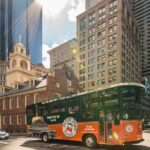
Price and value: what $34.99 really buys
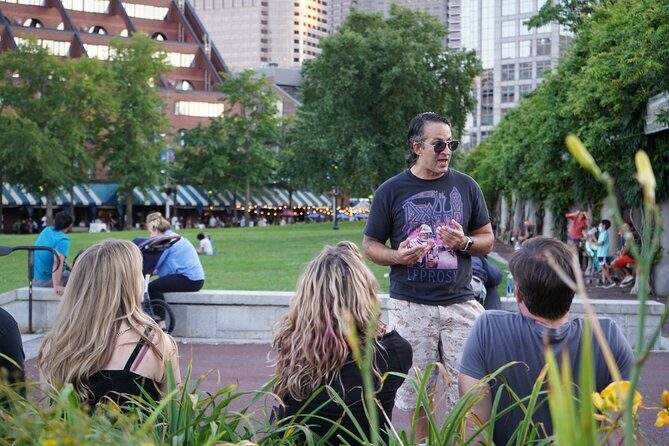
At $34.99 per person, this is priced like a focused, guided walking experience rather than a big museum day. The value comes from three things you can feel right away:
First, the tour’s total time—around 2 hours 20 minutes—is dense with stops. It is not just “drive-by photos.” You pause at multiple locations and get context tied to what you’re standing near.
Second, the route is described with free admission for the listed stops. That matters because it keeps the tour’s cost predictable. You are paying for interpretation and storytelling, not a stack of entrances.
Third, you get a mobile ticket and a small-group setup (max 22). A group that size makes it easier to hear the guide and stay oriented, especially when the tour uses visuals and you are switching between topics fast.
If you’re traveling with someone who wants something a bit different from the standard sightseeing circuit, the price makes it an easy “try it” decision.
Meeting points and how the route is laid out
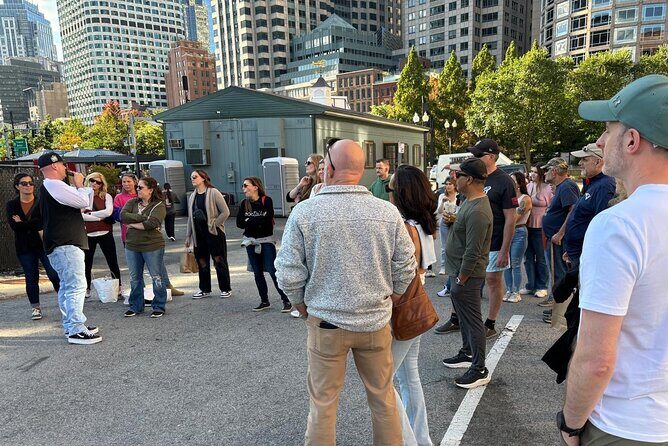
You start at 408 Atlantic Ave, Boston, MA 02110. You end at 1 Scott Alley, Boston, MA 02108, near Boston City Hall. That end point is a useful detail: you are not disappearing into an outskirt transit maze when the tour finishes.
Because this is a point-to-point walking route, you’ll want to plan your day around the fact that you are moving from stop to stop and ending in a slightly different place than where you started. It also means you can tack on a meal nearby once you’re done.
The tour is listed as near public transportation, so if you need to reposition before or after, it should be doable without stress. And yes, service animals are allowed, which is good to know for anyone traveling with an animal companion.
Stop-by-stop: from the Boston Massacre site to the Brooke Courthouse
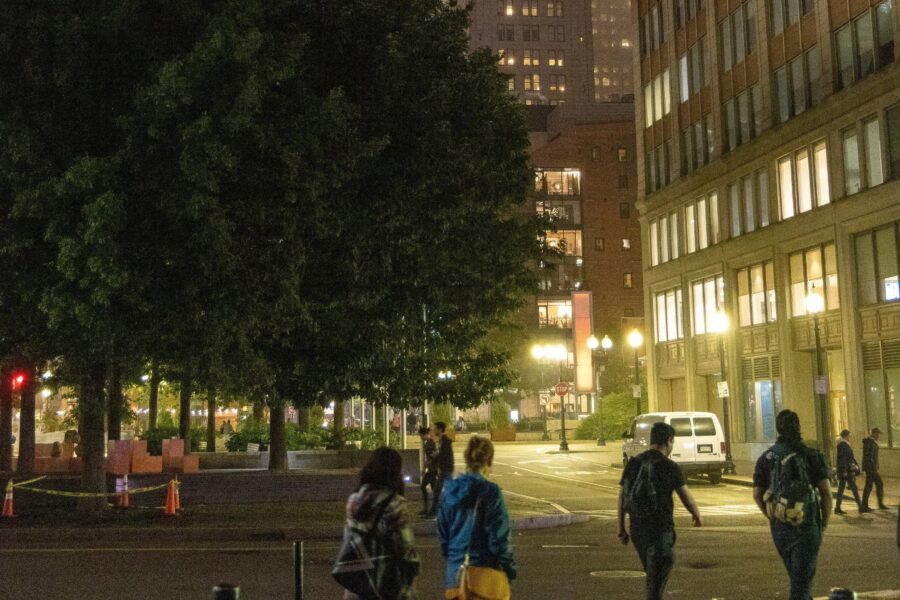
This tour follows a sequence that keeps switching tone—early American turmoil, waterfront gangster lore, neighborhood mob connections, and then darker criminal cases later on. Each stop is timed for short attention spans, with narration doing the linking.
The opening: historical narration that sets the tone
Before the first main landmark, you get historical narration. Think of this as the “how to read the city” moment: your guide frames the idea that crime history is not just names and dates—it’s also about geography, who held power, and how official systems shaped outcomes.
It’s a smart start because it prepares you for the way later stops jump between eras without losing the thread.

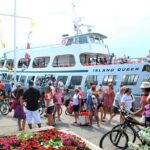


Stop 1: Boston Massacre Site (about 10 minutes)
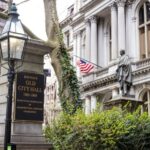
At the Boston Massacre site, you learn the story behind the event and you also get discussion of an infamous scammer from that era. This pairing is important. It’s not only about violence; it’s also about how manipulation and schemes worked in the same world.
What you’ll get: quick historical context and a case-style explanation anchored to a real place.
Downside to consider: because this is early, some people find the crimes feel less “modern true crime” and more political/chaos-driven than they expected.
Stop 2: South Boston Waterfront (about 30 minutes)
This is one of the longer stops. The tour tells a story about a gangster whose career intersected with the FBI—so much so that he became #1 on the FBI’s most wanted list. The emphasis is on the system’s role, not just the criminal’s choices.
This section is where the tour’s “mob and FBI intersection” theme gets most direct. If you have been reading about big Boston mob figures, you’ll likely recognize the shape of the narrative quickly, especially from the way guides in this tour style connect the waterfront geography to major names like Whitey Bulger.
What you’ll get: more time on one storyline and stronger momentum.
Heads-up: since it’s a longer stop, you’ll want to mentally settle in. It is not a quick photo-and-move moment.
Stop 3: Rachel Revere Square (about 20 minutes)
At Rachel Revere Square, you see Paul Revere’s home area and you get a connection to one of the darkest periods in early U.S. history: a mass hysteria that triggered hundreds of arrests and 20 executions.
Then the tour pivots toward Boston’s Italian mob origins, with added focus on how the FBI used dirty tactics to take them down. So you get two heavy chapters in one location: fear-driven justice on one side, investigative misconduct on the other.
Why this stop matters: it shows how Boston’s crime stories often connect to larger social forces—panic, power, and institutions acting in complicated ways.
Tradeoff: it’s a lot of weight for a single stop, so if you prefer lighter pacing, you might feel the “two dark arcs” back-to-back.
Stop 4: DeFilippo Playground (about 15 minutes)
In DeFilippo Playground, the tour talks about two of the largest robberies in world history, delivered in the middle of a normal, everyday park setting. It’s an interesting contrast: you’re standing in a public space, but the narration makes it feel like a crime scene in hindsight.
The tour also notes that the area is maintained by residents from a nearby Italian enclave, which adds a neighborhood texture beyond the crime file.
What you’ll get: a “how could this be so ordinary?” moment, plus context tied to community identity.
Consideration: if you expected every stop to be a direct crime location marker, you should know some parts are more interpretive—crime stories placed into places that feel calm today.
Stop 5: Lancaster Street (about 10 minutes)
At Lancaster Street, you visit the former headquarters area of a mob boss who was monitored by law enforcement. This is also tied to movie culture: it’s across from where scenes from The Departed were shot.
That film detail is more than trivia. It helps you anchor what you hear to the city’s current look—so when you walk past later on your own, your brain files it correctly.
What you’ll get: mob headquarters context plus an easy visual reference point from popular media.
Tradeoff: it’s short, so the story here is punchy rather than deeply technical.
Stop 6: Edward W. Brooke Courthouse (about 15 minutes)
The final stop is at the Edward W. Brooke Courthouse, where the tour covers one of the most infamous serial killers in history. Ending here makes sense: it’s where legal systems and real consequences meet the criminal narrative.
What you’ll get: closure with a crime category that’s unmistakably dark and serious.
Consideration: because this is a courthouse area, you’ll likely want to keep your group pace steady and avoid lingering too long at the edges if the area is busy.
The guide factor: Omar, Tom, and the storytelling style
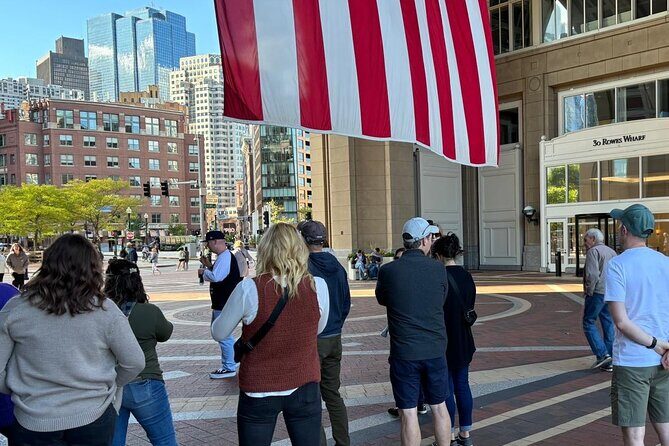
The guide quality is a standout. Multiple guide names show up in feedback, including Omar and Tom (often described as a history teacher). Others like Christian also come up.
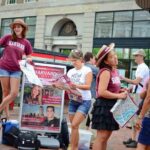
The common thread is how the tour is told. It is not just a script. Guides bring humor, then shift into facts, then use visuals—photos and materials—to show what the people looked like. That is a big deal for true crime fans. Names and theories can feel abstract. Photos pull you back into reality.
One more detail I like about this guide style: the pacing is built for engagement. Reviews mention jokes that land and a lively, entertaining delivery, not a monotone recitation. You’ll still hear serious topics, but the guide keeps the group moving mentally.
If you care about both the city and the stories—and you enjoy a guide who makes the walk feel like a guided case file—this kind of presentation is part of the value you’re paying for.
Who this tour fits best (and who should pass)
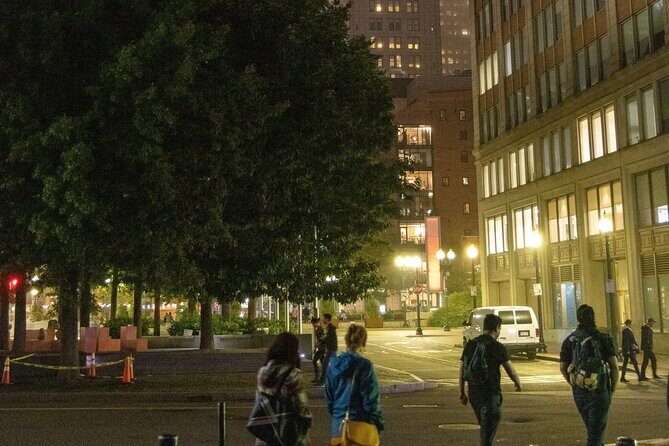
This tour is ideal if you’re into true crime, mob lore, serial killer stories, and the way investigations, media, and institutions shaped outcomes. It is also great if you like history but want it framed through crime rather than politics only.
It’s also a decent choice for couples or people traveling with a history-minded partner, because the route gives you both sightseeing and narrative payoffs without needing museum time.
Still, it’s not a perfect match for everyone. Because the material includes violence and execution-level topics, it’s better for adults and older teens. The tour also involves a fair amount of walking, so if you have mobility limits, you should be honest about whether you can handle it.
Weather matters too. This experience requires good weather, and if conditions are poor, you’ll be offered a different date or a full refund.
Practical tips so you enjoy the walk
A few practical things will help you get the most out of it:
- Wear comfortable walking shoes. The timing is short at each stop, and you’ll be switching streets often.
- Bring a layer. Even in Boston, temperatures and wind can change as you move from downtown toward the waterfront areas.
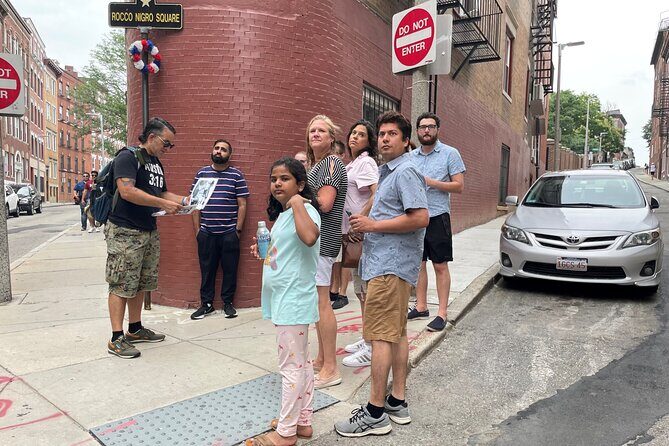
- If you don’t like sitting through photo-heavy moments, you should know the format can include binder-style visuals and pictures during the narration. It’s part of how the guide connects faces to stories.
And because it’s a mobile-ticket tour, keep your phone charged. It’s simple, but it avoids last-minute stress.
Should you book this Boston Crime Tour?
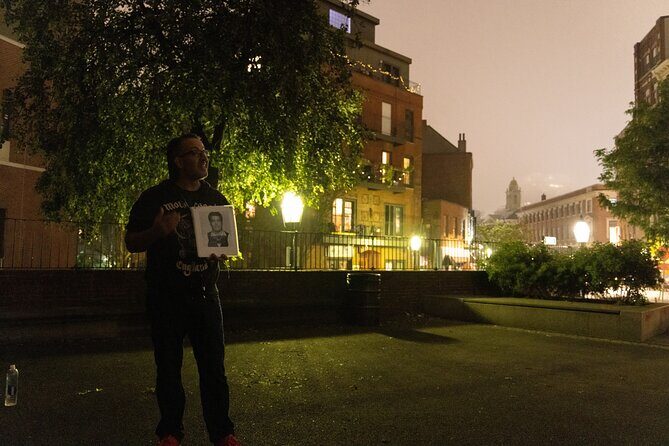
Book it if you want an unusual Boston experience that trades the usual sightseeing rhythm for crime-linked street stops. $34.99 feels fair for a guided walk that includes multiple landmark chapters, admission-free stops, a small group limit, and a guide who uses visuals and keeps the tone engaging.
Skip it if you need a light, kid-friendly history outing. The topics are dark, and you’ll be hearing about executions, serial killers, and other serious crimes. Also pass if you prefer long, quiet monument time. This tour is narrative-first, meaning you’ll be moving and listening more than lingering.
If you’re a true crime fan who also wants to see real parts of Boston in a short window, this is one of the easiest “worth it” picks on a weekend schedule.
FAQ
How long is the Boston Crime Tour?
The tour lasts about 2 hours 20 minutes.
What is the price of the tour?
It costs $34.99 per person.
Is the tour offered in English?
Yes, it is offered in English.
What is the maximum group size?
The tour has a maximum of 22 travelers.
Where do you meet for the tour?
You meet at 408 Atlantic Ave, Boston, MA 02110.
Where does the tour end?
The tour ends at 1 Scott Alley, Boston, MA 02108, near Boston City Hall.
Is admission required for the stops?
The itinerary lists the stops with admission ticket free.
Do I need a printed ticket?
No. The tour uses a mobile ticket.
What about cancellations and weather issues?
You can cancel for a full refund up to 24 hours before the experience’s start time. The tour also requires good weather, and if it’s canceled due to poor weather, you’ll be offered another date or a full refund.
Is the tour accessible if I have limited mobility?
The tour notes a moderate physical fitness level is required, and it involves walking. Service animals are allowed.