REVIEW · BOSTON
Relive 1776: Interactive AR Experience on The Freedom Trail
Book on GetYourGuide →Operated by See Reality · Bookable on GetYourGuide
A single AR headset turns a walking tour into a scene. Relive 1776 puts 1700s Boston in your line of sight with historically accurate characters and choices that shape what you see, right along the Freedom Trail. I especially like the interactive moments (like dealing with soldiers and even operating a field cannon) and the crisp, real-world view that comes with AR. The main thing to consider is the pace and tech setup: you’ll swap between phone AR and provided headsets, so it’s not the kind of tour where you just wander and watch.
If you love American history, or you’re traveling with kids, this is a smart way to make the story stick without turning it into a long lecture. There is no gore, and because it’s AR (not VR), it avoids the nausea issues that can come with full VR setups. Still, there is a version with guns, so if that sounds stressful, plan for the kids version ahead of time.
In This Review
- Key highlights worth planning around
- Relive 1776: interactive 1776 AR on the Freedom Trail
- Price and timing: does $30 buy enough value?
- What it feels like: AR headsets and phone scenes (no VR tradeoffs)
- Where to meet: the Relive 1776 booth by the Old State House
- Boston Common under the Great Elm Tree: meet the people who set the story in motion
- Granary Burying Ground: history with weight, and the tour keeps moving
- Old State House: British soldiers, colonial texture, and choices that matter
- Paul Revere House: quick, guided, and designed for learning through action
- Bunker Hill finale: the last scene and the field-cannon moment
- Who this is best for (and who should skip it)
- Small group energy, live guide, and the convenience touches that matter
- Practical tips so the experience feels smooth
- Should you book Relive 1776?
- FAQ
- How long is Relive 1776 on the Freedom Trail?
- How much does Relive 1776 cost?
- Does Relive 1776 use VR or AR?
- Where do I meet for the tour?
- What technology is included during the tour?
- Is there gore in the simulation?
- Is there a kids version?
- Is the tour wheelchair accessible?
Key highlights worth planning around
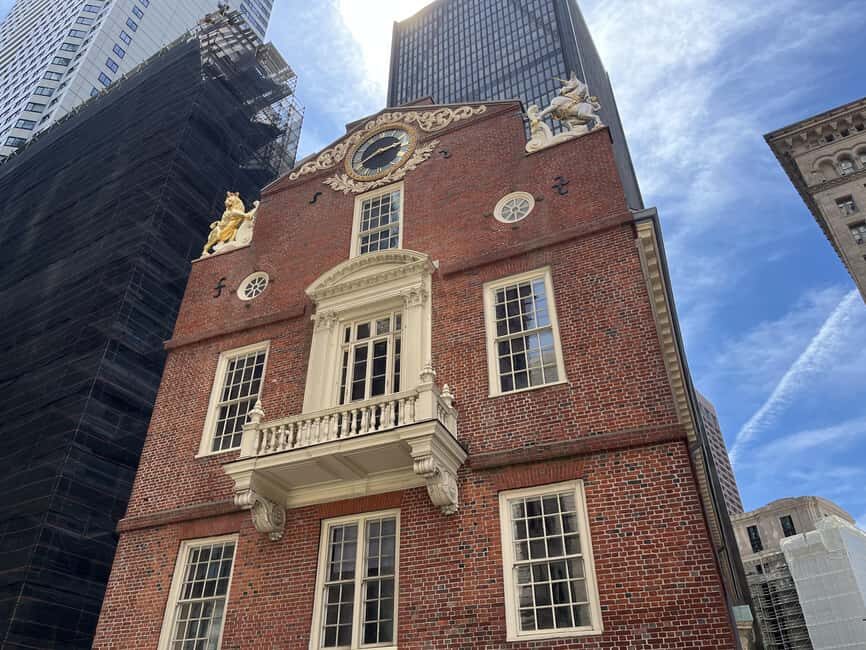
- AR on real streets: You keep seeing Boston while characters pop into your view.
- Five guided stops: Boston Common, Granary Burying Ground, Old State House, Paul Revere House, and Bunker Hill.
- Characters that react to choices: British soldiers and colonists respond based on what you do in the moment.
- A guide stays with you: You get live instruction in English throughout the route.
- Short sessions inside a single tour: Each scene runs about 5–15 minutes, with the full experience around 30 minutes.
Relive 1776: interactive 1776 AR on the Freedom Trail
Relive 1776 is built for one big problem with classic walking tours: after a while, it can start to feel like a checklist. This tour keeps you moving through the Freedom Trail sites, but it adds characters, actions, and interactive choices so you’re not just reading plaques.
It’s also designed for modern travel reality. You have a small group (limited to 8 people) and a guide who keeps the experience flowing in plain language. The whole thing is short enough that it works even if your Boston day is already packed.
And since it’s AR instead of VR, you can watch history play out while still seeing the sidewalk, street crossings, and what’s around you. That matters. It makes the tour feel more like theater in the real world than an activity where you lose track of your surroundings.
You can also read our reviews of more tours and experiences in Boston.



Price and timing: does $30 buy enough value?

At $30 per person for a roughly 30-minute experience, you’re not paying for a full day of activities. You’re paying for a very specific outcome: taking five Freedom Trail stops and turning them into interactive, character-led scenes.
Here’s how I’d judge the value for your trip:
- If you’re visiting Boston for the first time and want the Freedom Trail story to feel memorable, the price can make sense because you’re compressing what usually takes longer into something quick and active.
- If you already know the basics and you’re hoping for something different, AR can be a strong upgrade from plain sightseeing—especially because the characters interact with your choices.
- If you’re the type who likes long, unhurried walks with minimal tech, this might feel like a sprint. The time is fixed, and you’ll spend part of it dealing with headset or phone AR moments.
The good news is flexibility. You can go at your own pace and even skip stops if you’re short on time. That lets you treat it as a highlight rather than a burden.
What it feels like: AR headsets and phone scenes (no VR tradeoffs)
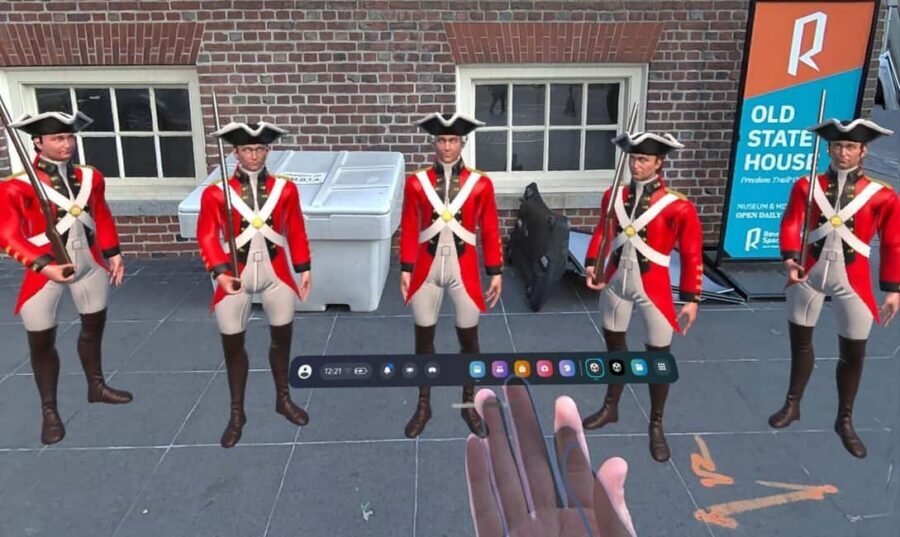
This is one of the most practical parts of the concept. It’s AR, not VR, so your eyes stay on the real street the whole time. You’re not wearing something that blocks the world. You’re seeing the world, and then you see history overlaid on top of it.
The experience uses two kinds of tech:
- Two stops use provided AR headsets
- Three stops use mobile phone AR
You also get a sanitization approach for shared devices. Headsets are sanitized between participants to kill 99.99% of bacteria and viruses, and you have an optional fresh facial cover for better comfort.
One more detail I appreciate: there’s no gore in the simulation. You’ll still encounter a reenactment tone that can include guns, and that’s where the kids version matters. But you’re not going to get graphic content on this tour, which is a huge part of why it works for families.
Where to meet: the Relive 1776 booth by the Old State House
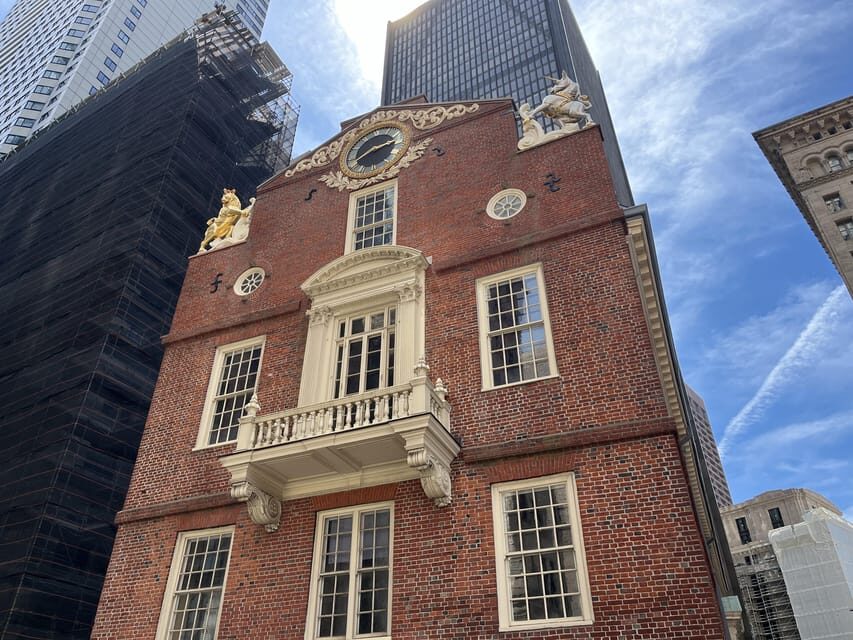
Getting started matters, because AR tours can lose momentum if you’re searching around while everyone waits.
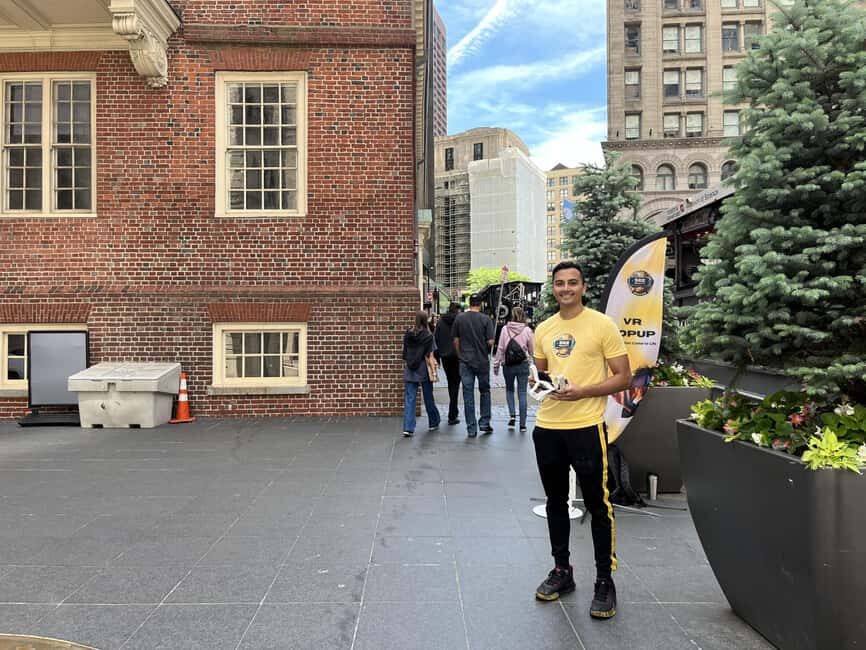
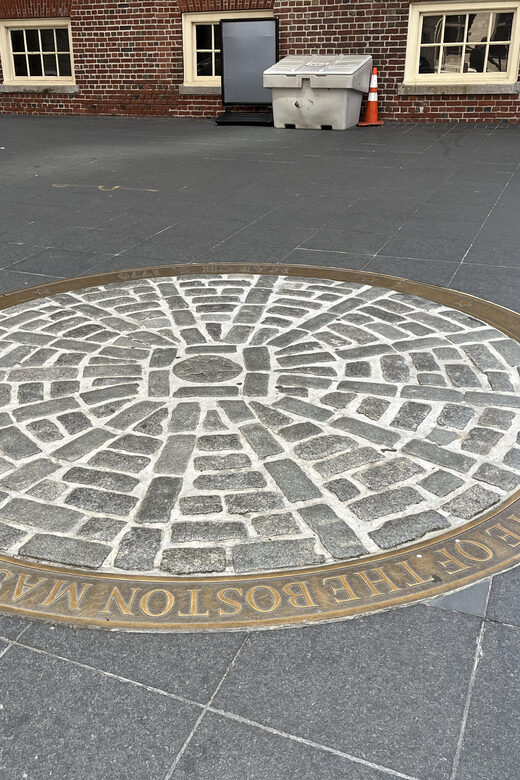
You meet at the Relive 1776 booth between the plants outside the Old State House, next to the Boston Massacre marker in the ground. The booth is the key visual—find that first, then handle any questions with the guide.
There are also two starting location options mentioned for the tour: Boston Massacre Site or Commodore John Barry Memorial. In practice, that means you should double-check your confirmed start time and location instructions. The meeting booth is your safest bet to avoid confusion on the ground.
Either way, you’ll be guided through the Freedom Trail route as a small group, and the guide keeps you on track so you don’t have to figure out the tech or timing alone.
Boston Common under the Great Elm Tree: meet the people who set the story in motion
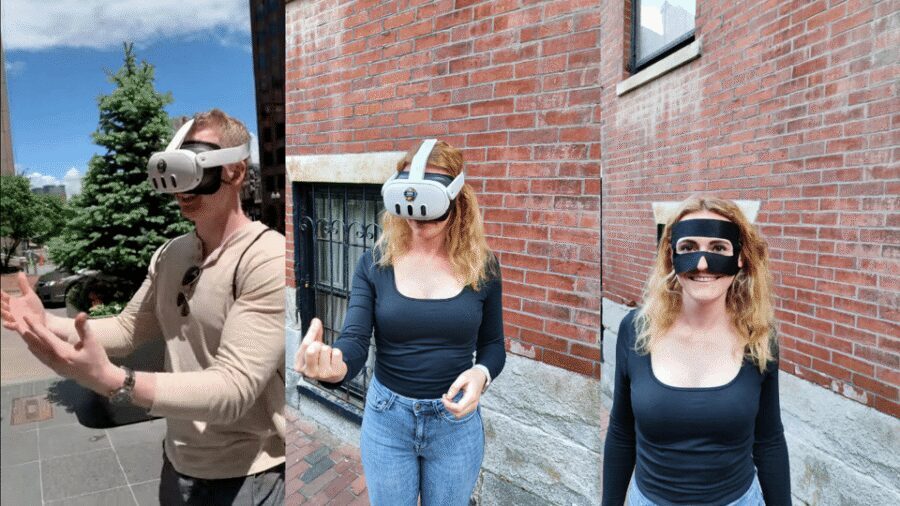
The action starts at Boston Common with a guided stop (about 15 minutes) and a moment built around the Great Elm Tree. This is where the tour leans hardest into “history as a scene,” not just a location.
You meet key figures—Paul Revere, John Hancock, and Samuel Adams—and the interactive part kicks in. After this introduction, you’re helping them fight back against tyranny through a series of events staged around Boston.
What makes this stop valuable is that it’s a turning point. Boston Common isn’t just a scenic green space. In the story of 1776, it’s where big ideas, public action, and “we’re doing this now” energy came into focus.
In AR form, that becomes more than a setting. It becomes the backdrop for choices and responses, which helps you connect the people to the places instead of treating them like names in a textbook.




Granary Burying Ground: history with weight, and the tour keeps moving
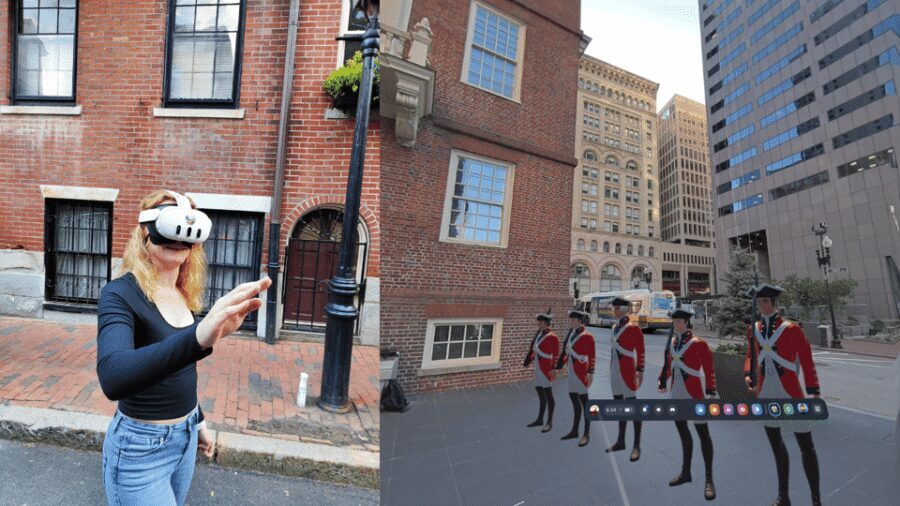
Next is Granary Burying Ground, a guided stop of about 10 minutes. Even if you’ve seen photos of this cemetery before, the value here is how the tour connects the tone of the Revolution era to specific sites you can stand in.
This is also one of the places where the AR structure helps. Instead of letting you fall into a “walk and look” routine, you’re doing a short guided AR scene and then shifting to the next location. That rhythm keeps the experience from turning into museum mode.
One thing I’d keep in mind: cemeteries bring a more reflective mood naturally. That’s not a bad match for this tour. If you want a mix of action and context, Granary Burying Ground gives you a quieter pause in the middle of the story.
Old State House: British soldiers, colonial texture, and choices that matter

The tour’s next big anchor is the Old State House with a guided stop around 20 minutes. This is where the interactive nature of Relive 1776 shows up in a practical, memorable way.
You’ll see British soldiers and colonists appear in your real-world view. Then the characters react to what you do. The experience also includes activities like trying on colonial fashion, so it isn’t only about watching a scene—it’s about stepping into the role long enough to make the period feel real.
This stop matters because the Old State House sits at the crossroads of public authority and public tension. It’s easy to get the Revolution story as a sequence of battles. This tour nudges you toward what came first: governance, power, and pressure.
Just note that if you’re sensitive to the idea of conflict, you’ll want to pay attention to what version you’re taking (kids version exists). The simulation is designed with no gore, but it still has a “beware the guns” element that some kids may find scary.
Paul Revere House: quick, guided, and designed for learning through action
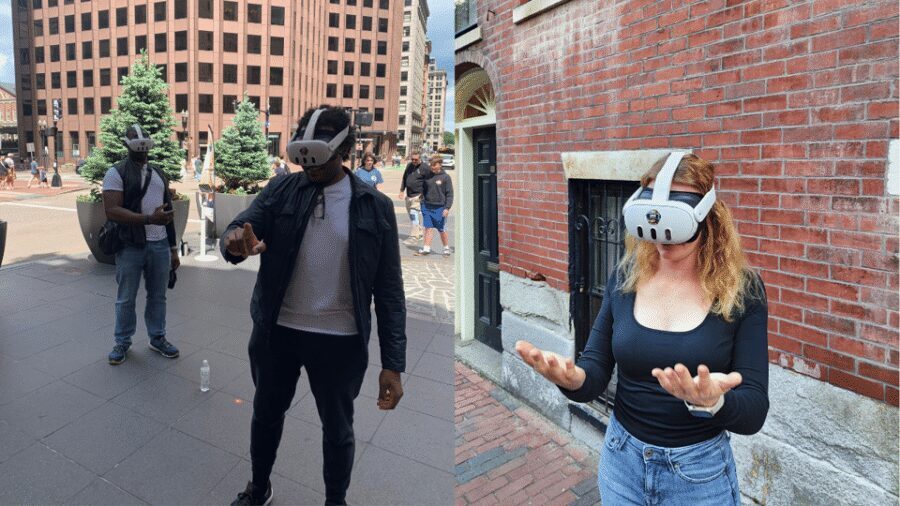
After Old State House, you go to the Paul Revere House for a guided stop around 10 minutes. This is another place where the experience keeps its pacing tight, rather than dragging the story out.
You’ll continue the storyline with AR scenes that connect to the people and events you just met. The tour includes a mix of AR setups here too—since some parts use phone AR and some use the provided headsets, you should expect a small amount of tech switching as you move between stops.
It also includes transportation from Paul Revere House to Bunker Hill, which is a real convenience. That matters on a day when your legs are already doing their part on the Freedom Trail. You get to preserve energy for the finale instead of grinding through every last step.
Bunker Hill finale: the last scene and the field-cannon moment
The last stop is Bunker Hill, guided around 20 minutes, where the AR tour ends. This is the finale location, so it’s where the tour tends to go bigger and more action-focused.
One of the standout elements mentioned is that you may get to operate a historically accurate field cannon as part of the interactive events. That kind of hands-on moment is exactly why AR works here. It turns what could be a distant battle story into something you participate in—at least in a controlled, non-graphic simulation.
Bunker Hill is also the right ending point because it’s the part of the Revolution story that feels like momentum. Even if you’ve been to the monument area before, using it as a “wrap-up stage” helps your brain tie together the characters you met earlier with the bigger outcome.
And yes, it’s still family-friendly in the sense that there’s no gore. The guns may still be a concern for some visitors, which is why the tour offers a kids version without guns.
Who this is best for (and who should skip it)
Relive 1776 fits a wide range of people, but it’s not for everyone.
Best fit:
- First-time Boston visitors who want the Freedom Trail story to feel personal
- History fans who like accuracy and details, not just dates
- Families who want something interactive but controlled (no gore)
- Anyone who’s done VR before and wants AR instead, because you keep your bearings
Consider skipping or changing plans if:
- You have epilepsy (not suitable)
- You have heart problems (not suitable)
Also, if you’re traveling with kids and the idea of guns worries you, go for the kids version without guns. It’s specifically mentioned as a safer-feeling option for children who might find the adult version too intense.
Small group energy, live guide, and the convenience touches that matter
A small group size of 8 people keeps the experience from turning into a tech line. You can ask questions without feeling lost in a crowd, and the guide can adjust to what people are doing in the AR scenes.
Your guide is English only, so plan around that if you need another language. Since the guide is part of the experience, it also helps if you like a bit of narrative framing. You’re not just handed a device and told to press buttons.
The tour also includes a souvenir: an Illegal Tea reusable tea bag with a discount card. It’s not essential, but it’s a fun little way to leave with something related to the tour.
And if you’re worried about wasting time, the experience includes skipping the ticket line.
Practical tips so the experience feels smooth
A few things I’d do to make this tour more comfortable and less fiddly:
- Arrive a few minutes early so you’re not starting the AR setup under stress.
- If you’re wearing glasses or have facial sensitivity, consider the option for a fresh facial cover for the headset.
- Plan to wear comfortable shoes. You’ll be walking multiple Freedom Trail stops.
- If your group includes someone cautious about conflict imagery, confirm you’re selecting the right version for your crew.
- Follow the simple rule: no littering. Sounds obvious, but on busy tourist sidewalks it’s worth remembering.
Finally, don’t try to treat it like a normal guided walk. The tour’s value is the moment-to-moment interaction. When you focus on the scenes, the route feels faster and more meaningful.
Should you book Relive 1776?
If you want the Freedom Trail to feel like a living story—not a list of stops—book it. For $30 and about 30 minutes, you get a compact, guided way to understand the Revolution through characters, reactions, and hands-on moments like the cannon segment.
I’d especially recommend it if you’re traveling with kids who can handle a short tech experience, or if you want something more memorable than standard plaques. The no-gore approach and the kids version without guns make it easier to match the experience to your group’s comfort level.
Skip it if you have epilepsy or heart problems, or if you strongly dislike guided tech setups and would rather do a quiet self-guided Freedom Trail day.
Bottom line: this isn’t just another “see the site” tour. It’s a short, guided slice of 1776 that you’ll remember the next time you walk past these places.
FAQ
How long is Relive 1776 on the Freedom Trail?
The experience is about 30 minutes total, and each of the five AR experiences runs roughly 5–15 minutes.
How much does Relive 1776 cost?
It costs $30 per person.
Does Relive 1776 use VR or AR?
It uses AR (augmented reality), not VR. You can see the real world at all times.
Where do I meet for the tour?
Look for the Relive 1776 booth between the plants outside the Old State House, next to the Boston Massacre marker in the ground.
What technology is included during the tour?
Some parts use mobile phone AR, and two parts use provided AR headsets. You also get a sanitized headset and an optional fresh facial cover.
Is there gore in the simulation?
No. The simulation has no gore.
Is there a kids version?
Yes. There is a kids version available without guns.
Is the tour wheelchair accessible?
Yes, the tour is wheelchair accessible.