REVIEW · BOSTON
Best of Boston Small Group Tour, I know the secrets others don’t!
Book on Viator →Bookable on Viator
Boston hits different when someone local narrates it.
This small-group tour (max six) keeps you close to your guide, and you move at a smart pace across the places that shaped the American Revolution. I also love the on-the-go stories—the kind that connect Harvard’s rise, burial grounds, and meetinghouses into one clear thread—plus the simple perks like cold drinks and photo stops on request. The one drawback to plan for: the day is packed, so you’ll have shorter time windows at each stop, and tickets for a couple key interiors are not included.
Starting right at Boston Marriott Long Wharf helps a lot if you’re not staying in the middle of things. You’ll get Saratoga Springs water and soft drinks (Coke, Diet Coke, or Polar Orange Dry), which keeps the day feeling easy even when you’re moving quickly through busy streets. If you have a lot of luggage or mobility limits, mention it early, because some of the moving parts of a compact vehicle and quick get-outs can matter.
In This Review
- Key highlights you’ll actually feel during the day
- Why this Boston day tour is such a good value at $149
- Meeting at Boston Marriott Long Wharf and getting rolling
- The ride matters: comfortable route, quick photo stops, and real pacing
- Harvard University: from a tiny farm to big ideas
- Beacon Hill: the streets where power ruled
- Granary Burying Ground and King’s Chapel: stone memorials with stories
- Granary Burying Ground
- King’s Chapel
- Old City Hall and Faneuil Hall: education and public persuasion
- Old City Hall
- Old South Meeting House
- Faneuil Hall Marketplace
- Old State House and the Declaration moment
- The North End: Boston’s layers after the revolution
- Bunker Hill: the lesson, not just the battlefield
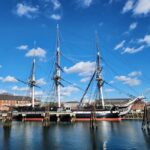
- Charlestown Navy Yard and USS Constitution: ships that carried the future
- Comfort details that make the day easier
- Price vs. what you get: who should book this
- Should you book the Best of Boston small group tour?
- FAQ
- What time does the tour start?
- Where is the meeting point?
- How many people are in the group?
- Is pickup offered?
- How long is the tour?
- Are drinks included?
- Is admission included for Harvard University?
- Is admission included for Old South Meeting House and Old State House?
- What fitness level do I need?
- Can I cancel for a full refund?
Key highlights you’ll actually feel during the day
- Six guests maximum, so questions and detours for photos happen without feeling rushed
- Cold drinks included (Saratoga Springs water plus Coke/Diet Coke/Polar Orange Dry) for a long route
- Harvard + Revolution landmarks in one run, with story links that make the city make sense
- Granary Burying Ground and King’s Chapel, where early Boston power shows up in stone and names
- Faneuil Hall Marketplace to the North End, covering civic Boston and the neighborhood layers after
- Bunker Hill and Charlestown Navy Yard, including time at key battle-and-ship sites like USS Constitution
Why this Boston day tour is such a good value at $149
At $149 per person, you’re paying for four things that add up fast in Boston: time, transport, narration, and a tight route.
First, you save time by covering major stops in one go instead of bouncing between neighborhoods on your own. Second, the included drinks help on a tour that runs about 6 to 7 hours. Third, the guide’s storytelling makes the sites feel connected, not like a checklist. That matters in Boston, where many landmarks sit close together—but only if someone explains how they connect can you read the city quickly.
Finally, most stops are free admissions. You’ll still want to plan for possible ticket purchases at the places where admission is not included, but that’s your choice rather than a surprise.
You can also read our reviews of more tours and experiences in Boston.

Meeting at Boston Marriott Long Wharf and getting rolling
The tour starts at 9:00 am at Boston Marriott Long Wharf, 296 State St. It’s a convenient anchor point—easy to find and close to public transportation—so you’re not spending your first hour hunting down a meeting spot.
Pickup is offered, and the tour runs back to the meeting point. In practice, the flow tends to stay flexible. Some people report a more helpful drop-off based on where they’re headed next, but you should still plan to end where the tour begins.
The ride matters: comfortable route, quick photo stops, and real pacing

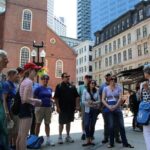
This is a small-group experience with a maximum of six. That sounds like marketing until you feel it—fewer people means fewer delays at each stop and easier conversation while you’re moving.
The tour also includes on-request picture stops. That’s useful because Boston street scenes can be photogenic fast, and you don’t want to lose the moment trying to ask a driver to pull over later.
A practical note: there’s some walking and quick boarding/getting out. One review mentioned that getting in and out from the very back of the vehicle could be a concern for mobility challenges. If that could be you, tell the operator up front so they can set expectations.
Harvard University: from a tiny farm to big ideas
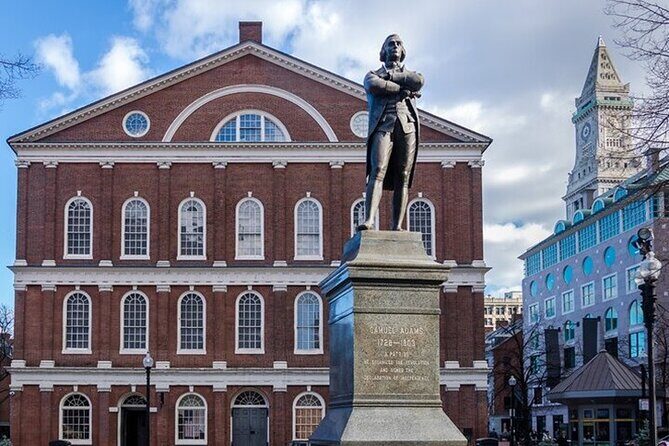
Harvard is your first stop, and it works. You start with a place that helps you understand why Boston became a magnet for money, power, and research long before the Revolution.
You’ll hear how a one-acre farm grew into a world-class institution, and you’ll connect the dots between influential people and the kind of prestige that later fueled political clout. The “wow” here isn’t just campus views—it’s the cause-and-effect story: ideas, wealth, and status don’t appear out of thin air. They get built.
What to watch for: keep an eye out for details your guide points out, because the time here is short. Admission is free, so you can enjoy the area without worrying about an entry fee.
Possible drawback: even though it’s a major stop, your time window is around 30 minutes, so arrive with comfortable expectations. You’re here for orientation and key context, not a campus deep dive.
Beacon Hill: the streets where power ruled
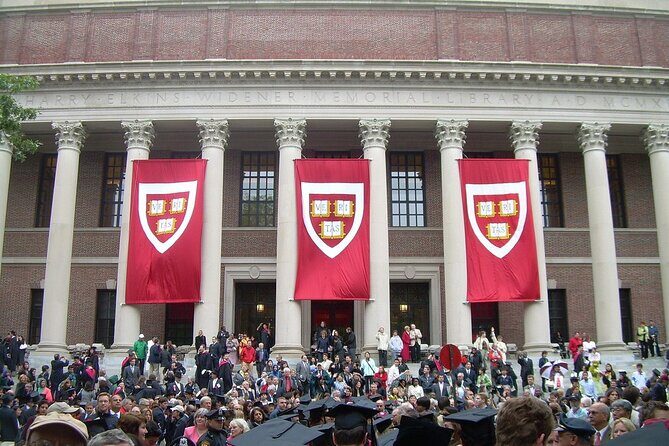
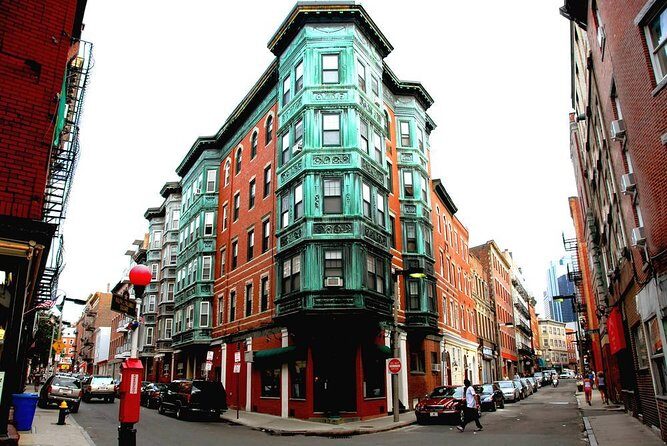
Next comes Beacon Hill, where Boston’s elite influence shows up in architecture and street layout. You’re looking at a neighborhood that, for roughly two centuries, served as home turf for the city’s rich and powerful.
This is a good stop for quick photos and a short wander, because the streets reward slow looking—but you won’t have slow time. Still, even a short walk helps you “read” the neighborhood: why it feels old, why it looks orderly, and why Boston power took this form.
Tip: if there’s a specific photo you want, speak up early. The tour supports picture stops on request, and that keeps things from turning into last-minute guessing.


Granary Burying Ground and King’s Chapel: stone memorials with stories
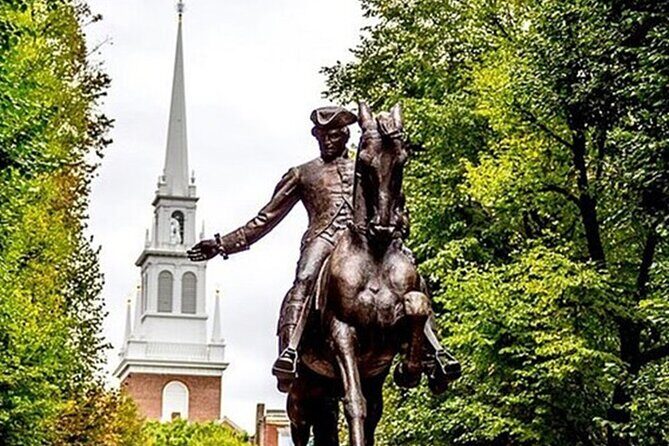
Then you hit two stops that many people treat as separate sights—but you’ll hear them as connected chapters.
Granary Burying Ground
This cemetery was created because there was no more room at an earlier burial ground linked to King’s Chapel. The name alone tells a story of how the city used land: this one started as a grain storehouse area. Then it became resting place for patriots.
When a guide walks you through it, the cemetery stops feeling gloomy and starts feeling like a timeline. You’ll hear why these people mattered, and why Boston’s leaders stayed close to their city in life and death.
King’s Chapel
King’s Chapel is one of Boston’s earliest Anglican churches and also linked to an important burial ground. It’s compact, historic, and full of names that show up later in Revolutionary-era narratives.
Why this matters: Boston’s Revolution isn’t just speeches and battles. It’s also institutions, church life, property, and where decisions were made.
Possible drawback: both stops are around 10 minutes each. In a place like this, you might want more time. Think of it as a high-impact introduction you can later build on if you want.
Old City Hall and Faneuil Hall: education and public persuasion
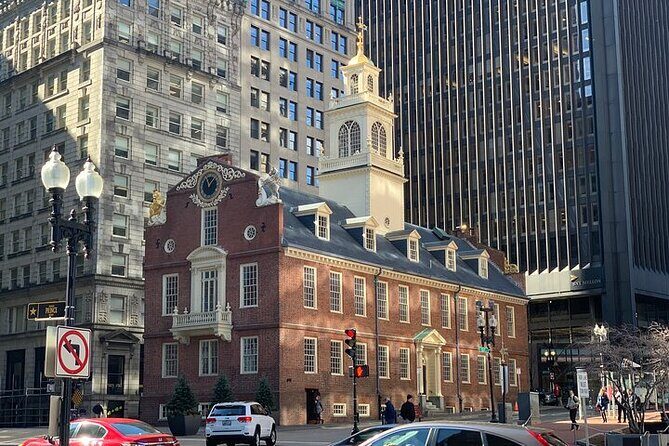
From the burial ground zone, you move toward places that shaped civic life.
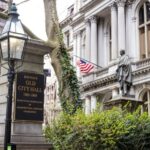
Old City Hall
You’ll learn that this area was originally the site of the Latin School, described as the first free public school in America. That detail is a big deal. Education isn’t a side note in revolutionary movements; it’s part of how citizens form, organize, and argue.
You’ll also see how the school connects visually to other old landmarks nearby, including the long-standing Parker House hotel across the street and King’s Chapel behind it.
Old South Meeting House
This is one of the Revolution-meeting spots, used by early Congregationalists and later linked with the Sons of Liberty. You’ll hear about how British troops later desecrated the site.
Here’s the practical part: admission is not included. So plan for either skipping interior time or paying at the venue if you want to go inside.
Faneuil Hall Marketplace
Faneuil Hall is civic Boston in brick-and-stone form: Boston’s first town hall and described as the oldest outdoor market in America. Even if you’ve seen photos, being there helps. The square layout makes it feel like a place where public voice would naturally gather.
Time check: this stop is about 10 minutes. That’s enough for a quick look, a few photos, and a sense of place.
Old State House and the Declaration moment
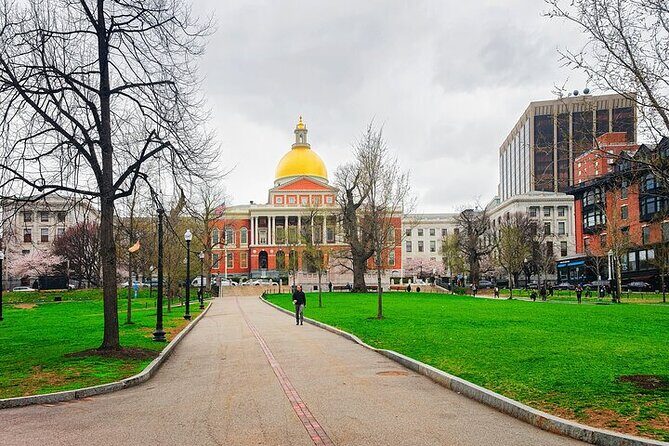
Next you’ll see Old State House, a key seat of government for Massachusetts both as a colony and later as a state. You’ll hear about the Boston Massacre and the reading of the Declaration of Independence.
This is where the city shifts from “old buildings” into “history that happened on this exact corner.” Old State House is the kind of stop where you can almost feel the room changing when the guide frames what occurred here.
Again, interior admission is not included, so decide ahead of time whether you care about going inside during the tour.
Practical tip: if you’re the type who wants interiors, keep a little extra flexibility in your day. If you’re mostly after the big picture exterior views, you’ll still get plenty.
The North End: Boston’s layers after the revolution
After the civic and revolutionary core, the route moves into the North End, Boston’s oldest neighborhood. You’ll get a story of shifting communities across centuries: British presence in the 17th and 18th centuries, then other groups arriving later, including an influx of Irish and Jewish communities in the 19th century. Later, it’s described as becoming Little Italy in the 20th century.
The reason this stop works on a tour like this is timing. You end the political storyline and then you see how the city keeps changing. Boston isn’t frozen in 1776. It keeps absorbing new cultures and reshaping itself.
This stop is about 10 minutes. Use it like a quick orientation walk: grab a short stroll, look for neighborhood scenes, and set yourself up for dinner plans later.
Bunker Hill: the lesson, not just the battlefield
Then comes Bunker Hill. This is where the tour pivots toward what you might call the reality of war—messy, costly, and instructive.
You’ll hear how this was the first battle of the new Continental Army and how it delivered a pyrrhic victory for the British. The key takeaway is the lesson the Patriots learned: war isn’t just bravery. It’s logistics, organization, and learning fast.
You’ll have about 30 minutes, which is enough time for orientation and for the guide to connect the battlefield to the larger independence story.
Why it’s worth the time: on paper, Bunker Hill can sound like one stop among many. In practice, it’s a turning point that makes the rest of Boston’s landmarks click.
Charlestown Navy Yard and USS Constitution: ships that carried the future
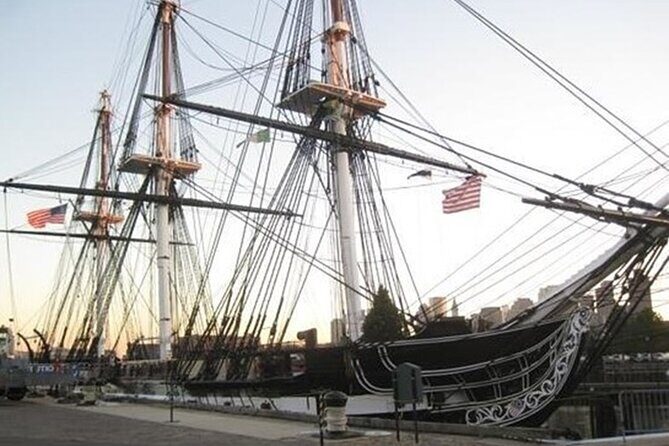
Finally you head to Charlestown Navy Yard, where battleships were built and repaired. The centerpiece is the USS Constitution, famous as Old Ironsides and described as the oldest ship afloat and America’s Ship of State.
This stop is about 30 minutes, which is short—but it’s also the right length for a key photo moment, a guided explanation, and (if time allows) stepping inside. Some people highlight the USS Constitution interior as the standout part of the day.
Why this stop lands: the Revolution wasn’t only fought on land. It needed ships, repairs, and a maritime backbone. Charlestown makes that practical side feel real.
Comfort details that make the day easier
A tour like this can be either exhausting or smooth depending on the small stuff. Here, the small stuff is handled.
You’ll get spring water plus soft drinks during the day. That might sound basic, but in Boston heat or cold, having drinks included is one less thing you have to think about.
The guide also stops for pictures on request. That keeps you from feeling like every photo needs to wait until you’re rushing away from a landmark.
And yes, weather can hit. One review noted that on a rainy day the guide had umbrellas to keep stops comfortable. Since the tour requires good weather, don’t assume you’ll always get perfect conditions—but the approach seems designed to keep you moving.
Price vs. what you get: who should book this
This is a great fit if you:
- want a fast, high-coverage day with major Boston landmarks
- prefer a six-person max group where you can ask questions
- like history that’s connected, not just recited
- want drinks included and minimal hassle
It’s also a strong option if you’re staying outside the densest downtown core and don’t want to fight logistics on your own.
If you’re the type who needs lots of quiet time inside every museum or building, you might find the pacing a bit tight. This tour is built for orientation and highlights.
Should you book the Best of Boston small group tour?
If your goal is to understand Boston quickly—then wander on your own later—this is a very solid choice. You’ll get a clean route that hits the city’s big Revolutionary-era sites, then adds the neighborhood layers in the North End, and caps it with the shipyard story around USS Constitution.
I’d book it if you want value at $149 in the form of transport, snacks/drinks, and a guide who stitches landmarks together into one narrative. I’d think twice only if you have major mobility limits, extremely heavy luggage needs, or a strong preference for long interior time at every stop.
Overall: this is the kind of day that helps you see Boston instead of just passing through it.
FAQ
What time does the tour start?
The tour starts at 9:00 am.
Where is the meeting point?
You meet at Boston Marriott Long Wharf, 296 State St, Boston, MA 02109.
How many people are in the group?
The maximum group size is six travelers.
Is pickup offered?
Yes, pickup is offered.
How long is the tour?
It runs about 6 to 7 hours.
Are drinks included?
Yes. The tour includes Saratoga Springs water and soft drinks (Coke, Diet Coke, or Polar Orange Dry).
Is admission included for Harvard University?
Yes. The Harvard University stop includes free admission.
Is admission included for Old South Meeting House and Old State House?
No. Admission tickets are not included for Old South Meeting House and Old State House.
What fitness level do I need?
Moderate physical fitness is recommended, since there is walking and getting in and out of the vehicle.
Can I cancel for a full refund?
Yes. You can cancel up to 24 hours in advance for a full refund. If the experience is canceled due to poor weather, you’ll be offered a different date or a full refund.